

The true cost of claiming on your car insurance – and why fault doesn’t always matter


It’s a question your insurer will never answer: how much does your car insurance go up after a claim?
Complex algorithms, individual circumstances, the nature of the accident and a list of other factors are all in play, making a definitive answer hard to come by – especially when your premium often rises each year regardless.
Two insurance experts we spoke to on the record couldn’t offer any firm guidance – though they did lift the bonnet on the processes involved and how any increase might be calculated.
Perhaps the only reliable indicator is anecdotal evidence – so we asked Money blog readers for their stories, many of which we’ve included at the bottom of this piece.
They show huge disparities, with some facing 10% to 50% increases, while others were – counterintuitively – quoted a cheaper price when they came up for renewal.
One reader’s premium increased by as much as 207% – and around one in five ended up paying at least 170% more.
A recurring theme was that initial renewal quotes jumped significantly, but some of the edge was taken off by shopping around.
Pic: iStock
Can you sort it out without involving an insurer?
All of this might make you wonder if it’s cheaper, after a minor accident, to sort things out directly between both parties.
It can be done – but it’s a risky road to go down.
As one insurance insider told us, agreements a few hours after an accident regularly dissolve.
“They all say they’re happy, and then…”
Injuries, real or exaggerated, are not always apparent in the immediate aftermath, and what appears to be superficial damage on, say, your bumper, can end up requiring a new radiator.
Read all the latest Money news here
So this route can leave you in a tricky spot, legally and financially – you need to be really sure about who you’re dealing with and it’s always best to seek independent advice.
Don’t forget, too, that most policies will be invalid if you have an accident and don’t report this to your insurer. That doesn’t mean making a claim – you can tell them for “information only” – but, as some of your stories below prove, a note on your file could affect future quotes.
Fault or no-fault – it doesn’t always matter
One thing that might surprise people is that fault isn’t always a decisive factor in how much a premium may rise.
Jenny Ross, editor of Which? Money, told us: “If you’re involved in an accident or something happens to your car, this affects your risk profile whether it’s your fault or not.
“The reason is, risk isn’t a statement of how good or conscientious a driver you are, or how likely you are to cause accidents – but a statistical estimate of how likely you are to be involved in an incident that might lead to a claim.”
For example, a recent incident could be reflective of difficult traffic conditions where you tend to drive, and this will be the factor that pushes up a premium.
Someone else’s accident can impact your premium
Stuart Masson, editorial director at The Car Expert, told the Money blog a premium may be affected if people with a similar profile to you have an accident.
“Insurance companies use demographic data to calculate premiums based on accident data – and that can penalise you indirectly,” he said.
For example, your postcode, type of car and job title are all factors that can influence your premium costs.
“If there has been an accident (regardless of fault) involving someone with your job, living in your postcode and driving your model of car, it will inevitably factor into the algorithm as an increased accident risk and therefore increase your premium,” said Masson.
Does no-claims discount protection work?
Many people pay extra to protect their no-claims, but they may not realise this protection will (usually) only withstand a limited number of claims per year.
And while NCDP is likely to lessen the impact of any rise in your premium, it won’t stop it altogether.
“The reason is, it’s not directly protecting your premium (which will probably increase if you claim), but the discount applied to it,” said Ross from Which?.
She gave this example:
If your premium was £1,000, and you had a discount of 50%, you’d pay £500. If you claimed, and the underlying premium rose to £1,200, without NCDP your discount might fall to 30% – meaning you’d pay £840 (an increase of 68%). If you had NCDP preserving your 50% discount, you’d pay £600 – still an overall increase of 20%.
Loyalty does not pay
If your renewal quote does rise, it’s important to shop around – both our experts and most of the readers who wrote in concur.
“Don’t give your insurer any loyalty, because they won’t show you any,” said Masson.
Your stories
My premium went from £387 to £569 for a no-fault claim that isn’t closed yet and hasn’t gone to court, even though the other driver claimed responsibility. Had I not added the claim to my insurance quote, my premium this year would have been £418. If it’s not my fault, I don’t understand why I have to pay more.
Bharat – 47% increase
Shortly after leasing our car somebody hit it in a supermarket car park and drove off. We called our insurer to check if we could claim and how that would affect our premium. We didn’t in the end and paid for the repair ourselves (about £300). When we came to renew, the quoted premium had gone from £550 to more than £1,200 so we shopped around and settled on a policy with a £530 quote. When we were finalising the payment, the agent ran a check and said there was an incident noted on “CARE” and that the policy was now going to be £650.
Steven London – 18% increase
I had an accident in February – an at-fault claim. My insurance went up from £700 to £850 a year, which I thought was reasonable. 33M, Porsche Macan, £400 excess, £1,600 total claim value for repairs to both vehicles.
Anonymous – 21% increase
I had an accident where I was deemed at fault in March. At renewal time in May, I was still quoted £100 less than the previous year, even with this claim settled. Maybe my age (now 25) brought it down.
William Ferguson – decrease
A woman driving a large SUV came out of a side road without stopping and wrote my car off. Her insurers, Direct Line Motability, straightaway admitted full liability as I was not at fault. Later, after I bought a Ford Fiesta, my Aviva premium jumped from £249.86 last January to a quotation of more than £1,000 because I was “in an accident”. I used all the comparison sites to get new quotations (some did not even bother to ask who was to blame for the accident!). Premium quotes ranged from over double (Admiral – £510.41) to well over five-fold my January premium – all because I was “involved” in an accident!
Christopher, Chester – 104% increase
My car insurance with John Lewis went up from around £650 to £1,150 after a claim for a no-fault accident. This after paying for protected NCB and being with them for years. I had to shop around and got cover elsewhere for £690.
Anonymous – 6% increase
After 15 years claims-free, my car was damaged overnight by an unknown driver. Since I couldn’t prove a responsible party, I was deemed at fault. My premium skyrocketed from £280 to £860 after that single incident. The repairs cost just £500. I would have been better off footing the bill privately.
Anthony, Portsmouth – 207% increase
Having had no claims for 20 years, I was unfortunate to be on the receiving end of two instances of bad driving, and another of just bad luck, in a few months. Having added these no-fault claims to my AA quote, the price went up to more than £480 (from £297). I phoned to ask why, arguing the premium shouldn’t go up as I was 64, retired and doing fewer miles. I was effectively told that retirees are considered higher risk, and my claims history, despite the circumstances, still showed I was higher risk.
Carol Sim – 61% increase
In 2023, when I was 20, I had an accident in my 2018 1.5 Mini Cooper when a driver went into the back of me at a roundabout. My insurance went up from £655.25 to £1,001.25. But seeing as I had changed vehicle to a 2021 Cooper S as well as changed locations from Cornwall to Kent (which added £130.70 to the price), I didn’t think this was too bad.
Ross – 53% increase
I reinsured my Audi A7 after a rear-end shunt that was my fault. I have a good driving record with full no-claims discount. It was going to cost me £300 more to renew, but using comparison websites I got it £50 cheaper than before the bump (£480). I do have no-claims protection which is taken into account, as well as my age, 59.
Neil Pannett, West Sussex – 10% decrease
My quote with Admiral was reasonable considering the extras. I was 32 and my wife was 29 when I bought the car. Insurance was roughly £760, which went down over the years to about £480. In 2023, a driver who had passed their test two days earlier hit our vehicle. All documents were sent off and my insurance said it clearly wasn’t my fault – it went down as a non-fault. A year later when my insurance was due for renewal, Admiral wanted just shy of £1,300. Needless to say, after being with them seven or so years from a previous vehicle, I went to Hastings Direct which gave me the same policy for £560.
Ross Curtis, Kent – 17% increase
After a claim where I struck a post at a coffee drive-through (it was a newly erected post and in my nearside blind spot) my renewal premium went from around £370 to just over £1,000! It was my only claim ever with a maximum non-claims discount on record.
Graeme – 170% increase
I was hit from behind by a car that had left no gap and had been tailgating me for a while – I went from paying £44 to £77 a month on renewal. The accident was classed as a no-fault on my insurance. My motorbike insurance also increased from £90 to £240.
Tony Reilly – 167% increase
I had an accident in London near Edgware Road where I was found to not be at fault. But during the investigation my premium went up from £400 to £660. After a year and being forced to pay the extra £160, I got my no-claims bonus back and my insurance went down to the £400 region again.
M’hamed Naana – 65% increase
I have had to make two no-fault claims (October 2023 and June 2025). I have just come to renew my insurance, but the price increased by more than £100. Using comparison sites I found a premium almost £200 cheaper. I rang to confirm the second no-fault claim, but it increased the quote by £65. The person on the phone apologised as “although I am not at fault, the rules are it increases the risk”.
Barry Horne – decrease
I had two non-fault claims over a year. Both times I wasn’t in the car and both times the full amount was recovered from the other party. Despite this, my protected no claims insurance policy went from £334 to £960 a year.
Martin – 187% increase
My vehicle was involved in an accident last year which was determined to be no-fault to me and the third party paid the claim. When I came to renew this year I got some quotes, first without declaring the claim, then declaring the claim. The second lot of quotes were consistently 10% higher.
Ian – 10% increase
I made a no-fault claim through Admiral Insurance when a car ran into my Audi. The other driver and his insurer admitted it was entirely their fault. My car was written off by Admiral. Two months later my renewal quote went up from £678 to £1,059.
MC, London – 56% increase
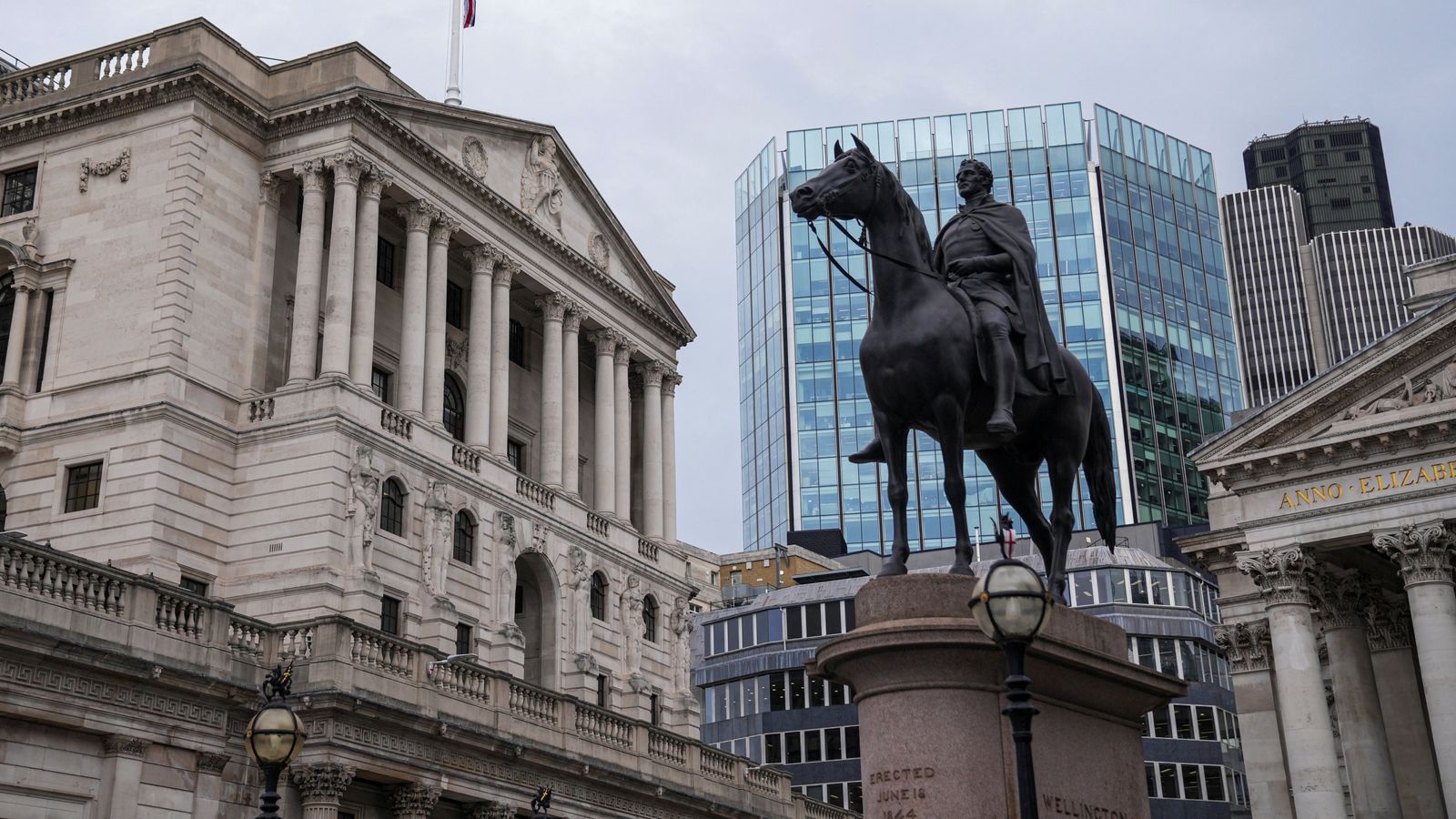
The Bank of England has warned of heightened risks to the UK’s financial system but cut the amount of money that banks need to hold in reserve in case of shock.
The twice-yearly financial stability report highlights a series of pressures, from higher government borrowing costs to risks around lending to major tech firms and record stock market valuations – particularly in areas exposed to artificial intelligence (AI).
“Risks to financial stability have increased during 2025,” the Bank‘s financial policy committee (FPC) said.
“Global risks remain elevated and material uncertainty in the global macroeconomic outlook persists. Key sources of risk include geopolitical tensions, fragmentation of trade and financial markets, and pressures on sovereign debt markets.
Money latest: My supermarket delivery row
“Elevated geopolitical tensions increase the likelihood of cyberattacks and other operational disruptions.
“In the FPC’s judgement, many risky asset valuations remain materially stretched, particularly for technology companies focused on AI.
“Equity valuations in the US are close to the most stretched they have been since the dot-com bubble, and in the UK since the global financial crisis (GFC). This heightens the risk of a sharp correction.”
Its concern extended to the growing trend of tech firms using debt finance to fund investment.
Could the AI bubble burst?
The Bank, which joined the International Monetary Fund in warning over an AI-led bubble in October, delivered its verdict at a time when UK regulators are under pressure from the government to place a greater focus on supporting economic growth.
It is understood, for example, the UK’s ringfencing regime – that sees retail banking separated from more risky investment banking operations within major lenders – is the subject of a review between the Bank and government.
Efforts by the chancellor to grow the economy will be potentially helped by the Bank’s decision today to lower capital requirements – the reserves banks must hold to help them withstand shocks in the financial system such as the global crisis of 2008/9.
The sector’s main capital requirement was cut by the Bank from 14% to 13%.
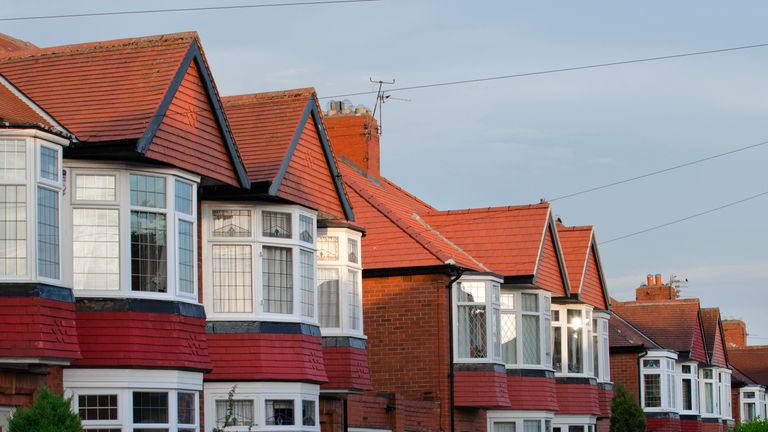
The Bank said that almost four million households face higher mortgage costs as fixed-term deals end. Pic: iStock
Such a move was urged, not only by the government, but by businesses to bolster UK lending and competitiveness.
The relaxation of the buffer does not take effect until 2027.
It was announced alongside confirmation that the country’s biggest lenders – Barclays, HSBC, Lloyds, NatWest, Santander UK, Standard Chartered and Nationwide building society – had passed the Bank’s latest stress tests.
The shocks each was exposed to included a 5% contraction in UK economic output, a 28% drop in house prices and Bank rate at 8%.
Despite the growing risks identified by the FPC, the Bank said that each was strong enough to support households and businesses even in the event of such scenarios, given the healthy state of their reserves.
It is widely expected that the gradual reduction in Bank rate will continue next year, assuming the outlook for inflation remains on a downwards trajectory, helping wider borrowing costs – a source of record bank profitability – decline.
The Bank said that three million households were expected to see their mortgage payments decrease in the next three years but that 3.9 million were forecast to refinance onto higher rates.
As such, it projected a £64 (8%) rise in costs for a typical owner-occupier mortgage customer rolling off a fixed rate deal in the next two years.
Banking stocks, which have enjoyed strong gains this year, were up when the FTSE 100 opened for business despite wider market caution globally which is aligned with the risks spoken of in the financial stability report.
Matt Britzman, senior equity analyst at Hargreaves Lansdown, said: “UK banks are offering a dose of optimism this morning in what’s turning out to be a good couple of weeks for the major lenders.
“The UK’s seven biggest banks sailed through the latest stress test, reaffirming their resilience and earning a regulatory nod to ease capital buffers.
“Most banks already hold capital well above the minimum by choice, so any shift in strategy may take time – but in theory, it frees up extra capital for lending or capital returns.
“However they use the new freedom, this is another clear signal that the UK banking sector is in robust health. This was largely expected, but the confirmation should still be taken well, especially after dodging tax hikes in last week’s budget.”

Did the chancellor mislead the public, and her own cabinet, before the budget?
It’s a good question, and we’ll come to it in a second, but let’s begin with an even bigger one: is the prime minister continuing to mislead the public over the budget?
The details are a bit complex but ultimately this all comes back to a rather simple question: why did the government raise taxes in last week’s budget? To judge from the prime minister’s responses at a news conference just this morning, you might have judged that the answer is: “because we had to”.
“There was an OBR productivity review,” he explained to one journalist. “The result of that was there was £16bn less than we might otherwise have had. That’s a difficult starting point for any budget.”
Politics latest: OBR boss resigns over budget leak
Beth Rigby asks Keir Starmer if he misled the public
Time and time again throughout the news conference, he repeated the same point: the Office for Budget Responsibility had revised its forecasts for the UK economy and the upshot of that was that the government had a £16bn hole in its accounts. Keep that figure in your head for a bit, because it’s not without significance.
But for the time being, let’s take a step back and recall that budgets are mostly about the difference between two numbers: revenues and expenditure; tax and spending. This government has set itself a fiscal rule – that it needs, within a few years, to ensure that, after netting out investment, the tax bar needs to be higher than the spending bar.
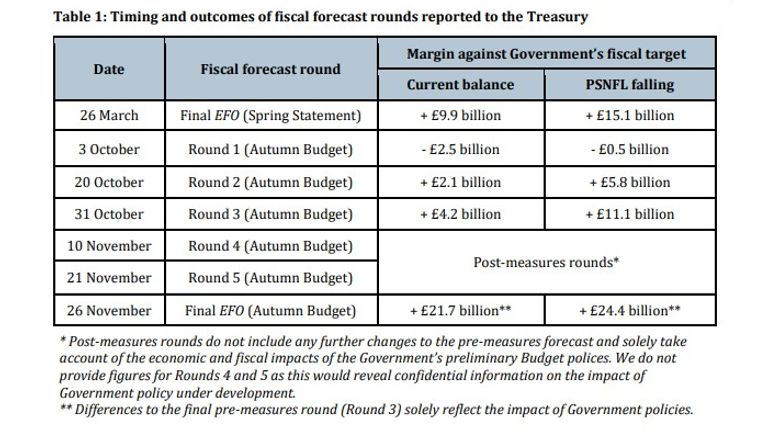
At the time of the last budget, taxes were indeed higher than current spending, once the economic cycle is taken account of or, to put it in economists’ language, there was a surplus in the cyclically adjusted current budget. The chancellor had met her fiscal rule, by £9.9bn.
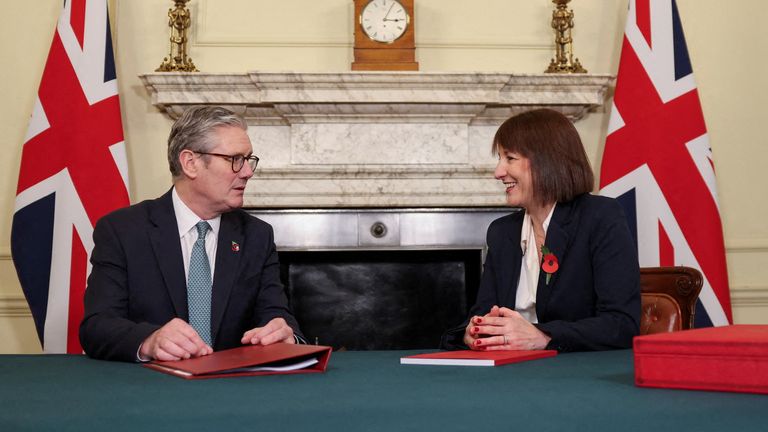
Pic: Reuters
This, it’s worth saying, is not a very large margin by which to meet your fiscal rule. A typical budget can see revisions and changes that would swamp that in one fell swoop. And part of the explanation for why there has been so much speculation about tax rises over the summer is that the chancellor left herself so little “headroom” against the rule. And since everyone could see debt interest costs were going up, it seemed quite plausible that the government would have to raise taxes.
Then, over the summer, the OBR, whose job it is to make the official government forecasts, and to mark its fiscal homework, told the government it was also doing something else: reviewing the state of Britain’s productivity. This set alarm bells ringing in Downing Street – and understandably. The weaker productivity growth is, the less income we’re all earning, and the less income we’re earning, the less tax revenues there are going into the exchequer.
The early signs were that the productivity review would knock tens of billions of pounds off the chancellor’s “headroom” – that it could, in one fell swoop, wipe off that £9.9bn and send it into the red.
Read more:
Main budget announcements – at a glance
Enter your salary to see how the budget affects you
That is why stories began to brew through the summer that the chancellor was considering raising taxes. The Treasury was preparing itself for some grisly news. But here’s the interesting thing: when the bad news (that productivity review) did eventually arrive, it was far less grisly than expected.
True: the one-off productivity “hit” to the public finances was £16bn. But – and this is crucial – that was offset by a lot of other, much better news (at least from the exchequer’s perspective). Higher wage inflation meant higher expected tax revenues, not to mention a host of other impacts. All told, when everything was totted up, the hit to the public finances wasn’t £16bn but somewhere between £5bn and £6bn.
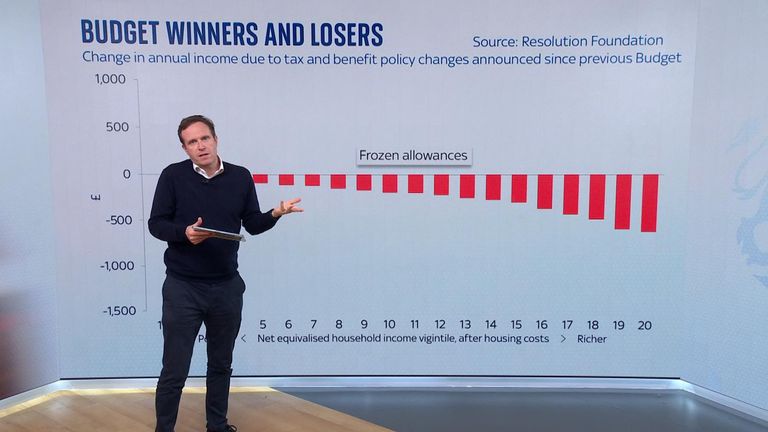
Budget winners and losers
Why is that number significant? Because it’s short of the chancellor’s existing £9.9bn headroom. Or, to put it another way, the OBR’s forecasting exercise was not enough to force her to raise taxes.
The decision to raise taxes, in other words, came down to something else. It came down to the fact that the government U-turned on a number of its welfare reforms over the summer. It came down to the fact that they wanted to axe the two-child benefits cap. And, on top of this, it came down to the fact that they wanted to raise their “headroom” against the fiscal rules from £9.9bn to over £20bn.
These are all perfectly logical reasons to raise tax – though some will disagree on their wisdom. But here’s the key thing: they are the chancellor and prime minister’s decisions. They are not knee-jerk responses to someone else’s bad news.
Yet when the prime minister explained his budget decisions, he focused mostly on that OBR report. In fact, worse, he selectively quoted the £16bn number from the productivity review without acknowledging that it was only one part of the story. That seems pretty misleading to me.

Sir Keir Starmer has denied he and the chancellor misled the public and the cabinet over the state of the UK’s public finances ahead of the budget.
The prime minister told Sky News’ political editor Beth Rigby “there was no misleading”, following claims he and Rachel Reeves deliberately said public finances were in a dire state, when they were not.
Politics latest: Reeves says Cabinet briefed on morning of budget
He said a productivity review by the Office for Budget Responsibility (OBR), which provides fiscal forecasts to the government, meant there would be £16bn less available so the government had to take that into account.
“To suggest that a government that is saying that’s not a good starting point is misleading is wrong, in my view,” Sir Keir said.
Cabinet ministers have said they felt misled by the chancellor and prime minister, who warned public finances were in a worse state than they thought, so they would have to raise taxes, including income tax, which they had promised not to in the manifesto.
At last Wednesday’s budget, Ms Reeves unveiled a record-breaking £26bn in tax rises.
The OBR published the forecasts it provided to the chancellor in the two months before the budget, which showed there was a £4.2bn headroom on 31 October – ahead of that warning about possible income tax rises on 4 November.
The OBR’s timings and outcomes of the fiscal forecasts reported to the Treasury
Sir Keir added: “There was a point at which we did think we would have to breach the manifesto in order to achieve what we wanted to achieve.
“Late on, it became possible to do it without the manifesto breach. And that’s why we came to the decisions that we did.”
Sir Keir said a productivity review had not taken place in 15 years and questioned why it was not done at the end of the last government, as he blamed the Conservatives for the OBR downgrading medium-term productivity growth by 0.3 percentage points to 1% at the end of the five-year forecast.
Read more:
Senior cabinet minister defends Reeves
‘Of course I didn’t lie about budget forecasts, says chancellor
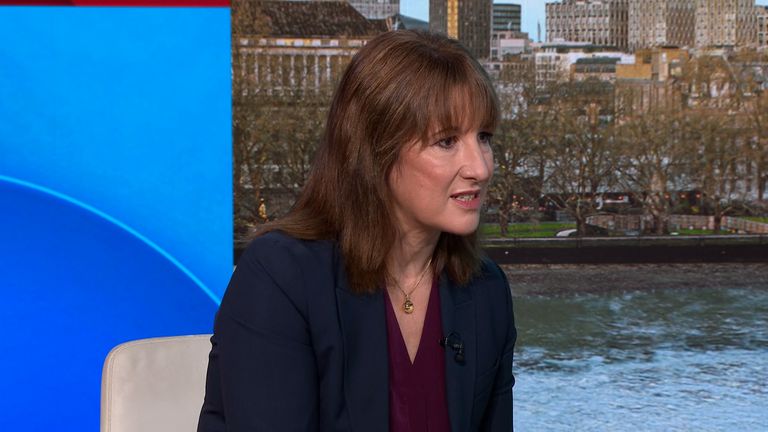
Reeves: I didn’t lie about ‘tax hikes’
The prime minister added: “I wanted to more than double the headroom, and to bear down on the cost of living, because I know that for families and communities across the country, that is the single most important issue, I wanted to achieve all those things.
“Starting that exercise with £16 billion less than we might otherwise have had. Of course, there are other figures in this, but there’s no pretending that that’s a good starting point for a government.”
On Sunday, when asked by Sky’s Trevor Phillips if she lied, Ms Reeves said: “Of course I didn’t.”
She also said the OBR’s downgrade of productivity meant the forecast for tax receipts was £16bn lower than expected, so she needed to increase taxes to create fiscal headroom.
-
 Sports2 years ago
Story injured on diving stop, exits Red Sox game
-
 Sports3 years ago
‘Storybook stuff’: Inside the night Bryce Harper sent the Phillies to the World Series
-
 Sports2 years ago
Game 1 of WS least-watched in recorded history
-
 Sports3 years ago
Button battles heat exhaustion in NASCAR debut
-
 Sports3 years ago
MLB Rank 2023: Ranking baseball’s top 100 players
-
Sports4 years ago
Team Europe easily wins 4th straight Laver Cup
-
 Environment3 years ago
Japan and South Korea have a lot at stake in a free and open South China Sea
-
 Environment1 year ago
Here are the best electric bikes you can buy at every price level in October 2024