

EV sales *still* have not fallen, cooled, slowed or slumped. Media is lying to you.

EV sales continue to rise, but the last two years of headlines falsely stating otherwise would leave you thinking they haven’t. After so many lies, it would be nice for everyone to stop pushing this false narrative that they could find the truth behind by simply looking up one single number for once.
(This is an update of a previous article which remains largely true today, but apparently bears restating, since this misinformation remains pervasive)
Here’s what’s actually happening: Over the course of the last two years or so, sales of battery electric vehicles, while continuing to grow, have posted lower year-over-year percentage growth rates than they had in years prior. EV sales used to grow at 50%+ per year, but for the last couple years, they have grown closer to ~25% per year.
This alone is not particularly remarkable – it is inevitable that any growing product or category will show slower percentage growth rates as sales rise, particularly one that has been growing at such a fast rate for so long.
In some recent years, we had even seen year-over-year doublings in EV market share (though one of those was 2020->2021, which was anomalous). To expect improvement at that level perpetually would be close to impossible – after 3 years of doubling market share from 2023’s 18% number, EVs would account for more than 100% of the global automotive market, which cannot happen.
Clearly, growth percentages will need to trend downward as a new product category grows. It would be impossible for them not to.
To take an extreme example, it would be odd to say that sales are slumping in Norway, which just set a record at 98.3% BEV market share in September with 14,329 units moved, because BEV sales only went up 14.6% compared to the previous September’s 96.4% BEV number (incidentally, 2024 YoY sales were up 10%, so sales growth actually is accelerating, but market share growth cannot at such high percentages).
And yet, this mathematical necessity has been reported time and time again in media, and by anti-EV political forces, as if EV sales are down, despite that they continue to rise.
The actual short-term status of EV sales – they’re still up
Instead of the perpetual 50% CAGR that had been optimistically expected, we have seen a global EV sales growth rate of 23% in the first 10 months of this year, according to a report just released by Rho Motion (recently acquired by Benchmark Mineral Intelligence). That includes a +32% bump in Europe, +22% bump in China, +4% in North America, and a big +48% bump in the “rest of the world.” Notably, this 23% global growth rate is higher than last year’s YTD growth rate, which was 22% at this time.

It’s clear that EV sales growth rates have been held back by falling Tesla sales, the company which had previously been the global leader in EV sales. Outside of this last quarter which saw a pull-forward in demand due to credit expiry, Tesla sales have been dropping for about two years in most territories it sells in.
This is primarily due to chaotic leadership at the wayward EV leader – as buyers have been driven away from Tesla’s brand by CEO Elon Musk, while most other companies have seen significant increases in EV sales.
(Musk himself even spread disinformation about EV sales on Tesla’s 2024 Q3 earnings call, when he said “a lot of the industry are seeing year over year declines in order volumes,” even as EV sales were growing – showing his disconnection with the trends of his own industry as he falls deeper into social media addiction).
Even “slower growth” isn’t really correct anymore
In covering these trends, some journalists have attempted to use the less-wrong phrase “slower growth,” showing that EV sales are still growing, but at a lower percentage change than previously seen.
But for the first nine months of this year, that isn’t true – EV sales are up more in 2025 than in 2024 by a percentage basis.
They are also up in raw sales numbers – in 2024, EV sales grew by a larger number than in 2023. And the same is true so far in 2025.
Going back to 2023, 10.7 million EVs were sold globally. Then in 2024, 13.3 million were sold, a difference of 2.6 million. And so far in 2025, 16.5 million EVs have sold, a difference of 3.2 million. Not only are the numbers getting bigger, but the growth in unit sales is getting bigger as well.
So while EV sales growth is lower than the earliest days when the market was brand new, and lower than the post-covid boom, it is so far higher this year than last year, and we are likely to close out the year with a larger increase in unit sales than was seen from ’23-’24, even taking into account US tax credit expiry.
But the US is one country worth focusing on, as the US is dragging behind the rest of the world right now.
The exception that proves the rule
US EV sales have also been held back by misguided tariffs, which have only become more chaotic. Due to this and other policies aimed to stop the boom in domestic manufacturing led by the Biden administration, companies aren’t offering Americans the advanced, low-cost EVs that in many cases the rest of the world has access to (and, especially, anything that isn’t an SUV).
Overall, though, the EV market has increased so far this year, with 11.7% US EV sales growth YTD. That said, that is changing.
In one specific month so far, October, the US saw a YoY -38% drop in EV sales, which is a major contributor to the 10% month-over-month drop in the table above. This is because EVs were inflated in cost by $7,500 (by republicans, with the support of Elon Musk), while gas cars continue to benefit from $20k+ in ignored costs over their lifetimes. Obviously, this is going to distort the market, and will continue to going forward for the time being.
But we’ve seen this happen before, we’ve seen everyone grouse about it, and we’ve seen EV sales continue to rise regardless.
In late 2023, Germany abruptly ended its EV incentives, leading to a period of depressed sales. In their case, the end wasn’t even telegraphed, it just happened quickly, so EVs didn’t get to benefit from a chunk of buyers who pulled forward their purchases in order to get the incentives before they disappeared.
This resulted in around a year of depressed sales for EVs, and since Germany is Europe’s biggest auto market, it depressed European sales too – making it seem that the continent had lost enthusiasm for electric vehicles, even though sales continued to grow basically everywhere in Europe but Germany.
But now, EV sales are up again in Germany. The country brought back a partial incentive recently, but EV sales had already started going back up before then. The end of incentives slowed progress, but not for long.
We expect to see a similar thing happen in the US. EV buyers aren’t suddenly going to go back to inferior gas vehicles now that they already know EVs are better, and new buyers will continue to find out they’re better over time. The pace will slow in one country for some period of time, but will likely pick back up after an adjustment period.
Meanwhile, the rest of the world will continue to electrify rapidly, and the single country and single political party that has decided to jeopardize its nation’s competitiveness will cause the temporary pain for Americans that is their overall goal, while having no significant effect on the rest of the world’s growth (and, in some ways, encouraging that growth).
Finally, some have suggested that this is a natural part of any technology adoption curve, as a technology transitions from being used by “early adopters” to “early majority.” Most consider the “chasm” between these groups to be somewhere around the 10-20% adoption range. It is possible that certain countries, like the US, are seeing this chasm and may eventually come around to the reality that EVs are just better.
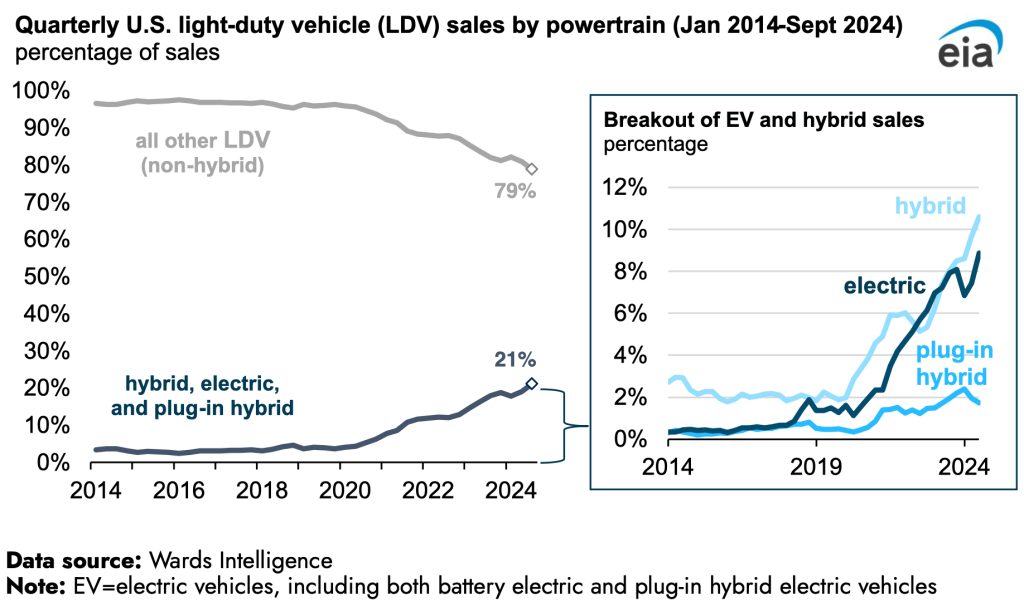
In terms of US hybrid sales, much has been made of customers “shifting from EVs to hybrids,” which is also not the case. Conventional gas-hybrid sales are indeed up and plug-in hybrids, which have grown more slowly than gas-hybrids/BEVs, have also shown some growth lately.
But gas-hybrid sales have not come at the cost of EV sales, rather at the cost of gas-only car sales. Because as the above graph shows, both are increasing rapidly, and gas car sales are the ones going down.
Gas car sales are actually going down
Because that’s just the thing: the number of gas-only vehicles being sold worldwide is a number that actually is falling. That number continues to go down year over year.
Sales of new gas-powered cars are down by about a quarter from their peak in 2017, and show no signs of recovering. It is exceedingly likely that 2017 will be the high-water mark of gas-powered cars ever sold on this planet.
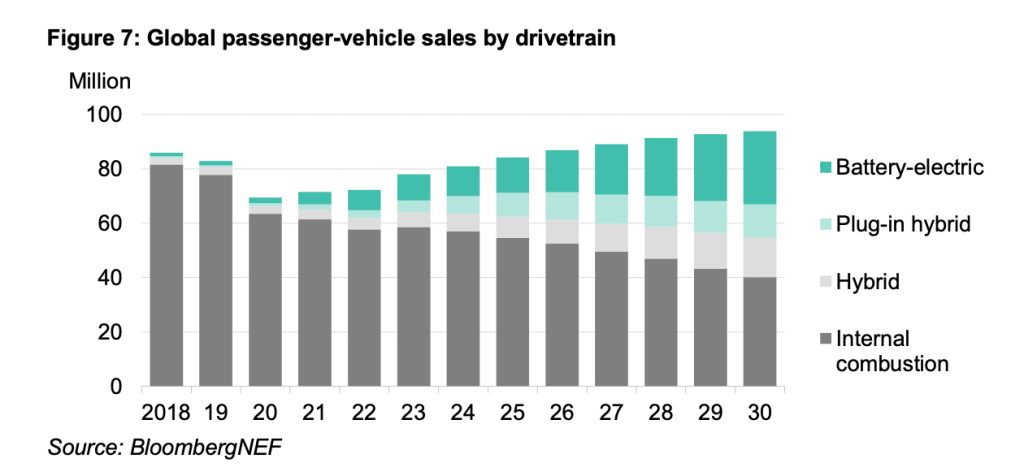
And yet, somehow, virtually every headline you read is about the “EV sales slump,” rather than the “gas-car sales slump.” The one you keep hearing about isn’t happening, but the one you rarely hear about is happening.
These numbers are easily verifiable in moments. No matter what region of the world you’re in, EV sales were up in the first 9 months of this year. This has been true for most recent quarters when taking into account year-over-year numbers (the traditional way to measure car sales, since car sales are seasonal), though these false headlines have persisted.
Why does it matter? These lies influence policy – and cause more pollution
All of this matters because the constant incorrect reporting is causing changes in plans for both automakers and governments who are pulling back on EV plans, and contributes to incorrect consumer perceptions which in turn actually can affect demand, all of which dooms humanity to worse health and climate outcomes.
Early on as this pattern of lies started to show itself in the media, David Reichmuth of the Union of Concerned Scientists suggested that one motivation behind the false headlines could be to influence regulations. The idea goes that, by pretending EV sales were “cooling,” despite that they were not, automakers could convince governments to pull back on their future commitments, thus allowing automakers to continue business as usual instead of having to put in effort to make actually good cars that don’t poison everything around them.
But those regulations already passed and timelines were loosened after automaker whining, so congratulations, you got what you wanted, you get to poison people a bit more for a few more years. But apparently that’s not enough, because now certain entities are still looking to poison you more.
The same pattern is happening now in Europe, with automakers spending most of this year begging the EU to let them pollute just a little longer.
It even happened for a short time in China, but there the car dealers’ association merely asked for a temporary reprieve to sell off remaining gas-powered inventory, while demanding that automakers stop sending a glut of unsellable gas cars. Slightly different from the Western automakers who keep begging to poison people just a little bit longer.
And yet, the headlines have continued, and so many outlets continue to push the same false narrative that they have for two years now claiming that EV sales are down. Some number of consumers who hear these constant falsehoods may have their EV buying decisions delayed as a result, which could in turn actually be suppressing EVs below the even higher level that they would be at without so much incorrect reporting.
It has also influenced brands to change their plans. Porsche, for example, just said it will take a $6B loss and delay future EV models, claiming low demand. However, Porsche’s electric car sales are up 27% globally YTD, while its combustion-only sales are down, showing that even manufacturers are not immune to this misinformation, even in reference to their own sales numbers.
And Toyota, who were never serious about EVs anyway and are one of the worst climate companies in the world, also lied about EV demand last week when it delayed a battery plant. Outlets took Toyota’s lie at face value, and uncritically repeated this false information (including Nikkei Asia, who refused to fix the falsehood despite yours truly sending in a correction).
These are not the only two companies who have canceled plans citing the same falsehood. Maybe it’s strategic, maybe they’re looking for an excuse, but they’re going against the global trend, which is usually not the best for business.
More importantly, it’s also not good for the planet and everything on it. Higher EV sales growth rates would be preferable to the current status quo and are needed to meet climate targets – so this would be objectively better from the perspective of all life on Earth. Or rather, a faster decline in gas car sales is what’s truly needed, and would be beneficial to all living beings on this planet.
The environment cannot wait, and humans can’t spend the next 10-20 years breathing down the poison coming out of the tailpipe of each gas-powered vehicle sold today. This needs to end and it needs to end now. The faster we act, the easier it will be for the world to reach carbon reductions that are objectively necessary to achieve.
So stop lying about EV sales trends
But overall, the point of this article is that media headlines suggesting some slowdown in EV sales are simply incorrect, and leave out the bigger picture that gas car sales actually are dropping, and that’s a good thing. And it’s hard to imagine that these headlines, which have gone on for over two years now, are not intentional at this point.
Each journalist who has spent the last two years perpetuating the myth of an EV sales slowdown could have read any one of our articles, or googled a single number showing year-over-year EV sales in any region or for most countries and most brands, and found that they are still going up. The information is out there and easy to find.
And if misinformation is done knowingly and intentionally despite ready access to truth, which is your job as a journalist to seek and find, it’s a lie.
So stop lying.
The 30% federal solar tax credit is ending this year. If you’ve ever considered going solar, now’s the time to act. To make sure you find a trusted, reliable solar installer near you that offers competitive pricing, check out EnergySage, a free service that makes it easy for you to go solar. It has hundreds of pre-vetted solar installers competing for your business, ensuring you get high-quality solutions and save 20-30% compared to going it alone. Plus, it’s free to use, and you won’t get sales calls until you select an installer and share your phone number with them.
Your personalized solar quotes are easy to compare online and you’ll get access to unbiased Energy Advisors to help you every step of the way. Get started here.


FTC: We use income earning auto affiliate links. More.

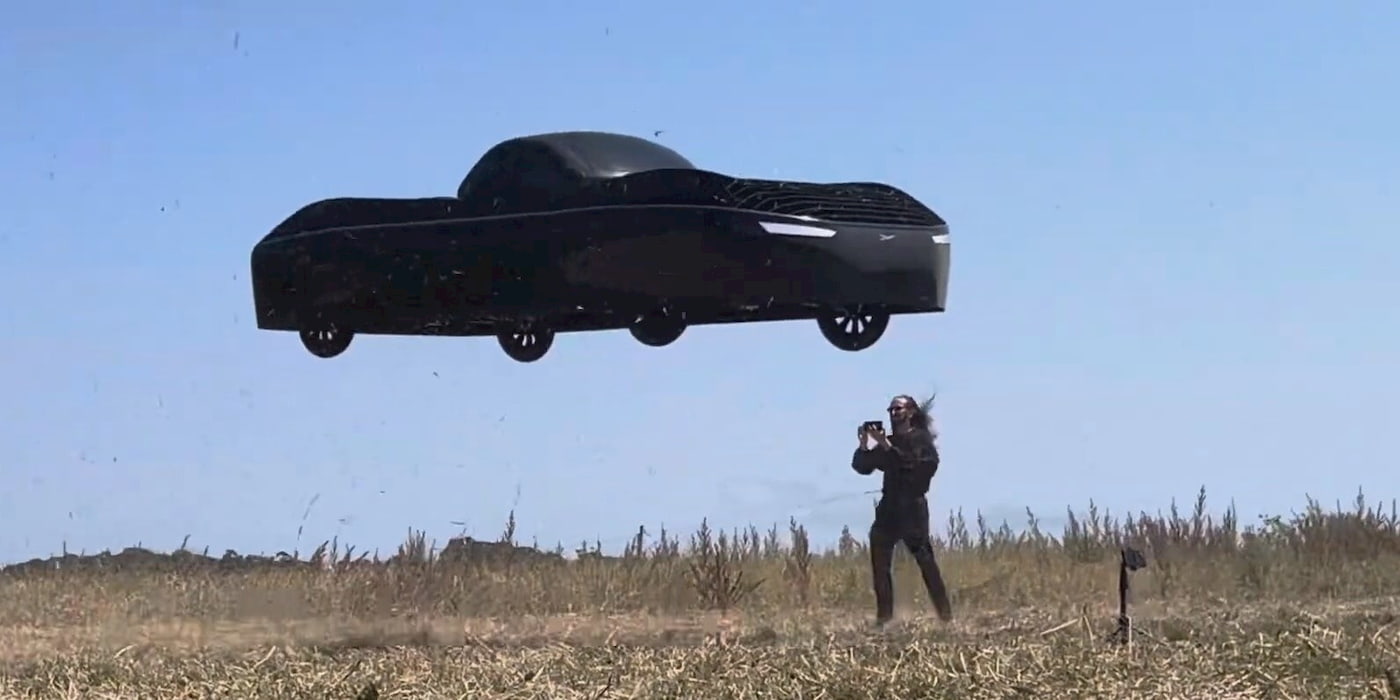
Flying cars are no longer just for the movies. Alef Aeronautics has begun building the first electric flying cars for customers, which are being hand-made in California.
Electric flying cars are real and hand-made in the US
It sounds like something from The Jetsons or Harry Potter, but flying cars are becoming a reality. Alef has been developing all-electric flying cars for about a decade now.
After unveiling a prototype in 2016, the company secured backing from early Tesla and Bitcoin investor Tim Draper. Draper became a pioneering investor and mentor to the team.
The big funding round propelled Alef to create not just a toy, but a flying car that can be used as an everyday commute vehicle.
In 2018, the company’s first full-size “skeleton” was flown, and the following year, the first prototype was shown to a group of investors.
Alef introduced its first model, dubbed the Model A, in 2022, a 100% electric flying car that can drive 220 miles with a 110-mile flight range.
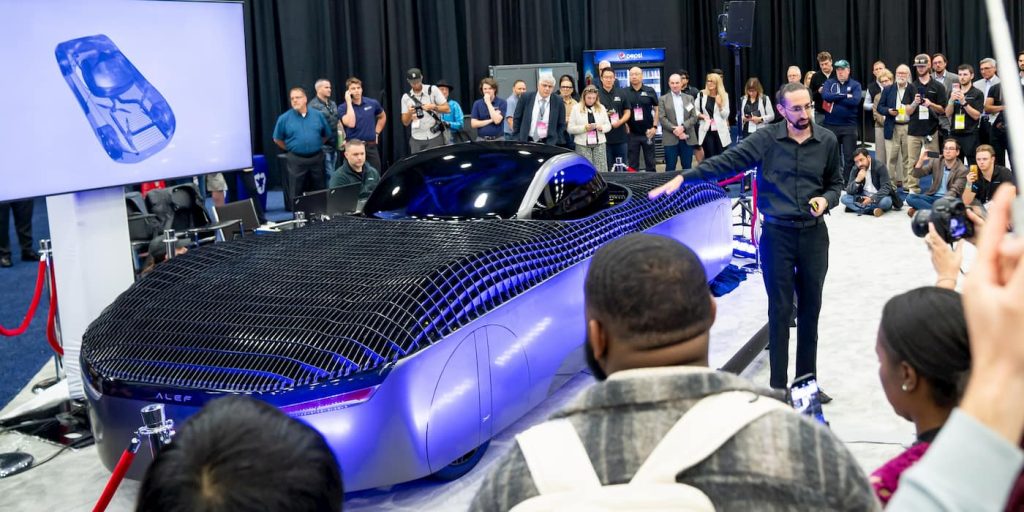
Less than a year later, it became the first to receive a Special Airworthiness Certification from the US Federal Aviation Administration while securing its first pre-orders from a car dealership.
We got our first look at the flying car in action earlier this year after Alef released a video of an ultralight Model A jumping over other vehicles, including a Tesla Cybertruck (see the video below). According to Alef, it was the “first-ever video in history of a car driving and vertically taking off.”
In its mission to make flying cars a reality, the California-based startup announced another major milestone on Monday.
Alef said it has begun manufacturing the first flying cars for customers at its facility in Silicon Valley, California. The first models are being hand-made and will be delivered to just a few early customers “for the purpose of testing flying cars in the real world environment,” according to Alef.
The company plans to train and support early adopters, using lessons learned as it ramps up production and deliveries.

“We are happy to report that production of the first flying car has started on schedule,” Alef’s CEO, Jim Dukhovny, said at the event.
Alef claims its flying cars are “100% electric, drivable on public roads, and has vertical takeoff and landing capabilities.”
The startup has already received 3,500 pre-orders, which it says is worth $1 billion. Alef’s flying car is expected to start at around $299,999. You can pre-order one on Alef’s website with a $150 deposit, or you can secure a spot in the priority queue for $1,500. The first customer deliveries are expected to begin in 2026.
FTC: We use income earning auto affiliate links. More.


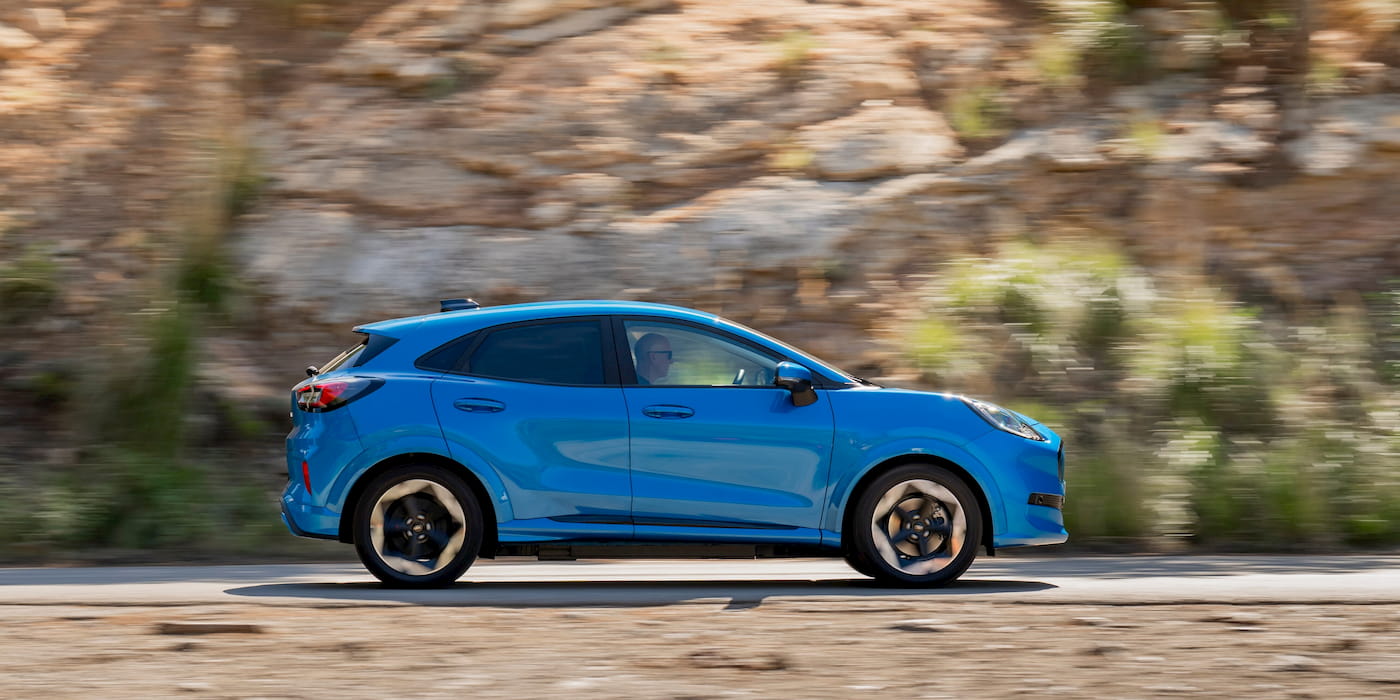
Ford is promising that more affordable EVs are coming soon. A new partnership will include two Ford-branded electric vehicles, but that’s just the start.
Ford and Renault partner up on affordable EVs
“We know we’re in a fight for our lives,” Ford’s CEO Jim Farley warned on Monday (via CNN) before announcing a landmark partnership with Renault to develop more affordable EVs and fend off surging Chinese brands like BYD and SAIC’s MG.
Ford said the new partnership is “a first step,” as part of a broader restructuring in the region. The plans include two new Ford-branded EVs, based on Renault’s Ampere platform.
Although they will share underpinnings with the popular Renault 5, the American automaker will lead the design to “ensure these vehicles are distinctly Ford.”
The first is expected to be an electric successor to the widely popular Fiesta, while the second is rumoured to be a small EV crossover, similar to the Renault 4.
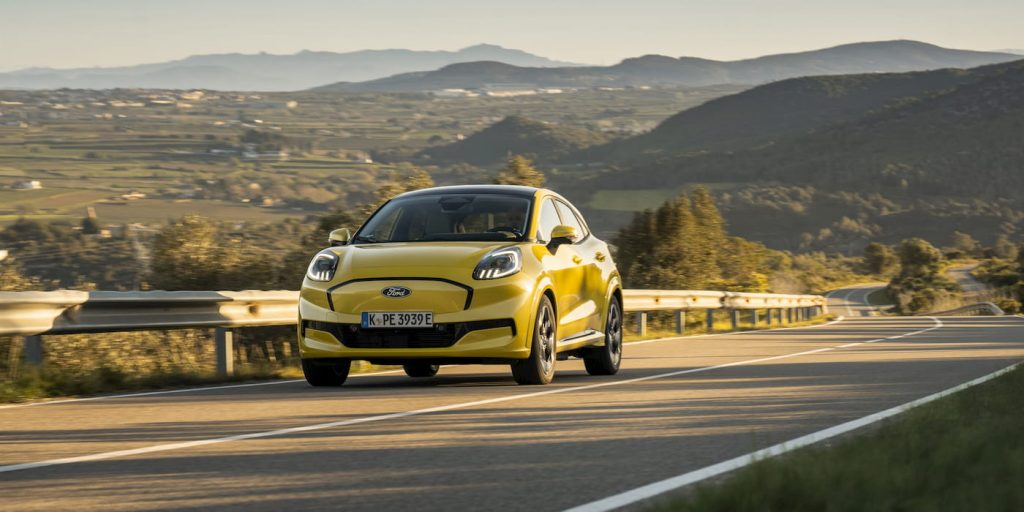
Ford didn’t offer specifics, but said the first vehicles will begin arriving in showrooms in 2028. Farley told reporters that the new EVs will be smaller than anything planned for the US, as it seeks to fill a critical gap in its European lineup.
“As an American company, we see Europe as the frontline in the global transformation of our industry,” Farley said, adding that “how we compete here will write the playbook for the next generation.”
The partnership will also include jointly developing Ford and Renault-branded commercial vehicles using common platforms.
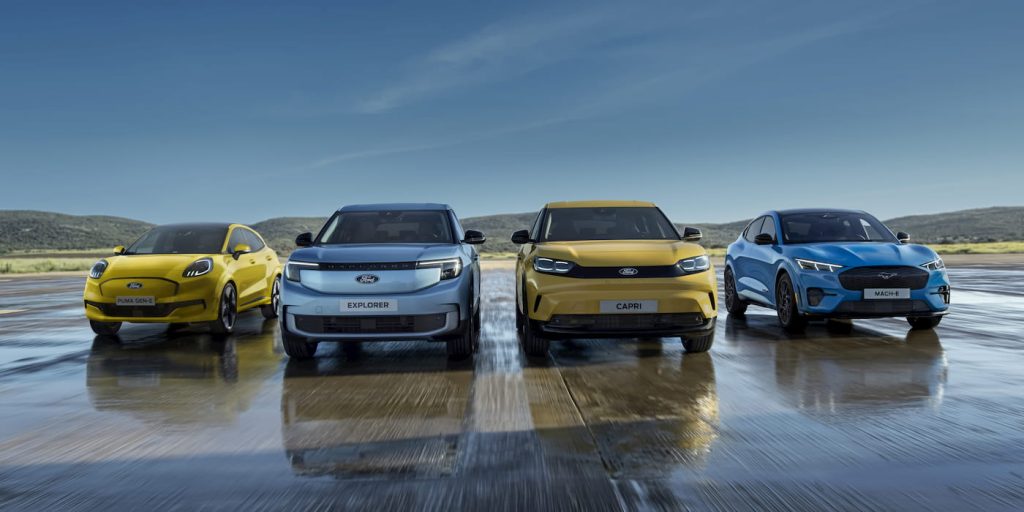
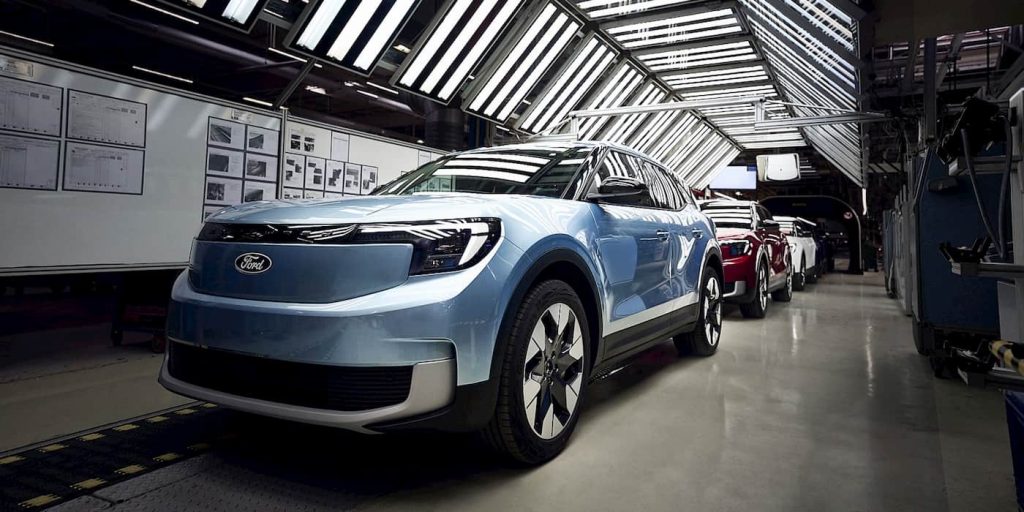
Ford’s current EV lineup in Europe consists of the Electric Explorer and Capri, which share a platform with the Volkswagen ID.4 and ID.5, and the Puma Gen E.
The news comes just a day after Farley warned that the EU’s emissions rules are “risking the future” of the auto industry.
Electrek’s Take
Ford initially backed the EU’s push to have all-electric vehicle sales in the region by 2035, but now it’s blaming slower-than-expected EV demand and calling for looser rules.
Farley has warned several times now that Chinese automakers, like BYD, are an “existential threat” to the auto industry. As part of its restructuring, Ford has already announced plans to cut thousands of jobs in Europe while reducing output at its Cologne EV facility.
Ford’s share of European passenger car sales has plummeted from 6.1% in 2019 to just 3.3% through October of this year.
Although the company is blaming slower EV demand, electric vehicles are still gaining ground in Europe. Through October 2025, nearly 1.5 million EVs were registered in Europe, accounting for 16.4% of the market. That’s up from around 13.2% through the first 10 months of 2024.
Meanwhile, the combined share of petrol and diesel cars fell to 36.6% from 46.3% over the same period.
Are EV sales slowing? Or, is it a Ford problem? The new alliance with Renault to build more affordable EVs will be critical to Ford’s comeback in the region.
FTC: We use income earning auto affiliate links. More.
-
 Sports2 years ago
Story injured on diving stop, exits Red Sox game
-
 Sports3 years ago
‘Storybook stuff’: Inside the night Bryce Harper sent the Phillies to the World Series
-
 Sports2 years ago
Game 1 of WS least-watched in recorded history
-
 Sports3 years ago
Button battles heat exhaustion in NASCAR debut
-
 Sports3 years ago
MLB Rank 2023: Ranking baseball’s top 100 players
-
Sports4 years ago
Team Europe easily wins 4th straight Laver Cup
-
 Environment3 years ago
Japan and South Korea have a lot at stake in a free and open South China Sea
-
 Environment1 year ago
Here are the best electric bikes you can buy at every price level in October 2024