
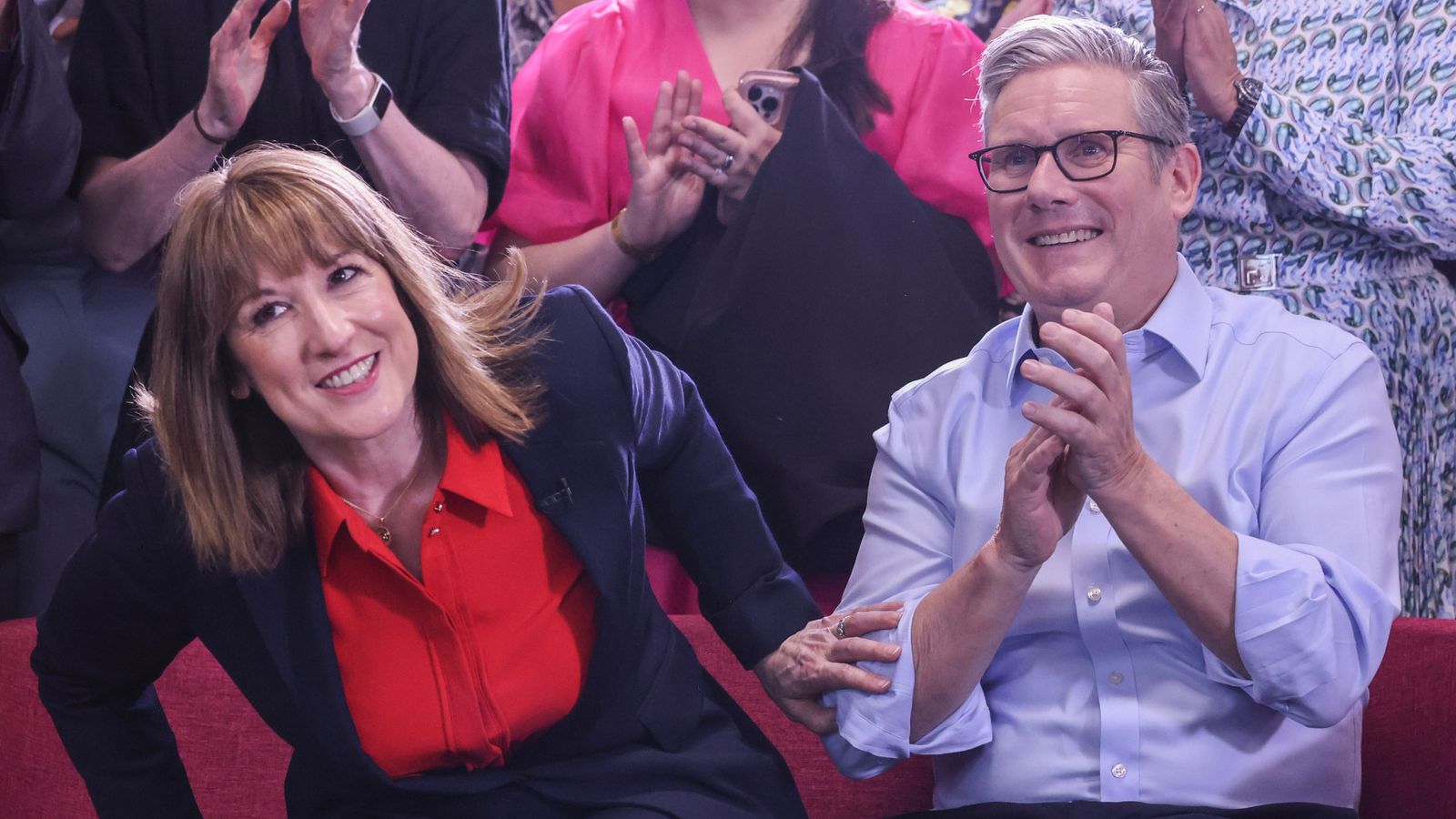
Budget 2025: Starmer and Reeves ditch plans to raise income tax


Sir Keir Starmer and Rachel Reeves have scrapped plans to break their manifesto pledge and raise income tax rates in a massive U-turn less than two weeks from the budget.
The decision, first reported in the Financial Times, comes after a bruising few days which has brought about a change of heart in Downing Street.
Read more: How No 10 plunged itself into crisis
I understand Downing Street has backed down amid fears about the backlash from disgruntled MPs and voters.
The Treasury and Number 10 declined to comment.
The decision is a massive about-turn. In a news conference last week, the chancellor appeared to pave the way for manifesto-breaking tax rises in the budget on 26 November.
She spoke of difficult choices and insisted she could neither increase borrowing nor cut spending in order to stabilise the economy, telling the public “everyone has to play their part”.
‘Aren’t you making a mockery of voters?’
The decision to backtrack was communicated to the Office for Budget Responsibility on Wednesday in a submission of “major measures”, according to the Financial Times.
The chancellor will now have to fill an estimated £30bn black hole with a series of narrower tax-raising measures and is also expected to freeze income tax thresholds for another two years beyond 2028, which should raise about £8bn.
Tory shadow business secretary Andrew Griffith said: “We’ve had the longest ever run-up to a budget, damaging the economy with uncertainty, and yet – with just days to go – it is clear there is chaos in No 10 and No 11.”
How did we get here?
For weeks, the government has been working up options to break the manifesto pledge not to raise income tax, national insurance or VAT on working people.
I was told only this week the option being worked up was to do a combination of tax rises and action on the two-child benefit cap in order for the prime minister to be able to argue that in breaking his manifesto pledges, he is trying his hardest to protect the poorest in society and those “working people” he has spoken of so endlessly.
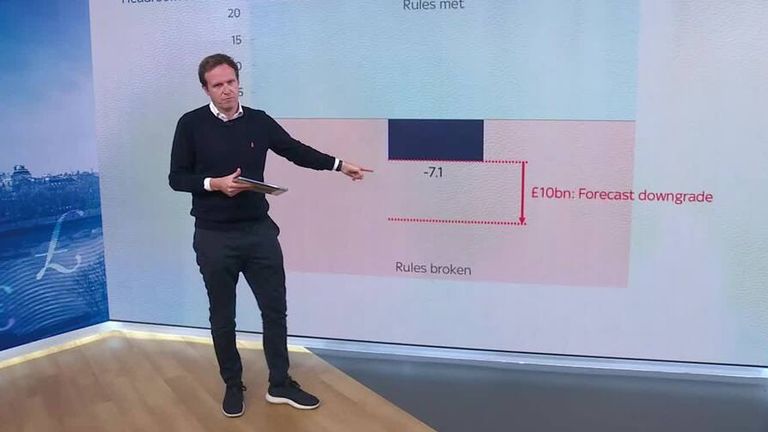
Ed Conway on the chancellor’s options
But days ago, officials and ministers were working on a proposal to lift the basic rate of income tax – perhaps by 2p – and then simultaneously cut national insurance contributions for those on the basic rate of income tax (those who earn up to £50,000 a year).
That way the chancellor can raise several billion in tax from those with the “broadest shoulders” – higher-rate taxpayers and pensioners or landlords, while also trying to protect “working people” earning salaries under £50,000 a year.
The chancellor was also going to take action on the two-child benefit cap in response to growing demand from the party to take action on child poverty. It is unclear whether those plans will now be shelved given the U-turn on income tax.
A rough week for the PM
The change of plan comes after the prime minister found himself engulfed in a leadership crisis after his allies warned rivals that he would fight any attempted post-budget coup.
It triggered a briefing war between Wes Streeting and anonymous Starmer allies attacking the health secretary as the chief traitor.
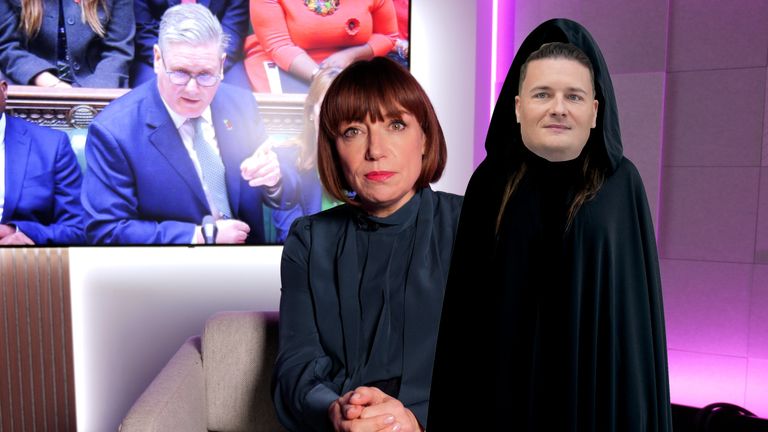
Wes Streeting: Faithful or traitor? Beth Rigby’s take
Read more: Is Starmer ‘in office but not in power’?
The prime minister has since apologised to Mr Streeting, who I am told does not want to press for sackings in No 10 in the wake of the briefings against him.
But the saga has further damaged Sir Keir and increased concerns among MPs about his suitability to lead Labour into the next general election.
Insiders clearly concluded that the ill mood in the party, coupled with the recent hits to the PM’s political capital, makes manifesto-breaking tax rises simply too risky right now.
But it also adds to a sense of chaos, given the chancellor publicly pitch-rolled tax rises in last week’s news conference.
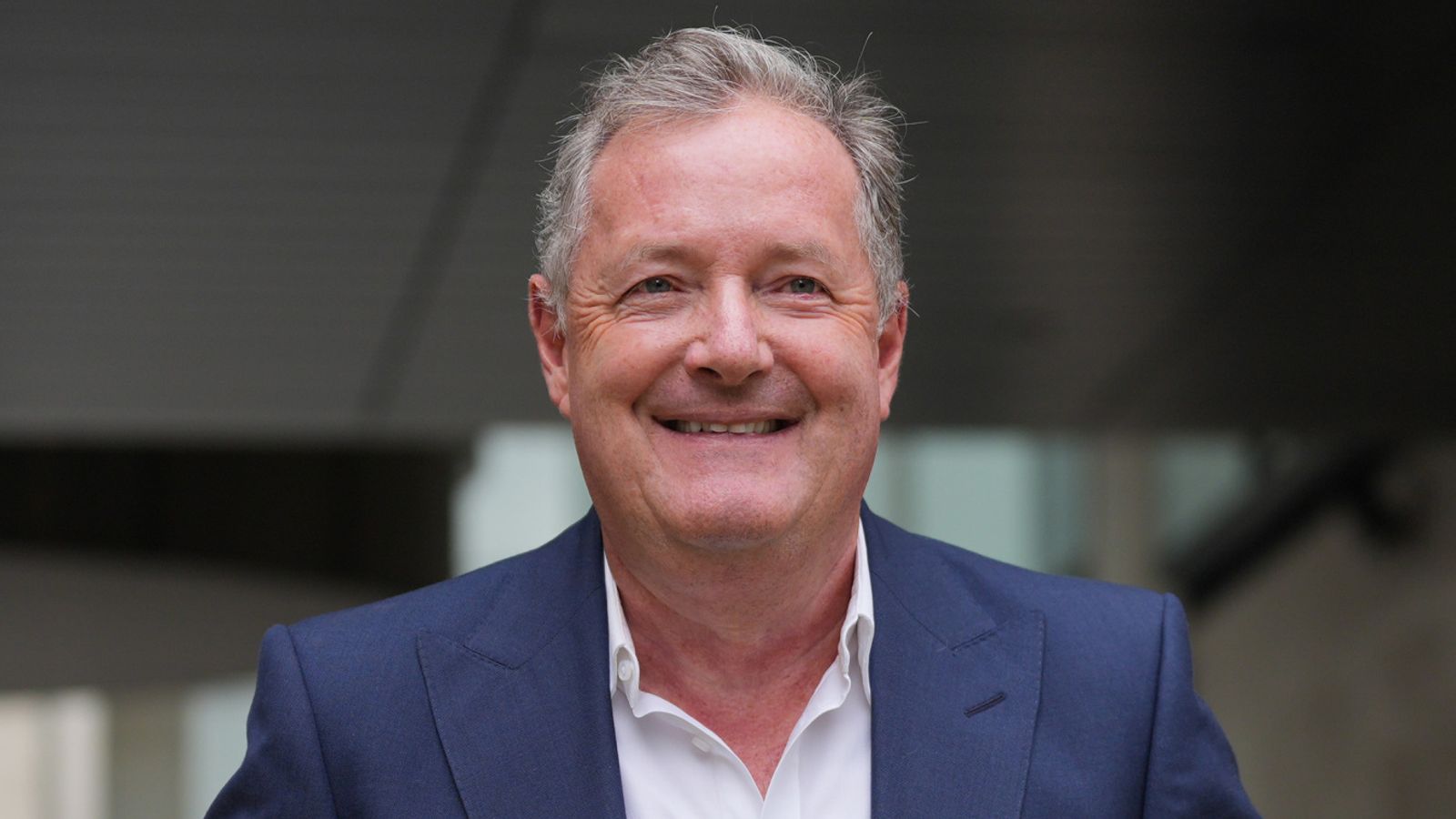
Piers Morgan, the broadcaster and journalist, is raising tens of millions of dollars of funding from heavyweight investors as he seeks to turn Uncensored, his YouTube-based venture, into a broad-based global media business.
Sky News can exclusively reveal that Mr Morgan is in the process of finalising a roughly $30m (£22.5m) fundraising for Uncensored that will give it a pre-money valuation of about $130m (£97m).
The new investors are understood to include The Raine Group, the New York-based merchant bank, and Theo Kyriakou, the media mogul behind Greece’s Antenna Group, owner of a stake in London-based digital venture The News Movement.
Michael Kassan, a marketing veteran, is understood to be advising the business on advertising-related matters and may also invest in a personal capacity, according to insiders.
A number of family offices from around the world are also said to be in talks to become shareholders in Uncensored.
Joe Ravitch, the prominent American banker and Raine co-founder who has advised in recent years on the sale of Chelsea and Manchester United football clubs, is said to be joining the Uncensored board as part of the capital-raising.
The move comes nearly a year after Mr Morgan announced his departure from Rupert Murdoch’s British empire through a deal which handed him full control and ownership of his Uncensored YouTube channel.
Allies of Mr Morgan said this weekend that some details of the fundraising were likely to be confirmed publicly in the coming days.
While the size of his personal stake in the business was unclear this weekend, insiders said the crystallisation of a $130m valuation would mean that Mr Morgan’s economic interest was, on paper, worth tens of millions of pounds.
“The ambition is to grow this into a billion dollar company within a few years,” said one person close to the discussions with investors.
“With the scale of audiences now being driven to digital channels and the commercial opportunities there, that is definitely achievable.”
The former Mirror editor, whose career has also encompassed stints at ITV, with CNN in the US and Mr Murdoch’s global media conglomerates News Corporation and Fox, is now drawing up plans to transform Uncensored into a more diverse digital media group.
This is expected to include the launch of a series of ‘verticals’ attached to the Uncensored brand, including channels dedicated to subjects such as history, sport and technology.
Mr Morgan is already said to be in talks with prominent figures to spearhead some of these new strands, with a chief executive also expected to be recruited to drive the growth of the overall Uncensored business.
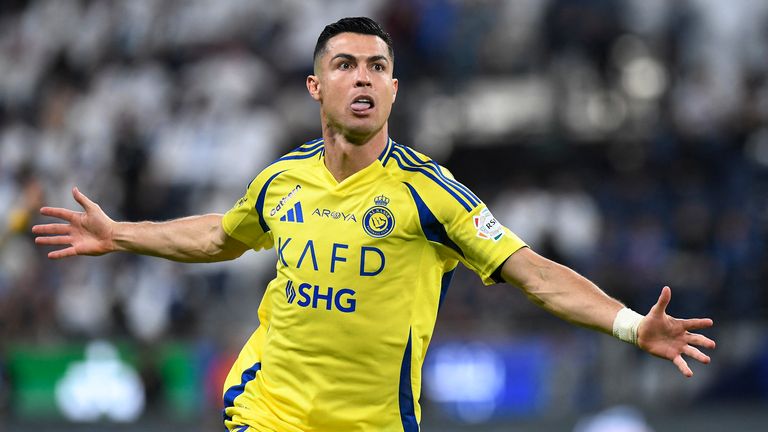
His appetite to establish a YouTube-based global media network has been driven by the scale of the global audiences he has drawn to some of his recent work, including interviews with the footballer Cristiano Ronaldo and the former world tennis number one Novak Djokovic.
Piers Morgan interviewed Ronaldo. Pic: Reuters
Both of those athletes have collaborated with Mr Morgan by posting parts of their exchanges on social media platforms, attracting hundreds of millions of views.
Mr Morgan’s access to President Donald Trump, whom he has interviewed on several occasions, is also likely to be a factor in the timing of Uncensored’s expansion strategy.
While many ‘legacy’ news and media networks remain hamstrung by inflated cost bases, Mr Morgan’s decision to go it alone and focus on developing the Uncensored brand reflects his belief that the news and media industries are ripe for disintermediation by channels tied to prominent, and sometimes controversial, individual journalists and presenters.
The Piers Morgan Uncensored YouTube channel has 4.3 million subscribers, roughly half of whom are from the US.
Of the remaining 50%, however, only a minority are British, with a significant number based in the Middle East, South Africa and parts of Asia.
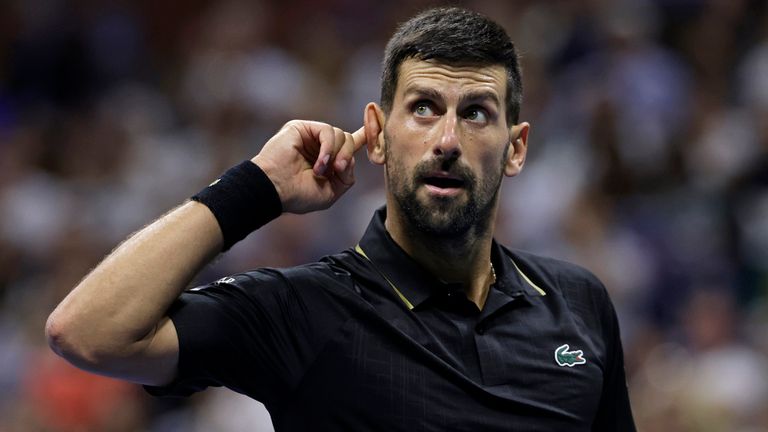
Novak Djokovic at Flushing Meadows. Pic: AP
This has fuelled Mr Morgan’s view that there is journalistic and commercial mileage in creating content on issues which historically might have struggled to generate a significant international audience – such as ongoing military and political tension between India and Pakistan, and the white farmer ‘genocide’ furore in South Africa.
Under the deal he struck with Mr Murdoch in January this year, Mr Morgan has a four-year revenue-sharing agreement that involves News UK receiving a slice of the advertising revenue generated by Piers Morgan Uncensored until 2029.
Mr Morgan had returned to Mr Murdoch’s media empire in January 2022 with a three-year agreement that included writing regular columns for The Sun and New York Post, as well as presenting shows on the company’s now-folded television channel, Talk TV.
He also recently released a book, Woke Is Dead, which was published by Mr Murdoch’s books subsidiary, Harper Collins.
As part of his new arrangements, Mr Morgan also signed a deal with Red Seat Ventures, a US-based agency which partners with prominent media figures and influencers to help them exploit commercial opportunities through sponsorship and other revenue streams.
Among those Red Seat has worked with are Megyn Kelly, the American commentator, and Tucker Carlson, the former Fox News presenter.
While many well-known American news media figures are followed because of their partisanship and affiliations to either the political left or right, Mr Morgan has positioned himself as a ‘ringmaster’ who is not ideologically hidebound.
His plans come at a time of continuing upheaval in the global media industry, with Netflix agreeing a landmark $83bn deal this week to buy the Hollywood studio Warner Bros.
In the UK, Sky, the Comcast-owned immediate parent company of Sky News, is in talks to acquire ITV’s broadcasting business, while the Daily Telegraph newspaper could soon find itself as a stablemate of the Daily Mail if a proposed £500m deal is successful.
Meanwhile, Reach, the London-listed newspaper publisher which owns the Daily Express and the Daily Mirror, now has a market valuation of just £176m – less than double that of Mr Morgan’s new standalone digital media company.
When Sky News revealed Mr Morgan’s move to separate from News UK earlier this year, he said: “Owning the [Uncensored] brand allows my team and I the freedom to focus exclusively on building Uncensored into a standalone business, editorially and commercially, and in time, widening it from just me and my content.
“It’s clear from the… US election that YouTube is an increasingly powerful and influential media platform, and Uncensored is one of the fastest-growing shows on it in the world.
“I’m very excited about the potential for Uncensored.”
This weekend, he added: “I am very excited that some of the most experienced and successful players in the global media industry, like Joe, Michael and Theo, share my ambitious vision for Uncensored.
“This is the future of modern media.”
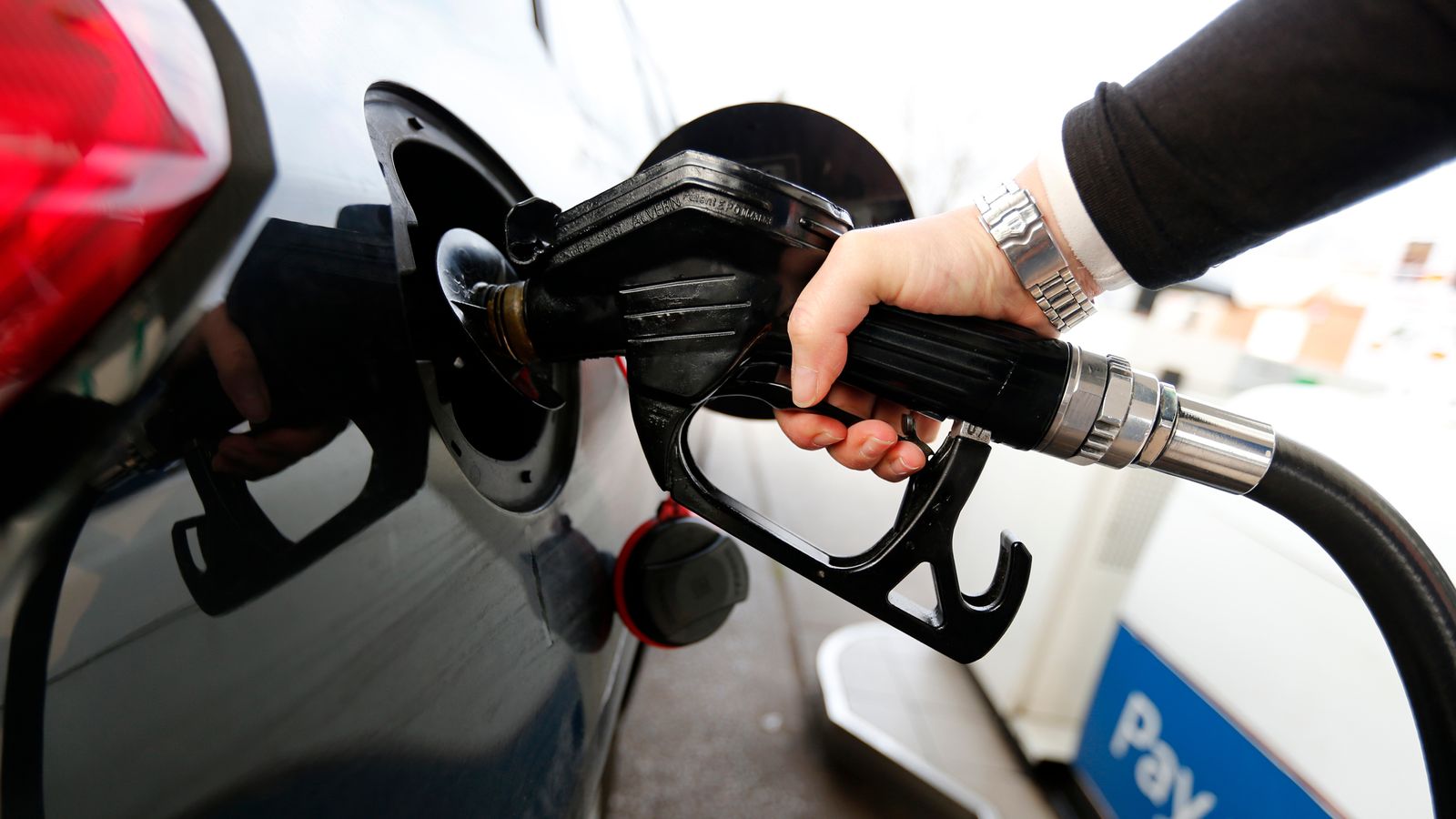
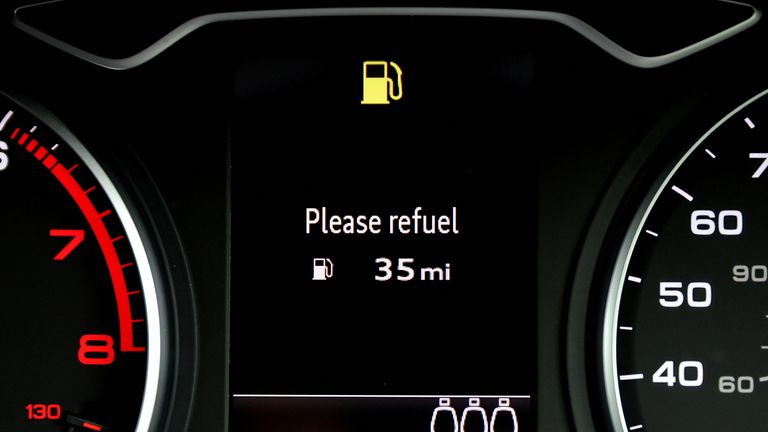
It’s a debate that has raged since the end of the COVID pandemic but, despite regulatory scrutiny, it’s fair to say there’s been no clear answer to accusations that UK drivers pay over the odds for fuel.
What was once a promotional loss leader for supermarkets desperate for drivers to fill their car boots with groceries, unleaded and diesel costs have been unusually high for years.
Fuel retailers say there is a simple explanation: rising costs being passed on to motorists.
But critics argue there is a reason why the Competition and Markets Authority (CMA) has consistently found that we’re paying more than we should be – and that the disparity between wholesale costs and pump prices has got worse in recent months.
So: who’s right?
What the oil data tells us
Oil prices are well down on levels seen in January (between $75 and $82 a barrel) but fuel prices are clearly not.
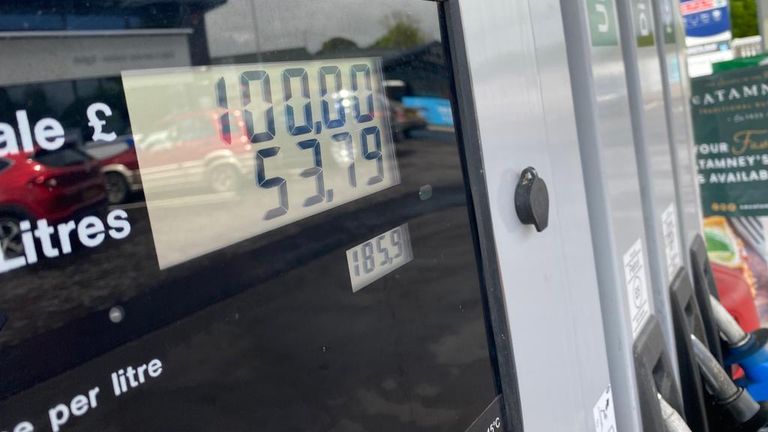
In recent weeks, Brent crude has traded in the range of $62 to $64 per barrel and yet drivers are currently, on average, paying £1.37 a litre for petrol and £1.46 for diesel.
The average pumps costs in January stood at £1.39 and £1.45 – despite the significantly higher oil costs seen at the time.
Prices can be affected by all sorts of factors including the value of the pound versus the oil-priced dollar, but that disparity is notable.
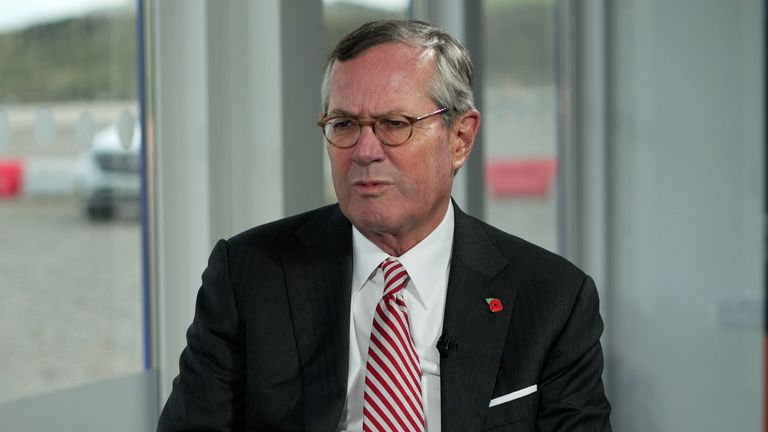
Trump’s ambassador tells UK to drill for oil
There is another, emerging, factor to consider
It might surprise you to learn that the UK now has only four operational refineries to produce petrol and diesel after two major sites shut this year.
The decline has sparked an industry warning of a crisis due to high UK carbon charges, imposed by the government, that have made domestic fuel producers uncompetitive versus imports.
The loss of the refinery at Grangemouth this spring has been particularly acute as it left Scotland without domestic production and at the mercy of a more complicated and expensive delivery structure.
Fuel retailers say the impact has been minimal so far, mainly due to remaining UK refineries raising production.
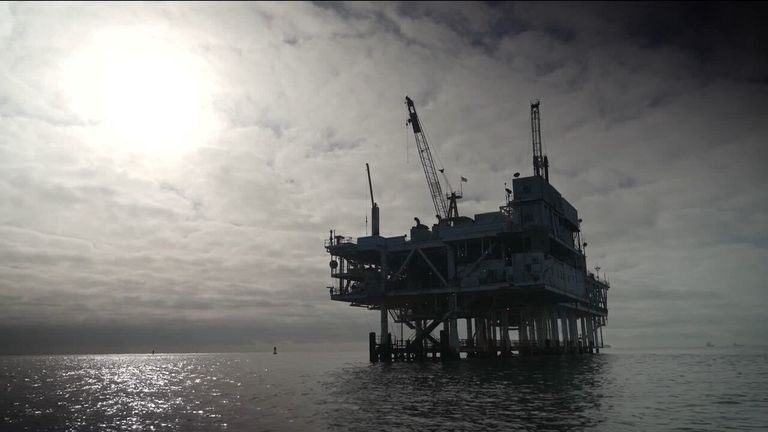
‘Drill baby drill’
The case for the prosecution
Quite simply, fuel price campaigners and motoring groups have long accused the industry of raising its profit margins.
Supermarkets focused price investment elsewhere as the cost of living crisis took hold but the days of Asda (before it was bought by the fuel-focused Issa brothers and private equity) leading a sector-wide fuel price war are long gone.
Reports by both the AA and RAC this week highlight price spikes despite a 5p slump in wholesale costs a fortnight ago.
The AA said: “At the height of the spike, it matched what had been seen in mid June. Then, the petrol pump average reached a maximum of 135.8p by late July.
It said that government data had since shown pump prices at levels not seen since March.
The body questioned the reasons behind that disparity and also pointed towards, what it called, a postcode lottery for pump costs with gaps of up to 9p a litre between towns only 10 miles apart.
The RAC declared on Thursday that pump prices rose at their fastest pace in 18 months during November, with diesel at a 15-month high.
The critics have also included regulators as monitoring of fuel retailers by the CMA since its original market study has consistently found that drivers have been excessively charged.
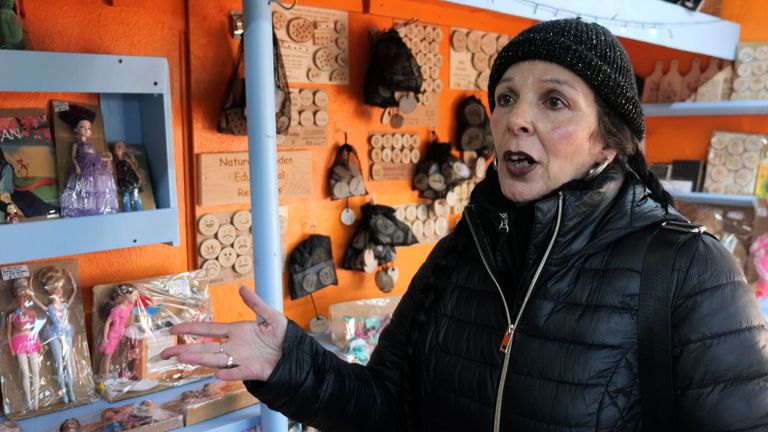
‘It’s either keep warm or eat’
What’s the fuel industry’s position?
It pleads “not guilty”.
The bodies representing retailers make the point that the CMA and its wider critics fail to take into account huge rises in costs they have faced over the past four years – costs which are being/have been passed on across the economy.
These include those for energy, business rates, minimum wage, employer national insurance costs and record sums arising from forecourt crime.
The Petrol Retailers’ Association (PRA), which represents the majority of forecourts, told Sky News that average margins across the sector are the same today as they were a year ago at between 3% to 4% after costs.
It suggests no fuel for the fire surrounding those profiteering allegations but that rising costs have been passed on in full.
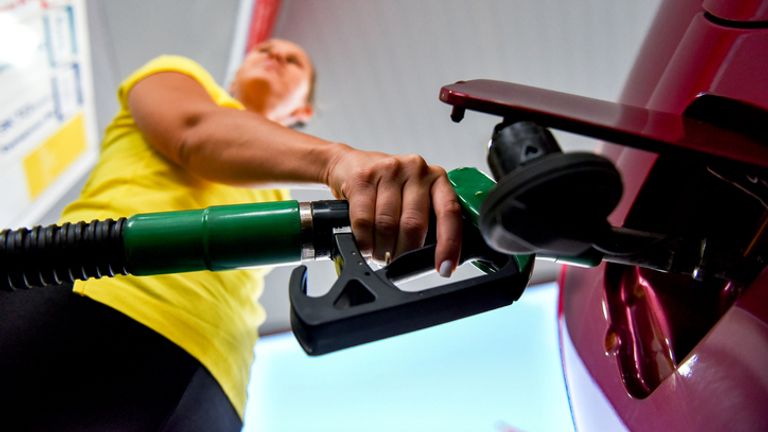
Pic: iStock
What has the regulator done?
The CMA’s road fuel market study committed to monitor the market and recommended a compulsory fuel finder scheme to help bolster competition. That was two-and-a-half years ago.
Limited data has been widely available via motoring apps ahead of the start of the official scheme, expected in spring next year, which will bring real-time pricing into a driver’s view for the first time.
The CMA hopes that by forcing each retailer to divulge their prices in real time, customers will vote with their feet.
In the regulator’s defence
The CMA could argue that government has dragged its heels in implementing its fuel finder recommendation.
While the Conservatives accepted it, Labour is now pushing it through parliament.
The regulator can only act within the powers it has been given. It would say that it can’t threaten or hand out fines until its recommendations are in play and they have been clearly flouted.
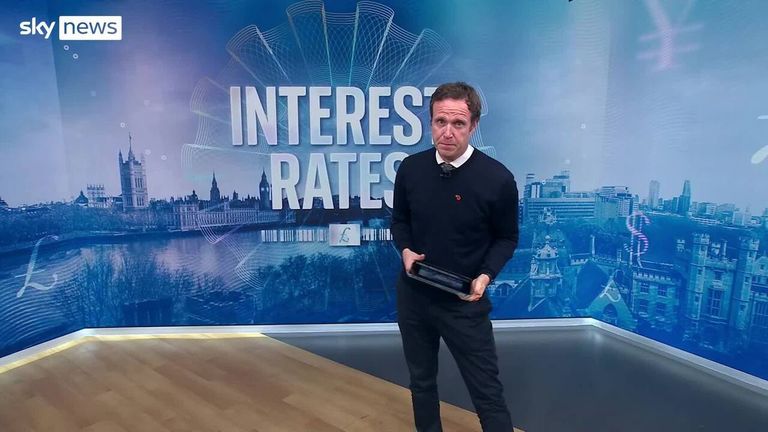
What next for the UK economy?
So who’s right?
This is a debate all about transparency but we clearly don’t have a full view on the complicated, and shifting, supply chain which can influence pump prices.
The CMA hopes that postcode lotteries for pump costs will ease once more drivers are aware of the ability to compare and shop around.
But the main reason why this issue remains unresolved is that the CMA’s findings have been incomplete to date.
Its determinations that pump costs have been excessive have all been made without taking retailers’ operating costs into full account.
Pic: Reuters
Why we are closer to an answer
The CMA’s next market update is expected within weeks and will, for the first time, take more extensive cost data into account.
A spokesperson told Sky News: “We recommended the Fuel Finder scheme to help drivers avoid paying more than they should at the pump, and the government intends to launch it by spring 2026.
“The scheme will give drivers real-time price information, helping them find the cheapest fuel and putting pressure on retailers to compete.
“We looked closely at operating costs during our review of the market, and they formed a key part of our final report in 2023.
“As we confirmed in June, we’ve been examining claims that these costs have risen and will set out our assessment in our annual report later this month.”
The hope must be that both sides involved can accept the report’s findings for the first time, to bring this bitter debate to an end once and for all.”
-
 Sports2 years ago
Story injured on diving stop, exits Red Sox game
-
 Sports3 years ago
‘Storybook stuff’: Inside the night Bryce Harper sent the Phillies to the World Series
-
 Sports2 years ago
Game 1 of WS least-watched in recorded history
-
 Sports3 years ago
Button battles heat exhaustion in NASCAR debut
-
 Sports3 years ago
MLB Rank 2023: Ranking baseball’s top 100 players
-
Sports4 years ago
Team Europe easily wins 4th straight Laver Cup
-
 Environment3 years ago
Japan and South Korea have a lot at stake in a free and open South China Sea
-
 Environment1 year ago
Here are the best electric bikes you can buy at every price level in October 2024