UK
Four years after Sarah Everard’s murder, women still feel unsafe on Britain’s streets

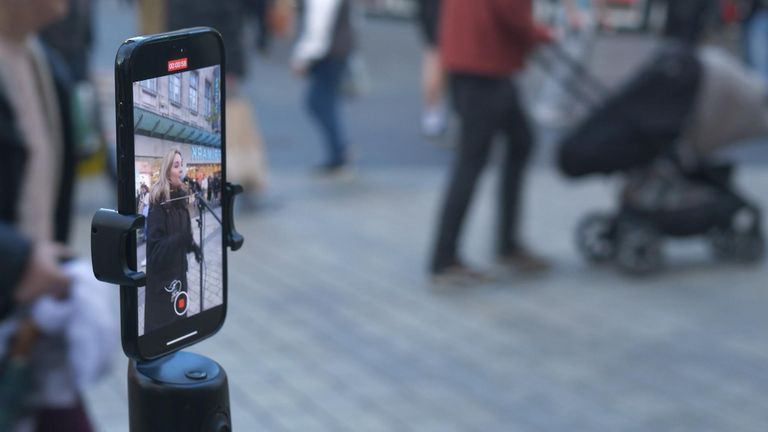

In the middle of Liverpool city centre, musician Ami Alex is showing me a TikTok she posted while busking on the street.
But instead of showcasing her singing, it shows a man approaching her repeatedly, coming closer and closer. He reaches out and touches her – wiping something wet on her arm.
“At first I thought it was coffee,” she says. “But when I watched the video back – you can hear him saying ‘that’s my pee’. My jaw dropped. I was horrified.”
It’s hard to believe what she’s showing me, but she says this kind of behaviour is “unfortunately standard for a woman doing this kind of work”.
She has many more videos – of men touching her without her consent, or demanding hugs or kisses for the money they’ve given.
“I’ve gotten a lot better at dealing with it,” she says. “When I was 21, 22, when I first started doing this, I would go home in tears.
“It’s just so degrading. It makes you feel objectified. Like – is that all you think of me?”

Sarah Everard’s murder in 2021 caused outrage across the country. There was an outpouring of anger as women shared their stories of feeling unsafe, threatened and sexualised on the streets.
At the time there were promises – assurances to women that things would have to change. But four years on, many women here in Merseyside say they have the same feelings they did then.
“Men are honestly shocked when we tell them ‘we don’t feel safe’,” says Kate Chadwick, from the Wirral charity Tomorrow’s Women. “Pretty much every woman has had some kind of experience.”
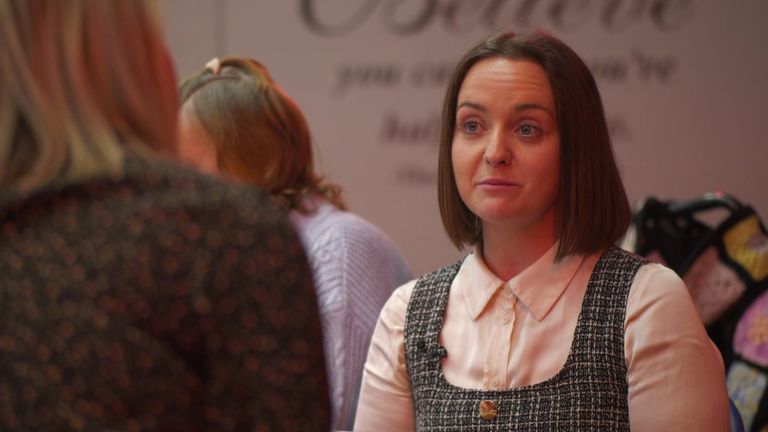
Kate Chadwick
I meet her at a regular lunch club they host – at their building where men are not allowed inside. It’s intended as a safe space for their members, who they are helping through everything from domestic violence to sexual assault. There’s a medical clinic here, beauty treatment rooms, a computer lab – all staffed by women.
Kate shows me the pocket rape alarm they give out to the women who come here. She hopes they never have to use it, but “it makes them feel safer just having it”.
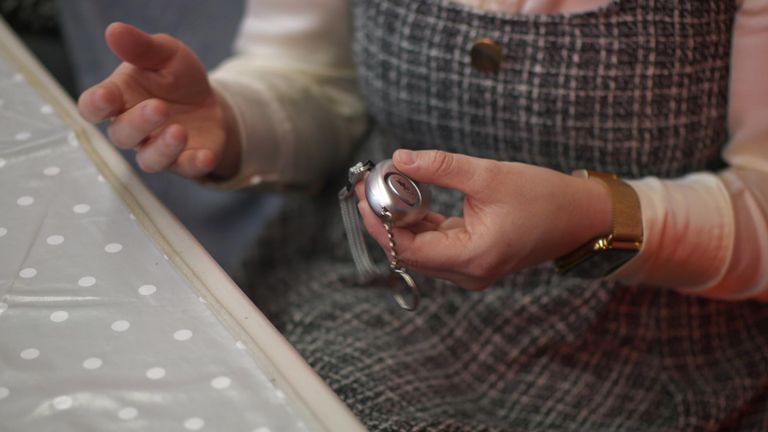
Women helped by the charity are given pocket rape alarms
“As a woman, in the winter it’s a hard time just to exist,” Kate says. “Women don’t feel safe coming out of their homes. Routines will change. They don’t want to walk in certain places.
“One of our members gets two buses home because it’s safer than waiting at a dark bus stop to just get the one.”
They are about to launch a photography exhibition around stalking and harassment. For this, they gave their members a camera and asked them to submit photos that show their experience being a woman.
There are several photos of dimly lit streets, bus stops with no one else there. One photo is a fist holding a key through the knuckles – an image most women will recognise.

Another picture is of an outfit laid out on the floor – a T-shirt, denim skirt and tights. It’s titled What Were They Wearing?
“This can often be the first question in a sexual assault case,” Kate says. “It really doesn’t matter what the woman was wearing.”
“It’s definitely not getting better,” she says. “In 2024, violence against women and girls was declared a national emergency. The statistics you read every day are shocking.”
Later that evening, back in Liverpool, we meet Girls on the Go – a running club started with the express purpose of allowing women to exercise safely in the winter. It’s 5.15pm when we meet for the run, and already dark.
The women running here list a collection of similar experiences. They have been catcalled, yelled at from cars, even chased while out running alone.
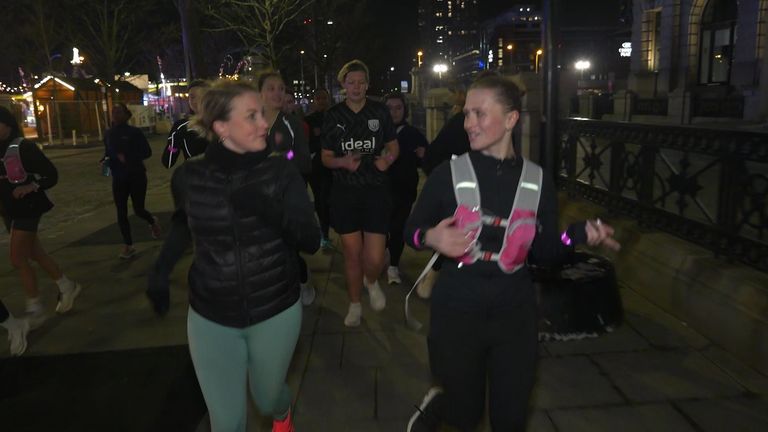
Girls on the Go helps women exercise safely in winter
Run leader Madeline Cole tells me that, as a women-only club, they have had to modify their warm-ups because “as soon as you bend over to touch your toes, or go into a squat, the shouting starts”.
Founder Steph Barney says she started the club because it is still “intimidating running alone as woman”.
“Far too many women experience harassment and catcalling – we wanted to create a group where women would feel safer doing it together” she says. “Even in the summer you get sexualised just for wearing shorts. You have to restrict what you do. None of my male friends have ever had to worry about that.”
I ask if anything would help them feel safer when out on their runs. “Better street lighting is a really obvious one,” she says. “And one of the issues is that it’s still not taken seriously by society. When you’re catcalled, it feels embarrassing to say ‘this is scary’.
“If it was taken more seriously – more women would speak out. And more could be done.”
Read more UK news:
OBR chief resigns after budget leak investigation
King officially strips Andrew of two more titles
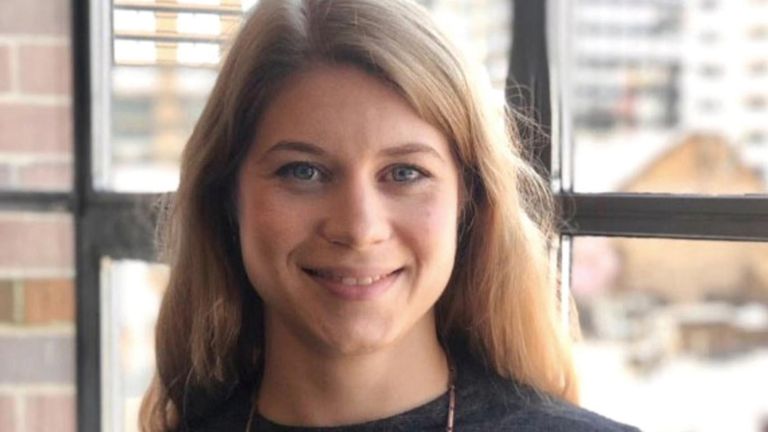
Sarah Everard
The Angiolini Inquiry – which was established to investigate the circumstances surrounding Sarah Everard’s murder – is due to publish its latest report later today.
It is examining whether there a risk of it happening again, police culture, and broader concerns surrounding women’s safety in public spaces.