
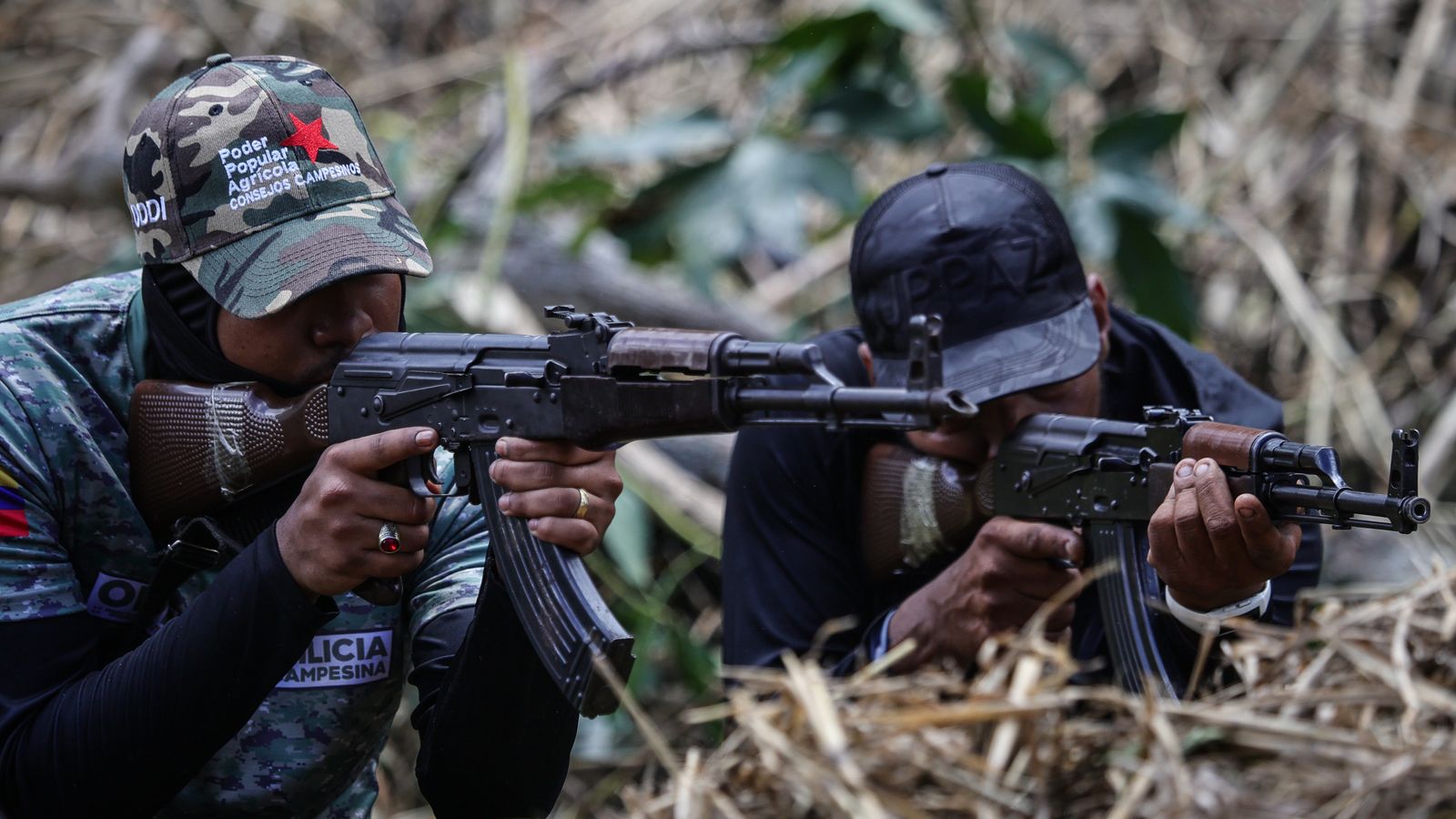
Warships, the CIA and potential ‘precision attacks’ – the US-Venezuela crisis explained


For months, Donald Trump has intensified military presence in the Caribbean.
From US warships in the region, American troops having the green light for covert operations, and deadly strikes on what the Trump administration claims are “narco-terrorists” – here is all you need to know about the crisis.
Why have tensions increased?
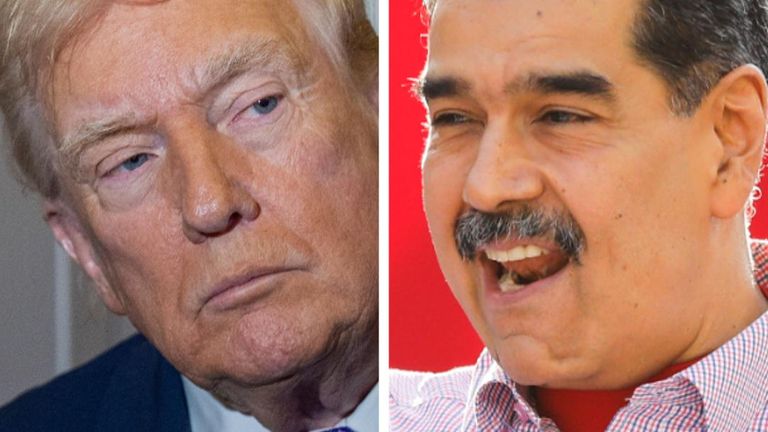
Tensions first started to escalate in September when President Donald Trump accused Venezuela President Nicolas Maduro – who he does not recognise as the country’s leader – of heading up the notorious organised crime gang Tren de Aragua (without providing evidence).
It followed US strikes on a boat that Mr Trump claimed was being used by the gang to carry drugs. Eleven people died in the strike, which is believed to have been the first US military operation in the southern Caribbean to crack down on drug cartels.
Since early September, US strikes have killed more than 80 people in 21 attacks on small boats accused of transporting narcotics, with Mr Trump maintaining cartels were a threat to US “national security, foreign policy, and vital US interests”.
From November: Three killed as US strikes another alleged drug boat
The US president also alleged Venezuela had sent a significant number of prisoners, including individuals from mental health facilities, into the US, and confirmed he had approved CIA operations in the country to tackle alleged drug trafficking.
The US government has released no evidence to support its assertions that those killed in the boats were “narco-terrorists”.
In return, Venezuela’s president, Mr Maduro, accused Mr Trump of seeking regime change and of “fabricating a new eternal war” against his country. He denies having any links to the illegal drug trade.
Is US about to go to war with Venezuela?
He also claimed the US strikes targeting boats are illegal, amount to murder, and are acts of aggression.
In a message to American citizens on 16 October, he said in English: “Not war, yes peace. The people of the US, please.”
What are US warships doing?
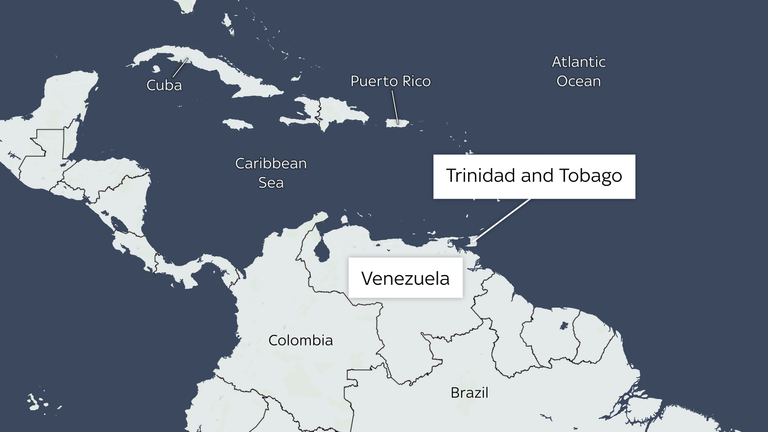
In November, the docking of the USS Gravely guided missile destroyer in the capital of Trinidad and Tobago – just 25 miles from the coast of Venezuela – escalated tensions.
Venezuela’s government condemned the arrival and called it a provocation by Trinidad and Tobago and the US.
The USS Gerald R Ford aircraft carrier – the largest warship in the world – travelled to the Caribbean in what was interpreted by many at the time as a show of military power.
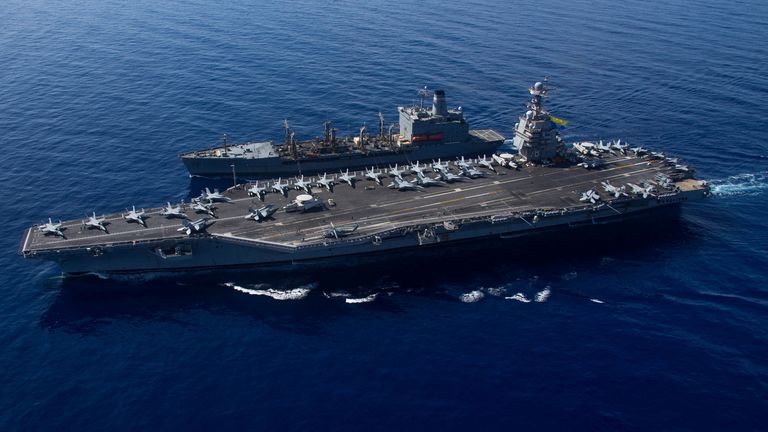
The world’s largest warship, the USS Gerald R Ford. File pic: Reuters
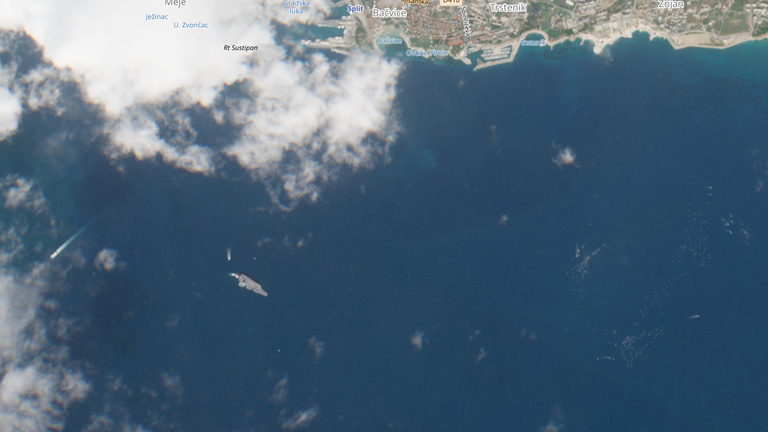
Satellite image shows USS Gerald R Ford on 25 October off the coast of Croatia, a day after the announcement it would be deployed to the Caribbean. Pic: EU Copernicus
Other warships, F-35 aircraft, a new influx of troops and weaponry also arrived in the area, as part of the mission dubbed Operation Southern Spear.
Rear Admiral Paul Lanzilotta, who commands the strike group, said at the time, the mission will bolster an already large force of American warships to “protect our nation’s security and prosperity against narco-terrorism in the Western Hemisphere”.
After the arrival of the Ford, some experts remarked that it was ill-suited to fighting cartels, but could be an effective instrument of intimidation to push Mr Maduro to step down.
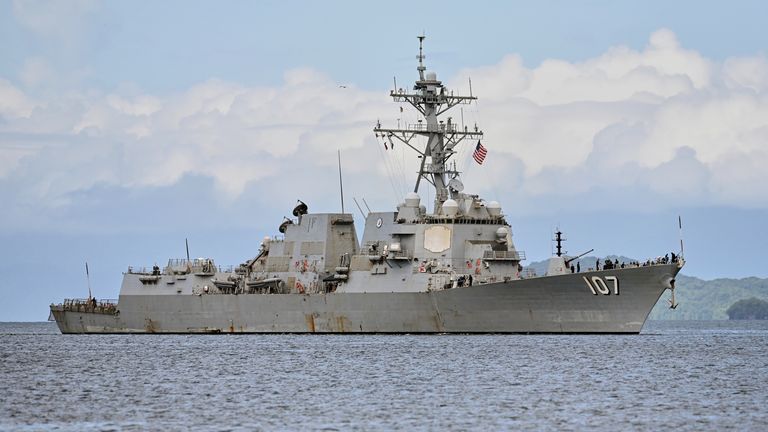
The USS Gravely destroyer arrives in Port-of-Spain, Trinidad and Tobago, on 26 October. Pic: AP
What about airspace?
Days after the arrival of the USS Gerald R Ford, the US government’s Federal Aviation Administration (FAA) warned of a “potentially hazardous situation” when flying over Venezuela.
The warning led to three international airlines cancelling flights departing from Venezuela and, later, Mr Maduro revoked operating rights for six major airlines.
In further escalation, Mr Trump said on 30 November that the airspace “above and surrounding” the country should be considered closed “in its entirety”.
Trump: Maduro call neither ‘went well or badly’
He wrote on Truth Social: “To all Airlines, Pilots, Drug Dealers, and Human Traffickers, please consider THE AIRSPACE ABOVE AND SURROUNDING VENEZUELA TO BE CLOSED IN ITS ENTIRETY.”
The move was labelled a “colonial threat” and “illegal, and unjustified aggression,” by Venezuela’s foreign affairs office, which accused the president of threatening “the sovereignty of the national airspace… and the full sovereignty of the Venezuelan state”.
Are Trump’s claims true?
Mr Trump said his reasons for the strikes on vessels were the migration of Venezuelans, allegedly including former prisoners, to the US – and drug trafficking.
But Venezuelan officials have claimed Mr Trump’s true motivation is access to the country’s plentiful oil reserves.
The US leader has not provided evidence for the claim about prisoners, and Sky News chief correspondent Stuart Ramsay pointed out that the fentanyl drug that is causing destruction in America is largely manufactured in Mexico, not Venezuela.
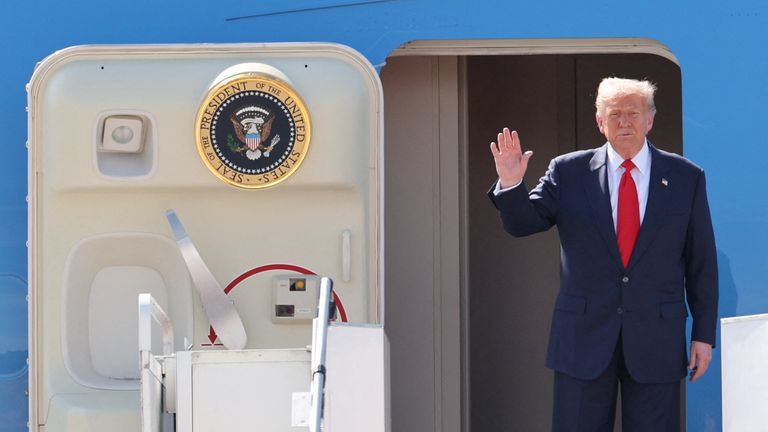
Pic: Reuters
Ramsay reports that the fentanyl is smuggled directly into the US across its southern border. Venezuela is instead largely a transit country rather than a drug producer – supplying illegal drugs, especially cocaine, which come from countries like Colombia, Peru, and Bolivia.
“President Trump claims these boats from Venezuela are heading to the US, but in reality they are mainly heading to the nearby islands of Trinidad and Tobago, and from there they largely go to West Africa and Europe – mostly Spain and Portugal,” Ramsay says.
“Drugs heading to America either pass through Mexico over the border into the US or are transported via the Pacific Ocean route through countries like Ecuador. In this instance, Venezuela isn’t involved.”
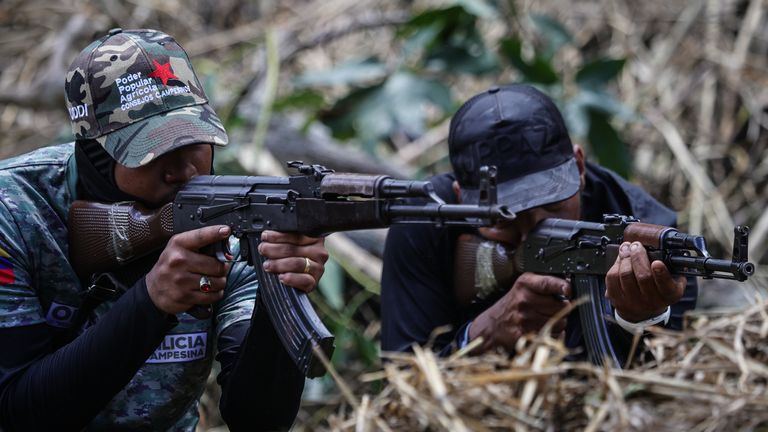
In Venezuela, the government has civilians trained in the use of weapons to defend the country in the event of a US attack. Pic: AP
Will the US actually attack Venezuela?
Mr Trump has said in the past that land operations against alleged Venezuelan drug traffickers would begin “very soon” – which would be a major escalation of Operation Southern Spear.
To get an idea of what could happen next, Sky News spoke to Dr Carlos Solar, an expert on Latin American security at the RUSI defence thinktank.
He says the level of military strategy the US is applying around Venezuela seems “unproportionate” for the task of tackling drug trafficking.
“A build-up this size can only suggest there’s a strategic military goal,” he added.

Venezuelan President: ‘We don’t want a war’
Dr Solar says the role of the CIA is “not surprising”, as the US often deploys spying capabilities in countries deemed adversarial.
“With the chances of a military conflict looming, having the most intelligence capable on the ground would be reasonable.”
Asked what could happen next, Dr Solar told Sky News: “One scenario is Trump authorises a round of long-range precision attacks in Venezuela’s territory linked to drug trafficking operations, eventually forcing Maduro to reciprocate later.
“We saw this early in the year when the US attacked Iran’s nuclear facilities and Tehran returned missiles to US bases in Qatar.
“If the US decides to move more strongly, destroying all critical military targets from the Venezuelan forces, then the US could have Maduro surrender and leave the country immediately.
“This would be the least disruptive without causing greater destabilisation of the country.”
Read more:
US likely jammed GPS signals off Venezuela coast – expert
Venezuela opposition leader wins Nobel Peace Prize
Trump may have another motive in escalation of war on drugs
Who is Venezuela’s leader?
Mr Maduro has been in power since 2013, including re-elections in contests marred by accusations of fraud.
He is currently serving his third term after being declared the winner of last year’s presidential election, despite evidence that the opposition defeated him by a two-to-one margin.
Over the last decade, his country has been gripped by spiralling hyperinflation and a humanitarian crisis that has seen an estimated eight million Venezuelans flee the country.
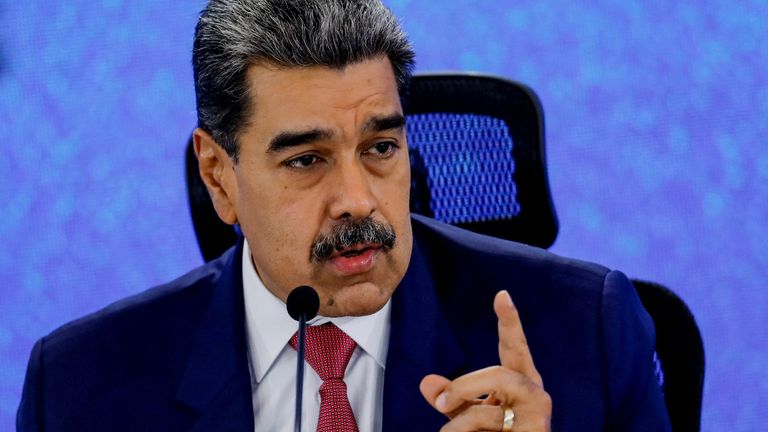
Venezuela’s President Nicolas Maduro. Pic: Reuters
Mr Maduro has also been indicted in American courts on federal charges of narco-terrorism and conspiracy to import cocaine, with the US government offering a reward of $50m for his arrest.
Responding to the allegations that he controls the crime group Tren de Aragua, Mr Maduro has repeatedly said the group is no longer active in their country after they dismantled it during a prison raid in 2023.
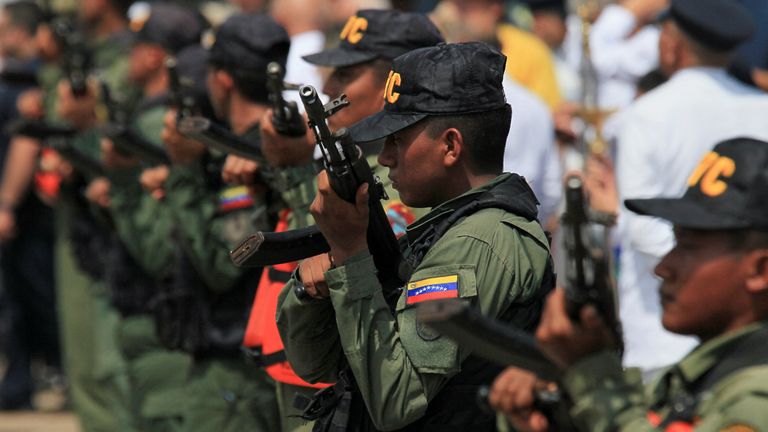
Members of Venezuela’s Bolivarian National Guard. Pic: Reuters
Tren de Aragua, which traces its roots to a Venezuelan prison, is not known for having a big role in global drug trafficking but instead for its involvement in contract killings, extortion, and people smuggling.
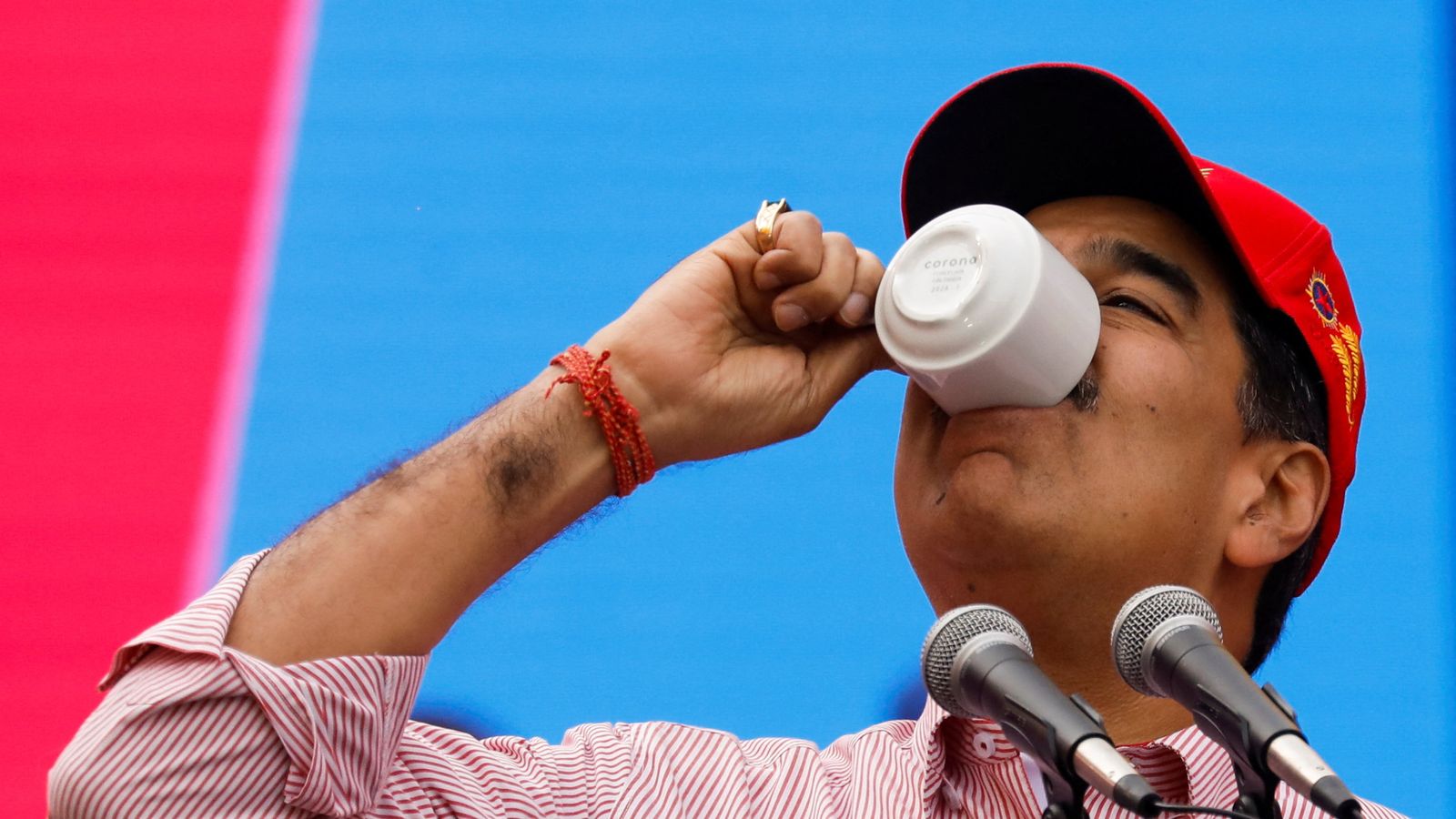
Nicolas Maduro has said Venezuelans are ready to defend their country as the US considers a land attack.
The president held a rally in Caracas amid heightened tensions with Donald Trump’s administration, which has been targeting what it says are boats carrying drug smugglers.
Mr Trump met his national security team on Monday evening, having warned last week that land strikes would start “very soon”.
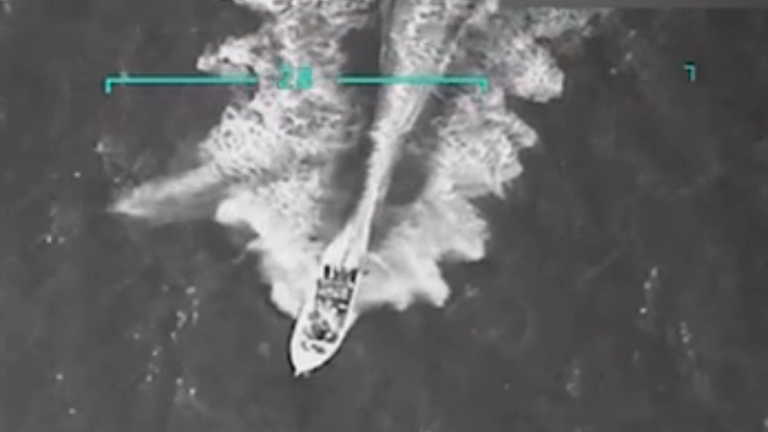
An image of an alleged drug boat being targeted by the US military. Pic: Truth Social
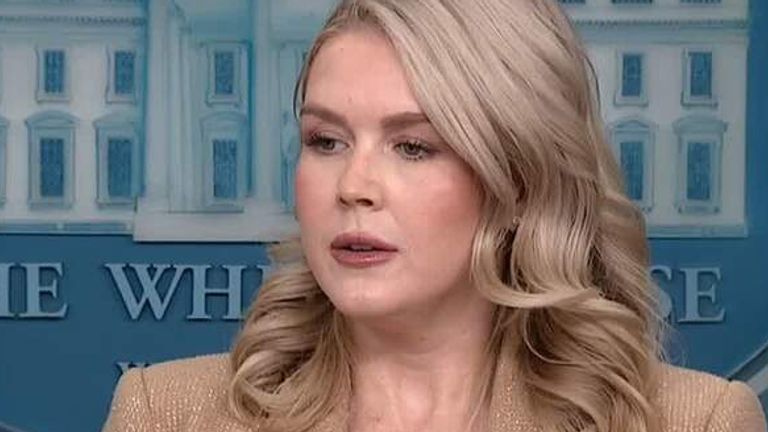
It’s not been confirmed what was discussed at the meeting, but White House press secretary Karoline Leavitt told reporters: “There’s many options at the president’s disposal that are on the table – and I’ll let him speak on those.”
US forces have carried out at least 21 strikes on boats it claims were carrying narcotics to its shores over the last few months, and the White House has accused Mr Maduro of being involved in the drugs trade – a claim he denies.
‘The president has a right to take them out’
‘Psychological terrorism’
Mr Maduro – widely considered a dictator by the West – said on Monday that Venezuelans are ready “to defend [the country] and lead it to the path of peace”.
“We have lived through 22 weeks of aggression that can only be described as psychological terrorism,” he said.
Venezuela has said the boat attacks, which have killed more than 80 people, amount to murder – and that Mr Trump’s true motivation is to oust Mr Maduro and access its oil.
Concerns have been raised over the legality of the US attacks, which the Pentagon has sought to justify by designating the gangs as foreign terror organisations.
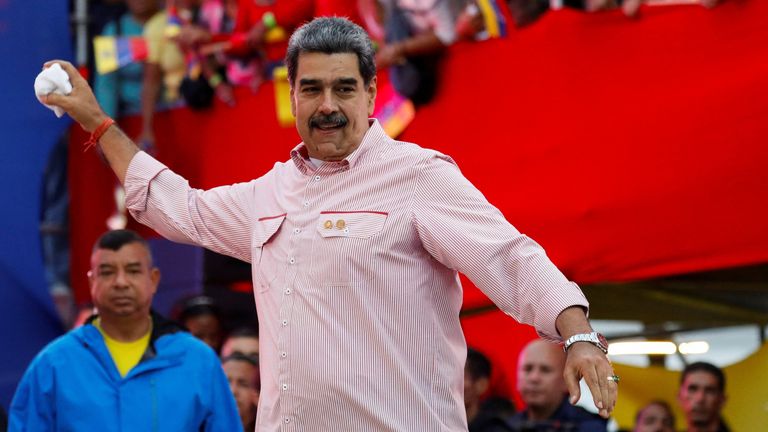
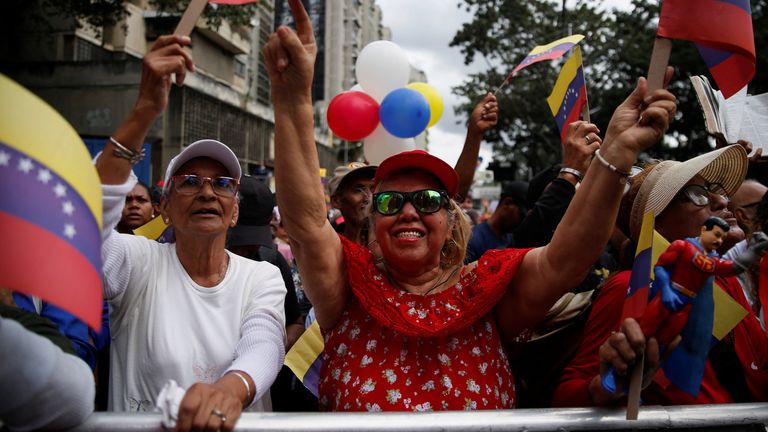
Maduro was championed by supporters as he spoke on Monday. Pics: Reuters
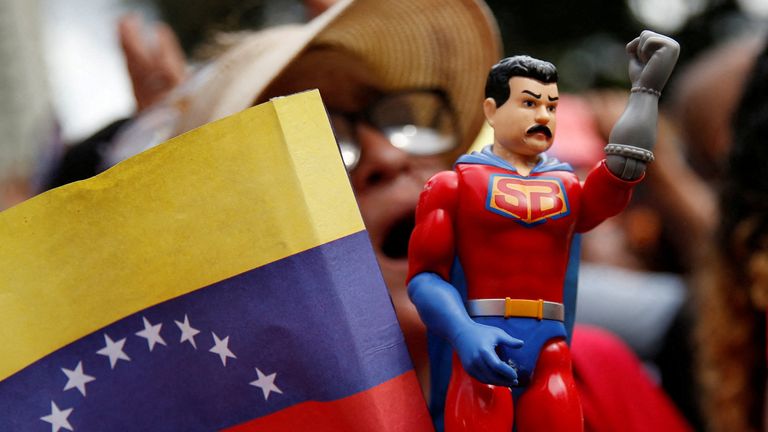
Controversy over US strikes
Tensions remain high over America’s large deployment in the Caribbean Sea and eastern Pacific, which includes its flagship aircraft carrier and thousands of troops.
The US has released videos of boats being blown up but has not provided evidence – such as photos of drugs – to support the smuggling claims.
Controversy also surrounds the first incident, on 2 September, in which 11 people were killed – with a follow-up strike targeting the boat after the first attack left two survivors in the water.
US media reported defence secretary Pete Hegseth gave an order that everyone on board should be killed.
However, there are concerns about the legality of the second strike if the survivors posed no threat.
Mr Hegseth dismissed the reporting as “fake news” and insisted all actions in the region are compliant with US and international law.
“Every trafficker we kill is affiliated with a Designated Terrorist Organization,” he said on X.
Is US about to go to war with Venezuela?
Mr Trump said on Sunday he would not have wanted a second strike and that Mr Hegseth had denied giving such an order.
Ms Leavitt confirmed on Monday that the boat had been hit by a second strike – but denied Mr Hegseth gave the order for the follow-up.
Instead, she said he had authorised US navy vice admiral Frank Bradley to attack, and the admiral acted “well within his authority and the law, directing the engagement to ensure the boat was destroyed and the threat to the US was eliminated”.
Read more from Sky News:
Hong Kong fire: 13 arrested as death toll hits 151
More than 1,100 confirmed dead in Asia floods
Trump: Maduro call neither ‘went well or badly’
As the US weighs its next steps, Mr Trump said on Sunday he had spoken to Mr Maduro by phone and that the conversation went neither “well or badly”.
In recent days, he also stated that Venezuela’s airspace should be considered closed – with the South American nation calling it a “colonial threat” and “illegal, and unjustified aggression”.
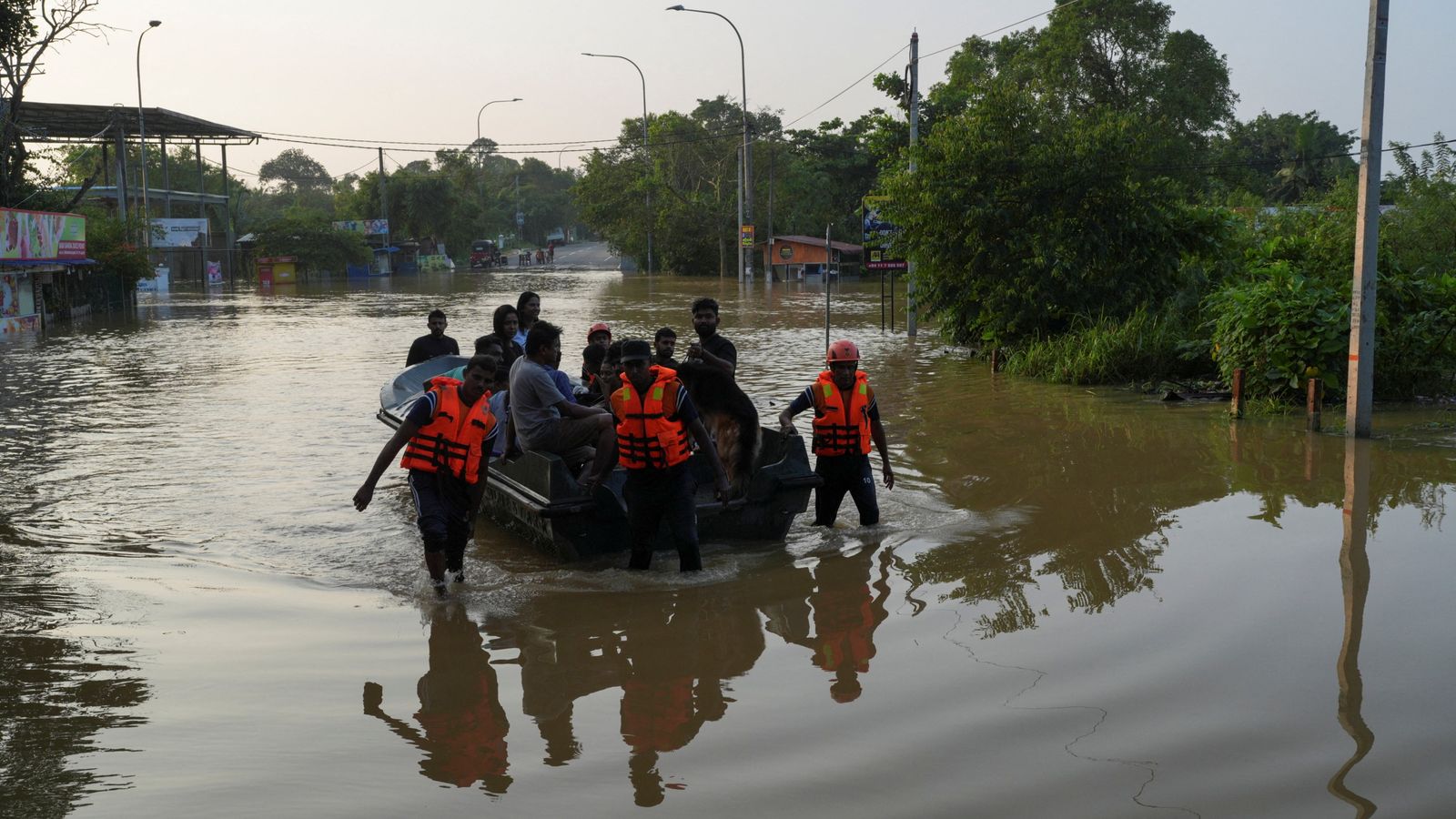
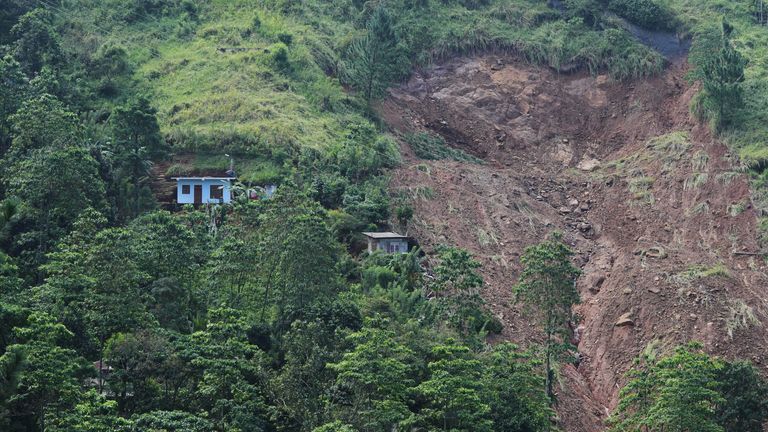
Rescue and recovery and efforts are under way in parts of South and Southeast Asia where the number of those killed in devastating floods continues to rise.
Cyclones and extreme weather have killed at least 1,200 people in Sri Lanka, Indonesia and Thailand, according to authorities.
Rescuers are still searching for hundreds of missing people after a cyclone and other storms triggered flooding and landslides in the region.
In a post on X, the King and Queen Camilla said they were “deeply saddened” to hear about devastating storms and added their “heartfelt condolences” to the families of those who have died.
Landslides in Sarasavigama village near Kandy, Sri Lanka. Pic: AP
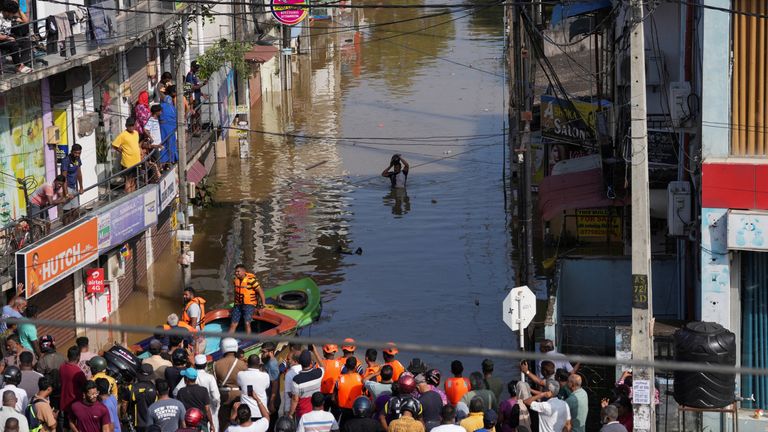
A man wades through the flooded street, following heavy rainfall in Wellampitiya, Sri Lanka. Pic: Reuters
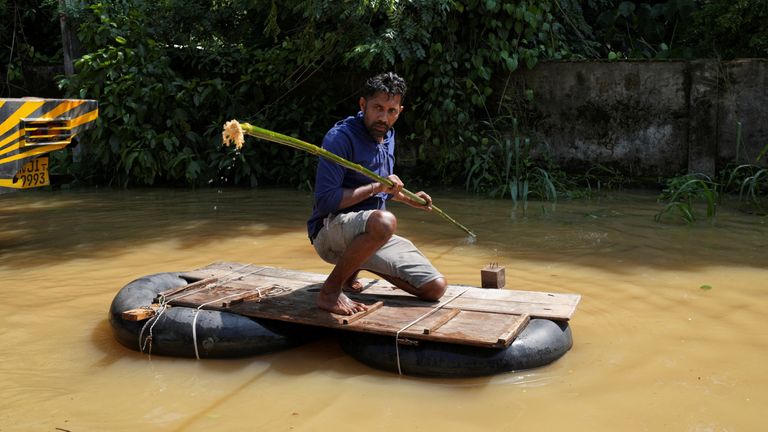
A man uses a makeshift raft at a flooded area, following Cyclone Ditwah in Kelaniya, Sri Lanka. Pic: Reuters
Hundreds of thousands in shelters in Sri Lanka
Sri Lankan authorities said about 218,000 people were in temporary shelters after downpours that triggered landslides, primarily in the tea-growing central hill country.
People were seen salvaging belongings from flooded homes along the banks of the Kelani River, near the capital Colombo on Monday.
Meanwhile, train and flight services have resumed after being disrupted last week, but schools stayed closed, officials said.
Cyclone Ditwah was the “largest and most challenging” natural disaster in Sri Lanka’s history, President Anura Kumara Dissanayake said.
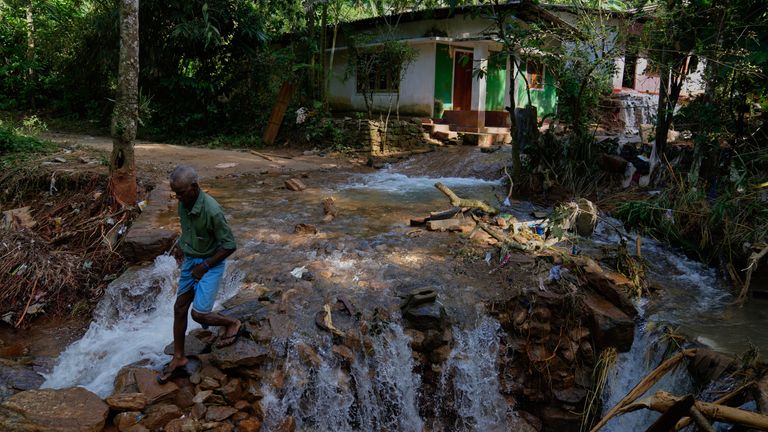
A landslide survivor crosses a section of a damaged road in Sarasavigama village near Kandy, Sri Lanka. Pic: AP
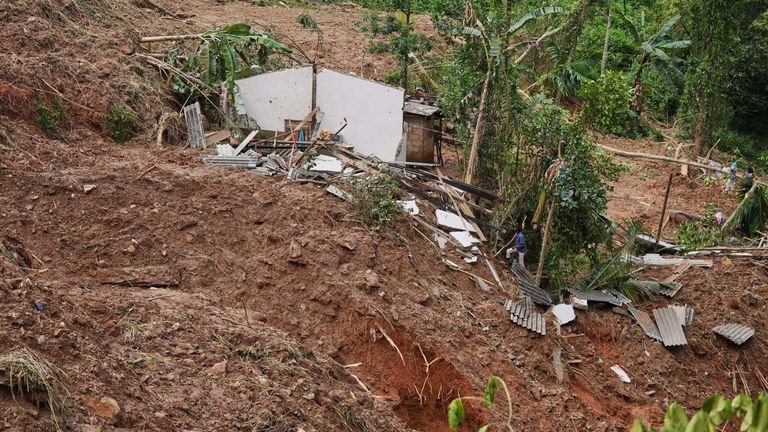
Landslide survivors salvage belongings at the site of a landslide in Sarasavigama village near Kandy, Sri Lanka. Pic: AP
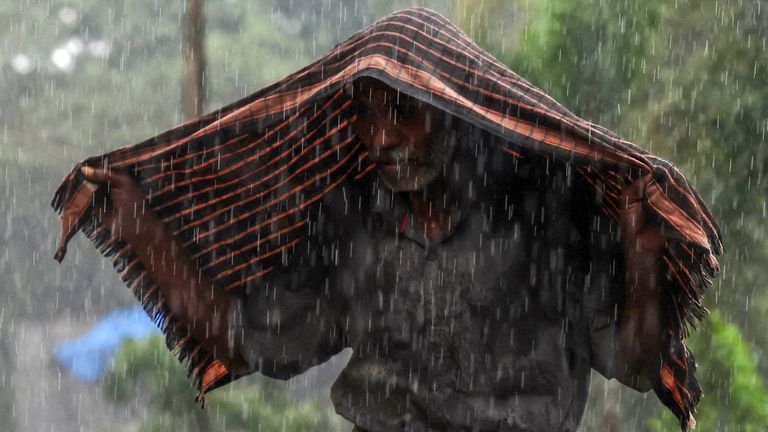
A man uses his scarf to protect himself from the rain in the aftermath of Cyclone Ditwah, in Chennai, India. Pic: Reuters
The cyclone also brought heavy rain to India’s southern state of Tamil Nadu over the weekend, with authorities saying three people were killed in rain-related incidents.
The storm, which as of 5pm UK time on Monday was about 20km (12 miles) off the coast of the state capital Chennai, has weakened into a “deep depression” and was expected to weaken further in the next few hours, weather officials said.
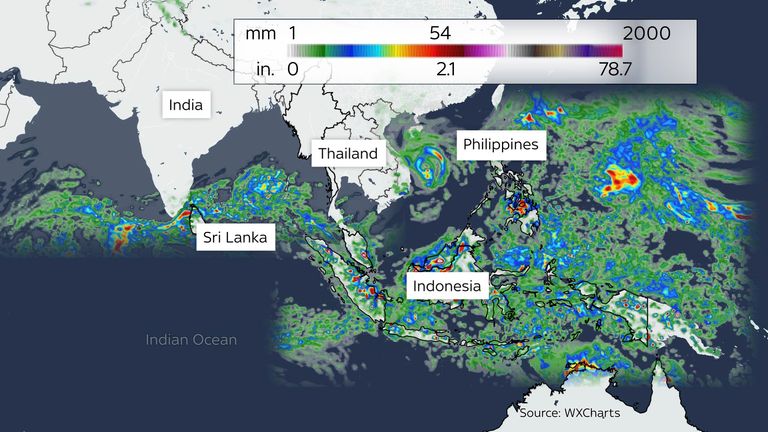
Amount of rainfall expected in South and Southeast Asia in the next 48 hours
Over a million affected in Indonesia
More than 28,000 homes have been damaged in Indonesia, with 1.4 million people affected by torrential rains following a tropical storm that formed in the Malacca Strait.
The country’s president, Prabowo Subianto, called it a catastrophe and pledged to rebuild infrastructure as he visited the three affected provinces on Monday, where nearly 300,000 people have been displaced by the flooding.
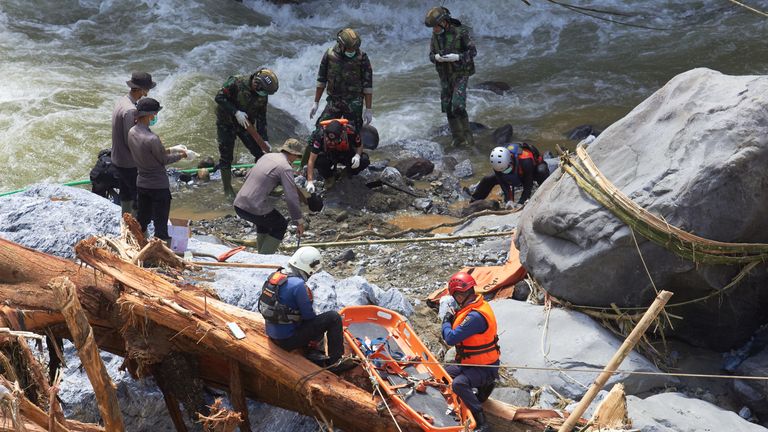
Rescuers search for flood victims in Tanah Datar, West Sumatra, Indonesia. Pic: AP
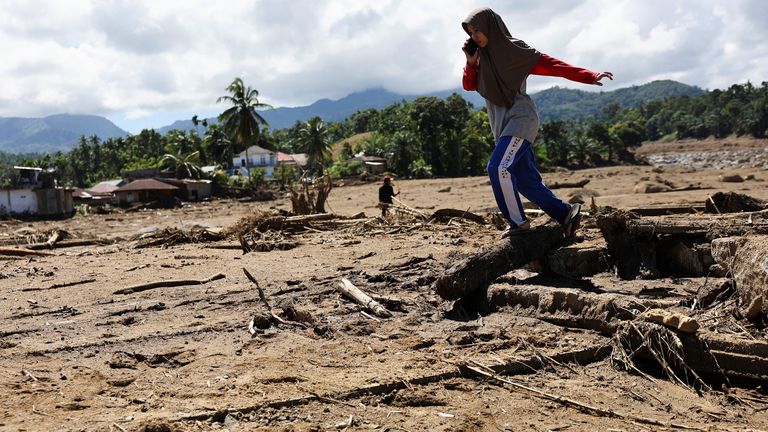
A flooded field in Indonesia’s West Sumatra province. Pic: Reuters
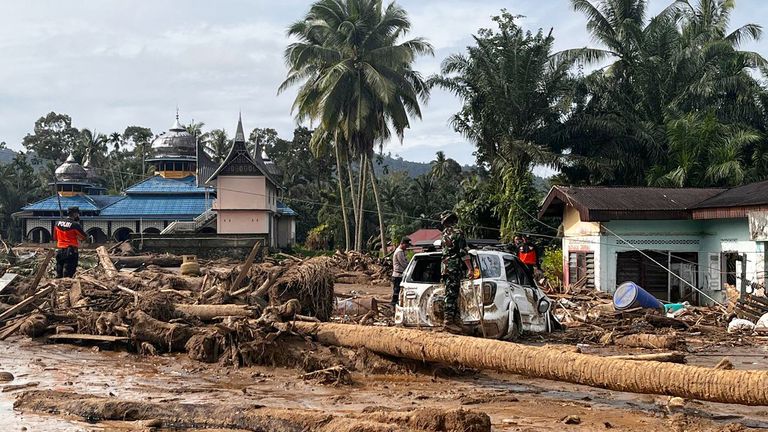
Rescuers search for victims at a village affected by flash flooding, in Agam, West Sumatra, Indonesia. Pic: AP
‘Nothing remains’
“The water just rose up into the house and we were afraid, so we fled. Then we came back on Friday, and the house was gone, destroyed,” said Afrianti, 41, who only goes by one name and lives in West Sumatra’s Padang city.
She and her family of nine have made their own tent shelter beside the single wall that remains of their home.
“My home and business are gone, the shop is gone. Nothing remains. I can only live near this one remaining wall,” she said.
Highest one-day rainfall in Thai city for 300 years
In Thailand, flooding in eight southern provinces affected about three million people and led to a major mobilisation of its military to evacuate critical patients from hospitals and reach people stuck in floodwaters for days.
In the worst-affected city of Hat Yai, a southern trading hub, 335mm (13 inches) of rain fell on 21 November, its highest single-day tally in 300 years, followed by days of unrelenting downpours.
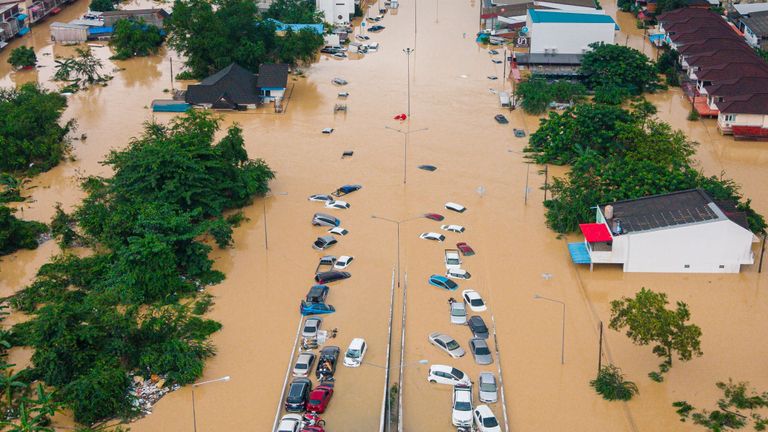
More than three million people have been impacted by floods in Thailand
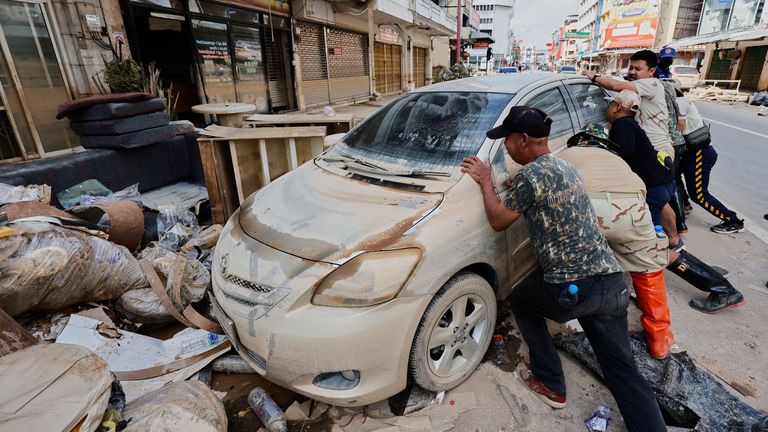
People move a car damaged by floods in Songkhla province, southern Thailand. Pic: AP
King offers ‘heartfelt condolences’
King Charles and Queen Camilla responded to the crisis in a statement posted on X and praised the work of emergency responders: “We wish to express our heartfelt condolences to the families of those who have so tragically lost their lives.
“Our thoughts and prayers are with the many whose homes have been destroyed and to all who are awaiting news of loved ones missing.
“These disasters remind us of the increasingly urgent need to restore the balance and harmony of Nature.”
Thailand’s Prime Minister Anutin Charnivirakul expects residents to be able to return home within seven days, a government spokesperson said on Monday.
Read more from Sky News:
Zelenskyy to make first official visit to Ireland
Dignitas founder dies by assisted suicide
The first batch of compensation payments was set to be distributed on Monday, starting with 239m baht (£5.6m) for 26,000 people, the spokesperson added.
In Malaysia there have been at least three deaths and authorities are still on alert for a second and third wave of flooding as 11,600 remain in evacuation centres.
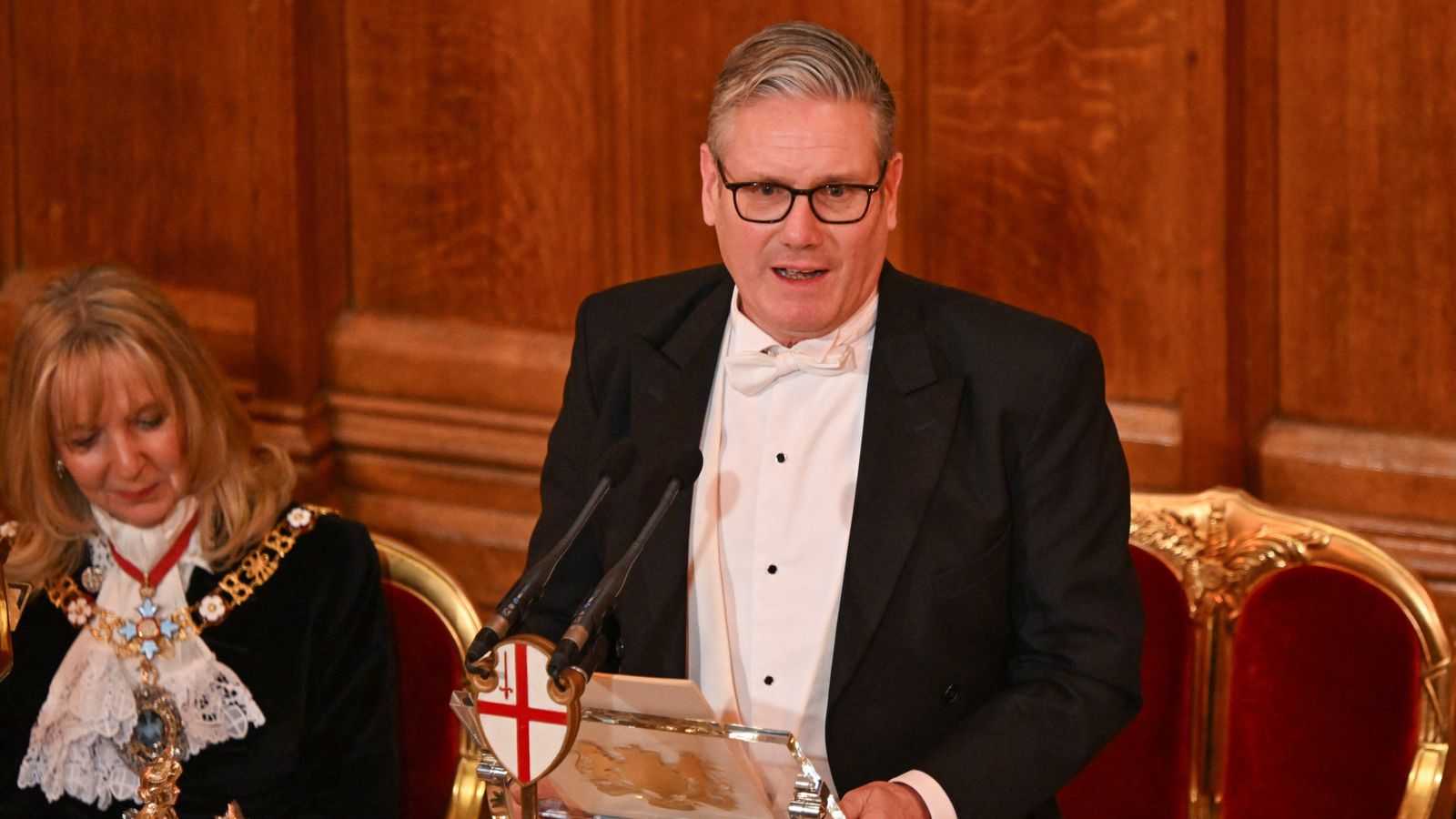
Sir Keir Starmer has warned China poses “real national security threats to the United Kingdom” – and hit out at Brexit.
During a speech at the Guildhall in London, the prime minister said “wild promises” made to the British people ahead of the referendum have been unfulfilled.
“How it was sold and delivered was simply wrong,” he added. “We are still dealing with the consequences today.”
The Guildhall event is a flagship foreign policy speech for any PM. Pic: Reuters
Sir Keir argued it would be “utterly reckless” to consider Brexit as a template for future foreign policy – and attacked politicians who have a “corrosive, inward-looking attitude”.
He singled out Kemi Badenoch and Nigel Farage, who have both called for the UK to leave the European Convention on Human Rights – and Zack Polanski, who wants to leave NATO.
Such attitudes “offer grievance rather than hope”, the PM said – accusing them of having “a declinist vision of a lesser Britain, not a Great Britain”.
Although Sir Keir opposed Brexit when in Opposition, he stressed that the vote to leave “was a fair, democratic expression, and I will always respect that”.
He told the Lady Mayor’s Banquet that Labour has made “a decisive move to face outward again and build our power, both hard and soft, which had been so damaged and neglected”.
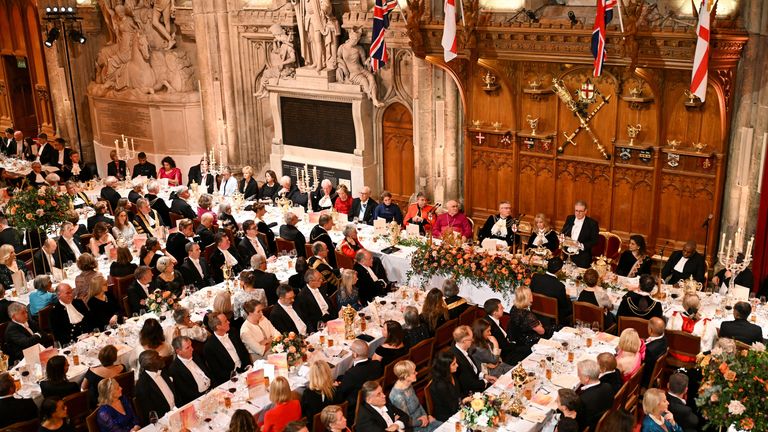
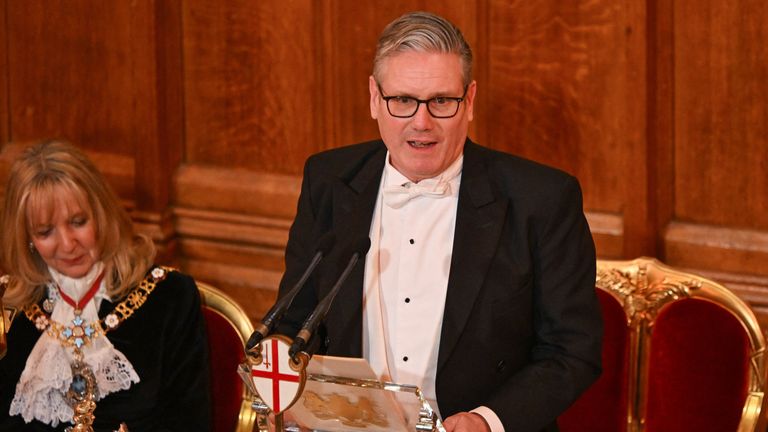
The Lady Mayor’s Banquet took place on Monday night. Pic: Reuters
‘Protecting our security is non-negotiable’
Elsewhere in the speech, the prime minister warned the UK needs a policy towards China that recognises the national security threat it poses.
He said: “For years we have blown hot and cold. We had the ‘Golden Age’, which then flipped to an ‘Ice Age’. We reject that binary choice.
“So our response will not be driven by fear, nor softened by illusion. It will be grounded in strength, clarity and sober realism.”
China has been a major issue in Westminster of late following accusations of spying in parliament, and controversy over the new “super embassy” that Beijing wants to build in central London.
Analysis: Not everyone will like what PM had to say

The China hawks like Iain Duncan Smith, Tom Tugendhat and others on the Conservative benches – and indeed Reform – won’t like this one little bit.
A large part of this speech was devoted to China, and he did talk about the twin-track approach: being tough on national security, but at the same time talking to the Chinese.
He bemoaned the fact that a British prime minister hadn’t talked to the Chinese premier since Theresa May in February 2018.
This was probably the most wide-ranging, perhaps most significant foreign policy speech we’ve heard from Sir Keir Starmer.
It comes against the backdrop of all the political turmoil over the budget, but it was a serious speech. It will please those who want to see the UK taking a much more interventionist approach rather than isolationist.
His supporters will like what they’ve heard here – but not China hawks and Brexiteers.
However, Sir Keir defended plans to visit China in the new year – and said an absence of engagement with the world’s second-biggest economy would be “staggering” and a “dereliction of duty”.
He described it as “a nation of immense scale, ambition, and ingenuity” and a “defining force in technology, trade and global governance”.
‘Huge’ opportunities for businesses
Setting out his own approach, Sir Keir explained: “This is not a question of balancing economic and security considerations. We don’t trade off security in one area, for a bit more economic access somewhere else.
“Protecting our security is non-negotiable – our first duty. But by taking tough steps to keep us secure, we enable ourselves to cooperate in other areas.”
The PM added that he wants to give businesses “the confidence, clarity, and support” to win opportunities in China.
“In areas like financial and professional services, creative industries, pharmaceuticals, luxury goods and more – Great British success stories – the export opportunities are huge, and we will back you to seize them,” he said.
PM preparing for likely China visit
‘Starmer continues to kowtow to China’
Sky News understands the prime minister is set to approve plans for a controversial Chinese “super embassy” in central London.
A final decision on the planning application for the former Royal Mint site near the Tower of London is due on 10 December after repeated delays.
Concerns were previously raised after Beijing’s planning application featured blacked-out areas.
Since he was elected last year, Sir Keir has been active on the world stage, trumpeting deals with the US, India, and the EU and leading the “coalition of the willing” in support of Ukraine.
But he has also faced criticism from his opponents, who accuse him of spending too much time out of the UK attending international summits rather than focusing on domestic issues.
Read more:
MI5 spying warning aims to send signal to China
‘Many options’ on table for Venezuela
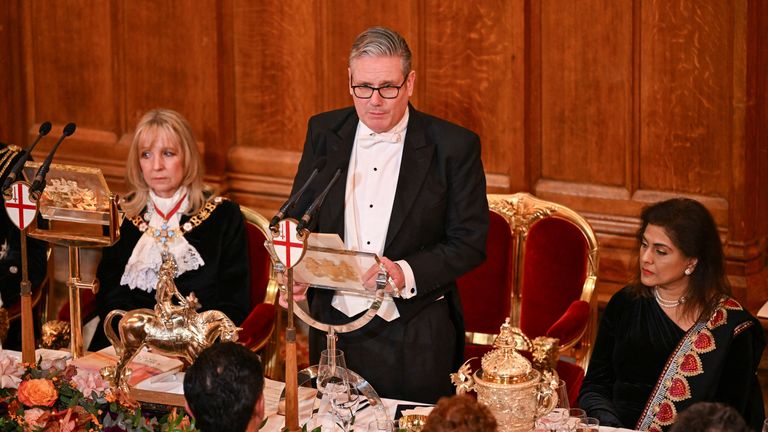
The Tories branded Starmer ‘Beijing’s useful idiot’. Pic: Reuters
Responding to the prime minister’s speech, shadow foreign secretary Dame Priti Patel said: “From China’s continued flouting of economic rules to transnational repression of Hong Kongers in Britain, Starmer’s ‘reset’ with Beijing is a naive one-way street, which puts Britain at risk while Beijing gets everything it wants.
“Starmer continues to kowtow to China and is captivated by half-baked promises of trade.
“Coming just days after the latest Chinese plot to interfere in our democracy was exposed, his love letter to the Chinese Communist Party is a desperate ploy to generate economic growth following his budget of lies and is completely ill-judged.
“While China poses a clear threat to Britain, China continues to back Iran and Russia, and plots to undermine our institutions. Keir Starmer has become Beijing’s useful idiot in Britain.”
-
 Sports2 years ago
Story injured on diving stop, exits Red Sox game
-
 Sports3 years ago
‘Storybook stuff’: Inside the night Bryce Harper sent the Phillies to the World Series
-
 Sports2 years ago
Game 1 of WS least-watched in recorded history
-
 Sports3 years ago
Button battles heat exhaustion in NASCAR debut
-
 Sports3 years ago
MLB Rank 2023: Ranking baseball’s top 100 players
-
Sports4 years ago
Team Europe easily wins 4th straight Laver Cup
-
 Environment3 years ago
Japan and South Korea have a lot at stake in a free and open South China Sea
-
 Environment1 year ago
Here are the best electric bikes you can buy at every price level in October 2024