World
Warships, the CIA and potential ‘precision attacks’ – the US-Venezuela crisis explained


For months, Donald Trump has intensified military presence in the Caribbean.
From US warships in the region, American troops having the green light for covert operations, and deadly strikes on what the Trump administration claims are “narco-terrorists” – here is all you need to know about the crisis.
Why have tensions increased?
Tensions first started to escalate in September when President Donald Trump accused Venezuela President Nicolas Maduro – who he does not recognise as the country’s leader – of heading up the notorious organised crime gang Tren de Aragua (without providing evidence).
It followed US strikes on a boat that Mr Trump claimed was being used by the gang to carry drugs. Eleven people died in the strike, which is believed to have been the first US military operation in the southern Caribbean to crack down on drug cartels.
Since early September, US strikes have killed more than 80 people in 21 attacks on small boats accused of transporting narcotics, with Mr Trump maintaining cartels were a threat to US “national security, foreign policy, and vital US interests”.
From November: Three killed as US strikes another alleged drug boat
The US president also alleged Venezuela had sent a significant number of prisoners, including individuals from mental health facilities, into the US, and confirmed he had approved CIA operations in the country to tackle alleged drug trafficking.
The US government has released no evidence to support its assertions that those killed in the boats were “narco-terrorists”.
In return, Venezuela’s president, Mr Maduro, accused Mr Trump of seeking regime change and of “fabricating a new eternal war” against his country. He denies having any links to the illegal drug trade.
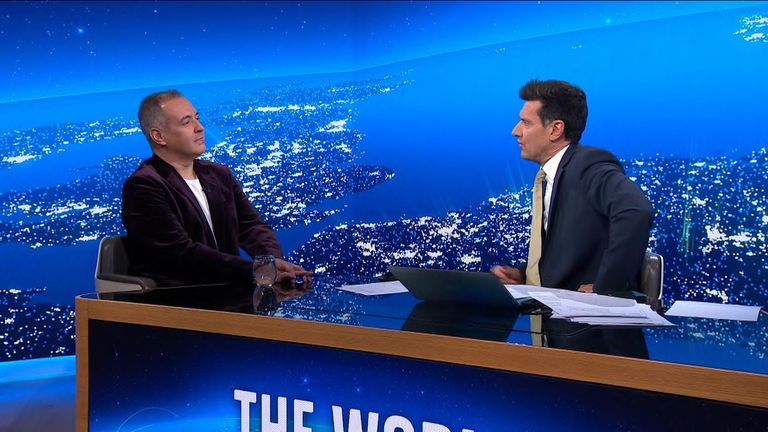
Is US about to go to war with Venezuela?
He also claimed the US strikes targeting boats are illegal, amount to murder, and are acts of aggression.
In a message to American citizens on 16 October, he said in English: “Not war, yes peace. The people of the US, please.”
What are US warships doing?
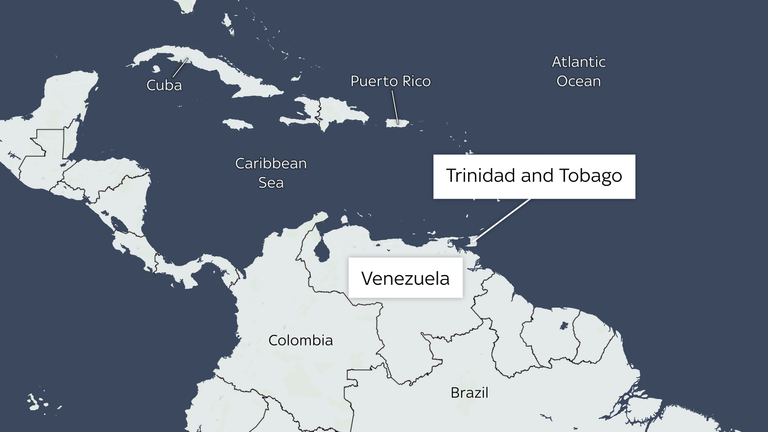
In November, the docking of the USS Gravely guided missile destroyer in the capital of Trinidad and Tobago – just 25 miles from the coast of Venezuela – escalated tensions.
Venezuela’s government condemned the arrival and called it a provocation by Trinidad and Tobago and the US.
The USS Gerald R Ford aircraft carrier – the largest warship in the world – travelled to the Caribbean in what was interpreted by many at the time as a show of military power.
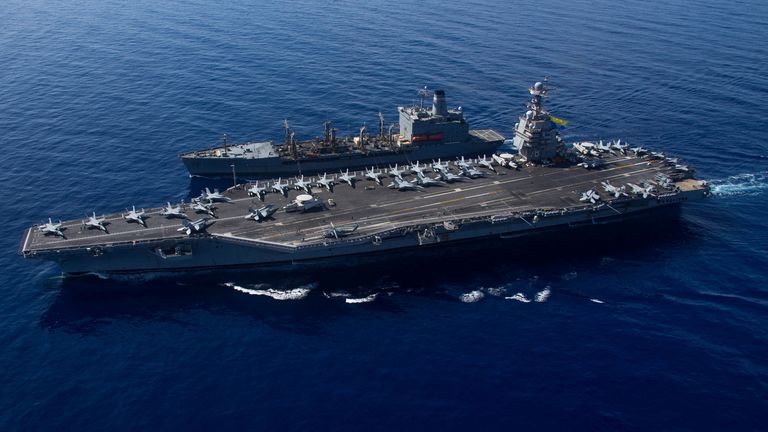
The world’s largest warship, the USS Gerald R Ford. File pic: Reuters
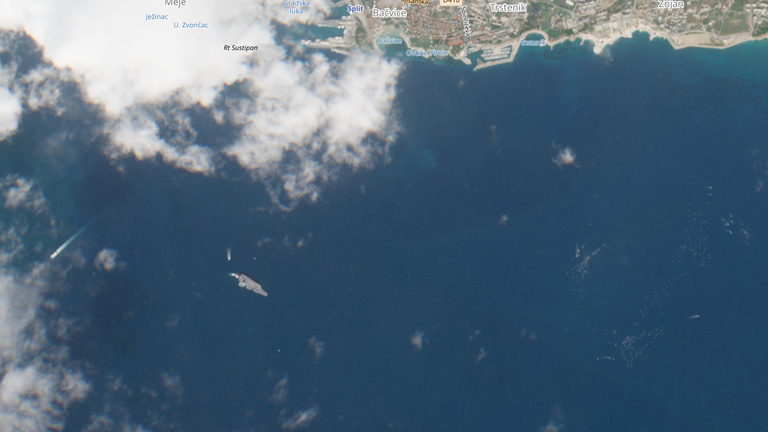
Satellite image shows USS Gerald R Ford on 25 October off the coast of Croatia, a day after the announcement it would be deployed to the Caribbean. Pic: EU Copernicus
Other warships, F-35 aircraft, a new influx of troops and weaponry also arrived in the area, as part of the mission dubbed Operation Southern Spear.
Rear Admiral Paul Lanzilotta, who commands the strike group, said at the time, the mission will bolster an already large force of American warships to “protect our nation’s security and prosperity against narco-terrorism in the Western Hemisphere”.
After the arrival of the Ford, some experts remarked that it was ill-suited to fighting cartels, but could be an effective instrument of intimidation to push Mr Maduro to step down.
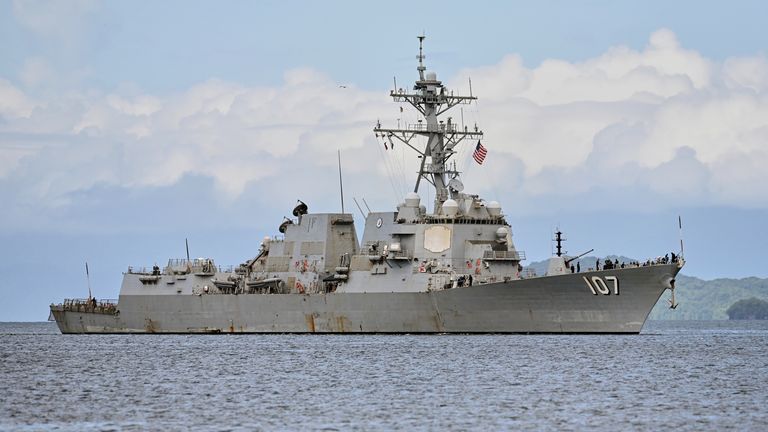
The USS Gravely destroyer arrives in Port-of-Spain, Trinidad and Tobago, on 26 October. Pic: AP
What about airspace?
Days after the arrival of the USS Gerald R Ford, the US government’s Federal Aviation Administration (FAA) warned of a “potentially hazardous situation” when flying over Venezuela.
The warning led to three international airlines cancelling flights departing from Venezuela and, later, Mr Maduro revoked operating rights for six major airlines.
In further escalation, Mr Trump said on 30 November that the airspace “above and surrounding” the country should be considered closed “in its entirety”.
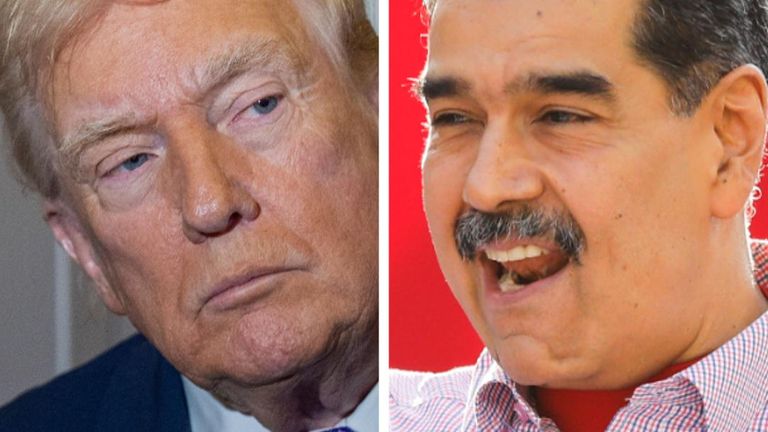
Trump: Maduro call neither ‘went well or badly’
He wrote on Truth Social: “To all Airlines, Pilots, Drug Dealers, and Human Traffickers, please consider THE AIRSPACE ABOVE AND SURROUNDING VENEZUELA TO BE CLOSED IN ITS ENTIRETY.”
The move was labelled a “colonial threat” and “illegal, and unjustified aggression,” by Venezuela’s foreign affairs office, which accused the president of threatening “the sovereignty of the national airspace… and the full sovereignty of the Venezuelan state”.
Are Trump’s claims true?
Mr Trump said his reasons for the strikes on vessels were the migration of Venezuelans, allegedly including former prisoners, to the US – and drug trafficking.
But Venezuelan officials have claimed Mr Trump’s true motivation is access to the country’s plentiful oil reserves.
The US leader has not provided evidence for the claim about prisoners, and Sky News chief correspondent Stuart Ramsay pointed out that the fentanyl drug that is causing destruction in America is largely manufactured in Mexico, not Venezuela.
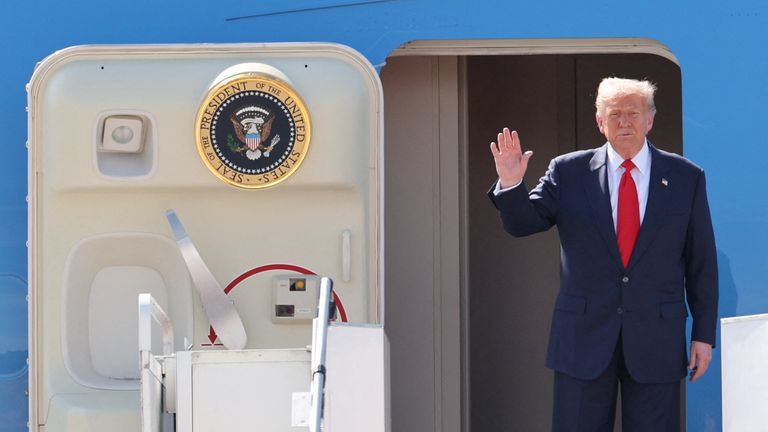
Pic: Reuters
Ramsay reports that the fentanyl is smuggled directly into the US across its southern border. Venezuela is instead largely a transit country rather than a drug producer – supplying illegal drugs, especially cocaine, which come from countries like Colombia, Peru, and Bolivia.
“President Trump claims these boats from Venezuela are heading to the US, but in reality they are mainly heading to the nearby islands of Trinidad and Tobago, and from there they largely go to West Africa and Europe – mostly Spain and Portugal,” Ramsay says.
“Drugs heading to America either pass through Mexico over the border into the US or are transported via the Pacific Ocean route through countries like Ecuador. In this instance, Venezuela isn’t involved.”
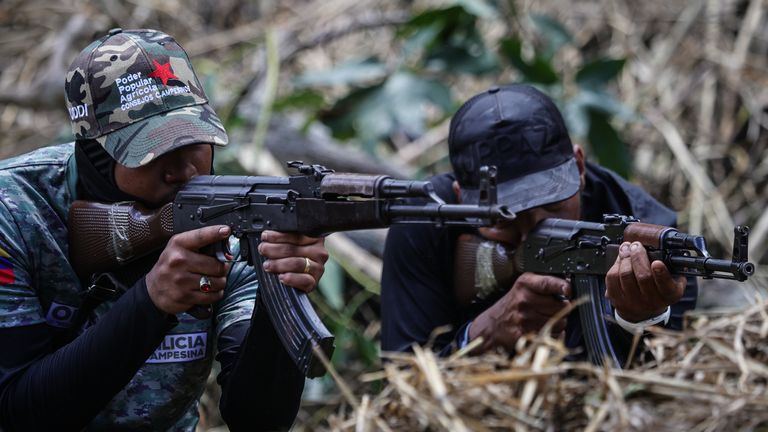
In Venezuela, the government has civilians trained in the use of weapons to defend the country in the event of a US attack. Pic: AP
Will the US actually attack Venezuela?
Mr Trump has said in the past that land operations against alleged Venezuelan drug traffickers would begin “very soon” – which would be a major escalation of Operation Southern Spear.
To get an idea of what could happen next, Sky News spoke to Dr Carlos Solar, an expert on Latin American security at the RUSI defence thinktank.
He says the level of military strategy the US is applying around Venezuela seems “unproportionate” for the task of tackling drug trafficking.
“A build-up this size can only suggest there’s a strategic military goal,” he added.

Venezuelan President: ‘We don’t want a war’
Dr Solar says the role of the CIA is “not surprising”, as the US often deploys spying capabilities in countries deemed adversarial.
“With the chances of a military conflict looming, having the most intelligence capable on the ground would be reasonable.”
Asked what could happen next, Dr Solar told Sky News: “One scenario is Trump authorises a round of long-range precision attacks in Venezuela’s territory linked to drug trafficking operations, eventually forcing Maduro to reciprocate later.
“We saw this early in the year when the US attacked Iran’s nuclear facilities and Tehran returned missiles to US bases in Qatar.
“If the US decides to move more strongly, destroying all critical military targets from the Venezuelan forces, then the US could have Maduro surrender and leave the country immediately.
“This would be the least disruptive without causing greater destabilisation of the country.”
Read more:
US likely jammed GPS signals off Venezuela coast – expert
Venezuela opposition leader wins Nobel Peace Prize
Trump may have another motive in escalation of war on drugs
Who is Venezuela’s leader?
Mr Maduro has been in power since 2013, including re-elections in contests marred by accusations of fraud.
He is currently serving his third term after being declared the winner of last year’s presidential election, despite evidence that the opposition defeated him by a two-to-one margin.
Over the last decade, his country has been gripped by spiralling hyperinflation and a humanitarian crisis that has seen an estimated eight million Venezuelans flee the country.
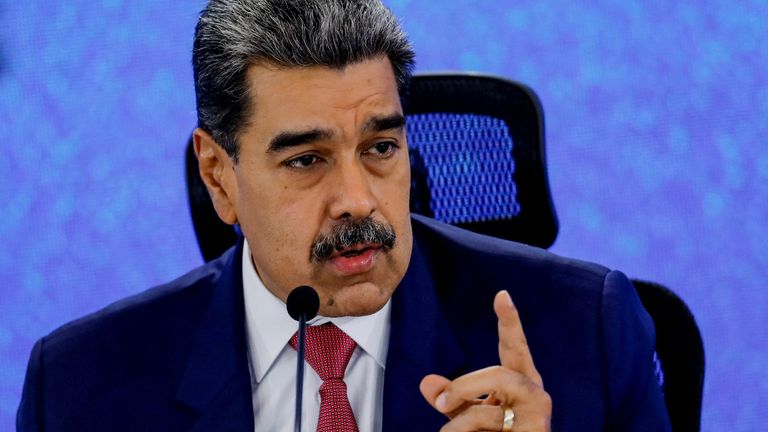
Venezuela’s President Nicolas Maduro. Pic: Reuters
Mr Maduro has also been indicted in American courts on federal charges of narco-terrorism and conspiracy to import cocaine, with the US government offering a reward of $50m for his arrest.
Responding to the allegations that he controls the crime group Tren de Aragua, Mr Maduro has repeatedly said the group is no longer active in their country after they dismantled it during a prison raid in 2023.
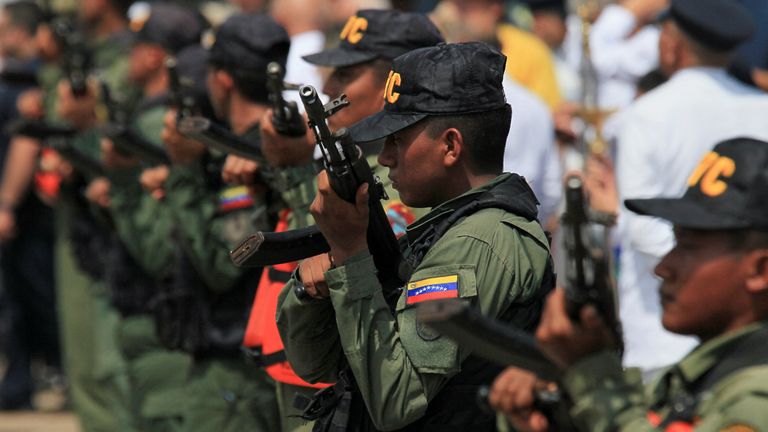
Members of Venezuela’s Bolivarian National Guard. Pic: Reuters
Tren de Aragua, which traces its roots to a Venezuelan prison, is not known for having a big role in global drug trafficking but instead for its involvement in contract killings, extortion, and people smuggling.