

Tesla (TSLA) goes all out with new incentives in end-of-year sales push


Tesla is pulling every demand lever available as we head into the final weeks of the year. The automaker has launched a new set of aggressive incentives in the US, including free upgrades on inventory vehicles, 0% APR financing, and $0 down leases.
It’s the end of the quarter (and year), and as per usual, Tesla is trying to empty its inventory, but it’s more difficult this year due to the end of the tax credit in Q3 pulling a lot of demand away from Q4.
We have regularly reported on Tesla ramping up incentives at the end of the year, but this new batch is arguably the most aggressive we have seen in a long time.
First off, Tesla is offering one free upgrade on eligible inventory vehicles.
If you go to Tesla’s inventory page for Model 3 or Model Y, you will see a lot of vehicles listed with a “Free Upgrade” tag. This basically means that if you pick a car that has a paid option, like a premium paint color (Ultra Red or Quicksilver), 20″ Induction wheels, or the White interior, Tesla is waiving the cost of that option.
That’s a value of anywhere from $1,000 to $2,500 depending on the option.
On top of that, Tesla has expanded its financing offers. The company is now offering 0% APR financing for up to 72 months on Model 3 and Model Y purchases.
This is a significant move. We have seen low interest rates before, but 0% for 72 months is basically free money, especially in the current interest rate environment.
But wait, there’s more.
For those looking to lease, Tesla has introduced $0 down leases for the Model Y.
Previously, Tesla required a down payment of at least $3,000 for its best lease rates. Now, you can drive off the lot with a Model Y for $0 down, though the monthly payments will obviously be higher than with a down payment.
Tesla writes on its website regarding the new push:
“Take delivery by December 31, 2025 to take advantage of these limited-time offers. Available on select inventory vehicles while supplies last.”
The automaker is clearly trying to deliver as many cars as possible before the ball drops on 2025.
Electrek’s Take
The end-of-year push is in full swing.
When you see Tesla stacking incentives like this, 0% financing, zero down, and free options, it tells you one thing: they have inventory to move.
With a lot of demand in the US pulled forward into Q3 due to the end of the tax credit for electric vehicles, it was always clear that Tesla would have trouble moving cars in Q4.
These are roughly the best end-of-quarter incentives we have ever seen, and even then, I’d be surprised if Tesla can come close to its record deliveries of last year’s Q4: 495,000 vehicles.
If you drive an electric vehicle, make charging at home fast, safe, and convenient with a Level 2 charger installed by Qmerit. As the nation’s most trusted EV charger installation network, Qmerit connects you with licensed, background-checked electricians who specialize in EV charging. You’ll get a quick online estimate, upfront pricing, and installation backed by Qmerit’s quality guarantee. Their pros follow the highest safety standards so you can plug in at home with total peace of mind. Ready to charge smarter? Get started today with Qmerit.


FTC: We use income earning auto affiliate links. More.


Los Angeles has officially cut ties with coal. City officials say the Intermountain Power Project (IPP) in Utah – the last coal-fired power plant supplying the US’s second-largest city – went offline just before Thanksgiving.
IPP’s two massive units had a combined capacity of around 1,800 megawatts (MW) when fully operational, and as recently as 2024, they still supplied around 11% of LA’s electricity. The plant sits in Utah’s Great Basin region and powered Southern California for decades. Now, for the first time, none of LA’s power comes from coal.
There’s a political hiccup with IPP, though: the Republican-controlled Utah Legislature blocked the Intermountain Power Agency from fully retiring the coal units this year, ordering that they can’t be disconnected or decommissioned. But despite that mandate, no buyers have stepped forward to keep the outdated coal units online.
The Los Angeles Department of Water and Power (LADWP) is transitioning to newly built, hydrogen-capable generating units at the same IPP location, part of a modernization effort called IPP Renewed. These new units currently run on natural gas, but they’re designed to burn a blend of natural gas and up to 30% green hydrogen, and eventually 100% green hydrogen. LADWP plans to start adding green hydrogen to the fuel mix in 2026.
“L.A.’s coal divestment is not just about discontinuing the use of coal to power our city – it’s about building a clean energy economy that benefits every Angeleno. This milestone will further accelerate our transition to 100 percent clean energy by 2035,” said Mayor Karen Bass.
To reach that goal, LA is investing heavily in solar, wind, battery storage, and local programs that expand rooftop solar and energy efficiency.
One of the city’s biggest milestones was reached in August with the completion of the Eland Solar-plus-Storage Center – a massive project that pairs 758 megawatts of solar with 300 MW/1,200 MWh of battery storage. It’s one of the largest solar-plus-storage plants in the country, capable of powering more than 260,000 Los Angeles households. Bringing Eland online helped push LADWP’s power supply past 60% clean energy in 2025.
Read more: In a first, renewables generate more power than coal globally

The 30% federal solar tax credit is ending this year. If you’ve ever considered going solar, now’s the time to act. To make sure you find a trusted, reliable solar installer near you that offers competitive pricing, check out EnergySage, a free service that makes it easy for you to go solar. It has hundreds of pre-vetted solar installers competing for your business, ensuring you get high-quality solutions and save 20-30% compared to going it alone. Plus, it’s free to use, and you won’t get sales calls until you select an installer and share your phone number with them.
Your personalized solar quotes are easy to compare online and you’ll get access to unbiased Energy Advisors to help you every step of the way. Get started here.
FTC: We use income earning auto affiliate links. More.
![Kia's small EV drops its camo, plus a sneak peek at the interior [Video]](https://i0.wp.com/electrek.co/wp-content/uploads/sites/3/2025/12/Kia-EV2-spotted-camo.jpeg?resize=1200,628&quality=82&strip=all&ssl=1)
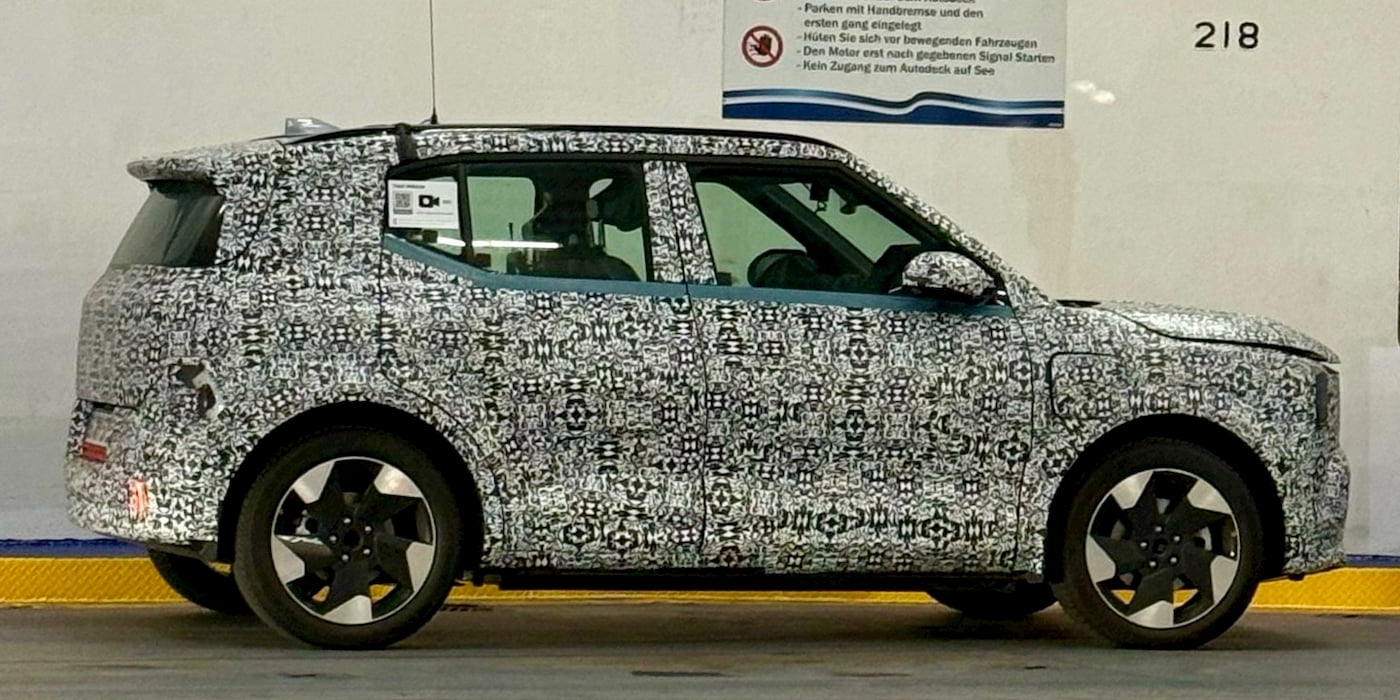
Kia’s most affordable electric SUV will be here in just over a month. Ahead of its debut, the EV2 was spotted with light camo, offering our best look yet.
Kia EV2 looks more like an SUV with less camo
Just days after Kia confirmed the EV2 will debut at the Brussels Motor Show on January 9, 2026, the small electric SUV was spotted in Europe with barely any camo.
The EV2 is a fully electric B-segment SUV set to be Kia’s new entry-level EV. It will sit below the EV3, which is already the UK’s most popular retail electric vehicle and among the top-sellers in Europe.
“With the EV2, we reaffirm our commitment to make electric mobility truly accessible to a broader audience,” Kia Europe president and CEO, Marc Hedrich, said earlier this month.
Despite its compact size, the EV2 looks and feels much bigger in person. It has a similar high-riding, blocky design as Kia’s latest electric SUVs, such as the EV5 and three-row EV9.
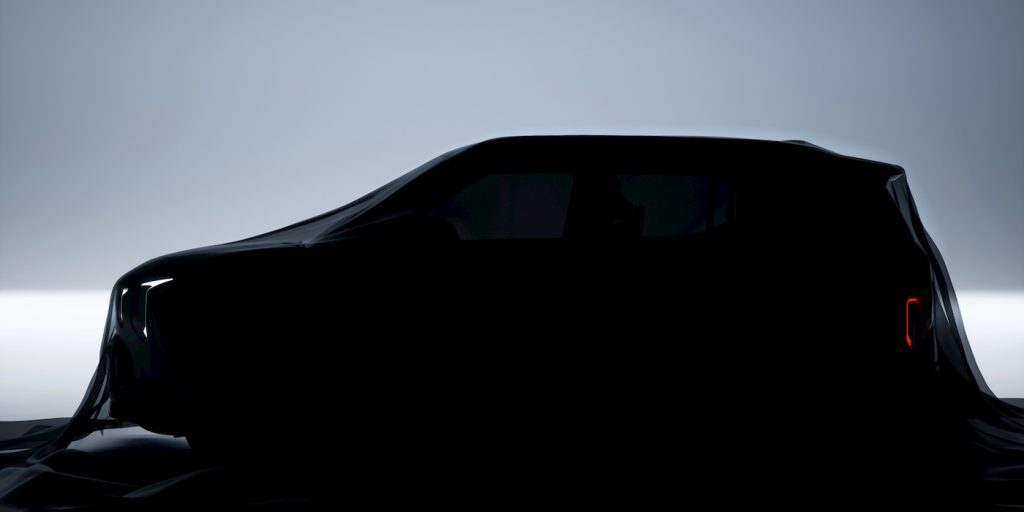
In the teaser images Kia posted a few days ago, the EV2 was shown under a drape with a design that looked nearly identical to the EV2 Concept from earlier this year.
Now, we can finally confirm it. The Kia EV2 was recently spotted in Europe in light camo, rocking a tall, SUV-like stance. The latest image from KindelAuto gives us a solid look at its profile, which still resembles a mini EV5 or EV9.
Kia will begin EV2 production alongside the EV4 hatch at its Zilina, Slovakia, plant shortly after its debut at the Brussels Motor Show next month, ramping up output throughout 2026.
Although Kia has yet to reveal specifics, the EV2 is expected to be about 4,000 mm (157″) long, or slightly smaller than the EV3 at 4,300 mm (169.3″). It will be closer in size to the Hyundai Inster EV.
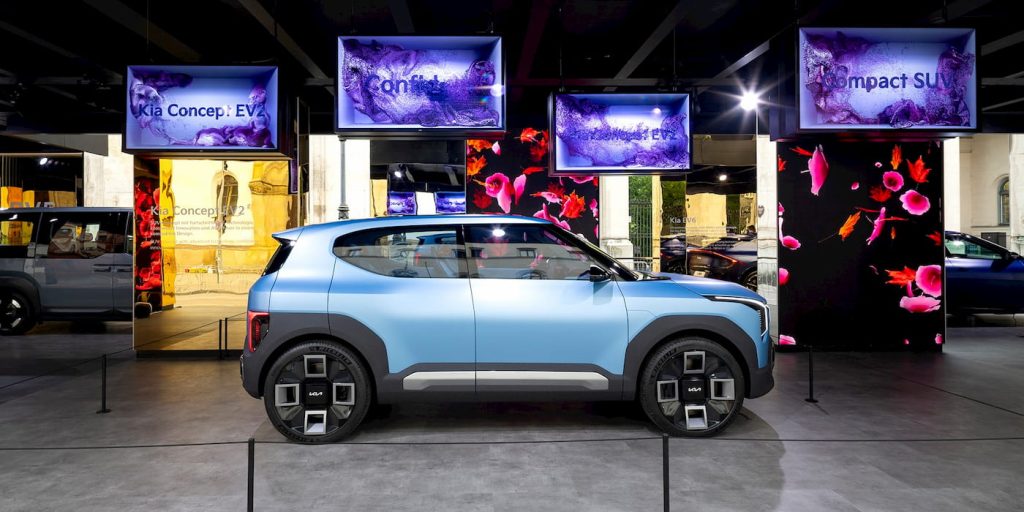
Prices are expected to start at around €30,000 ($35,000) in Europe, given that the EV3 starts at about €36,000 ($42,000).
A new video from HealerTV offers a glimpse of the interior. Although the EV2 concept included sliding benches, detachable seats, cushions, and other innovative features to unlock more space, the interior looks more like Kia’s latest EVs, such as the EV3, EV4, and EV5.
You can see it has a standard armrest and a separate storage spot, similar to the EV5. The door handles are about the same as those in the EV3 and EV4.
Although it’s just a preview since the windows were covered, the second row looks about the same as the EV3. The reporter mentioned a “family look” similar to Kia’s other electric vehicles.
The compact electric SUV is expected to ride on Hyundai’s E-GMP platform, with similar battery pack options as the EV3. The EV3 is available with 58.3 kWh and 81.4 kWh battery options, delivering a WLTP range of 410 km (255 miles) and 560 km (348 miles), respectively.
The EV2 will debut at the Brussels Motor Show on January 9, 2026. Kia will hold a press conference at 10:40 am CET to introduce the new entry-level EV. Check back for updates leading up to the event.
For those in the US, sadly, the EV2 is not expected to make the trip overseas. However, Kia is offering generous discounts of over $10,000 off its current EV lineup.
Interested in a test drive? We can help you get started. You can use the links below to find Kia’s electric vehicles near you.
FTC: We use income earning auto affiliate links. More.


Nissan is looking for a partner to co-develop new EVs with as it struggles to turn things around, but only on one condition.
Nissan is still looking for EV partners
After its plans with Honda fell through earlier this year, Nissan is still hoping to find a partnership to build next-generation EVs.
As part of its recovery plan, Re:Nissan, the automaker has already announced significant job cuts, factory closures, and other extreme measures to cut costs as it looks to return to profitability.
Nissan has been actively seeking new partnerships, but it won’t settle for “just a transaction.” Speaking to Automotive News at an event earlier this month, Ponz Pandikuthira, chief product and planning officer for Nissan Americas, said that although it was open to partnering, it would have to be a two-way street.
“We would not engage with a partner just to buy a vehicle, or platform, or piece of tech,” Pandikuthira said, adding, “That’s what makes it a long-term commitment instead of just a transaction.”
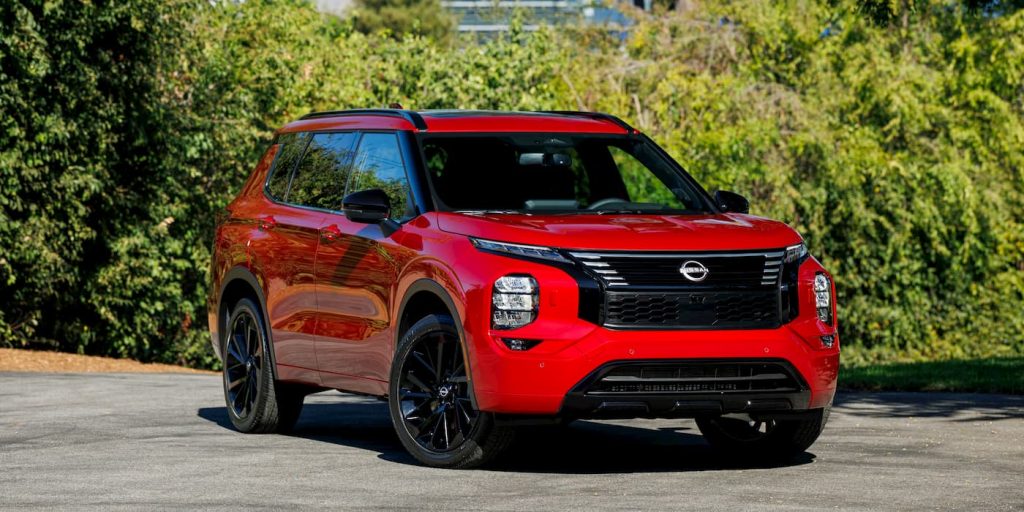
Pandikuthira suggested Nissan is already in talks with several potential partners, including Honda and Mitsubishi. Sources told Automotive News in October that Nissan was in discussions with Ford and Stellantis to supply a new electrified SUV based on the Rogue.
The sources claimed the electrified Rogue would use Nissan’s new e-POWER hybrid system. According to Pandikuthira, Nissan could also use the next-gen Frontier platform, set to underpin the new Pathfinder.

So what would the partnership look like? The product and planning boss said it could involve automakers either buying the technology or Nissan building rebadged vehicles, but the partner would still need to use its tech. It would be a two-way commitment, not just a transaction.
Either way, Nissan will need to move quickly. It already cut the Ariya electric SUV from its 2026 lineup in the US, and is reportedly struggling to sell the new LEAF.
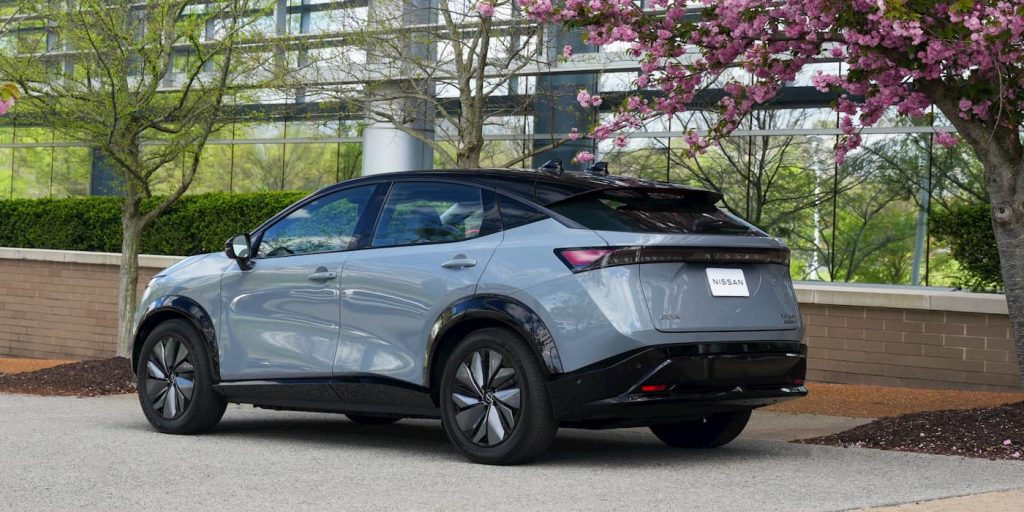
We know we need economies of scale for an EV, and we would be open to a discussion with another partner to jointly develop an EV,” Pandikuthira stressed. That could involve a family of SUVs, Nissan’s product boss suggested.
Electrek’s Take
Starting at $29,990 with over 300 miles of range, Nissan says the 2026 LEAF has “the lowest starting MSRP for any new EV currently on sale in the US.” If it’s already having a tough time selling the low-cost LEAF EV, it could be a long road ahead for Nissan.
Like Hyundai and General Motors, which announced plans to co-develop five new vehicles, combining resources with a new partnership could help Nissan reduce development costs, leverage new tech, and achieve economies of scale.
What are your thoughts on a Nissan EV partnership? Which company would be the best fit? Let us know your thoughts in the comments.
FTC: We use income earning auto affiliate links. More.
-
 Sports2 years ago
Story injured on diving stop, exits Red Sox game
-
 Sports3 years ago
‘Storybook stuff’: Inside the night Bryce Harper sent the Phillies to the World Series
-
 Sports2 years ago
Game 1 of WS least-watched in recorded history
-
 Sports3 years ago
Button battles heat exhaustion in NASCAR debut
-
 Sports3 years ago
MLB Rank 2023: Ranking baseball’s top 100 players
-
Sports4 years ago
Team Europe easily wins 4th straight Laver Cup
-
 Environment3 years ago
Japan and South Korea have a lot at stake in a free and open South China Sea
-
 Environment1 year ago
Here are the best electric bikes you can buy at every price level in October 2024