US
Luigi Mangione had handgun, silencer and ‘manifesto’ in backpack during arrest, police say

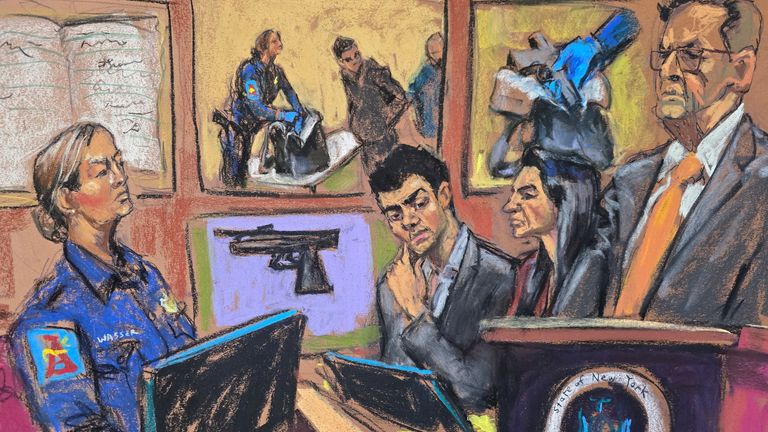

Police officers found a handgun, a silencer and a red notebook described as a “manifesto” when they arrested Luigi Mangione.
The 27-year-old was arrested in December 2024 and charged with killing UnitedHealthcare chief executive Brian Thompson in New York City.
Mangione‘s lawyers want to block prosecutors from showing or telling jurors at his eventual trial in Manhattan about statements he allegedly made and items they said police seized from his backpack during his arrest at a McDonald’s in Pennsylvania.
The objects include a 9mm handgun prosecutors say matches the one used in the killing, a silencer, a magazine with bullets wrapped in underwear and a notebook in which they say Mangione described his intent to “wack” a healthcare executive.
Mangione with his attorney. Pic: Reuters
The defence contends the items should be excluded because police did not get a warrant before searching Mangione’s backpack.
Prosecutors deny claims Mangione was illegally searched and questioned.
They also want to suppress some statements he made to police, such as allegedly giving a false name, because officers asked him questions before telling him he had a right to remain silent.
Last week, Mangione watched surveillance videos of the killing of Mr Thompson, 50, as he walked to a New York City hotel for his company’s annual investor conference.
Mangione has pleaded not guilty to state and federal murder charges.
The state charges carry the possibility of life in prison, while federal prosecutors are seeking the death penalty.
This week’s hearing concerns only the state case, but Mangione’s lawyers want to bar evidence from both cases.
Read more:
The reality of Trump’s trade war
Paramount launches hostile takeover bid for Warner Bros
In September, a judge dismissed two terrorism counts against Mangione, finding prosecutors had not presented enough evidence Mangione intended to intimidate health insurance workers or influence government policy.
Trial dates are yet to be set in either the state or federal cases.