
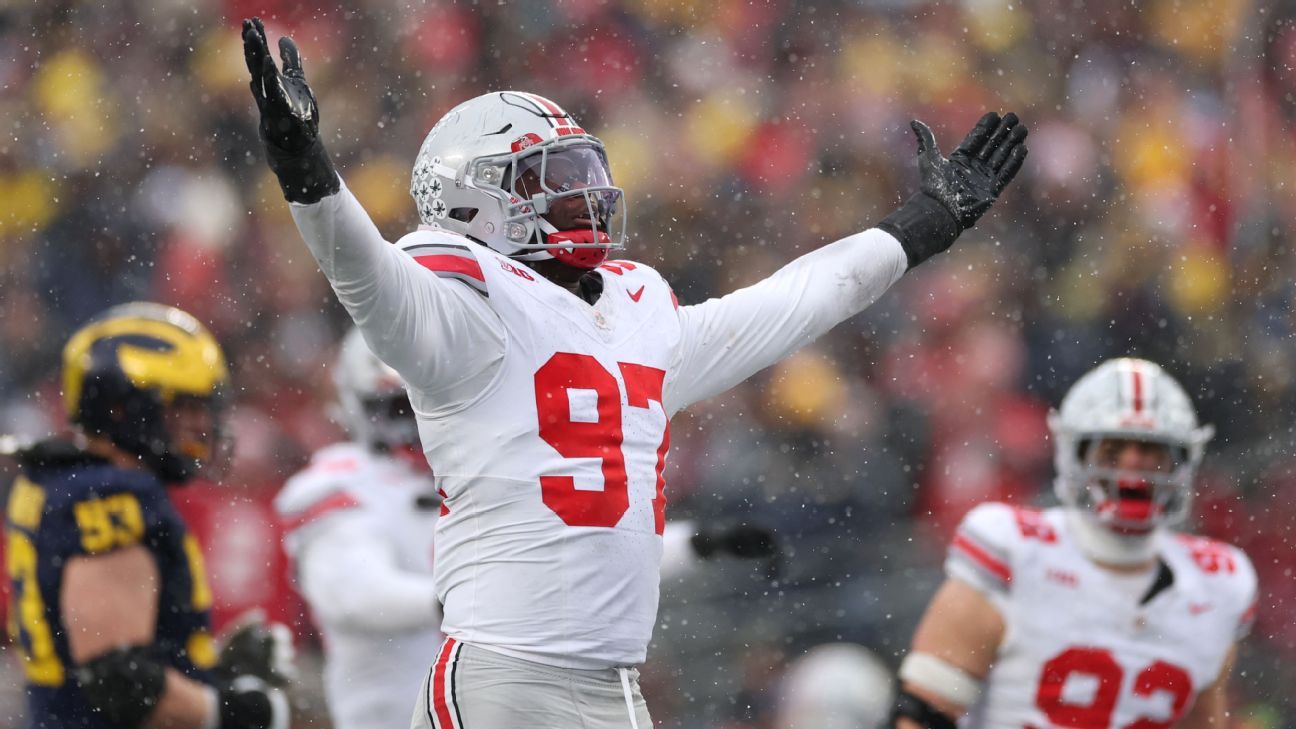
Ohio State’s invincibility, Texas’ CFP conundrum and Lane Kiffin’s legacy


-
Bill Connelly
OK, so it wasn’t the most ridiculous Rivalry Week we’ve ever seen. Thirteen of the top 14 teams in the College Football Playoff rankings won, and the one that didn’t (Texas A&M) was already guaranteed a CFP spot. Chalk has reigned over the past couple of weeks, but as with pizza among other things, Rivalry Week is great even when it’s not great.
We still got a dramatic Iron Bowl, we still got one last silly plot twist in the ACC title race (the silliest yet, perhaps), we still got all the intense environments we could possibly want — plus some snow! — and we still got an all-time comeback in the smaller-school ranks.
(We also got whatever continued to go down in Oxford, Mississippi, which wasn’t even slightly enjoyable but certainly created buzz.)
The conference title game pairings are set, and we’ll soon know how a big load of chalk might impact the CFP rankings. In the meantime, here’s what we learned during an anxious-as-ever Rivalry Week.
(This is for ESPN’s Marty Smith in particular, since he was forced to spend most of Saturday doing live reports about nothing happening in the Ole Miss football building instead of watching the games.)

Ohio State is the most relaxed team on the planet
In Friday’s preview, I wrote about how Ohio State found itself in a strange position: The Buckeyes were unbeaten and No. 1 in the country and faced far less pressure than Michigan heading into The Game. Ohio State fans online assured me this wasn’t actually true — that they were super nervous, and that the pressure was on the Buckeyes to end the losing streak against their hated rival.
Those things were certainly true enough, but Saturday in Michigan, in the face of increasingly Michigan weather, Ohio State was relaxed, sound and just as good as it has been all season. The Wolverines landed some early shots, getting a big run from Jordan Marshall on the first play of the game and picking off Julian Sayin‘s second pass. But they could turn those blows into only field goals – Ohio State ranks second nationally in red zone TD rate allowed – and field goals aren’t going to get the job done against OSU in 2025.
Sayin began the game 2-for-5 but went 17-for-21 from there, and while Michigan was able to limit big plays somewhat, freshman running back Bo Jackson gained 166 yards from scrimmage, and Sayin connected on long touchdown passes to Jeremiah Smith (35 yards, and I guess it was a TD) and Carnell Tate (50).
Total yards over the last three quarters: Ohio State 334 (5.9 per play), Michigan 78 (2.7). The Wolverines were never going to be able to keep up, and unlike last year, the Buckeyes were never going to panic. Instead, they treated Michigan like any other opponent in this machine-like run to 12-0. Ohio State has scored between 34 and 48 points in eight of its past 10 games and has allowed more than 10 points just twice all year. Even with a work-in-progress run game that hasn’t dominated as much as usual — and even when facing the pressure of a nearly 2,200-day streak of not beating Michigan — this team just grounds the opposition into paste.
Over the past few weeks, I’ve found myself thinking that this CFP might end up being an “Ohio State vs. the field” situation. Georgia looked spectacular for a couple of weeks in November but shifted into cruise control against Charlotte last week and could never get its offense humming against a weak Georgia Tech defense Friday. Kirby Smart’s Dawgs are such brawlers that I would still probably give them the best chance of getting the job done, but there’s still reason to wonder about their upside.
Elsewhere, Indiana is, at second in both SP+ and FPI, the computers’ pick for giving the Buckeyes the most to handle. And it might help the Hoosiers that they basically get a practice shot at OSU in the Big Ten championship game next week. I’m sure they want to win their first league title since 1967, but if they lose, they might learn lessons they could apply in a CFP rematch.
Texas Tech has a relentless pass rush and an even better run defense and could put Sayin in increasingly uncomfortable situations. Alabama is 4-1 in one-score finishes in 2025 and, with Saturday night’s late fourth-and-2 touchdown against Auburn, has proved it has the boldness that might be required to beat the Buckeyes. Notre Dame has played like a top-three or so team since its two losses that began the year and, after last season’s national title game loss, would bring a fun revenge storyline to the table. Oregon is the only team not named Michigan to have beaten the Buckeyes in the past 23 months.
This isn’t a slam dunk by any means. But damn, it is hard to pick anyone but Ohio State as the clear title favorite.
Intricate tiebreakers and the ACC’s “8-5 conference champion” destiny
It was John Isner Week in college football — lots of talk about extended tiebreakers.
The ACC had five teams tied for second place at 6-2 (Duke, Georgia Tech, Miami, Pitt and SMU). Those teams played exactly four games among each other, and they shared only one common opponent (Syracuse). Duke, with the worst overall record of the bunch, stole an ACC championship game berth because of its conference opponents’ win percentage.
The Mountain West had four teams tied for first at 6-2 (Boise State, New Mexico, San Diego State and UNLV). They almost played a complete round-robin — we were missing only SDSU-UNLV – but because it was incomplete, the conference had to break the tie with a blend of computer rankings, including SP+. That gave us the Rebels at Boise State even though UNLV was 0-2 against its 6-2 brethren.
The SEC ended up with a four-way tie for first at 7-1 among Alabama, Georgia, Ole Miss and Texas A&M. They played just two games against each other — Bama over Georgia, Georgia over Ole Miss — and A&M got to the finish line without having played any of the other three. Alabama and Georgia got in because of superior conference opponent win percentages.
The MAC had three teams tied for second at 6-2, and while Miami lost to both of the others (Ohio and Toledo), the Redhawks got the MAC championship bid because, since there wasn’t a full round-robin between them, they won the next tiebreaker (record against common opponents).
The American Conference ended up with three teams tied at 7-1 in conference play: Navy, North Texas and Tulane. They shared only one common opponent (Temple), and there was only one head-to-head matchup between the teams. Tulane got in because of its CFP ranking (No. 24), and UNT got in because of a head-to-head win (a rarity in tiebreakers!) over Navy.
The extended playoff is, to me, an undeniably great thing for the sport in terms of both representation and the amount of football that means something late in the season. Conference realignment, however, has given us leagues so utterly enormous that we have ended up with all sorts of messy tiebreakers to determine championship game participants. Granted, it helps immensely when you play nine conference games — as the SEC and ACC soon will — but with everyone moving away from divisions, this is what we get instead.
Granted, divisions stunk. There’s a reason conferences got rid of them in the first place (and why I wanted them to). They were usually quite unbalanced from a quality perspective, meaning we rarely got a conference’s two best teams playing for the crown. Plus, with a divisional structure it would take forever to play all of your conference mates in these enormous conferences. (The classic example: Texas A&M has been in the SEC for 14 seasons, and Georgia still hasn’t played in College Station.)
Obviously, conferences aren’t looking to voluntarily get smaller, so is there a solution here? Is it either faulty divisions or terrible tiebreakers? If someone’s in the mood to get silly, I certainly have ideas.
What about two-tiered conferences with promotion and relegation between them? That would ensure that the teams most likely to make title runs are playing each other, though it would prevent a sudden rise like that of 2024 Indiana (since the Hoosiers would have most certainly started the year in the Big Ten’s second tier).
What about temporary divisions that are established based solely on recent quality and are redrawn every few years to avoid permanent imbalance?
Maybe it’s as simple as what the American Conference did: putting “highest CFP ranking” pretty high up the tiebreaker list (and maybe shifting to the AP poll or computer averages if no one is ranked by the CFP committee). The ACC would probably love that right about now; its best team (Miami) will quite possibly end up missing out on a CFP slot that goes to either a lesser ACC champion (Virginia) or, if 7-5 Duke upsets the Cavaliers, perhaps a second Group of 5 champion instead.
My CFP rankings prediction
In previous seasons, I shared a BCS-like formula that I maintain — essentially, half AP poll, half computer ratings (mostly résumé SP+ and strength of record) — that does a decent job of approximating how the CFP committee will think. Based on both that formula and who the committee has to this point favored (Texas Tech, Oklahoma) and disfavored (Vanderbilt, any Group of 5 team) compared to the formula this season, here’s my best guess for what the top 25 will look like Tuesday night:
1. Ohio State (12-0)
2. Indiana (12-0)
3. Georgia (11-1)
4. Texas Tech (11-1)
5. Oregon (11-1)
6. Ole Miss (11-1)
7. Texas A&M (11-1)
8. Oklahoma (10-2)
9. Notre Dame (10-2)
10. Alabama (10-2)
11. BYU (11-1)
12. Miami (10-2)
13. Vanderbilt (10-2)
14. Utah (10-2)
15. Texas (9-3)
16. USC (9-3)
17. Virginia (10-2)
18. Michigan (9-3)
19. Arizona (9-3)
20. Tulane (10-2)
21. Iowa (8-4)
22. Tennessee (8-4)
23. Missouri (8-4)
24. Georgia Tech (9-3)
25. James Madison (11-1)
We don’t know how far Texas A&M will fall, but my guess is that its résumé doesn’t quite stand up to those of Oregon or Ole Miss. Those three teams are somewhat interchangeable, though. And at the bottom of the list, the committee has been going out of its way not to rank either James Madison (17th in my formula) or North Texas (20th) and might continue that. But with last week’s Nos. 19, 20, 21, 22 and 23 teams losing, there’s an open door. Maybe the committee will deign to notice just how impressive the Dukes and/or Mean Green have been at some point. (Yes, their schedules have been weak. Yes, they would accept a power conference invitation if offered. Their weak schedules are not their fault.)
The most interesting rankings, of course, will be those in the No. 8-14 range. If we just assume that any two-loss SEC or Big Ten team and any one-loss Big 12 or ACC team is in, we have more teams in than we have slots available. And this extremely chalky weekend did nothing to help with that. Recent weeks suggest an Oklahoma-Notre Dame-Alabama-BYU-Miami-Utah-Vandy hierarchy, but with Utah looking shaky again and Vandy scoring a win over Tennessee, I’m guessing the Commodores will jump the Utes.
The most interesting team, however, is Texas. Granted, the Longhorn buzz grew quieter when all the favorites won Saturday, but we’ll see if Steve Sarkisian’s campaigning after Friday night’s win over Texas A&M moves the needle. Many have pointed out that, had Texas scheduled a weak nonconference opponent instead of Ohio State, the Longhorns would quite likely be in the field of 12, and that’s fine.
My counterpoint, however, is simple: How many times did they actually look like a playoff team this year? Three? Four? They needed overtime to beat Kentucky and barely got past Mississippi State, and their offense didn’t really show up until late October. And no one in about the No. 11-19 range above has suffered a loss as egregious as Texas’ dreadful 29-21 defeat at Florida. Their best wins are strong, but they have both more losses than others in this range and the worst loss of anyone in this range. That more than offsets wins over OU and Vandy in my eyes. Maybe the committee will spring a surprise, but if the Horns don’t make it, it’s their own damn fault.
Lane Kiffin’s legacy
3:06
Lane Kiffin: ‘It was really difficult’ to leave Ole Miss for LSU
Lane Kiffin chats with Marty Smith about his decision to leave Ole Miss for LSU and not being able to coach the Rebels during the College Football Playoff.
It sure is fun thinking back to the September “E60” feature on Lane Kiffin. You know, the one where he talked about how much he’s thinking about his legacy and rethinking the balance between raw ambition and happiness? Well, as of Sunday, that legacy officially includes deciding to ditch a playoff team (Ole Miss) in favor of one of its more bitter conference rivals (LSU), stretching the saga out for weeks, casting a huge cloud over all of Rivalry Week and attempting to play the victim, picking one last round of fights with local media and — despite having once been canned by Nick Saban a week before the national title game because of his failure to properly multitask — seemingly using public pressure to try to force Ole Miss to allow him to coach both schools at the same time until the Rebels’ stay in the CFP is over.
That works if you’re North Texas coach Eric Morris, agreeing to jump to a power conference gig. How in the hell was that supposed to work when jumping from one job to another within the loudest and messiest conference in the country, while potentially getting ready to poach a lot of his old players for his new job?
Kiffin is an awesome — and, potentially, still improving — head coach who will probably win big at LSU, one of the most well-resourced, built-to-win programs in the country. I know why LSU wanted him so badly and offered him such a lucrative deal, even despite the irony of the Louisiana governor signing off on the deal weeks after complaining about egregious coach contracts and saying, “It’s really time for the NCAA to put on some guardrails in college sports.”
But he’s such a good coach that he was already winning big at another school and didn’t need to leave to build an elite program. He already had one mostly built, and by all accounts Ole Miss was prepared to lay down lots of cash (for both him and playing talent) if he stayed. The college football calendar stinks, and there’s really no clean and easy way to fix it, but once again, this didn’t happen to Lane Kiffin. It happened because he was willing to leave a CFP team before the CFP. Now, his legacy is all but assured to start with the way he left schools, not how many games he won at them.
Congrats to the bowl-eligible teams
Bowls might not mean what they used to, but they can mean quite a bit to a 5-6 team desperately trying to snag one last win during Rivalry Week. And quite a few needed some drama to get to win No. 6. Penn State needed a huge day from Kaytron Allen and a late fumble recovery score to survive at Rutgers 40-36 in a battle of 5-6 teams. The road team won two other such games as well: Arkansas State scored the winner with 42 seconds left to top Appalachian State 30-29 in Boone, and Georgia Southern kept Marshall at arm’s length in a 24-19 win in Huntington.
Elsewhere, Louisiana needed overtime to put away rival Louisiana-Monroe but eventually secured its sixth win; Texas State earned a bowl showcase for prolific quarterback Brad Jackson thanks to a 49-26 win over South Alabama; Army beat UTSA 27-24 to move to 6-5 with Navy coming up; Kansas State messed around a bit but eventually put Colorado away 24-14; and Washington State avenged an earlier road defeat to Oregon State by pummeling the Beavers at home 32-8. I guess they split the Pac-12 title then? They should play a third game next week just for fun.
Plus, Delaware scored all 20 of the fourth quarter’s points to put away a 61-31 win over UTEP. That became particularly important when only 80 eligible teams ended up with six wins. There are 82 FBS bowl slots, so the Blue Hens and another Conference USA team and FBS newcomer, 7-5 Missouri State, are now eligible and get to bowl as well. Clean and easy.
Amazing jobs by Jason Eck, Mark Carney and Jerry Mack
Kent State fielded one of the worst teams imaginable in 2024, and that’s not an exaggeration: Since the FBS/FCS split in the late 1970s (and not including the incomplete 2020 season), the only teams that graded out worse than last year’s Golden Flashes are 2021 UMass, 2019 UMass and 2006 Temple. Kent State was 0-12 that year after going 1-11 the season before. Then Mark Carney was named the school’s interim head coach mid-spring after Kenni Burns’ firing. This seemed like just about the worst job imaginable, but if the Golden Flashes had eked out a win against either Buffalo (a 31-28 loss) or Ball State (17-13), they’d have ended up bowl-eligible.
Carney’s performance was incredible, good enough to get his “interim” tag wiped off, but it’s not even clear that his was the best coaching performance of the season. That honor might need to go to Jerry Mack, who inherited a 2-10 Kennesaw State team, went 9-3 and earned a spot in next week’s Conference USA championship game. Or perhaps you prefer Jason Eck’s performance at New Mexico. Bronco Mendenhall left after one season in Albuquerque, Eck had to flip damn near the entire roster, and yet the Lobos are 9-3 and 66th in SP+; they haven’t finished in the top 70 since 2007.
The portal and the instability of rosters has its obvious drawbacks, but it has produced some pretty tantalizing turnarounds in recent seasons. We got a few in 2025, and I didn’t even mention what Eric Morris has done at North Texas, or Clark Lea at Vanderbilt, or Tony Elliott at Virginia, or Jim Mora at UConn, or Willie Fritz at Houston.
A lot of talented teams botched their offensive line
South Carolina’s LaNorris Sellers, a sack-prone quarterback by nature who will probably continue to be terribly sack-prone in the pros, got zero help from his run game (107th in rushing success rate) and faced absurd amounts of instant pressure in 2025 (134th in pressure rate).
LSU’s Garrett Nussmeier watched both his trajectory and NFL draft stock plummet when trying to move the ball with no run game (119th in rushing success rate), loads of offensive line penalties and quite a few sacks (70th in sack rate).
Texas’ Arch Manning didn’t get help from his run game until basically the second half of the Longhorns’ 12th game (91st in rushing success rate) and faced constant pressure (119th in pressure rate) with lots of O-line penalties.
It hit me in recent weeks that, although we knew heading into the season that a lot of highly ranked teams were breaking in new starting quarterbacks, the biggest issue among numerous ambitious teams was a total lack of continuity up front.
Of the teams in the preseason AP top 20, seven returned less than 44% of their offensive line starts from 2024: No. 1 Texas, No. 3 Ohio State, No. 5 Georgia, No. 7 Oregon, No. 9 LSU, No. 13 South Carolina and No. 17 Kansas State. Of those seven, six underachieved against offensive projections this season. Texas was projected 24th and currently ranks 38th. Kansas State was projected 16th and ranks 45th. South Carolina was projected 26th and ranks 85th. LSU was projected second and ranks a ghastly 90th. Texas signed zero O-line transfers, preferring to build from within. South Carolina and Kansas State signed four each, and LSU signed two. Their lines all stank regardless.
Granted, plenty of teams managed to underachieve with experienced lines, and maybe one of the most interesting stories of the season — something to peck around with in the offseason — is the fact that a majority of preseason ranked teams underachieved offensively. But for all the attention that we justifiably give to the QB position, crafting a sturdy and reliable offensive line in the portal era seems as tricky as ever.
This week in SP+
The SP+ rankings have been updated for the week. Let’s take a look at the teams that saw the biggest change in their overall ratings. (Note: We’re looking at ratings, not rankings.)
Moving up
Here are the 10 teams that saw their ratings rise the most this week:
Louisville: up 2.5 adjusted points per game (ranking rose from 37th to 30th)
Bowling Green: up 2.5 points (from 125th to 115th)
Florida International: up 2.4 points (from 105th to 94th)
Boston College: up 2.3 points (from 113th to 103rd)
Washington State: up 2.3 points (from 65th to 60th)
Fresno State: up 2.3 points (from 75th to 67th)
Florida: up 2.2 points (from 69th to 62nd)
Air Force: up 2.2 points (from 93rd to 86th)
NC State: up 2.2 points (from 66th to 61st)
South Florida: up 2.2 points (from 28th to 23rd)
We saw plenty of “go up big on your rival and keep punching” situations Saturday — Louisville beat Kentucky by 41, Fresno State beat San José State by 27, NC State beat North Carolina by 23, Florida beat Florida State by 19 — and it provided some last-minute ratings shifts.
Moving down
Here are the 10 teams whose ratings fell the most:
Kentucky: down 2.8 adjusted points per game (ranking fell from 57th to 63rd)
Florida State: down 2.7 points (from 34th to 43rd)
Pitt: down 2.7 points (from 29th to 36th)
Coastal Carolina: down 2.4 points (from 112th to 117th)
Tennessee: down 2.3 points (from 14th to 21st)
Nebraska: down 2.2 points (from 39th to 46th)
San José State: down 2.1 points (from 111th to 116th)
Cincinnati: down 2.0 points (from 41st to 49th)
West Virginia: down 2.0 points (from 92nd to 93rd)
North Carolina: down 2.0 points (from 94th to 97th)
Perhaps not surprisingly, the teams that received the poundings referenced above fell by pretty solid amounts, too. And god bless the ACC for continuing to provide surprises and shifts right until the end — six of the 20 teams on these two lists are from that league.
Who won the Heisman this week?
I am once again awarding the Heisman every single week of the season and doling out weekly points, F1-style (in this case, 10 points for first place, 9 for second and so on). How will this Heisman race play out, and how different will the result be from the actual Heisman voting?
Here is this week’s Heisman top 10:
1. Drew Mestemaker, North Texas (20-for-24 passing for 366 yards and 3 touchdowns against Temple).
2. Diego Pavia, Vanderbilt (18-for-28 passing for 268 yards, 1 TD and 2 INTs, plus 168 non-sack rushing yards and a TD against Tennessee).
3. Jadan Baugh, Florida (38 carries for 266 yards and 2 touchdowns against Florida State).
4. Brad Jackson, Texas State (20-for-26 passing for 280 yards and 2 touchdowns, plus 113 non-sack rushing yards and 3 TDs against South Alabama).
5. Stephen Daley, Indiana (six tackles, 4.5 TFLs, a sack and a forced fumble against Purdue).
6. Kaytron Allen, Penn State (22 carries for 226 yards and a touchdown, plus 12 receiving yards against Rutgers).
7. Jaron-Keawe Sagapolutele, Cal (31-for-40 passing for 330 yards and 4 touchdowns against SMU).
8. Trinidad Chambliss, Ole Miss (23-for-34 passing for 359 yards and 4 touchdowns, plus 26 non-sack rushing yards against Mississippi State).
9. Evan Dickens, Liberty (43 carries for 267 yards and 4 touchdowns, plus 16 receiving yards against Kennesaw State).
10. Behren Morton, Texas Tech (25-for-32 passing for 310 yards and 3 touchdowns against West Virginia).
North Texas’ offense has shifted from great to video-game great in recent weeks. The clearest evidence? Drew Mestemaker threw for 366 yards on just 24 passes, and that was a clear step backward from the week before, when he threw for 469 in 19 against Rice.
And speaking of absurd, Diego Pavia just put up 436 combined rushing and passing yards in an enormous rivalry win over Tennessee, Vandy’s first in seven years. That’s a pretty good way to make a final impression to Heisman voters.
Honorable mention:
• Emmett Johnson, Nebraska (29 carries for 217 yards and a touchdown, plus 22 receiving yards against Iowa).
• Parker Kingston, BYU (six catches for 126 yards and a touchdown, plus a punt return TD against UCF).
• Dante Moore, Oregon (20-for-29 passing for 286 yards and a touchdown, plus 20 non-sack rushing yards and a TD against Washington).
• T.J. Parker, Clemson (four tackles, three sacks and a fumble recovery against South Carolina).
• Jeremy Payne, TCU (26 carries for 174 yards and 2 touchdowns, plus 44 receiving yards against Cincinnati).
• Jordan Pollard, San Jose State (19 tackles, 1 TFL, 1 forced fumble and a 58-yard pick-six against Fresno State).
• Antwan Raymond, Rutgers (29 carries for 189 yards and 2 TDs, plus 62 receiving yards and a TD against Penn State).
• Julian Sayin, Ohio State (19-for-26 passing for 233 yards, 3 TDs and an INT against Michigan).
• Malachi Toney, Miami (13 catches for 126 yards and a touchdown, plus 30 rushing yards and a touchdown pass against Pitt).
Through 14 weeks, here are your points leaders, with the tiebreaker of most points in the past four weeks:
1. Diego Pavia, Vanderbilt (43 points)
2. Julian Sayin, Ohio State (29 points, 4 in the past four weeks)
3. Ty Simpson, Alabama (29 points, 0 in the past four weeks)
4. Trinidad Chambliss, Ole Miss (28 points)
5. Taylen Green, Arkansas (27 points)
6. Drew Mestemaker, North Texas (26 points, 18 in the past four weeks)
7. Fernando Mendoza, Indiana (26 points, 7 in the past four weeks)
8. Gunner Stockton, Georgia (25 points)
9. Demond Williams Jr., Washington (21 points)
10. Haynes King, Georgia Tech (18 points)
In his past four games, Pavia averaged 374 passing yards, 107 non-sack rushing yards and 4 combined touchdowns. That trounces what Mendoza and Sayin did down the stretch, and it should do more than simply guarantee him a trip to New York — he should win in New York. It blows my mind that Pavia’s current betting odds (+550) are so much worse than either Mendoza’s (even) or Sayin’s (+140).
My 20 favorite games of the weekend
1. FCS: No. 21 Yale 43, No. 13 Youngstown State 42. Remember last year, when all the visiting teams in the first round of the CFP looked like deer in headlights out of the gate? We got the FCS version of that Saturday, when the first two Ivy League teams to play in the playoffs both stumbled immediately. Harvard, down 31-0 to Villanova at halftime, never recovered, eventually falling 52-7.
Yale, on the other hand, did more than recover. Trailing 42-14 midway through the third quarter, the Bulldogs pitched a shutout from there: They scored, recovered a fumble, scored again, forced a (missed) field goal, scored again, forced a three-and-out, scored again, hit the 2-point conversion, forced a four-and-out and won the game. It was the cleanest, easiest game-winning 29-0 run you’ll ever see. An absolute stunner.
Yale’s reward, by the way? A cross-country date with No. 2 Montana State. I wouldn’t recommend falling behind by 28 in that one.
2. California 38, No. 21 SMU 35. Indeed, the ACC knows plot twists. Cal led by 17 points with 13 minutes left, then trailed with one minute left, then won anyway. Jaron-Keawe Sagapolutele’s freshman year has been up and down, but this was quite the shining moment.
3. No. 10 Alabama 27, Auburn 20. Tied with your hated (and messy) rival, having blown a 17-point lead? Facing a fourth-and-2 and not wanting to settle for a field goal? Go for it!
0:33
Alabama’s 4th-down gamble pays off with late TD
Alabama’s 4th-down gamble pays off with late TD
And I guess there was only one way for the Hugh Freeze era at Auburn to officially end: with a one-score loss. The Tigers have suffered 12 of them in the past three seasons. The only team to suffer more in that span? Conference mate Arkansas (14).
4. New Mexico 23, San Diego State 17 (2OT). New Mexico will get a shot at just its second ever 10-win season in a bowl game because of this thriller, which included an early 10-0 lead, a couple of long touchdown runs, a pair of overtime turnovers (an interception for UNM, a fumble recovery for SDSU), a one-handed touchdown grab in the second OT, one last stop and a field storming. Best game of Friday.
5. No. 8 Oklahoma 17, LSU 13. There was no way in hell this game was going to be pretty, and it indeed featured more turnovers (four) than touchdowns (three), but after twice falling behind in the second half, OU’s offense showed up, first with a 45-yard screen-and-run from Deion Burks, then with a wide-open, 58-yard John Mateer-to-Isaiah Sategna III bomb that probably sent the Sooners to the CFP.
6. Division II: No. 10 Texas-Permian Basin 21, No. 15 Western Colorado 15 (OT). UTPB keeps going! The Falcons returned to Colorado for the second straight playoff game, spotted their hosts a 15-0 lead with eight minutes remaining, then got to work. Kanon Gibson ran for one touchdown and threw for another to force overtime, then he hit Jaylon Tillman for a 21-yard score in OT. The PAT was blocked, but Caimon Mathis broke up a fourth-down WCU pass, and UTPB advanced to the D-II quarterfinals.
7 and 8. Kennesaw State 48, Liberty 42 (2OT) and Jacksonville State 37, Western Kentucky 34. Conference USA brought the drama this season — 50% of its conference matchups were one-score games, tied with the SEC for the most. Hell, the Big 12 (41.1%) was the only other conference above 39%. It made sense, then, that the conference title game pairings were decided by a couple of thrillers. First, JSU overcame an early 14-point deficit, traded field goals down the stretch and won with a 28-yarder from Garrison Rippa at the buzzer.
The Gamecocks will play Kennesaw State, which blew it but got a second chance. The Owls gave up a game-tying 59-yard touchdown pass with 3:28 left, then let Liberty drive to set up a late field goal attempt, but Jay Billingsley missed from 32 yards. KSU needed only two plays to score twice in overtime, and Liberty went four-and-out in the second OT. In its second year in FBS, Kennesaw will play for its first CUSA title. Hooty hoo!
9. Division III: No. 20 Wheaton 28, No. 5 Wartburg 24. Let it be known that I nailed it in Friday’s preview: Three of the games in my smaller-school showcase were classics. On an increasingly snowy field in Waverly, Iowa, Wheaton trailed host Wartburg on three occasions but struck back each time. Matt Crider’s 4-yard touchdown with 24 seconds left gave the Thunder the lead, and Wheaton defenders Collin Moore and Caleb Coburn teamed up to bat away a Hail Mary in the end zone. The win moves them on to the round of 16 against DePauw.
10. FCS: Southern 28, Grambling 27. I felt strange not mentioning the Bayou Classic in Friday’s preview, but Southern has been so dreadful this season that I passed. Never again. The 1-10 Jaguars fell behind 14-0 early and didn’t lead until midway through the fourth quarter, when Cam’Ron McCoy found Khalil Harris for a 34-yard score. Ckelby Givens recovered a fumble with 32 seconds left, and Southern scored one of the more unlikely recent wins in this wild series.
11. Louisiana 30, Louisiana-Monroe 27
12. Boise State 25, Utah State 24
13. Arkansas State 30, App State 29
14. Illinois 20, Northwestern 13
16. Kent State 35, Northern Illinois 31
17. No. 4 Georgia 16, No. 23 Georgia Tech 9
19. D-II: No. 16 Newberry 24, No. 9 West Florida 17
20. UAB 31, Tulsa 24

-
Dave Wilson
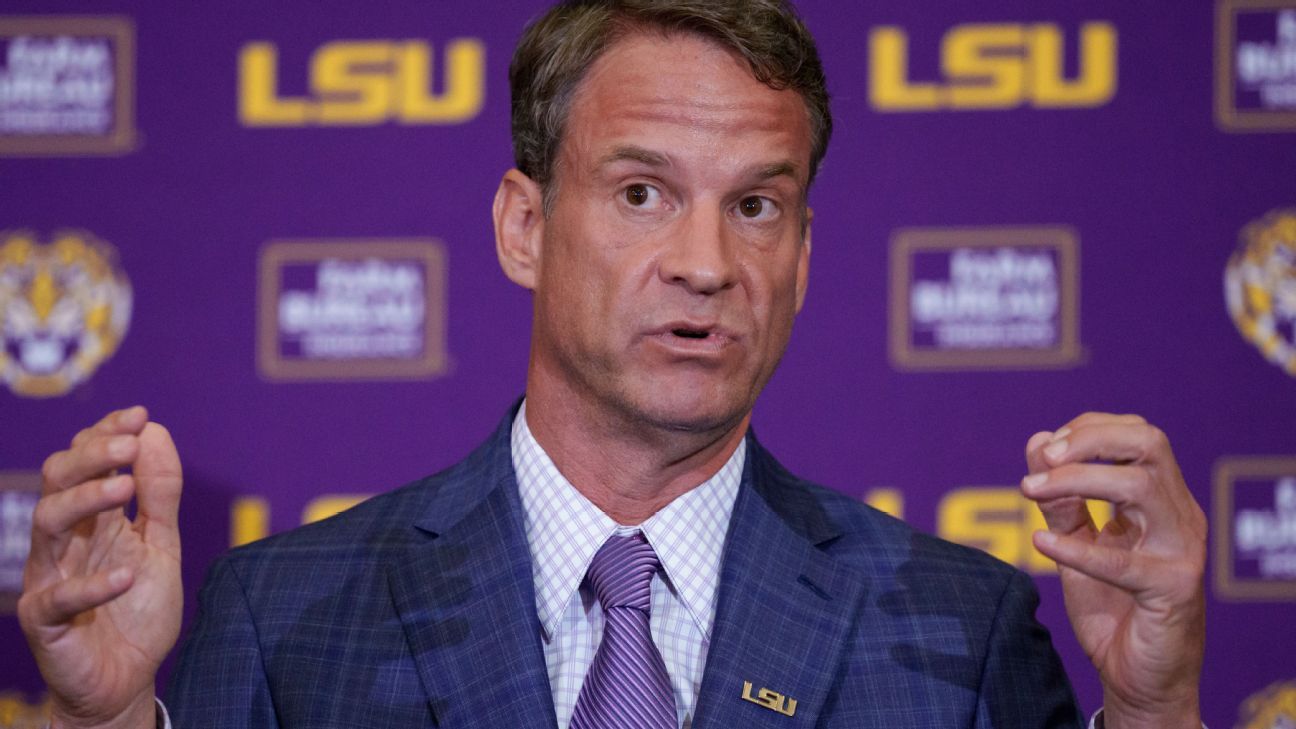
BATON ROUGE, La. — Lane Kiffin was introduced as new coach at LSU on Monday, promising to restore it to a place as “the best program in all of college football,” while detailing what he said was an excruciating decision to leave Ole Miss.
His arrival marked the end of a months-long saga in which Kiffin was the subject of rival coaching searches by Florida and LSU while Ole Miss tried to retain him. He leaves Oxford amid a historic season in which the Rebels are 11-1 and No. 7 in the College Football Playoff ranking.
Kiffin said the “last 48 hours, in a lot of ways, sucked,” saying he understood the passion of furious Ole Miss fans who were at the airport as he departed. He said he informed Ole Miss administrators on Saturday night that he was going to take the LSU job, and continued a conversation in earnest through Sunday trying to figure out a solution to how he could continue to coach the Rebels in what he called the “most historic sporting event in the history of the state of Mississippi, a home playoff game.
“There was no way to possibly do it, in my opinion, any better than we did from a timing standpoint,” Kiffin said.
Eventually Ole Miss athletic director Keith Carter made the decision that he would not coach the Rebels in the future, which Kiffin said was a decision he respected. He said Carter told him that while it may make sense make sense to everybody outside the program to keep the staff together for the playoffs, he’s the one that has to live in Oxford going forward after Kiffin is gone.
LSU athletic director Verge Ausberry called Kiffin “a big enough personality to operate in a state of big personalities,” and said LSU had no issues with Kiffin continuing to coach Ole Miss. But, he said, the reality is that there’s no rule like in the NFL where teams can’t contact coaches until the season is over.
“That’s not our fault,” Ausberry said. “It was a hand we were dealt, and we had to deal with it, and I had to protect LSU’s interests. I have great friends at all those other institutions in the SEC, but this is about doing what’s right for LSU.”
So Kiffin departed Oxford immediately for Baton Rouge. He arrived, drove by Tiger Stadium, a place he had coached many times, saw it lit up, and said he felt “the power of the place.”
“I called one person. I called Ed Orgeron,” Kiffin said, of his longtime friend and colleague who won a national title as the head coach at LSU in 2019. “I said, ‘hey, man, all I can do … This place just makes me want to talk like you right now.'”
Kiffin’s first 24 hours included a phone call with Louisiana Gov. Jeff Landry, who took a front-and-center approach to LSU’s coaching situation, which led to the departure of former athletic director Scott Woodward. Kiffin called the call “unique,” with a smile and said, “I could feel his passion and energy in that call for the state of Louisiana and for LSU football.”
Kiffin has a 117-53 record in 14 years as a college head coach at Tennessee, USC, Florida Atlantic and Ole Miss, including seven 10-win seasons. He’s also been a part of five of the most infamous exits in football history: Al Davis detailing his shortcomings on an overhead projector in Oakland, leaving after one year at Tennessee for the USC job, then being fired on the tarmac at USC, followed by Nick Saban dismissing him a week before a national championship game at Alabama, and now leaving Ole Miss for Baton Rouge before the playoff.
He said he did not get emotional by the reaction by fans, including, he said, fans who tried to run him off the road while driving with his son Knox in the car, saying that’s life in the SEC.
“I think that people get really upset when you leave somewhere, because they feel hurt because you’re doing a really good job,” Kiffin said. “They ain’t going to the airport and driving from all over to say those things and yell those things and try to run you off the road if you were doing bad.”
Kiffin credited his three biggest mentors, all of whom he considered among the greatest defensive minds in football: Monte Kiffin, Pete Carroll and Nick Saban. He credited Carroll, who he said promised his late father he’d look after Lane, for encouraging him to make the leap. He hinted that Saban, too, had nudged him as well.
“Coach Saban coached at another place in this conference, so I can’t really say exactly what he said,” Kiffin said, to laughs from the crowd. “But I’ll say, I think the world of Coach Saban, and I respect him. And so there’s a reason we’re here.”
He said his first task is wrapping up the Tigers’ recruiting class with the early signing period beginning Wednesday through Friday. Kiffin said Frank Wilson will continue to serve as the interim head coach for LSU’s impending bowl game, but did not have any further clarity on staff positions.
Kiffin agreed to a seven-year contract with LSU on Sunday that will pay him $13 million annually, including a provision where he will receive the same CFP bonus structure from LSU that he would received at Ole Miss, including $150,000 for the Rebels’ participation in a first-round CFP game, up to $250,000 for a quarterfinal appearance and another $1 million if Ole Miss wins the national championship.
He said on Monday that he was not aware of his contract terms, saying he never asks his agent, Jimmy Sexton, but rather is more concerned with what the financial resources are to build the program, including NIL for players. He said the plan he heard from LSU proved that this was the best job in football.
“When you take the history, tradition, passion and the great players in the state of Louisiana, no one can argue that when you’re in Tiger Stadium on Saturday night, there is nothing like it,” Kiffin said. “This place is built for championships with championship expectations — we understand that — but as an elite competitor that’s exactly what you want and that’s why we’re here.”
Lane Kiffin was understandably the story of the Egg Bowl, but the coach’s prolonged employment decision didn’t really qualify as surprising for those who have followed his career.
You know who was a surprise? Trinidad Chambliss. Did anyone outside of Oxford, Mississippi, or Big Rapids, Michigan, where Chambliss starred for Division II Ferris State before transferring to Ole Miss, know the quarterback’s name entering the season?
Chambliss, who replaced injured starter Austin Simmons in September and never looked back, became one of the season’s most delightful surprises. He again displayed his talent and poise in the Egg Bowl, recording season highs for passing yards (359) and touchdowns (4) in Ole Miss’ 38-19 win over rival Mississippi State. Chambliss finished the regular season with 3,016 passing yards and 18 touchdowns, to go along with 470 rushing yards and six scores.
There were other surprises on display over the weekend, from Oklahoma’s resurgent defense under coach Brent Venables, to Ohio State experiencing no drop-off under first-year starting quarterback Julian Sayin, to BYU improving to 11-1 behind its own young quarterback Bear Bachmeier, to Indiana being even more dominant than it was under coach Curt Cignetti in 2024.
As the regular season wraps up, here’s a look at the latest Power Rankings and the biggest surprises among the top 25 teams. — Adam Rittenberg
Previous ranking: 1
Arvell Reese was merely a backup rotation player for the Buckeyes last season. This season, the edge rusher/linebacker has become a superstar. With 59 tackles and 6.5 sacks, Reese has wrecked opposing offenses. He’s in line to earn All-America honors — and suddenly is a virtual lock to go high in the first round of the next NFL draft. Ohio State boasted the No. 1 statistical defense last season on the way to winning the national championship. This season, its defense is even better — and Reese’s emergence is a major reason why. With Saturday’s 27-9 win at Michigan, Ohio State has become the first team since Florida’s 1975 team to give up 16 or fewer points in each of its first 12 games, according to ESPN Research. With Reese joining fellow linebacker Sonny Styles, defensive end Caden Curry and reigning All-America safety Caleb Downs, the talented Buckeyes have a championship-caliber unit again. — Jake Trotter
Previous ranking: 2
The most surprising thing about coach Curt Cignetti’s second season at IU is how much it resembled the first, only even more dominant. Indiana went from its first 11-win season in 2024 to its first 12-win season in 2025, despite facing tougher conference competition, and recorded eight wins by 24 points or more while scoring 55 or more points six times, including Friday’s 56-3 shellacking of rival Purdue in the Old Oaken Bucket game.
The Hoosiers rushed for 355 yards and five touchdowns against Purdue, displaying a run game that has elevated substantially. IU averaged 229.8 rushing yards during the regular season, up from 165.1 in 2024, as a deeper group of running backs and offensive linemen pummeled opponents. Though the Hoosiers elevated their run game, they maintained their stifling defense against the run, giving up only 951 yards in 12 games. — Rittenberg
Previous ranking: 4
Gunner Stockton, for all his talents, seems almost required to be underappreciated. His rise to QB1 this offseason was considered something of a risky bet, particularly after Georgia’s early exit from the playoff following Carson Beck‘s injury last season. Stockton is soft-spoken and reserved, and even his best games tend to be overshadowed by other performances. And yet, to look back on Georgia’s 11-1 season in 2025, it’s impossible to say anyone has made a bigger impact than Stockton. It hasn’t always been pretty — that’s part of the experience, really — but it has always been gritty and resilient and, at times, exhilarating. Stockton wraps the regular season with nearly 3,000 total yards, 28 touchdowns and only 5 interceptions, numbers that largely mirrored Beck’s 2024 season, only with fewer costly mistakes. — David Hale
Previous ranking: 7
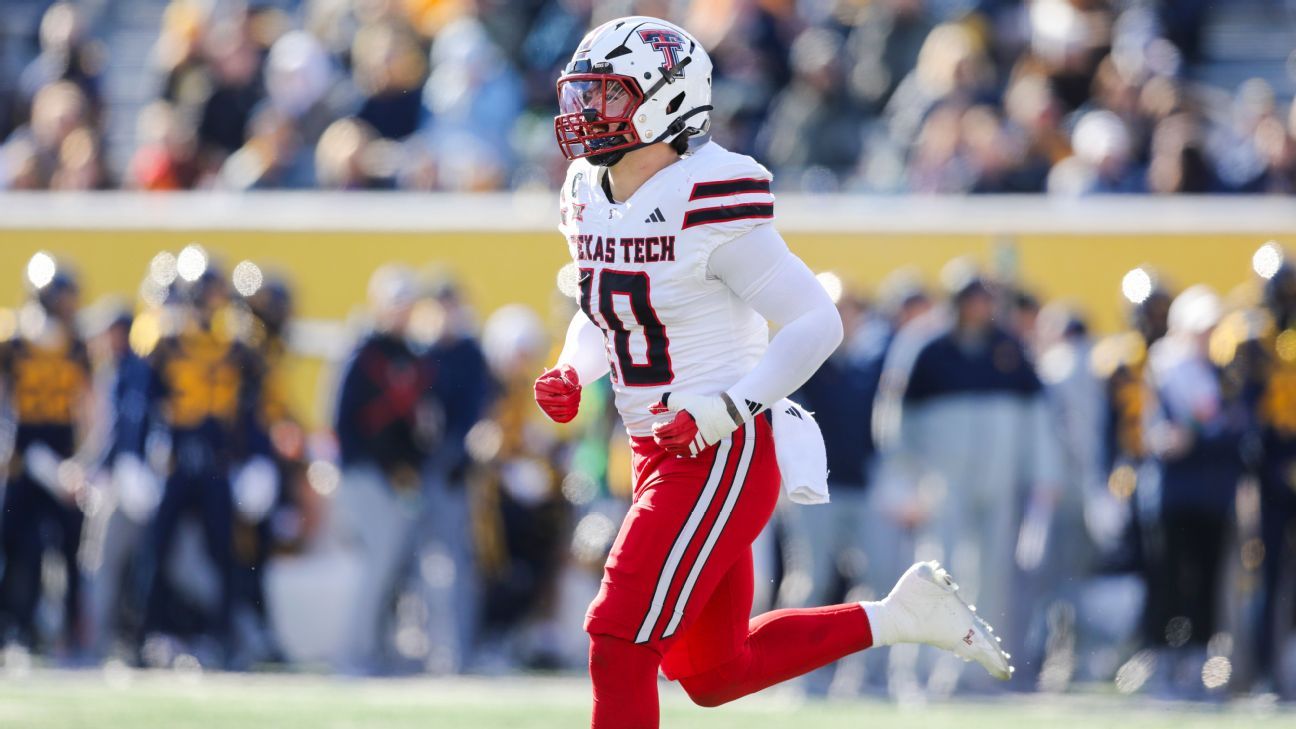
Though there was a ton of internal optimism about what Texas Tech could achieve on defense in 2025 with the arrival of coordinator Shiel Wood and 10 high-profile transfer portal additions, it has never seen anything like this in Lubbock. The 11-1 Red Raiders’ 49-0 shutout of West Virginia on Saturday closed out a historic regular season for this unit. Texas Tech has the No. 3 scoring defense in FBS at 11.25 points per game, which ranks second best in Big 12 history behind the 2009 Nebraska defense powered by Ndamukong Suh. Tech gave up only 100 total points in Big 12 conference play, the fewest by a defense since 2003 when the Big 12 played eight conference games. Now it’s time for a rematch with BYU and an offense it shut out for 3½ quarters on Nov. 8. — Max Olson
Previous ranking: 5
The Ducks handled what was a tricky trip to end the season to Seattle with the proper amount of focus; they never trailed and beat rival Washington 26-14 to end their third straight season with at least 11 wins under Dan Lanning. Though it won’t be defending its Big Ten title from last season, Oregon heads into the playoff with an identity on offense that isn’t surprising, but the way it happened wasn’t as expected.
Even though the Ducks were able to snag one of the top running backs in the transfer portal — Makhi Hughes — they have become an elite running team without him. Hughes is redshirting the season and Oregon has not missed him — Noah Whittington, Jayden Limar and dynamic freshmen Dierre Hill Jr. and Jordon Davison have together been a force, totaling over 2,000 yards between them as well as 26 touchdowns. Quarterback Dante Moore has shown himself to be one of the top quarterbacks, but if the Ducks succeed in December and January, they will be fueled by their ground game. — Paolo Uggetti
Previous ranking: 6
When the season started, Trinidad Chambliss was a backup quarterback from Division II Ferris State just hoping for an opportunity. That moment came in Week 3, after starter Austin Simmons sustained a foot injury and could not play. Chambliss made the most of his start and never looked back, leading the Rebels to an 11-1 season and what should be their first at-large berth in the College Football Playoff.
That Chambliss has been so good in his first season at the Division I level has been the biggest surprise at Ole Miss and one of the biggest surprises in college football. Especially since he was not pegged to start, and pundits thought Ole Miss would take a step back with Jaxson Dart off to the NFL draft. Chambliss ranks fourth in the SEC with 3,016 yards passing, throwing 18 touchdown passes to only three interceptions. — Andrea Adelson
Previous ranking: 3
The Aggies were picked to finish eighth in the preseason SEC media poll, then reeled off an 11-1 regular season in which they were in contention for the SEC championship game until a final, devastating loss to Texas, of all teams. The season qualifies as a bit of a surprise, with an explosive offense that was a vast improvement over 2024’s, which ranked 50th in scoring offense.
This season, Marcel Reed, along with Mario Craver and KC Concepcion, stretched the field, the team averaged 36.3 points (16th) and Reed had a breakout season, second in the SEC to Diego Pavia with 35 total touchdowns. Obviously, in a 27-17 loss to Texas to end the season, the Aggies came back to earth with Reed being held to 180 passing yards and no touchdowns and two interceptions, and adding 71 yards rushing. But the playoff looms for the Aggies, and they get another chance to rewrite an ending to a dream season. — Dave Wilson
Previous ranking: 8
It’s difficult to say there’s anything surprising about a Brent Venables defense being elite. But after losing defensive stars Billy Bowman Jr. and Danny Stutsman to the NFL draft, it might have been hard to imagine the Sooners could be this good. Following Oklahoma’s regular-season finale win over LSU on Saturday, the Sooners lead the SEC in total defense (273.6 YPG), run defense (81.4 YPG) and scoring defense (13.9 PPG). Only Texas Tech and Indiana are giving up less rushing yards per game, and Oklahoma’s smothering pass rush sits level alongside Texas A&M for the national sacks lead (41). With Venables calling plays again, the Sooners’ defense has been good enough to mask a broadly mediocre offense this fall, carrying Oklahoma almost certainly to its first playoff appearance since 2019. — Eli Lederman
Previous ranking: 10
Two games into the season, Notre Dame’s playoff hopes seemed dead and buried. The idea that an 0-2 team would run the table to claw its way back into the playoff picture didn’t really seem worth considering. So, from that standpoint, the Irish’s current position — at 10-2 with a good chance of being selected for the playoff — is surprising. But anyone who has watched Notre Dame play over the past several weeks understands this is a team not only worthy of selection, but capable of making a deep playoff run. — Kyle Bonagura
Previous ranking: 9
The storyline we have written about the most this season has been the most surprising: The Crimson Tide have not been as dominant as expected on the offensive line, and their run game has struggled for any consistency. Alabama was projected to have one of the better lines in the country, particularly with the return of Kadyn Proctor. But even he struggled early to maintain his weight and had his own moments when he was not as dominant as he could have been.
But the fact Alabama still has a chance to win the SEC, with one of the worst rushing offenses in the country, certainly comes as a surprise. Alabama ranks No. 108 in the country in rushing, averaging just 3.7 yards per carry. Jam Miller has either been hurt or played through an injury for most of the season and left the game against Auburn because of a lower leg injury. His status is up in the air for the SEC title game. He leads the team with 493 yards rushing — on pace for the fewest yards by the team’s leading rusher since 1990. — Adelson
Previous ranking: 11
At 11-1, there seems to be a consensus that if BYU loses to Texas Tech in the Big 12 title game, it won’t make the playoff — and that does seem to be the most likely scenario. But perhaps the Cougars deserve more consideration. If Steve Sarkisian can claim Texas being left out would be “a travesty,” what does that mean for an 11-win team whose lone loss was to a team capable of winning the whole thing? — Bonagura
Previous ranking: 12
Freshman receiver Malachi Toney, the player nicknamed “Baby Jesus” because he has been called a savior on the football field, emerged as the most dynamic player in the Miami offense and arguably in the entire country as an 18-year-old. Miami had questions about its receiver group headed into the season after losing its top four players from a year ago. Toney stepped into the void and made his presence felt immediate against Notre Dame, then kept going with one game more impressive than the next. Toney ended the regular season leading the team with 84 catches for 970 yards and seven touchdowns, while also throwing for two touchdowns and rushing for another. He had two games with 12 or more receptions this season. All other true freshmen in FBS have combined for one such game. — Adelson
Previous ranking: 14
Though the Commodores returned Diego Pavia at quarterback, there were not many believers headed into the season. Vanderbilt was picked to finish 13th in the SEC preseason media poll. But the surprise of the season is the team itself. Pavia reached an even higher level, leading Vanderbilt to its first 10-win season in program history and potentially securing a spot for the Heisman Trophy ceremony in New York next week. Vanderbilt also won a school-record six SEC games, beat Tennessee for the first time since 2018 and also took down LSU and Missouri. Pavia ranks second in the SEC with 3,192 yards passing — a single-season school record — and also ran for 826 yards and nine touchdowns. He ranks fourth on the school career list for total yards. — Adelson
Previous ranking: 16
There was lots of optimism around the Longhorns this season as a first-time preseason No. 1. Still, upon inspection, the offense was going to be a bit of a mystery with Arch Manning, a first-time starter, and wholesale changes at offensive line and wide receiver. What wasn’t expected was the midseason swoon on defense. True, the Horns lost Jahdae Barron and Andrew Mukuba in the secondary, but Michael Taaffe, an All-American returned as well as several talented corners. Texas was able to right the ship in time to pull off a big win over No. 3 Texas A&M in Austin, grabbing two fourth-quarter interceptions after pressuring Marcel Reed all night in a 27-17 win. But looking back at the season, the 97th-ranked passing defense’s struggles against DJ Lagway, who had his best game of 2025 for 3-9 Florida in an upset of Texas, could prove to be the breaking point in Texas’ playoff hopes. — Wilson
Previous ranking: 13
After the initial playoff rankings were released, it seemed possible that if enough results went in Utah’s favor, the Utes could back their way into the playoff, but it didn’t play out that way. The margin between Utah and the playoff was slim. Consider this: In the Utes’ only two losses of the season, they led in the fourth quarter (against BYU) and trailed by three in the fourth quarter (Texas Tech). Still, even if the Utes lose their bowl game, they are almost guaranteed to finish as a top-20 team, which would be the fourth time in the past eight years. — Bonagura
Previous ranking: 17
The Cavaliers went from one of the worst rushing offenses in the ACC to one of the best this season thanks to one of the best transfers they signed: running back J’Mari Taylor from NC Central. Taylor walked on at NC Central in 2020 just hoping for a chance, and when he transferred to Virginia this past offseason, the hope was that he would help the Cavaliers run the ball more consistently. He did that and more, finishing with 997 yards rushing in the regular season to lead the ACC. He is the first Virginia running back to lead the conference in rushing since Antwoine Womack 25 years ago. Thanks to Taylor’s dominance on the ground, Virginia was able to have more balance with its offense, and that allowed the Cavaliers to make it to the ACC championship game — one win away from making their first CFP appearance. — Adelson
Previous ranking: 19
Lincoln Riley’s team has started slowly in every big game it has played this season. In the case of losses to Illinois, Notre Dame and Oregon, the Trojans were not able to overcome that flaw. But in every other game this season, including in Saturday’s season finale against UCLA in which they trailed 10-7 at half, they have been able to find another gear in the second half to win.
The Trojans showed progress this season compared to a 7-5 record in 2024, primarily because they became a very good second-half team — not the case last season — and were able to win most of their close games. Now, at 9-3, is that enough to satisfy the caliber of program USC portends to be? Until Riley gets the Trojans to the College Football Playoff, the answer is probably no. — Uggetti
Previous ranking: 15
Saturday was not a banner day for freshman receiver Andrew Marsh, who finished without a catch in a 27-9 loss to Ohio State. Still, a month deep into the season, Marsh emerged from the fringes of the receiver rotation to become quarterback Bryce Underwood‘s go-to target. Marsh ended the regular season leading the Wolverines with 42 receptions for 641 yards and three touchdowns, despite sitting on only one catch until Oct. 4. Saturday was a massive disappointment for the Michigan offense. But the Wolverines have a lot to build on moving forward with Underwood and Marsh leading the passing attack. — Trotter
Previous ranking: NR
Brent Brennan and his staff pulled off one of the best turnarounds in college football in Year 2, rebounding from a bitterly disappointing 4-8 debut with a 9-3 run in 2025 that should conclude with a top-25 finish. Two of those losses also were pretty close — a double-overtime defeat to BYU and a loss at Houston on a last-second field goal. The Wildcats responded with a five-game win streak and closed out Big 12 play with a 23-7 victory over rival Arizona State. This staff did a tremendous job of flipping its fortunes this offseason by pairing 27 incoming transfers with quarterback Noah Fifita and a strong core of team leaders who chose to stay through tough times and help Brennan get things fixed. — Olson
Previous ranking: 20
The Mean Green are one of the best stories of the 2025 season, with a quarterback (Drew Mestemaker) who didn’t even start in high school, throwing for 3,825 yards and 29 touchdowns to four interceptions, leading the nation’s top offense in yards per game (516.2), yards per play (7.5) and points per game (46.4). The 11 wins are a school record, with still a conference championship game to go and a chance to earn the unthinkable following 5-7 and 6-7 seasons in coach Eric Morris’ first two years: a spot in the College Football Playoff field. But all of that success comes at a price. Morris has already accepted the Oklahoma State coaching job, though he will finish out the season, and Mestemaker could be right behind him. But the Mean Green have had a season for the ages in Denton. — Wilson
Previous ranking: 21
Despite losing Darian Mensah to Duke in the offseason, not signing eventual replacement Jake Retzlaff until the summer and what has turned out to be a pretty lackluster run game on average, Tulane’s offense has remained excellent in 2025. The Green Wave sleepwalked through Saturday’s 27-0 win over Charlotte, but Retzlaff still threw for 291 yards, bringing him to 2,717 yards for the season in addition to 615 non-sack rushing yards. His go-to receiver has changed at times this season, but Anthony Brown-Stephens led the way with nine catches and 98 yards Saturday. The Green Wave defense has been shaky, especially against the pass — and that could be a problem against North Texas in the American championship game — but Retzlaff & Co. can keep up in a track meet. — Bill Connelly
Previous ranking: 24
The Dukes are now one win away from potentially advancing to the College Football Playoff. Coach Bob Chesney’s squad closed out an 11-1 regular season and an 8-0 run through conference play with a 59-10 blowout of Coastal Carolina. This team has built on a nine-win season in 2024 with one of the most dominant runs through conference play the Sun Belt has ever seen. James Madison’s average margin of victory in Sun Belt play has been 27.4 points. It will host Troy (8-4) in the Sun Belt championship game and hope one more strong showing earns some respect from the CFP committee. Another outcome that can absolutely help JMU’s chances: Duke upsetting Virginia in the ACC title game would create a real possibility of two G5 teams earning bids in the 12-team CFP. — Olson
Previous ranking: 25
After last season’s eight-overtime loss to Georgia, there was a sense that something significant had changed for Georgia Tech. No, the Yellow Jackets weren’t going to spend like Texas Tech in the offseason, but that game served notice that, with enough commitment, there was every reason to believe this program could compete with the big boys. For most of 2025, that’s exactly what happened — even in another nail-biter with the Bulldogs on Friday. Georgia Tech was good. Just not good enough.
A late-season swoon that included losses to NC State, Pitt and, again, Georgia, ultimately nixed the year’s highest hopes, but a 10-win campaign is still within reach, which, while not exactly surprising, still would constitute a high-water mark for the program in more than a decade. Haynes King‘s brilliance, the emergence of stars such as Malachi Hosley, and the grunt work done by Jordan van den Berg, Keylan Rutledge and so many other players who crafted their games in head coach Brent Key’s image have made for a surprisingly fun season, even if it ultimately fell short of the highest of aspirations. — Hale
Previous ranking: 18
For better or worse, this was an old Josh Heupel team. After making a playoff run with a great defense and frustrating offense, Heupel’s Vols have flipped back to being all offense, little defense. It has given up over 30 points seven times, including Saturday’s demoralizing 45-24 loss to Vanderbilt, its first defeat to the Commodores in seven years. Still, despite losing starting quarterback Nico Iamaleava to the transfer portal in the spring, the offense improved dramatically, and with just one extra stop against Georgia and Oklahoma, the Vols have remained in the playoff hunt the entire season. A very mixed bag in 2025. — Connelly
Previous ranking: NR
Perhaps it should be no surprise that Iowa’s offense improved again in 2025 after offensive coordinator Tim Lester lifted the Hawkeyes from No. 132 to No. 72 in scoring offense a season ago. But considering the offenses Iowa fans were subjected to in 2022 and 2023, any and every improvement must be celebrated. The Hawkeyes close the regular season with the nation’s 60th-ranked scoring offense — up to 28.9 points from 27.7 a year ago — marking the program’s best finish in the category since 2020.
The addition of transfer quarterback Mark Gronowski provided Iowa with a fresh red zone rushing presence and made the Hawkeyes’ passing attack ever so slightly more explosive. Lester also deserves credit for maintaining one of the Big Ten’s top rushing attacks despite losing 2024 rushing leader Kaleb Johnson. Simply back in the middle of the pack offensively within the conference, Kirk Ferentz and Iowa proved just how competitive it can be in 2025 on its way to eight-plus wins for the 10th time since 2015. — Lederman
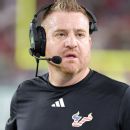
Four-star prospect Bralan Womack, ESPN’s No. 3 safety in the 2026 class, flipped his commitment from Auburn to Mississippi State on Monday, sealing a historic late-cycle pledge for coach Jeff Lebby and the Bulldogs.
Womack, a 6-foot, 200-pound defender from Flowood, Mississippi, is the No. 39 overall prospect in the 2026 ESPN 300. If he signs later this week, Womack will join the in-state Bulldogs as the school’s highest-ranked signee in the ESPN recruiting era, dating to 2006.
Prior to Monday, Womack had spent the fall as the top-ranked commit in Auburn’s 2026 class after picking the Tigers over Florida, Ohio State and Texas A&M in August. However, Auburn’s decision to fire coach Hugh Freeze on Nov. 2 unsettled Womack’s recruitment, opening the door to late fall flip interest from LSU, Mississippi State and Texas A&M.
Womack’s exit from the Tigers’ incoming class comes one day after the program announced the hiring of South Florida coach Alex Golesh on Sunday. Womack, who visited Auburn for the Iron Bowl in Week 14, told ESPN on Nov. 25 that his decision would be tied closely to the outcome of the Tigers’ coaching search and interim coach D.J. Durkin’s role with the program in the future.
Whether or not Durkin will remain on Golesh’s staff remains unclear as of Monday.
Womack, ESPN’s No. 3 recruit in the state of Mississippi, won back-to-back state titles in his sophomore and junior seasons at Mississippi’s Hartfield Academy. He entered his senior campaign this fall as the state’s reigning Gatorade Football Player of the Year.
Womack has visited each of LSU, Mississippi State and Texas A&M since late October. He told ESPN that the Bulldogs turned up the heat on his recruitment early last month, eventually hosting him twice in November, most recently during last weekend’s Egg Bowl defeat to Ole Miss.
Womack said the Bulldogs’ pitched him on becoming the defensive version of star freshman quarterback Kamario Taylor — an in-state signee in the 2025 class who made his first career start in Week 14 — and highlighted the program’s progress across two seasons under Lebby.
“You can see his ability to go out and get players and build confidence in a locker room that didn’t have much when he walked in,” Womack said. That takes a lot. You can see what he’s doing.”‘
Womack now stands as the lone ESPN 300 pledge in Mississippi State’s 2026 signing class with the three-day early signing period set to open Wednesday morning. Prior to his flip, the Bulldogs’ incoming class sat at No. 49 in ESPN’s class rankings for the 2026 cycle.
-
 Sports2 years ago
Story injured on diving stop, exits Red Sox game
-
 Sports3 years ago
‘Storybook stuff’: Inside the night Bryce Harper sent the Phillies to the World Series
-
 Sports2 years ago
Game 1 of WS least-watched in recorded history
-
 Sports3 years ago
Button battles heat exhaustion in NASCAR debut
-
 Sports3 years ago
MLB Rank 2023: Ranking baseball’s top 100 players
-
Sports4 years ago
Team Europe easily wins 4th straight Laver Cup
-
 Environment3 years ago
Japan and South Korea have a lot at stake in a free and open South China Sea
-
 Environment1 year ago
Here are the best electric bikes you can buy at every price level in October 2024