

Sudan’s RSF says it has captured Babanusa in West Kordofan

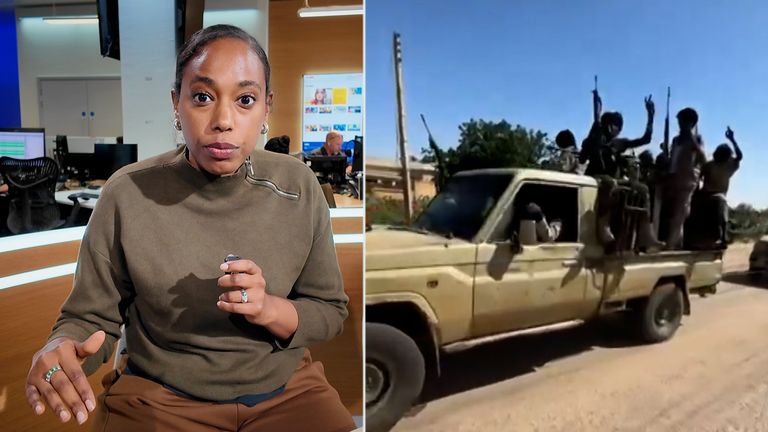
Sudan’s paramilitary Rapid Support Forces says it has captured Babanusa, a transport junction in the south of the country, just a month after the fall of Al Fashir to the same group.
The RSF said in a statement the seizure of the city in West Kordofan state came as it repelled “a surprise attack” by the Sudanese army in what it called “a clear violation of the humanitarian truce”.
The paramilitary group added it had “liberated” the city in the state, which has become the latest frontline in the war in Sudan.
Sky’s Yousra Elbagir explains the unfolding humanitarian crisis
It comes just over a month after the Sudanese Armed Forces (SAF) withdrew from military positions in the heart of Al Fashir, the capital of North Darfur, and the symbolic site was captured by the RSF with no resistance.
The RSF claimed at the time it had taken over the city and completed its military control of the Darfur region, where the administration of former US president Joe Biden has accused the group of committing genocide.
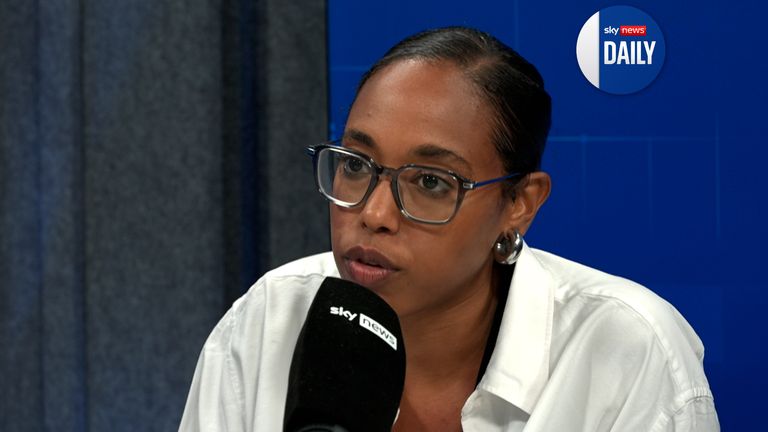
Sky’s Africa correspondent Yousra Elbagir on why evidence suggests there is a genocide in Sudan.
The war between the Sudanese army and the RSF – who were once allies – started in Khartoum in April 2023 but has spread across the country.
About 12 million people are believed to have been displaced and at least 40,000 killed in the civil war, according to the World Health Organization (WHO) – but aid groups say the true death toll could be far greater.
Tom Fletcher, the UN’s under-secretary-general for humanitarian affairs, recently told Sky’s The World With Yalda Hakim the situation was “horrifying”.
“It’s utterly grim right now – it’s the epicentre of suffering in the world,” he said of Sudan.
Read more:
Tens of thousands killed in two days in Sudan city
Sudan’s war: Is it a genocide?
The United States, the United Arab Emirates, Egypt and Saudi Arabia – known as the Quad – earlier in November proposed a plan for a three-month truce followed by peace talks.
The RSF responded by saying it had accepted the plan, but soon after attacked army territory with a barrage of drone strikes.
World
More than 800,000 young children seeing social media content ‘designed to hook adults’, figures show

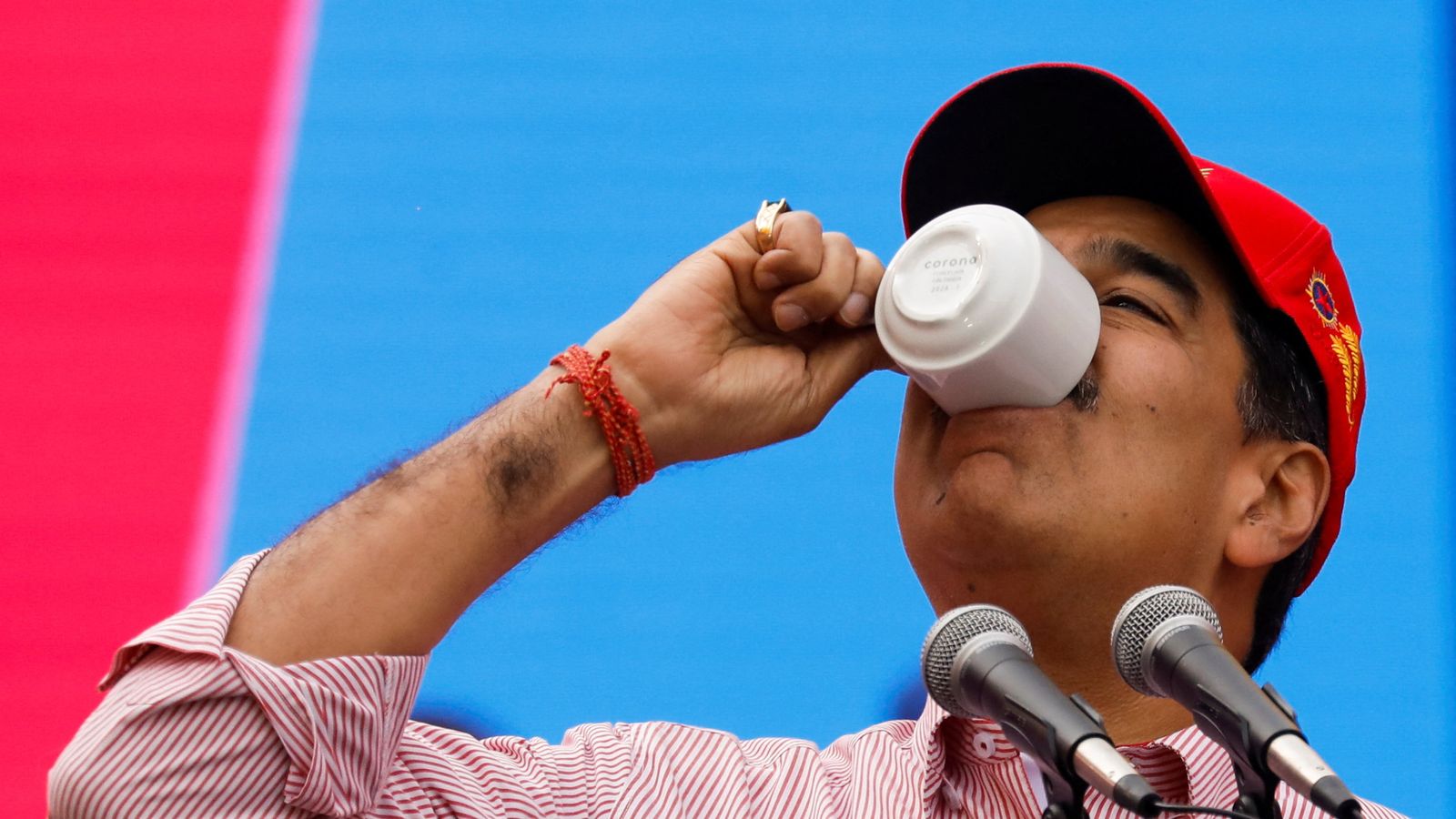
Nicolas Maduro has said Venezuelans are ready to defend their country as the US considers a land attack.
The president held a rally in Caracas amid heightened tensions with Donald Trump’s administration, which has been targeting what it says are boats carrying drug smugglers.
Mr Trump met his national security team on Monday evening, having warned last week that land strikes would start “very soon”.
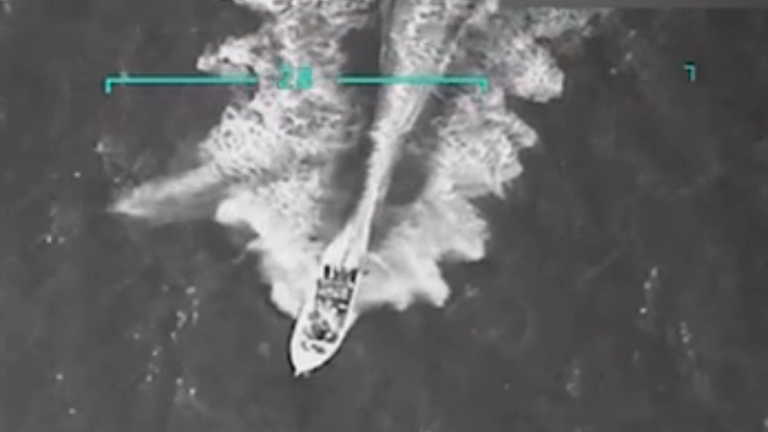
An image of an alleged drug boat being targeted by the US military. Pic: Truth Social
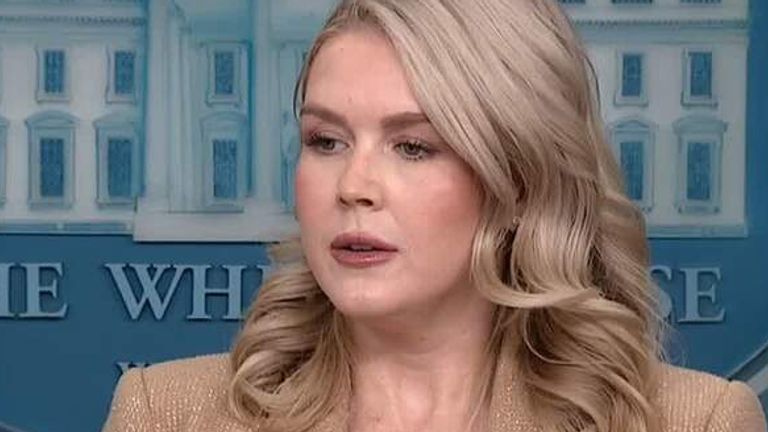
It’s not been confirmed what was discussed at the meeting, but White House press secretary Karoline Leavitt told reporters: “There’s many options at the president’s disposal that are on the table – and I’ll let him speak on those.”
US forces have carried out at least 21 strikes on boats it claims were carrying narcotics to its shores over the last few months, and the White House has accused Mr Maduro of being involved in the drugs trade – a claim he denies.
‘The president has a right to take them out’
‘Psychological terrorism’
Mr Maduro – widely considered a dictator by the West – said on Monday that Venezuelans are ready “to defend [the country] and lead it to the path of peace”.
“We have lived through 22 weeks of aggression that can only be described as psychological terrorism,” he said.
Venezuela has said the boat attacks, which have killed more than 80 people, amount to murder – and that Mr Trump’s true motivation is to oust Mr Maduro and access its oil.
Concerns have been raised over the legality of the US attacks, which the Pentagon has sought to justify by designating the gangs as foreign terror organisations.
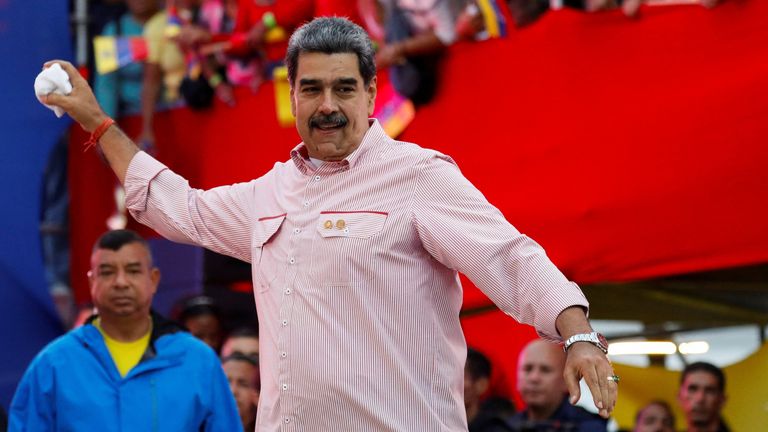
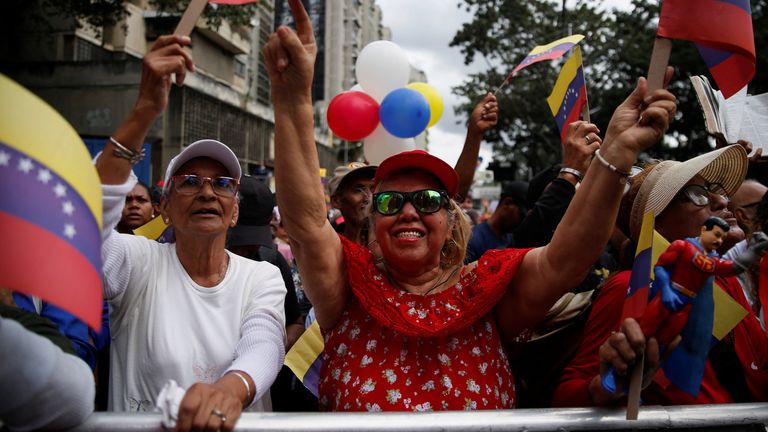
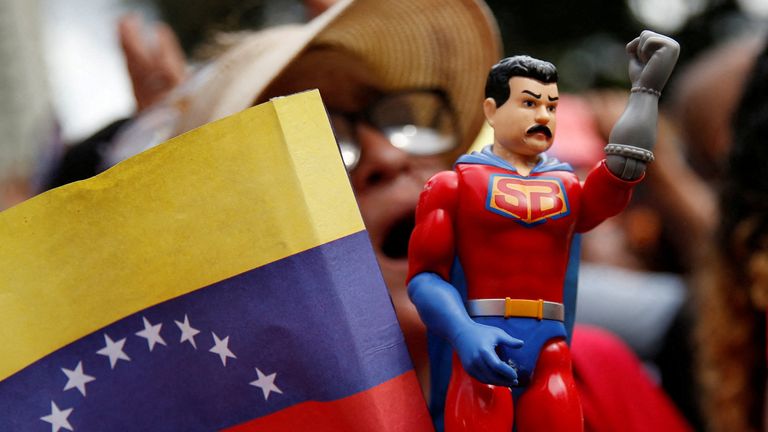
Maduro was championed by supporters as he spoke on Monday. Pics: Reuters
Controversy over US strikes
Tensions remain high over America’s large deployment in the Caribbean Sea and eastern Pacific, which includes its flagship aircraft carrier and thousands of troops.
The US has released videos of boats being blown up but has not provided evidence – such as photos of drugs – to support the smuggling claims.
Controversy also surrounds the first incident, on 2 September, in which 11 people were killed – with a follow-up strike targeting the boat after the first attack left two survivors in the water.
US media reported defence secretary Pete Hegseth gave an order that everyone on board should be killed.
However, there are concerns about the legality of the second strike if the survivors posed no threat.
Mr Hegseth dismissed the reporting as “fake news” and insisted all actions in the region are compliant with US and international law.
“Every trafficker we kill is affiliated with a Designated Terrorist Organization,” he said on X.

Is US about to go to war with Venezuela?
Mr Trump said on Sunday he would not have wanted a second strike and that Mr Hegseth had denied giving such an order.
Ms Leavitt confirmed on Monday that the boat had been hit by a second strike – but denied Mr Hegseth gave the order for the follow-up.
Instead, she said he had authorised US navy vice admiral Frank Bradley to attack, and the admiral acted “well within his authority and the law, directing the engagement to ensure the boat was destroyed and the threat to the US was eliminated”.
Read more from Sky News:
Hong Kong fire: 13 arrested as death toll hits 151
More than 1,100 confirmed dead in Asia floods
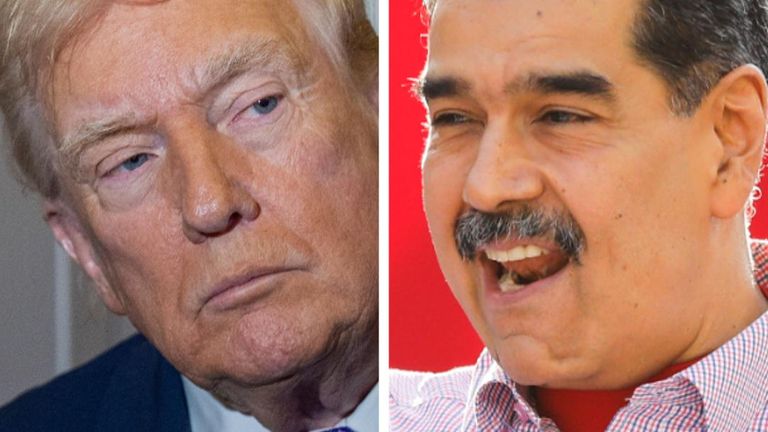
Trump: Maduro call neither ‘went well or badly’
As the US weighs its next steps, Mr Trump said on Sunday he had spoken to Mr Maduro by phone and that the conversation went neither “well or badly”.
In recent days, he also stated that Venezuela’s airspace should be considered closed – with the South American nation calling it a “colonial threat” and “illegal, and unjustified aggression”.
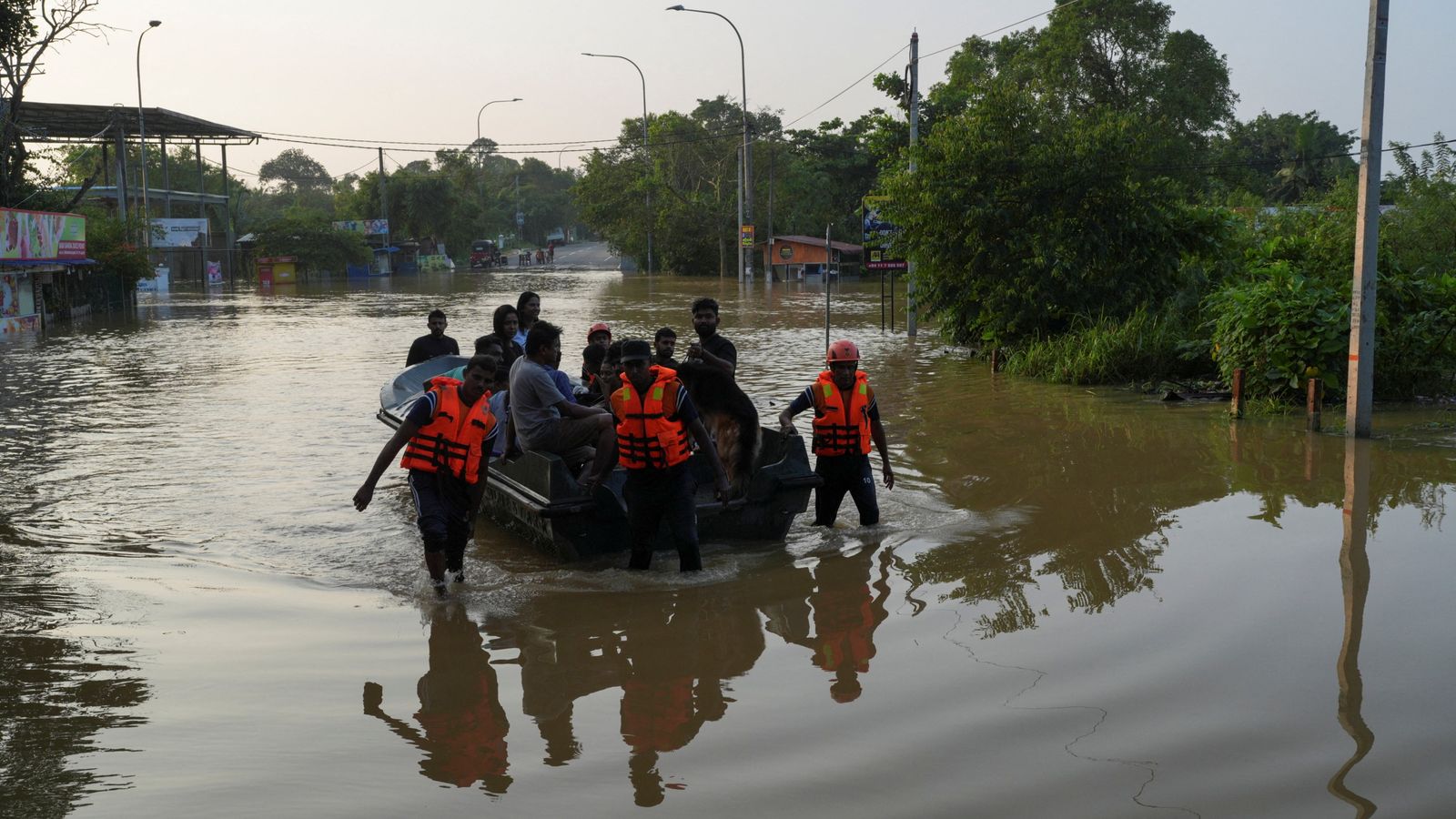
Rescue and recovery and efforts are under way in parts of South and Southeast Asia where the number of those killed in devastating floods continues to rise.
Cyclones and extreme weather have killed at least 1,200 people in Sri Lanka, Indonesia and Thailand, according to authorities.
Rescuers are still searching for hundreds of missing people after a cyclone and other storms triggered flooding and landslides in the region.
In a post on X, the King and Queen Camilla said they were “deeply saddened” to hear about devastating storms and added their “heartfelt condolences” to the families of those who have died.
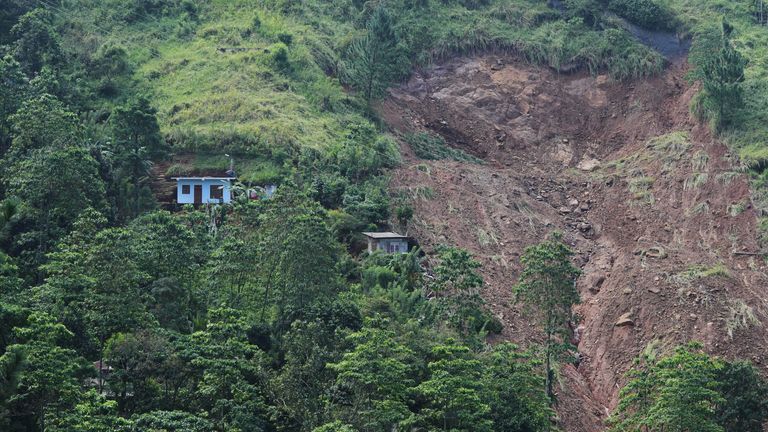
Landslides in Sarasavigama village near Kandy, Sri Lanka. Pic: AP
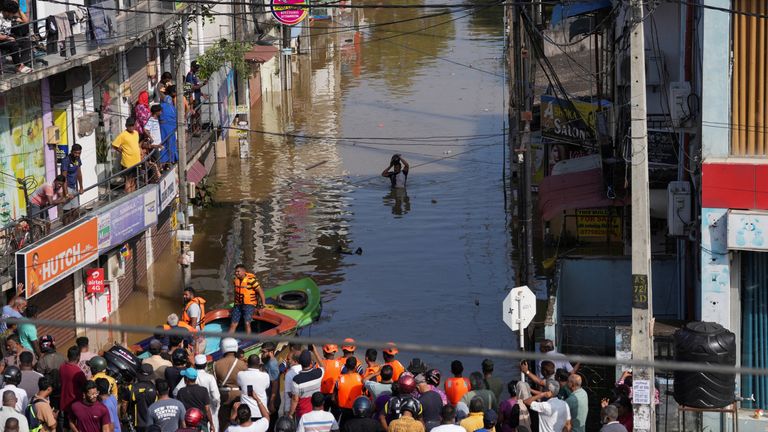
A man wades through the flooded street, following heavy rainfall in Wellampitiya, Sri Lanka. Pic: Reuters
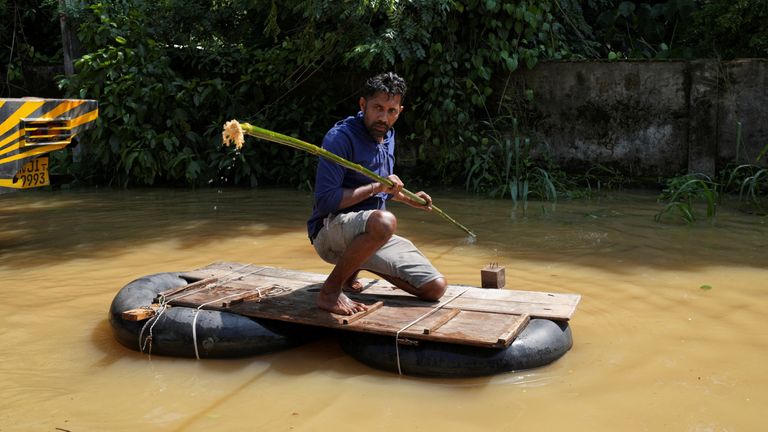
A man uses a makeshift raft at a flooded area, following Cyclone Ditwah in Kelaniya, Sri Lanka. Pic: Reuters
Hundreds of thousands in shelters in Sri Lanka
Sri Lankan authorities said about 218,000 people were in temporary shelters after downpours that triggered landslides, primarily in the tea-growing central hill country.
People were seen salvaging belongings from flooded homes along the banks of the Kelani River, near the capital Colombo on Monday.
Meanwhile, train and flight services have resumed after being disrupted last week, but schools stayed closed, officials said.
Cyclone Ditwah was the “largest and most challenging” natural disaster in Sri Lanka’s history, President Anura Kumara Dissanayake said.
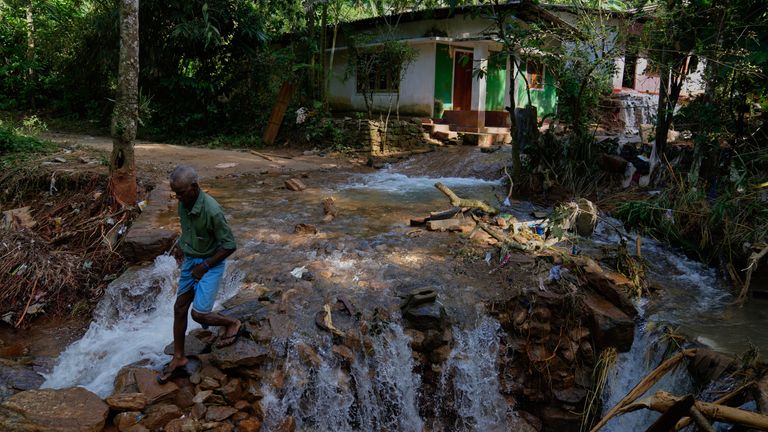
A landslide survivor crosses a section of a damaged road in Sarasavigama village near Kandy, Sri Lanka. Pic: AP
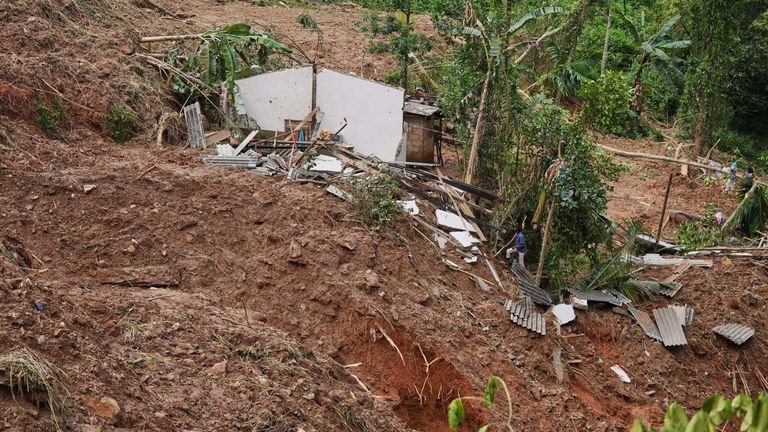
Landslide survivors salvage belongings at the site of a landslide in Sarasavigama village near Kandy, Sri Lanka. Pic: AP
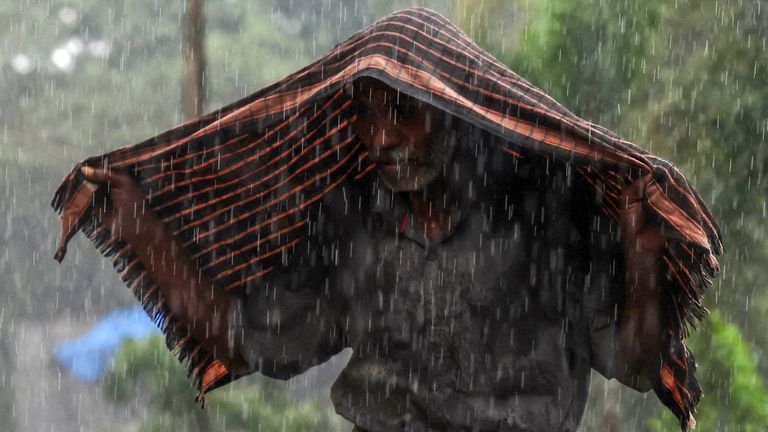
A man uses his scarf to protect himself from the rain in the aftermath of Cyclone Ditwah, in Chennai, India. Pic: Reuters
The cyclone also brought heavy rain to India’s southern state of Tamil Nadu over the weekend, with authorities saying three people were killed in rain-related incidents.
The storm, which as of 5pm UK time on Monday was about 20km (12 miles) off the coast of the state capital Chennai, has weakened into a “deep depression” and was expected to weaken further in the next few hours, weather officials said.
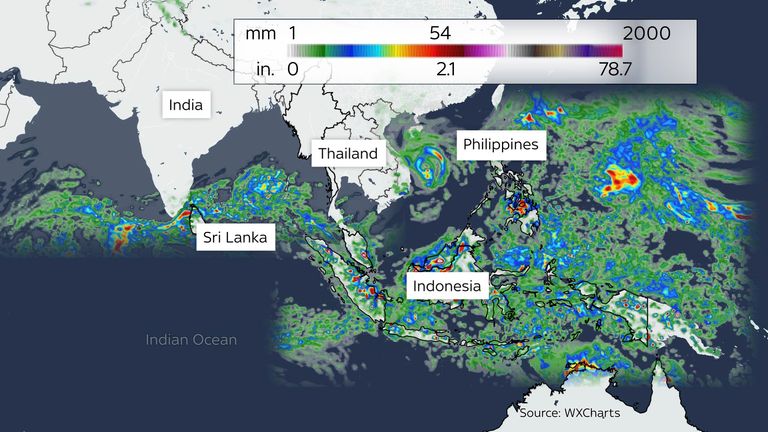
Amount of rainfall expected in South and Southeast Asia in the next 48 hours
Over a million affected in Indonesia
More than 28,000 homes have been damaged in Indonesia, with 1.4 million people affected by torrential rains following a tropical storm that formed in the Malacca Strait.
The country’s president, Prabowo Subianto, called it a catastrophe and pledged to rebuild infrastructure as he visited the three affected provinces on Monday, where nearly 300,000 people have been displaced by the flooding.
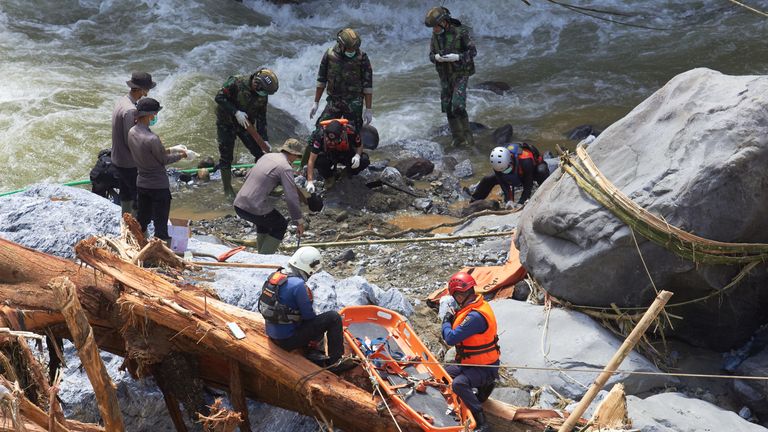
Rescuers search for flood victims in Tanah Datar, West Sumatra, Indonesia. Pic: AP
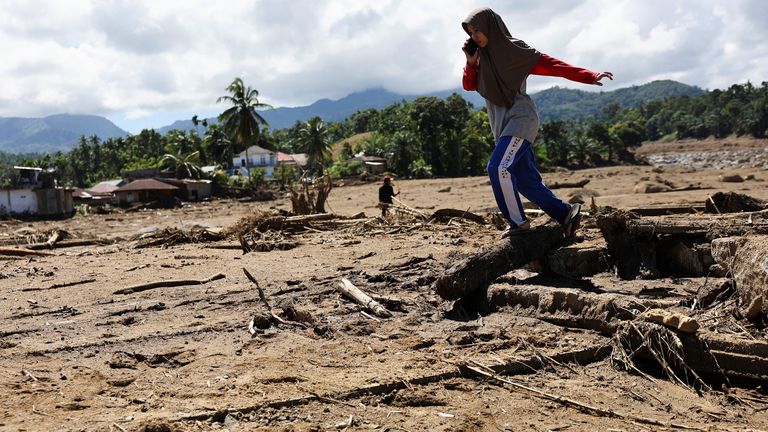
A flooded field in Indonesia’s West Sumatra province. Pic: Reuters
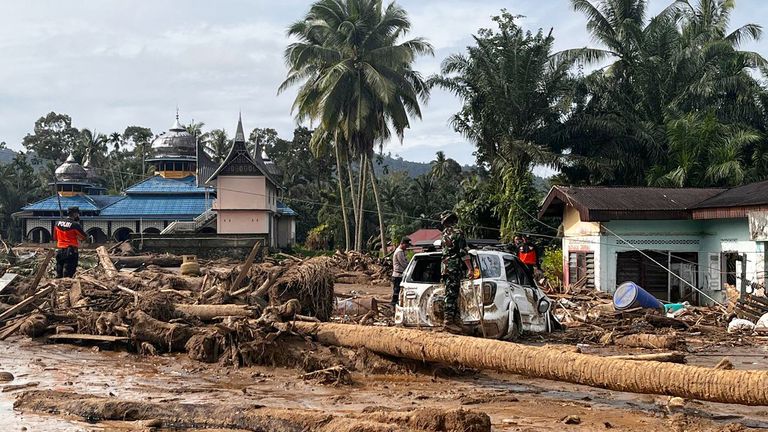
Rescuers search for victims at a village affected by flash flooding, in Agam, West Sumatra, Indonesia. Pic: AP
‘Nothing remains’
“The water just rose up into the house and we were afraid, so we fled. Then we came back on Friday, and the house was gone, destroyed,” said Afrianti, 41, who only goes by one name and lives in West Sumatra’s Padang city.
She and her family of nine have made their own tent shelter beside the single wall that remains of their home.
“My home and business are gone, the shop is gone. Nothing remains. I can only live near this one remaining wall,” she said.
Highest one-day rainfall in Thai city for 300 years
In Thailand, flooding in eight southern provinces affected about three million people and led to a major mobilisation of its military to evacuate critical patients from hospitals and reach people stuck in floodwaters for days.
In the worst-affected city of Hat Yai, a southern trading hub, 335mm (13 inches) of rain fell on 21 November, its highest single-day tally in 300 years, followed by days of unrelenting downpours.
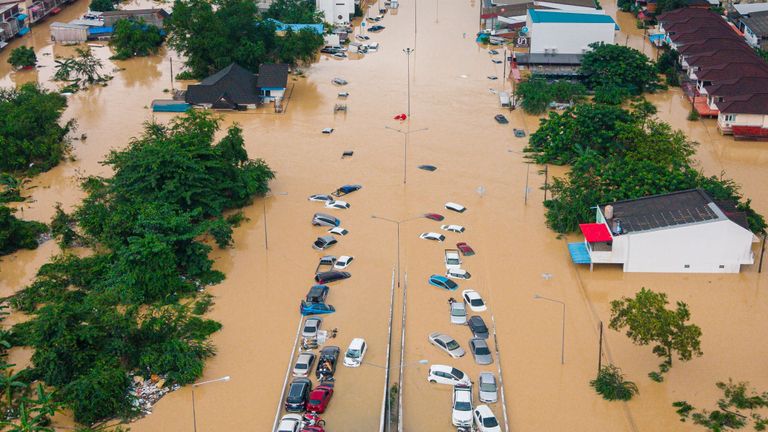
More than three million people have been impacted by floods in Thailand
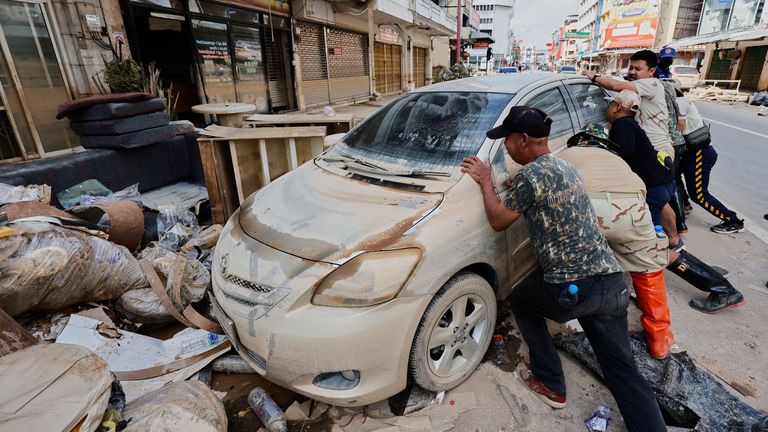
People move a car damaged by floods in Songkhla province, southern Thailand. Pic: AP
King offers ‘heartfelt condolences’
King Charles and Queen Camilla responded to the crisis in a statement posted on X and praised the work of emergency responders: “We wish to express our heartfelt condolences to the families of those who have so tragically lost their lives.
“Our thoughts and prayers are with the many whose homes have been destroyed and to all who are awaiting news of loved ones missing.
“These disasters remind us of the increasingly urgent need to restore the balance and harmony of Nature.”
Thailand’s Prime Minister Anutin Charnivirakul expects residents to be able to return home within seven days, a government spokesperson said on Monday.
Read more from Sky News:
Zelenskyy to make first official visit to Ireland
Dignitas founder dies by assisted suicide
The first batch of compensation payments was set to be distributed on Monday, starting with 239m baht (£5.6m) for 26,000 people, the spokesperson added.
In Malaysia there have been at least three deaths and authorities are still on alert for a second and third wave of flooding as 11,600 remain in evacuation centres.
-
 Sports2 years ago
Story injured on diving stop, exits Red Sox game
-
 Sports3 years ago
‘Storybook stuff’: Inside the night Bryce Harper sent the Phillies to the World Series
-
 Sports2 years ago
Game 1 of WS least-watched in recorded history
-
 Sports3 years ago
Button battles heat exhaustion in NASCAR debut
-
 Sports3 years ago
MLB Rank 2023: Ranking baseball’s top 100 players
-
Sports4 years ago
Team Europe easily wins 4th straight Laver Cup
-
 Environment3 years ago
Japan and South Korea have a lot at stake in a free and open South China Sea
-
 Environment1 year ago
Here are the best electric bikes you can buy at every price level in October 2024