

Ford finds a new partner for affordable EVs amid a ‘fight for our lives’

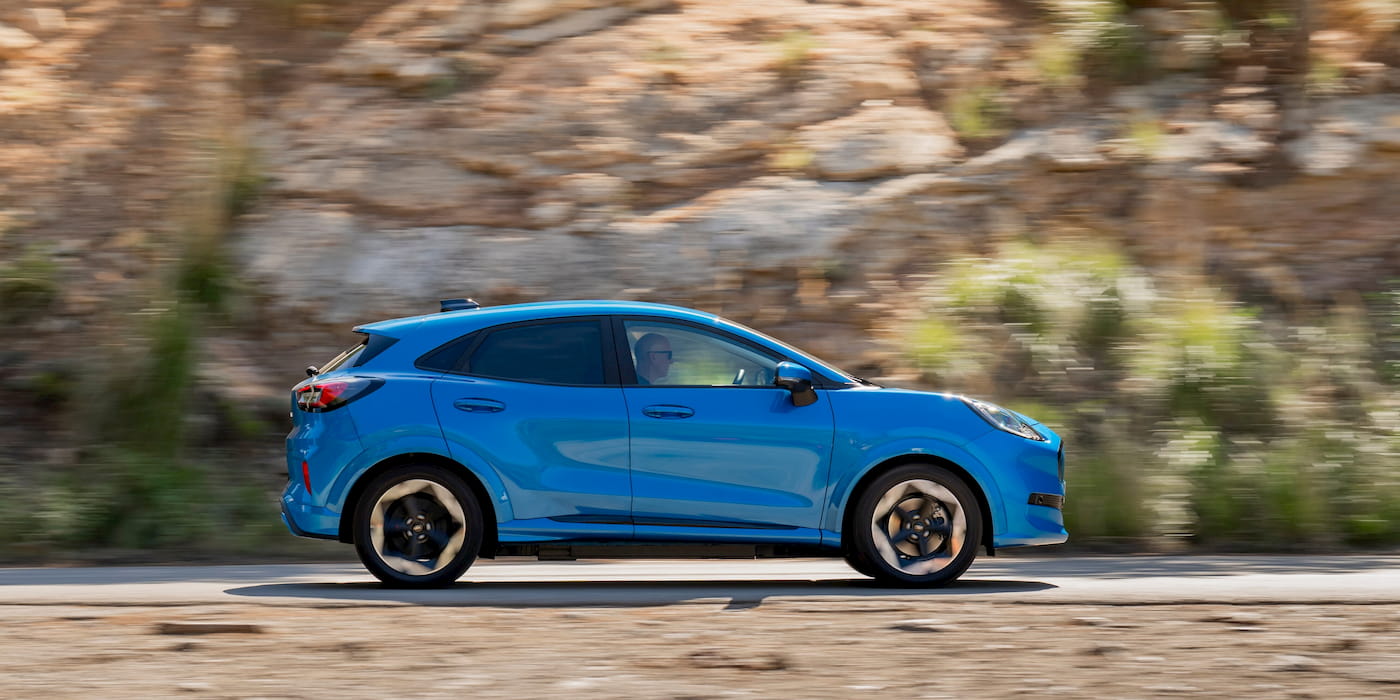
Ford is promising that more affordable EVs are coming soon. A new partnership will include two Ford-branded electric vehicles, but that’s just the start.
Ford and Renault partner up on affordable EVs
“We know we’re in a fight for our lives,” Ford’s CEO Jim Farley warned on Monday (via CNN) before announcing a landmark partnership with Renault to develop more affordable EVs and fend off surging Chinese brands like BYD and SAIC’s MG.
Ford said the new partnership is “a first step,” as part of a broader restructuring in the region. The plans include two new Ford-branded EVs, based on Renault’s Ampere platform.
Although they will share underpinnings with the popular Renault 5, the American automaker will lead the design to “ensure these vehicles are distinctly Ford.”
The first is expected to be an electric successor to the widely popular Fiesta, while the second is rumoured to be a small EV crossover, similar to the Renault 4.
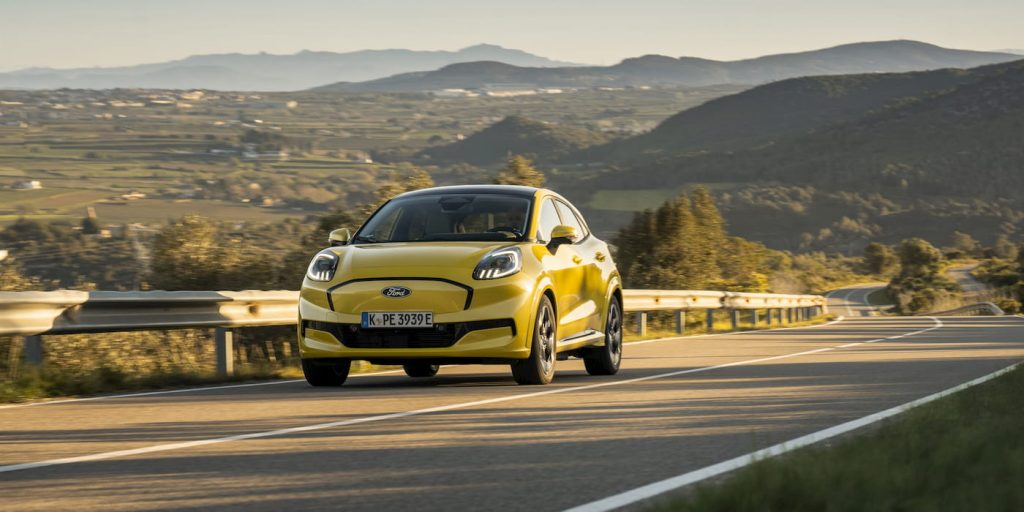
Ford didn’t offer specifics, but said the first vehicles will begin arriving in showrooms in 2028. Farley told reporters that the new EVs will be smaller than anything planned for the US, as it seeks to fill a critical gap in its European lineup.
“As an American company, we see Europe as the frontline in the global transformation of our industry,” Farley said, adding that “how we compete here will write the playbook for the next generation.”
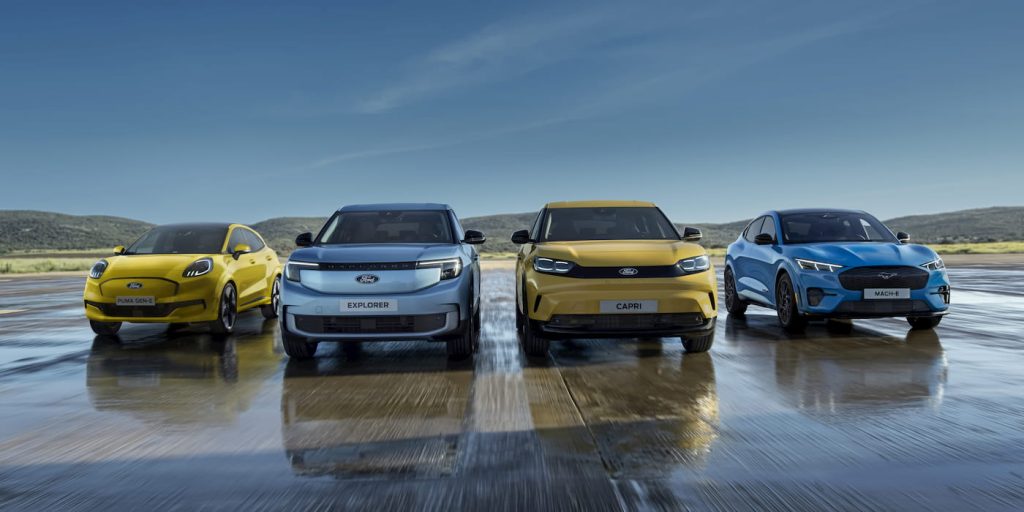
The partnership will also include jointly developing Ford and Renault-branded commercial vehicles using common platforms.
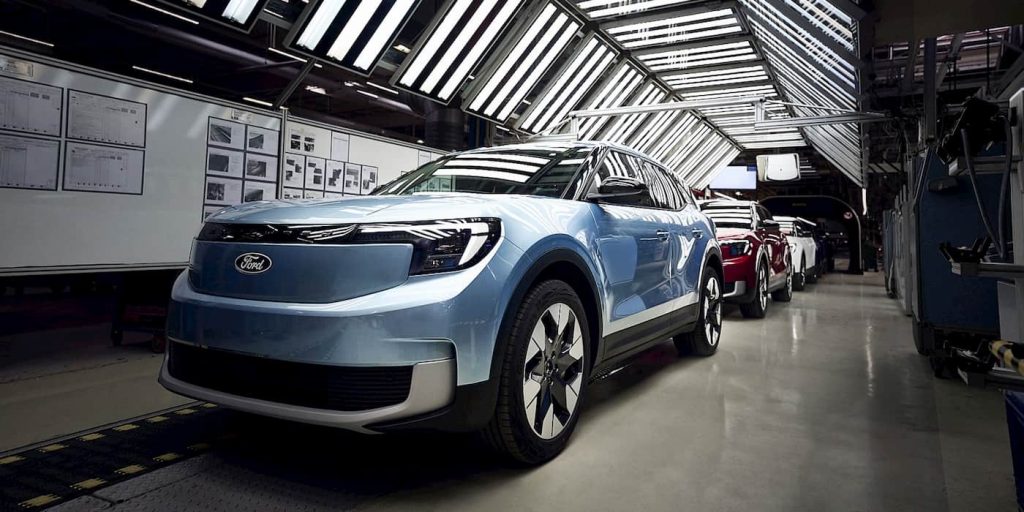
Ford’s current EV lineup in Europe consists of the Electric Explorer and Capri, which share a platform with the Volkswagen ID.4 and ID.5, and the Puma Gen E.
The news comes just a day after Farley warned that the EU’s emissions rules are “risking the future” of the auto industry.
Electrek’s Take
Ford initially backed the EU’s push to have all-electric vehicle sales in the region by 2035, but now it’s blaming slower-than-expected EV demand and calling for looser rules.
Farley has warned several times now that Chinese automakers, like BYD, are an “existential threat” to the auto industry. As part of its restructuring, Ford has already announced plans to cut thousands of jobs in Europe while reducing output at its Cologne EV facility.
Ford’s share of European passenger car sales has plummeted from 6.1% in 2019 to just 3.3% through October of this year.
Although the company is blaming slower EV demand, electric vehicles are still gaining ground in Europe. Through October 2025, nearly 1.5 million EVs were registered in Europe, accounting for 16.4% of the market. That’s up from around 13.2% through the first 10 months of 2024.
Meanwhile, the combined share of petrol and diesel cars fell to 36.6% from 46.3% over the same period.
Are EV sales slowing? Or, is it a Ford problem? The new alliance with Renault to build more affordable EVs will be critical to Ford’s comeback in the region.


FTC: We use income earning auto affiliate links. More.

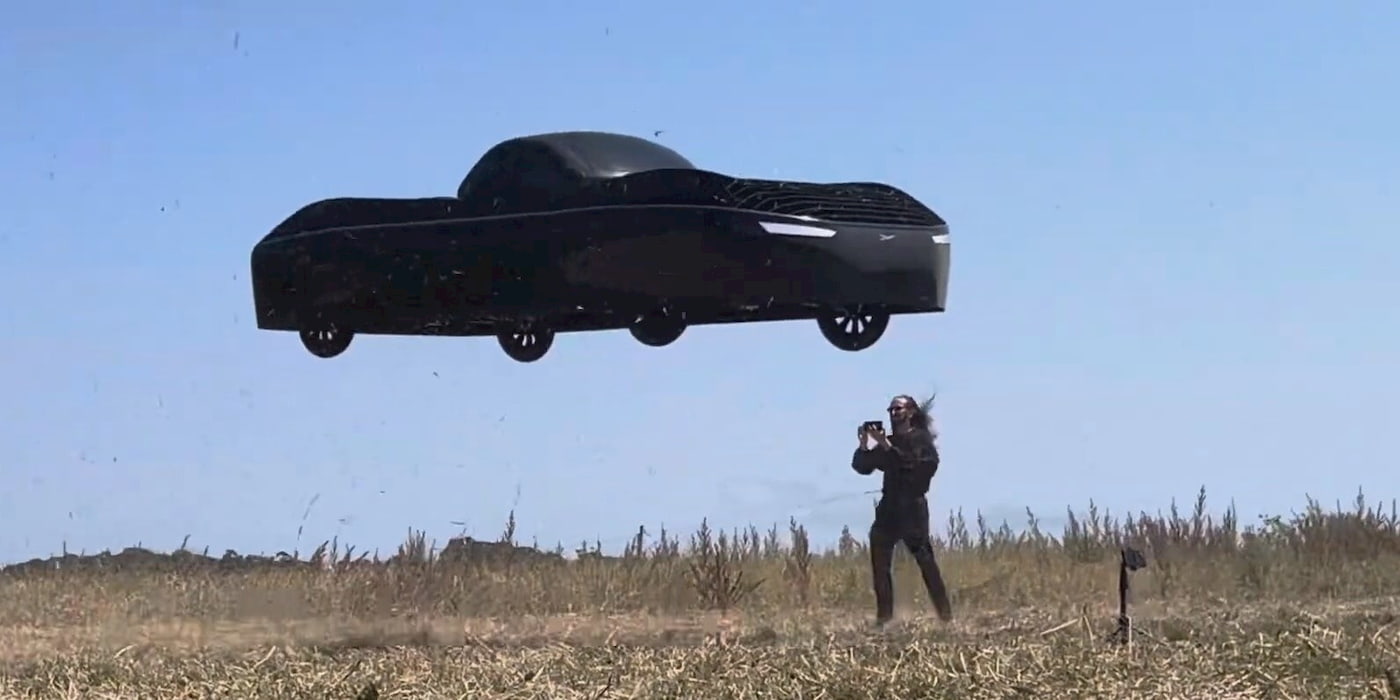
Flying cars are no longer just for the movies. Alef Aeronautics has begun building the first electric flying cars for customers, which are being hand-made in California.
Electric flying cars are real and hand-made in the US
It sounds like something from The Jetsons or Harry Potter, but flying cars are becoming a reality. Alef has been developing all-electric flying cars for about a decade now.
After unveiling a prototype in 2016, the company secured backing from early Tesla and Bitcoin investor Tim Draper. Draper became a pioneering investor and mentor to the team.
The big funding round propelled Alef to create not just a toy, but a flying car that can be used as an everyday commute vehicle.
In 2018, the company’s first full-size “skeleton” was flown, and the following year, the first prototype was shown to a group of investors.
Alef introduced its first model, dubbed the Model A, in 2022, a 100% electric flying car that can drive 220 miles with a 110-mile flight range.
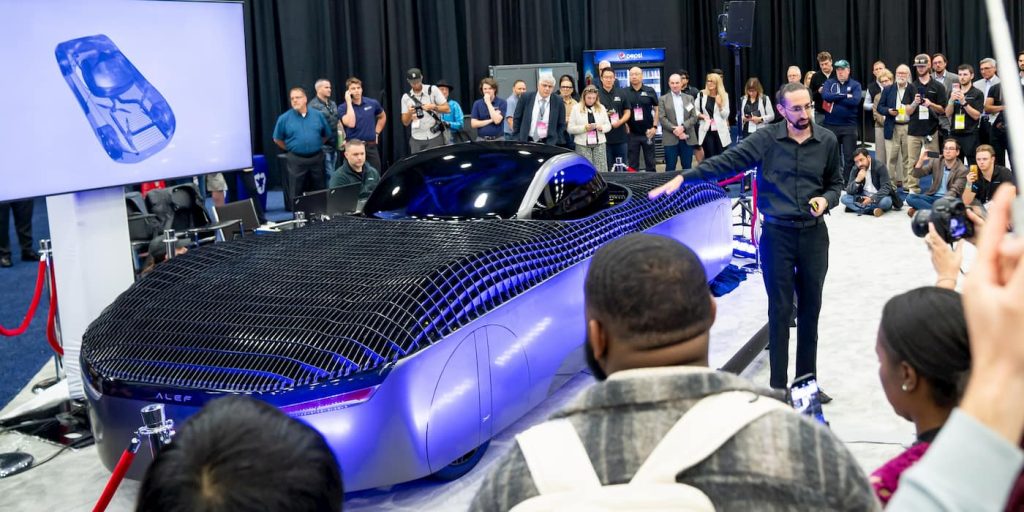
Less than a year later, it became the first to receive a Special Airworthiness Certification from the US Federal Aviation Administration while securing its first pre-orders from a car dealership.
We got our first look at the flying car in action earlier this year after Alef released a video of an ultralight Model A jumping over other vehicles, including a Tesla Cybertruck (see the video below). According to Alef, it was the “first-ever video in history of a car driving and vertically taking off.”
In its mission to make flying cars a reality, the California-based startup announced another major milestone on Monday.
Alef said it has begun manufacturing the first flying cars for customers at its facility in Silicon Valley, California. The first models are being hand-made and will be delivered to just a few early customers “for the purpose of testing flying cars in the real world environment,” according to Alef.
The company plans to train and support early adopters, using lessons learned as it ramps up production and deliveries.
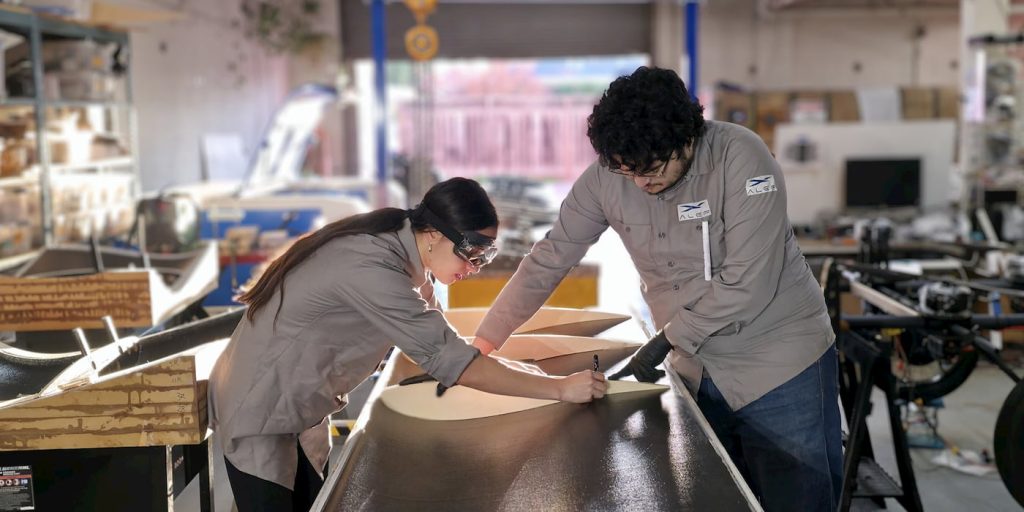
“We are happy to report that production of the first flying car has started on schedule,” Alef’s CEO, Jim Dukhovny, said at the event.
Alef claims its flying cars are “100% electric, drivable on public roads, and has vertical takeoff and landing capabilities.”
The startup has already received 3,500 pre-orders, which it says is worth $1 billion. Alef’s flying car is expected to start at around $299,999. You can pre-order one on Alef’s website with a $150 deposit, or you can secure a spot in the priority queue for $1,500. The first customer deliveries are expected to begin in 2026.
FTC: We use income earning auto affiliate links. More.

Environment
Tesla China retail sales slip in November, facing impossible task to avoid first annual decline

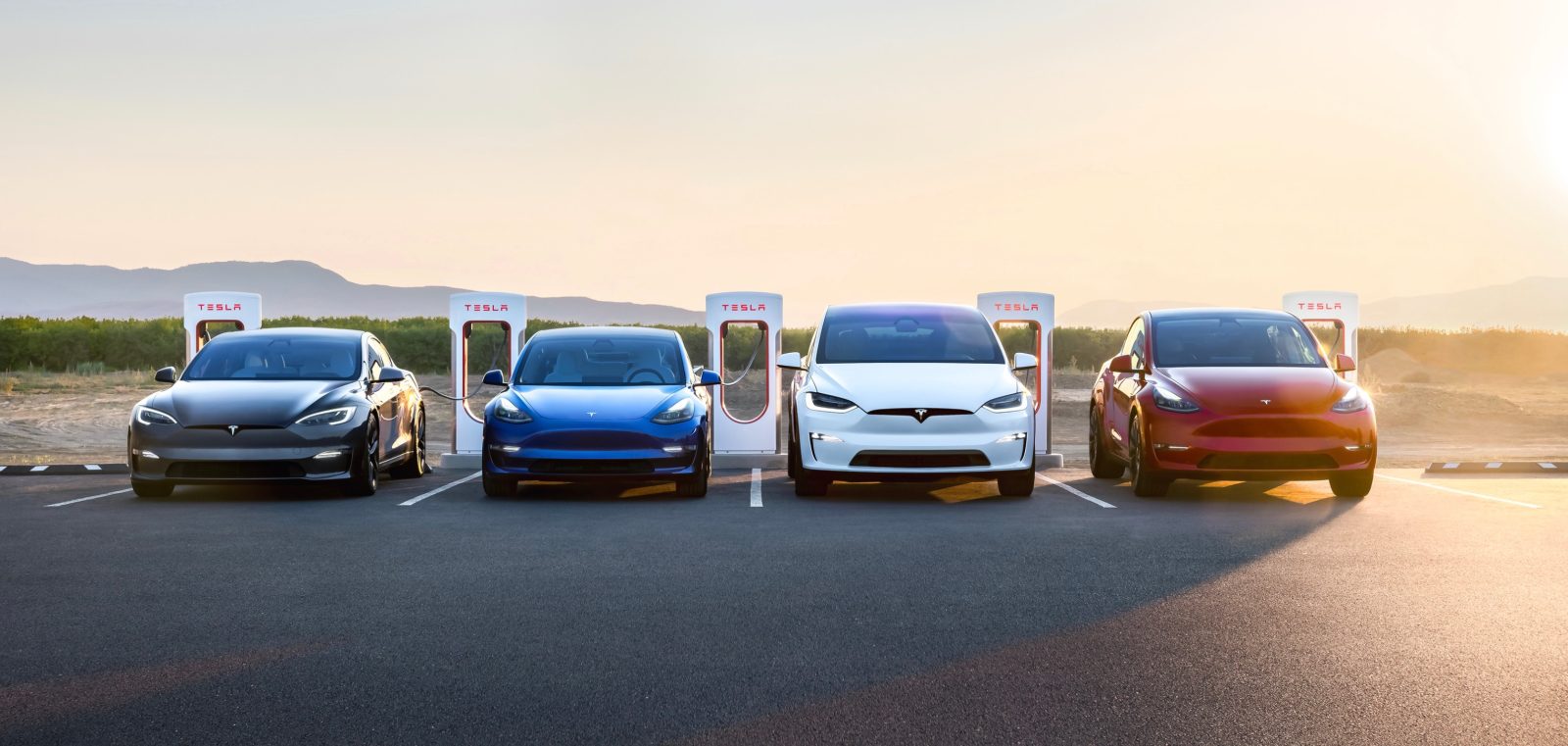
Tesla’s November numbers out of China are in, and they confirm what we’ve been suspecting for a while now: the growth story in the world’s most important EV market has officially stalled for the year.
While Giga Shanghai is still churning out vehicles, the local appetite for them seems to have hit a ceiling, and the company is now facing a mathematical impossibility if it wants to avoid a year-over-year decline in 2025.
According to new data from the China Association of Automobile Manufacturers(CAAM), Tesla achieved 73,145 retail sales (domestic deliveries) in November 2025.
While that is a significant volume of vehicles, it represents a slight year-over-year decline compared to November 2024, when Tesla delivered 73,490 units.
A drop of roughly 345 units might seem like a rounding error, but in a market that is aggressively expanding with competitors like BYD and Xiaomi posting record growth, a contraction for Tesla is concerning.
The picture gets gloomier when you zoom out to the annual performance.

Throughout 2025, Tesla has struggled to maintain the momentum it saw in late 2023 and early 2024. We saw significant dips earlier this year, particularly in February and October, that put the company behind the eight ball.
Now, with only one month left in the year, we can calculate exactly what Tesla needs to do to match its 2024 retail total of 657,105 vehicles.
As of the end of November, Tesla’s year-to-date retail sales for 2025 sit at 531,855.
That leaves a deficit of 125,250 vehicles.
To put it plainly: Tesla needs to deliver over 125,000 cars in China in December alone just to break even with last year’s numbers.
For context, Tesla’s absolute best retail month on record in China was December 2024, where they managed to push out 82,927 units. Even if Tesla pulls every demand lever available, such as 0% financing, insurance subsidies, and FSD transfer schemes, Giga Shanghai simply does not have the historical precedence, and likely not the capacity, to produce and then for Tesla’s retail org to deliver 125,000 vehicles locally in a single month.
The wholesale numbers (which include exports) peaked at around 94,000 in December 2023. Even if they diverted every single car made in Shanghai to local customers and halted all exports (which they usually do at quarter-end anyway), they would still fall short by over 30,000 units.
Electrek’s Take
This is a sobering moment for Tesla in China. 2025 will mark a year of regression for Tesla’s retail sales in China.
Tesla, the global leader in electrification, can’t grow in China, the world’s largest and fastest-growing EV market.
We’ve been saying this for a while: the Model 3 and Model Y are incredible vehicles, but they are saturation products in a market flooded with fresh, competitive, and cheaper alternatives. The chart clearly shows the fatigue. In 2024, we saw a massive end-of-year push (82k in Dec), but the buildup to that in 2025 just isn’t there.
The slight dip in November, usually a strong month for end-of-quarter pushes, is the smoking gun. It suggests that even with incentives, the new Model Y, and the Model YL, demand is static, amid a surging EV market.
Even if Tesla delivers a record of 85,000 vehicles in December, it would be down 6% in China for 2025.
Meanwhile, competitors like Xiaomi are up 175% and Xpeng 70%. This is a problem for Tesla.
FTC: We use income earning auto affiliate links. More.
-
 Sports2 years ago
Story injured on diving stop, exits Red Sox game
-
 Sports3 years ago
‘Storybook stuff’: Inside the night Bryce Harper sent the Phillies to the World Series
-
 Sports2 years ago
Game 1 of WS least-watched in recorded history
-
 Sports3 years ago
Button battles heat exhaustion in NASCAR debut
-
 Sports3 years ago
MLB Rank 2023: Ranking baseball’s top 100 players
-
Sports4 years ago
Team Europe easily wins 4th straight Laver Cup
-
 Environment3 years ago
Japan and South Korea have a lot at stake in a free and open South China Sea
-
 Environment1 year ago
Here are the best electric bikes you can buy at every price level in October 2024