


A hidden, underground military base in eastern Ukraine is so secret, soldiers change into civilian clothes whenever they step outside to avoid drawing attention.
Journalists are not usually allowed access.
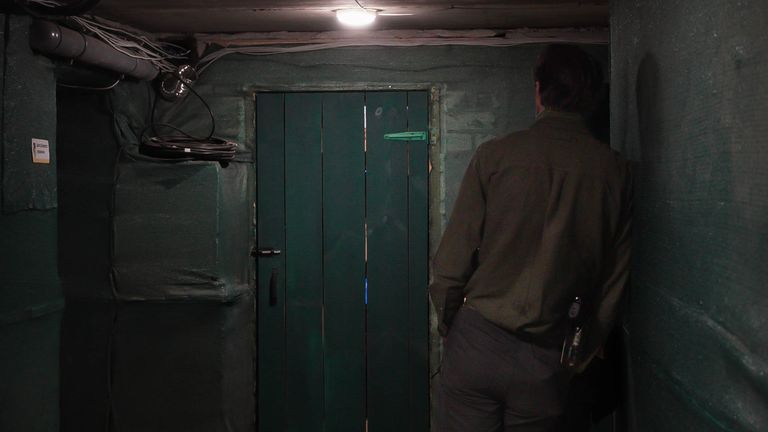
But the unit that has been using this vast, subterranean warren of war rooms, a dormitory, kitchen, canteen and makeshift gym as its headquarters since the summer is imminently relocating, so Sky News was invited inside.
Lieutenant Colonel Arsen Dimitric – call sign Lemko – is the chief of staff of 1st Corps Azov of the National Guard of Ukraine, one of the country’s most effective combat forces.
Lemko
He sat with us in the base, next to a large square table, covered by a map of the Donbas region.
His soldiers have been fighting in this area since the summer, countering a surge in Russian attacks in and around the frontline city of Pokrovsk.
“We aim to destroy as much of the enemy as possible,” he said.
“Will we take losses? Yes. Will it hurt? Absolutely.”
But he said if Russia is allowed to advance, even more Ukrainians will suffer.
“Their [the Russians’] only advantage is numbers,” he said.
“They don’t care how many people they lose.”
Lemko said almost 17,000 Russian soldiers had been killed or wounded fighting in this section of the warzone alone between August to November.
Read more:
Russia hits Ukraine with massive missile and drone attack

Ukrainian video footage of the battlefield showed Russian armoured vehicles being taken out by drones and artillery fire.
At one point, Russian soldiers mounted on motorbikes try to advance, only to be stopped by Ukrainian fire.
“Our task is to hit them as hard as possible in various areas,” Lemko said. “We focus on our operations, others on theirs, and leadership will negotiate the best possible terms.”
The Azov Corps soldiers are fighting over land that should be handed over to Russia, according to an initial draft of a peace deal proposal between Kyiv and Moscow put forward by the United States. This is despite swathes of the Donbas remaining under Ukrainian control.
But General Oleksandr Syrskyi, the head of the Ukrainian armed forces, has since told Sky News that simply surrendering territory would be “unacceptable”.

Giving up territory ‘unacceptable’, Ukraine’s military chief says
For Lemko, he says the job of his troops is to inflict as much damage as possible on the Russian side to help strengthen Ukraine’s hand in negotiations.
“Simply giving it [land] away isn’t the way,” he said.
“Diplomats do their work, we do ours. Our job as soldiers is to give as many advantages as possible to our negotiating team. And we’re doing exactly that.”
Lemko, who has been battling against Russia since the Crimean annexation in 2014, also had a warning for the rest of Europe about a rise in hybrid attacks, such as mysterious drone sightings, acts of sabotage and cyber hacks suspected of being linked to Moscow.
He said Ukraine’s experience showed that if attacks by Russia that fall under the threshold of conventional war are not successfully countered, full-scale conflict could follow.
“Ukraine once lost a hybrid war that had been waged since the very start of our independence,” he said.
“Because of that defeat, there was a physical operation against us in Crimea and then a physical operation in 2022.
“Now the hybrid war has reached its climax, and it is moving into the Baltic States and Europe.
“That is why, in my opinion – and in the opinion of most of our officers – now is the moment for all countries to unite and counter this hybrid war. Because the consequence may be a physical one.”
Production: Katy Scholes, security and defence producer, and Azad Safarov, Ukraine producer.
Camera operator: Mostyn Pryce


At least 25 people have been killed after a fire at a nightclub in Goa, the state’s police service has said.
The fire reportedly started around midnight on Saturday local time.
The majority of victims were kitchen staff at the club – although around three to four tourists are thought to be among those killed.
Videos on social media showed emergency services lining up to help the injured – some of whom were taken to nearby hospitals.
Dr Pramod Sawant, Goa’s chief minister, said: “I am deeply grieved and offer my heartfelt condolences to all the bereaved families in this hour of unimaginable loss.”
He later said he was “closely reviewing the situation arising from the tragic fire” – adding six additional people had been injured.
“All six injured persons are in a stable condition and are receiving the best medical care,” he said.
Pic: NDTV

Fire at nightclub in Goa. Pic: NDTV
Authorities worked through the night to bring the situation under control and all bodies have been recovered, the state’s police chief told reporters, according to Reuters news agency.
India’s Prime Minister Narendra Modi said the deadly fire was “deeply saddening”.
He said he had spoken with Goa’s chief minister and that “the state government is providing all possible assistance to those affected”.
Dr Sawant said he has “ordered an inquiry” to discover what happened after visiting the site.

Pic: AP
“The inquiry will examine the exact cause of the fire and whether fire safety norms and building rules were followed,” he said.
“Those found responsible will face most stringent action under the law – any negligence will be dealt with firmly.”
Goa, a small state on India’s western coast, is a popular tourist destination, attracting millions of tourists every year.
US
Jeffrey Epstein’s most lucrative currency was people – six years after his death, he continues to haunt those who knew him

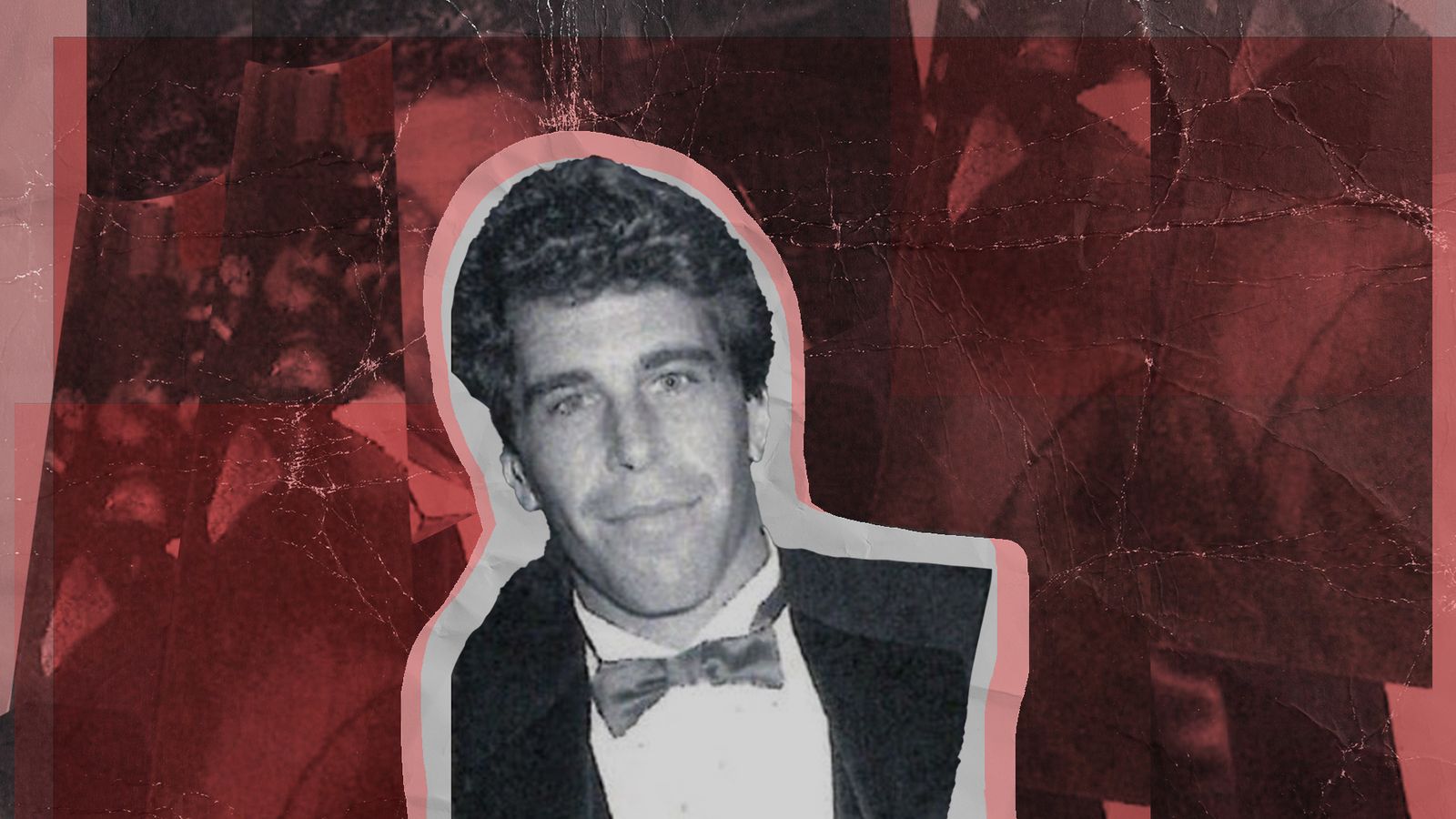
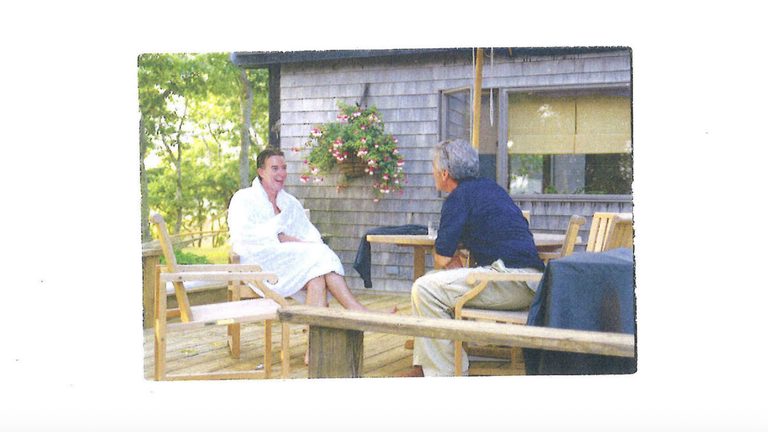
Framed photos with presidents, princes and even the pope adorned the many homes of Jeffrey Epstein.
This article contains images and language that some readers may find disturbing.
The disgraced New York financier’s most lucrative currency was people. He made a career out of connections with world leaders in politics, business titans and science’s most lauded brains.
The man formerly known as Prince Andrew, Andrew Mountbatten-Windsor, described Epstein‘s appeal in his infamous TV interview: “He had the most extraordinary ability to bring extraordinary people together and that’s the bit that I remember, going to the dinner parties where you would meet academics, politicians, people from the United Nations. It was a cosmopolitan group of what I would describe as US eminence.”
His network was not just US-based but the global elite – among them hedge fund owners, bankers and hoteliers.
But as more and more new documents and photos are made public, we can build up an intimate portrait of a man who kept so much private.
Read more: Dozens more images of Epstein’s island released
Another man once called a prince, but of darkness this time, Peter Mandelson, described his “best pal” as a “prolific networker”. Epstein’s friends crossed political parties – Republican and Democratic – and continents.
Epstein and Mandelson. Pic: US House Oversight Committee
Epstein’s Palm Beach mansion was just a seven-minute drive from Donald Trump‘s Mar-a-Lago. In 2002, Mr Trump told New York Magazine: “I’ve known Jeff for 15 years. Terrific guy. He’s a lot of fun to be with. It is even said that he likes beautiful women as much as I do, and many of them are on the younger side.”
They are said to have fallen out while competing to purchase a mansion in 2004.

Trump and Epstein at a party together in 1992. Pic: NBC News
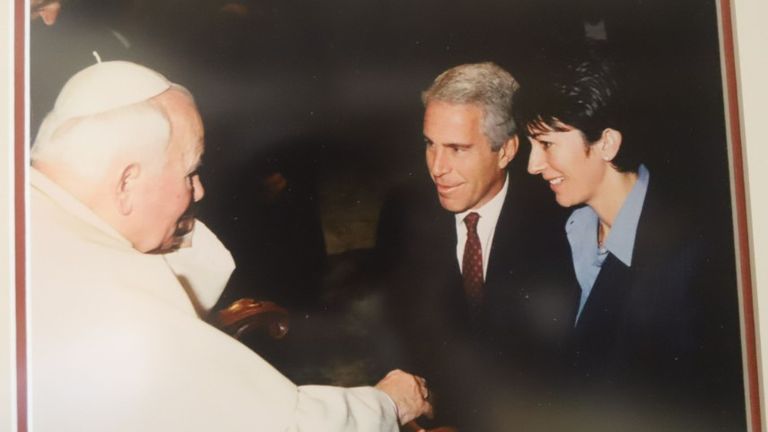
Jeffrey Epstein and Ghislaine Maxwell meeting Pope John Paul II
The release of thousands of Epstein’s personal emails shows he had had plenty of world leaders in his inbox.
The former prime minister of Norway and former president of the Maldives sought his advice on politics and finance respectively.

Inside Jeffrey Epstein’s private island
An enigma
Epstein’s emails are short, often abrupt and riddled with spelling mistakes. The impression he wanted to give: he was a busy man, an enigma. You were lucky to be getting a reply.
He cared about appearances – his own and of the women he abused. He dated many models, including a former Miss Sweden. He followed a strict diet to keep lean and insisted the women in his life did the same.

A drawing in Epstein’s 50th birthday book
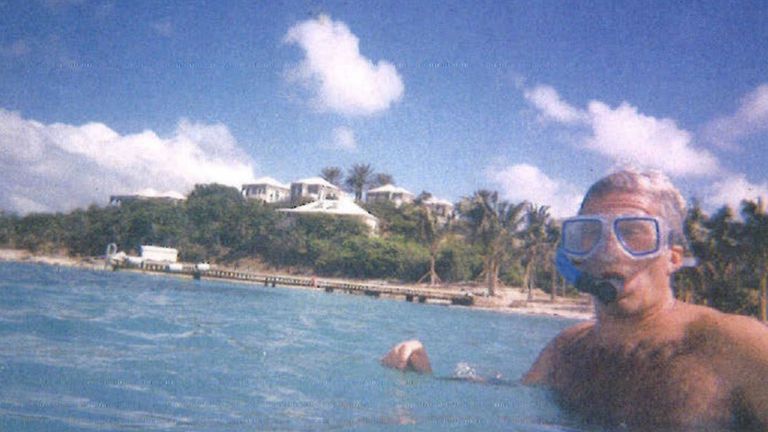
His now notorious 50th birthday book is packed full of candid snaps, some featured here, that flaunt his lavish lifestyle. It is also brazen in its relishing of Epstein’s proclivity for young women. Images of scantily clad women are included in photos and doodles.
The anecdotes from his wealthy, powerful friends are often smutty or innuendo-led. “It’s no secret that Jeffrey appreciates beautiful women. But not many people know that he can create them out of thin air,” reads one.
Massages were entry route to abuse
Epstein’s black book of contacts had lengthy lists of women lined up for “massages” in Florida, California, New Mexico, New York, London, Paris and his island.

At least 152 women are named in it with phone numbers – they were available on speed dial.
The premise of a massage was often his entry route to abuse. The massages were scheduled, part of his daily routine. Whether on a private jet or his private island, he acted with impunity for far too long.

Inside Epstein’s island: What do new images tell us?
Epstein did not show remorse for his crimes
Multiple women went to the police to report his actions over the years. But the only jail time he was ever sentenced to was in 2008 after a controversial deal where he pleaded guilty to state charges of soliciting a minor for prostitution. He was sentenced to 18 months in jail, but only served 13 and negotiated the ability to leave the jail six days a week for up to 12 hours a day for work.
Despite becoming a registered sex offender in 2008, he was far from a social pariah. Nor did he show remorse for his crimes.
Even a decade after his conviction, he was still mocking sexual abuse. He wrote in a message to a friend in 2018, “so many guys caught in the me too, reaching out to me. Asking when does the madness stop. Funny,” and then that “breast cancer was easier to cure than the me too movement”.
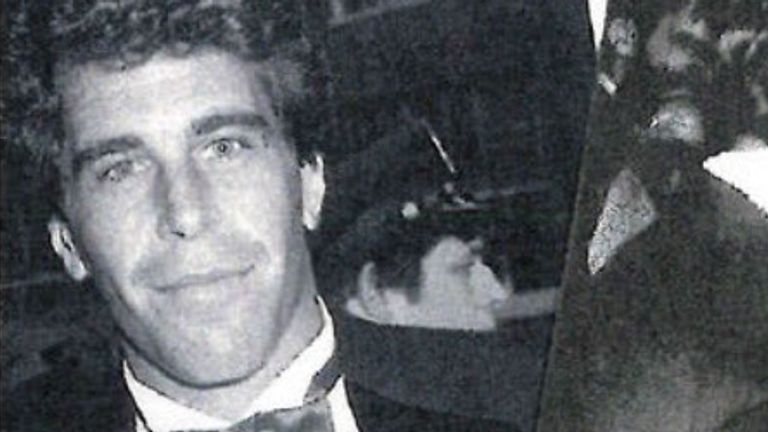
A picture of Jeffrey Epstein from his 50th birthday book

‘Epstein claimed if girls had started menstruating they were of age to have sex’
Virginia Giuffre revealed in her memoir that Epstein would say that criminalising sex with teenage girls was a cultural aberration. He would point to different US states having different ages of consent – in Florida it was 18. He claimed if girls had started menstruating they were biologically of age to have sex.
Documents released by the House Oversight Committee reveal he paid to “clean up” what came up about him on Google after his conviction. On 11 December 2010 he bemoaned that despite forking out thousands, “the google page is not good” in an email.

The Epstein files released last month: Sky’s US correspondent Mark Stone explains
‘An extraordinary volume’ of naked photos of young girls
On 6 July 2019, Epstein was arrested on federal charges related to sex trafficking after his private jet flew into the US from Paris.
“An extraordinary volume” of naked photos of young girls were found in his New York town house. Authorities also found a safe containing 48 loose diamonds, $70,000 (£52,000) in cash and three passports belonging to the sex offender. The expired Austrian passport had a photo of Epstein, but a different name and an address in Saudi Arabia.
👉 Follow Trump100 on your podcast app 👈
On 10 August 2019, Epstein was found dead in his New York prison cell while awaiting trial. Forty-eight hours before he died he signed a will which put his assets in a trust, the beneficiaries of which remain private.
Epstein’s most vocal victim, Ms Giuffre, who took her own life this year, closes her memoir Nobody’s Girl saying: “Epstein is dead but the attitude that allowed him to do what he did, it’s alive and well.”
Six years after his death, Epstein continues to haunt those who knew him. Some may be scared – for their reputation, careers and for what more could still come out.
-
 Sports2 years ago
Story injured on diving stop, exits Red Sox game
-
 Sports3 years ago
‘Storybook stuff’: Inside the night Bryce Harper sent the Phillies to the World Series
-
 Sports2 years ago
Game 1 of WS least-watched in recorded history
-
 Sports3 years ago
Button battles heat exhaustion in NASCAR debut
-
 Sports3 years ago
MLB Rank 2023: Ranking baseball’s top 100 players
-
Sports4 years ago
Team Europe easily wins 4th straight Laver Cup
-
 Environment3 years ago
Japan and South Korea have a lot at stake in a free and open South China Sea
-
 Environment1 year ago
Here are the best electric bikes you can buy at every price level in October 2024