World
Is this what the beginning of a war looks like? How the US threat around Venezuela is shaping up


Is this what the beginning of a war looks like?
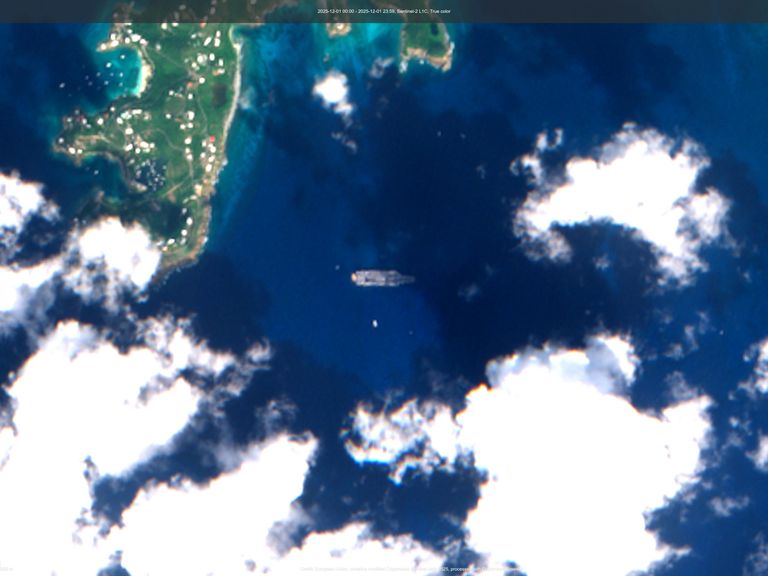
In the deep blue waters of the Caribbean, visible from space, an unremarkable grey smudge.
The USS Gerald R Ford seen off the US Virgin Islands on 1 December. Credit: Copernicus
But this is the USS Gerald R Ford: the largest, most deadly aircraft carrier in the world. And it is only part of an armada, apparently set on Venezuela.

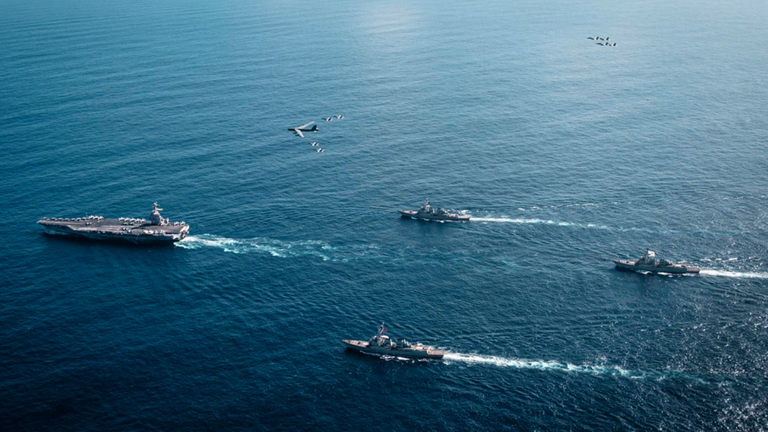
The Gerald R Ford, USS Winston S Churchill, USS Mahan and USS Bainbridge in the Atlantic on 13 November. Source: US Department of Defense
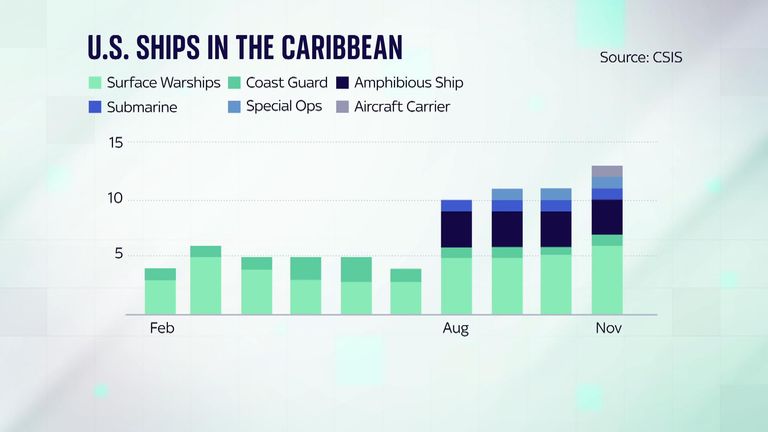
From being able to count on one hand the number of warships and boats in the Caribbean, since August we can see the build-up of the number, and variety of ships under US command.
And that’s only at sea – air power has also been deployed, with bombers flying over the Caribbean, and even along the Venezuelan coast, as recently as this week.
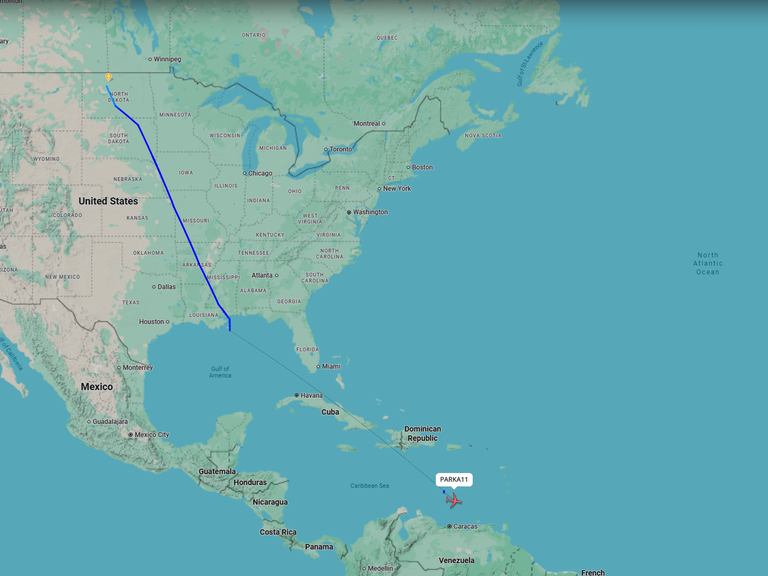
A Boeing B-52H Stratofortress near Venezuelan coast from Minot Air Force Base, North Dakota, on 3 December. Credit: FlightRadar24
Venezuela’s President Nicolas Maduro told crowds his country has endured 22 weeks of aggression from the US and Donald Trump.
Things could be about to get worse.
So let’s rewind those 22 weeks to understand how we got here…
‘Drug boat’ strike

On 2 September, the White House posted on X that it had conducted a strike against so-called “narcoterrorists” shipping fentanyl to the US, without providing direct evidence of the alleged crime.
Sky’s Data & Forensics unit has verified that in the past four months since strikes began, 23 boats have been targeted in 22 strikes, killing 87 people.
Read more: The US-Venezuela crisis explained
The latest was on 4 December, after which US Southern Command announced it had conducted another strike on an alleged drug smuggling boat in the eastern Pacific.

It was the first such strike since 15 November and since the defence secretary, sometimes referred to as secretary of war, Pete Hegseth, came under scrutiny for an alleged “second strike” in an earlier attack.
The US says it carried out the action because of drugs – and there has been some evidence to support its assertion.
The Dominican Republic said it had recovered the contents of one boat hit by a strike – a huge haul of cocaine.
Legal issues
Whatever the cargo, though, there are serious, disputed legal issues.
Firstly, it is contested whether by designating the people on the boats as narcoterrorists, it makes them lawful military targets – or whether the strikes are in fact extra judicial murders of civilians at sea.
And more specifically… well, let’s go back to that very first video, of the very first strike.
What this footage doesn’t show is what came afterwards – an alleged “second strike” that targeted people in the water posing no apparent threat.
That has created a crisis for Hegseth.
Speaking at a cabinet meeting last week, the defence secretary said he did not see that there were survivors in the water when the second strike was ordered and launched in early September, saying that “the thing was on fire”.
And the 4 December strike shows this strategy isn’t over.
The strikes are just part of the story, as warships and planes have headed toward the region in huge numbers.
Drugs or oil?
Some have said this isn’t about drugs at all, but oil.
Venezuela has lots – the world’s largest proven reserves.
Speaking to the faithful on Fox News, Republican congresswoman – and Trump supporter – Maria Salazar said access to Venezuela would be a “field day” for American oil companies.
And Maduro himself has taken up that theme. A few days later, he wrote this letter to OPEC – which represents major oil producing nations – to “address the growing and illegal threats made by the government of the United States against Venezuela”.

That’s how Maduro has framed this – a plan by the US “to seize Venezuela’s vast oil reserves… through lethal military force”.
Lethal military force – an understatement when you think of the armada lying in wait.
And it may be called upon soon. Trump on Tuesday said he’s preparing to take these strikes from international waters on to Venezuelan territory.
Maduro has complained of 22 weeks of “aggression”. There may be many more to come.
Additional reporting by Sophia Massam, junior digital investigations journalist.
The Data X Forensics team is a multi-skilled unit dedicated to providing transparent journalism from Sky News. We gather, analyse and visualise data to tell data-driven stories. We combine traditional reporting skills with advanced analysis of satellite images, social media and other open source information. Through multimedia storytelling we aim to better explain the world while also showing how our journalism is done.