

MLB Rank 2023: Ranking baseball’s top 100 players


Who will be the best player of the 2023 MLB season?
Opening Day is almost here, which means it’s time to break down how baseball’s elite stack up against each other.
To create our annual MLB Rank list of the top 100 players in the sport, we presented a panel of ESPN baseball experts with pairings upon pairings of the biggest names in the game and asked one simple question: Which player will be better in 2023?
But it raises the question: How do you compare a player like Shohei Ohtani to Mike Trout? Or Aaron Judge? And where do baseball’s best pitchers land? It seems impossible to pit these stars against one another, but we did it — and one player came out on top.
Our list features Cy Young Award winners, MVPs, veterans building Hall of Fame résumés and young megastars who could dominate MLB for years to come. But who’s No. 1? And where does the best player on your team rank?
ESPN MLB experts Alden Gonzalez, Dave Schoenfield, Joon Lee, Jesse Rogers and Brad Doolittle broke down why each player is ranked where they are and what to expect from them in the upcoming season.
Watch: “Baseball Tonight” MLB Rank special, Sunday at 4 p.m. ET on ESPN
More: Snubs, surprises
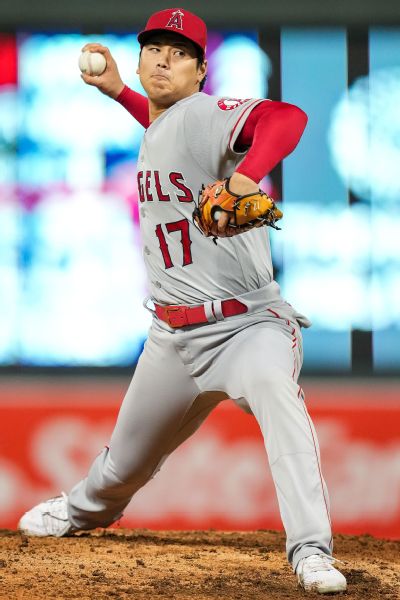
It shouldn’t surprise anyone that Ohtani ranks first heading into the 2023 season. He is the most uniquely talented player in baseball history, and it took a historic offensive season from Aaron Judge to prevent him from becoming a back-to-back MVP. Ohtani, still only 28, is both one of the most dominant starting pitchers and one of the most feared hitters in the sport, along with being one of the fastest runners. (And if he wanted to be an outfielder, coaches believe he could become an excellent defender, too.)
From 2021 to 2022, Ohtani put up a higher wRC+ than Jose Ramirez, Mookie Betts and Manny Machado, and a lower xFIP than Max Scherzer, Max Fried and Sandy Alcantara. Outside of Babe Ruth, briefly a two-way player more than 100 years ago, nobody has even attempted both traits at this level, let alone excelled at it. — Gonzalez
Season prediction: As the years go on, Ohtani seems to grow more comfortable in a two-way role. His command on the mound continually evolves, his familiarity with opposing pitchers only grows. It has become clear while watching him perform in the World Baseball Classic that Ohtani is the best baseball player in the world. Expect another MVP-worthy season — with a $500 million-plus contract to follow. — Gonzalez
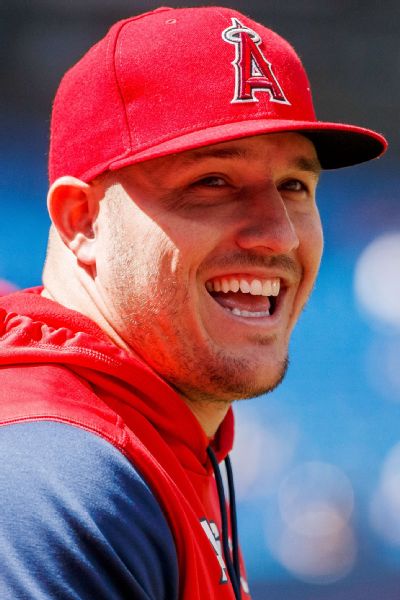
CF | Los Angeles Angels
Perhaps the only man who can challenge Ohtani as the game’s best player is a healthy Mike Trout. Health, though, has been an issue of late. Trout has played in fewer than 70% of the Angels’ games over the last five years, most notably missing the last four and a half months of the 2021 season with a troublesome calf. When he does play, however, he resembles the best player on the planet.
Last year, Trout appeared in only 119 games but still managed 40 home runs and a .999 OPS and won his ninth Silver Slugger. His 81.4 FanGraphs WAR since his first full season in 2012 is laughably beyond anybody else’s grasp (second place is Max Scherzer, at 60.1). At 31, Trout should still have a few prime years left. He just needs to stay off the injured list.
Season prediction: Trout is still fully capable of standing out even among the game’s best players, and he should continue to do so. If he stays healthy, he might lead the majors in every major offensive category. Just don’t expect a bunch of stolen bases or acrobatic catches; Trout, rightly, has become conscious of the importance of preserving his body. — Gonzalez
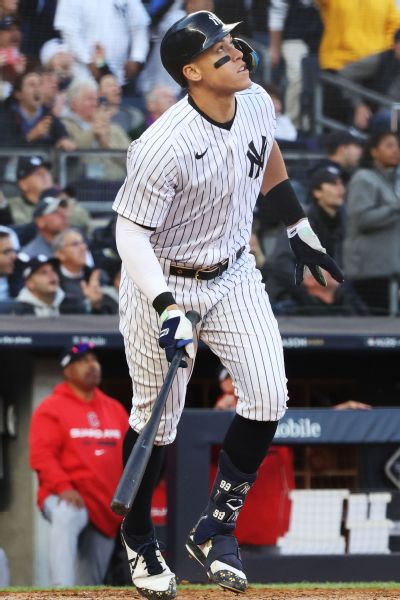
Putting together a historic season is going to vault someone right up this list. Judge captivated the sports world by breaking Rogers Maris’ American League home run record. Now, armed with an enormous contract, Judge enters the second phase of his career. While he is one of the sport’s most recognizable faces and biggest stars, a World Series title has eluded him. And while Judge will always be remembered for his historic 2022 season, the success of the Yankees during this contract will ultimately determine his legacy.
Season prediction: Judge lives up to his new contract by continuing as the heartbeat of the Yankees’ lineup. That lineup went where Judge went last season. In the moments where he struggled, so did the entire offense. When he flourished, so did the Yankees. The outfielder has put together two straight seasons of strong health and New York will need him to continue that, especially as the rotation is plagued by injuries. — Lee
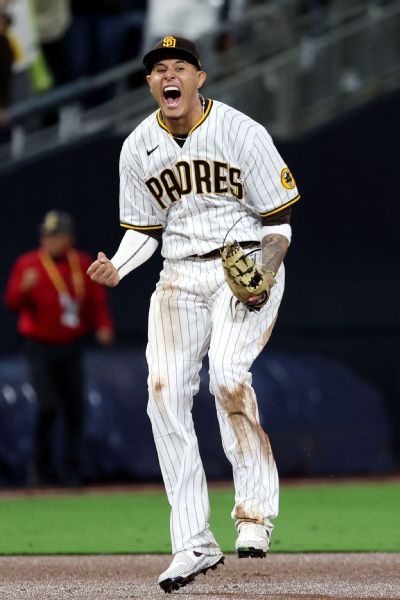
Machado turned 30 during the 2022 season, and if that midcareer performance was any indication, he’s well on his way to Cooperstown. Machado is one of baseball’s most consistent stars, not just in terms of production but also — and perhaps more importantly — durability.
On his way to finishing second in National League MVP balloting, Machado created more runs than ever in 2022 and reached triple digits in both runs and RBIs in the same season for the first time. His defense isn’t as off-the-charts as it once was, but he remains an excellent defender with the arm and speed to suggest he’s not going to have to move off the hot corner any time soon. Also, Machado’s sprint speed has remained largely unchanged and, over the past two seasons, he has stolen 21 bags in 25 attempts. Thus, the new rules could portend a career season on the basepaths for him.
Season prediction: Given the way the ball was flying off Machado’s bat during the WBC, he seems poised for another run at his first MVP award. He has continued to evolve as a hitter, adding more launch without becoming too pull-oriented. Machado’s RBI count in this particular San Diego lineup could be eye-popping, and if he does tack on some steals, his stat line in the context of a Padres run to the NL West title will be too much for NL MVP voters to ignore. — Doolittle
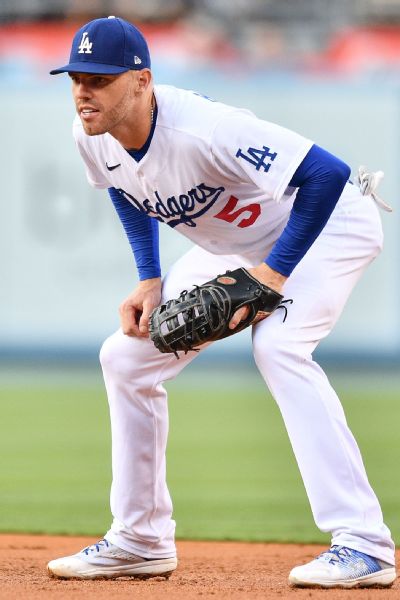
Freeman put together one of the best seasons of his career in the first year of his new contract in Los Angeles, hitting .325/./407/.511 with 21 homers and a 5.9 bWAR, the third-best mark of his 13-year career. The Dodgers’ lineup will be leaning on him even more this season with the departures of Trea Turner and Justin Turner. Freeman has been among the most durable players in baseball since he entered the league in 2010, playing fewer than 147 games just twice, in 2015 and 2017 (with the exception of the COVID-shortened 2020 season). Freeman’s exceptional ability to make contact will likely have him aging better than most hitters heading into their mid-30s.
Season prediction: Freddie Freeman continues being Freddie Freeman. Since 2013, he has hit below .300 just thrice. The Dodgers will need him to keep that level of production up, as the division gets tougher with the Padres’ recent big-ticket additions. — Lee
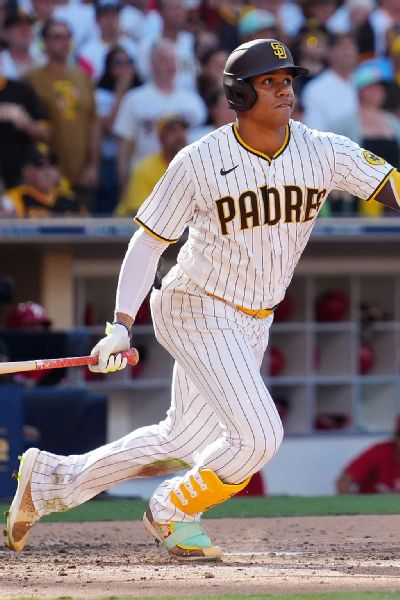
RF | San Diego Padres
How do you know you’re a future Hall of Famer? When you post clearly the worst season of your five-year career and you still have a .401 on-base percentage, an OPS+ that rates you as 49% better than a league-average hitter and you win your third straight Silver Slugger award.
Soto’s NL-leading 135 walks were paired with just 96 whiffs, underscoring his status as the game’s most disciplined hitter. But it’s not just take, take, take. When Soto gets a pitch to hit, he makes contact, usually hard contact. His dip in 2022 can be traced to a BABIP (.249) that was 60 points under his career mark. Part of that was because he became a little more launch-and-pull oriented but that need not be a permanent change. And even if it is, his in-play numbers in a post-shift world could be frightening.
Season prediction: Soto looked like he was in midseason form during the WBC — as in the middle of a career season — and after last season’s flirtation with playing like a mere mortal, expect a monster campaign as his future free agency (or a record contract extension before then) looms. What does a monster season look like for this guy? Something like .340, 45 homers, 150 walks, 8.0 WAR. And those estimates could be modest. — Doolittle
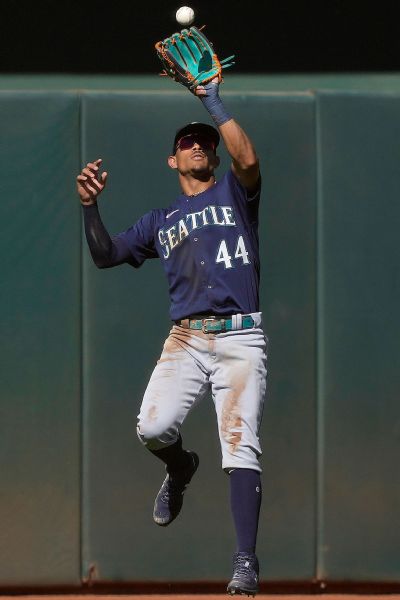
It’s hard not to go there. He was one of the game’s biggest stars as a rookie. He plays center field for the Mariners. He hits tape-measure home runs and makes impossible catches. He has the million-dollar megawatt smile. Ken Griffey Jr. had his own candy bar; J-Rod has his own cooking show.
At age 21, Griffey produced a 155 OPS+; Rodriguez, in his rookie season at age 21, produced a 147 OPS+. Griffey finished ninth in the MVP voting; J-Rod finished seventh. After going homerless in April and hitting just one in his first 34 games, Rodriguez hit .297/.358/.567 the rest of the way with 27 home runs in 99 games. Now imagine that over a full season. Enjoy, Mariners — and baseball — fans.
Season prediction: It’s hard to predict an MVP award in a league with Ohtani, but let’s go with Rodriguez hitting 35-plus home runs and finishing in the top three while leading the Mariners to — surprise! — a division title. — Schoenfield
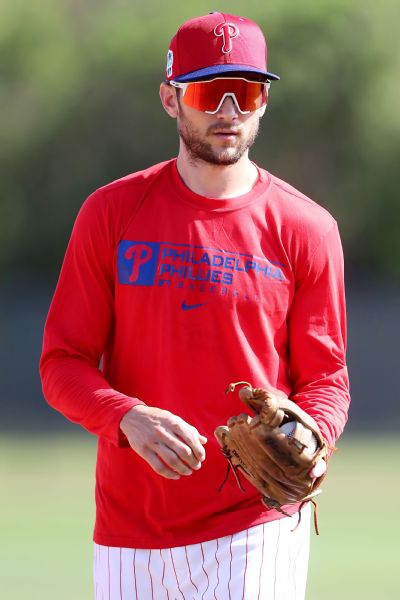
Turner is the complete package. His combination of speed and power at shortstop is the reason why the Phillies invested $300 million in him. At various times in his career, he led the league in games played, plate appearances, at-bats, stolen bases, triples, batting average and total bases.
Last year might have been his best on the basepaths, as he stole 27 of 30 — good for a 90% success rate. He also hit 21 home runs, producing yet another season with an OPS over .800. He’s done it in four consecutive years, helping him to his huge new contract.
Season prediction: The new rules — starting with the bigger bases — will be a godsend for the speedy Turner. He’ll set a career high in steals with at least 50. — Rogers
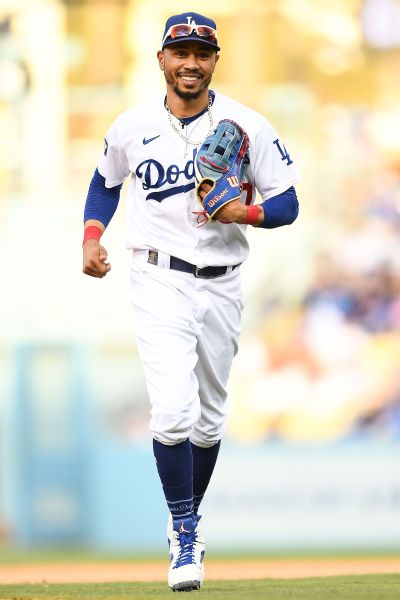
RF | Los Angeles Dodgers
Betts, venturing into his age-30 season, is among the few legitimate five-tool players in the sport, despite being listed at 5-foot-9 and 180 pounds. He’s a gifted defender with a cannon for an arm, but he’s also one of the game’s fastest players and best all-around hitters, bringing elite bat-to-ball skills and, yes, power. Betts has finished within the top five in MVP voting four times over the past seven seasons, including last year, when he won his sixth Gold Glove and his fifth Silver Slugger. He is the only player to accumulate more than 200 home runs and more than 150 stolen bases from 2015 to 2022. The Dodgers will play him some at second base this year — and he’ll probably be great at that, too.
Season prediction: Two traditional numbers to keep an eye on with Betts: stolen bases and RBIs. Betts hasn’t reached 20 stolen bases since swiping 30 in 2018, but the bigger bases and the limited pickoffs should present more opportunities. He hasn’t driven in 100 runs since 2017, but the Dodgers would love to put him in more run-producing situations this season — if they can find someone else to lead off. — Gonzalez
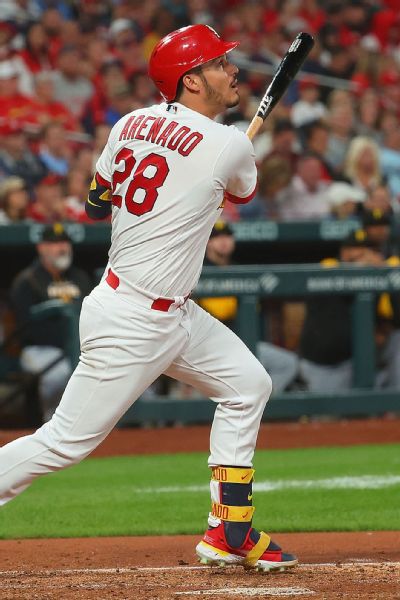
Pitchers fear Arenado as much as anyone in the game: He’s hit at least 30 home runs in seven consecutive seasons (not including 2020). He also only struck out 72 times in 2022 while drawing 52 walks. In this era of baseball, that’s a great ratio for a power hitter.
There are some pitchers that like him: His own. It’s because he’s a vacuum at third base, winning the Gold Glove there in every year he’s been in the league. He also has five silver slugger awards, including last season when he finished third in MVP voting.
Arenado is arguably the best combination of offense and defense in the entire game — easily placing him in the top 20 players in MLB.
Season prediction: Arenado will swap with teammate Paul Goldschmidt and win the MVP in 2023. — Rogers
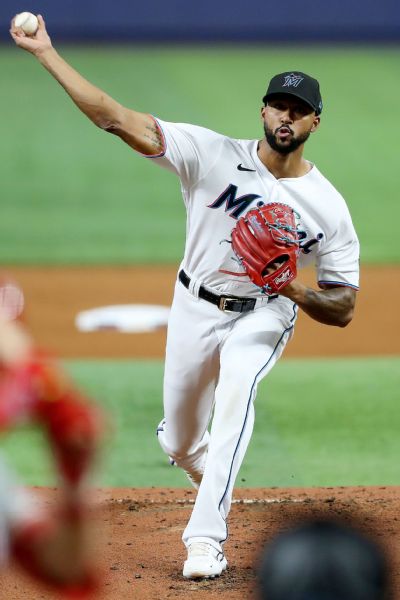
There was an early-20th-century pitcher known as Iron Man McGinnity. We might as well start calling the Marlins ace Iron Man Alcantara. He easily led the majors in innings pitched last season and is the only pitcher to top 200 innings each of the past two seasons. That’s fun, but you have to dominate to rank high on this list.
In 2022, Alcantara transformed from quality innings-eater to Cy Young winner — and don’t bet against him repeating. It all starts with a beautiful delivery from a lean, 6-foot-5 frame. If Michelangelo were to sculpt a pitcher, Alcantara would be his model. He throws 98 mph and that helps set up one of the most devastating pitches in baseball, his unhittable, nod-your-head-and-walk-back-to-the-bench changeup. Batters went 36-for-248 against it with 78 strikeouts and nary a home run.
Season prediction: Alcantara leads the majors once again in innings pitched, makes the All-Star Game and finishes in the top five of the Cy Young voting, although his ERA rises half a run (thanks, shaky Marlins defense!). — Schoenfield
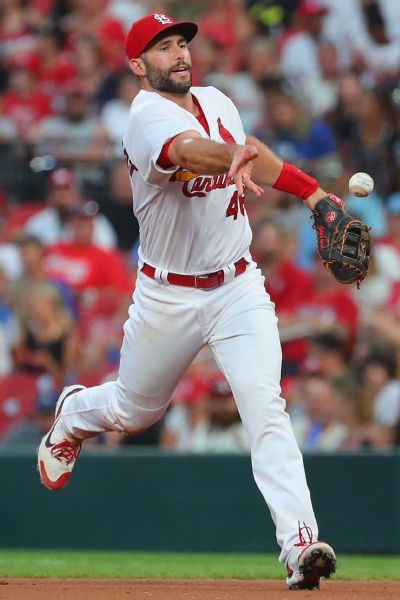
1B | St. Louis Cardinals
At 34, baseball’s perennial MVP bridesmaid finally broke through with a season that really was another representative campaign for a player who posts nothing but terrific stat lines. Now a first-time reigning MVP, Goldschmidt will have his own tough act to follow after landing in the top three of the NL in all the slash categories and leading in slugging, OPS and OPS+ (a career-best 180). He also finished the season with an MVP-esque 7.8 WAR, according to Baseball Reference. While that 180 OPS+ is a high bar, don’t expect a collapse: Goldschmidt has posted 140 or better nine of his 11 full seasons. He’ll spend the next few years burnishing what is shaping up as a Hall-worthy resume.
Season prediction: Goldschmidt turned 35 late last season and eventually, his game will start to fray. There was no sign of that last season, but expecting a repeat of those numbers is probably unrealistic. Expect more of an “average” Goldschmidt season — 140-145 OPS+ — which is still awfully good. — Doolittle
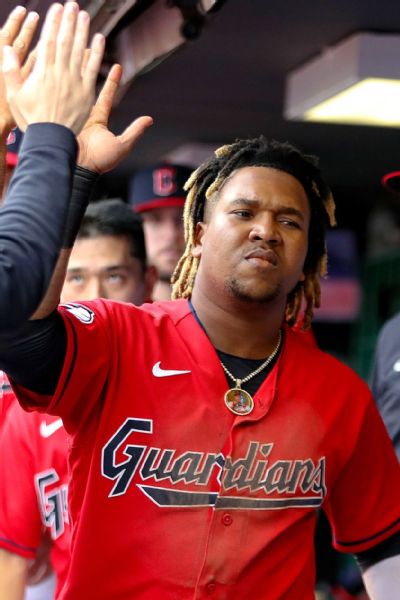
Mr. Consistency. Ramirez is a baseball player in the way grizzled old scouts might describe a player who isn’t the strongest or the fastest or the biggest or the flashiest. Other than an inexplicable slump in the first half of 2019, he has been one of baseball’s best hitters — and best all-around players — since 2017. We can see that respect in his results in the MVP voting: third, third, second, sixth and fourth in five of the past six seasons. Ramirez already has 2.54 MVP Award Shares in his career — more than Rickey Henderson, Chipper Jones or Cal Ripken Jr.
He’s durable, he steals 20 bases every year, he strikes out fewer than 100 times a season, he swats doubles and home runs and he’s a solid defender. Nobody ever seems to call him one of the top 10 best players in baseball, but at the end of the season, he’s always right there.
Season prediction: This one is easy. Ramirez hits 32 home runs (give or take a few), drives in over 100 runs, leads the league in doubles for the third time and finishes in the top six in MVP voting. — Schoenfield
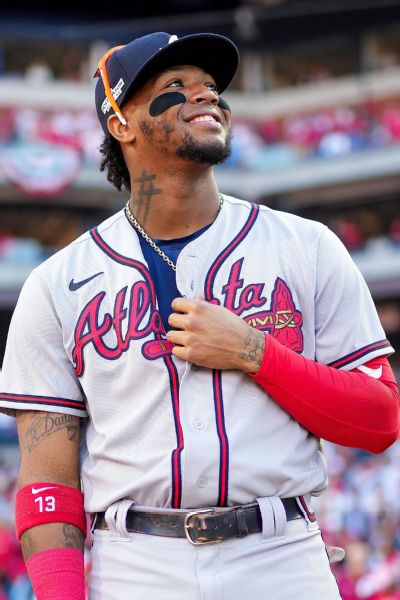
His sublime 2019 season at 21 years old — when he hit .280 with 41 home runs while leading the NL in stolen bases (37) and runs (127) and played with the frenetic enthusiasm of a pack of Shiba Inu puppies — is now a few years in the rearview mirror, but this ranking shows we haven’t forgotten about him.
When Acuña tore his ACL on July 10, 2021, he ranked fifth in the majors in home runs, fourth in stolen bases and fourth in OPS. When he returned last season, he wasn’t that same player. He had trouble elevating the ball and his power declined. By the end of August, he described his knee as “terrible,” but played through it. He now says he’s completely healthy — the Braves even let him play in the World Baseball Classic — and we’re betting on him finding that power stroke again and returning as one of the sport’s elite all-around talents.
Season prediction: I’d love to be bold here and say 40-40 — he did steal 29 bases last year despite not being 100% — but let’s go with a 30-30 season and his third All-Star Game start (and fourth appearance). — Schoenfield
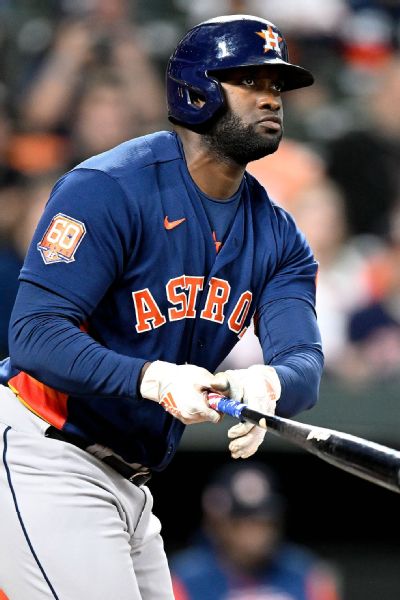
At the All-Star break last season, a case could have been made for Alvarez to win the AL MVP. Judge changed all of that, but the fact remains, Alvarez has become one of the most dangerous lefties in the game. He and Judge were the only two players in baseball last season with an OPS over 1.000. And now he has done that twice in his career — not an easy stat line to achieve even one time.
Alvarez isn’t a great outfielder, but he has improved over time. With Jose Abreu entrenched at first base — and needing some at-bats at DH — it’s possible Alvarez plays more in left field. But he’s not being paid for his defense. The former rookie of the year will certainly have multiple chances at winning his first MVP because of his offensive prowess after finishing third in 2022.
Season prediction: Alvarez will lead the league in hit by pitches and intentional walks. — Rogers
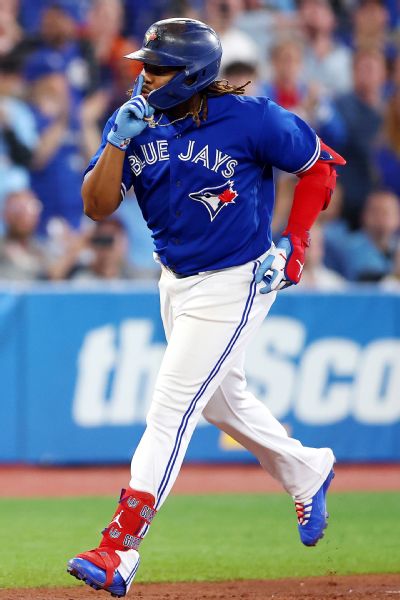
Guerrero was one of the more difficult players to assess: Is he the absolute basher of 2021 when he was the best hitter in baseball and finished second in the MVP voting? Or the mere masher of 2022 who dropped to 29th among qualified hitters in wRC+ (weighted runs created)? That level of production greatly affects his value. A first baseman who is the 29th-best hitter isn’t one of the top 20 players in the game.
Guerrero does present a high offensive floor, however, and few batters can match his combination of power (94th percentile in hard-hit rate) and contact ability (79th percentile in strikeout rate). He ended up chasing out of the zone more often last year, leading to more weak contact, especially on the ground. He’s only 24, so our panel predicts he’ll make the necessary adjustments.
Season prediction: I’m going with the middle ground here between his superlative 2021 season and 2022, so that gives us 40 home runs with a .293 average and over 100 ribbies. That should make him one of the top 10 hitters in the game. — Schoenfield
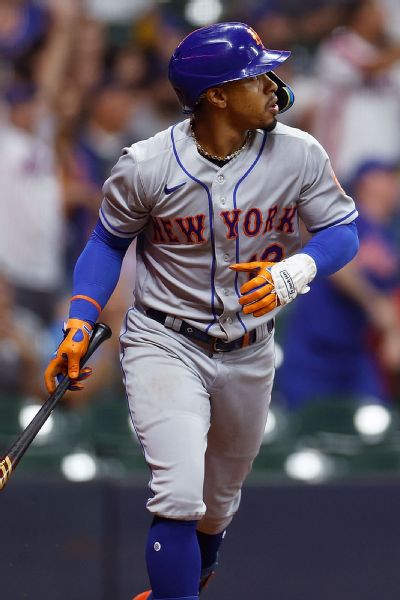
After putting together the worst season of his career in 2021, Lindor looked much more like himself in 2022, slashing .270/.339/.448 with 26 homers and 16 stolen bases while putting together a strong season defensively. Since he entered the league in 2015, Lindor has been the game’s best shortstop with a 42.0 fWAR, which is 8.0 WAR more than Xander Bogaerts, the second-most productive shortstop in the same time period. While we still haven’t seen the 30-homer shortstop Lindor was in Cleveland, he remains among the most impactful players in the game and someone who will be critical for New York’s success if the team hopes to live up to its massive payroll.
Season prediction: Now with three seasons in New York under his belt and fully comfortable in that setting, Lindor puts together his best season as a Met. The dynamic shortstop finds more of a power stroke and continues his reign of elite defense. — Lee
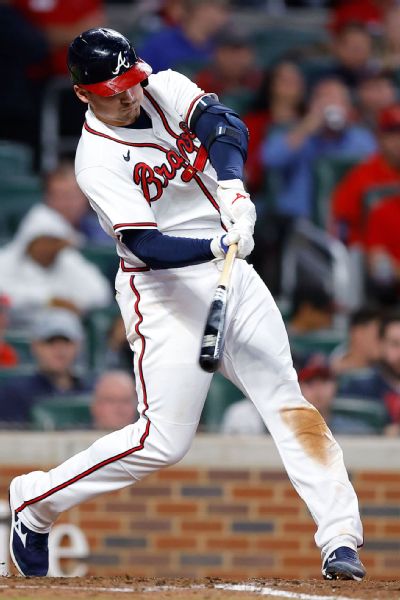
3B | Atlanta Braves
When Riley broke out with a .303/.367/.531 season in 2021, that sparkling line was underpinned by a .368 BABIP. So what would a season look like if that number returned to earth? It would look like Riley’s 2022 season in which he led the NL in total bases, made the All-Star team and finished sixth in MVP balloting.
After two seasons of this, there’s no doubt that Riley has become one of the game’s shining stars and is perhaps even a little underrated from an attention standpoint. He is a pure basher who ranks in the top five percentile in Statcast metrics like exit velocity, barrel rate and hard-hit percentage. He swings big to generate that power and has the strikeout and swing-and-miss rates to show it. Those are the last dominoes to fall before Riley really makes a push for MVP and the time is right — he’s just hitting the prime of his career.
Season prediction: Now at a lofty, established performance level, expect Riley to make additional marginal gains. Look for him to tack on 20-25 walks and for a few more of his doubles to clear the fence, allowing him to reach the 40-homer mark for the first time in his career. — Doolittle
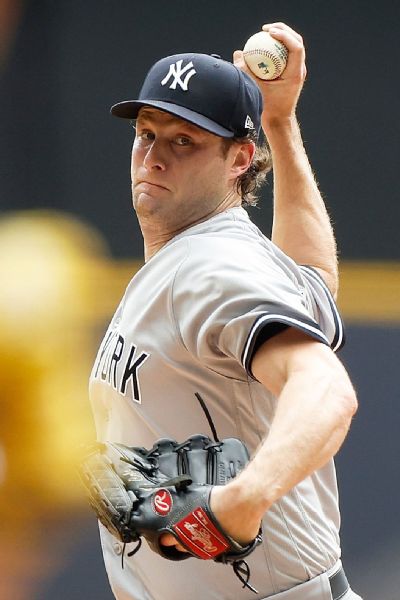
SP | New York Yankees
The Yankees signed Cole to a nine-year, $324 million contract in December 2019 and — in the aggregate, at least — have received everything they could have hoped for in a staff ace pitching within the nation’s largest market. Cole finished fourth, second and ninth, respectively, in AL Cy Young Award voting from 2020 to 2022. During that time, he has ranked first in the AL in wins (36) and innings (455), fourth in strikeout-to-walk ratio (5.50), fifth in WHIP (1.02) and 19th in ERA (3.28). He’s in his early 30s now, but his fastball velocity has maintained itself in the upper 90s. He hasn’t been able to match the eye-popping strikeout rates of his Houston days, but he has come close.
Season prediction: Cole was helped by a stellar defense behind him and gave up more home runs than anybody in the AL last year. At 32, he’s still a legitimate ace; but he might be starting to fade in the conversation for the game’s best pitcher. Others might replace him in 2023. — Gonzalez
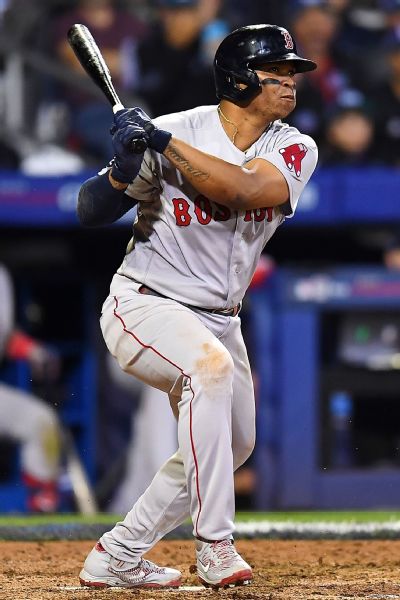
While the Boston front office had felt hesitant in the past to give out long-term contracts, Devers is the homegrown star entering 2023 with a 10-year, $313.5 million deal. The reason is simple: Boston views his bat as a generational talent and something that will age well as he enters his age-26 season in the big leagues. While Devers has shown a power stroke at the plate early in his career, his ability to hit the ball to all fields is what makes him one of the game’s biggest offensive threats, slashing .295/.358/.521 in 2022. While his defense still ranks average among third basemen, he made large strides last season by improving his range and consistency on throws to first base.
Season prediction: Devers will keep chugging along as one of the game’s most dynamic offensive hitters. He’ll continue to work hard on improving his defense, so another step forward could be possible. — Lee
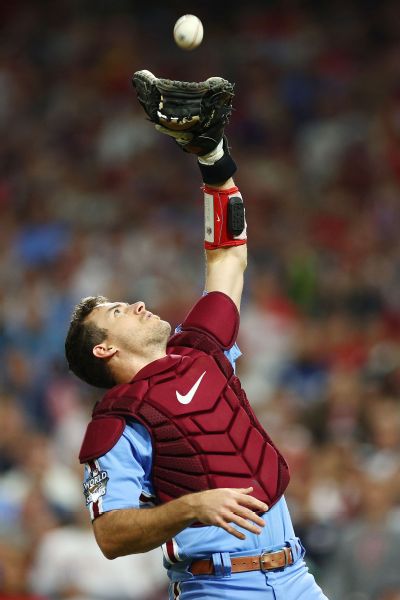
C | Philadelphia Phillies
The best catcher in the game isn’t far off from being a top-20 player but it won’t be his defense he needs to improve on to make the leap. As much as he provides at a weak offensive position, Realmuto will probably have to produce a near .900 OPS season to jump into that top 20. His career high is .840, achieved in the shortened 2020 season. Again, a great number for a catcher but below the top hitters in the game. He finished seventh in MVP voting in 2022, a career year where he won the gold glove and silver slugger award. It’s why he’s on the verge of being one of the best 20 players in the game.
Season prediction: With the new rules in play and Bryce Harper out of the lineup for several months, the Phillies might run more — and that would include Realmuto, who stole 21 last season. In 2023, he’ll become just the third catcher in MLB History to steal 30 bases in a single season. — Rogers
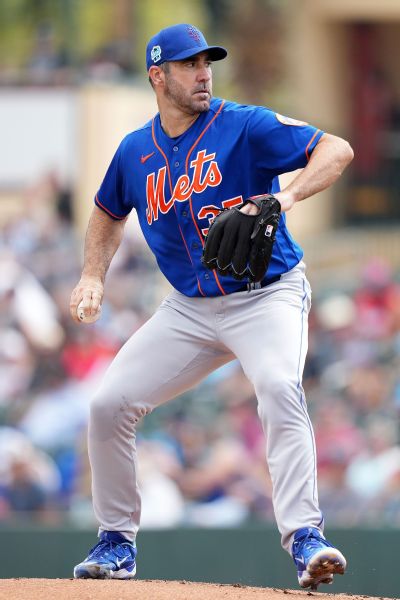
SP | New York Mets
Verlander won a Cy Young Award as a 39-year-old coming off Tommy John surgery. That alone should be enough to crack the top 25 on this list. What Verlander did as a member of the Astros in 2022 should go down as one of the most impressive seasons in baseball history. He did so while striking out more than a batter per inning, throwing his fastball in the mid-90s and accumulating 175 innings, during which he boasted a major league-best 1.75 ERA. The list of power pitchers who have excelled into their 40s is predictably short, featuring the likes of Nolan Ryan and Randy Johnson and Roger Clemens. There’s no reason Verlander can’t join them.
Season prediction: There wasn’t really anything from 2022 that would indicate Verlander is anything but a top-shelf starting pitcher again in 2023. But this is still his reality: He’s 40 years old, coming off a season in which he pitched into November and accumulated nearly 200 innings when you count the playoffs. Expect some regression. — Gonzalez
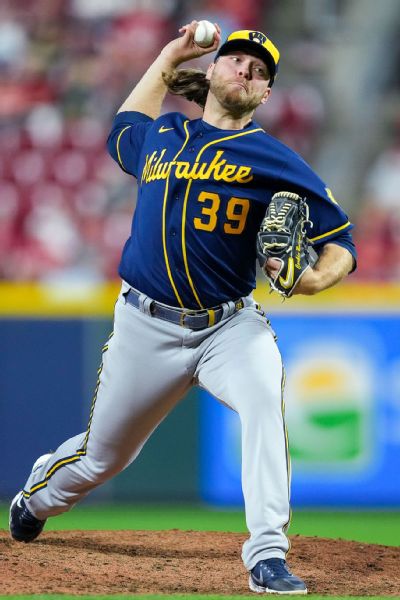
Since the beginning of the 2020 season, only four pitchers have more bWAR than Burnes and only Cole has struck out more batters. While Burnes wasn’t quite as dominant last season as he was during his Cy Young campaign of 2021, he still managed to lead the NL with 243 strikeouts while topping 200 innings for the first time. He improved his third-time-through-the-order numbers and perhaps because of that, he worked deeper into games. Burnes’ homer rate more than doubled but some of that might have been some ill luck with his homers-per-flyball ratio. If that comes back in line and the workload stays as high, he could post his best season yet and push even farther up this list.
Season prediction: Burnes will be eligible for free agency after the 2024 season. Because of that, this will be a key campaign for his future earnings potential. He was terrific last season but his velocity was down a half-tick and he was hit hard more often. With a lot on line, look for Burnes to clean that up and once again figure prominently in NL Cy Young balloting. — Doolittle
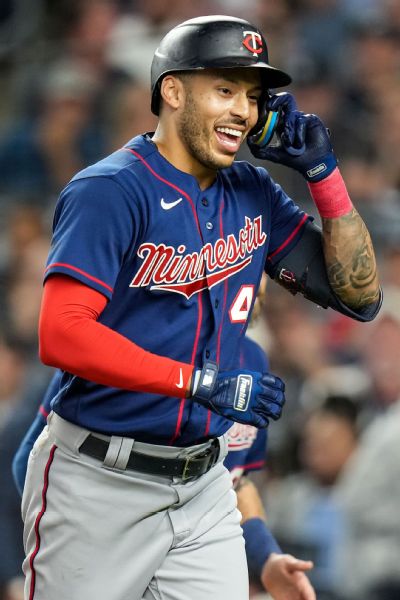
Correa’s offseason adventure makes him one of the most intriguing players to watch in 2023. After all, the Twins were his default third choice. Everyone seems happy with the reunion, however, and the Twins end up getting an elite player at a discount — as long as the old ankle injury that scared off the Giants and Mets doesn’t prove problematic.
It’s hard to believe Correa is still just 28 years old. He remains in the prime of his career and shows the value of a player who hits — and hits for some power, at that — and plays good defense at a premium position: He has averaged 7.2 bWAR per 162 games in his career. His raw OPS last season was only the fifth highest of his career, but his adjusted OPS was the second highest. He has batted 600 times just twice in his career; if he can do that, he can be a top-20 player.
Season prediction: Correa plays 150 games for the first time since 2016 and sets a career high in home runs — and steals his first base since 2019. — Schoenfield
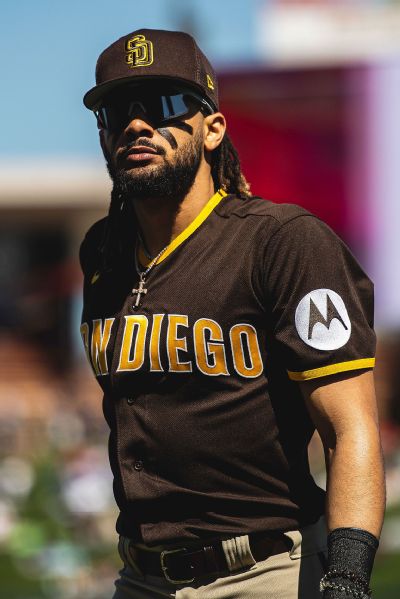
RF | San Diego Padres
We’re a society that tends to move on quickly, always so fast to focus our attention on what’s next. And that might especially be true for one Fernando Tatis Jr. “I think a lot of people are forgetting how special he is,” Tatis’ teammate, Jake Cronenworth, said in the days leading up to spring training.
It’d be understandable given the circumstances. But before missing the entire 2022 season — first with a wrist injury, then with a steroid suspension — Tatis was one of the most electrifying players in the sport, accumulating 81 home runs, 52 stolen bases and 13.2 FanGraphs WAR within his first 273 major league games. He’s only 24 and still perfectly capable of providing the most elite combination of power and speed, defense and overall baseball excellence. But he’s also coming off shoulder and wrist surgeries, a full year off and he’ll be transitioning from shortstop to right field.
Season prediction: People around the Padres expect an inspired, motivated, energetic Tatis in 2023, undoubtedly eager to get back to elite production after all the (self-imposed) negativity that surrounded him last year. Contending for an MVP might be unrealistic considering the shoulder and wrist surgeries and all the time off, but he’ll come close. And at times he’ll look like a Gold Glove-caliber outfielder. — Gonzalez

SP | Philadelphia Phillies
A stalwart during his eight-year career, Nola has made at least 32 starts in each of the past four full seasons. He even made 12 in the shortened 2020 campaign. That durability alone puts him among some of the best pitchers in the game. The 2022 regular season might have been his best, as he led all pitchers in strikeout-to-walk ratio, whiffing 235 batters while walking only 29.
He also finished fourth in Cy Young voting but didn’t perform well late in the playoffs. The first two rounds were great for Nola but his NLCS and World Series numbers weren’t very good — he gave up 14 runs in 13 innings. A repeat regular season with a solid postseason would elevate him to a top-20 player in the game, but right now, he’s on the outside looking in.
Season prediction: Austin Nola will join a rare group of hitters to homer off their brother when the Phillies and Padres face off this season. They opposed each other in the playoffs last year, with the elder brother going 1-for-2 off the younger one in the NLCS. — Rogers
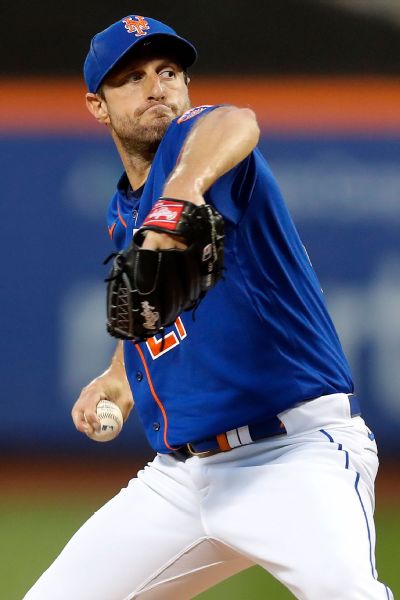
SP | New York Mets
He’s now 38 years old but Mad Max is as dominant as ever, even if he has lost a little in fastball velocity relative to the rest of the league. Indeed, his 2.29 ERA in 2022 was a career low (although with 145⅓ innings, he failed to qualify for the ERA title for the first time since his rookie season) and his 169 ERA+ was the second best of his career.
His command, deep arsenal of five pitches and ability to keep batters guessing remains supreme — and you have to admire that he still loves to just rear back and challenge hitters at times with the old No. 1 down the middle. His strikeout rate ranked in the 89th percentile, his walk rate in the 95th percentile and his whiff rate in the 83rd percentile. He’s no longer a 220-inning pitcher, but if Scherzer goes back to his usual 30 starts, don’t rule out Cy Young contention.
Season prediction: There’s nothing in the metrics that suggest Scherzer is slowing down. The only seasons since 2013 he hasn’t finished in the top five of the Cy Young voting were 2020 and last season (and that was only because he missed some time). It’s hard to predict health, but let’s go with 200 K’s, an ERA under 3.00 and another top-five Cy Young finish. — Schoenfield
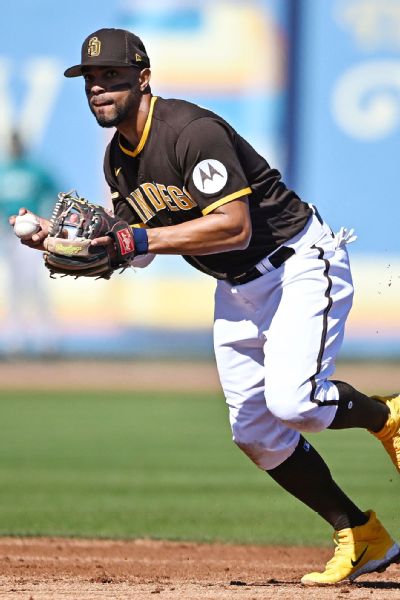
SS | San Diego Padres
The 30-year-old shortstop now joins a Padres team where he is expected to be an offensive focal point, alongside Machado, Soto and Tatis. Bogaerts solidified his place among the game’s best shortstops in a contract season, hitting .307/.377/.456 with 15 homers and a 5.7 bWAR. Since he entered the majors in 2013, he ranks second in fWAR among all shortstops, trailing just Lindor and ahead of Trea Turner and Correa. Bogaerts has also made large strides as a defender throughout the course of his career, qualifying as a Gold Glove finalist in 2022. Given his skill set and strong abilities as a hitter, expect his game to age well into his 30s.
Season prediction: Bogaerts’ power numbers go down a notch in the spacious Petco Park, but he’ll stay one of the game’s best contact hitters. He’ll be a consistent doubles threat for the Padres while also making defensive strides. — Lee
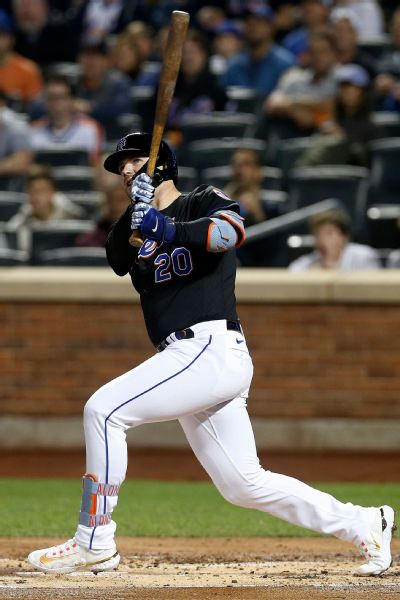
1B | New York Mets
Alonso topped the NL with a Mets-record 131 RBIs, tying Judge for most in the majors. OK, RBIs are more than a little team-dependent and according to the Bill James Handbook, Alonso led the majors with 308 RBI opportunities. Still, his 42.5% RBI rate ranked in the top 10 of the majors. In other words, he clears the bags. It’s not hard to understand why, since Alonso is a highly aggressive hitter who averages 45 homers per 162 games during his career.
The downside of that approach is that he chases too many pitches and given the care with which pitchers work him (he led the NL in intentional walks and among 130 qualified hitters, only eight saw a lower rate of pitches in the strike zone), that lack of selectivity is what stands in the way of him ranking with the game’s elite overall hitters.
Season prediction: Expect Alonso to hit around .267/.348/.518 with 40-plus homers and 100-plus RBIs, which is roughly an average of what he did over the past two seasons. While there are some obvious areas in which Alonso could improve, at 28 he is what he is. And for the Mets, that’s plenty good. — Doolittle
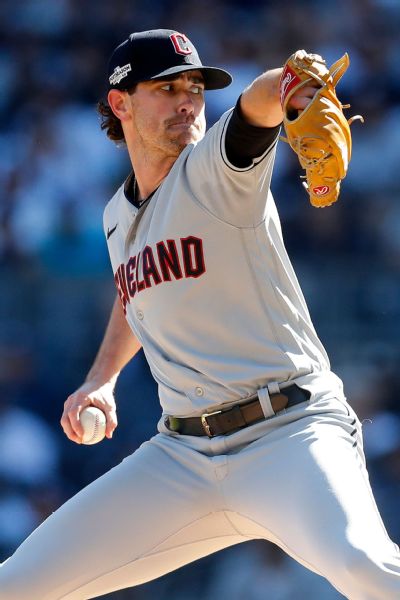
SP | Cleveland Guardians
The 2022 season brought with it an evolution for Bieber, the AL’s Cy Young Award winner in 2020. Bieber had seen the velocity on his four-seam fastball continually diminish, from 94 mph in 2020 to 93 mph in 2021 to 91 mph in 2022. But he has altered his pitch mix in order to combat it, beginning to use his slider more often than his curveball, and he has seen results. Bieber finished the 2022 season seventh in Cy Young voting, posting a 2.88 ERA and reaching precisely 200 innings. Alarm bells were ringing in Cleveland when Bieber got shelled by the Blue Jays on May 7, allowing seven runs with a fastball that barely cracked 90 mph. From that point forward, he posted the 10th-lowest ERA in the sport.
Season prediction: You probably wouldn’t be surprised to learn that Bieber’s strikeout rate has dropped over time, from 41.1% in 2020 to 33.1% in 2021 to 25% in 2022. But his walk rate last season, 4.6%, was barely more than half what it was the year before. Bieber is a different pitcher, but still a very effective one. Expect that to continue. — Gonzalez
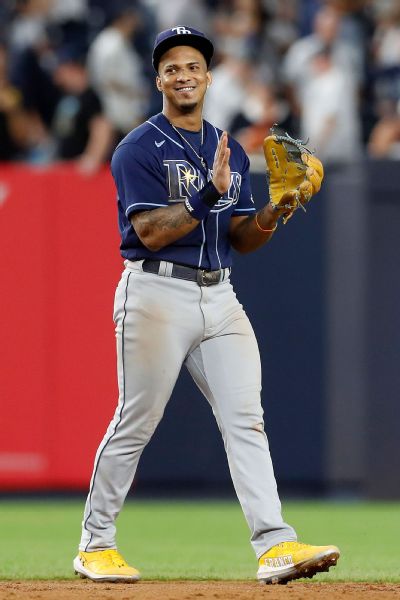
Few prospects over the past decade — maybe none since Bryce Harper — reached the majors with as much fanfare as Franco when the Rays called him up in 2021 as a 20-year-old who oozed future batting champ with his sweet line-drive stroke and exquisite contact ability. No, he hasn’t hit .300 … not yet anyway (he just turned 22). After hitting .331 in his first 28 games to start the season in 2022, he battled some injuries that affected his production and eventually landed him on the IL. He returned in September to hit .322 with more walks than whiffs. With this ranking, we’re still buying into that .300 potential and ability to smoke lasers all over the park while playing a solid shortstop.
Season prediction: After hitting .288 in his 2021 rookie season and .277 last season, the projection systems see Franco in the .280 to .285 range. I’m going a lot higher: .322 and the AL batting title. — Schoenfield
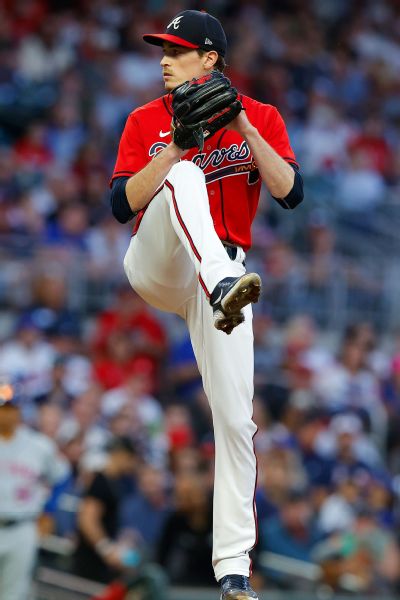
SP | Atlanta Braves
Only an epic season by Miami’s Alcantara stood in the way of Fried landing his first NL Cy Young Award. Still, the lefty ace keeps inching his way to new heights with each passing season. He was on the mound more in 2022, with 30 starts and a career-high 185⅓ innings while slicing his walk rate and allowing fewer homers.
Fried’s consistency and dominance for the annually contending Braves has allowed him to go 52-20 since 2019, a .722 winning percentage. His 32 games over .500 during that span is matched only by the Yankees’ Cole. Fried’s career strikeout rate (8.8 per nine innings) is a touch below the game’s top starters in this high-strikeout era and if anything is unnecessarily keeping him out of the conversation around baseball’s top pitchers, that’s probably the reason. It’s not hard to argue that he should maybe rank higher on this list.
Season prediction: According to Statcast, Fried’s use of his changeup went from 2.2% in 2021 to 14.1% last season. Hitters hit just .173 with a .218 slugging percentage against that offering. Fried is a hard worker and intense competitor who continues to evolve his arsenal with experience. That he keeps getting better is no accident. If he’s able to do that again in 2023, and he finished second in the Cy Young voting in 2022, where would that leave him? Exactly. — Doolittle
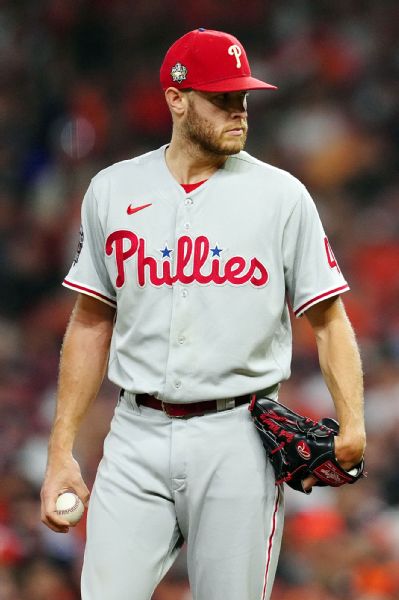
SP | Philadelphia Phillies
Injuries have slowed Wheeler at various times of his career but when he’s healthy, he’s a borderline top-20 player. In fact, he hasn’t produced an ERA over 3.00 since 2019. Wheeler finished second in Cy Young Award voting in 2021 and probably would have been closer to the award last season if not for an arm ailment that sidelined him for several starts in 2022. He made 26 starts overall and dealt with some fatigue in the World Series. A repeat of that 2021 season, when he made 32 starts, would probably return Wheeler to top-20 status. His fastball/curveball combination is among the best — and so is Wheeler.
Season prediction: Wheeler will join Nola as the only teammates to throw 200 innings this season. — Rogers
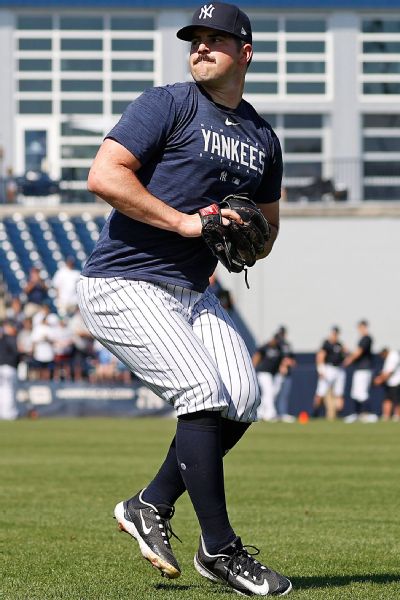
SP | New York Yankees
There’s no doubt that when Rodon is healthy, he’s one of the best in the game. Over the past two seasons, he has lived up to the potential that made him a top-3 pick in the 2014 MLB draft out of NC State. With the Giants, he had 31 starts with a 2.88 ERA and 1.03 WHIP while striking out 237 in 178 innings. The major question mark will be health, though. A forearm strain has already put him on the IL to start the 2023 season. Last year marked the first time in Rodon’s career that he made more than 30 starts in a season. Whenever he is on the mound, he will certainly show why he earned himself a six-year, $162 million deal, but the question is how many times he will actually toe the rubber.
Season prediction: When healthy, he takes the Yankees rotation to another level. What’s harder to predict is how many starts the lefty will actually make. If the Yankees make a deep run this postseason, Rodon will play a major role. — Lee
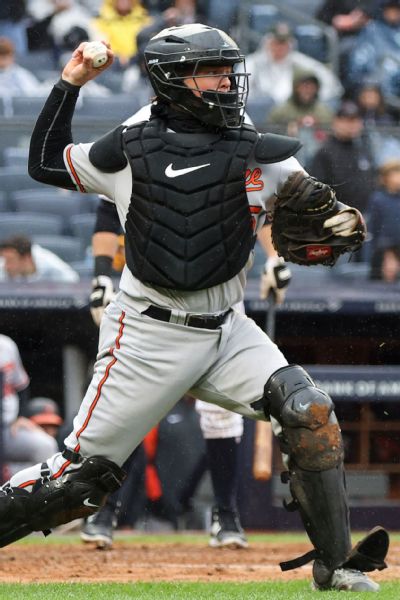
Baltimore needed Rutschman to live up to the hype as one of the top prospects in baseball and he exceeded all expectations, displaying a strong ability to get on base while providing some of the best defense in baseball behind the plate. In 113 games, Rustchman hit .254/.362/.445 with 13 homers and a 5.2 bWAR, placing him second in all of baseball behind Realmuto. If the Orioles expect to take another step forward, they will need Rutschman to continue looking like one of the best catchers in the sport.
Season prediction: Rutschman will keep building on his status as one of the game’s best defensive catchers while taking a step forward offensively as he continues adjusting to big league pitching. Any increased production will make him among the game’s most valuable players. — Lee
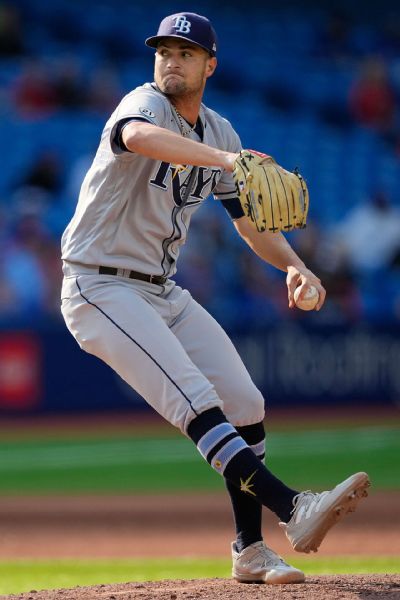
SP | Tampa Bay Rays
There was perhaps no more dominant pitcher in last year’s first half than McClanahan. Armed with a devastating four-pitch mix, McClanahan posted a 1.71 ERA in 110⅔ innings, striking out 147 batters while walking only 19 and starting the All-Star Game. But the second half featured a non-serious shoulder injury and mediocre results, including four starts in which he gave up more than three runs and didn’t get into the sixth inning. So McClanahan went about working on his body this offseason. He stretched more diligently and improved his diet, and the Rays believe the 25-year-old right-hander can be even better in 2023. There’s no reason why his first-half success can’t extend for a full season. The stuff is there.
Season prediction: McClanahan will rise to another level in 2023 and contend for the AL Cy Young Award, displaying some of the best stuff in the sport and tapping into more consistency throughout the year. — Gonzalez
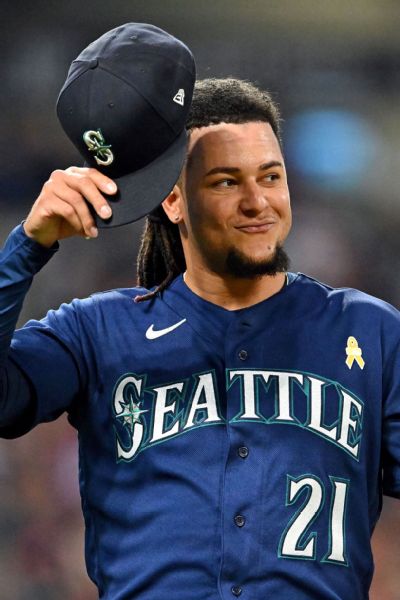
SP | Seattle Mariners
During Castillo’s years with the Cincinnati Reds, there were frustrating bouts of inconsistency and control lapses, though he was an All-Star in 2019 and then again in 2022 before his trade to the Mariners. He seemed to put everything together last season, going 8-6 with a 2.99 ERA and the best strikeout-to-walk ratio of his career.
It took less than two months for the Mariners to love what they saw and sign him to a five-year, $108 extension and then give him the ball for the franchise’s first playoff game in 22 years. He promptly dominated the Blue Jays with 7⅓ scoreless innings. He throws 97 with a great changeup and wipeout slider, and with a full year at T-Mobile Park — it must feel like the Columbia River Gorge after all those years in Cincinnati — he’s primed for his best season yet.
Season prediction: Castillo has won just 16 games the past two seasons combined. He’s going to win 16 in 2023 and pick up some down-ballot Cy Young votes for the first time in his career. — Schoenfield
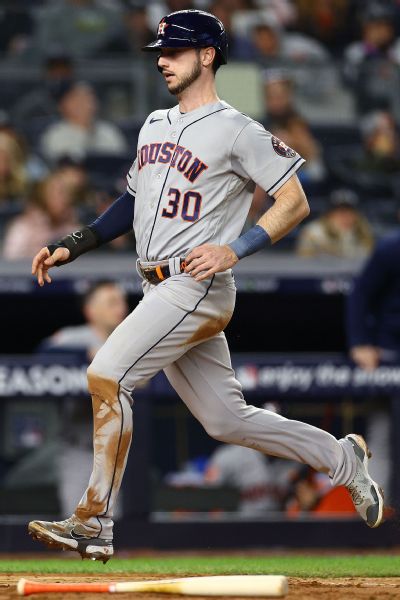
RF | Houston Astros
Tucker is slowly advancing up the list of most dangerous lefties in the game, in part because of his ability to hit lefties. His career .808 OPS against left-handed pitching isn’t all that different from his .853 one vs. righties. Of course, that was all achieved with the shift in place. Without it, Tucker’s 2023 batting average should go up after hitting .257 in 2022.
Tucker just keeps getting better. He has an 11 bWAR combined over the past two seasons, finishing 20th in MVP voting in 2021 and then 15th in 2022 to go along with his first All-Star appearance and first Gold Glove for his outfield defense. More of the same will keep Tucker rising in the ratings. It’s not impossible for him to be a top-20 player going into 2024. He has the talent.
Season prediction: Tucker takes another leap, repeating as Gold Glove winner while hitting 35-plus home runs with a batting average at least 20 points higher than his 2022 mark. — Rogers
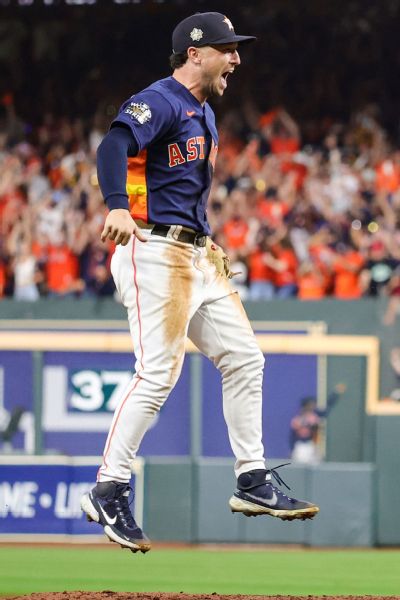
3B | Houston Astros
When we last ran MLB rank in 2021, Bregman was a top-15 fixture. He was sixth in 2019, 12th in 2020 and 13th in 2021. But after three solid seasons that were well off his peak in 2018-2019, he’s landed here. It seems about right given what his new level of play seems to be after three years and over 1,200 plate appearances. Peak Bregman was the full package — elite power, lots of walks, elite run run production, even some steals. The new version has similar strike-zone mastery and exit velocities but the BABIP results just haven’t been the same. Though he hits righty, the shift has been a bane for Bregman and perhaps its departure will be a boost.
Season prediction: While Bregman might not have any more 40-homer seasons in him, it would be surprising if there isn’t another MVP-level season or two in his future. The Astros will be fine either way: Houston has advanced at least to the ALCS in all six seasons since Bregman became a regular. — Doolittle
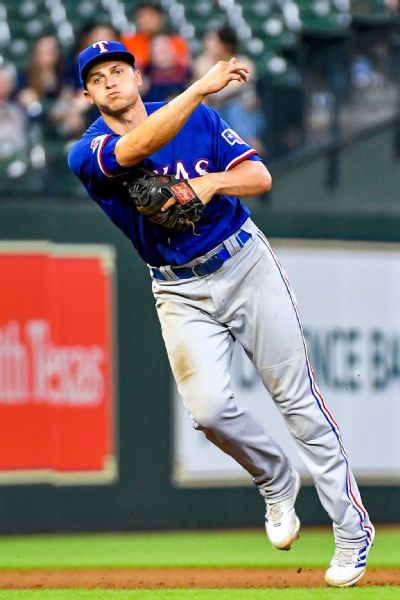
If you want a poster boy for how the elimination of the shift might help some hitters, Seager is your guy. According to Baseball Info Solutions, Seager hit .112 on ground balls and short line drives hit between first and second base in 2022. As a result, Seager, who hit .297 in seven seasons with the Dodgers, saw his average plummet to .245 in his first year with the Rangers. BIS estimates Seager would have gained 29 additional hits under 2023 rules — and his average would thus climb to .293. Look for better numbers from Seager with the new rules and perhaps an even higher ranking in 2024 as he tops 30 home runs again and hits much closer to .300.
Season prediction: Look for better numbers from Seager with the new rules and perhaps an even higher ranking in 2024 as he tops 30 home runs again and hits much closer to .300. — Schoenfield
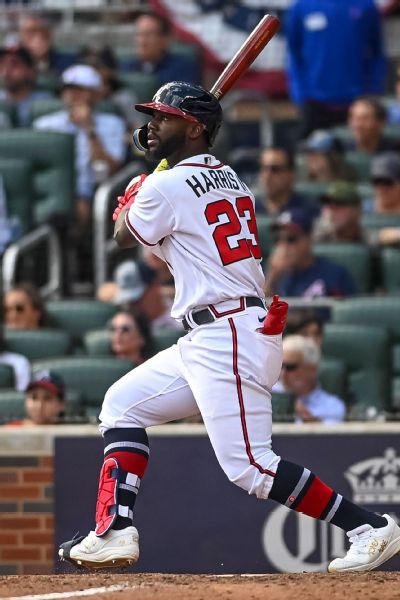
CF | Atlanta Braves
No young player had as meteoric a rise in 2022 as Harris. While he was a consensus top 100 prospect entering the season, his highest ranking was ESPN’s Kiley McDaniel at No. 38 and he had played all of 2021 in High-A. It looked like he would spend the season at Double-A Mississippi.
Nobody expected this: just 43 games in Double-A, a rushed promotion to the majors when the Braves needed a center fielder, a sudden development in his power and, frankly, emerging as one of the best players in the league over the final four months. He finished at .297/.339/.514 with 19 home runs, 20 stolen bases, excellent defense and a nice Rookie of the Year trophy. Some expect pitchers to figure out how to exploit his aggressive approach, but Harris can flat hit. Imagine what will happen if he improves his plate discipline.
Season prediction: If there’s a Michael Harris fan club, sign me up. The computers forecast regression, but I’m predicting more of the same: Let’s go with a 30-30 season, a trip to the All-Star Game and a Gold Glove. — Schoenfield
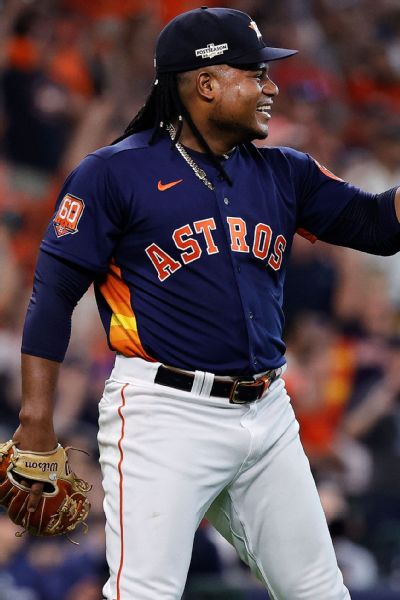
SP | Houston Astros
With three wins in three starts and just two runs allowed over 19⅓ innings in the ALCS and World Series, Valdez is a big reason why the Astros are the reigning champions. He really came into his own in 2022, leading the AL in innings, while completing three games and winning 17, all while putting up an ERA+ of 137. For all of that, Valdez finished fifth in the AL Cy Young balloting and made his first All-Star team.
Valdez didn’t do much differently last season in terms of arsenal, he was just a better, more precise pitcher who attacked the bottom of the strike zone, rarely missed in the middle of the plate and routinely put away hitters with his outstanding curveball. All Valdez really has to do to move up the rankings from here is to do it all over again. This time, he’ll get a chance to show his stuff as the ace of the Astros’ rotation now that Verlander has moved on.
Season prediction: Valdez sat out the WBC rather than pitching for the Dominican Republic after his jump in regular-season innings was followed by the heavy load he carried in October. The Astros might not overwork him early in the season, but beyond that, there is no reason to think that Valdez will fall off from last season’s form. Expect more of what we saw in 2022. — Doolittle
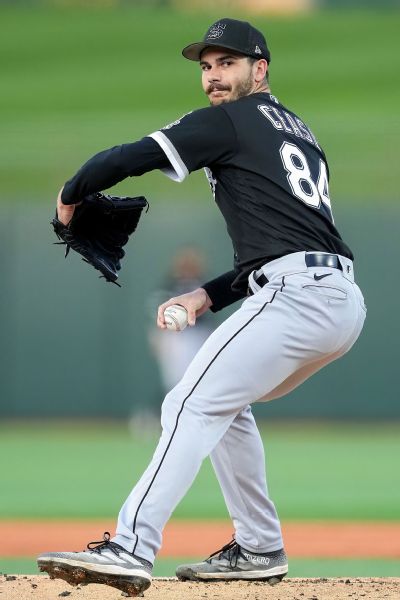
Cease needs more exposure. He nearly became one of those rare pitchers to miss out on the All-Star team but win the Cy Young award in the same season (he ended up finishing second in Cy Young voting to Verlander last year). Playing for the underachieving White Sox didn’t help matters. It’s partly why he’s not in the top 20 despite coming off a dominant 2022 campaign.
Cease has one of the most devastating sliders in the game, which led him to strike out an AL-best 227 batters last season. But he also walked the most in the AL, 78, though not many of those runners came back to haunt him considering his 2.20 ERA for the year. A reduction in walks while keeping his other numbers intact will continue to open eyes around the league for Cease.
Season prediction: Cease’s batting average against on balls in play has fluctuated greatly throughout his career. He’s due for a higher one in 2023, which could cause his ERA to rise. He won’t repeat the 2.20 mark in 2022 — it’ll be closer to 3.00 this year. — Rogers
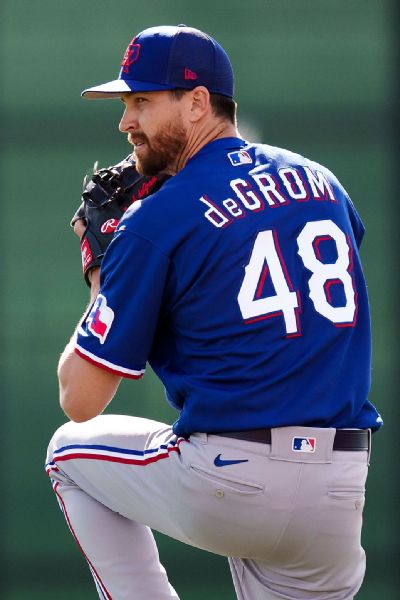
SP | Texas Rangers
Nobody doubts that deGrom is one of the best pitchers of his generation, but his health remains a concern. DeGrom made 26 total starts across 2021 and 2022. While he still showed the stuff that made him one of the most feared pitchers in the entire sport, the 34-year-old righty took a step back in terms of his product, posting a 3.08 ERA and 0.75 WHIP in 64⅓ innings pitched. How deGrom ages as he heads into the back half of his 30s will play a monumental role in the success of Texas in 2023 and beyond.
Season prediction: When he’s healthy, deGrom remains a nightmare for hitters, but this availability remains the biggest question. The righty has not thrown more than 20 games per season since 2019 (including the shortened 2020 season), and he is not getting any younger. — Lee
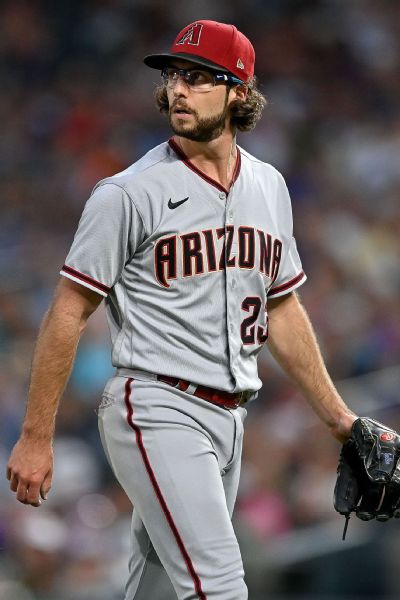
You rarely hear on-base percentage quoted in regards to pitchers, but Gallen was the anti-OBP hurler in 2022. He led the NL in WHIP and hits allowed per nine innings while holding opponents to a measly .252 OBP. He also sliced his home run rate in half and sliced more than a walk per nine innings from his 2021 season.
The end result was a new pitching star rising in the desert as Gallen posted a 2.54 ERA over 185 innings and finished fifth in NL Cy Young balloting. He mostly ditched his slider last season and developed a four-pitch arsenal built off a wickedly effective, high-spin four-seamer and the metrics of all of his offerings were excellent. He does this without elite raw velocity, though he did add a tick of zip in 2022. At 27, he’s just getting rolling.
Season prediction: Gallen’s .237 BABIP will be hard to repeat but his career mark (.264) is well below last season’s MLB average (.293), so he has plenty of room to allow for a little regression. Even if Gallen’s ERA and WHIP rise because of a higher BABIP, don’t despair, because he’s a complete pitcher who should remain one of the NL’s top hurlers. — Doolittle
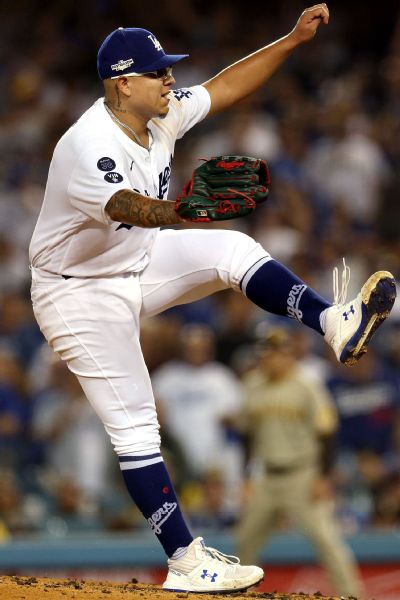
SP | Los Angeles Dodgers
After years of innings restrictions and occasional bullpen assignments, the Dodgers finally let Urias ride as a full-time, no-questions-asked starting pitcher in 2021 and watched him instantly become one of the game’s best. Urias led the majors with 20 wins in 2021 and led the NL with a 2.16 ERA and a 194 ERA+ in 2022. If not for the incredible dominance of Alcantara, he could have won the Cy Young. And yet, Urias finished third in the voting. He is criminally underrated, partly because he plays on the West Coast and partly because he doesn’t light up a radar gun like some of his peers. But few have better command. And when he becomes a free agent next offseason, few will be more coveted.
Season prediction: Urias’ success as a pitcher continues to trend in the right direction, and the 2023 season, his last one before free agency, could be his biggest one yet. If he remains healthy, expect him to make his first All-Star team — yeah, that’s right, he hasn’t made one yet — and vie for the Cy Young once more.
At times it feels as if Urias has been in the big leagues for a long time, but he’s only 26 and has accumulated less than 600 career regular-season innings. There’s plenty left to tap into. — Gonzalez
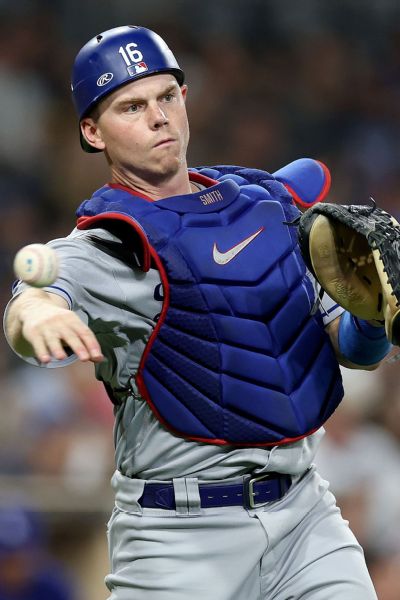
C | Los Angeles Dodgers
Smith has accumulated 9.7 fWAR since settling in as a regular behind the plate in 2020, a total surpassed by only two catchers — Realmuto and Sean Murphy. At 27 years old, Smith has established himself as one of the game’s best at his position, particularly on the strength of his bat. Smith has a .261/.356/.501 slash line in nearly 1,500 career major league plate appearances, even more impressive when considering the physical demands of his position. He slugs, but he is also patient. Smith boasted the 14th-lowest chase rate in the majors last year at 21.2%.
Season prediction: Smith will be more important to the Dodgers’ lineup than ever, with Justin Turner and Cody Bellinger gone and Max Muncy and Chris Taylor coming off down seasons. He’s currently slated to hit third, right behind Freeman. Expect him to DH more often this season, given the presence of Austin Barnes and top prospect Diego Cartaya. The Dodgers need his bat in the lineup as often as possible. And this could be Smith’s best year from a run-production standpoint. — Gonzalez
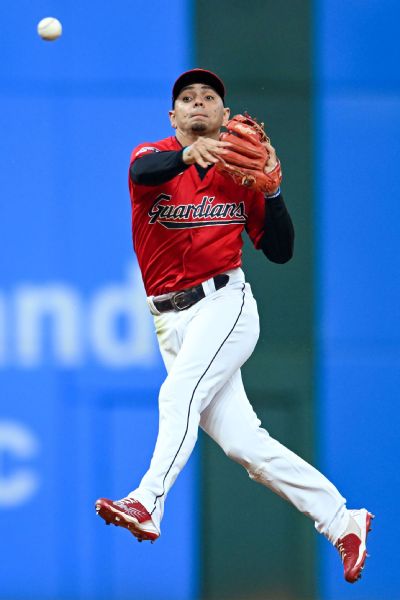
2B | Cleveland Guardians
The 24-year-old second baseman put together a breakout season in 2022, hitting .297/.371/.466 with a 7.2 bWAR. Gimenez’s defense catapulted him into one of the game’s more valuable players, but there are some questions about whether the Guardians’ infielder can repeat the success given the 40-point differential in his expected batting average (.257) and actual average (.297). While his 17 homers last season look like an outlier compared to his career numbers, expect him to make an impact on the basepaths after stealing 20 bases in 2022.
Season prediction: Gimenez will still be an above-average hitter but expect his power numbers to take a step back while his production equalizes with the expected sabermetric numbers given his contact rate and exit velocity. — Lee
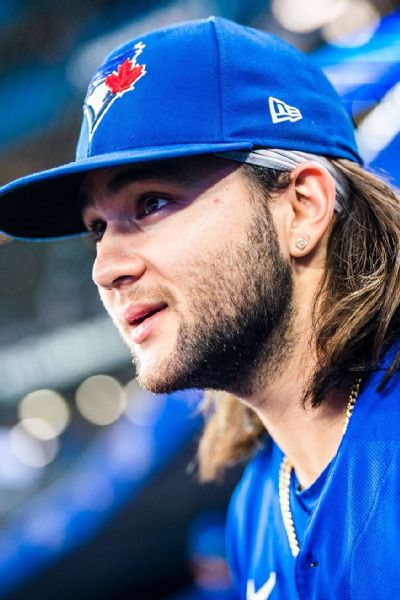
SS | Toronto Blue Jays
In totality, Bichette’s 2022 season — .290/.333/.469 slash line, 24 home runs, 13 stolen bases and the AL lead in hits for a second straight year — was a profound success. But the 25-year-old shortstop navigated his fair share of peaks and valleys offensively and once again struggled with errors defensively. Bichette’s 47 errors trail only Javier Baez for the most among shortstops since the start of 2021. But that’s the kind of thing that tends to get cleaned up as a player matures. So do pronounced highs and lows. Bichette showed down the stretch what kind of premier talent he is, while OPS’ing 1.105 after the start of September.
Season prediction: Bichette probably won’t OPS above 1.000 for a full season, but he certainly has the talent to do so. He is a superstar navigating a portion of his career when players typically are still getting significantly better. FanGraphs projects a 4.4 WAR from him this season. If he’s healthy, his 2023 WAR should start at least with a 6.0. — Gonzalez
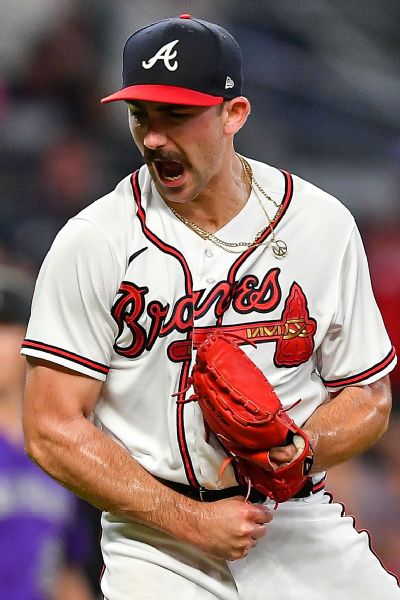
SP | Atlanta Braves
It was quite a year for Strider, who started the season in the Atlanta bullpen, soared once he hit the rotation, nearly won the NL Rookie of the Year award and capped it all by signing a six-year, $75 million extension. How was your 2022?
Strider emerged as one of baseball’s most dominant young pitchers, flashing a fastball that averages 98 miles per hour and a strikeout rate (13.8 per nine innings) that looks like a typo. The only downside for him was a late-season oblique injury that might have cost him NL rookie honors (won by teammate Harris) and limited his contribution to Atlanta’s playoff effort. Strider is mostly a two-pitch pitcher at this point, though he’ll sprinkle in a changeup against lefties, so it’s raw power that is currently earning him his bread. Obviously the Braves have seen more than enough to believe he can build off his dazzling rookie campaign.
Season prediction: Strider’s stuff is so overpowering that for now, it’s all he needs to get through an order a couple of times. To become a bedrock starter who can sometimes work deep, he’ll need more than two pitches. His spring work didn’t suggest he has that, so for now, expect more sharp, dominant outings. — Doolittle
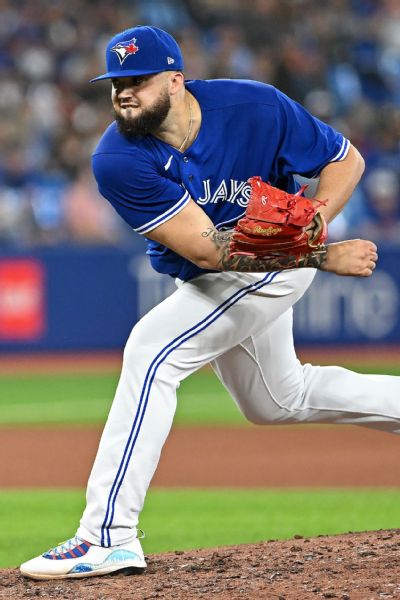
SP | Toronto Blue Jays
Manoah is clearly a pitcher getting better with every season. He dropped his ERA by a run from 2021 to 2022 and increased his innings pitched by 85. He’s emerged as the Blue Jays’ ace, though his one postseason start (last year) wasn’t a good one. Still, Manoah is likely to be a Cy Young candidate again as he continues to mature. His sweeping slider is effective against both righties and lefties, as hitters have a hard time producing hard contact and slugging off of him. Players slugged .314 against him in his first two seasons — and that number alone makes him worthy of his position in the rankings.
Season prediction: Manoah puts it all together in 2023 and wins his first Cy Young award while surpassing 200 innings pitched for the first time in his career. — Rogers
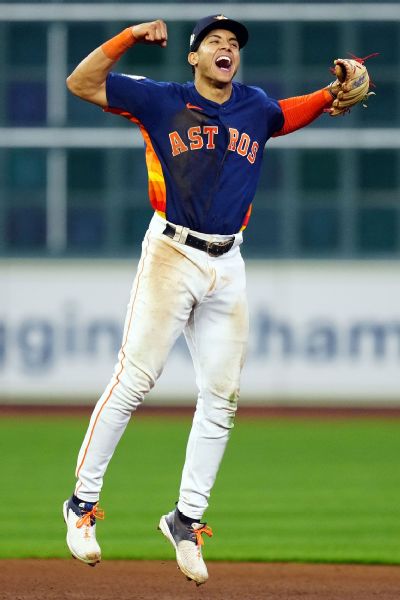
SS | Houston Astros
His strong rookie season and World Series MVP award helped Astros fans quickly move past the departure of Correa. Peña lived up to his reputation as a strong fielder, but he also displayed more power than expected, hitting 22 homers in 136 games with a .253/.289/.426 batting line. There’s certainly room for growth with the young shortstop, but he ranked alongside Trea Turner and Ha-Seong Kim in terms of their impacts on the field, hovering around a 4.8-4.9 bWAR.
Season prediction: Peña takes a step forward with his batting average while maintaining his elite glove, solidifying himself as one of the game’s most valuable shortstops. — Lee
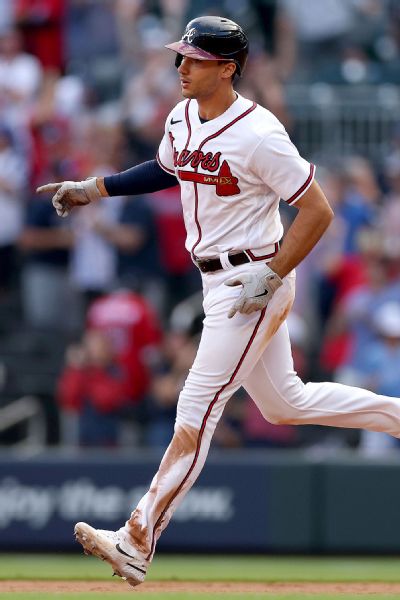
1B | Atlanta Braves
Every generation needs that big, slugging lefty first baseman who swats impressive home runs and swings from his heels with absolutely no remorse. Olson wasn’t quite as good in his first season with the Braves as he was with the Oakland Athletics in 2021 — due to a higher strikeout rate that cut into his batting average — but still belted 78 extra-base hits and drove in 103 runs. He showed in 2021 that he can be more than a “Three True Outcomes” slugger, although that’s what he became in the second half of 2022, when his average fell to .219 and his doubles rate fell way off. We’ve seen him play at an All-Star, top-10 MVP level, but there’s enough inconsistency here to keep him out of the top 50.
Season prediction: So far, his low strikeout rate in 2021 looks like a career outlier as his swing-and-miss rate was much higher against fastballs in 2022. I’d bet on a batting average closer to .240 again as opposed to the .271 mark in 2021, but in this Braves’ lineup, he’s a good bet to once again crack 100 RBIs with his 30-homer power. — Schoenfield
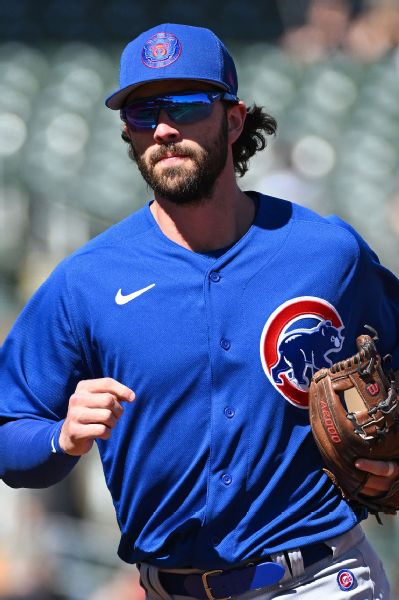
There’s a reason Swanson signed for $177 million with the Cubs during the offseason: He’s a really good player. There’s also a reason it was way less than what three other star shortstops signed for. Swanson is good, especially on defense, but he has yet to prove offensive consistency. His home run totals have increased over the years, but so have his strikeout numbers. Even he admits he needs to find the right balance between contact and power.
The Cubs are also paying for leadership. Swanson is known for wanting one thing out of his baseball life: to win. He did that in Atlanta, and now he’ll pave the way for a new roster of Cubs trying to find their way back to the postseason.
Season prediction: There might be some early struggles as Swanson tries to live up to his big contract — it happens all the time — but he should find his power stroke to left field once the summer hits Wrigley. Thirty home runs is not out of the question — but neither is 150 strikeouts (again). — Rogers
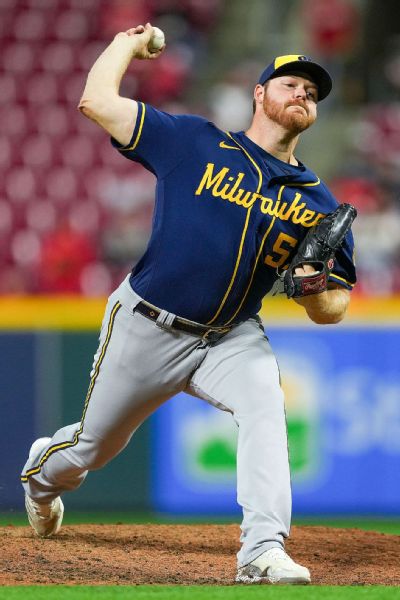
SP | Milwaukee Brewers
Woodruff has been one of the game’s most consistent starters over the last four seasons, a span in which his per-inning production has been truly elite. At 6’4″ and 244 lbs., Woodruff has the look of a classic top-of-the-rotation starter. He has the repertoire and stuff to dominate consistently and enough diversity in his offerings to remain effective deep into games. And yet Woodruff’s career high in innings as he enters his age-30 season is 179⅓. Injuries have usually diverted his run to the top ranks of big league starters, though arm injuries, strangely enough, haven’t been the issue. As such, it feels like his career season is still in his future.
Season prediction: Like co-ace teammate Burnes, Woodruff has not been extended by the Brewers and has one more season of arbitration eligibility before he hits free agency. Over the second half of last season, Woodruff was as good as any pitcher in the game. If the intersection of momentum and motivation means anything, the portents for 2023 are lined up in his favor. — Doolittle
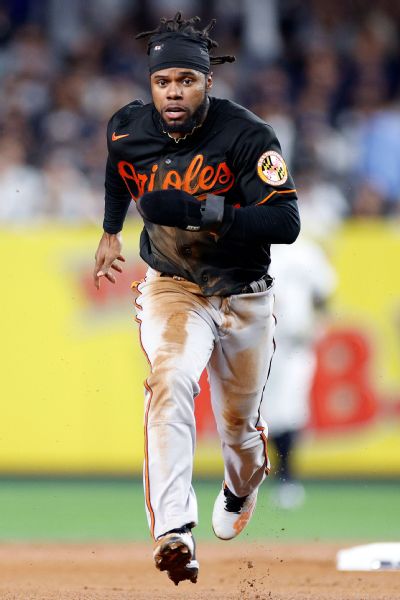
CF | Baltimore Orioles
Mullins’ offensive numbers took a slight dip from 2021 to 2022, with his OPS going from .878 to .721. He walked less, didn’t slug nearly as much and produced slightly fewer line drives. But he also produced elite center-field defense, contributing nine outs above average, and added 34 stolen bases. In other words: He hit enough to still be considered one of the sport’s best all-around players at his position. His 9.3 fWAR over the last two years ranks fifth among outfielders, topped only by Judge, Soto, Betts and Alvarez. That’s pretty good company.
Season prediction: Mullins isn’t an elite exit-velocity guy, and his numbers will often be susceptible to batted-ball luck. Is he the hitter of 2021 or 2022? Something in the middle is probably a safe bet, though his 2022 drop in barrel percentage should warrant some concern. He should still be young enough (28) to bring all the other speed-related elements that make him stand out. — Gonzalez
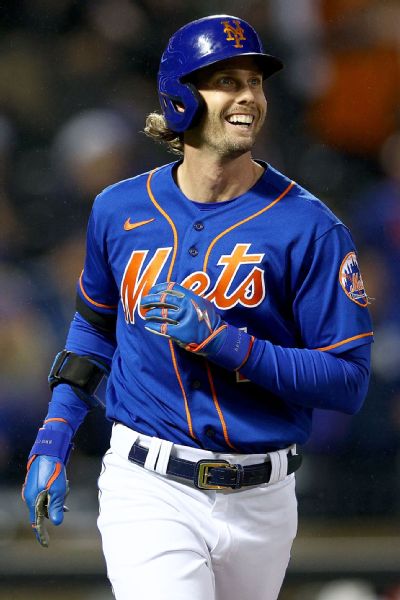
2B | New York Mets
McNeil put together one of the best seasons of his career in 2022, hitting .326/.382/.454 with nine homers, winning the batting title and posting a career-high 5.7 bWAR. The Mets rewarded his success with a new four-year, $50 million contract, locking up a key member of New York’s core lineup. The second baseman is one of the best contact hitters in the sport, striking out just 242 times in 2,039 career plate appearances, bested by just nine players with at least 1,000 plate appearances since his debut in 2018. His versatility continues to be an asset as well, with 100 games at second base and 46 in the outfield in 2022.
Season prediction: McNeil’s game figures to age well — he turns 31 in April — given his reliance on contact over power. While it’s unfair to expect him to win the batting title again in 2023, he has just one season in the big leagues where he has hit below .300, and the Mets expect him to be a lineup catalyst for a group hoping to compete for the World Series. — Lee
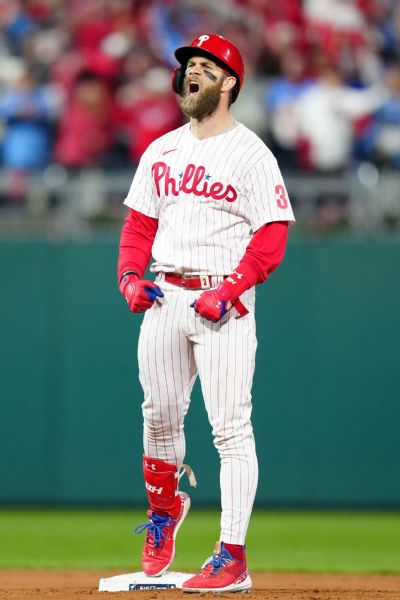
RF/DH | Philadelphia Phillies
It doesn’t take a baseball expert to understand why Harper is where he is on the list, as he’ll be out more than half the season while recovering from Tommy John surgery. His return will certainly boost the Phillies’ chances, and he’ll undoubtedly continue as one of the most feared hitters in the game. But for the rankings, availability is as important as productivity, so for now Harper is on the outside of the top 50 — though, he easily could be in a different place going into next season.
Season prediction: Harper returns with a bang in late July but struggles to find his footing. He’ll be a .230 hitter while hitting 12 home runs in the second half. — Rogers
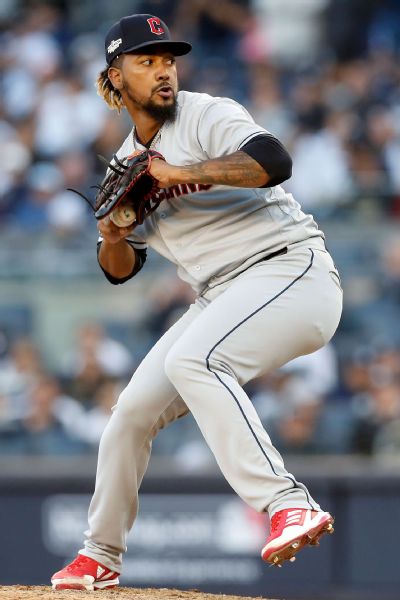
RP | Cleveland Guardians
In the original incarnation of our rankings, there were but two relievers so dominant that they earned a spot on the list. Edwin Diaz then suffered that devastating knee injury in the WCS, so now Clase, who won last year’s Mariano Rivera AL Reliever of the Year award, stands alone as baseball’s top fireman entering the season. He’s earned that status by becoming one of the rarest of baseball phenomenons: The consistent reliever.
In his case, Clase isn’t just consistent — he’s consistently dominant. Over the last two seasons, Clase has a surreal 1.33 ERA over 142⅓ innings. In 2022, he saved 42 games in 46 chances and earned wins in two of the games in which he blew the save. He does this with a cutter-slider combination so unhittable that to describe it as “nasty” hardly seems sufficient. The cutter in particular is almost — dare we say? — Rivera-esque.
Season prediction: There is zero reason to think that Clase’s game is going to tail off any time soon, especially when a “bad” season for him at this point would be a two-something ERA. — Doolittle
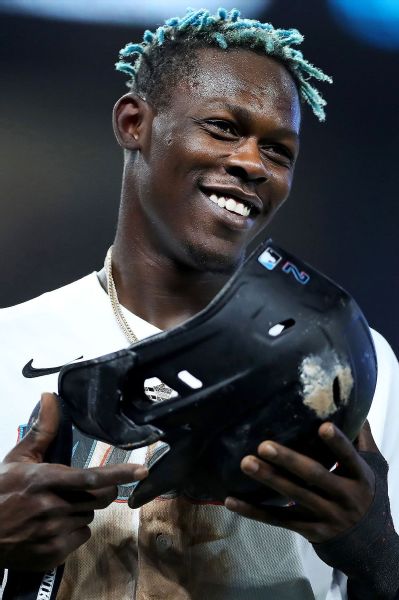
CF | Miami Marlins
He’s on the cover of “MLB The Show” video game, he was named to his first All-Star Game in 2022 and he popularized the ice cream-themed glove. Now, Chisholm has to stay healthy after missing the second half with a stress fracture in his lower back and adjust to a new position as the Marlins move him from second base to center field. To his credit, it was Chisholm who went to the Marlins with the idea, so he has embraced the change with enthusiasm. There’s no doubting the massive upside here after he hit 14 home runs with 45 RBIs and slugged .535 in 60 games. Those numbers over 150 games: 35 home runs and 112 RBIs. That sounds like an All-Star center fielder.
Season prediction: Hey, don’t dismiss that 35-homer potential. He’s averaged 27 per 162 games in his short career, and he’s just 25 with only 205 career games. With his tools, there’s still a chance he could explode if everything comes together. I’ll go 30 home runs and 25 steals, and if he can cut down on the K’s, he has superstar potential. — Schoenfield
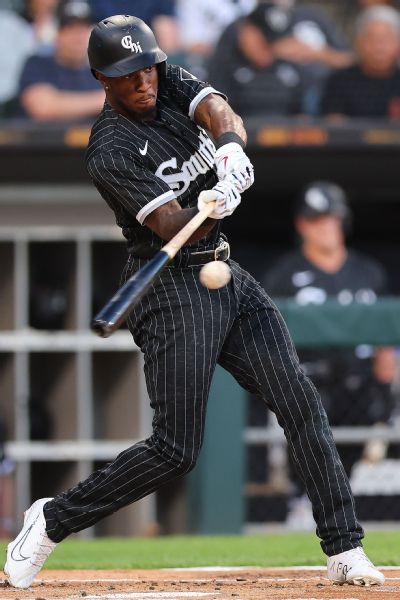
SS | Chicago White Sox
There was a time when Anderson would have ranked higher on the list, since he has a batting title under his belt. But injuries zapped some of his ability last season and though he hit over .300 for the fourth consecutive year, it came in only 79 games. A healthy, available Anderson may move him back up the rankings.
Meanwhile, playing in the WBC this spring can only help raise his game and potentially his leadership. During the tournament, Trout said that Anderson had the best opposite field swing in the game. That’s some high praise. If he’s on the field the entire season, he may win another batting title yet.
Season prediction: Anderson hits over .320 while he and Elvis Andrus make a surprisingly good double play combination. Anderson might even get some time at second base, where he shined during the WBC. — Rogers
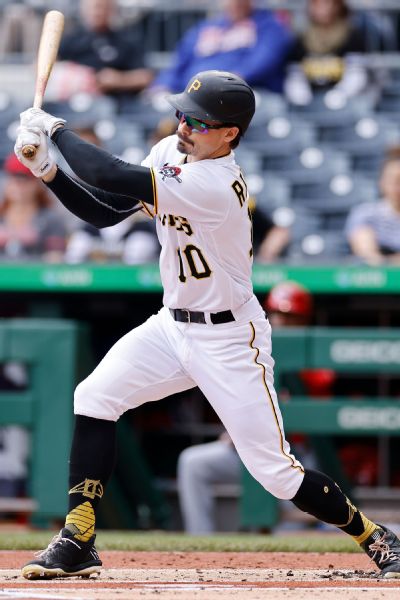
In four months, Reynolds — one of few baseball players to publicly request a trade — is expected to be one of the most coveted players from executives looking to solidify their teams for the stretch run. Toss aside a fan-less shortened 2020 season, and he has been about as productive as they come, slashing .292/.371/.496 in his three full major league seasons. The Pirates have expressed a desire to keep Reynolds long term, but there are no indications that the two sides are close on an extension. He is coming off a sluggish — by his standards — 2022 season, one that saw his OPS drop by more than 100 points and his defensive metrics fall off even more dramatically. But several GMs would undoubtedly line up to trade for him nonetheless.
Season prediction: Reynolds’ strikeouts picked up and his walks declined in 2022, which is usually a troubling sign. He chased more often, particularly against fastballs. He saw more high fastballs last year, and he struggled mightily against them, slashing .074/.133/.185. Reynolds won’t get back to his 2021 self until he makes that adjustment. — Gonzalez
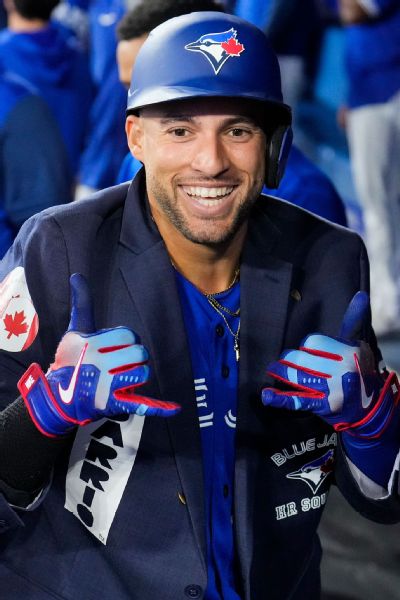
OF | Toronto Blue Jays
Springer remains a top-of-the-lineup catalyst with his blend of power, speed and patience. Among 64 hitters with at least 100 plate appearances from the lead-off spot last season, Springer ranked in the top five in hits, runs, homers and RBIs, while landing at 14th in OPS. He still plays the game with panache via his big swings at the plate and daring dives on the basepaths.
Still, after finishing in the top 40 of the last five editions of these rankings, Springer fell down the pecking order mostly because he just can’t stay on the field enough. He hasn’t played in more than 140 games since 2018 and made it into just 133 contests last season for Toronto. During his two seasons with the Blue Jays, Springer has hit the IL with an oblique strain, a strained quadriceps, a sprained knee and an inflamed elbow. This last malady resulted in surgery last fall to remove bone spurs.
Season prediction: Now 33, Springer’s playing time has to be carefully managed, especially as it seems unlikely that the abandon with which he has always played is going to disappear. The injuries will come, and rest will be needed. That’s all fine for the Blue Jays if Springer is right when October comes around and he gets another shot to show why he’s one of the great postseason players of his generation. — Doolittle
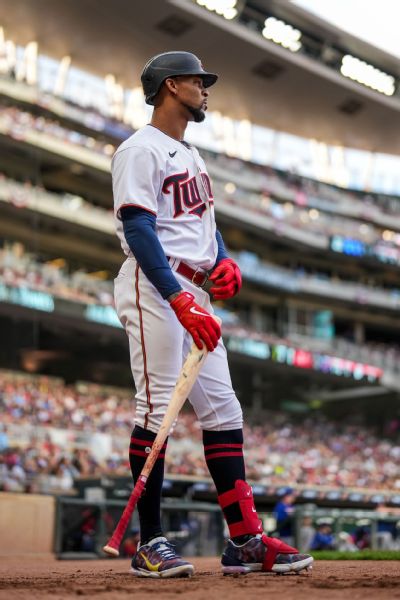
CF | Minnesota Twins
We all know the story. Over the past four seasons, Buxton has hit .258/.316/.558 while playing Willie Mays defense in center field. He has averaged an incredible 8.3 WAR per 650 plate appearances since 2019 — except that’s more PAs than he had in 2021 and 2022 combined. Of his 28 home runs in 2022, 11 of them went more than 425 feet, including two over 450. The power/defense combo is so impressive that if he could play 130 games, he’d be one of the best players in baseball with top-15 overall potential. But he’s now 29 and played 100 games just once in his career. There have been players who had careers ruined or shortened with injuries, but Buxton’s career is turning into a weird, one-of-a-kind “what if?”
Season prediction: Yeah, right — you may as well ask me to make my stock picks for the next 12 months or predict the weather for the first game of the World Series. There’s 40-homer power here if he stays healthy, but I wouldn’t count on that. — Schoenfield
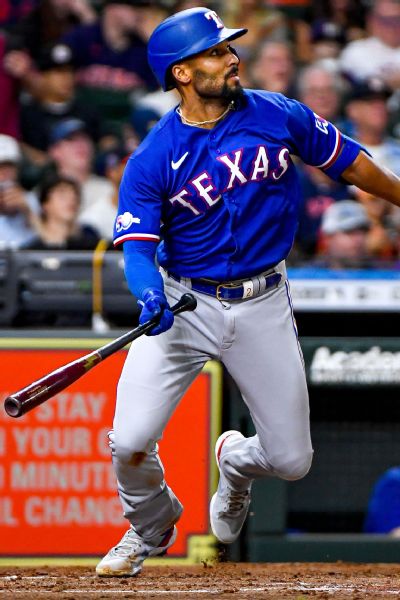
2B | Texas Rangers
After a very slow start for his new team in 2022, Semien brought the lumber. All but one of his 26 home runs was hit after June 1. That kind of volatility might be expected for a player joining a new organization with a big contract. Semien isn’t going to go up the rankings as he enters his mid-30’s, but that doesn’t mean he has to go down either. He should age well playing second base after giving up on shortstop in signing with Texas a year ago. His power at that position makes him special, though he’s not likely to repeat his 2021 performance, when he hit 45 home runs for Toronto.
Season prediction: Semien’s power numbers will continue to decrease playing in pitcher-friendly Globe Life Field. He’ll hit under 20 home runs in a full season for the first time since 2018. — Rogers
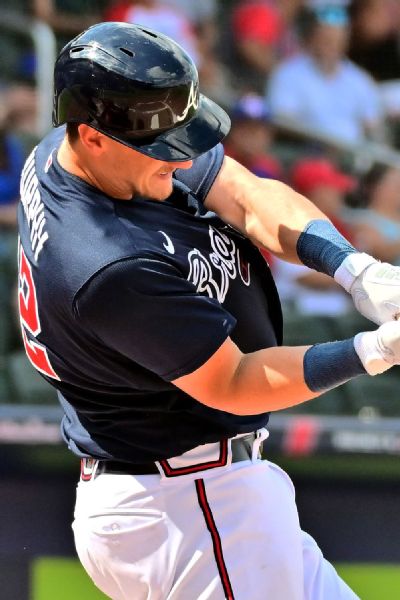
C | Atlanta Braves
As much as anything, the Braves seem to believe in certainty when it comes to their long-term design. Find a young player you like and keep that player for as long as you can in an exchange of security (for the player) and team-friendly terms. And so Murphy becomes the latest example of that design after Atlanta acquired him in a hot stove trade and almost immediately inked him to a six-year, $73 million extension to become Atlanta’s backstop now and for the foreseeable future.
This ranking, which is well-deserved, illustrates why the Braves have such faith in a player who has yet to play a regular season inning for them. Murphy is one of the game’s top two-way backstops who hits for power, draws walks, handles his position so well that he was the AL’s Gold Glove catcher in 2021 and even has some postseason experience. He’s also durable and hits well enough that he can help out frequently at DH on days he isn’t catching.
Season prediction: The only catchers to have won a Gold Glove in both leagues are Bob Boone and Tony Pena. Supplanting Realmuto in the NL won’t be easy for Murphy, but he’s got a chance to join the list. He frames well and with an elite pop time, his ability to gun down would-be base thieves could be accentuated under the new rules. — Doolittle
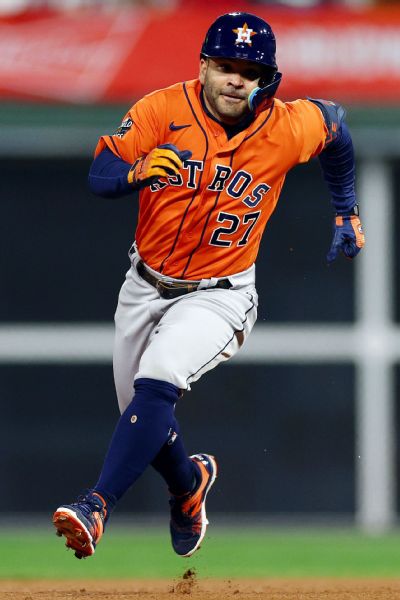
2B | Houston Astros
As with Harper, Altuve would have ranked a lot higher, but the broken thumb he suffered in the World Baseball Classic will keep him sidelined indefinitely and well into the season. When Altuve scuffled through a rough COVID-shortened 2020 season, it appeared Father Time might have been starting his victory lap, even if it was just a 48-game sample. Altuve has proven every skeptic wrong throughout his career and did so again. The 2022 season was one of his best, as he matched his MVP year of 2017 with a 160 OPS+ and finished fifth in the AL MVP voting.
Even without the injury, Altuve was a good bet to regress, at least a little. He turns 33 in May, and despite launching 39 doubles and 28 home runs last season, his hard-hit rate was the lowest of his career. That’s cause for concern, although he doesn’t swing and miss much, and he did show sudden growth in his plate discipline, with big improvements in chase rate and walk rate. If that holds, he’ll continue to age well.
Season prediction: Altuve’s .300 batting average last year was 31 points higher than his expected batting average going into the season. We don’t know how the injury will ultimately affect his power, but his launch angle and ability to pull everything is ideal for home runs. I think the average takes a dip back into the .270 range that it was in 2021. — Schoenfield
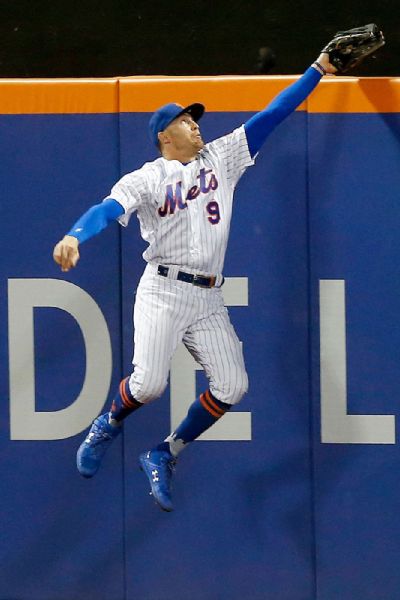
CF | New York Mets
Nimmo had the best season of his career in 2022, earning him an eight-year, $162 million contract to stay in New York. The 29-year-old outfielder put together a strong offensive season, hitting .274/.367/.433 with 16 homers while continuing to make big strides as a defensive player. He represents one of the backbones of the Mets’ lineup as one of their most consistent producers. As important as his production is, so is his leadership in the clubhouse as a tone-setter — he brings energy to Citi Field on a daily basis.
Season prediction: Nimmo will continue to be a catalyst near the top of the lineup while providing solid outfield defense. The Mets don’t need him to be anything more than what he’s been throughout the last few seasons: solid and dependable. — Lee
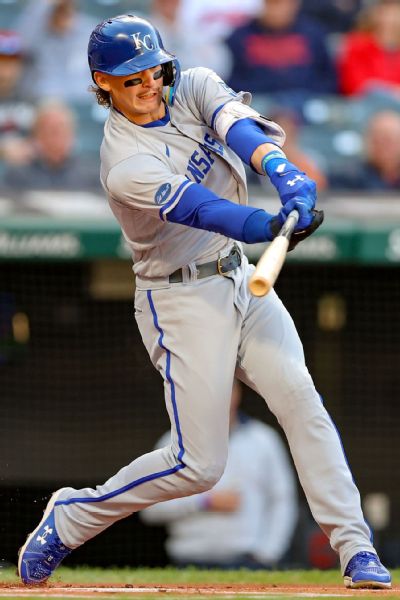
What follows is a partial list of players who appeared in at least 120 games in their age-22 season or younger and put up less than 2.3 fWAR: Jimmy Rollins, Altuve, Arenado, Freeman, Adrian Beltre, Robinson Cano, Bogaerts. And that’s just dating back to 2000. So, don’t ring the alarm bells on Witt just yet. Thriving in the major leagues at that age is exceedingly difficult. Witt’s rookie season — 20 home runs and 30 stolen bases, but also a .254/.294/.428 slash line and more than four times as many strikeouts as walks — was a disappointment when considering the hype that surrounded him. But it doesn’t mean he won’t be a star. It didn’t for any of those other names.
Season prediction: The Royals knew Witt wouldn’t play much in the WBC, but they wanted him to experience that environment. They thought it could speed up his development and turn him into a better player. It’ll work. Witt will take a big leap in 2023 and vie for the All-Star team. — Gonzalez
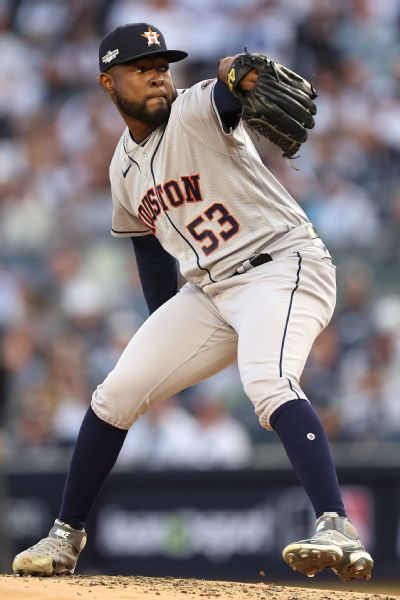
SP | Houston Astros
Javier keeps inching his way towards a monster season. He appeared as a starter and reliever both in last year’s regular season and postseason. That’s how valuable he was to the Astros’ run to a title. This year, he may find his way to the top of the Astros’ rotation or at least right behind Valdez. His fastball has so much life on it, he should blow past 200 strikeouts in 2023. As is, he had 194 in 148 innings last season, good for an eye-popping 33.2% strikeout rate. One of every three batters went down by strikeout against Javier. He could be a Cy Young candidate if those numbers continue over the course of 32 starts.
Season prediction: If healthy, Javier will lead the league in K’s with over 250. — Rogers
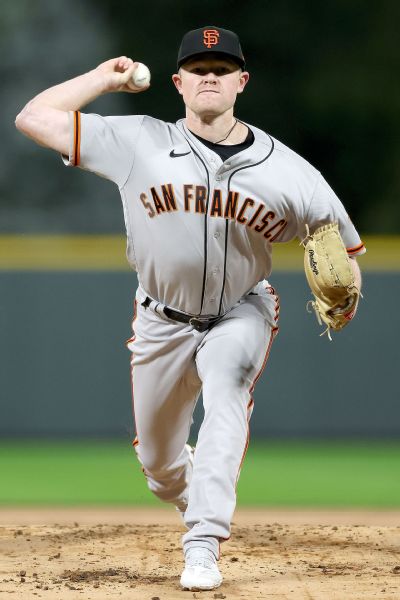
He was my pick for NL Cy Young winner in 2022, and while that didn’t happen, he proved his terrific run down the stretch in 2021 was no fluke as he went 15-9 with a 2.90 ERA and just 11 home runs allowed in 192⅓ innings. Webb is the antithesis of modern pitchers: He throws a low-spin sinking 91-mph fastball that produces grounders instead of strikeouts, and he gets batters to chase his slider and changeup. We’ll see if the shift ban hurts him more than other pitchers, but I expect his throwback style, pitch efficiency and command will lead to another strong season.
Season prediction: More of the same. He’s had two back-to-back excellent seasons, and while I’m a little worried about the Giants’ defense at second base without the shift, I’m looking for an ERA around 3.00 with close to 200 innings once again. — Schoenfield
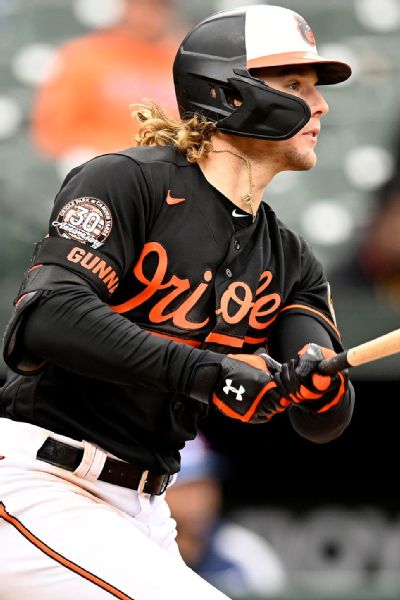
3B | Baltimore Orioles
How does a player with all of 132 plate appearances and a .259 batting average end up in our top 100? Faith. Faith in the prospect hype and faith in the flashes of brilliance we saw from him during his 2022 debut as a proof of concept. As Henderson retains rookie status, he’s still eligible in the prospect rankings and thus landed the coveted top spot in this year’s edition of Kylie McDaniel’s Top 100. He’s got power, defense, a strong arm, the speed to steal 20 bases or more and minor-league OBPs that suggest an advanced approach at the plate. Along with fellow phenom Rutschman — last year’s top prospect — Henderson is at the vanguard of what looks like a dawning era of contention in Baltimore.
Season prediction: Henderson enters the season as a leading AL Rookie of the Year candidate. At the same time, his minor-league line jumped from a .258 average and .826 OPS in 2021 to .297 and .946 a season ago. Some regression wouldn’t be a shock, both because of that leap and because development doesn’t usually happen in a linear fashion. And yet he’s so good, he might be the ROY anyway. — Doolittle
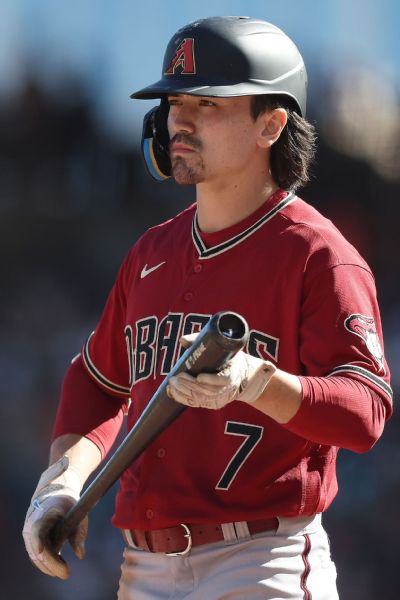
OF | Arizona Diamondbacks
Carroll has played in only 32 major league games and already looks like one of the most exciting players in the sport. He can hit for average, slug, provide elite defense and run with the best of them — and he brings that level of enthusiasm every time he plays. The COVID-19 pandemic wiped out minor league baseball in 2020 and shoulder surgery robbed him of most of 2021, but Carroll looked like a man who hadn’t missed a beat in 2022. In what amounted to his first full season of professional baseball, Carroll scorched through Double-A and Triple-A, OPS’ing 1.036 with 24 home runs and 31 stolen bases in only 442 plate appearances. The D-backs had no choice but to call him up late in the season, and Carroll accumulated 1.4 fWAR in about a month. He’ll maintain rookie eligibility for 2023 and should be a clear favorite for ROY.
Season prediction: Carroll will win the NL Rookie of the Year Award and turn a lot of heads in 2023, helping the D-backs make a surprising run for a playoff spot. — Gonzalez
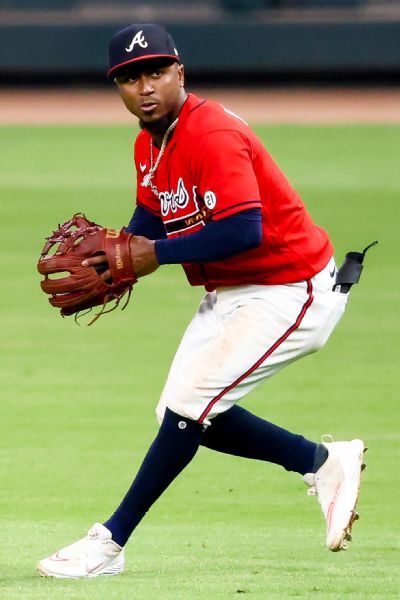
2B | Atlanta Braves
Last year was a frustrating one for Albies, as he played just 64 games because of a broken left foot and broken right pinky, and his offense was down when he did play. At his best, he generates surprising power from his small frame, hitting 30 home runs and ranking fifth in the majors in extra-base hits in 2021 (when he also drove in 106 runs) and tied for 15th in 2019. Albies has his mind set on a big season … very big: “I’ll take 30-30,” he told The Athletic, referring to 30 home runs and 30 steals (his career high is 20). “But my goal is to go 40-40.” The Braves will happily take 150 — as in 150 games played.
Season prediction: I’m a little concerned here even though Albies is just 26. He’s been injured in two of the past three seasons, and his plate discipline hasn’t gotten any better, despite the Braves’ best efforts (and, in fact, he had a career-worst chase rate last season). Still, he has a knack for pounding out those extra-base hits. I’ll go .250 with 25 home runs and 35 doubles — a little below what we saw in the rabbit ball years of 2019 and 2021. — Schoenfield
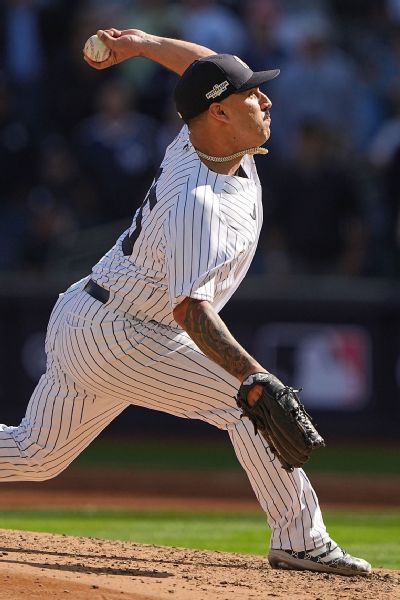
SP | New York Yankees
There’s a reason why Nasty Nestor emerged as a fan favorite during the 2022 season. The crafty lefty put together a breakout 2022 campaign, posting a 2.44 ERA and 0.92 WHIP in 28 starts en route to making his first All-Star team. In a year where Cole was inconsistent, Cortes proved to be one of the team’s most reliable performers. The Yankees were cognizant of not overusing him last season — he had never pitched more than 93 innings in the big leagues — so with a full offseason under his belt and a secure rotation spot, Cortes could take another step forward in 2023.
Season prediction: Cortes will keep proving there’s a way to succeed as a starter in the big leagues without top-tier velocity. He’ll need to make sure his command remains on point, but the creative mix of pitches, arm slots and windup movements makes him a dynamic pitcher for the Yankees’ rotation. — Lee
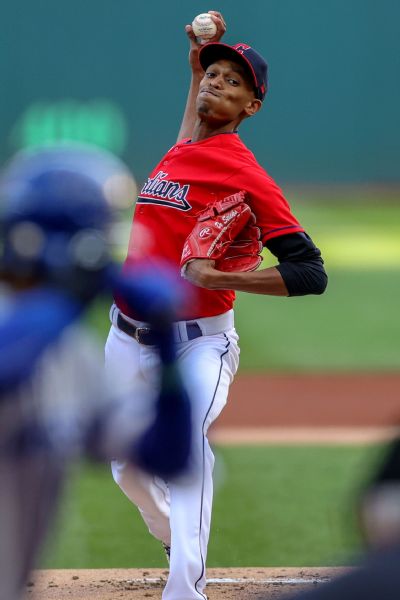
SP | Cleveland Guardians
By trying to do a little less in 2021, McKenzie accomplished a whole lot more in 2022. His strikeout rate dropped from 27.5% to 25.6% of opposing batters, but he more than offset that dip by slicing his walk rate and managing his effort to work deeper into games. He averaged 4.8 innings per start in 2021 but that figure soared to 6.3 last season as he finished with 191⅓ innings pitched and doubled his quality start count. McKenzie leaned less frequently on his fastball, even though he still has just a three-pitch mix. Even without a deep arsenal, McKenzie’s numbers remain strong even as he gets into the third time through an opposing lineup.
Season prediction: From here, it’s a matter of fine tuning the command. While McKenzie was much better at attacking the strike zone last season, he did go through spates where he caught the middle of the plate too often, and his homer rate would spike. Given his rate of improvement so far, the Guardians can look to further gains in this area. — Doolittle
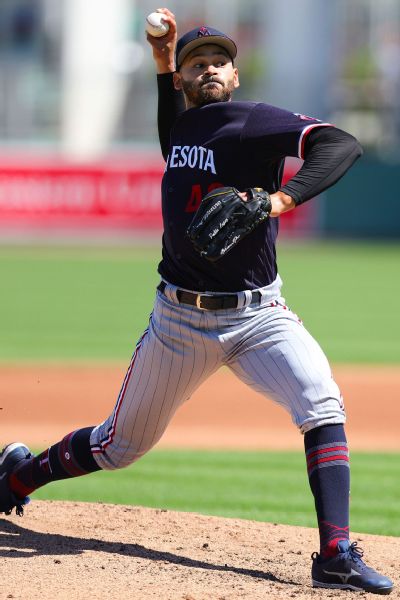
SP | Minnesota Twins
It will be interesting to see how a former Marlins pitcher performs knowing he’ll have more offense backing him. Lopez should get a boost from playing with the Twins over the offensively-challenged Marlins. He put together a solid season in 2022, but there’s room to grow. The biggest step in his game last season was simply making all 32 starts, cementing him as a mid-rotation guy in the big leagues. Righties hit .218 off him last season, fifth lowest in the NL. His cutter is becoming an often-used pitch and his change-up is already really good.
Season prediction: Lopez surpasses 200 innings for the first time in his career while getting over five runs of support per game. — Rogers
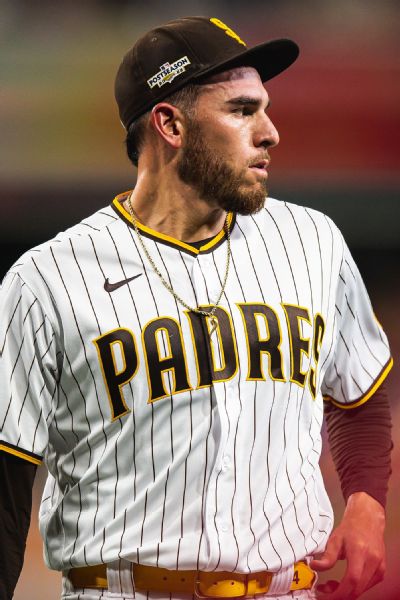
SP | San Diego Padres
Some players struggle with the pressures of starring for their hometown team. Musgrove has embraced it, using it as motivation to elevate himself to a higher level. The 30-year-old right-hander has posted a 3.06 ERA and accumulated 362⅓ innings in his first two years with the Padres, while helping to front the rotation of a star-studded team with grand expectations.
Rather than venture into the open market this offseason, Musgrove signed a five-year, $100 million extension with two months left in the 2022 regular season. He is now one of the faces of the team he grew up rooting for — right up there with Machado, Tatis and Bogaerts — while the Padres navigate the most exciting time in franchise history. And he wouldn’t have it any other way.
Season prediction: The last four years have represented steady growth for Musgrove. In 2022, he was an All-Star for the first time. In 2023, he’ll be in the Cy Young discussion for the first time — as long as he wears sneakers in the weight room. — Gonzalez
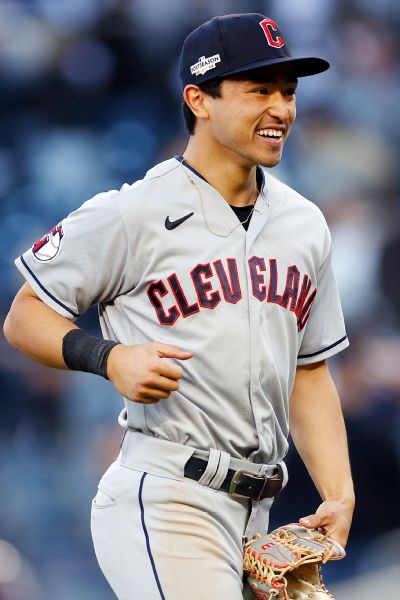
LF | Cleveland Guardians
We’ve been so indoctrinated by today’s power-driven game that sometimes we forget that players like Kwan can not only still exist but excel, too. He hit .298/.373/.400 and won a Gold Glove in left field despite one of the lowest hard-hit rates in the game. His 5.5 bWAR was the best by a Cleveland rookie since Kenny Lofton in 1992. He makes it work because of impeccable strike-zone judgment — he swung and missed just 91 times out of 1,006 swings. Only Luis Arraez had a better contact rate.
The projection systems forecast regression, however, his contact ability, defense, speed and plate discipline give him a high floor of 3 WAR even if the average drops 20 points. But here’s betting on .300 in 2023.
Season prediction: Hey, I just said .300! Let’s go with .304 with 100 runs scored and another Gold Glove. — Schoenfield
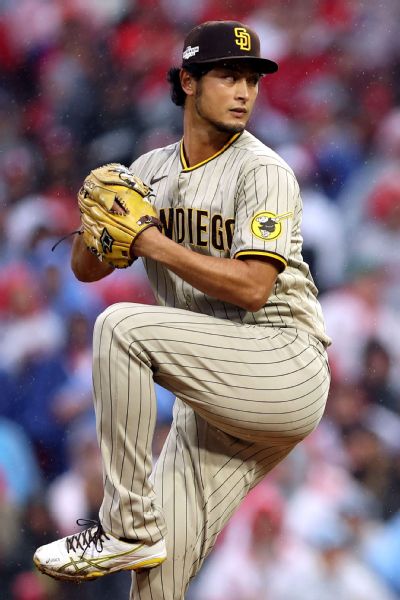
SP | San Diego Padres
The Padres, throwing money around at a neck-breaking pace, signed Darvish to a six-year, $108 million extension, a deal that will amazingly pay him through his age-41 season. “If anybody is able to pitch a little bit later in their career and get this type of an extension, it certainly is him,” Padres manager Bob Melvin said.
Over these last two years, Melvin has gained a deep level of respect for the way Darvish works and cares about his craft, a trait that could allow him to overcome the issues that plague pitchers in their late 30s and early 40s. From 2017 to 2022, the 36-year-old ranks ninth in the majors in strikeouts and 17th in innings while posting a 3.66 ERA.
Season prediction: Darvish’s expansive repertoire allows him to adjust better than anybody, and last year was no different. He featured the lowest strikeout rate of his career, but also one of his lowest walk rates. His cutter, fastball and slider continue to make up the vast majority of his offerings, but Darvish can constantly change their sequencing and introduce several other pitches that continually keep hitters honest. With such a potent offense behind him, he can be an All-Star for the second time in three years in 2023. — Gonzalez
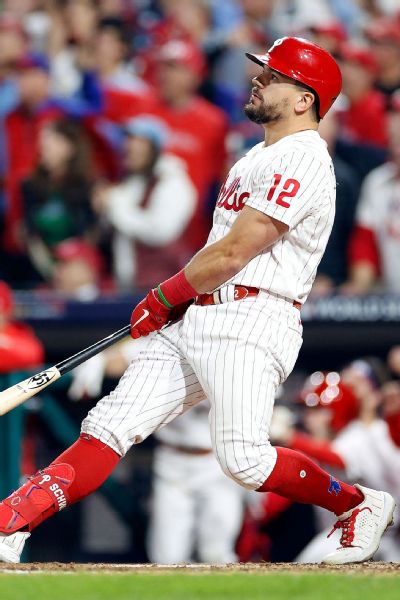
LF | Philadelphia Phillies
Schwarber went from being DFA’d after the 2020 season to hitting 46 home runs last year for Philadelphia. He’s played in the postseason for three different teams and just completed his first stint on Team USA in the WBC. That’s why he’s a top-100 player. But unless he reduces his strikeouts — he had exactly 200 last year — and raises his career .233 batting average, he’ll remain in the lower half of these rankings. He has vowed to address the former stat, and the elimination of the shift should address the latter one. As is, Schwarber is a valuable power hitter with playoff experience up-and-down his resume.
Season prediction: The elimination of the shift will indeed raise his batting average — one scout said as high as .270 — but the strikeouts and home run totals will remain the same. — Rogers
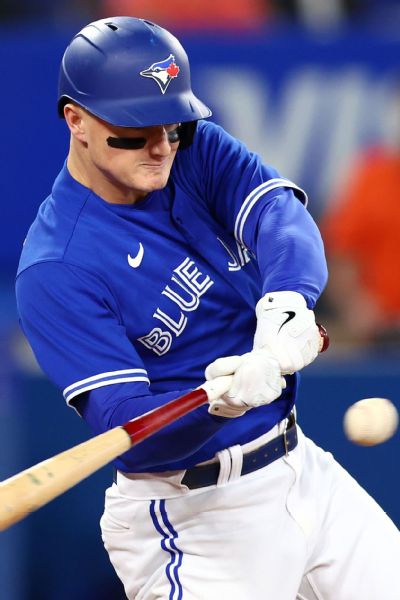
3B | Toronto Blue Jays
Chapman has not replicated his breakout 2018 season, but he maintained his status as one of the game’s best defensive third basemen in 2022 while providing power at the plate, hitting 27 homers and slashing .229/.324/.433. He is entering a contract year, and with the free-agent market hitting a new apex this past offseason, he could be poised to receive a major payday if he puts together a strong season — especially if he improves his batting average, which has not been above .232 since the 2019 season. Chapman will be the biggest name on the third base free-agent market with Machado having already signed an extension.
Season prediction: Chapman will continue his reign as one of the game’s premier defenders. Many around the Blue Jays believe that 2022 represented Chapman’s floor, and that with a major incentive to improve at the plate this season, the third baseman could put together his best year since 2018. — Lee
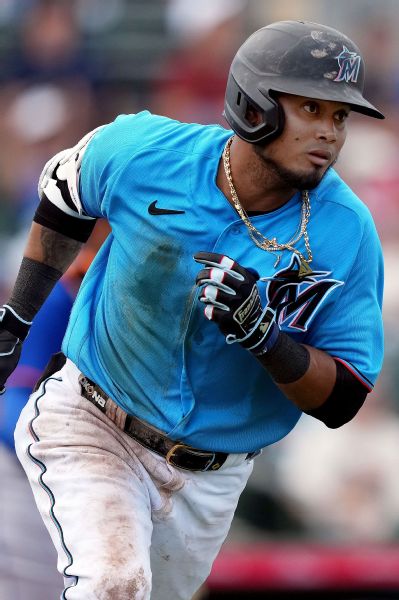
2B | Miami Marlins
Any Marlins fan in attendance at the WBC quarterfinal in Miami might have gotten the wrong idea when Arraez mashed a pair of homers for Venezuela against the U.S. That’s not the player they’ll see for the most part now that he’s joined the Fish. Instead they’ll see a hitter with such elite bat control and contact ability that in his Minnesota days, one could compare him to Rod Carew without being scoffed at. Arraez won his first batting title last season, hitting .316 for the Twins in the AL. Miami, in case you’re wondering, has had two batting champs: Hanley Ramirez and Dee Strange-Gordon. Arraez will be a strong candidate to join the list as long as he’s in Miami.
Season prediction: DJ LeMahieu is the only hitter to win a batting crown in both the AL and the NL. Arraez owns a career average of .314, a number good enough to win the crown in the senior circuit twice in the last five years. Now that he has switched leagues, LeMahieu may have company on this very short list a year from now. — Doolittle
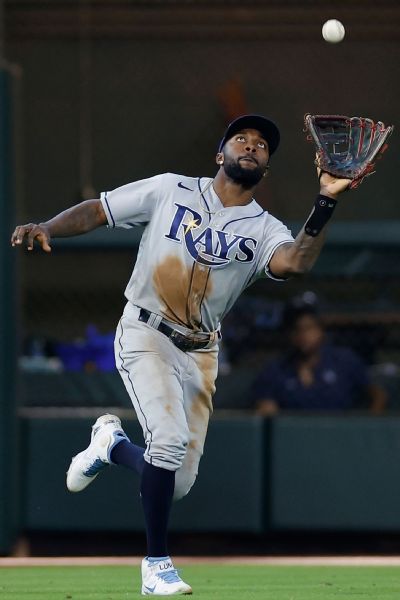
LF | Tampa Bay Rays
First it was the 2020 MLB playoffs, then the 2023 World Baseball Classic. There is something about this guy in big moments. Arozarena will spend the rest of his career in the shadow of his postseason exploits of 2020 when he homered 10 times in 18 games, but he has settled into a solid all-around player who does a little bit of everything, posting seasons of 4.1 bWAR in 2021 and 2.9 in 2022. He had 41 doubles, 20 home runs and 32 steals last season. Yes, that’s a bit of statistical spaghetti, but that was just the 25th time that has been done, and the first since Mookie Betts did it in 2018. He cut his strikeout rate 4% last season, and if he can cut it another 4%, he can climb a little higher on this list.
Season prediction: Arozarena is already 28, so you wouldn’t really expect improvement at this point. His swing and launch angle are more conducive to doubles than home runs, so I’ll stick with 20 home runs. It will be interesting to see if the Rays let him run, as he loves to be aggressive on the bases (sometimes TOO aggressive). Don’t rule out 40 steals. — Schoenfield
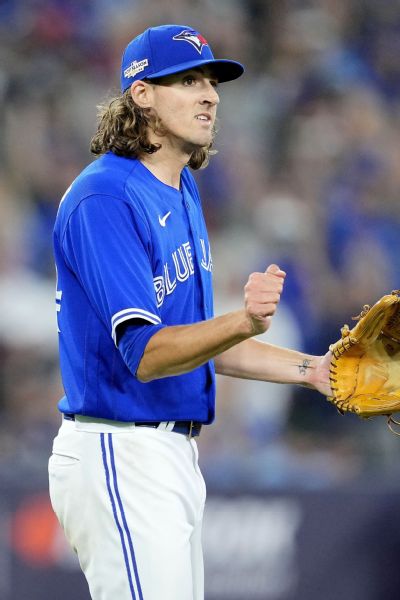
SP | Toronto Blue Jays
Gausman was solid in his first season with the Blue Jays in 2022, but the numbers didn’t necessarily pop the way they did with the Giants in the prior season. Look closer, though. Gausman had a 3.35 ERA that ranked 25th in the majors, but a 2.38 FIP that ranked second. Opponents’ batting average on balls in play against Gausman was .364, by far the highest for any qualified pitcher (second, interestingly enough, was Gausman’s teammate, Jose Berrios). The Blue Jays essentially needed better defense. And they took major steps there by adding Kevin Kiermaier and Daulton Varsho to their outfield.
Season prediction: Backed by a better defense, Gausman will make one of the biggest leaps in the sport, ERA-wise, and re-establish himself as a top-flight pitcher for a team that will contend for a division title. — Gonzalez
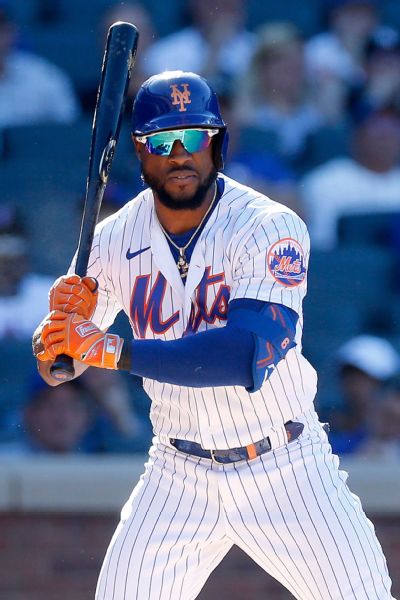
RF | New York Mets
If Marte could put together an injury-free season, he might be higher on this list. Nagging injuries have kept him from his full potential the last couple of seasons, though he continues to produce .800-plus OPS seasons through them. After having offseason surgery on his groin, it remains to be seen if he’ll be fully healthy come Opening Day. Even this spring, he had a scare after getting hit in the helmet by a pitch. Marte still has three years remaining on his deal with the Mets, who could use a big season out of him considering injuries they’ve incurred elsewhere on the roster. Marte dropped from 47 stolen bases in 2021 to 18 last season. Will that number increase again if he’s healthy for a full season?
Season prediction: Marte will steal 30 bases again, providing at least a 20/20 season for the Mets — if he’s healthy. — Rogers
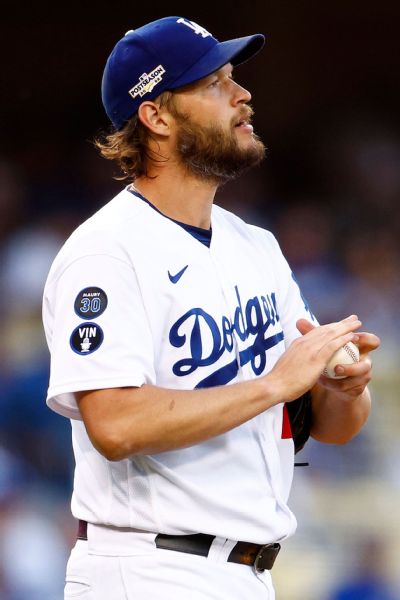
SP | Los Angeles Dodgers
The fastball velocity erodes, the back continues to be a problem, and yet Kershaw is still pitching at a Hall of Fame level. Take just these last two years, when the proverbial thought was that he had fallen off. There were 105 pitchers who made at least 40 starts from 2021 to 2022. Only 13 had a lower ERA, only three had a lower WHIP and only two had a higher strikeout-to-walk ratio. When he’s on the mound, few are better than Kershaw. He’s 35 now, and there’s no reason why that still wouldn’t be the case. The only question is how much longer he wants to do this.
Season prediction: Kershaw has basically settled into who he is at this point. He’ll be susceptible to home runs and perhaps spend a stint or two on the IL, but he’ll pound the strike zone, prevent runs and, when he’s out there, continue to perform at an elite level, even if the radar gun indicates that he shouldn’t. — Gonzalez
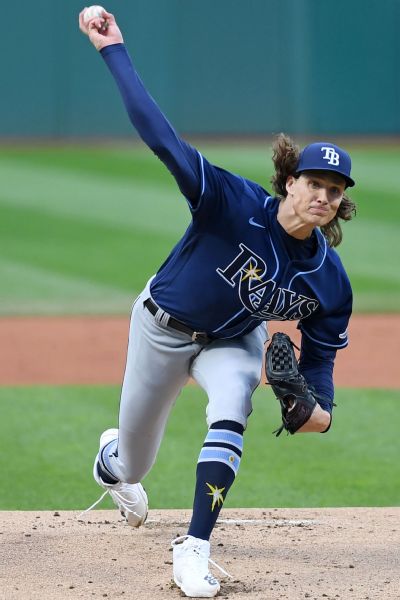
SP | Tampa Bay Rays
There’s an argument to be made that Glasnow’s torn UCL was the difference between the Rays making a run to the World Series in 2021 versus exiting in the first round after a 100-win season. A healthy Glasnow still holds that potential. The 29-year-old righty returned in 2022 after recovering from Tommy John surgery and started Game 2 of the wild-card series between the Rays and the Guardians, allowing two hits and no runs in five innings while striking out five. If Glasnow stays healthy, he’s a critical part of Tampa’s success, but he’s started more than 20 games just once in his career.
Season prediction: It’s undeniable that Glasnow is one of the best pitchers in the game when he’s on the mound, but how much he’s on the mound is the actual question. He’s already missing the start of the 2023 season with a strained oblique, and his career numbers suggest that making more than 20 starts is an anomaly rather than a trend. But if he stays healthy, watch out for the Rays. — Lee
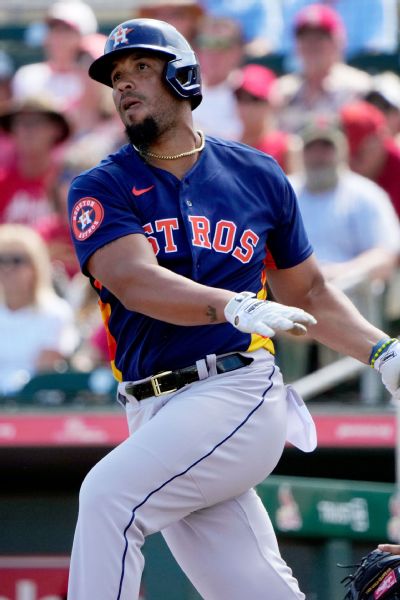
1B | Houston Astros
If all you knew about Abreu was that he was two years removed from an MVP award and just signed a three-year free agent contract, you’d think the champion Astros just snagged themselves an in-his-prime superstar. That might not be precisely the case, but even at 36, Abreu remains a premier run producer who will likely slot right into the cleanup slot in Houston.
His RBI count dropped to 75 last season, and it wasn’t just a function of diminished opportunity, as his RBI percentage fell from 42% to 31%. His homers fell from 30 to 15 and isolated power fell from .219 to a career low .141. Still, Abreu hit .304, and his exit velocities and barrel rates remained largely unchanged. Clearly, the Astros noticed.
Season prediction: Abreu is a hard worker, remarkably consistent, a leading clubhouse voice and enters the coming season on a quest for his first World Series ring. You can pretty much count on another 100-RBI season even if his power doesn’t rebound all the way back to pre-2022 levels. — Doolittle
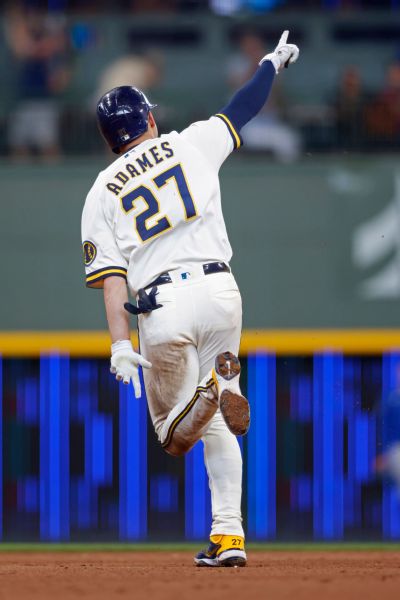
SS | Milwaukee Brewers
Adames continued his ascent as one of the game’s best shortstops in his first full season with the Brewers, hitting 31 homers with a .238/.298/.458 batting line in 139 games. Adames has been especially lethal in high-leverage situations, hitting .306/.333/.514 in 120 plate appearances in 2022. Additionally, the shortstop has been strong with runners in scoring position with two outs, hitting .302/.429/.603 in 77 plate appearances in 2022. And that’s before you factor in his glove. Adames has one of the best arms for a shortstop in baseball and ranks among the best NL shortstops in outs above average and runs prevented.
Season prediction: The biggest variable is the batting average. Expect Adames to hit for power, but if he’s also able to add hitting for a higher average to his repertoire, he will be flying up these charts, especially considering his defensive prowess. — Lee
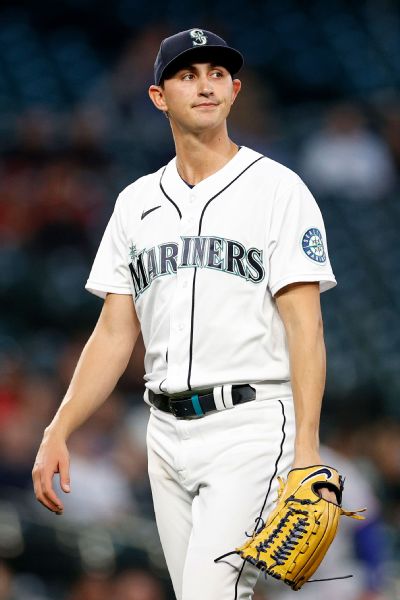
SP | Seattle Mariners
After a strong rookie season in which he went 8-5 with a 3.39 ERA in 25 starts, Kirby is a popular breakout candidate for 2023 — especially after posting a 3.02 ERA in a second half in which he allowed just one home run. With excellent control (just 22 walks), a 95-mph fastball that he can dial up to the upper 90s and a six-pitch repertoire (he threw each at least 8% of the time), it’s easy to see why many expect a big season.
He needs to get better against right-handers after they hit .324 against him, and he’s working on a new splitter since six pitches apparently aren’t enough. Improving the slider to give him a better swing-and-miss pitch against right-handed batters will be vital in order for him to make a leap.
Season prediction: If the new splitter and the new slider that he started late last season prove effective, Kirby is a great sleeper Cy Young pick. I won’t go that far yet, but look for 15 wins and an ERA around 3.00. — Schoenfield
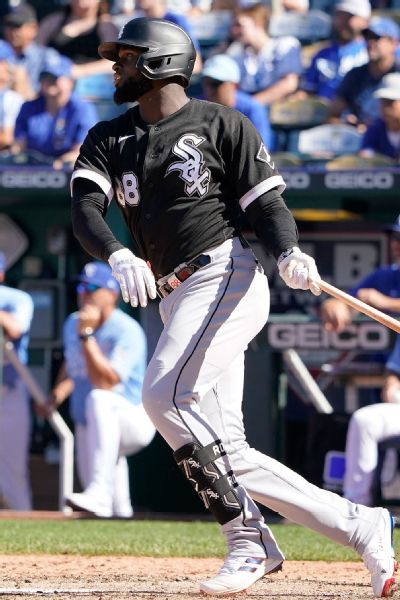
CF | Chicago White Sox
Perhaps the most talented player to be this low on the top 100, Robert simply has yet to put it all together in the big leagues. Injuries have stopped him in his tracks — he’s played the equivalent of one season over the last two. He just hasn’t been impactful in any meaningful way, but few can deny his talent. On paper, Robert is a five-tool player but nagging ailments have limited his ability to hit or run. For now, he’s a top-100 talent, but that may be all he’ll be unless he can stay healthy.
Season prediction: Robert made it through the WBC without injury, so that’s a good sign. A 30-30 season isn’t out of the question if he stays on the field. — Rogers
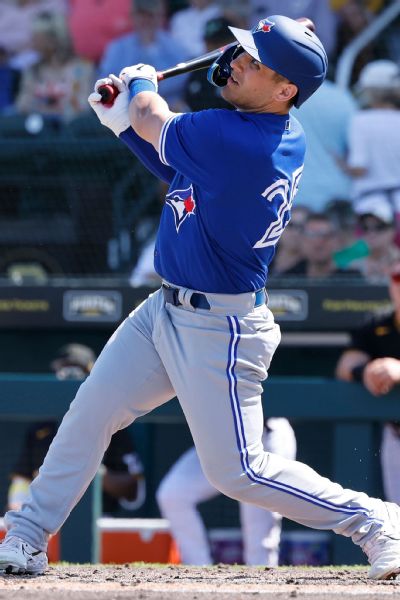
OF | Toronto Blue Jays
Varsho’s days behind the plate are probably over. He’s just too good of an outfielder. He contributed a major league-best 18 outs above average last year for the D-backs, who dealt him to the Blue Jays because they simply had too many young, promising, left-handed-hitting outfielders. The 26-year-old also contributed some with the bat, adding 27 home runs and 16 stolen bases to finish with a 4.6 fWAR. The Blue Jays, though, need him mostly to cover ground in their outfield. They’re hoping the steps they took on the run-prevention side — adding Varsho, Kevin Kiermaier, Chris Bassitt and Erik Swanson — will be enough to take the AL East.
Season prediction: Varsho will once again be basically a league-average hitter, but he’ll steal at least 20 bases, play Gold Glove-caliber defense and be worth somewhere in the neighborhood of 5.0 WAR. The Blue Jays will gladly take it. — Gonzalez
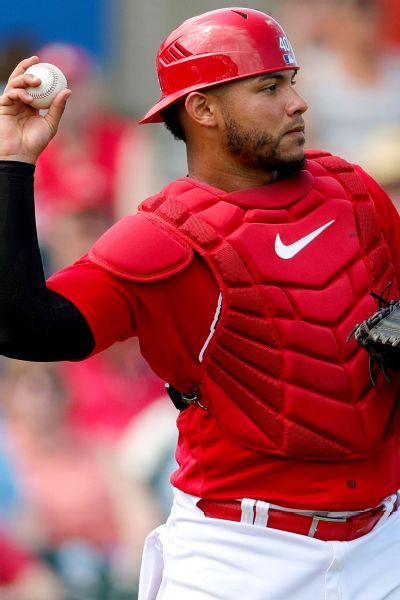
C | St. Louis Cardinals
The project of Contreras stepping into the proverbial shoes of retired Redbirds legend Yadier Molina has many levels. He’s replacing the best catcher in franchise history. He’s replacing a nine-time Gold Glover. He’s replacing one of St. Louis’ most beloved athletes and the leader of the clubhouse. And, in Contreras’ new partnership with Adam Wainwright, he’s taking Molina’s place in baseball’s most prolific battery. On top of all that, Contreras has to live up to a five-year, $87.5 million contract in an intense baseball city. It’s a lot. But if any player has the make-up to fill all of those shoes, it’s the hyper-competitive Contreras. It won’t take long for Cardinals fans to realize they now have their best everyday offensive catcher since Ted Simmons.
Season prediction: From a numbers standpoint, it is all but certain that Contreras will be a sizable offensive upgrade from Molina because of his combination of power and patience. But initially, the focus will be on Contreras’ defense and ability to work with the St. Louis pitching staff. Don’t expect him to fail. — Doolittle
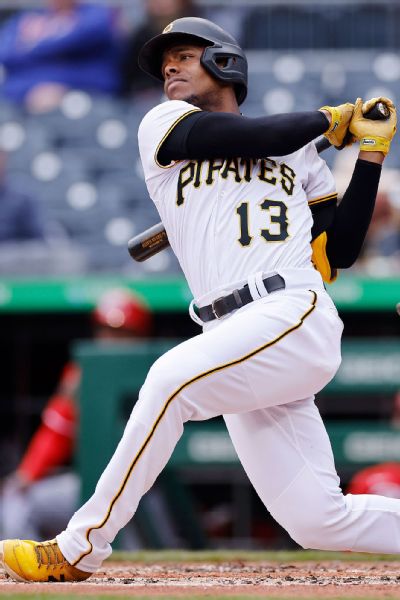
3B | Pittsburgh Pirates
Hayes represents the hope that Pirates fans have for the future of the ballclub. The 26-year-old third baseman put together a strong season in 2022, posting a 4.3 bWAR while hitting .244/.314/.345 with seven homers and 20 stolen bases in 136 games. He added muscle to his frame this offseason in hopes of improving his power numbers. While Hayes certainly has room for improvement offensively, he’s already among the league’s best defensively at the hot corner, routinely making highlight reel plays.
Season prediction: Hayes takes a big step forward, developing his power stroke while continuing to improve the strides he’s made as a base stealer in the major leagues. He represents a potential franchise cornerstone if he can keep improving in the manner he has over the last few seasons. This could be the year he goes from one of the game’s most overlooked players to a top-tier star. — Lee
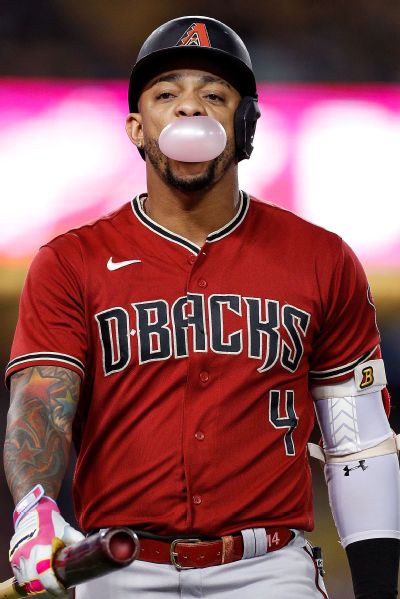
2B | Arizona Diamondbacks
One more season like 2022 and Marte will find himself outside the top 100. His OBP dipped to .321 last year (his lowest since 2016), he struck out over 100 times for the first time in his career and his defense declined. A hamstring injury may have contributed to his struggles, but he was scuffling before he got hurt. The Diamondbacks are counting on Marte to lead their team to postseason contention, and while some of his underlying numbers are worrisome, he remains a candidate for a rebound season.
Season prediction: Marte improves on some of his offensive numbers but remains a high strikeout player. He’ll whiff over 100 times for the second consecutive season and second time in his career. — Rogers
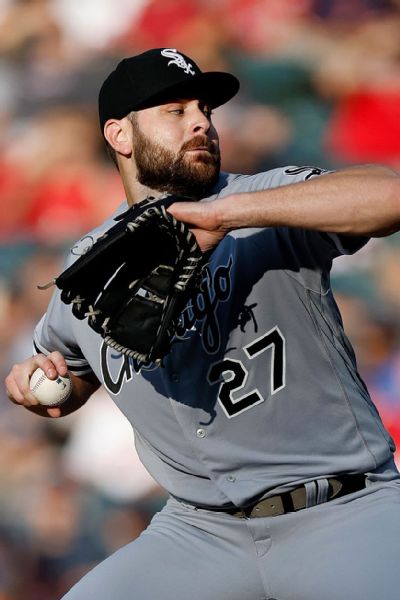
After getting down-ballot Cy Young votes each season from 2019 to 2021, Giolito thought it was a good idea to add more mass. The 6-foot-6 right-hander weighed a hulking 280 pounds in 2022, but it didn’t lead to better results as he went 11-9 with a 4.90 ERA. He’s back to his old weight, dropping 35 pounds, but it was a decline in fastball velocity that was perhaps what hurt him most last year. His four-seamer averaged 94.2 mph in 2019, but it has steadily dropped since then and was down to 92.6 in 2022. In 2019, batters hit .203 and slugged .364 against it; in 2022, they hit .283 and slugged .449. He’s going to have to regain some fastball mojo to stay in the top 100.
Season prediction: That fastball velocity is trending in the wrong direction. He wasn’t as bad as that 4.90 ERA indicates, and he should be better in 2023, but I wouldn’t put him at the top of my Cy Young contenders. — Schoenfield
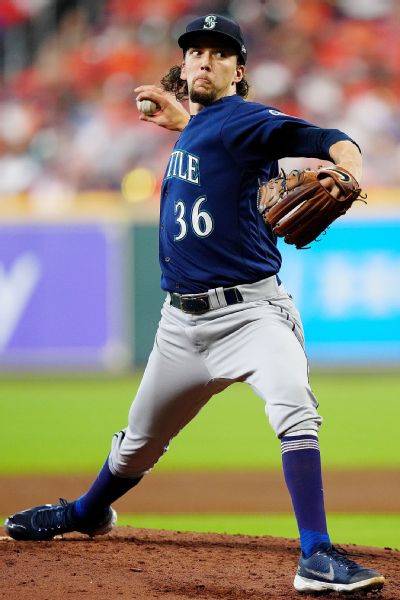
SP | Seattle Mariners
Gilbert made some encouraging strides in his second season as a major league starting pitcher, lowering his ERA from 4.68 to 3.20 and accumulating 185⅔ innings. But his exit data — 91 mph average exit velocity, 45.6% hard-hit rate — offered up some troubling signs. Gilbert rose through the ranks largely off his fastball command; however, it’s the development of his slider that is going to elevate him. A curveball with more depth has been incorporated to offer another variation from the two pitches.
Season prediction: Expect another step forward for Gilbert in his age-26 season, but also some ups and downs. His exit data has been consistently subpar the last two years, with hitters slugging both his fastball and his slider. Those offerings need to improve. — Gonzalez
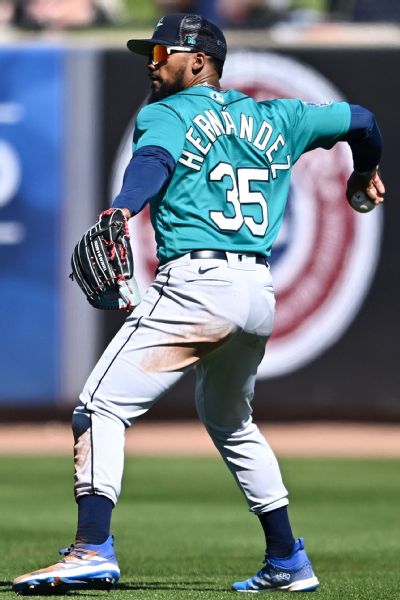
RF | Seattle Mariners
Calling an established big league player “toolsy” can almost be looked at as a pejorative, but the label works for Hernandez because he’s paired his strengths in tools with enough skill to build up a solid track record of production. He ranks in the top five percentile in exit velocity and hard-hit percentage, per StatCast, and also ranks high in barrel rate, sprint speed and arm strength. There are holes in his game, to be sure. He chases too much and has a high swing-and-miss rate. His metrics as a defender lag behind his tools. But over the last five seasons, he’s averaged 34 homers, 97 RBIs and 89 runs per 162 games with a 121 OPS+. After moving from Toronto to Seattle via trade over the winter, he’ll now try to help the Mariners get over the hump in their pursuit of their first AL pennant.
Season prediction: There will be a lot on Hernandez’s shoulders in 2022. Not only will he be hitting cleanup for a new team, the coming season will be the platform campaign before his first foray into free agency. He’s already 30, which is not a great age for a first-time free agent, so he, and the Mariners, have a lot riding on a big season. A forecast: He’ll get it. — Doolittle
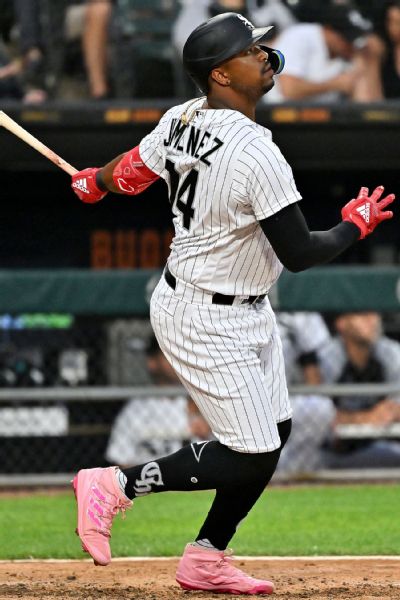
OF/DH | Chicago White Sox
The former top prospect came into spring training on a mission, after having lost 25 to 30 pounds this offseason. Jimenez changed his diet, giving up red meat while eating more chicken and salmon in an effort to replicate the body that helped him emerge as one of the game’s most promising young players in the minor leagues. The White Sox outfielder is still just 26 years old, although he has yet to show the superstar production many expected out of him as one of the game’s best young prospects, struggling with injuries in 2021 and 2022. When he was on the field in 2022, Jimenez looked solid, hitting .295/.358/.500 with 16 homers in 84 games.
Season prediction: Jimenez takes a step forward after an offseason of hard work. Health will be the biggest x-factor, but his success is one of the focal points of Chicago’s progress in 2023, with a clubhouse of young players struggling to fulfill their true potential. — Lee
College football’s championship weekend delivered a mix of compelling drama and blowouts.
In Atlanta, Georgia dominated Alabama and won the SEC for a second year in a row. The Bulldogs held the Tide to 209 total yards and locked up a first-round bye. UGA, the No. 3 seed, will play the winner of the matchup of No. 6 Ole Miss vs. No. 11 Tulane in the Allstate Sugar Bowl.
It was a similar story in the Big 12 where Texas Tech broke open the game with BYU in the second half. The Red Raiders forced four turnovers in the 34-7 win. Texas Tech is the No. 4 seed and will face either No. 5 Oregon or No. 12 James Madison in the Capital One Orange Bowl.
The real drama was reserved for the Big Ten and ACC championships. Indiana won its first conference title since 1967 and took down No. 1 Ohio State. The Hoosiers will be the No. 1 seed while the Buckeyes fell just one spot to No. 2 The undefeated Hoosiers will have their first playoff game at the Rose Bowl presented by Prudential against the winner of the No. 8 Oklahoma-No. 9 Alabama matchup. Ohio State faces the winner of No. 10 Miami vs. No. 7 Texas A&M in the Goodyear Cotton Bowl.
Duke‘s upset of Virginia in the ACC title game opened the door for two Group of 5 teams — Tulane (which won the American) and James Madison (Sun Belt winner).
After months of rankings, seedings and countless debates, we have a 12-team bracket that brings about plenty of enticing questions and intriguing possibilities.
Can Oregon, Indiana, Texas A&M or Texas Tech bring home its first national title? Can Ohio State repeat? Will a Group of 5 team get its first-ever CFP win?
Here are our full picks for the 12-team College Football Playoff.

Andrea Adelson
First round
Oregon 55, JMU 13
Bama 20, Oklahoma 17
Ole Miss 35, Tulane 14
Miami 27, Texas A&M 24
Quarterfinals
Oregon 35, Texas Tech 30
Indiana 30, Alabama 20
Georgia 40, Ole Miss 24
Ohio State 24, Miami 21
Semifinals
Ohio State 27, Georgia 24
Indiana 35, Oregon 31
National title game
Ohio State 21, Indiana 20
Kyle Bonagura
First round
Oregon 49, James Madison 24
Texas A&M 31, Miami 24
Ole Miss 38, Tulane 24
Alabama 31, Oklahoma 28
Quarterfinals
Texas Tech 28, Oregon 27
Georgia 35, Ole Miss 21
Ohio State 24, Texas A&M 14
Indiana 35, Alabama 27
Semifinals
Ohio State 24, Georgia 17
Indiana 28, Texas Tech 24
National title game
Indiana 17, Ohio State 10
Bill Connelly
First round
Oregon 41, James Madison 24
Oklahoma 27, Alabama 17
Ole Miss 35, Tulane 20
Texas A&M 31, Miami 28
Quarterfinals
Texas Tech 38, Oregon 34
Indiana 30, Oklahoma 7
Georgia 27, Ole Miss 23
Ohio State 24, Texas A&M 13
Semifinals
Texas Tech 27, Indiana 23
Georgia 17, Ohio State 16
National title game
Texas Tech 28, Georgia 20
David Hale
First round
Oregon 35, JMU 13
Ole Miss 48, Tulane 24
Alabama 17, Oklahoma 10
Miami 27, Texas A&M 21
Quarterfinals
Texas Tech 24, Oregon 21
Indiana 20, Alabama 10
Georgia 30, Ole Miss 21
Ohio State 34, Miami 24
Semifinals
Indiana 30, Texas Tech 28
Georgia 27, Ohio State 24
National title game
Georgia 24, Indiana 20
Eli Lederman
First round
Oregon 38, James Madison 10
Ole Miss 31, Tulane 20
Alabama 21, Oklahoma 10
Texas A&M 38, Miami 31
Quarterfinals
Oregon 24, Texas Tech 17
Indiana 23, Alabama 10
Georgia 41, Ole Miss 30
Ohio State 30, Texas A&M 17
Semifinals
Indiana 20, Oregon 17
Georgia 27, Ohio State 20
National title game
Georgia 31, Indiana 17
Max Olson
First round
Oregon 34, James Madison 17
Alabama 13, Oklahoma 10
Ole Miss 38, Tulane 14
Texas A&M 27, Miami 24
Quarterfinals
Texas Tech 27, Oregon 20
Indiana 24, Alabama 17
Georgia 41, Ole Miss 31
Ohio State 27, Texas A&M 17
Semifinals
Indiana 17, Texas Tech 16
Georgia 35, Ohio State 31
National title game
Georgia 31, Indiana 20
Adam Rittenberg
First round
Oregon 38, James Madison 13
Ole Miss 34, Tulane 16
Alabama 20, Oklahoma 17
Miami 31, Texas A&M 28
Quarterfinals
Texas Tech 23, Oregon 20
Indiana 24, Alabama 16
Georgia 31, Ole Miss 21
Ohio State 27, Miami 20
Semifinals
Indiana 20, Texas Tech 17
Ohio State 19, Georgia 16
National title game
Ohio State 24, Indiana 20
Mark Schlabach
First round
Oregon 51, JMU 17
Alabama 17, Oklahoma 14
Ole Miss 42, Tulane 20
Miami 28, Texas A&M 20
Quarterfinals
Texas Tech 35, Oregon 31
Indiana 31, Alabama 14
Georgia 35, Ole Miss 28
Ohio State 24, Miami 17
Semifinals
Ohio State 27, Georgia 24
Indiana 42, Texas Tech 38
National title game
Indiana 24, Ohio State 20
Jake Trotter
First round
Oregon 38, James Madison 10
Oklahoma 17, Alabama 16
Ole Miss 30, Tulane 14
Miami 27, Texas A&M 23
Quarterfinals
Texas Tech 25, Oregon 17
Indiana 24, Oklahoma 13
Georgia 35, Ole Miss 14
Ohio State 21, Miami 13
Semifinals
Indiana 19, Texas Tech 17
Ohio State 16, Georgia 14
National title game
Ohio State 21, Indiana 20
Paolo Uggetti
First round
Oklahoma 21, Alabama 17
Oregon 38, JMU 14
Miami 27, Texas A&M 24
Ole Miss 31, Tulane 21
Quarterfinals
Indiana 34, Oklahoma 20
Oregon 24, Texas Tech 21
Georgia 21, Ole Miss 17
Ohio State 27, Miami 20
Semifinals
Indiana 23, Oregon 20
Georgia 24, Ohio State 17
National title game
Indiana 21, Georgia 17
Dave Wilson
First round
Oregon 44, James Madison 13
Texas A&M 27, Miami 17
Ole Miss 31, Tulane 24
Oklahoma 23, Alabama 17
Quarterfinals
Texas Tech 24, Oregon 20
Georgia 44, Ole Miss 17
Ohio State 21, Texas A&M 20
Indiana 24, Oklahoma 10
Semifinals
Georgia 27, Ohio State 17
Indiana 24, Texas Tech 17
National title game
Georgia, 17, Indiana 14

-
Bill Connelly
Championship Week came and went with one last burst of uncertainty. The politicking is mercifully over. The bracket is set for the second 12-team College Football Playoff, and it is an incredible mix of stalwarts and new blood.
Five teams from last year’s field return. Four of the five teams with the most CFP appearances — Alabama (ninth appearance), Ohio State (seventh), Georgia (fifth), Oklahoma (fifth) — are here, too.
But the No. 1 seed is an Indiana team that just won its first Big Ten title in 58 years and had, until earlier this year, lost more games than any other program in the history of college football. No. 4 seed Texas Tech has never finished in the top 10 and just won its first outright conference title since 1955 (when it was in the Border Conference). No. 6 seed Ole Miss has its best record in 63 years, and No. 7 Texas A&M has its best record in 34 years.
Miami, potentially looking at its first top-10 season in 22 years, eked out a bid. Tulane is here! The Green Wave are on their best run since the 1930s! James Madison is here, too! The Dukes were in FCS four years ago!
New blood, bluebloods, great offenses, great defenses. The stakes are set. Let’s talk about why each playoff team will — or won’t — win the national title.
All times Eastern.

Title odds, per SP+: 23.5% (No. 2 favorite)
Quarterfinal opponent: vs. Oklahoma-Alabama winner (first-round bye)
Why they will win it all: No known weakness. Are you a “defense wins championships” person? Indiana ranks second in defensive SP+, third in points allowed per drive and sixth in success rate* allowed. The Hoosiers just held Ohio State to its lowest point total in 18 games. Do you like defensive disruption? They’re second in stuff rate (run stops at or behind the line) and seventh in sack rate.
(* Success rate: How frequently an offense is gaining 50% of necessary yardage on first down, 70% on second and 100% on third or fourth.)
Need to know that your title pick has a QB it can count on in big moments? Fernando Mendoza is third in Total QBR and is, if betting odds are to be believed (and they usually are), the Heisman favorite by a large margin. And in Elijah Sarratt and Omar Cooper Jr., he has maybe the most elite receiving duo in the country outside of Columbus. Does it help to know what a team can ground-and-pound when necessary, or stop its opponent from doing the same? IU’s offense ranks fourth in rushing success rate and 17th in yards per carry (not including sacks); its defense ranks fourth and 12th, respectively, in the same categories.
Third downs are important — what about those? Indiana is first nationally in third-down conversion rate (55.8%) and second on third-down conversion rate allowed (28.1%).
Have they come through away from home? Yeah, I’d say winning at Iowa City and Eugene probably qualifies.
There’s a reason why Indiana is the last unbeaten team standing. This team has aced every test it has been given in 2025.
Why they won’t: Random big-play issues. When you allow just 4.6 yards per play and 0.9 points per drive, you don’t have a serious issue with big plays. But a few teams did still have some success creating chunk plays.
Old Dominion scored on touchdown runs of 78 and 75 yards. Illinois hit on a 59-yard TD pass. Penn State had a 59-yard run and 43-yard pass. Kennesaw State had three completions of 30-plus yards. Hell, 98 of Ohio State’s 322 yards came on two completions (though one was a fruitless end-of-game Hail Mary), as did 93 of Maryland’s 293 yards. Even if it’s not a season-long issue, there are plenty of ultra-explosive offenses in this playoff field, and a couple of glitches could become extremely costly.

Title odds, per SP+: 28.6% (No. 1 favorite)
Quarterfinal opponent: vs. Texas A&M-Miami (first-round bye)
Why they will win it all: They’re Ohio State. The Buckeyes are the defending champions, they have at least two of the five or so best players in the sport (receiver Jeremiah Smith, safety Caleb Downs), their quarterback (Julian Sayin) has the highest Total QBR of any playoff QB, their offense ranks fourth in points per drive (despite having played four games against top-20 defenses, per SP+), and their defense ranks first in defensive SP+ and second in points per drive and yards per play.
They have all the components you could ask for, and despite Saturday night’s loss to Indiana, they enter this year’s CFP with better form and fewer question marks. And hell, after 11 straight comfortable wins, even the loss might be beneficial from the standpoints of focus and motivation. This is the shortest “why they will win it” section in this entire piece, but it’s also the most definitive. We know how good they are.
Why they won’t: Cautious programming. Against the best defense he has faced in his footballing life, Sayin completed 21 of 29 passes for 258 yards, a touchdown and an interception. Granted, those numbers were boosted by the late Hail Mary completion, but he mostly kept the ball out of harm’s way, and in nearly his first genuinely high-consequence drive all season, he drove the Buckeyes 70 yards inside the Indiana 5 in the third quarter and 81 yards inside the 10 in the fourth.
Sayin came up just short on a fourth-down QB sneak on the former drive, however, which evidently prompted Ryan Day to go shockingly conservative on the latter. On fourth-and-1 from the 9, Day elected to attempt a game-tying field goal, one that, even had Jayden Fielding made it, would have given the Hoosiers ample time to drive down for a field goal of their own. Fielding missed it. Ball don’t lie.
Day and offensive coordinator Brian Hartline have played it safe with Sayin for most of the season, easing him in, dialing up mostly quick passes and programming him to throw the ball away if he doesn’t see what he wants. When you have a star-studded receiving corps and an incredible defense backing you up, that makes sense. But you might need to dial the risk factor up in big moments, and it sure felt like Ohio State failed in that regard Saturday night. Will they put their faith in Sayin when it matters the most? Will he back up the faith if they do?

Title odds, per SP+: 9.8% (No. 4 favorite)
Quarterfinal opponent: vs. Ole Miss-Tulane winner (first-round bye)
Why they will win it all: They’re mean again. Georgia was maddening to watch early this season. Kirby Smart’s Bulldogs almost seemed to come out without a game plan, playing things as vanilla as possible, taking some shots from the opponent — and frequently falling behind into the second half — before rallying. It worked, aside from a loss to Alabama, but it made for some underwhelming performances (and undue stress for fans).
Over the past four games, however, the defense has locked in, allowing a paltry 7.3 points per game, 4.3 yards per play and 2.6 yards per carry, not including sacks. The Dawgs have forced three-and-outs 41% of the time in this span (10th nationally), and they’ve allowed touchdowns on just 17% of red zone trips (second).
In Saturday’s SEC championship game, a 28-7 win over Alabama, the Dawgs painted their masterpiece. They allowed just 209 total yards (3.8 per play), including just 20 non-sack rushing yards. On Bama’s first eight possessions, the Tide punted seven times, turned the ball over once and finished just one drive in Georgia territory. They finally moved the ball late but never got closer than 14 points.
After some listless play early on, Georgia is defending as well as it has since the 2022 season, its last national title year.
Why they won’t: A lack of big plays. Despite having faced a schedule featuring five top-20 defenses (per SP+), Georgia’s overall offensive numbers have been solid. It is 14th in offensive SP+, 23rd in points per drive and 22nd in success rate. The run game probably hasn’t helped as much as Smart would prefer, but short, quick passing has bridged the efficiency gap, and the Dawgs have scored at least 28 points nine times. That’s more than enough with the way the defense is playing.
While efficiency levels have been solid, Georgia struggles to create chunk plays. The Dawgs rank 130th in yards per successful play; quarterback Gunner Stockton averages just 10.7 yards per completion, and that sinks to 9.5 per completion against top-20 defenses. He almost never puts the ball in harm’s way, but safety comes with a price, and UGA is not built to move the ball quickly and aggressively if (or when) the need arises.

Title odds, per SP+: 20.9% (No. 3 favorite)
Quarterfinal opponent: vs. Oregon-James Madison winner (first-round bye)
Why they will win it all: They have the best front six in the country. Jacob Rodriguez is the best linebacker in the nation. Fellow linebacker Ben Roberts (two interceptions and a pass breakup) was the Big 12 championship game’s MVP. David Bailey is second in the nation in sacks and third in TFLs. Romello Height is 16th in sacks. And despite losing Skyler Gill-Howard to a midseason injury, tackles Lee Hunter and Anthony Holmes Jr. have prevented any semblance of a drop-off in the middle.
The secondary is good, too, but the front six has been transcendent in Lubbock. The Red Raiders rank third nationally in success rate allowed (31.3%), third in yards allowed per play (4.0) and first in yards allowed per carry, not including sacks (3.3). They’ve allowed more than two offensive touchdowns just once all year (to Kansas State in a game they still won by 23), and they’ve allowed less than 4.0 yards per play eight times in 13 games. Over the previous 15 seasons, Tech’s average defensive SP+ ranking was 83.0; thanks to first-year coordinator Shiel Wood and a transformational transfer class, the Red Raiders enter their first CFP ranked fourth. And since a 26-22 loss to Arizona State — suffered without starting quarterback Behren Morton — the offense has averaged 40.8 points per game. This band of pirates is playing utterly merciless ball at the moment.
Why they won’t: Red zone offense. Tech’s offensive numbers have been good, especially considering Morton was in and out of the lineup in the first two months. The Red Raiders are 15th in points per drive, and they can lean heavily into whatever opponents can’t stop. Cameron Dickey and J’Koby Williams grind out 145 rushing yards per game (5.5 per carry), and four receivers — all 6-foot-2 or taller — have caught between 46 and 55 passes.
They’ve scored TDs on just 56% of red zone trips, however, which is 101st in the nation. Against three top-20 defenses (Utah, plus BYU twice), the Red Raiders turned 14 trips into just five TDs (36%). By settling for field goal attempts, they let BYU hang around into the second half of both their meetings despite total defensive domination, and the level of competition will only rise from here.

Title odds, per SP+: 6.8% (No. 5 favorite)
First-round opponent: vs. No. 12 James Madison (Dec. 20, 7:30 p.m., TNT)
Why they will win it all: Big plays and three-and-outs. Oregon has gained at least 20 yards on 10.4% of its snaps this season, the most in the country. The Ducks have also allowed gains of at least 20 yards on 3.3% of their snaps, the least in the country. They have gone three-and-out just 15.3% of the time (fourth) while forcing three-and-outs 42% of the time (fifth). It is, to say the least, difficult to beat a team that is pummeling you in both the efficiency and explosiveness departments.
Flexibility is the name of the game for Dan Lanning’s Ducks in 2025. For the third straight season, with a third different starting quarterback, they have played beautifully efficient offense: They rank fifth nationally in offensive success rate (they were seventh in 2024 and first in 2023). They’re also in the overall SP+ top four for the third straight year. This year, however, the defense has caught up to the offense. They’re fifth in defensive SP+, their highest ranking since 1958, and while they’ve topped 34 points seven times, they’ve also won Big Ten rock fights with scores of 18-16 and 21-7. You need to have a lot of arrows in the proverbial quiver to work through the CFP, and while Oregon has been really good for a while, it feels like the Ducks have more arrows than ever.
Why they won’t: More disruption needed. As effective as the defense has been, the Ducks haven’t been great at forcing the issue. They rank 98th in stuff rate and 47th in sack rate. They force a lot of passing downs — which I define as second-and-8 or more and third- or fourth-and-5 or more — but they rank 47th in passing-down success rate allowed, and if you can work the ball into the red zone, you’re probably scoring seven points: Oregon’s 75.0% red zone TD rate allowed ranks 129th.
Against defenses without disruption, good offenses are consistent enough to thrive. Against the two top-15 offenses they’ve faced (Indiana and USC), the Ducks allowed 28.5 points per game and 5.1 yards per play — not terrible averages, but not dominant either.

Title odds, per SP+: 4.6% (No. 6 favorite)
First-round opponent: vs. No. 11 Tulane (Dec. 20, 3:30 p.m., TNT)
Why they will win it all: Vengeance (and great passing). Now that the weeks of innuendo and will-he-or-won’t-he questions are over, Ole Miss will head into its first CFP without Lane Kiffin but with most of the rest of the coaching staff. And while the Rebels aren’t the title favorites by any means, they’re capable of beating any team they play, especially if Kiffin’s departure produces a useful chip-on-the-shoulder effect.
The Rebels’ defense regressed from last year’s level, but it defends the pass well and has allowed more than 26 points only twice. When you almost never score fewer than 26 points (also twice all year), that puts you in a pretty good place. Ole Miss hogs the ball and wears opponents down with a solid but unspectacular run game (74th in yards per carry, not including sacks), and when it’s time for Trinidad Chambliss to pass, he often does something great. Chambliss is fifth in Total QBR, the Rebs are sixth in passing success rate and eighth in yards per dropback, and 23.1% of their completions have gained at least 20 yards (fourth). He rarely faces pressure — often because of good downs and distances — and is able to keep his eyes downfield quite a bit. Kewan Lacy and the run game are persistent, but the pass is why the Rebels are here.
Why they won’t: Run defense. The pass defense may be sound, but Ole Miss has been gashed on the ground at times. Not including sacks, the Rebels allow 5.0 yards per carry (83rd). Five opponents produced at least a 47% rushing success rate against them, including the only team to beat them (Georgia) and three that nearly pulled upsets (Kentucky, Washington State and Arkansas). Tackles Will Echoles and Zxavian Harris can both create negative plays, and not every CFP team has a great run game, but enough do for this to become a serious problem.
(One other thing to track, whether it’s a fatal flaw or not: How does new coach Pete Golding handle fourth-down decision-making? Kiffin has been famously aggressive on fourth downs through the years, and Ole Miss has scored 79 points after fourth-down conversions this season while allowing only three points after turnovers on downs. That’s some serious profit, and it could cost the Rebels if Golding chooses to be more conservative.)

Title odds, per SP+: 2.2% (No. 7 favorite)
First-round opponent: vs. No. 10 Miami (Dec. 20, noon, ABC)
Why they will win it all: Leverage. On offense, A&M brilliantly applies both horizontal and vertical leverage in the passing game, using speedsters KC Concepcion and Mario Craver to stretch defenses wide and deep threat Ashton Bethel-Roman and tight ends Theo Melin Öhrström and Nate Boerkircher to stretch them vertically. Once defenses are properly stressed, run lanes begin to open up for running back Rueben Owens II. At his best, quarterback Marcel Reed fires the ball quickly to all these different weapons and provides a solid run threat as well. The Aggies have topped 40 points seven times.
On defense, A&M leverages opponents into passing downs and tees off. Led by Cashius Howell (11.5 sacks), the Aggies rank first nationally in sack rate, and they are nearly impossible to beat on third downs: 73% of opponents’ third downs have required at least 7 yards (first), and A&M has allowed conversions on only 22% (also first). They also force three-and-outs 41% of the time (seventh). Attack, attack, attack.
Why they won’t: They may have peaked early. Following their 38-17 win at Missouri in Week 11, the Aggies proceeded to underachieve against SP+ projections by 20.9 points per game in their final three. Part of that average comes from showing mercy to an outmanned Samford, but they needed a huge second-half comeback to beat 4-8 South Carolina, and they got knocked out in the second half at Texas.
The Aggies’ run game isn’t contributing as much, and Reed is facing more pressure (35.6% pressure rate over the past three games), taking more sacks and throwing more interceptions — two each against South Carolina and Texas. And while their third-down conversion rate was 43.1% over their first nine games, it was 24.0% against the Gamecocks and Longhorns.
Defensively, glitches that have been problematic all season have become downright worrisome:
South Carolina had gains of 80 and 50 yards, and Texas had gains of 54, 48, 35 and 30. A&M now ranks 135th (out of 136) in yards allowed per successful play (14.4) and 127th in rushing yards allowed after contact (3.3). Defensive aggression risks big-play breakdowns, and things didn’t trend well in November. Maybe some rest will help?

Title odds, per SP+: 1.0% (No. 9 favorite)
First-round opponent: vs. No. 9 Alabama (Dec. 19, 8 p.m., ABC)
Why they will win it all: The coolest defense in the country. What if you could combine Texas A&M’s aggression with solid big-play prevention? You can! OU does just about every week. The Sooners rank second in success rate allowed (first against the run), third in stuff rate (run stops at or behind the line), third in sack rate and fourth in three-and-out rate, but they’re also allowing a much more palatable 12.7 yards per successful play (99th, but far ahead of A&M), and they’ve allowed 17 or fewer points eight times.
Linemen Taylor Wein and Gracen Halton have combined for 24 tackles for loss and 22 run stops, and their best lineman, R Mason Thomas, could be close to healthy by the time the playoff rolls around. Meanwhile, the secondary more than carries its weight: Corners Courtland Guillory and Eli Bowen have allowed just a 38% completion rate in coverage with two interceptions, 12 breakups and just two touchdowns allowed.
OU’s offense isn’t very good (we’ll get to that), but the Sooners know themselves as well as anyone in this field. The defense does most of the heavy lifting, and when the offense is given an opportunity, it takes advantage: The Sooners score TDs on 72% of red zone trips (16th). They’ve won in Knoxville and Tuscaloosa, and their reward for that is a first-ever playoff home game. Sooners fans cheered on the move to the SEC because they wanted bigger home games, and here comes the biggest one imaginable. And against an Alabama team the Sooners know they can beat.
Why they won’t: The Sooners can’t score. This seems pretty important. Even with excellent red zone execution, the Sooners rank 87th in success rate (111th rushing), 89th in points per drive and 95th in yards per play. Dreadful stuff.
Quarterback John Mateer‘s numbers were obviously impacted by his early-season hand injury (and how quickly he attempted to come back from it), but downfield passing has been an issue all season. He has completed 30% of passes 20 or more yards downfield, 104th among QBR-eligible QBs. The run game has been dreadful: The Sooners have averaged 3.3 yards per carry over the past three games. Playing well in the red zone is important, but they probably won’t create enough red zone chances to make a major run.

Title odds, per SP+: 0.7% (No. 10 favorite)
First-round opponent: at No. 8 Oklahoma (Dec. 19, 8 p.m., ABC)
Why they will win it all: They’re battle tested. In retrospect, we know Alabama basically clinched its playoff spot in October; in consecutive weeks, the Crimson Tide beat Georgia (24-21), Vanderbilt (30-14), Missouri (27-24) and Tennessee (37-20). They were great early against Georgia, in the middle against Mizzou and late against Vandy, and it looked like all the pieces had come together against the Vols. Ty Simpson was my Heisman points race leader into November, and even with a recent downturn, he has still produced great season stats: 3,268 passing yards, 64% completion rate, 26-to-5 TD-to-INT ratio. Their legs looked a little weary down the stretch, but we know they’re capable of producing form that can beat anyone.
Well, the offense looked weary down the stretch. The defense keeps improving. Against four top-15 offenses (per SP+), the Tide allowed just 20.8 points per game, and they gave up fewer yards per play with each contest — 6.7 against Georgia the first time, then 6.2 against Vandy, then 5.3 against Tennessee, then 4.4 against Georgia the second time. Edge rusher Yhonzae Pierre (11.5 TFLs, six sacks) is one of the SEC’s best playmakers, and safety Bray Hubbard (four interceptions, six breakups) punishes mistakes in the back. The offense won’t have to produce a ton for the Tide to win some playoff games.
Why they won’t: They last looked like a playoff team in Week 8. That’s kind of an issue, isn’t it? Thanks primarily to a fading offense, the Tide have underachieved against SP+ projections in four of their past six games, falling from sixth (after the Vandy game) to 13th in SP+ in the process. The run game has never kicked in — RB Jam Miller hasn’t been able to stay healthy (and hasn’t been great even when he’s available) — and carrying the weight of the offense seemed to wear Simpson down: His Total QBR was 82.7 through seven games, 74.5 over the next four and 54.0 over the past two.
Simpson averaged a ghastly 3.7 yards per dropback against Auburn and Georgia, and both his timing in the pocket and his timing with receivers has been terribly off. Maybe a week off will help, but we haven’t seen Bama’s best for a while — and we certainly didn’t see it the last time the Tide played OU.

Title odds, per SP+: 1.7% (No. 8 favorite)
First-round opponent: at No. 7 Texas A&M (Dec. 20, noon, ABC)
Why they will win it all: Football is an efficiency game. If you’re winning more plays than your opponent, you can win any game you play, and few win more plays than Mario Cristobal’s Hurricanes. They’re 10th in success rate (49.6%) and eighth in success rate allowed (34.5%); Indiana and Ohio State are the only other teams to rank in the top 10 in both categories.
Miami found balance this season. The Hurricanes were first in offensive SP+ in 2024 thanks to Cam Ward and the rest, but the Hurricanes were a dismal 52nd on defense, allowing 37.3 points per game in three losses and even giving up 30-plus in four wins. The offense predictably regressed after Ward’s departure, but Carson Beck, Malachi Toney & Co. are still 16th in offensive SP+, and the defense has carried a far heavier load thanks to a brilliant new coordinator (Corey Hetherman), a junior-year breakthrough from star lineman Rueben Bain Jr. and a number of transfer hits — linebacker Mohamed Toure is a dynamo in the middle, and a number of new DBs (safeties Jakobe Thomas and Zechariah Poyser, corners Keionte Scott and Xavier Lucas) have been stellar.
The Canes have so many more paths to victory now: The offense has scored 34 or more seven times, and the defense has allowed 12 or fewer seven times.
Why they won’t: Individual games are decided by big plays and turnovers (and close-and-late situations). In two losses, the Hurricanes had as many turnovers (six) as 20-yard gains. Beck threw six picks while averaging just 10.7 yards per completion. Turnover risk without any reward will doom you, efficiency or no efficiency.
Cristobal also has so much to prove in close games. Miami is 2-2 in one-score finishes this year, and a close win — in Week 1 against Notre Dame — got the Hurricanes into the playoff field. But Cristobal’s old, overly conservative tendencies backfired in both losses. Down three late against Louisville, the Canes played for a field goal instead of a touchdown; tied with 25 seconds (and a timeout) left against SMU, they kneeled the ball out and played for overtime. They lost both times. Winning four playoff games, including one in the first round against A&M (4-0 in one-score games), will require nailing late-game circumstances, and I wish we had more evidence that Miami is capable of that.

Title odds, per SP+: 0.02% (No. 12 favorite)
First-round opponent: at No. 6 Ole Miss (Dec. 20, 3:30 p.m., TNT)
Why they will win it all: Turnovers and TFLs. Tulane broke through with 12 wins and a Cotton Bowl victory in 2022, and the Green Wave have remained a Group of 5 contender ever since. After enjoying double-digit wins in just one season from 1935 to 2021, they’ve done it three times in the past four seasons.
Second-year coach Jon Sumrall didn’t like his team very much this October: After a tighter-than-necessary win over East Carolina, he told ESPN’s Harry Lyles, “We’re a really sloppy football team that finds ways to win games, and I’m going to lose my mind because we’re so immature.” They would get blown out by UTSA a couple of games later.
Since the start of November, however, the defense has surged. The Green Wave rank sixth in turnover rate (4.0%) and 18th in TFLs per game (7.0) in that span, and they’re allowing just 4.0 yards per carry, not including sacks (22nd). They force loads of passing downs and pounce on whatever mistakes the opposing quarterback makes, while Jake Retzlaff and the offense do lots of whatever the defense can’t stop. They forced five turnovers in Friday’s American championship game against North Texas, returning one for a touchdown, and against a UNT defense that is poor against the run, they simply rushed their way to a 34-21 win.
Why they won’t: You probably need to be elite at something. Tulane looks more like a power conference team than almost any in the Group of 5, and it beat both Northwestern and Duke in nonconference play. Sumrall teams will always problem-solve beautifully, even if they have to move to Plan B or Plan C. There’s a reason Sumrall has won three conference titles in four years as a head coach, and there’s a reason Florida hired him. But the Green Wave don’t have any elite traits this season, and when you have nothing you know you can lean on, sometimes not even Plan C will uncover an answer.
Tulane’s two losses this season were blowouts. Ole Miss (forgivable) and UTSA (less so) outscored them by a combined 93-36 and outgained them by a combined 355 yards. They can win a tight game against just about anyone, but if/when they lose in the CFP, it might not be close. And scaring Ole Miss in a first-round rematch will require a far better performance, especially from Retzlaff.

Title odds, per SP+: 0.2% (No. 11 favorite)
First-round opponent: No. 5 Oregon (Dec. 20, 7:30 p.m., TNT)
Why they will win it all: What, like it’s hard? JMU walked through the FBS door four years ago and immediately started acting like it owns the place. The Dukes are 40-10 in the FBS, and four of those losses came in 2024, as they were transitioning from Curt Cignetti to Bob Chesney. Once Chesney got his footing, so did the Dukes. They’re back in the SP+ top 25 for the second time in three seasons, and their only loss was at Louisville in September. They allowed the Cardinals just 264 total yards, and the game was tied in the fourth quarter until it turned on a fumble.
The Dukes look the part. JMU’s offense is top-30 in most key categories; it can play with high efficiency at times, and when it doesn’t, it bails itself out with big plays like Wayne Knight‘s 73-yard touchdown run Friday night in the Sun Belt championship game.
0:36
Wayne Knight bursts through for a 73-yard JMU TD
Wayne Knight breaks a few tackles on his way to a 73-yard rushing touchdown for James Madison.
The defense is simply dynamite. The Dukes rank first in success rate allowed (29%) and fourth in yards allowed per play (4.1). Colin Hitschler’s defense attacks nonstop, knowing that even if it gives up a big play or two, the flood of three-and-outs and turnovers will balance that out. Redshirt freshman Sahir West leads the team with 14 TFLs — he had 5.5 TFLs and three sacks against Troy on Friday — but eight different Dukes have at least five TFLs, and their trio of cornerbacks in Justin Eaglin, Elijah Culp and DJ Barksdale (slot) compares well to any in the CFP.
Why they won’t: You probably can’t rely on big plays in the CFP. Knight has nine rushes of at least 30 yards (more than 91 FBS teams) and quarterback Alonza Barnett III has added seven rushes of 20-plus yards while completing 17 passes of 30-plus. Chunk plays are fabulous bailouts, but it’s a lot harder to generate those against elite defenses. Against the two SP+ top-30 defenses the Dukes faced (Louisville and Washington State), they averaged just 19 points at 4.5 yards per play. Winning a CFP game (or games) will require dynamite defensive play, and while JMU could deliver that, there is minimal margin for error there. Can they hold Oregon to, say, 24 or fewer points?
-
 Sports2 years ago
Story injured on diving stop, exits Red Sox game
-
 Sports3 years ago
‘Storybook stuff’: Inside the night Bryce Harper sent the Phillies to the World Series
-
 Sports2 years ago
Game 1 of WS least-watched in recorded history
-
 Sports3 years ago
Button battles heat exhaustion in NASCAR debut
-
Sports4 years ago
Team Europe easily wins 4th straight Laver Cup
-
 Environment3 years ago
Japan and South Korea have a lot at stake in a free and open South China Sea
-
 Environment1 year ago
Here are the best electric bikes you can buy at every price level in October 2024
-
 Politics7 months ago
Veteran capital in crypto is shaping South Korea’s elections