An uncrewed SpaceX Dragon CRS-22 cargo ship launched on a Falcon 9 rocket from NASA’s Kennedy Space Center on June 3 and arrived at the International Space Station (ISS) two days later. It was carrying, among many other things, two new solar arrays that will power the ISS.
Jacksonville-headquartered Redwire Space is an aerospace manufacturer and space infrastructure technology company. Redwire is under contract with Boeing, NASA’s prime contractor for space station operations, to provide six International Space Station Roll-Out Solar Arrays (iROSA).
The Dragon delivered two out of six iROSA on this trip. They were rolled up and stored in a compact cylinder (pictured above). The other four solar arrays will arrive at the International Space Station by 2023.
Redwire is responsible for the design, analysis, manufacture, test, and delivery of iROSA. Each iROSA uses upgraded solar cells from Boeing’s Spectrolab and provides 28 kilowatts of power. The six arrays will together produce more than 120 kilowatts that will boost the station’s power generation by 20-30%. ROSA technology was successfully demonstrated on the ISS in June 2017. Here’s a good look at Redwire’s ISS solar array technology in this video:
ROSA’s patented design uses composite booms to serve as both the primary structural elements and the deployment actuator together with a modular photovoltaic blanket assembly that can be configured into various solar array architectures. Instead of using complex mechanisms and motors for deployment, ROSA uses stored energy from carbon fiber booms that are cut and rolled back against their natural shape for storage. At a designated point during the mission, the stored strain energy of the booms enforces the unrolling deployment actuation. When fully deployed, the now rigid booms provide the solar arrays’ structural stiffness and strength.
NASA astronaut Shane Kimbrough said [via Space.com]:
Looking forward to all the science and other goodies that it brought up along with our EVA solar arrays. It’s going to be a great few weeks as we get into Dragon and get things out.
Astronauts will install the two iROSA on spacewalks on June 16 and 20.
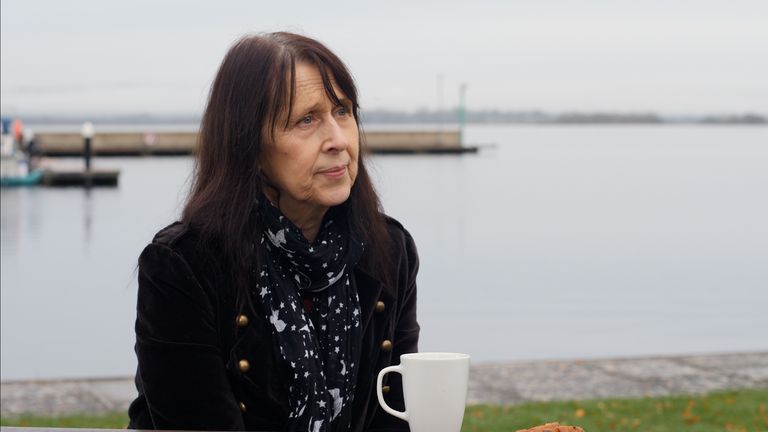
Siobhan MacGowan almost looks surprised as she remembers.
“It went very, very quickly. Even the first year went really quickly. Two years… you know,” she tails off.
The 24 months since her brother Shane died have flown by in one sense, but it’s clear that the family’s grief has barely subsided.
“It’s still very raw for me,” Siobhan says. “I can’t listen to Shane’s music, and I can’t watch him on video or listen to him speak.”
Image: Siobhan MacGowan
Legendary frontman of The Pogues, Shane MacGowan died on 30 November 2023 at the age of 65, following a long illness.
He passed away in the lead-up to Christmas, a time when his voice is heard on every radio station and in every pub – in the form of Fairytale Of New York.
Image: Shane and Siobhan on the Tipperary wilds
For his sister, the festive anthem – which he co-penned with the band’s banjoist Jem Finer – is now a visceral torment.
More on Ireland
Related Topics:
“You can be a genius, the way you can avoid it [the song]”, Siobhan says. “If it’s coming on, I just turn it straight off. If I’m in a supermarket, I just block it out, or I go into the loo, or I go outside, or I do something like that, but I have to block it.”
She can’t listen to Fairytale “at all”. “It’s just pain. Pain in my heart. It’s just so painful.”
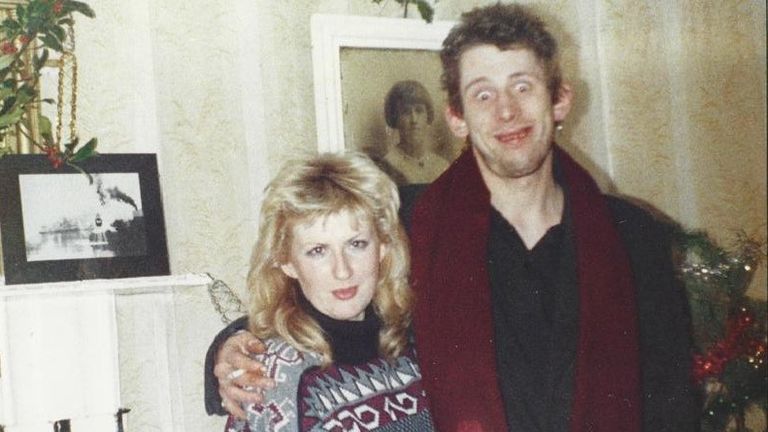
We look at a picture of Siobhan and Shane from Christmas Day 1987. Fairytale Of New York was number one in Ireland, but had been pipped by the Pet Shop Boys in the UK.
Image: Christmas in 1987. Family photo
“I remember him saying he wouldn’t have minded if it had been Michael Jackson that had beaten him,” Siobhan recalls. “But he couldn’t forgive the Pet Shop Boys. And it was a terrible cover of Always On My Mind! It was dreadful like, so he couldn’t forgive that.”
But Shane got over it? “No,” she bursts out laughing.
Image: Siobhan and Shane celebrating his 60th birthday , on Christmas Day, in Tipperary, Ireland
On a fresh, clear winter’s day, we are sitting by the banks of the Shannon in Dromineer, Co Tipperary. It’s one of the locations that inspired Shane’s song The Broad Majestic Shannon. Since the death of the singer, born in the UK to Irish parents, fans have made the pilgrimage to this part of Ireland, desperate to seek out the places that shaped his music.
Siobhan, along with Shane’s widow, Victoria Mary Clarke, has launched a self-guided walking tour called Unravelling Shane, in a bid to give some structure to those journeys.
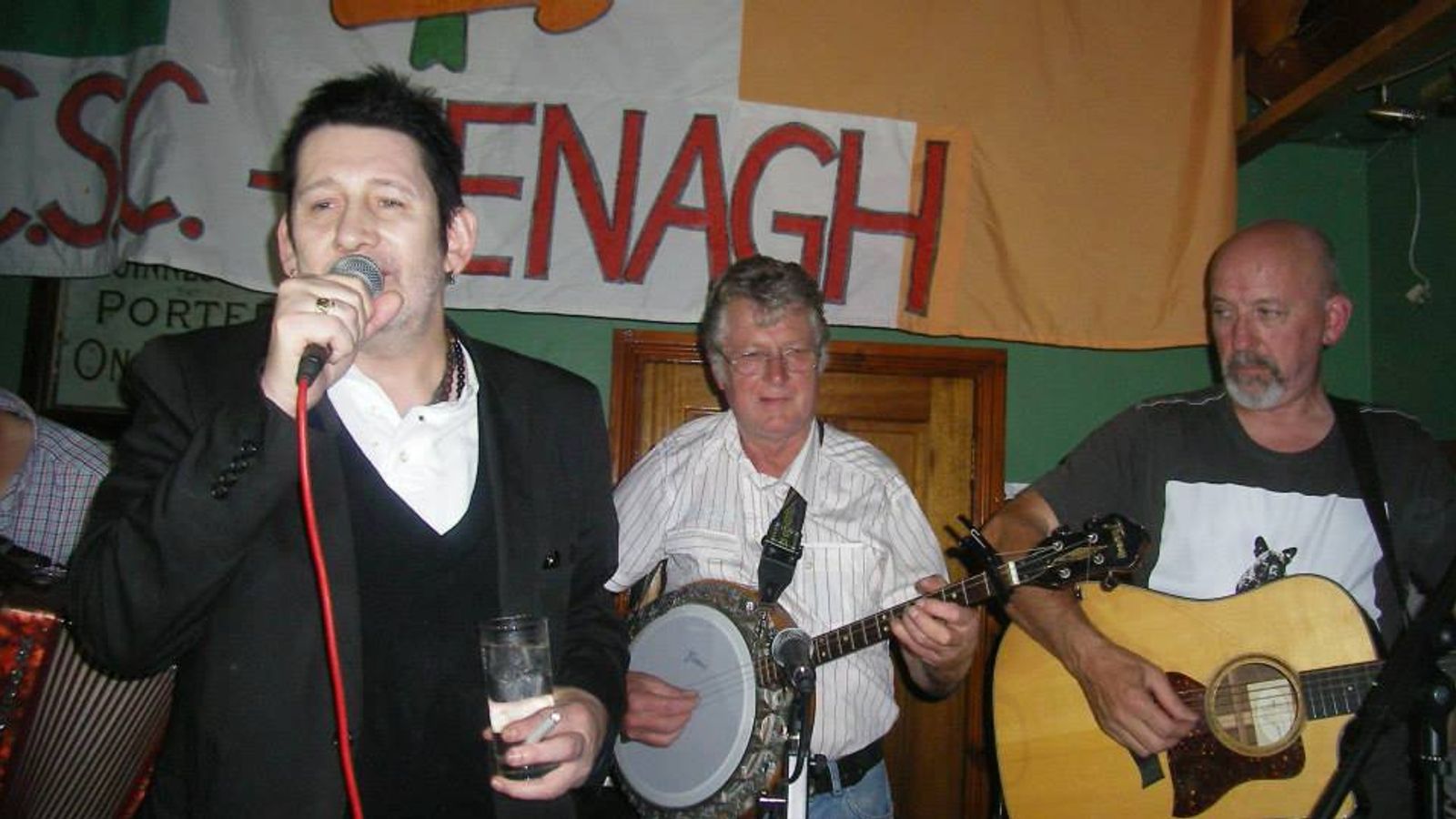
In the town of Nenagh, we visit some of the spots on the map, including Philly Ryan’s pub, Shane’s favourite watering hole. Philly is behind the bar, an ebullient force of nature, dressed like an undertaker. That’s because he is one. In time-honoured Irish fashion, he is both publican and funeral director.
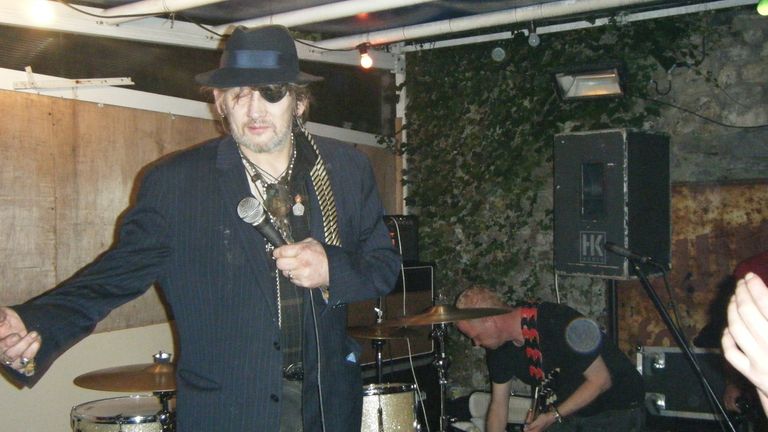
Image: Shane about to perform at Philly Ryan’s
In one role, he enjoyed many a raucous night with Shane MacGowan. In the other, he planned the funeral of his great friend. “Such a shock,” he says, recalling the phone call from Siobhan after her brother died.
Sitting among endless Shane and Pogues memorabilia, Philly reckons the late singer would enjoy the posthumous boost to Tipperary tourism.
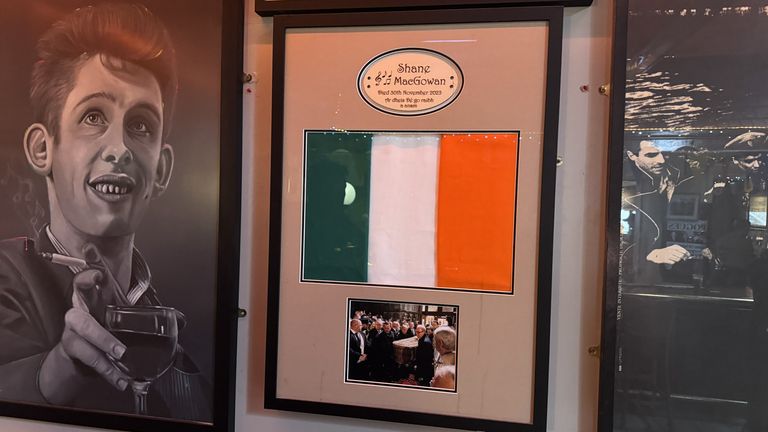
Image: The flag from Shane’s coffin framed in Philly Ryan’s pub in Nenagh, Co Tipperary, Ireland
“Shane loved Nenagh,” Philly says. “He’d have loved to get that attention onto Nenagh as a gift from Shane MacGowan to people of Nenagh. Nenagh was his town and he loved it dearly.”
Fans from all over the world wander into the pub now, looking for a tangible taste of Shane MacGowan’s legacy.
“We’ve had requests from places like Serbia, Italy, Germany, America, Japan,” says Carmel Ormond of the new walking tour. She’s a tourism officer with Destination Lough Derg.
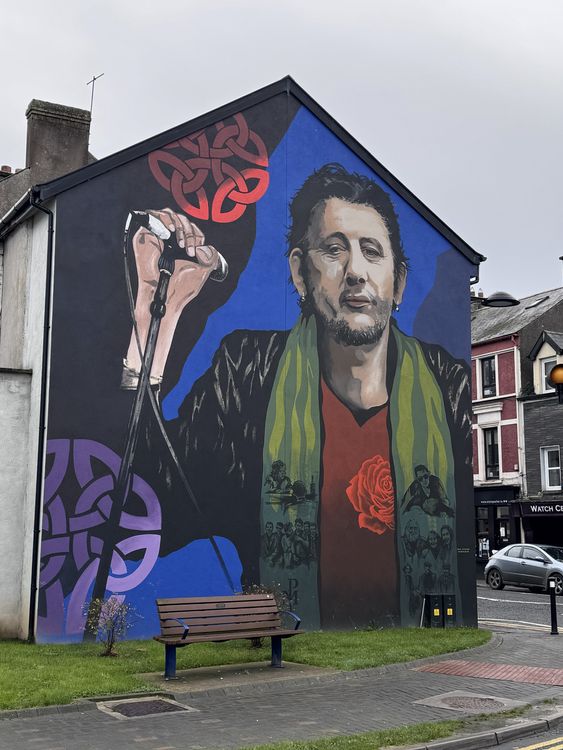
Image: Murals in the town of Nenagh, Co Tipperary
“It’s a huge amount of people interested from Japan, from Australia. We’ve requests from all over the world. We constantly meet people that are rambling around trying to find an area. It has become a huge tourist attraction.”
Another stop in Nenagh is the St Mary of the Rosary church, where Shane used to attend Sunday mass with his mother. Two years ago, it was the venue for his funeral. Attended by Johnny Depp and Nick Cave, it was streamed live around the world, as family members danced in the aisle to Fairytale Of New York.
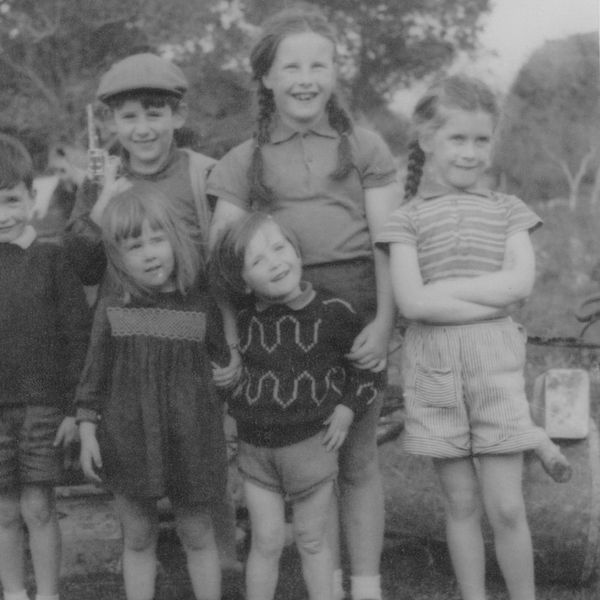
Image: Shane (wearing cap) and Siobhan (in front of him) on a farm in Tipperary, Ireland
“I danced with my husband and my heart was absolutely breaking,” Siobhan remembers. “I danced through it, and I did it for him. It was a dance of defiance against death. I thought, death is not going to stop this song.”
As his family continue to grapple with their loss this festive period, Shane MacGowan’s legacy is continuing to be shaped. Siobhan says his passing made her finally appreciate the full gifts of her sibling as an artist and a person.
“It was then I realised the huge volume of work and people’s reaction to him and his work that, to me, was extraordinary. Like I thought, wow, look at what you did. That’s what I said, look at what you did, you know.
“It only seems to be getting stronger. His legacy only seems to be getting stronger.”
Puppetry has enjoyed a renaissance in recent years.
With the ability to tell political and philosophical stories, fairy tales and musical adventures, all with equal flair, puppeteers bringing the inanimate to life on stage is back in vogue.
A staple of the festive season, the year-round resurgence has been invigorated by hit West End shows including War Horse, The Life Of Pi, The Lion King and My Neighbour Totoro, boosting a craft that has been traced back as far as the ancient Greeks.
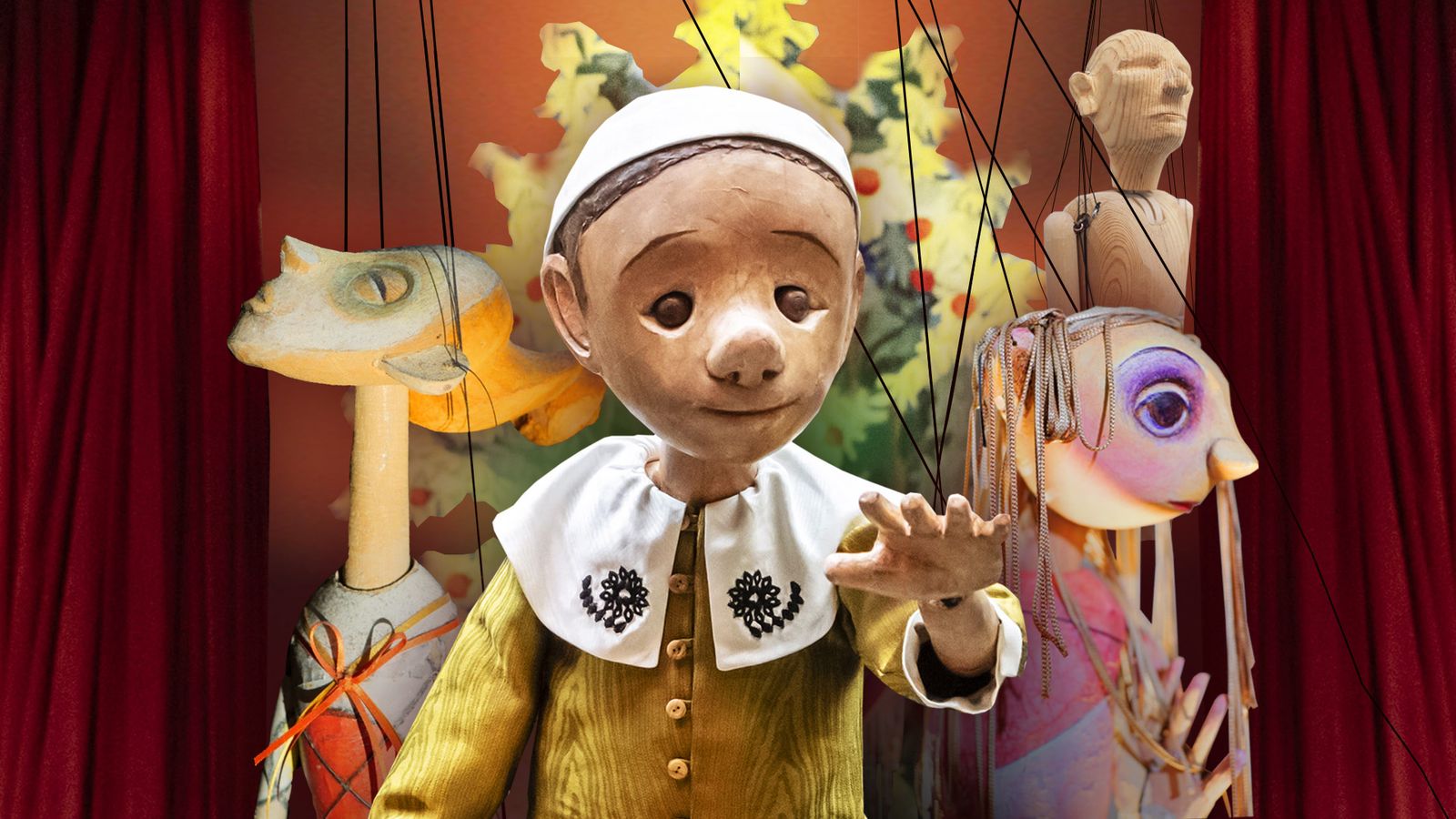
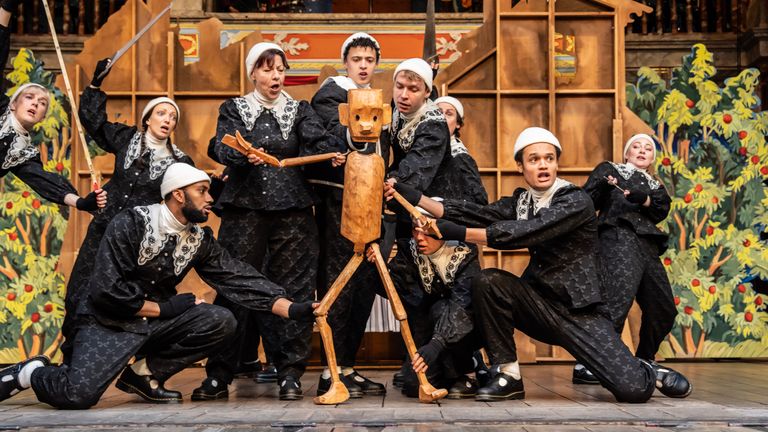
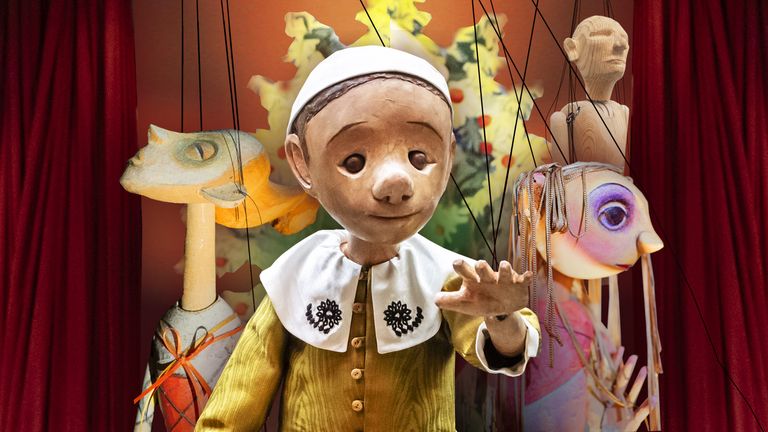
Image: Pinocchio is this year’s Christmas show at Shakespeare’s Globe. Pic: Johan Persson
This year, puppets are centre stage at Shakespeare’s Globe, with Pinocchio their leading man.
The tale of a wooden puppet who dreams of becoming a real boy, Globe associate director Sean Holmes tells Sky News: “It seemed to fit, a boy made of wood in a theatre made of wood.
“There’s something about the kind of challenge of that storytelling, the theatricality, the magic, the puppetry, that really drew us to it.”
The performers – made up of actors and puppeteers – spent 18 months workshopping the show ahead of opening night, perfecting the challenge of skilled puppetry, acting and singing all on an open-air stage. It’s no mean feat.
More on Theatre
Related Topics:
The show features a range of puppets, including rod, table-top, and large-scale creations that fill the stage and marionettes – small puppets with big impact.
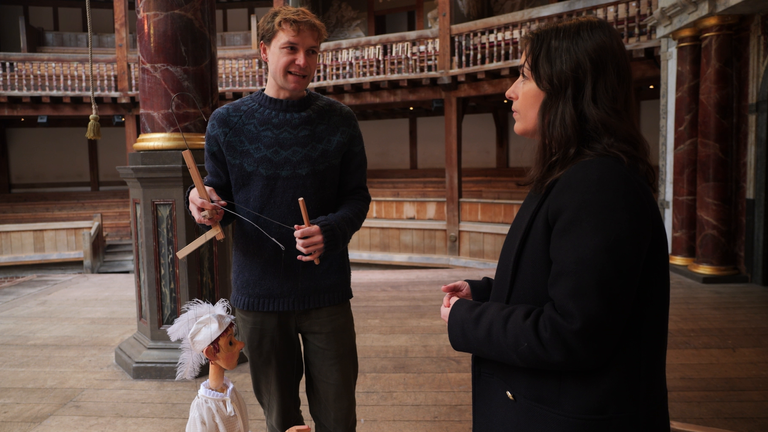
Image: Puppeteer Stan Middleton is a marionette specialist. Pic: Patrick Hutton
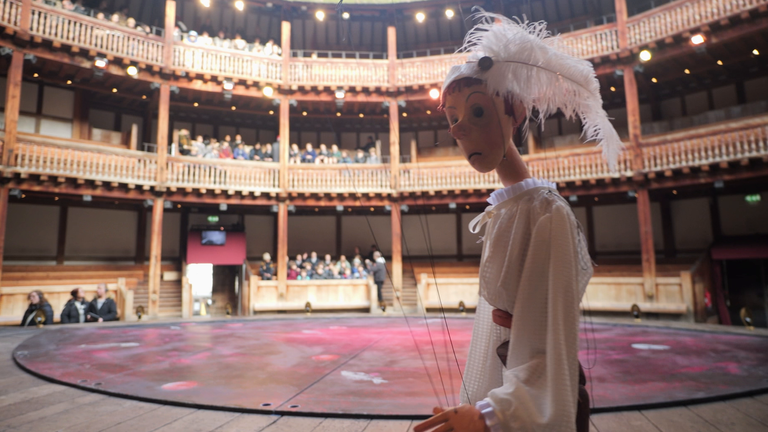
Image: Romeo the marionette on the Globe stage. Pic: Patrick Hutton
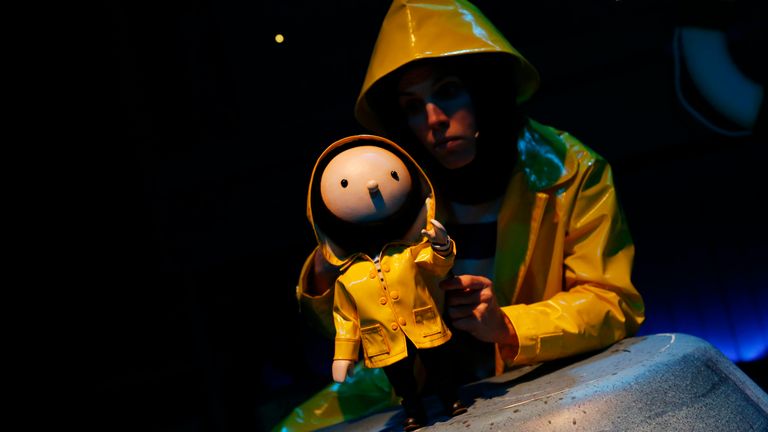
One of the show’s puppeteers, Stan Middleton, a marionette specialist, operates a marionette Romeo puppet in part of the performance.
He tells Sky News: “I think a lot of people are scared of marionettes because they think, ‘Oh no, they’re too difficult, we can’t do them’.”
He goes on: “It’s so nice to have the marionette moment in this show, because it gives people a chance to see how beautiful they are and how enchanting…
“They’ve got a sort of delicate charm and a sort of like inner silence which I think really captivates people.”
Despite their charms, the intricate skills required to both craft and manipulate long-string marionettes mean they are under threat.
While some puppets – including War Horse-style rod and Totoro-style body ones – are enjoying success on the stage, marionettes are critically endangered.
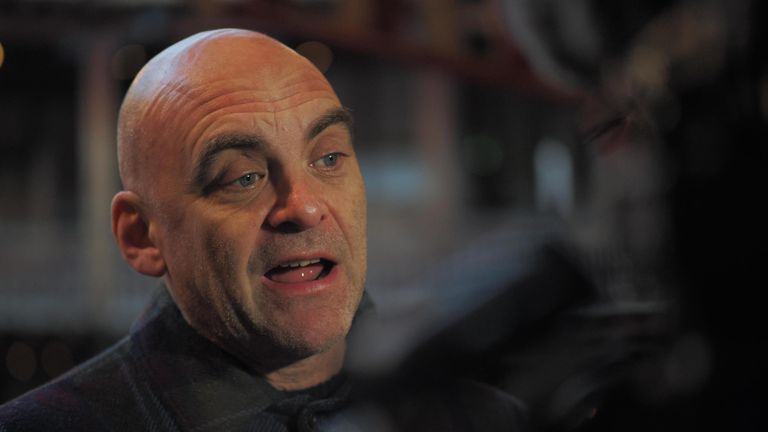
Image: Globe associate director Sean Holmes. Pic: Patrick Hutton
Unlike dance or circus, puppetry is not recognised in its own right by Arts Council England and is instead grouped with theatre.
It means specialist puppet venues are competing for funding in the highly saturated market of theatre companies producing for children and families, with no special recognition of their craft.
Marionette-making was added to Heritage Crafts’ Red List of Endangered Crafts in 2023.
There are now calls for it to be added to the UNESCO Intangible Cultural Heritage (ICH) list too, after the UK officially joined earlier this year.
Image: Puppets are big business, but as some types thrive, others are at risk of disappearing completely. Pic: Johan Persson/Patrick Hutton
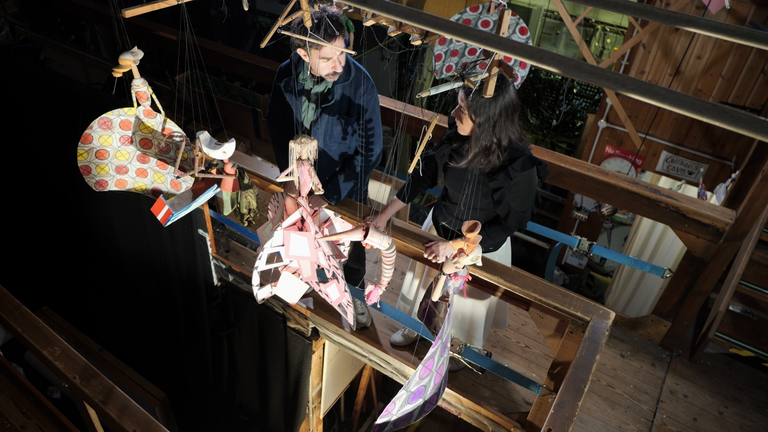
Image: Little Angel is one of the few UK theatres to have a marionette bridge. Pic: Patrick Hutton
Little Angel Theatre, a hub for British puppetry for over six decades, is one of a handful of UK spaces where puppeteers can perform with long-string marionettes.
Boasting not one but two marionette bridges, puppeteers can walk 360 degrees all the way around the upper part of the stage, working their marionettes from a hidden vantage point above.
Trained by some of the last remaining UK makers, including Little Angel co-founder Lyndie Wright, Little Angel Associate director Oliver Hymans is a central figure in the effort to save the craft.
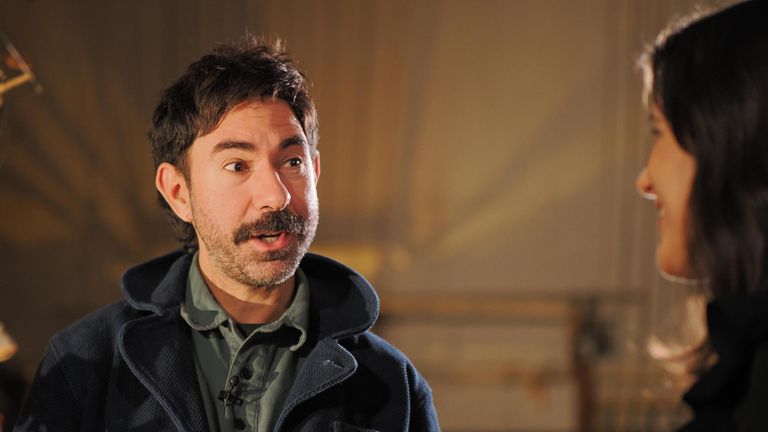
Image: Little Angel associate director Oliver Hymans. Pic: Patrick Hutton
Inspired by seeing old marionettes hung up at the back of the stage and intrigued by why they were not being used, he is now committed to re-establishing traditional marionette-making.
Hymans tells Sky News: “The marionette is a series of nine different pendulums all wired together. You’re having to work against gravity to keep it in control.
“But the thing about the marionette is you can hide the puppeteer. So, you can completely design and develop a world where there are only puppets and scenery and scenography.”
He says the majority of master marionette makers have retired or are nearing retirement, and warns there may be just a handful left in the country.
He explains: “With the onslaught of AI, we know it’s coming. Jobs where people use their hands are going to be vitally important, and if we don’t protect these crafts, they are going to die out.”
Image: Me at Little Angel Studios. Pic: Ellie Kurttz
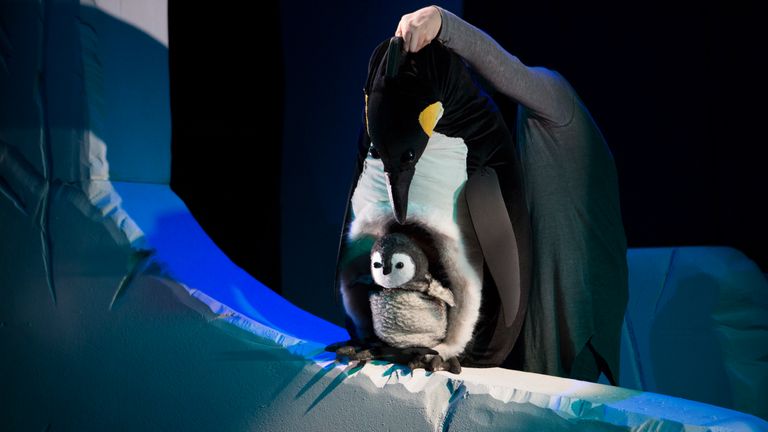
Image: The Storm Whale at Little Angel Theatre. Pic: Northedge Photography
Putting their money where their mouth is, Little Angel is nurturing emerging talent, upskilling people in both the art of making and performing with marionettes.
They plan to have a marionette show on stage next summer.
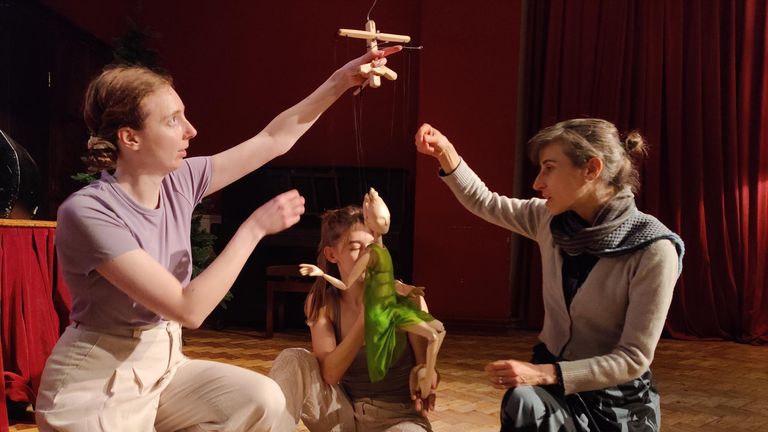
Also joining the fight for the overlooked craft, puppetry director Rachel Warr has organised a celebration of marionettes for the last three years, with the support of the Art Workers’ Guild Outreach Committee.
An industry-focused free event, it brings the puppetry community together – with particular relevance to those who work with marionettes – or who aspire to.
Image: Puppetry director Rachel Warr (R) with Alicia Britt and Anna Smith. Pic. Tom Crame
Some members of the community appear in a forthcoming short documentary about puppets, Untangling, by filmmaker Hester Heeler-Frood.
Warr told Sky News: “People are often more affected by a puppet dying on stage than an actor pretending to die in character. It doesn’t have the artifice of getting up and walking away and getting on the tube at the end of the night.
“There’s something quite vulnerable about the puppet in that sense… We know that it’s not really alive, and yet we’re able to project on to it our own thoughts and feelings. It’s a blank canvas – a powerful tool.”
Instagram
This content is provided by Instagram, which may be using cookies and other technologies.
To show you this content, we need your permission to use cookies.
You can use the buttons below to amend your preferences to enable Instagram cookies or to allow those cookies just once.
You can change your settings at any time via the Privacy Options.
Unfortunately we have been unable to verify if you have consented to Instagram cookies.
To view this content you can use the button below to allow Instagram cookies for this session only.
Meanwhile, as Pinocchio plays at the Globe, the theatre is running accompanying puppetry workshops, encouraging children to get involved in the craft – maybe inspiring future stars of puppeteering.
With their future hanging by a string, the training of the next generation is key to breathing life back into an overlooked craft, reinstating marionettes to their rightful place on the stage.
Pinocchio runs at Shakespeare’s Globe until Sunday 4 January.
The Storm Whale at Little Angel Studios runs until Saturday 24 January, and Me runs at Little Angel Theatre until Sunday 25 January.
David Walliams has been dropped by his publisher HarperCollins UK.
A spokesperson for the company said that “after careful consideration, and under the leadership of its new CEO, HarperCollins UK has decided not to publish any new titles” from Walliams.
“HarperCollins takes employee well-being extremely seriously and has processes in place for reporting and investigating concerns,” the spokesperson added.
“To respect the privacy of individuals, we do not comment on internal matters.”
The publisher announced in October that it had appointed Kate Elton as its new chief executive, following the departure of former boss Charlie Redmayne.
The 54-year-old, who shot to fame with the BBC sketch show Little Britain, is one of the country’s best-selling children’s authors.
He has written more than 40 books, which have sold more than 60 million copies worldwide and been translated into 55 languages, according to his website.
His first children’s book, The Boy in the Dress, was published by HarperCollins in 2008.
Walliams is also known for Come Fly With Me, another BBC sketch show, and was formerly part of the judging panel for Britain’s Got Talent.
He was awarded an OBE in 2017 for services to charity and the arts.
Walliams has been contacted for comment.
This breaking news story is being updated and more details will be published shortly.
Please refresh the page for the fullest version.
You can receive Breaking News alerts on a smartphone or tablet via the Sky News App. You can also follow @SkyNews on X or subscribe to our YouTube channel to keep up with the latest news.