
Freedom? Tyler, Texas, City Ordinance Bans Residents From Getting Solar If Panels Are Visible To The Public

There’s a small town in Texas that has taken a stance against solar panels in a weird way. That stance was actually taken back in 2012 via a city ordinance. Tyler, Texas, is what I’ve always considered the midpoint between Shreveport, Louisiana, and Dallas, Texas. Stop at the truck stop to get some rocks, fudge, and a bathroom break and continue on. The city’s stance against solar was taken back in 2012 in the form of the ordinance because city officials just didn’t like how solar panels looked on the roofs of residential homes.
The owner of Wright-Way Services — a company specializing in real estate, construction and remodeling, and solar power installations — ran into this problem.
Owner Rudy Wright recently told CBS19, “We just got notified just a few days ago. I guess it was actually a week ago, that they were denying us, because then they cited just the one sentence of the ordinance.”
Wright had been servicing the region for 13 years and hasn’t had any issue with installing solar panels all across East Texas. Until now. He took part in a meeting with the City of Tyler, which informed him that his installation was in violation of the 2012 ordinance. The ordinance reads:
“Residential solar installations must be situated so that they are screened from view from public streets.”
Wright knew of the ordinance, but until now, the city never denied his permits. The Planning Director for Tyler, Kyle Kingma, told CBS19 that based on Wright’s information, the job was in violation of the ordinance.
“The application that we had before us did not meet the criteria. And so if we could have had some sort of demonstration that it wasn’t seen from the road, then we can approve it,” said Kingma.
Kingma explained that the city reviewed every solar panel job on a case-by-case basis. Things they look at include curves on the road and a line of sight analysis from Tyler’s streets. Unfortunately for Wright, he doesn’t have any idea when a project may or may not be approved.
“How can I go bid solar in Tyler and be able to know whether I’m wasting my time or the customer’s time because you guys are not going to approve it? And he couldn’t answer that question and that it’s based on a case-by-case basis,” Wright told CBS19.
Kingma gave a bit of hope, though. He pointed out that if enough people wanted the city to change, they might modify it near the end of the summer. Until then, Tyler is very picky about solar in the city.


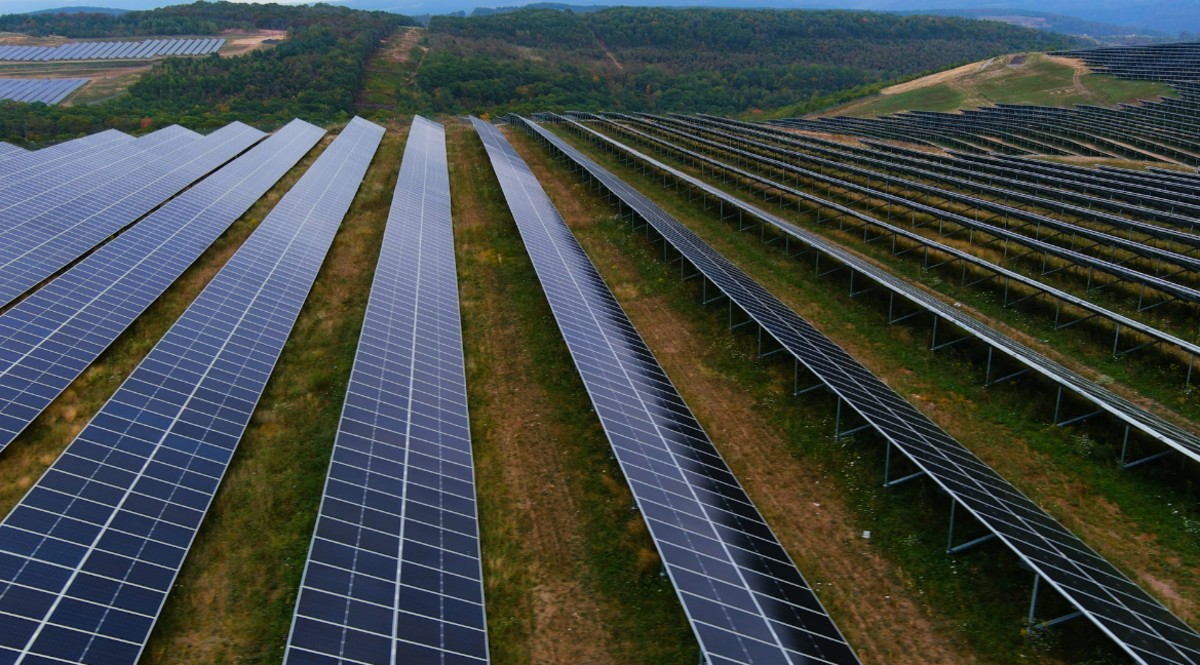
A former coal mine in western Maryland is now generating solar power – and it’s the largest solar farm in the state. Competitive Power Ventures (CPV) has brought Maryland’s largest solar project online in Garrett County, turning reclaimed coal mine land into a source of clean electricity.
CPV Renewable Power, an affiliate of CPV, and investment partner Harrison Street Asset Management have started commercial operations at CPV Backbone Solar, a 160-megawatt solar project in western Maryland. The site sits on a reclaimed, decommissioned coal mine, turning previously disturbed land into a new source of clean power.
Construction of the project was handled by Vanguard Energy Partners, a solar engineering, procurement, and construction firm.
The project comprises approximately 324,000 solar panels and is expected to generate enough electricity to power around 30,000 homes. For Maryland, it adds new in‑state generation while giving former fossil fuel land a second life.
CPV says that the project aims to demonstrate the role of brownfield redevelopment in the energy transition. The company’s CEO, Sherman Knight, said Backbone Solar shows “how brownfield redevelopment, innovative engineering, and strategic partnerships can meet complex project challenges and deliver new power generation in Maryland.”
Local officials have welcomed the project. Garrett County Board Chairman Paul Edwards said bringing the solar facility to the county helps protect the region’s natural landscape while also creating economic value for local residents.
CPV Backbone Solar also includes a community and environmental investment tied to the project. CPV has committed $100,000 over four years to the Deep Creek Watershed Foundation.
Backbone Solar becomes part of CPV’s growing renewable portfolio, which includes four operating wind and solar projects. The company also says it has a 4.8-gigawatt renewable development pipeline.
A second phase of the Backbone Solar project is already under construction. Once completed, it’s expected to increase the site’s total installed capacity from 160 MW to 175 MW.
Read more: Fast charge your EV while grabbing Royal Farms fried chicken

If you’re looking to replace your old HVAC equipment, it’s always a good idea to get quotes from a few installers. To make sure you’re finding a trusted, reliable HVAC installer near you that offers competitive pricing on heat pumps, check out EnergySage. EnergySage is a free service that makes it easy for you to get a heat pump. They have pre-vetted heat pump installers competing for your business, ensuring you get high quality solutions. Plus, it’s free to use!
Your personalized heat pump quotes are easy to compare online and you’ll get access to unbiased Energy Advisors to help you every step of the way. Get started here. – *ad


FTC: We use income earning auto affiliate links. More.


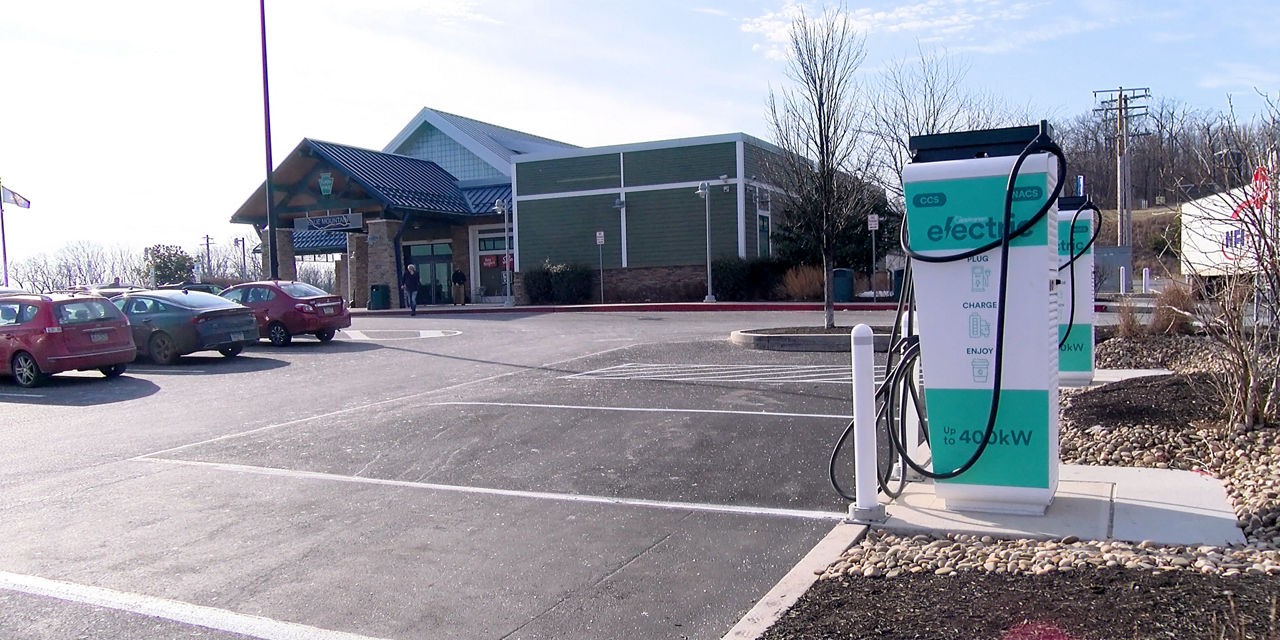
Pennsylvania just opened its first federally funded EV charging station on the Pennsylvania Turnpike — a key step toward making long-distance EV travel easier across the state.
The new station just opened at the Blue Mountain Service Plaza at Exit 202 westbound. Another NEVI-funded site at the New Stanton Service Plaza (Exit 77 westbound) is expected to open next week, according to the Pennsylvania Department of Transportation (PennDOT).
The chargers were built using funds from the federal National Electric Vehicle Infrastructure (NEVI) program, which is designed to install fast, reliable charging stations where drivers already stop — especially along busy highway corridors.
The Pennsylvania Turnpike is one of the state’s most heavily traveled roads, particularly during holiday travel, making service plazas a natural location for en-route EV charging. This first Turnpike site marks the beginning of NEVI-funded charging directly on the state’s toll road.
The Blue Mountain and New Stanton locations are part of the Turnpike’s larger, systemwide EV charging rollout. Working with Applegreen Electric, the Turnpike plans to install 80 new universal EV charging stations across all 17 service plazas by the end of 2027.
In addition to the NEVI-funded sites, the Turnpike has already brought new chargers online at the North Somerset, South Somerset, and Hickory Run service plazas using funding from Pennsylvania’s Driving PA Forward program. Each location offers high-speed charging with four ports per site, and all chargers are designed to work with all EV models without the need for adapters.
The project was awarded under the first round of PennDOT’s NEVI Alternative Fuel Corridor program. The next phase of funding, known as Corridor Connections, is focused on filling in charging gaps along major roadways that fall outside previously designated alternative fuel corridors. The goal is to make longer EV trips across Pennsylvania easier and more predictable.
The announcement also comes as Pennsylvania continues to push back against federal attempts to block EV funding. The US Department of Transportation is currently withholding congressionally approved money that would have supported EV infrastructure projects and jobs in the state. Governor Josh Shapiro (D-PA) sued the Trump administration over the move and, alongside 15 other states, successfully challenged an earlier attempt to derail the NEVI program. That legal fight helped keep projects like these Turnpike charging stations moving forward across the Commonwealth.
Electrek’s Take
This is precisely what the Biden administration’s NEVI program was meant to do: put fast, reliable charging stations where drivers already stop. Service plazas on major turnpikes are prime real estate for EV charging, particularly during holiday and long-distance travel. Pennsylvania’s rollout is still early days, but once chargers are live at all 17 plazas – assuming the federal funding spigot stays open – one of the Northeast’s busiest corridors is going to be a great place to road-trip in an EV.
Read more: PA Turnpike to add 80 new Applegreen DC fast chargers by 2027

FTC: We use income earning auto affiliate links. More.
-
 Sports2 years ago
Story injured on diving stop, exits Red Sox game
-
 Sports3 years ago
‘Storybook stuff’: Inside the night Bryce Harper sent the Phillies to the World Series
-
 Sports2 years ago
Game 1 of WS least-watched in recorded history
-
 Sports3 years ago
Button battles heat exhaustion in NASCAR debut
-
 Sports3 years ago
MLB Rank 2023: Ranking baseball’s top 100 players
-
Sports4 years ago
Team Europe easily wins 4th straight Laver Cup
-
 Environment3 years ago
Japan and South Korea have a lot at stake in a free and open South China Sea
-
 Environment1 year ago
Here are the best electric bikes you can buy at every price level in October 2024