
Troop numbers on South African streets increase to 25,000 amid looting – and more could be deployed

The number of soldiers deployed on the streets of South Africa has doubled to 5,000 as the army and police struggle to quell days of looting and violence.
President Cyril Ramaphosa is considering boosting troop numbers even more, as at least 72 people have been killed in the worst unrest in the country for years.
And some citizens are arming themselves to protect their property and businesses from the rampage, which has hit two of South Africa‘s nine provinces – KwaZulu-Natal, where Durban is located, and Gauteng, which includes Johannesburg.
In the Mobeni area of Durban, several food warehouses and a rice depot have been “invaded” and “ransacked”, according to Sky News correspondent John Sparks.
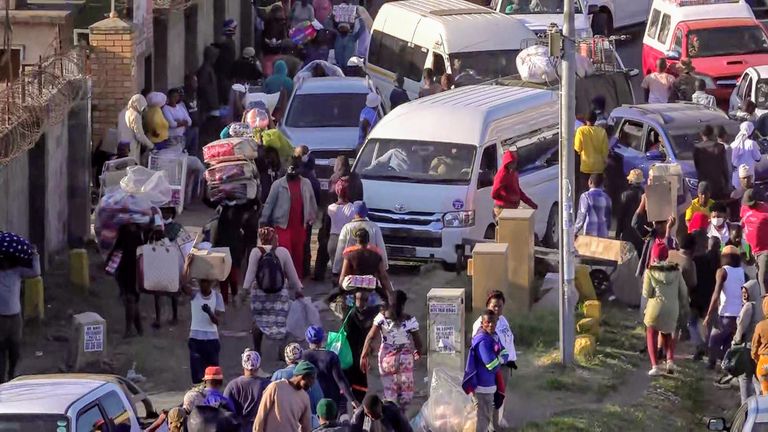
Food warehouses have been ransacked in Durban
He described the scene as “absolute chaos” and “out of control” as looters have been “carting off” what was inside the facilities.
He said they had brought cars and trucks to fill up their vehicles with what they could get their hands on.
There has been mass looting and rioting in multiple locations in the city and elsewhere in the country, including in some areas of Johannesburg, such as Vosloorus.
The unrest was sparked by the imprisonment last week of former president Jacob Zuma, which has spiralled into days of looting.
At least 1,234 people have been arrested in waves of rioting. The violence has not spread to the country’s other seven provinces, where police are on alert.
Many of the deaths were caused by chaotic stampedes as thousands of people stole food, electric appliances, alcohol and clothing from stores, police said.
Thousands of soldiers have been deployed to support officers and try to restore law and order.
But Sparks said the army was nowhere to be seen as people were just “helping themselves”.
He added: “This is really out of control.”
“What we have here is something quite extraordinary. People have broken into food warehouses and they are stripping them, they are emptying them.”
Among the items being stolen were mattresses, kitchen appliances and boxes of sardines.
In eastern Johannesburg, some shopping centres continued to be targeted, while in Soweto township, south of the city, police and army units patrolled malls and streets.
Acting minister in the presidency, Khumbudzo Ntshavheni, said the government was working with the consumer council to ensure food security.
There have been fears that the anarchy and looting could lead to food shortages.
She claimed putting troops on the streets was beginning to have the desired effect.
She said: “We are getting positive reports that the deployment of additional law enforcement agencies is starting to reap positive results as we are seeing less incidents of violence and looting reported.”
She added: “5,000 members of the national defence force have already been deployed on the ground. Law enforcement officers, supported by the military, are working tirelessly to ensure the country returns to peace and stability and that those responsible for the instability are quickly brought to book.”
Sparks had earlier been at another mass looting location where people told him they were “hungry”.
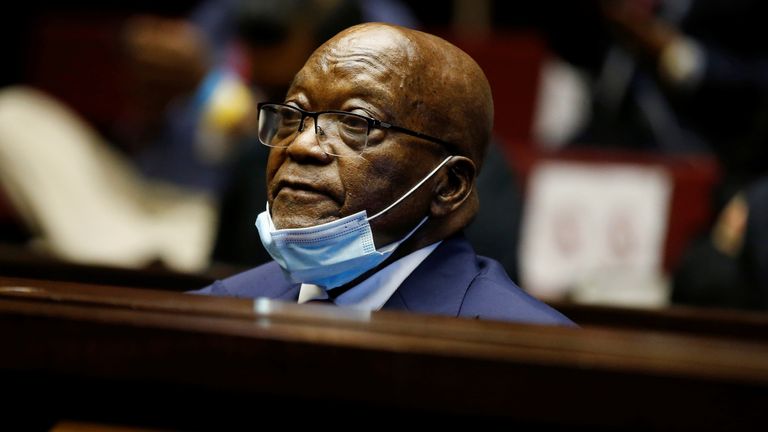
Former South African president Jacob Zuma was jailed last week
Lots of South Africans have lost jobs in the pandemic, including during lockdowns, and they were living “very much a hand-to-mouth existence”.
Sparks said COVID restrictions “have hurt people here”.
More than half of the country’s 60 million people are living in poverty, with an unemployment rate of 32%, according to official statistics.
Violence broke out after Zuma began serving a 15-month sentence for contempt of court.
He was jailed for refusing to comply with a court order to testify at a state-backed inquiry investigating corruption claims while he was president from 2009 to 2018.
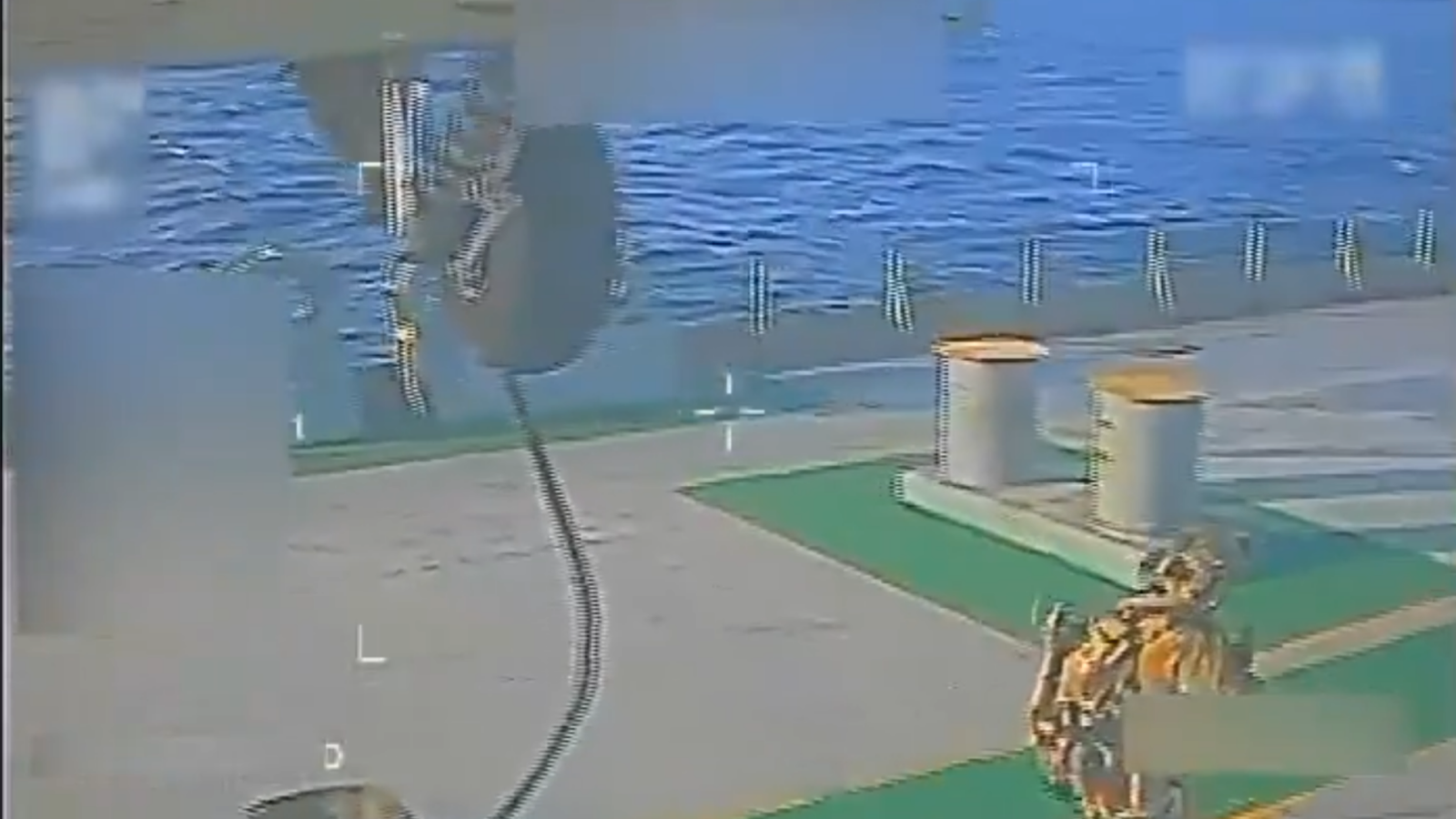
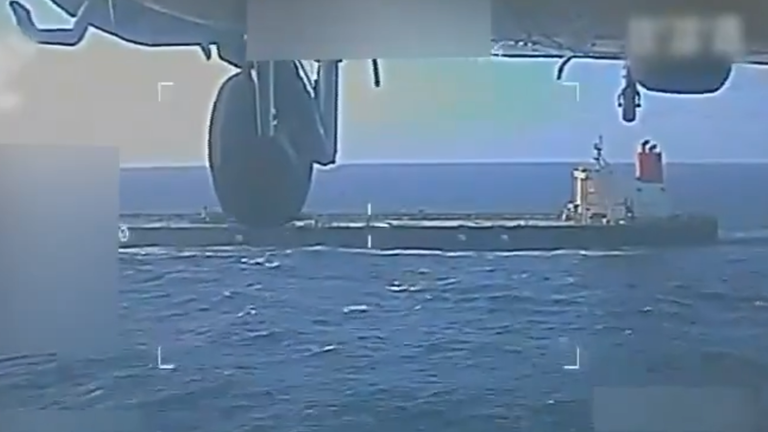
Venezuela has accused the US of “piracy” after an oil tanker was seized off the country’s coast.
Donald Trump announced the operation had taken place during a meeting of business leaders at the White House, telling reporters: “We’ve just seized a tanker on the coast of Venezuela, a large tanker, very large, largest one ever seized, actually.”
Attorney General Pam Bondi shared a video of the operation, revealing the FBI, Homeland Security, US Coast Guard, and Department of Defence were involved.
She said the US forces “executed a seizure warrant for a crude oil tanker used to transport sanctioned oil from Venezuela and Iran”.
Venezuela’s government said the seizure “constitutes a blatant theft and an act of international piracy.”
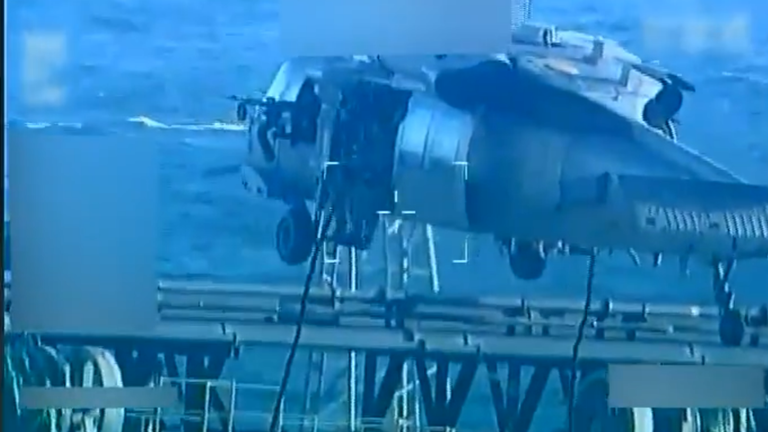
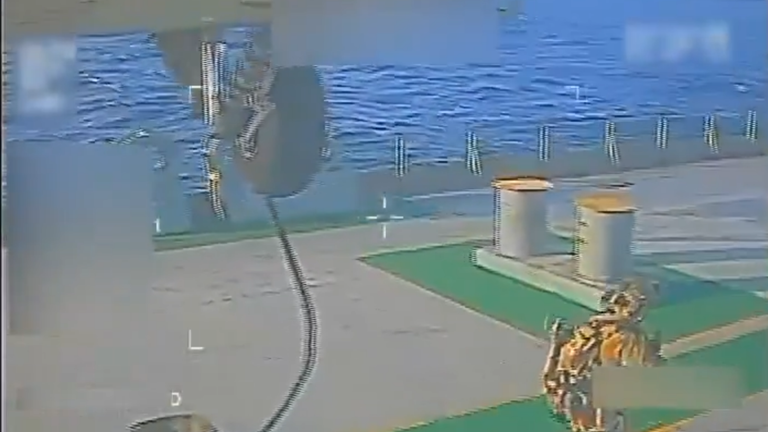
Pics: X/@AGPamBondi
Ms Bondi said the seized vessel – believed to be a tanker named Skipper – has been sanctioned by the US for many years “due to its involvement in an illicit oil shipping network supporting foreign terrorist organisations”.
She did not name the vessel, what flag it sailed under, or exactly where the incident took place.
UK maritime risk management group Vanguard said that the tanker Skipper – which the US sanctioned for alleged involvement in Iranian oil trading under the name Adisa – was believed to be the target.
Trump offers ominous commentary
Without giving additional information on the operation, Mr Trump added during the White House meeting that “other things are happening”.
Later, Mr Trump said the tanker was “seized for a very good reason”, and when asked what will happen to the oil on board, he added: “Well, we keep it, I suppose.”
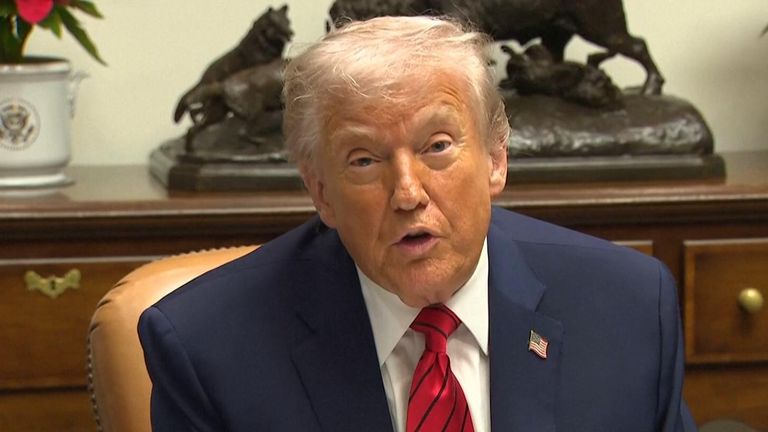
US seizing oil tanker a ‘significant escalation’
How did we get here?
It marks another escalation from the US after months of pressure on Venezuelan President Nicolas Maduro.
The White House accuses Mr Maduro of presiding over a narcotrafficking operation in Venezuela, which he denies.
The US has escalated military deployments against the Latin American country over the last few months, with the president suggesting American forces could launch a land attack.
Speaking to Politico on Tuesday, Mr Trump declined to comment on whether US troops would enter Venezuela, but warned Mr Maduro’s “days are numbered”.
On 2 September, the White House posted on X that it had conducted a strike against so-called “narcoterrorists” shipping fentanyl to the US, without providing direct evidence of the alleged crime.
Sky News has verified that in the past four months, 23 boats have been targeted in 22 strikes, killing 87 people.
Read more: Is this what the beginning of a war looks like?
Venezuela: ‘It has always been about our oil’
The Maduro government describes America’s actions as a grab for Venezuela’s oil reserves, which are among the biggest in the world.
At a rally before a ruling-party-organised demonstration in Caracas on Wednesday, Mr Maduro did not address the seizure but told supporters Venezuela is “prepared to break the teeth of the North American empire if necessary”.
Flanked by senior officials, he said that only the ruling party can “guarantee peace, stability, and the harmonious development of Venezuela, South America and the Caribbean”.
His government did issue a statement, accusing the US of “piracy” and “imperial abuses”.
Of the US campaign, it said: “It has always been about our natural resources, our oil, our energy, the resources that belong exclusively to the Venezuelan people.”
Read more on Venezuela:
Hegseth cites ‘fog of war’ defence
US aircraft carrier close to Venezuela
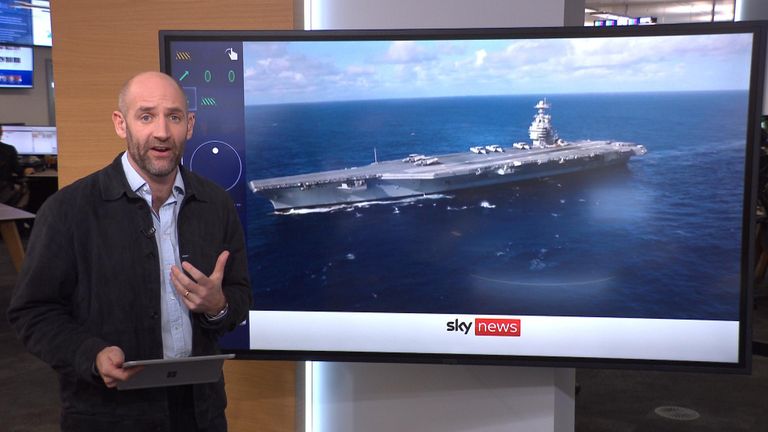
Are US strikes on Venezuela about drugs or oil?
Is military confrontation possible?
Geoffrey Corn, director of the Centre for Military Law at Texas Tech University, told Sky’s Mark Austin on The World that Mr Trump’s remarks on land strikes “ostensibly” refer to drug cartel members.
Formerly a senior adviser to the US army on warfare law, Mr Corn added: “That could very easily provide the pretext for some confrontation between Venezuelan armed forces and US armed forces.
“And then that would open the door to a broader campaign to basically negate the power of the Venezuelan military.”
World
British soldier killed in Ukraine named – as Trump exchanges ‘strong words’ with Kyiv’s allies
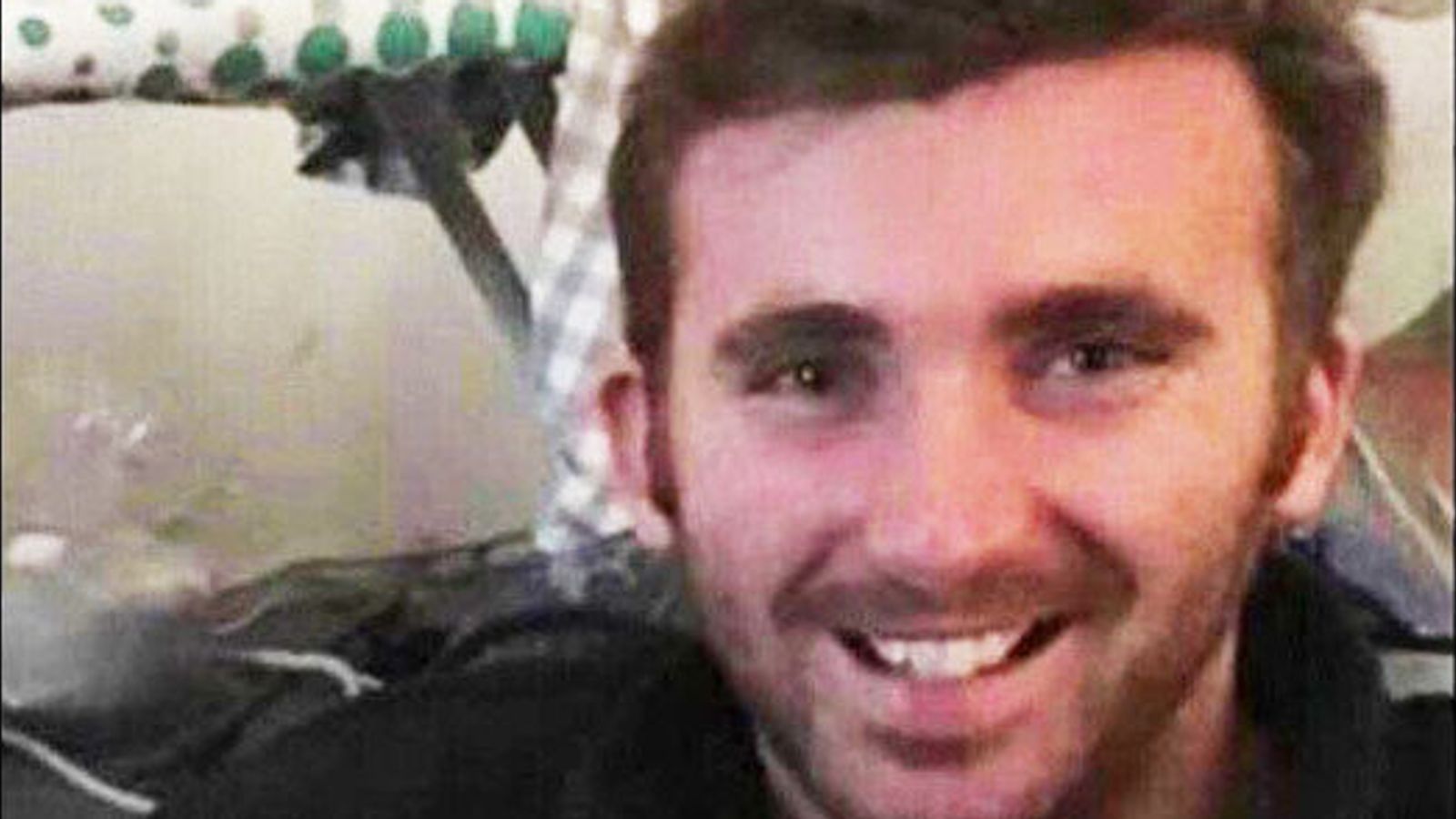
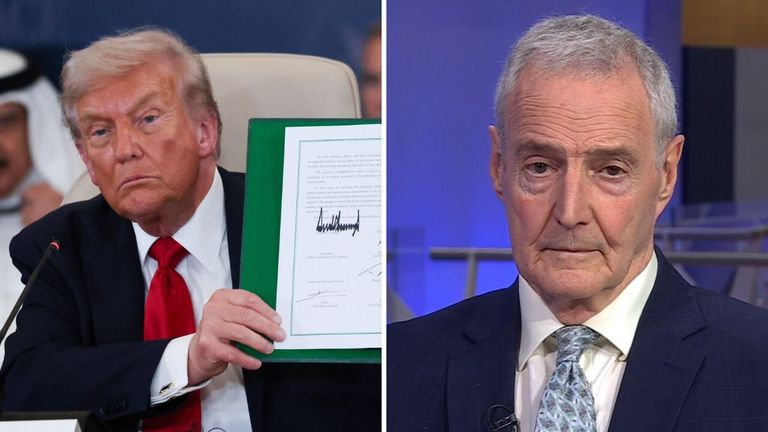
Tributes have been paid to a British soldier killed in Ukraine, as the country’s allies prepare for talks before a crucial potential meeting with Donald Trump.
Lance Corporal George Hooley, 28, has been named as the paratrooper who died in a “tragic accident” on Tuesday while observing Ukrainian forces testing a new defensive capability away from the frontline.
The Ministry of Defence (MoD) said he joined the army in November 2015 and was “an exceptional soldier”.
Defence Secretary John Healey said he “served our country with distinction and professionalism” and “will be very deeply missed”.
He added: “George’s tragic death reminds us of the courage and commitment with which our outstanding armed forces serve every day to protect our nation.”
Coalition of the willing to meet
Britain has been one of Ukraine’s biggest backers since Russia launched its full-scale invasion in February 2022, and that support will again come into play on Thursday.
Volodymyr Zelenskyy will hold a virtual meeting with members of the self-styled coalition of the willing, after reports Kyiv has handed its revised peace deal proposal to US negotiators.
Mr Zelenskyy said the revised proposal has 20 points, after some “obvious anti-Ukrainian points were removed”.
The original US draft proposal had 28 points, and was seen as favouring Russia.
Read more: Trump’s 28-point Ukraine peace plan in full
Trump could ‘pull plug’ on Ukraine
Zelenskyy hopeful of progress
Ukraine has sought to change some key clauses, such as territorial issues and security guarantees, following talks with US and European negotiators.
In his nightly address on Wednesday, Mr Zelenskyy said his country is also drafting two additional documents: the first regarding US security guarantees and the second on the economy and reconstruction.
He said Kyiv’s peace delegation held a “productive conversation” with the US earlier, and “discussed key issues for recovery, various mechanisms, and visions of reconstruction”.
He also revealed he discussed the possibility of holding elections with Ukraine’s parliament, but that holding elections under martial law was not easy.
Trump has ‘strong words’ with European leaders
It comes after Donald Trump used an interview with Politico to accuse Mr Zelenskyy of “using war” to avoid holding elections. The US president also claimed his Ukrainian counterpart had not read the original 28-point peace plan.
Mr Trump held a call with coalition of the willing members Sir Keir Starmer, Emmanuel Macron, ad Friedrich Merz on Wednesday, and said some “pretty strong words” were exchanged.
Earlier this week, he called Europe’s leaders “weak” and criticising them for failing to end the war.
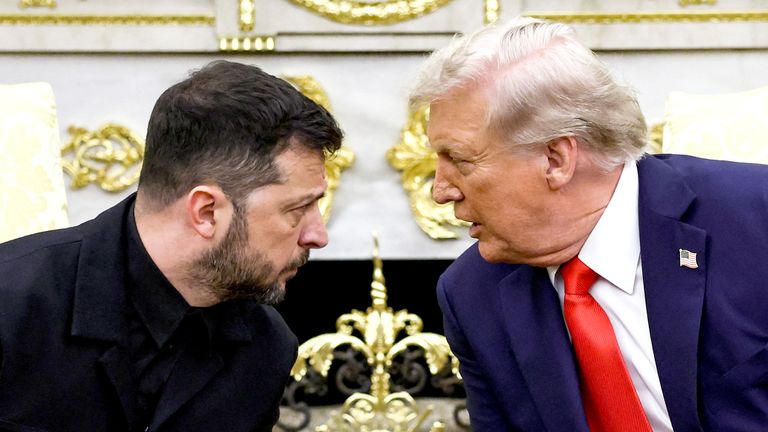
Why is Trump attacking European allies?
Speaking at the White House on Wednesday, Mr Trump said Mr Zelenskyy was keen on a meeting involving him and European leaders this weekend, but warned his attendance will be “based on what they come back with”.
Today’s virtual meeting comes days after Sir Keir hosted Mr Zelenskyy, Mr Macron and Mr Merz in Downing Street.
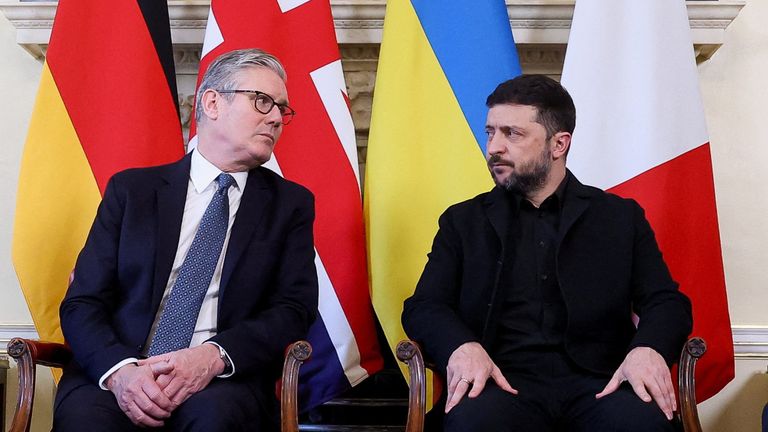
Zelenskyy meets leaders in Downing Street
The period of intense diplomacy comes as the fighting continues on the ground in Ukraine.
Its military says it’s still fending off a Russian assault launched on the key city of Pokrovsk, while energy infrastructure has been targeted by drones in southern Odesa.
World
Maria Corina Machado missed the ceremony, but the Nobel Peace Prize winner is heading to Oslo after ‘extraordinary’ day

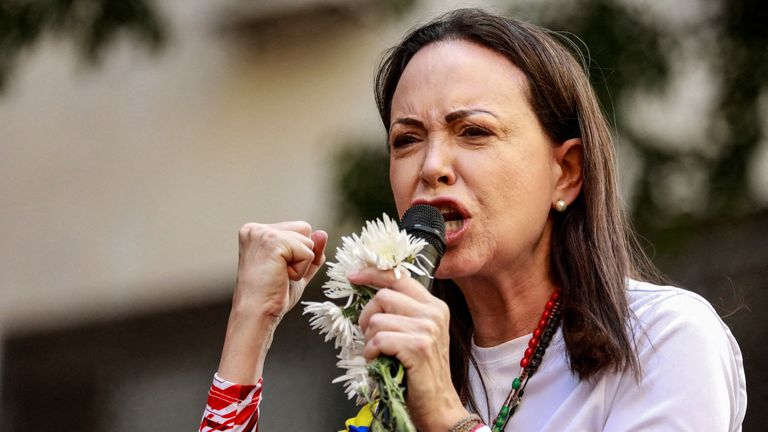
The Venezuelan opposition leader Maria Corina Machado didn’t make it to Oslo in time to receive the Nobel Peace Prize in person, in an extraordinary day shrouded in uncertainty over her whereabouts.
Machado isn’t the first Nobel Laureate unable to attend, but her journey to Oslo was unprecedented in the history of the prestigious prize.
Her departure from Venezuela, carried out amid heavy secrecy and probably with covert US help, was fraught with risk, but on Wednesday she was en route to Norway, where she is expected to land late in the evening.
Sister’s ‘mixed emotions’ over Nobel prize
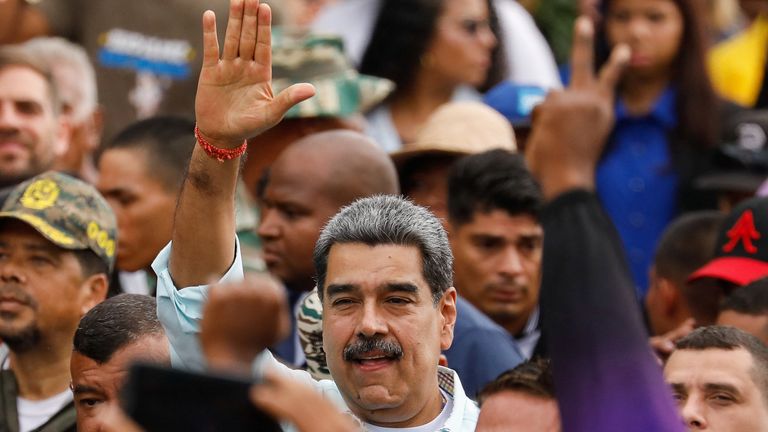
Venezuela’s President Nicolas Maduro joins supporters marching to commemorate the Battle of Santa Ines. Pic: Reuters
Reports suggested she first travelled by boat to the Caribbean island of Curaçao before getting a private flight via the US. Two US F-16 jets were tracked in the skies close to Curaçao late Tuesday night.
In a phone call with members of the Nobel Institute, released just after she took off, Machado said she was “very sad” not to make it in person but “as soon as I arrive, I will be able to embrace all my family and children.”
In her absence, her daughter Ana Corina Sosa Machado, whom she hasn’t seen for almost two years, collected the award in Oslo City Hall and delivered the speech her mother wrote.
She spoke about 2,500 people who had been “kidnapped, disappeared or tortured” under Venezuelan president Nicolas Maduro’s government and slammed the corruption that has brought Venezuela, once one of the world’s richest nations, to its knees.
“This prize carries profound meaning; it reminds the world that democracy is essential to peace.
“More than anything, what we Venezuelans can offer the world is the lesson forged through this long and difficult journey – that to have democracy, we must be willing to fight for freedom.”

Maria Corina Machado addresses supporters at an anti-Maduro protest in January. File pic: AP
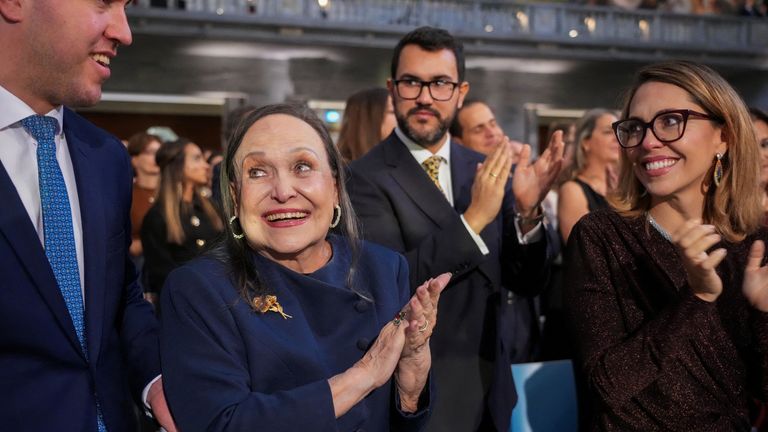
Corina Perez de Machado, mother of Maria Corina Machado, at the Nobel Peace Prize ceremony in Oslo. Pic: Reuters
To a standing ovation from an audience that included several South American leaders, Machado thanked the people of Norway and sent a message to her fellow countrymen and women, many of whom had travelled to Oslo from their homes outside Venezuela.
“Venezuela will breathe again,” her daughter read.
“We will open prison doors and watch thousands who were unjustly detained step into the warm sun, embraced at last by those who never stopped fighting for them.
Are US strikes on Venezuela about drugs or oil?
“We will see our grandmothers settle children on their laps to tell them stories not of distant forefathers but of their own parents’ courage.
“We will hug again. Fall in love again. Hear our streets fill with laughter and music. All the simple joys the world takes for granted will be ours.”
Ms Machado is the leader of a grassroots political movement fighting for democracy in Venezuela.
She was banned by Nicolas Maduro from running for election, so she rallied a campaign behind a little-known veteran diplomat Edmundo Gonzalez.
She organised and trained more than a million volunteers to monitor elections in 2024 and collect data.
Those results, smuggled out of the country, were verified by independent experts and confirmed a landslide win for Gonzalez and Machado’s party.
Maduro refused to recognise the result and detained thousands of opponents.
More on US-Venezuela crisis:
US seizes Venezuelan oil tanker
Is this how a war starts?
Maduro ready for land strikes
Protests have failed to dislodge him, although US president Donald Trump has stationed a massive naval force off the coast and has warned the Venezuelan leader his “days are numbered”.
Mr Trump had lobbied publicly to win this year’s Nobel Prize himself, but rang Machado to congratulate her. Some members of Trump’s administration had threatened the Nobel committee if he didn’t win.
Edmundo Gonzalez, who was at the ceremony in Oslo, has since gone into exile in Spain, but Machado has remained in Venezuela, spending most of her time in hiding.
Her mother, sister and children have also travelled to Oslo to be reunited with her.
The decision to travel to Norway is fraught with risk.
Having successfully left the country, she faces a dangerous journey home again.
-
 Sports2 years ago
Story injured on diving stop, exits Red Sox game
-
 Sports3 years ago
‘Storybook stuff’: Inside the night Bryce Harper sent the Phillies to the World Series
-
 Sports2 years ago
Game 1 of WS least-watched in recorded history
-
 Sports3 years ago
Button battles heat exhaustion in NASCAR debut
-
 Sports3 years ago
MLB Rank 2023: Ranking baseball’s top 100 players
-
Sports4 years ago
Team Europe easily wins 4th straight Laver Cup
-
 Environment3 years ago
Japan and South Korea have a lot at stake in a free and open South China Sea
-
 Environment1 year ago
Here are the best electric bikes you can buy at every price level in October 2024