
‘Help us get back to normal like everyone else’: Charities see ‘tidal wave’ of anxiety among clinically vulnerable

There has been a huge rise in clinically vulnerable people seeking support ahead of legal restrictions being lifted in England on Monday and rising COVID case numbers, a group of leading charities have said.
Policy director at Kidney Care UK Fiona Loud says there has been a “tidal wave of people getting in touch with us and our partner charities”.
“We are overwhelmed with people asking for support and feeling distressed,” she adds.
Ellie Dawes, from the Aplastic Anaemia Trust, says “we’ve seen an 800% increase in the number of people who’ve been contacting our support line” since the announcement about the removal of final restrictions was made.
There are 3.8 million people in the UK who are classed as clinically extremely vulnerable, and 500,000 people who are immunosuppressed. Those who are immunosuppressed may have reduced, or no protection at all from the vaccine.
Professor Emma Morris, director of UCL’s Division of Infection and Immunity, says people can become immunosuppressed from diseases which affect how the immune system works, or by taking drugs which intentionally suppress the immune system after an organ transplant or during treatment for certain cancers.
“I think the risk to those patients who are immunosuppressed, who haven’t been protected by the vaccine, is as high as it has ever been,” she says.
Hal Cohen has had two kidney transplants, the most recent after a donation from his father in December 2019.
The drugs which stop his body rejecting his kidney also mean he’s had no response to the COVID vaccine.
“I don’t have any antibodies or T-cells,” he says, which means he’s unlikely to be protected against the coronavirus.
This leaves Hal and others like him feeling anxious, as the chance of dying of COVID-19 is much higher for people who’ve had transplants.

Mr Cohen, pictured with his family, says the lifting of legal restrictions on Monday means he could lose freedoms
Hal says the lifting of legal restrictions, particularly face masks no longer being required in some settings, means he could lose freedoms come 19 July.
“Even things I would take for granted previously like having a haircut, I don’t know now if there are places where I can go where the person cutting the hair will be wearing a mask, or if other people will be wearing a mask – even basic things seem like a bit of a challenge going forward.”
Hal is calling for immunosuppressed people to be allowed to take part in more clinical trials like “booster doses of vaccines, mixing and matching different types of vaccines, or even some of the alternative treatments that are intended to prevent you getting COVID in the first place”.
Immunosuppressed people are often excluded from clinical trials, but Hal says being allowed to participate could “help us get back to normal like everyone else”.
This call is echoed by charities like Kidney Care UK which also wants to see a commitment from the government that immunosuppressed people will benefit from employment support when furlough ends.
Follow the Daily podcast on Apple Podcasts, Google Podcasts, Spotify, Spreaker
Both charities and scientists say there must be clear public health messaging so immunocompromised people know they may not have as much protection from the vaccine.
Prof Morris says: “We need to let people know that they are at an ongoing risk if the case numbers continue to increase – and that isn’t magically going to go away on Monday, when a number of restrictions will be lifted.”
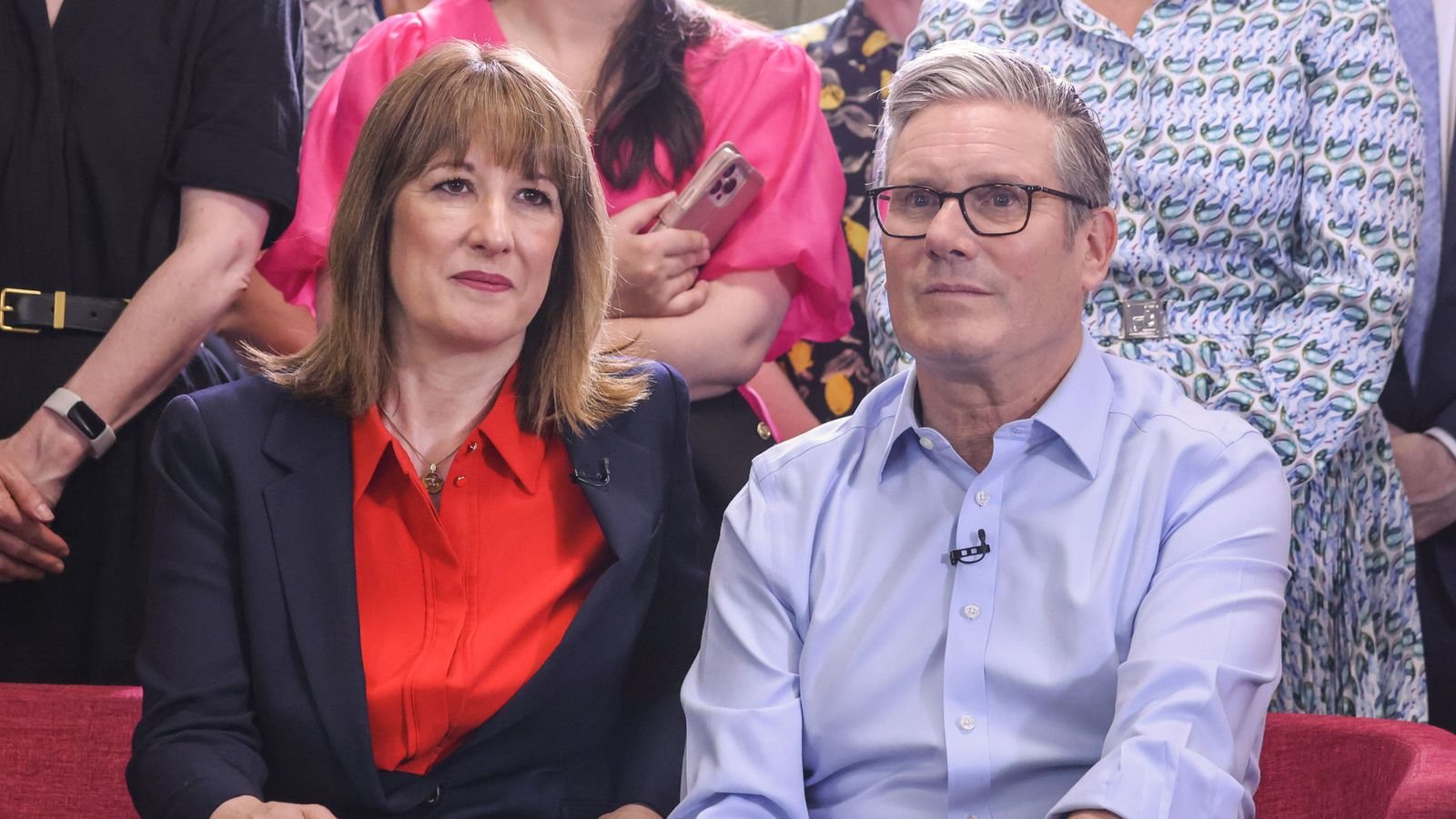

Rachel Reeves has hinted that taxes are likely to be raised this autumn after a major U-turn on the government’s controversial welfare bill.
Sir Keir Starmer’s Universal Credit and Personal Independent Payment Bill passed through the House of Commons on Tuesday after multiple concessions and threats of a major rebellion.
MPs ended up voting for only one part of the plan: a cut to universal credit (UC) sickness benefits for new claimants from £97 a week to £50 from 2026/7.
Initially aimed at saving £5.5bn, it now leaves the government with an estimated £5.5bn black hole – close to breaching Ms Reeves’s fiscal rules set out last year.
Read more:
Yet another fiscal ‘black hole’? Here’s why this one matters
Success or failure: One year of Keir in nine charts
Rachel Reeves’s fiscal dilemma
In an interview with The Guardian, the chancellor did not rule out tax rises later in the year, saying there were “costs” to watering down the welfare bill.
“I’m not going to [rule out tax rises], because it would be irresponsible for a chancellor to do that,” Ms Reeves told the outlet.
“We took the decisions last year to draw a line under unfunded commitments and economic mismanagement.
“So we’ll never have to do something like that again. But there are costs to what happened.”
Meanwhile, The Times reported that, ahead of the Commons vote on the welfare bill, Ms Reeves told cabinet ministers the decision to offer concessions would mean taxes would have to be raised.
The outlet reported that the chancellor said the tax rises would be smaller than those announced in the 2024 budget, but that she is expected to have to raise tens of billions more.
It comes after Ms Reeves said she was “totally” up to continuing as chancellor after appearing tearful at Prime Minister’s Questions.
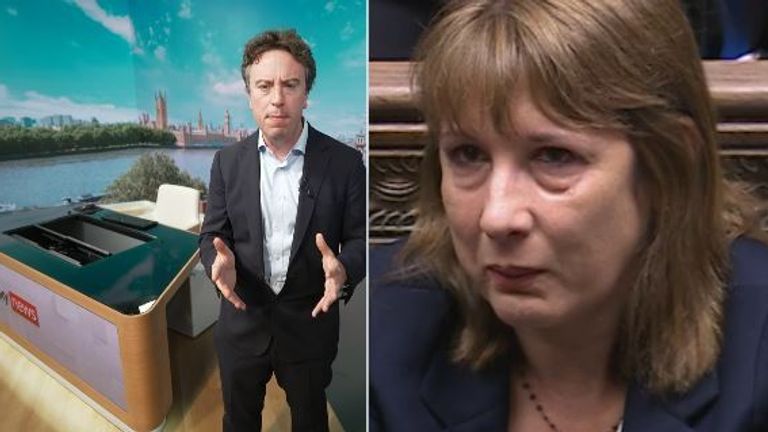
Why was the chancellor crying at PMQs?
Criticising Sir Keir for the U-turns on benefit reform during PMQs, Conservative leader Kemi Badenoch said the chancellor looked “absolutely miserable”, and questioned whether she would remain in post until the next election.
Sir Keir did not explicitly say that she would, and Ms Badenoch interjected to say: “How awful for the chancellor that he couldn’t confirm that she would stay in place.”
In her first comments after the incident, Ms Reeves said she was having a “tough day” before adding: “People saw I was upset, but that was yesterday.
“Today’s a new day and I’m just cracking on with the job.”
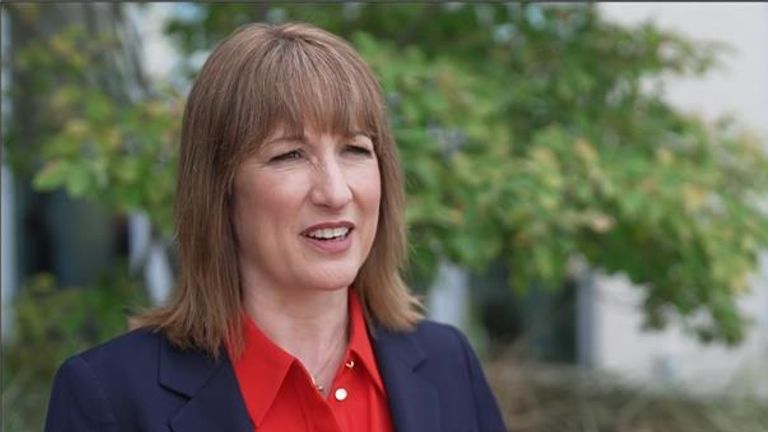
Reeves is ‘totally’ up for the job
Sir Keir also told Sky News’ political editor Beth Rigby on Thursday that he “didn’t appreciate” that Ms Reeves was crying in the Commons.
“In PMQs, it is bang, bang, bang,” he said. “That’s what it was yesterday.
“And therefore, I was probably the last to appreciate anything else going on in the chamber, and that’s just a straightforward human explanation, common sense explanation.”


The family and friends of Diogo Jota and his brother Andre Silva have been joined by Liverpool stars past and present and other Portuguese players at the pair’s funeral near Porto.
The Liverpool forward, 28, and his brother died in a car crash in Spain on Thursday.
Pictures below show the funeral at the Igreja Matriz de Gondomar church in the town of Gondomar near Porto. Click here for our liveblog coverage of the day’s events.
Diogo Jota’s wife Rute Cardoso arrives for the funeral of him and his brother Andre Silva. Pic: Reuters

Liverpool players Virgil van Dijk and Andrew Robertson arrive for the funeral. Pic: Reuters

Van Dijk carried a wreath with Jota’s number 20 while Andrew Robertson’s had a 30 for Andre Silva. Pic: Reuters
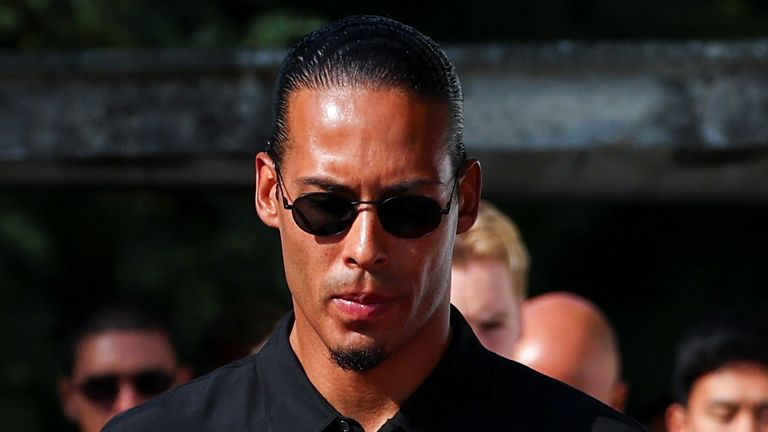
Liverpool captain Virgil van Dijk. Pic: Reuters
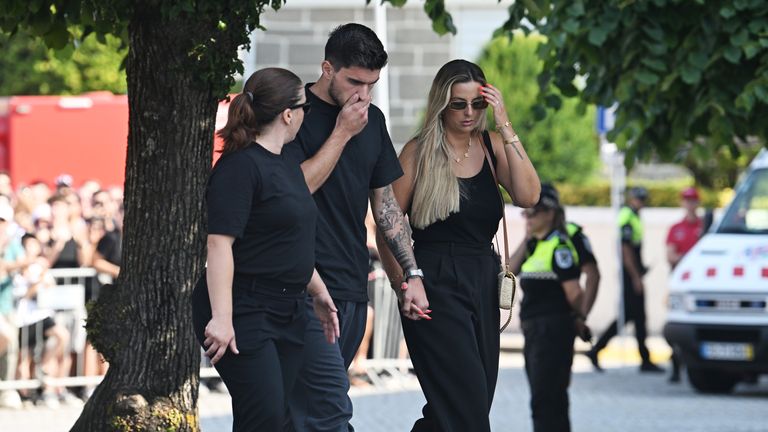
Portugal player Ruben Neves arrives at the funeral. Pic: PA

Liverpool’s Joe Gomez and manager Arne Slot arrive at the funeral of Diogo Jota and Andre Silva. Pic; PA

Liverpool’s Ryan Gravenberch and Cody Gakpo (right) arrive at the funeral of Diogo Jota and Andre Silva

Manchester City and Portugal player Bernardo Silva arrives at the funeral. Pic: AP

The coffins are carried to the church. Pic: PA
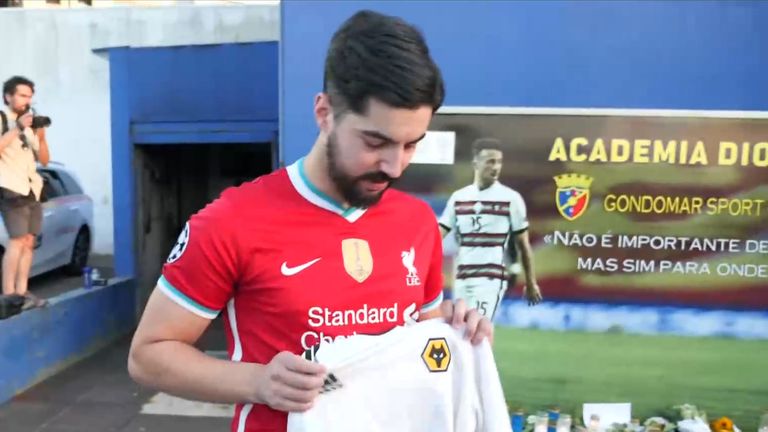
Miguell Rocha played with Jota for around ten years with Gondomar Sport Clube in Portugal.
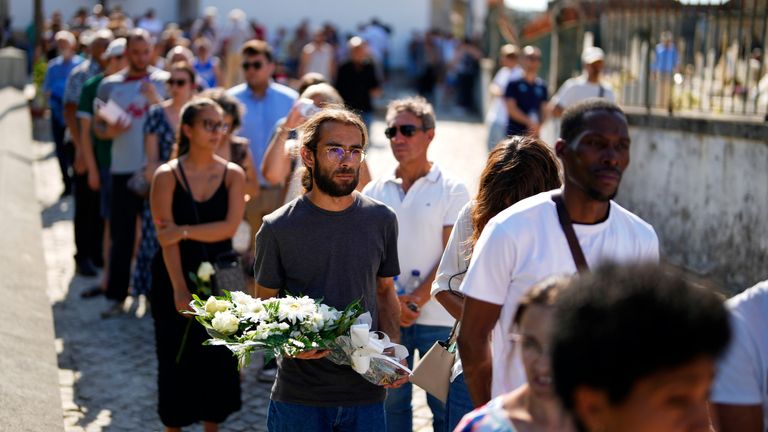
People line up to enter the church. Pic: AP

Pallbearers carry the coffins of Diogo Jota and his brother Andre Silva
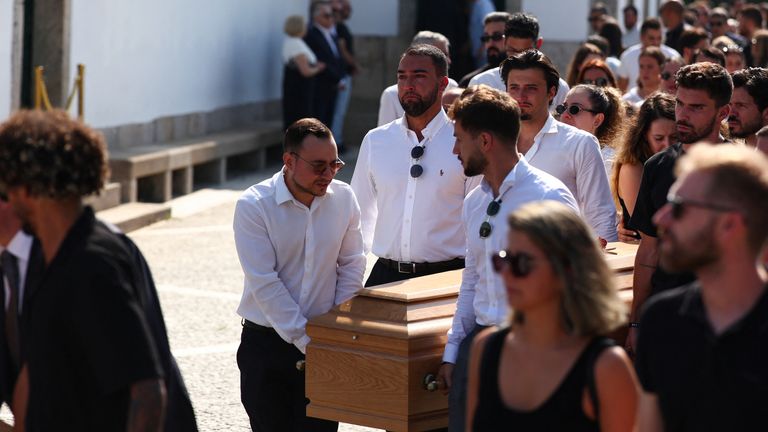
Pic: Reuters

Pic: AP
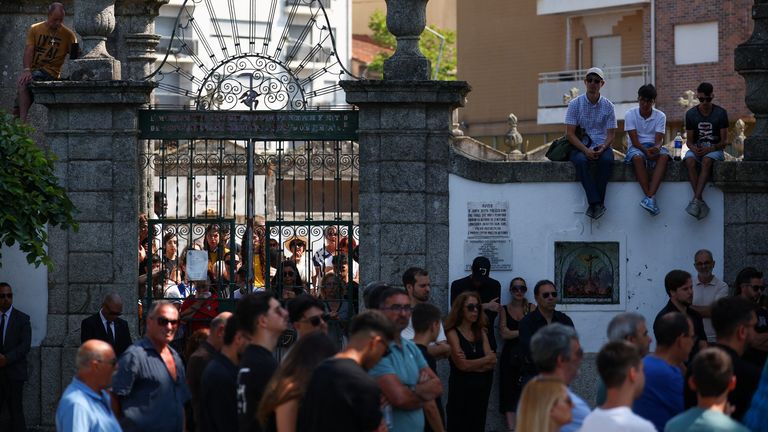
People gather outside the Chapel of the Resurrection. Pic: Reuters
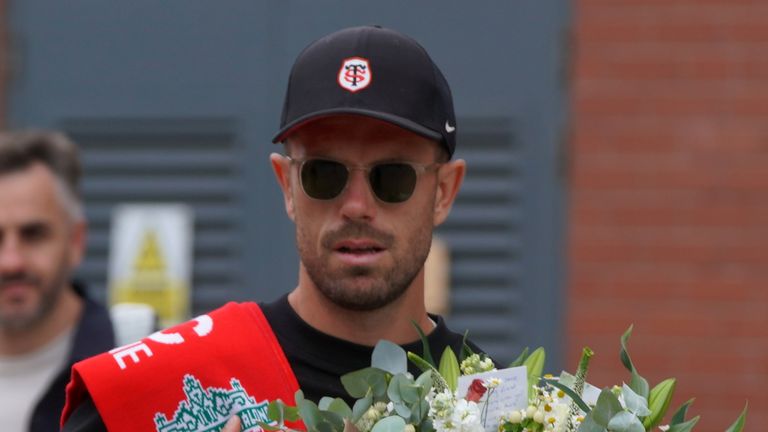
The former captain was seen wiping away tears as he read messages and laid his tribute down.
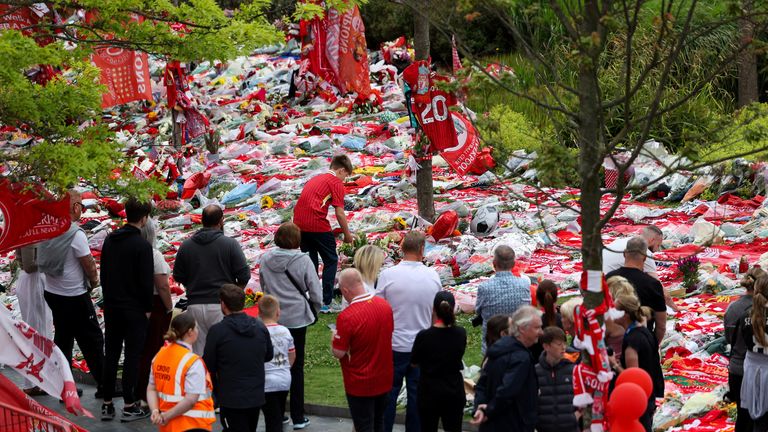
Fans pay their respects outside Anfield in Liverpool. Pic: Reuters

A board with a picture of Diogo Jota outside Anfield Stadium. Pic: PA
The coffins are carried to the church. Pic: PA
UK
How Britain’s most notorious gangster turned up at a charity lunch to fact-check a retired detective’s talk
Britain’s most notorious gangster and the detective who pursued him have been involved in a bizarre confrontation…at a charity lunch.
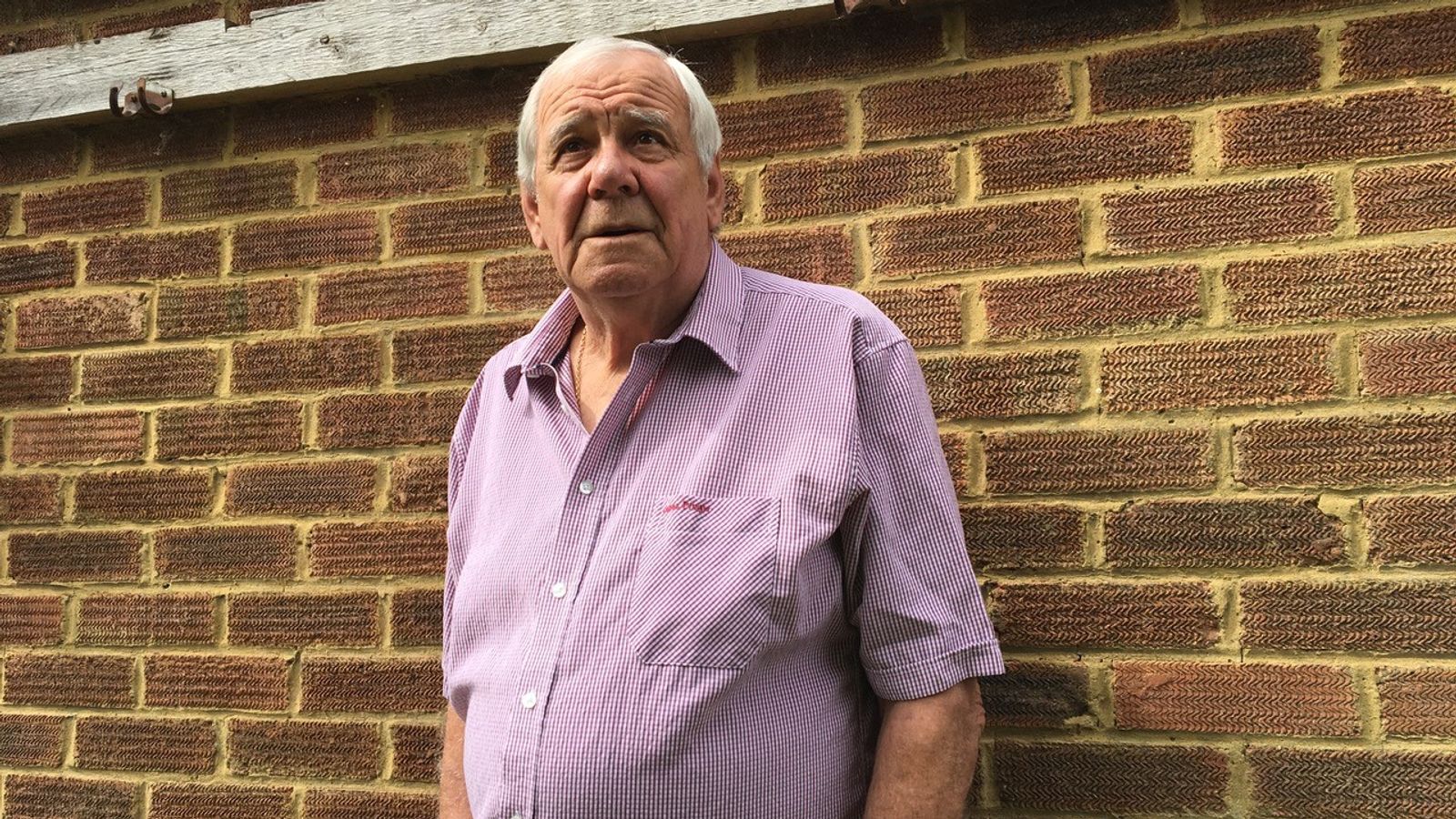
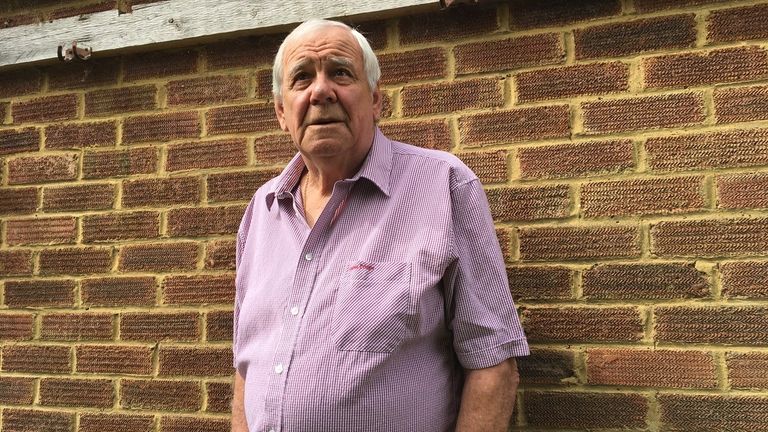
Former Detective Superintendent Ian Brown was at a Kent golf club and about to give a talk on the infamous £26m Brink’s-Mat gold robbery when he was summoned from the stage by officials.
Mr Brown, who appeared on the award-winning Sky News StoryCast podcast The Hunt For The Brink’s-Mat Gold in 2019, said: “I go outside and they say ‘he’s here’ and I say ‘who’s here’ and they say that table over there in the corner, that’s Kenny Noye with a baseball cap pulled down over his head.”
Noye stabbed to death an undercover policeman during the Brink’s-Mat investigation, but was acquitted of murder, though he was jailed for handling the stolen gold.
After his release, he used a knife again in the M25 road-rage murder of motorist Stephen Cameron.
“They said what are we going to do?” said Mr Brown.
“I said are you serving food? Well, just use plastic knives.”
Former Detective Superintendent Ian Brown. Pic: Robert Mulhern
Although Mr Brown had not personally arrested Noye over Brink’s-Mat he had identified him as a suspect months after the robbery.
Years later he met him during an ill-fated TV interview in which he quizzed him about his role in the robbery.
He said: “He told me everything I wanted to know except the truth. He still insists he had nothing to do with it.”
The interview was never broadcast after the prison authorities threatened to send Noye back to jail for a breach of his parole.
Read more:
What happened to the Brink’s-Mat gold?
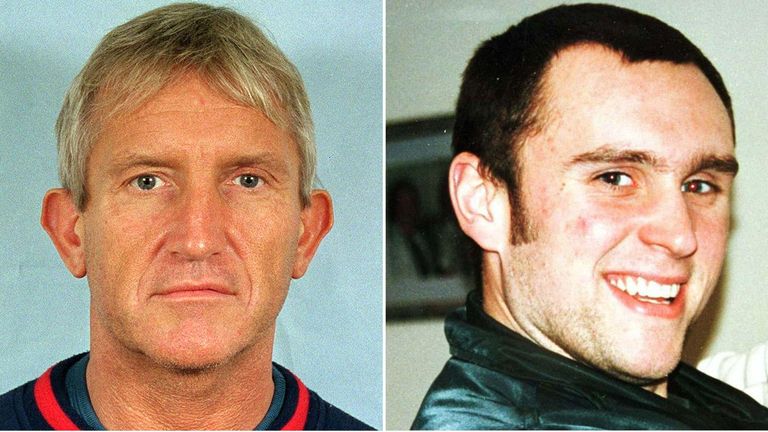
Kenneth Noye, left, and Stephen Cameron
Mr Brown, 86, said: “I went over to him and said ‘thanks for coming, nice of you to pop in’, but I don’t believe you’ve turned up with your sons and grandkids to listen to me telling how you killed a police officer.
“And he said ‘I want to make sure you don’t say I’ve been dealing drugs’ and I said ‘I’ve never said that Kenny’.”
The retired detective told Noye he wasn’t going to change his presentation just because he was there.
“He said ‘mate, I wouldn’t expect you to and I’ll come up [on stage] if you want me to’.
“Can you think how he’s turned up with his family to listen to somebody talking about you killing the police? Now, you put logic on that.”
The bizarre story emerged when I rang Mr Brown after I’d been told about the meeting.
A Sky News podcast told the story of the Brink’s-Mat heist in 2019
I also wanted to ask him about the recent BBC hit drama series The Gold which retold the story of the Brink’s-Mat heist at Heathrow Airport in 1983.
“It was an absolute shambles, far too much dramatic licence and the real story was so much better,” said the ex-detective, whose job had been to follow the trail of the 6,800 gold bars to the US and the Caribbean.
He said he chatted to one of the show’s writers for a long time in a phone call but then heard no more.
“They invented people, changed a bit here and there and made it politically correct in so many ways. I’m just very sad that that is what people will believe.
“And I couldn’t work out who my character was supposed to be. I could have been one of the female cops.”
He also criticised the portrayal of Noye, now 78, as a likeable jack-the-lad character when the truth about the double killer with a volatile temper was quite different.
-
 Sports3 years ago
‘Storybook stuff’: Inside the night Bryce Harper sent the Phillies to the World Series
-
 Sports1 year ago
Story injured on diving stop, exits Red Sox game
-
 Sports2 years ago
Game 1 of WS least-watched in recorded history
-
 Sports2 years ago
MLB Rank 2023: Ranking baseball’s top 100 players
-
Sports4 years ago
Team Europe easily wins 4th straight Laver Cup
-
 Environment2 years ago
Japan and South Korea have a lot at stake in a free and open South China Sea
-
 Sports2 years ago
Button battles heat exhaustion in NASCAR debut
-
 Environment2 years ago
Game-changing Lectric XPedition launched as affordable electric cargo bike