
Allmendinger wins crash-marred Brickyard 200


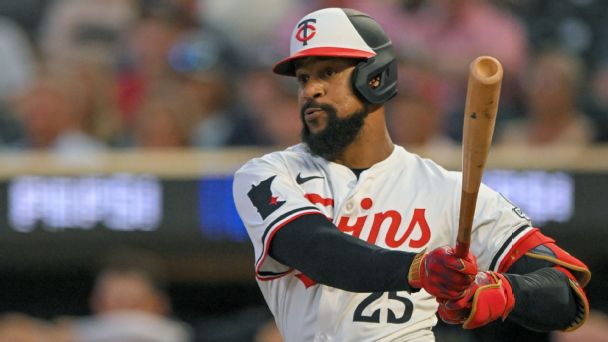
The MLB winter meetings have come and gone, and though there’s always a hope that there will be plenty of action, that’s not always the case. The 2025 meetings didn’t have a $700 million-plus deal like last year, but there were still a number of impactful free agent signings, although no groundbreaking trades.
Veteran slugger Kyle Schwarber chose to return to the Philadelphia Phillies on a five-year deal in the first major splash of the meetings. The Los Angeles Dodgers added to an already star-studded roster by signing closer Edwin Diaz to a three-year, $69 million contract that sets a record in AAV for a reliever. The Baltimore Orioles then joined the fun by adding a veteran slugger on a five-year deal of their own in Pete Alonso.
We asked our MLB experts who were on the scene in Orlando, Florida, to break down everything that happened this week. Which moves most impressed them — and which most confused them? Who were the biggest winners and losers? What should we make of the trade market? And what can we expect next?
What is the most interesting thing you heard this week in Orlando?
Jorge Castillo: That a Tarik Skubal trade is likely. Here’s what we know: Detroit Tigers president of baseball operations Scott Harris can shut down speculation by simply saying he is not trading Skubal and he has not done that. Instead, he noted this week that there aren’t any “untouchables” on his roster. Trading the best pitcher in baseball when you’re trying to compete would upset the fan base, but the Tigers, knowing re-signing Skubal next winter is unlikely, appear open to it.
Bradford Doolittle: Managers’ responses to questions about how they plan to handle the new automated ball-strike (ABS) challenge system were interesting. No one seems fixed on a protocol just yet, but what had not occurred to me is that catchers are likely to be the triggers for challenges for the defense. So instead of the possible reality in which catcher value was undermined by a full-blown automated system, this structure actually will enhance it — and we’ll have a new set of statistics to track.
Alden Gonzalez: Tyler Glasnow‘s name has come up in conversations, and the Dodgers would not be opposed to moving him. He’s poised to make a combined $60 million over the next two years, with either a $30 million club option or a $21.6 million player option in 2028. But the quality of his stuff continues to tantalize executives throughout the industry, and there are certainly a fair share of teams that will bank on him staying healthy enough to make it worthwhile. Maybe he’s part of the package that brings Tarik Skubal to L.A. It’s a long shot, perhaps, but wilder things have happened.
Jeff Passan: The Texas Rangers are in listening mode on star shortstop Corey Seager, which doesn’t mean the two-time World Series MVP is by any means going to be moved but reflects the Rangers’ willingness to overhaul the team beyond their trade of Marcus Semien. To be abundantly clear: Texas isn’t looking to shed the remaining $186 million on his contract. The return would need to overwhelm the Rangers. But they are facing a payroll crunch, and with Alonso landing a $155 million deal and Schwarber reaping $150 million, Seager’s deal is quite appealing. He’s only 31, he plays an excellent shortstop and of all the position players ostensibly available via trade or free agency, he is the best.
Jesse Rogers: Simply put, that deals for many of the major free agent pitchers aren’t close to being finalized. It almost feels like the beginning of the offseason for starting pitchers, who are meeting with teams to try to ignite their market. There has been a steady pace of signings for relievers — especially at the high end — but other than Dylan Cease, starting pitchers have been slow to agree to deals. That will change — at least in part — because Japanese starter Tatsuya Imai has a deadline of Jan. 2 to sign, but even that is still several weeks away.
What was your favorite move of the offseason so far?
Doolittle: I’m not too excited about any of them so far — not that I think they’re all bad, just nothing tickles my fancy. So the bar is pretty low. I’ll go with the Toronto Blue Jays going big on Cease. Keep that crest wave Toronto is on rolling.
Gonzalez: As a general rule, any free agent deal this time of year tends to be an overpay. And that’s what makes the Dodgers’ deal for star closer Diaz so appealing. Diaz received the highest annual value ever for a reliever, but they were able to get him for only three years (and, as they so often do, defer some of the payments). The Dodgers capitalized on the New York Mets‘ signing of Devin Williams — which opened the door for Diaz’s departure — and addressed their own biggest need with the type of short-term, high-AAV contract that is always their preference.
Rogers: I love Baltimore going for it, agreeing to a deal with Alonso. The Orioles had a bad season in 2025 and are doing everything they can to change their fortunes for next season — even if there are some inherent doubts about acquiring an aging first baseman for big money. The bottom line is Alonso is going to mash in Baltimore and perhaps bring some leadership to a team that needs a veteran presence. I love the big swing here — pun intended.
Which team’s actions (or lack thereof) had you scratching your head?
Doolittle: It’s probably too early to judge any particular team for its offseason in total, but the most perplexing move for me was Baltimore dealing Grayson Rodriguez to the Los Angeles Angels for one year of Taylor Ward. That definitely makes my head itch.
Castillo: The Orioles prioritizing a slugger after acquiring Ward from the Angels was unexpected. Baltimore does not have a shortage of young position player talent. Starting pitching, not offense, was their pressing need — especially after trading Rodriguez for Ward. But the Orioles offered Schwarber a five-year, $150 million deal and quickly pivoted to Alonso when Schwarber chose the Phillies, landing the former Mets first baseman with a five-year, $155 million deal that surpassed industry projections. The pressure remains on Orioles president of baseball operations Mike Elias to acquire a front-line starter, which he has plainly stated is an offseason priority.
Passan: What the New York Mets did over a 24-hour period to end the meetings — miss out on slugger Schwarber, lose closer Díaz to the two-time defending World Series champion Dodgers and lose Alonso, their franchise home run leader, to the Orioles — felt like a bloodletting.
Collapses like the Mets’ have consequences, and president of baseball operations David Stearns is reshaping them to his liking. Defensive liabilities are a no-no. Record-setting deals for relief pitchers are verboten. How the Mets proceed is anyone’s guess, but let’s not forget: Steve Cohen is still the richest owner in baseball, and that opens a world of possibilities. But if this period of inaction isn’t remedied through decisive moves — an influx of talent either through free agency or trades — the Mets’ playoff hopes will end before they’ve begun.
After a lot of buzz ahead of the meetings, it was pretty quiet on the trade front. What is one big deal you think could go down from here?
Gonzalez: The Miami Marlins have been engaged in trade conversations around Edward Cabrera, a 27-year-old starting pitcher with three controllable years remaining. And the Orioles have emerged as a front-runner, as first reported by The Athletic. There are a number of starting pitchers available at the moment. Sonny Gray has already gone from St. Louis to Boston, and Cabrera could be next to move.
Passan: A second baseman is going to move. Maybe multiple. There is too much interest in Ketel Marte, Brendan Donovan and Brandon Lowe for a deal not to be consummated. It’s not just them, either. Jake Cronenworth is available. The Yankees have listened on Jazz Chisholm Jr. The Mets’ overhaul could include moving Jeff McNeil.
Marte and Donovan are the clear top options, with Arizona’s and St. Louis’ respective demands exceptionally high. Which is where, at this point on the calendar, they should be. Especially with all of the teams that could use a second baseman (Boston, Pittsburgh, San Francisco, Seattle, New York Mets) or that would be willing to replace theirs.
Rogers: Where there is smoke, there is fire, meaning Washington Nationals starting pitcher MacKenzie Gore will be moved. His name came up a lot in Orlando and there are enough motivated teams in part because he’s good and affordable. An American League East team, such as the New York Yankees or Orioles, fits for Gore — especially the latter, which might have an extra hitter or two to spare after signing Alonso. Gore fits in Baltimore on several levels.
Who was the biggest winner — and loser — of the week?
Castillo: The Mets were the biggest loser. Losing Diaz and Alonso on consecutive days two weeks after trading Brandon Nimmo is a staggering sequence not just because they are all All-Star-caliber players, but because they were so integral to the franchise and beloved by the fan base. This doesn’t mean the Mets can’t emerge as winners this season. Stearns & Co. have time to rebound. They certainly have moves to make. But this was an ugly week for Mets fans, one they’ll never forget.
Passan: The Dodgers were the biggest winner, filling their clearest need with one of the best closers in baseball, Díaz. Cincinnati, in the meantime, is the biggest loser.
Free agents of Schwarber’s ilk rarely entertain the idea of going to small-market teams, but the Reds had a built-in advantage: He was from there. Considering the scarcity of such possibilities, the Reds — one big bat away from being a real threat to win the NL Central — needed to treat Schwarber’s potential arrival with urgency and embrace their inner spendthrift. They had the money to place the largest bid. They chose not to. And they missed, a true shame considering the strength of their rotation and the likelihood that similar opportunities won’t find them again anytime soon.
Rogers: The Phillies were the biggest winner. Where would they be without Schwarber? Perhaps it was a fait accompli he would be returning, but until he signed on the dotted line, some doubt had to exist. His power simply can’t be replaced, meaning the Phillies’ whole trajectory this offseason would have changed had he left. Now, they can keep moving forward on other important decisions, such as what to do at catcher and if Nick Castellanos still fits their roster. Checking the Schwarber box removes a major potential headache for the franchise. Conversely, even if it was a long shot, the Cincinnati Reds losing out on Schwarber has to hurt. As important as he is to the Phillies, his impact in Cincinnati could have been even more meaningful. He instantly would have elevated the Reds on and off the field.
Which team is under the most pressure to do something big after the meetings?
Castillo: The Mets for the reasons I stated above. Stearns obviously believed he needed to make changes to the roster after such a disappointing season. But this is a major, major overhaul that goes beyond on-field performance. Diaz, Alonso, and Nimmo were beloved core Mets and key to the franchise’s fabric. The pressure is on Stearns to ensure the jarring changes will produce success.
Doolittle: Cincinnati. The Reds muffed the Schwarber situation in a major way. I’m not sure what their actual chances were of signing him, but they should have at least matched what the Phillies offered. The fit between the player and what he’d add to the city and the clubhouse culture while addressing the roster’s biggest need in an emphatic fashion was a set of alignments hard to replicate. There is no suitable pivot from here. But the Reds need to do something — and they need to stop making excuses for why they don’t.
Gonzalez: The Mets. Their decision to not pay a premium for cornerstone players prompted Diaz to leave for L.A., Alonso to depart for Baltimore and their fans, understandably, to be up in arms. Now, they must react. They still have needs to address in their rotation, but they have to get aggressive with their lineup before all of the premium bats come off the board. Going after Cody Bellinger, and potentially stealing him from their crosstown rivals, feels like the natural pivot.
Passan: The Blue Jays have a chance to seize control of the AL East even more than they did in winning the division this year. Whether that means signing Kyle Tucker, Bo Bichette or both, they’re spending in the sort of fashion the Yankees and Red Sox used to — and taking advantage of the window of opportunity that presents is imperative.
Toronto, long mocked for its failures in free agency, is now a destination for players enthralled by the brand of baseball the Blue Jays play as well as the deep pockets of ownership. If you’re going to spend $210 million on Cease, that’s a sign: It’s all-in time, and opportunistic maneuvering would pay huge dividends for Toronto.
Rogers: The Yankees. For once, they are the team that needs to respond after the Blue Jays beat them on the field and now so far in the offseason. Toronto keeps adding while New York should try to at least maintain what it has — meaning Bellinger, or perhaps Tucker, should be in Yankees pinstripes as soon as possible. If the Yankees can add Imai, they’ll match Toronto’s addition of Cease. That would be a good thing. The two teams aren’t that far apart in talent, but Yankees general manager Brian Cashman can’t take his foot off the gas. The pressure is on in New York again.

-
Bill Connelly
The “Bowls are dead!” chorus is growing louder. Notre Dame opted out after what had to feel like one of the crueler playoff snubs imaginable (non-2023 Florida State edition, anyway). So did Kansas State and Iowa State (who, to be fair, lost their head coaches and had basically taken a bowl trip to Ireland to start the season already). When the Birmingham Bowl was looking for an opponent for Georgia Southern, it had to search pretty deep into the bin of 5-7 teams before finding one willing and able to make the flight. The vibes have certainly been better.
Once the field is set, however, the vibes don’t matter. With two delightful Saturday matchups — Prairie View A&M vs. South Carolina State in the Cricket Celebration bowl at noon ET, then Boise State vs. Washington in the Bucked Up LA Bowl Hosted by Gronk at 8 p.m. (with Army-Navy in between, of course) — the train leaves the station. Then we’re off on a three-week journey from Atlanta to Boise and Frisco and Hawaii and Boston and Birmingham and El Paso and all points in between.
Some teams will be more excited to be there than others, and some players will opt out, and the show will go on regardless. We’ll soak in the last college football we can get, we’ll see players dump french fries and mayonnaise (in separate bowl games, though that’d be delightful together) on victorious coaches, we’ll murder an anthropomorphized Pop-Tart, and we’ll all have a lovely time.
The deader we pretend bowls are, the more entertaining they turn out to be. To prepare you for the silliness, I’m here to lump each bowl game — not including first-round College Football Playoff games, which technically aren’t bowls, or the Fiesta and Peach Bowl semifinals, which don’t have any teams yet — into 13 categories. (Some show up in multiple categories. It’s fine.)
Here’s something you need to know about each game on the forever-loaded bowl schedule.

The usurpers start their run
 CFP Quarterfinal at the Capital One Orange Bowl: James Madison–Oregon winner vs. No. 4 Texas Tech (Jan. 1)
 CFP Quarterfinal at the Rose Bowl Game Presented by Prudential: Alabama–Oklahoma winner vs. No. 1 Indiana (Jan. 1)
Generally speaking, I remain of the belief that the College Football Playoff quarterfinals should be at home stadiums and that the four bowls currently used for the quarterfinals should be used to pair off the top eight non-playoff teams in the most attractive possible matchups. This year, we could have gotten a Texas-USC Rose Bowl, or Vanderbilt in the Sugar Bowl, or maybe a postseason Holy War between BYU and Utah in the Cotton Bowl. (And hey, would Notre Dame have so quickly opted out of bowl participation if the promise of a Notre Dame-Michigan Orange Bowl loomed instead? Perhaps, but go with me here.)
I’m not the biggest fan of these bowls basically being used as neutral-site venues for a playoff game. I remember last year’s incredible Arizona State-Texas quarterfinal, for instance, but I had to think for a moment to remember that it was technically also the Peach Bowl. To me that almost dilutes the value of these major bowls.
The best way around this problem, however, is when teams like Indiana or Texas Tech — college football’s greatest usurpers at the moment — are involved. Indiana and Ohio State played in a Big Ten championship game last week that had almost no playoff consequences, but you couldn’t tell that to Indiana fans who desperately wanted to see their team both pull one over on the Buckeyes for the first time since 1988 and win a share of their first Big Ten title (and earn their first Rose Bowl berth) since 1967. The Hoosiers will play — and be favored against — a college football blue blood there, too, be it Oklahoma or Alabama. They will obviously hope to play two more games after this one, but this will still feel like an awfully big deal.
Texas Tech, meanwhile, will be playing in its first Orange Bowl. It is an injustice that the Red Raiders weren’t sent to the far closer Cotton Bowl — Ohio State was sent there instead, and there’s a chance it could create a bit of a home-field advantage for the Buckeyes’ opponent if they face Texas A&M there — but it is still a neat rarity for a program that is successfully spending its way into the big time.
For all the problems facing this sport at the moment, we could see Indiana winning the Rose Bowl and Texas Tech winning the Orange Bowl, clinching a semifinal appearance against each other and assuring that one of them will play the national title. That’s pretty cool. (Granted, we also could end up with Alabama-Oregon or something far more familiar.)
Dynasties in the making?
 CFP Quarterfinal at the Goodyear Cotton Bowl Classic: Miami–Texas A&M winner vs. No. 2 Ohio State Buckeyes (Dec. 31)
 CFP Quarterfinal at the Allstate Sugar Bowl: Tulane–Ole Miss winner vs. No. 3 Georgia (Jan. 1)
It is a delightful work of symmetry that we have usurpers on one side of the bracket and the heaviest of heavyweights on the other. Of the past four national titles, Ohio State and Georgia have won three. The Buckeyes are the defending champs, and for all of the talk about parity in the SEC, the Bulldogs, national champs in 2021 and 2022, have won three of the last four conference titles and have played for seven of the last eight.
Ohio State is playing in the Cotton Bowl for the third straight season — even if last year’s win over Texas very much falls into the “it was a semifinal in Arlington more than it was the Cotton Bowl” category — and is visiting Jerry World for the fifth time in nine years. No matter how familiar the Buckeyes are with the terrain, however, they won’t be that familiar with their opponent: They’ll either be playing Texas A&M for the first time since the 1999 Sugar Bowl or Miami for the first time since 2011.
Georgia, meanwhile, will be either playing a Cinderella — if Tulane can avenge a blowout loss to Ole Miss early in 2025 — or facing a rematch of one of the SEC’s best games of 2025. The Dawgs went on a 17-0 run over the final 13 minutes to beat Lane Kiffin’s Rebels 43-35 on Oct. 18. Granted, they’re not Kiffin’s Rebels anymore, and a lot will have changed in two months. But either upstarts will pull upsets in the Cotton and Sugar Bowls, or we’ll get our first Ohio State-Georgia game since their incredible 2022 playoff game in Atlanta.
My five favorite non-playoff bowls

 Bucked Up LA Bowl Hosted by Gronk: Boise State vs. Washington (Dec. 13)
I ended up with five different reasons to pick these five games. Boise State-Washington is a pretty fun regional semi-rivalry that tends to produce either fun, tight Boise State wins or statement blowouts from UW. Both the Broncos and Huskies, meanwhile, are young enough to be hoping for big things in 2026, and both could use a positive result as a nice springboard.

 Sheraton Hawai’i Bowl: California vs. Hawai’i (Dec. 24)
California-Hawai’i might as well be called the JKS Bowl. Cal quarterback Jaron-Keawe Sagapolutele, a native of Ewa Beach, Hawai’i, has committed to returning to Berkeley next season — despite the fact that we don’t know what offensive coordinator new head coach Tosh Lupoi is going to hire — and he gets a homecoming game of sorts back on the islands.

 Go Bowling Military Bowl: Pittsburgh vs. East Carolina (Dec. 27)
Pitt-ECU is just going to be a mess. A wonderful mess. The Panthers and Pirates played two of last season’s wildest bowls — Pitt lost a six-overtime slugfest to Toledo, ECU won a brawl-plagued (or brawl-blessed?) rivalry game over NC State — and they both tend to live right on the line between aggression and a total lack of control. Hell yeah.

 Cheez-It Citrus Bowl: No. 13 Texas vs. No. 18 Michigan (Dec. 31)
Texas-Michigan is, quite simply, a helmet game. I’m a fan of underdogs, and I preach the value of college football socialism as much as anyone, but I’m allowed to enjoy helmet games.

 ReliaQuest Bowl: No. 14 Vanderbilt vs. No. 23 Iowa (Dec. 31)
Vandy-Iowa means that the final chapter in the Diego Pavia story will come against a physical and often confusing Iowa defense and a generally underrated Hawkeyes team. This should be a max-effort game from both sides, too.
Disappointment Bowls, Part 1 (crushed CFP dreams)
Isleta New Mexico Bowl: No. 25 North Texas vs. San Diego State (Dec. 27)
Pop-Tarts Bowl: No. 12 BYU vs. No. 22 Georgia Tech (Dec. 27)
Cheez-It Citrus Bowl: No. 13 Texas vs. No. 18 Michigan (Dec. 31)
ReliaQuest Bowl: No. 14 Vanderbilt vs. No. 23 Iowa (Dec. 31)
SRS Distribution Las Vegas Bowl: No. 15 Utah vs. Nebraska (Dec. 31)
Granted, the First Team Out of the 2025 CFP, Notre Dame, isn’t playing in the postseason at all. But the likes of BYU, Texas, Vandy, Utah and American Conference title game loser North Texas dealt with their share of disappointment too. Who uses the snub and/or letdowns as fuel, and who’s already punted on the season?
Disappointment Bowls, Part 2 (disappointing 2025 campaigns)
Bad Boy Mowers Pinstripe Bowl: Penn State vs. Clemson (Dec. 27)
Kinder’s Texas Bowl: No. 21 Houston vs. LSU (Dec. 27)
Liberty Mutual Music City Bowl: Tennessee vs. Illinois (Dec. 30)
Tony the Tiger Sun Bowl: Arizona State vs. Duke (Dec. 31)
Penn State, Clemson, LSU, Arizona State, Tennessee and Illinois all began the season in the preseason AP top 15, and they’re all currently unranked. For Penn State and Clemson, the disappointments came early in the season, and they spent the latter portion of the year gathering themselves and trying to make something of the campaign. The Nittany Lions rallied to win their last three games to reach bowl eligibility, and the Tigers won their last four to finish 7-5. The Pinstripe Bowl winner will therefore actually finish the season feeling pretty good about itself, all things considered. Arizona State might, too, considering the Sun Devils could still end up 9-4 despite an injury to quarterback Sam Leavitt derailing their hopes.
The 2026 Heisman race begins
Bucked Up LA Bowl Hosted by Gronk: Washington (Demond Williams Jr.) vs. Boise State (Dec. 13)
Sheraton Hawai’i Bowl: California (Jaron-Keawe Sagapolutele) vs. Hawai’i (Dec. 24)
TaxSlayer Gator Bowl: Missouri (Ahmad Hardy) vs. No. 19 Virginia (Dec. 27)
Valero Alamo Bowl: No. 16 USC (Jayden Maiava) vs. TCU (Dec. 30)
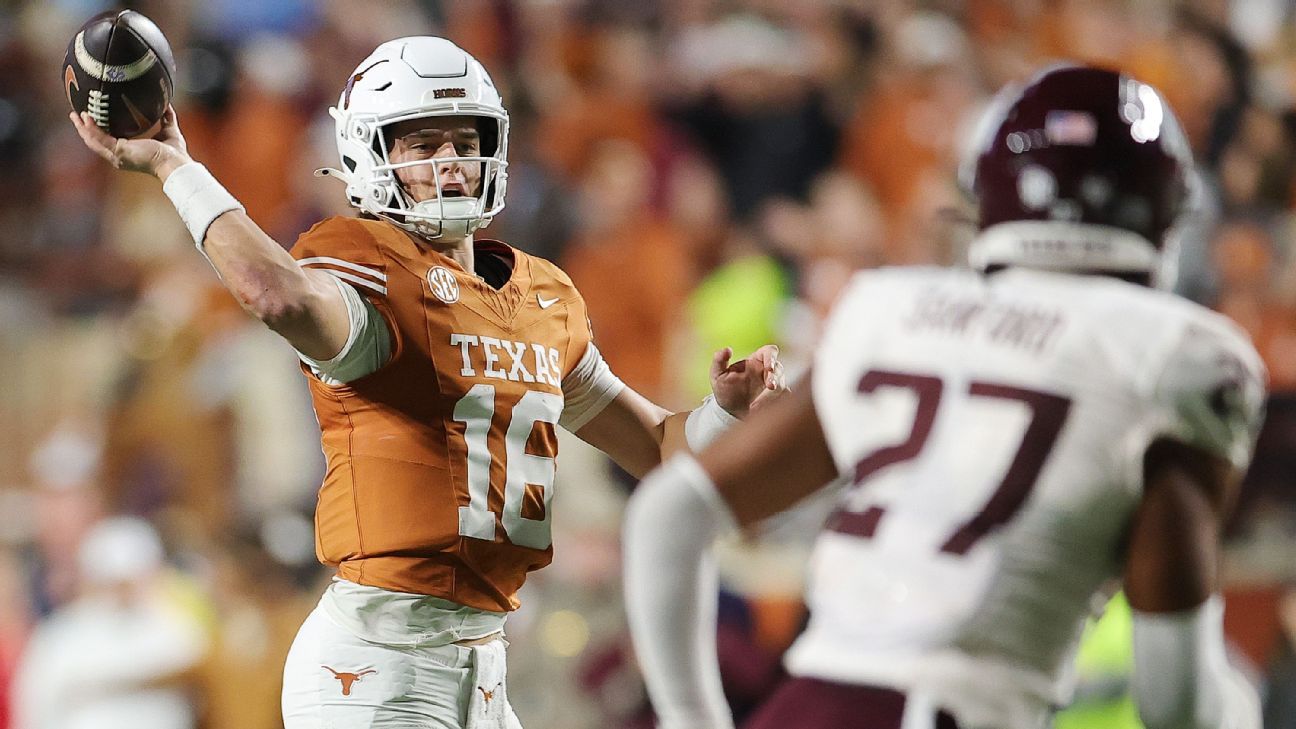
Cheez-It Citrus Bowl: No. 13 Texas (Arch Manning) vs. No. 18 Michigan (Bryce Underwood) (Dec. 31)
Ohio State’s Julian Sayin and Jeremiah Smith (and Bo Jackson?), Georgia’s Gunner Stockton, Ole Miss’ Trinidad Chambliss and Kewan Lacy, Miami’s Malachi Toney, Texas A&M’s Marcel Reed and other potential 2026 Heisman candidates will be plying their trade in the CFP. Oregon’s Dante Moore, too, if he doesn’t go pro. But despite being outside of the playoff’s realm, other potential candidates will have a chance to build plenty of 2026 buzz. Can you imagine what will happen if, say, Arch Manning throws for 300-plus on Michigan? You thought this year’s buzz was loud?
Embrace the silliness
Bucked Up LA Bowl Hosted by Gronk: Boise State vs. Washington (Dec. 13)
Famous Idaho Potato Bowl: Washington State vs. Utah State (Dec. 22)
Bush’s Boca Raton Bowl of Beans: Toledo vs. Louisville (Dec. 23)
Pop-Tarts Bowl: No. 12 BYU vs. No. 22 Georgia Tech (Dec. 27)
Snoop Dogg Arizona Bowl: Miami (Ohio) vs. Fresno State (Dec. 27)
Duke’s Mayo Bowl: Wake Forest vs. Mississippi State (Jan. 2)
It’s OK to admit it: For some games, the teams, players and coaches are just pawns for other types of entertainment value. Boise State-Washington could be very entertaining on its own, but it’s going to be awash with Rob Gronkowski appearances, too. The same goes for the Snoop Dogg Arizona Bowl.
Either Utah State’s Bronco Mendenhall or Washington State interim coach Jesse Bobbit will get showered with french fries at the end of the Famous Idaho Potato Bowl. The winner of the Bush’s Boca Raton Bowl of Beans — a real thing! — allegedly won’t get showered with beans, but there’s still time for important people to change their minds on that one. And at this point, the lore of the Pop-Tarts Bowl and Mayo Bowl are about as well-known as the sport itself.
1:34
‘Yeah, boy!’ Flava Flav revealed as mascot during mayo bath
Flava Flav is revealed as the celebrity in the mayo mascot uniform as Minnesota coach P.J. Fleck gets doused in mayonnaise.
Either Wake Forest’s Jake Dickert or Mississippi State’s Jeff Lebby will be finding mayonnaise in places he never dreamed of come the morning of Jan. 3. College football!
Ending Year 1 with a bang
The transfer portal has redefined what it means to be a first-year coach. Either by choice or by necessity, you can now almost re-craft your entire roster right out of the gate. This goes horribly for some, obviously, but not even including some schools like Washington State, where the first-year guy has already left, we have a number of first-year success stories looking to keep the positivity going.
Cricket Celebration Bowl: Prairie View A&M (Tremaine Jackson) vs. South Carolina State (Dec. 13)
People of a certain age (read: mine) will forever remember Prairie View A&M as the school that lost an epic 80 straight games in the 1980s and 1990s. The Aggies have seen successful since then — four SWAC West division titles, two SWAC titles — but now they’ll get their first Celebration Bowl spotlight thanks to last week’s upset of Jackson State in the SWAC title game. And they got here with a first-year coach who could become a very big name soon.
Tremaine Jackson is 50-15 in his short time as a head coach, and in the past two years he has brought Valdosta State to the Division II national title game and won the SWAC with Prairie View. PVAMU will face second-year coach Chennis Berry and SC State, and my SP+ ratings have the game as almost a perfect tossup. A great game to start bowl season.
IS4S Salute to Veterans Bowl: Jacksonville State (Charles Kelly) vs. Troy (Dec. 13)
JLAB Birmingham Bowl: Appalachian State (Dowell Loggains) vs. Georgia Southern (Dec. 29)
I wanted to isolate these two because of underrated bitterness: Jacksonville State and Troy are in-state rivals who will be playing each other in Mobile, Alabama, right in between the two schools. That one should be feisty enough that it almost made my favorite bowls list. Meanwhile, App State and Georgia Southern are former FCS powers that don’t like each other much either, and their first game this season, a 25-23 Eagles win, was great.
Myrtle Beach Bowl Presented by Engine: Kennesaw State (Jerry Mack) vs. Western Michigan (Dec. 19)
Famous Idaho Potato Bowl: Utah State (Bronco Mendenhall) vs. Washington State (Dec. 22)
Scooter’s Coffee Frisco Bowl: UNLV (Dan Mullen) vs. Ohio (Dec. 23)
Rate Bowl: New Mexico (Jason Eck) vs. Minnesota (Dec. 26)
SERVPRO First Responder Bowl: Florida International (Willie Simmons) vs. UTSA (Dec. 26)
Snoop Dogg Arizona Bowl: Fresno State (Matt Entz) vs. Miami (Ohio) (Dec. 27)
Lockheed Martin Armed Forces Bowl: Rice (Scott Abell) vs. Texas State (Jan. 2)
Duke’s Mayo Bowl: Wake Forest (Jake Dickert) vs. Mississippi State (Jan. 2)
Finishing strong
One method I enjoy for measuring which teams are particularly hot or cold at a given time is taking a weighted five-game average of how much teams are over- or underachieving against SP+ projections (weighted so that the most recent game takes on five times weight, the second-most recent game four times weight and so on).
At the end of the regular season, there were 15 teams with a weighted average of plus-9 PPG or better. That includes three playoff teams (Texas Tech, Tulane and Miami) and teams such as Wisconsin and Oklahoma State, which finished far short of bowl eligibility. But a few other teams, listed below with their PPG overachievement, could head into the offseason feeling like they have major momentum.
StaffDNA Cure Bowl: South Florida (+10.7) vs. Old Dominion (Dec. 13)
Famous Idaho Potato Bowl: Washington State (+10.9) vs. Utah State (Dec. 22)
SERVPRO First Responder Bowl: Florida International (+16.2) vs. UTSA (Dec. 26)
Snoop Dogg Arizona Bowl: Fresno State (+9.2) vs. Miami (Ohio) vs. (Dec. 27)
Trust & Will Holiday Bowl: No. 17 Arizona (+11.0) vs. SMU (Jan. 2)
USF and Washington State have already lost their head coaches — man oh man, does Wazzu deserve a period of time with some semblance of stability — but at the very least, FIU, Fresno State and Arizona have a chance to build major offseason positivity.
Redemption time
On the flip side, a few teams limped into bowl season at the end of a run of underachievement. Here are five games featuring teams that hope a bowl will turn bad feelings around. (Three of them already have interim coaches.)
Radiance Technologies Independence Bowl: Coastal Carolina (-16.1) vs. Louisiana Tech (Dec. 30)
SRS Distribution Las Vegas Bowl: Nebraska (-13.8) vs. No. 15 Utah (Dec. 31)
New Orleans Bowl: Southern Miss (-13.2) vs. Western Kentucky (Dec. 23)
AutoZone Liberty Bowl: Cincinnati (-13.0) vs. Navy (Jan. 2)
Union Home Mortgage Gasparilla Bowl: Memphis (-12.3) vs. NC State (Dec. 19)
Congratulations, you get to play a service academy!
Wasabi Fenway Bowl: Army vs. UConn (Dec. 27)
AutoZone Liberty Bowl: Navy vs. Cincinnati (Jan. 2)
The Cincinnati staff and UConn interim staff will both try to navigate the distractions of bowl season (and the looming portal season) while studying how to defend very annoying option offenses. Have fun with that.
7-6 sounds much better than 6-7 (and 6-7 sounds better than 5-8)
Quite a few teams had to eke out bowl eligibility and will now try to finish above .500. Meanwhile, recent times have brought us something new: a 5-8 record, obviously earned only by teams that sneak into a bowl at 5-7, then lose. Six teams belong to the 5-8 Club — 2016 North Texas, 2019 Army, 2021 Rutgers, 2022 Rice, 2023 Hawai’i and 2024 Louisiana Tech — and three teams will be attempting to avoid the ignominy. Rice will be looking to avoid becoming the first two-time member.
68 Ventures Bowl: Louisiana (6-6) vs. Delaware (6-6) (Dec. 13)
Xbox Bowl: Missouri State vs. Arkansas State (6-6) (Dec. 18)
Famous Idaho Potato Bowl: Washington State (6-6) vs. Utah State (6-6) (Dec. 22)
GameAbove Sports Bowl: Central Michigan vs. Northwestern (6-6) (Dec. 26)
SERVPRO First Responder Bowl: Florida International vs. UTSA (6-6) (Dec. 26)
Bad Boy Mowers Pinstripe Bowl: Penn State (6-6) vs. Clemson (Dec. 27)
JLAB Birmingham Bowl: Georgia Southern vs. Appalachian State (5-7) (Dec. 29)
Radiance Technologies Independence Bowl: Coastal Carolina (6-6) vs. Louisiana Tech (Dec. 30)
Lockheed Martin Armed Forces Bowl: Rice (5-7) vs. Texas State (6-6) (Jan. 2)
Duke’s Mayo Bowl: Wake Forest vs. Mississippi State (5-7) (Jan. 2)
First year, first bowl
68 Ventures Bowl: Louisiana vs. Delaware (Dec. 13)
Xbox Bowl: Missouri State vs. Arkansas State (Dec. 18)
Delaware and Missouri State both enjoyed solid FBS debut campaigns. Delaware needed tight wins over UConn, Middle Tennessee and Louisiana Tech and a season-ending walloping of UTEP to reach 6-6, and Missouri State began the year 2-3 before ripping off five straight wins and finishing 7-5. Now both the Blue Hens (3-point underdogs to Louisiana) and Bears (2.5-point favorites over potential regional rival Arkansas State) hope to boast a perfect all-time bowl record — well, a perfect record in FBS bowls, anyway: MSU went 0-4 in small-school bowls, most recently falling to Stephen F. Austin in the 1989 Pecan Bowl — a few days from now.
-
 Sports2 years ago
Story injured on diving stop, exits Red Sox game
-
 Sports3 years ago
‘Storybook stuff’: Inside the night Bryce Harper sent the Phillies to the World Series
-
 Sports2 years ago
Game 1 of WS least-watched in recorded history
-
 Sports3 years ago
Button battles heat exhaustion in NASCAR debut
-
 Sports3 years ago
MLB Rank 2023: Ranking baseball’s top 100 players
-
Sports4 years ago
Team Europe easily wins 4th straight Laver Cup
-
 Environment3 years ago
Japan and South Korea have a lot at stake in a free and open South China Sea
-
 Environment1 year ago
Here are the best electric bikes you can buy at every price level in October 2024