
‘It was a godsend’: Sir Tim Rice celebrates 50 years of Jesus Christ Superstar concept album

The revered musical Jesus Christ Superstar turns 50 this year.
The rock opera about Jesus and his face-off with Judas has toured the world, with huge productions on the West End, Broadway and beyond.
But before it became a global hit on stage, it started life as a concept album – something Sir Tim Rice called a “godsend”.
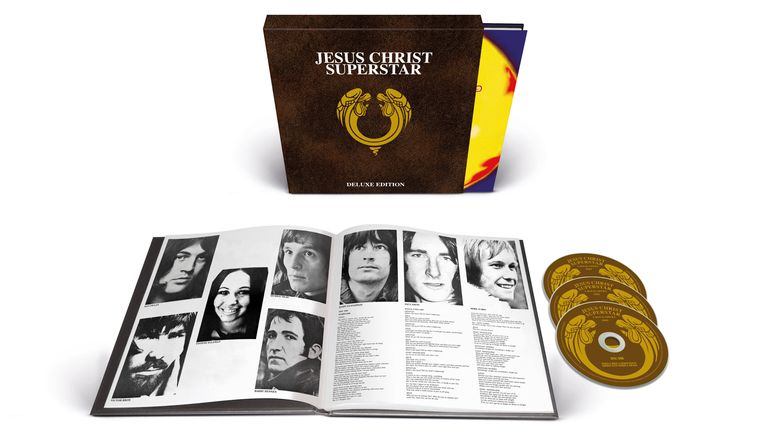
The album has been remastered 50 years on
Speaking to Sky News amid the launch of the album’s repackaged rerelease, Sir Tim, who along with Lord Andrew Lloyd Webber was the brains behind the project, said that the record allowed the pair to do more than they could do in a theatre at the time.
“We were trying to get our idea into a musical on the last few days in the life of Jesus, as seen through the eyes of Judas Iscariot.
“That was our ambition… but no theatrical producer showed any interest at the time, so we were kind of forced to make an album.
“But this turned out to be an absolute godsend, because we were able to use greater forces – we were able to make it more rock, we could have a huge orchestra, we could do wonderful things, even back then in 1970, wonderful things in the recording studio that you couldn’t do in a theatre and that made it a contemporary piece of music.
“Had we gone to the theatre straight away, it might have been okay, but it wouldn’t have been possible to have had a rock band in those days and an orchestra and all that stuff in a theatre, and we probably would have started out of town where the facilities would have been even less for this new sort of show.
“So we put out the record and the record was an almost overnight hit in America.”
Subscribe to the Backstage podcast on Apple Podcasts, Google Podcasts, Spotify, Spreaker
It was this album, with the likes of rock legends Ian Gillan (of Deep Purple fame) as Jesus, Manfred Mann’s Mike D’abo as King Herod and American singer Yvonne Elliman on it, that Sir Tim and Lord Lloyd Webber went on to score one of the first major stage successes of their careers.
“We had this thumping great hit record, a hit record of a show’s score without a show, and of course all the producers who said they [did not] want to do the show, now did want to do the show,” Sir Tim told Sky News.
“Superstar then grew in 1970, 1971, 1972 from an album, which became a hit all over the world, and only rather belatedly in Great Britain, and it became a show on Broadway first and then Australia and around Europe.”
But even before the album, which was recorded in the unassuming Olympic Studios in Barnes, southwest London, it was an idea Sir Tim had when he was growing up at Christian schools.
“I wasn’t sure if I was a believer or not, but I often thought when I was 15 or 16, Judas Iscariot, Pontius Pilate, these guys were around at the time but they didn’t really have their views put forward, particularly Judas in the Gospels.
“Judas is just like a cardboard figure of evil whose role was to betray Christ, and I often wondered if I were in that situation and did not believe Jesus was God, even if I thought he was a terrific guy, what would my reaction be?
“Would you feel that he was a danger to other people… and that really was something that I found very intriguing.”
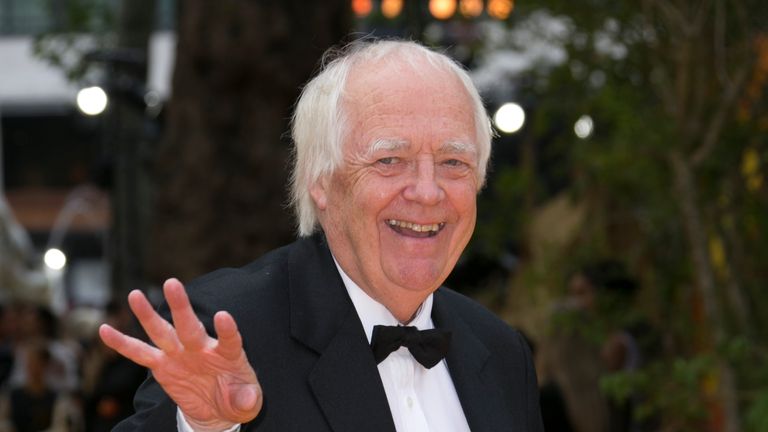
Sir Tim Rice wrote the show with Lord Andrew Lloyd Webber. Pic: Joel C Ryan/Invision/AP
Sir Tim and Lord Lloyd Webber were also fresh off the back of their first biblical success – Joseph And The Amazing Technicolour Dreamcoat – and had carved themselves out as people who could turn the story into something more exciting.
“This was something Andrew and I talked about to the dean of St Paul’s Cathedral, because he’d seen that we could do something from the Bible and make it fun and entertaining and also keep it serious… and he said, go for it – it’s a good idea.”
The album features tracks like Gethsemane (with that piercing high note), I Don’t Know How To Love Him, and of course Superstar, with Sir Tim saying it would be difficult “to take anything out of it without harming the whole piece” – a testament to the soundtrack’s importance on the story.

(L-R) Tim Minchin, Ben Forster, Melanie C and Chris Moyles were in the 2012 arena version of the show
Reflecting on his memories of recording the album, Sir Tim said: “It was quite nice at the end… when we sent copies of the album out to all the people who’d been on it, and most of them hadn’t really heard very much of it.
“They heard their own songs, often unmixed, but they hadn’t heard the whole thing and in some cases weren’t quite sure what the whole thing was going to end up like at all – but when we sent the album out to them… everybody they called up and said, this is actually great.
“It was a very hot summer, I remember in 1970, and we were sometimes a bit annoyed at having to be stuck in a studio for most of that summer – but it was actually really a very good experience and it was because it was our first major recording sessions”.
The special anniversary editions of the Jesus Christ Superstar album are available now, featuring demos, commentaries, interviews and more.
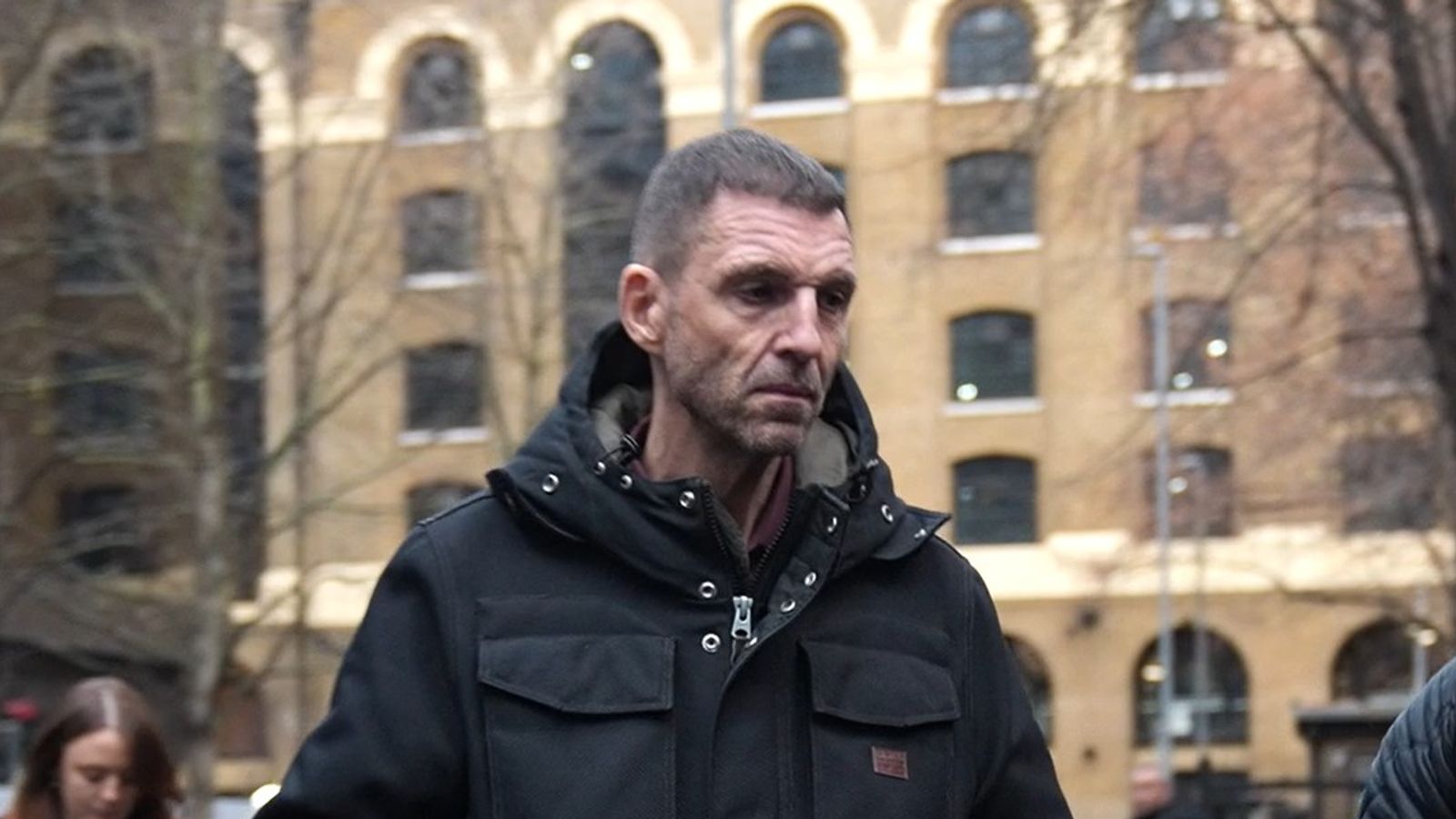


Donald Trump has said he will be “involved” in the decision on whether Netflix should be allowed to buy Warner Bros, as the $72bn (£54bn) deal attracts a media industry backlash.
The US president acknowledged in remarks to reporters there “could be a problem”, acknowledging concerns over the streaming giant’s market dominance.
Crucially, he did not say where he stood on the issue.
Money latest: The cheapest days to travel by plane
It was revealed on Friday that Netflix, already the world’s biggest streaming service by market share, had agreed to buy Warner Bros Discovery’s TV, film studios and HBO Max streaming division.
The deal aims to complete late next year after the Discovery element of the business, mainly legacy TV channels showing cartoons, news and sport, has been spun off.
But the deal has attracted cross-party criticism on competition grounds, and there is also opposition in Hollywood.
Netflix agrees $72bn takeover of Warner Bros
The Writers Guild of America said: “The world’s largest streaming company swallowing one of its biggest competitors is what antitrust laws were designed to prevent.
“The outcome would eliminate jobs, push down wages, worsen conditions for all entertainment workers, raise prices for consumers, and reduce the volume and diversity of content for all viewers.”

File pic: Reuters
Republican Senator, Roger Marshall, said in a statement: “Netflix’s attempt to buy Warner Bros would be the largest media takeover in history – and it raises serious red flags for consumers, creators, movie theaters, and local businesses alike.
“One company should not have full vertical control of the content and the distribution pipeline that delivers it. And combining two of the largest streaming platforms is a textbook horizontal Antitrust problem.
“Prices, choice, and creative freedom are at stake. Regulators need to take a hard look at this deal, and realize how harmful it would be for consumers and Western society.”
Paramount Skydance and Comcast, the parent company of Sky News, were two other bidders in the auction process that preceded the announcement.
The Reuters news agency, citing information from sources, said their bids were rejected in favour of Netflix for different reasons.
Paramount’s was seen as having funding concerns, they said, while Comcast’s was deemed not to offer so many earlier benefits.
Paramount is run by David Ellison, the son of the Oracle tech billionaire Larry Ellison, who is a close ally of Mr Trump.
The president said of the Netflix deal’s path to regulatory clearance: “I’ll be involved in that decision”.
On the likely opposition to the deal. he added: “That’s going to be for some economists to tell. But it is a big market share. There’s no question it could be a problem.”

Thousands of members of actors’ trade union Equity are being asked whether they would support industrial action over artificial intelligence protections.
The organisation has launched an indicative ballot among about 7,000 members working in film and TV.
Performers are being asked whether they are prepared to refuse to be digitally scanned on set in order to secure adequate artificial intelligence protections.
It will be the first time the performing arts and entertainment trade union has asked this whole section of its membership to vote in a ballot.
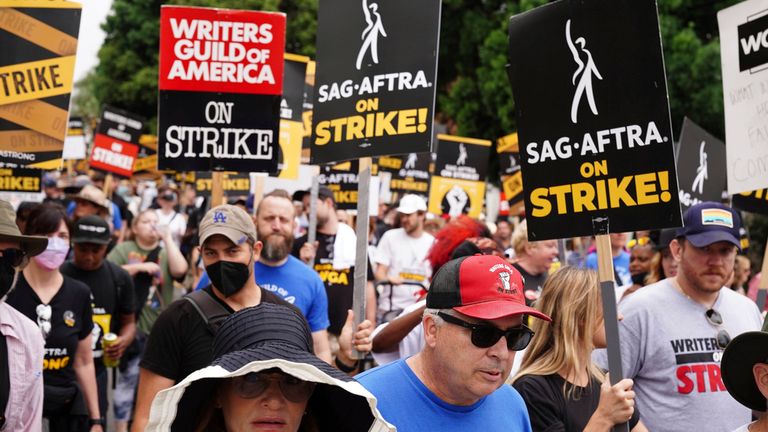
The Hollywood strikes took place in 2023. File pic: AP
The announcement follows the Hollywood strikes in 2023, when members of Equity’s sister union in the US, SAG-AFTRA, and writers, went on strike over issues including AI.
Video game actors in the US also protested over the use of AI, ending almost a year of industrial action earlier in 2025.
Equity’s ballot opens on Thursday and runs for two weeks, and will show the level of support the union has for action short of a strike.
Another statutory ballot would have to be made before any industrial action is taken.
“While tech companies get away with stealing artists’ likeness or work, and the government and decision makers fret over whether to act, unions including Equity are at the forefront of the fight to ensure working people are protected from artificial intelligence misuse,” Equity general secretary Paul W Fleming said in a statement.
“If bosses can’t ensure someone’s likeness and work won’t be used without their consent, why should performers consent to be digitally scanned in the first place?”
Mr Fleming said the ballot would give members the opportunity to “send a clear message to the industry: that it is a basic right of performers to have autonomy over their own personhood and identity”.
The union has no choice but to recommend members support industrial action, he said.
“It’s time for the bosses to step away from the brink and offer us a package, including on AI protections, which respects our members,” added Mr Fleming.
-
 Sports2 years ago
Story injured on diving stop, exits Red Sox game
-
 Sports3 years ago
‘Storybook stuff’: Inside the night Bryce Harper sent the Phillies to the World Series
-
 Sports2 years ago
Game 1 of WS least-watched in recorded history
-
 Sports3 years ago
Button battles heat exhaustion in NASCAR debut
-
 Sports3 years ago
MLB Rank 2023: Ranking baseball’s top 100 players
-
Sports4 years ago
Team Europe easily wins 4th straight Laver Cup
-
 Environment3 years ago
Japan and South Korea have a lot at stake in a free and open South China Sea
-
 Environment1 year ago
Here are the best electric bikes you can buy at every price level in October 2024