
Gas levy ‘expected to be confirmed in next two weeks’ despite rising prices

Spiralling gas bills could soar further under government plans to impose new charges to pay for eco-friendly heating, it has been reported.
The move to introduce a levy on the fossil fuel is contained in a new strategy due to be published ahead of next month’s COP26 climate conference in Glasgow, according to The Times.
It commits the government to cutting the price of electricity by removing green levies and slapping additional costs on gas to fund the switch to low-carbon alternatives.
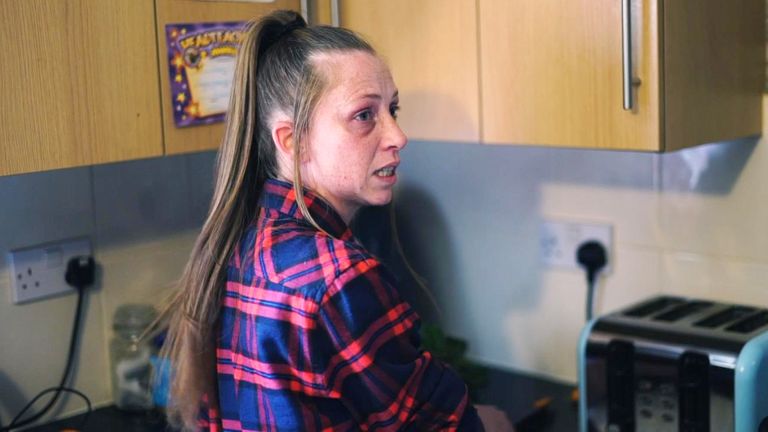
Family struggles with cost of living
However, the step is likely to prove controversial, with households already struggling with soaring energy bills in the face of increased wholesale prices, triggered by global demand as economies recover from the coronavirus pandemic.
The energy watchdog Ofgem has already warned millions of households should expect to see a “significant rise” in their bills at the next price cap review.
One government insider told The Times that the plans were “madness”.
Earlier this week, Boris Johnson said Britain was aiming to produce “clean power” by 2035 as part of the nation’s goal of reaching net zero carbon emissions.
Business Secretary Kwasi Kwarteng has also insisted that by decarbonising the UK’s power supply, the government would ensure households are less exposed to swings in fossil fuel markets.
The government will undertake a series of consultations on the carbon reduction plan, which is likely to start in 2023 and could add £170 a year to gas bills, The Times said.
The strategy will reportedly include measures to boost the sale of heat pumps, which currently cost about £10,000, compared with £2,000 for a gas boiler.
A spokesman for the Department for Business, Energy and Industrial Strategy told the Times: “We’ll set out our upcoming heat and buildings strategy shortly. No decisions have been made.”
It comes as soaring energy costs have prompted industry leaders to warn the government their factories could stop production or permanently close.
:
Subscribe to ClimateCast on Spotify, Apple Podcasts, or Spreaker
Andrew Large, director-general at the Confederation of Paper Industries, and Gareth Stace from UK Steel, attended a meeting with the business secretary and other representatives of energy intensive industries to discuss the wholesale gas crisis on Friday.
Mr Large later told the BBC it was “very clear” across all of the sectors that there are “serious” risks that plants could halt work as a result of the gas prices being too high.
Speaking to Channel 4 News, Mr Stace insisted the worst-case scenario would see steel plants closing for good.
He said: “The nightmare scenario would be that we produce less steel in the UK, that we see all of that steel that we do consume in the UK, and that’s increasing, be met by imports and once you take away a steel plant, you don’t really bring them back.
“That’s it for good. Once it’s done, it’s done.”
Watch the Daily Climate Show at 6.30pm Monday to Friday on Sky News, the Sky News website and app, on YouTube and Twitter. The show investigates how global warming is changing our landscape and highlights solutions to the crisis.

The US Office of the Comptroller of the Currency has affirmed that national banks can intermediate cryptocurrency trades as riskless principals without holding the assets on their balance sheets, a move that brings traditional banks a step closer to offering regulated crypto brokerage services.
In an interpretive letter released on Tuesday, the regulator said banks may act as principals in a crypto trade with one customer while simultaneously entering an offsetting trade with another, a structure that mirrors riskless principal activity in traditional markets.
“Several applicants have discussed how conducting riskless principal crypto-asset transactions would benefit their proposed bank’s customers and business, including by offering additional services in a growing market,” notes the document.
According to the OCC, the move would allow customers “to transact crypto-assets through a regulated bank, as compared to non-regulated or less regulated options.”

The letter also reiterates that banks must confirm the legal permissibility of any crypto activity and ensure it aligns with their chartered powers. Institutions are expected to maintain procedures for monitoring operational, compliance and market risks.
“The main risk in riskless principal transactions is counterparty credit risk (in particular, settlement risk),” reads the letter, adding that “managing counterparty credit risk is integral to the business of banking, and banks are experienced in managing this risk.”
The agency’s guidance cites 12 U.S.C. § 24, which permits national banks to conduct riskless principal transactions as part of the “business of banking.” The letter also draws a distinction between crypto assets that qualify as securities, noting that riskless principal transactions involving securities were already clearly permissible under existing law.
The OCC’s interpretive letter — a nonbinding guidance that outlines the agency’s view of which activities national banks may conduct under existing law — was issued a day after the head of the OCC, Jonathan Gould, said crypto firms seeking a federal bank charter should be treated the same as traditional financial institutions.
According to Gould, the banking system has the “capacity to evolve,” and there is “no justification for considering digital assets differently” than traditional banks, which have offered custody services “electronically for decades.”
Related: Trump’s national security strategy is silent on crypto, blockchain
From ‘Choke Point 2.0’ to pro-crypto policy
Under the Biden administration, some industry groups and lawmakers accused US regulators of pursuing an “Operation Choke Point 2.0” approach that increased supervisory pressure on banks and firms interacting with crypto.
Since President Trump took office in January after pledging to support the sector, the federal government has moved in the opposite direction, adopting a more permissive posture toward digital asset activity.
Magazine: Quantum attacking Bitcoin would be a waste of time: Kevin O’Leary

CryptoUK, a UK-based cryptocurrency trade association, has announced that it will join The Digital Chamber, a US crypto policy advocacy group, potentially marking a significant cross-collaboration on digital asset regulation between the two countries.
In a Tuesday notice, CryptoUK said its team would fall under The Digital Chamber’s umbrella as part of a “unified, cross-border advocacy platform.” Both groups have worked in their respective countries to promote policies favoring the cryptocurrency and blockchain industry, starting with The Digital Chamber in 2014 and CryptoUK in 2018.
“CryptoUK has always aspired to ensure we are driven by policy-led issues, member collaboration, and regulatory engagement,” said Su Carpenter, CryptoUK’s executive director.

The partnership between the two advocacy groups comes as US lawmakers move forward on negotiations to pass a digital asset market structure bill, aiming to establish regulatory clarity for the industry. In the UK, policymakers announced plans to collaborate with their counterparts in the US to explore crypto laws and regulations.
Related: Digital Chamber seeks to guide crypto policy across US states
US-based crypto advocacy organizations, such as The Digital Chamber, have garnered support from former regulators and members of Congress as the Trump White House directs policies toward the industry. Among these groups are the Solana Policy Institute, the Blockchain Association, the Crypto Council for Innovation, and the American Innovation Project.
UK central bank moves forward on stablecoins
On Nov. 10, the Bank of England released a consultation paper to propose a framework for “sterling-denominated systemic stablecoins.” The move by the country’s central bank marked a step toward the UK seeming to play catch-up to the US, where the government passed a law regulating payment stablecoins in July.
Bank of England Deputy Governor Sarah Breeden signaled before the publication of the paper that the central bank’s actions were in response to the US advancing stablecoin policies, and it was “really important” to be synchronized on rules.
Magazine: When privacy and AML laws conflict: Crypto projects’ impossible choice
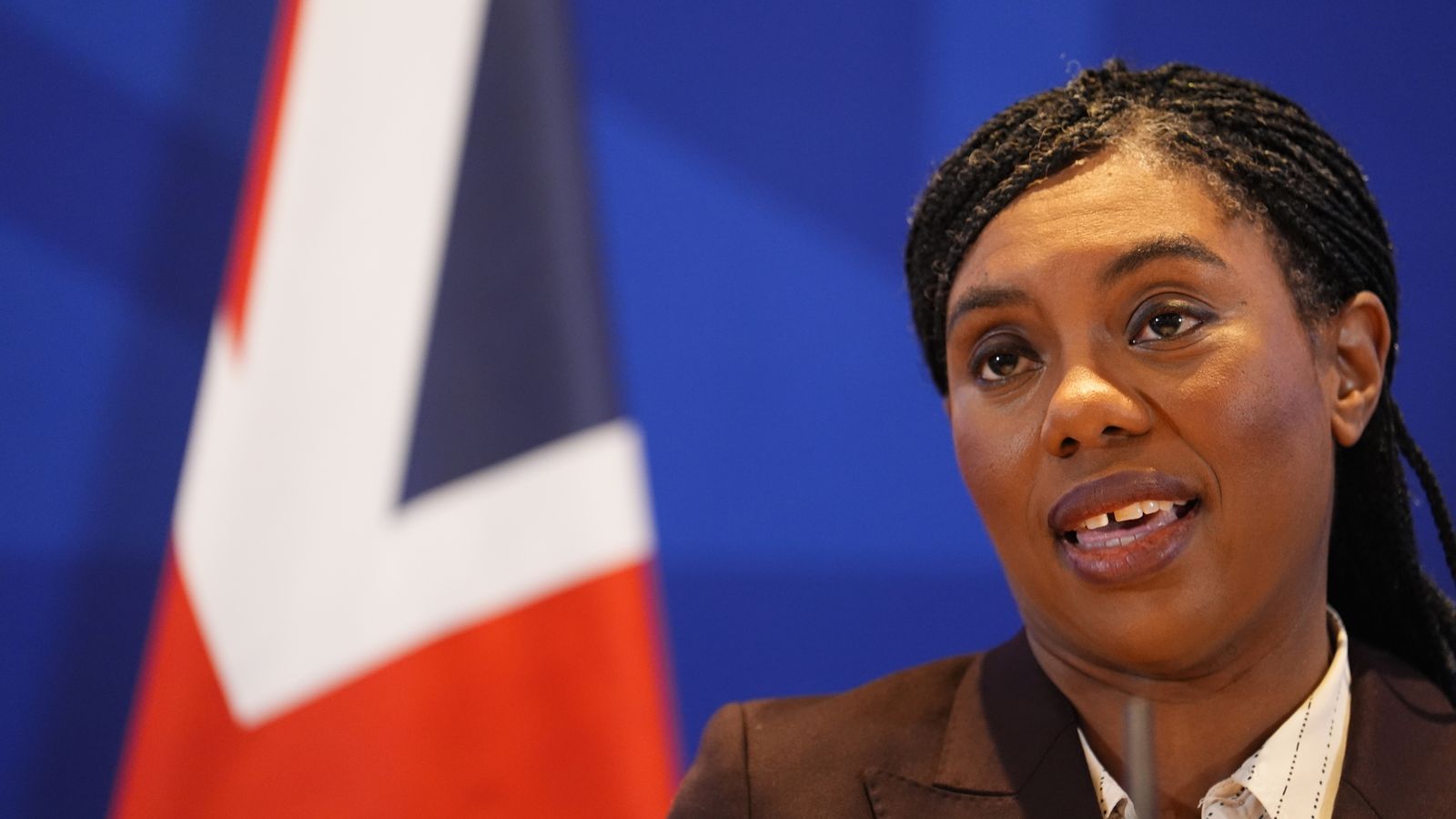
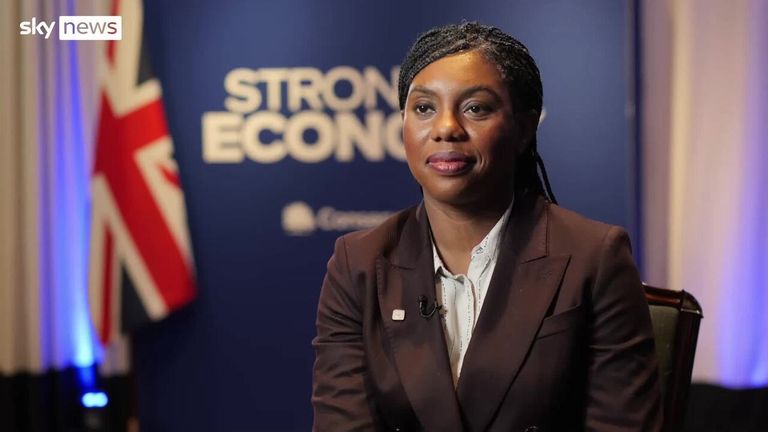
Kemi Badenoch has refused to say that the Conservatives are intending to win next May’s local elections, despite being repeatedly pushed on the issue.
Asked twice to define success for her party at the elections, the Tory leader merely said that she is “going to be fighting for every vote”.
Speaking to Sky News, she added: “Success is going to be people seeing the Conservative Party as the only party that is competent and credible enough to do the tough stuff that this country needs.”
The comments come as the Conservatives continue to trail in the polls.
Watch Kemi Badenoch’s interview with Sky News in full
New data released by YouGov this morning has put the Tories in third place behind Reform and Labour, a space they have largely occupied throughout the year. The pollster’s weekly voting intention analysis put Ms Badenoch’s party on 18%, down one percentage point.
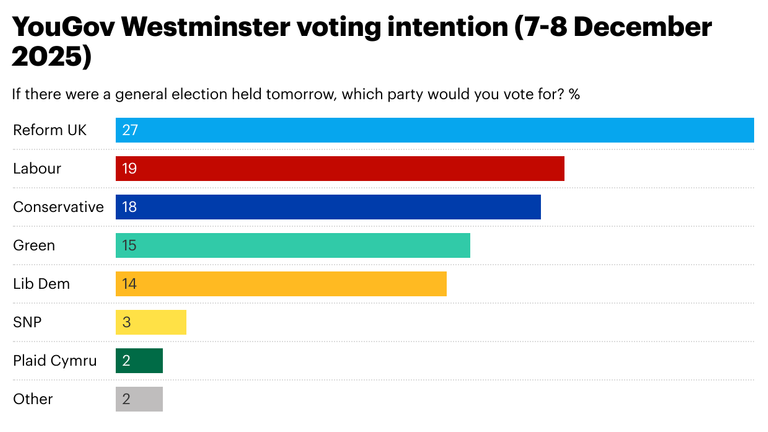
YouGov’s weekly voting intention poll has the Tories down one percent on last week, and just three above the Greens. Pic: YouGov
Ms Badenoch gave a speech on welfare costs in London on Tuesday, where she attacked the government’s plans to tackle child poverty. Afterwards, she sat down with Sky News political correspondent Sam Coates.
Asked about the local elections, she said: “There are going to be local elections all over the country, and there’s a conservative message that I want everyone to hear: Our country’s not working properly.
“There are fundamental things that need to change. We need to create jobs. Otherwise, we’re not going to have money for councils.”
She added: “We’ve seen new parties like Reform come in. They’re making a hash of things at council level. We need to make sure that people can see the benefits of voting Conservative.”
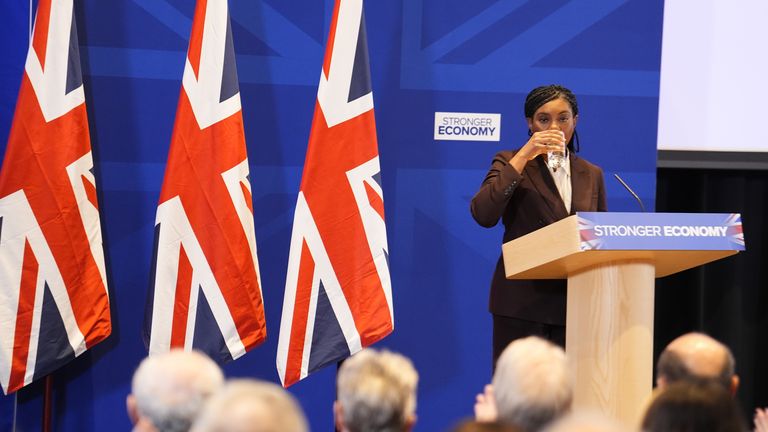
Ms Badenoch also refused to score her party’s performance out of 10. Pic: PA
When it was pointed out that she had not defined success as winning the local elections, Ms Badenoch said: “The country is going to decide. We’re going to put out an offer, and we’re going to fight for every vote.”
May will see local council elections, as well as votes for the Senedd in Wales and the Scottish Parliament. They are seen as a crucial moment for the Tory leader – and also for Prime Minister Sir Keir Starmer.
‘Of course poverty bothers me’
Ms Badenoch also refused to score the party’s performance out of 10, as the year draws to a close, and she marks a little over 12 months as leader.
She told Sky News: “When I look at the historic defeats which Conservatives suffered last year, things are definitely better.”
Read more:
Tory-Reform pact ‘not happening’
Badenoch dismisses Reeves’s ‘mansplaining’ claim
Challenged on the Tories’ position in the polls, Ms Badenoch said: “Of course, we have a mountain to climb.
“We lost more seats [in 2024] than we’ve ever done in our 200-year history. This was always going to be a long road ahead.”
-
 Sports2 years ago
Story injured on diving stop, exits Red Sox game
-
 Sports3 years ago
‘Storybook stuff’: Inside the night Bryce Harper sent the Phillies to the World Series
-
 Sports2 years ago
Game 1 of WS least-watched in recorded history
-
 Sports3 years ago
Button battles heat exhaustion in NASCAR debut
-
 Sports3 years ago
MLB Rank 2023: Ranking baseball’s top 100 players
-
Sports4 years ago
Team Europe easily wins 4th straight Laver Cup
-
 Environment3 years ago
Japan and South Korea have a lot at stake in a free and open South China Sea
-
 Environment1 year ago
Here are the best electric bikes you can buy at every price level in October 2024