
Missing Chinese tennis player purportedly seen in video released by state media

Missing Chinese tennis player Peng Shuai has purportedly appeared in a video in which she is seen with friends in a restaurant.
Peng, a former Wimbledon doubles champion, is seen smiling and is having fun in the apparently new footage released by state media.
The video was posted on Twitter by Hu Xijin, editor-in-chief of Global Times – the official newspaper of China’s ruling Communist Party. He said it was taken today and showed Peng having dinner with her coach and friends in Beijing.
He earlier claimed Peng has been staying in her own home “freely” and will make a public appearance soon.
Peng, 35, disappeared after writing a social media post on 2 November accusing former vice-premier Zhang Gaoli of forcing her to have sex after playing tennis at his home.

Peng appears to be smiling and having fun. Pic: @li_ding1
In the video, Peng is seen sitting with a man and two woman but does not speak.
The man and one of the women make repeated references to the date, with the man saying: “Tomorrow is the 20th of November right?”
The woman corrects him by saying it would be 21 November, before the man discusses Peng’s recent performances and upcoming tournaments.
“We had two matches in the past,” he says. “But we were not happy with the results.
“The match tomorrow is the conclusion of the nine matches in the past three months.
“The end of November is the end of the year. We must try our best.”
Peng’s original post on Weibo has been taken down and neither Zhang Gaoli nor the Chinese government have commented on her allegation.
It comes as Boris Johnson is reportedly considering a diplomatic boycott of the Winter Olympics in Beijing next year in protest at China’s record on human rights.
An “active discussion” in government is ongoing, with Foreign Secretary Liz Truss said to be in favour of the boycott, the Times newspaper said.
The mystery surrounding the tennis champion took a new twist on Friday after photos emerged apparently showing her relaxing at home, surrounded by soft toys and with a grey cat.
Experts have expressed scepticism and questioned the authenticity of the images.
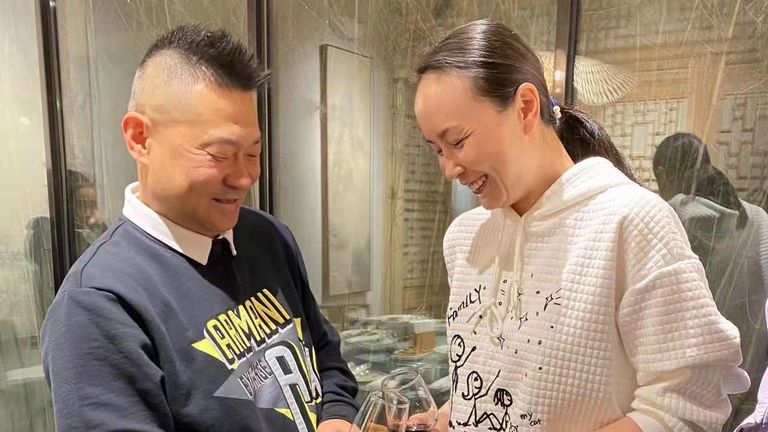
Peng is a former Wimbledon doubles champion. Pic: @li_ding1
Others also pointed to the presence in one of the photos of a framed picture featuring Winnie the Pooh – a character banned in China after people mockingly likened him to President Xi Jinping.
An email said to be from Peng was released on Wednesday by CGTN – the international arm of government-controlled state broadcaster CCTV – but doubts have also been raised over its authenticity.
It says the sexual assault claim “is not true” and adds: “I’m not missing, nor am I unsafe. I’ve just been resting at home and everything is fine”.

Peng was seen with a cat in a ‘new’ photo

Sceptics pointed to the presence of Winnie the Pooh – a character banned in China after people mockingly likened him to President Xi Jinping
Amid growing concern about her whereabouts, the Women’s Tennis Association (WTA) has threatened to pull tournaments out of China and the men’s ATP has demanded clarity from the Chinese authorities.
Britain’s Andy Murray and the Lawn Tennis Association have joined an online campaign to help find Peng.
Other tennis stars including Serena Williams, Naomi Osaka and Novak Djokovic are among those concerned over her whereabouts.
World
Belarus pardons key opposition figure, among 123 prisoners, in exchange for US sanction relief
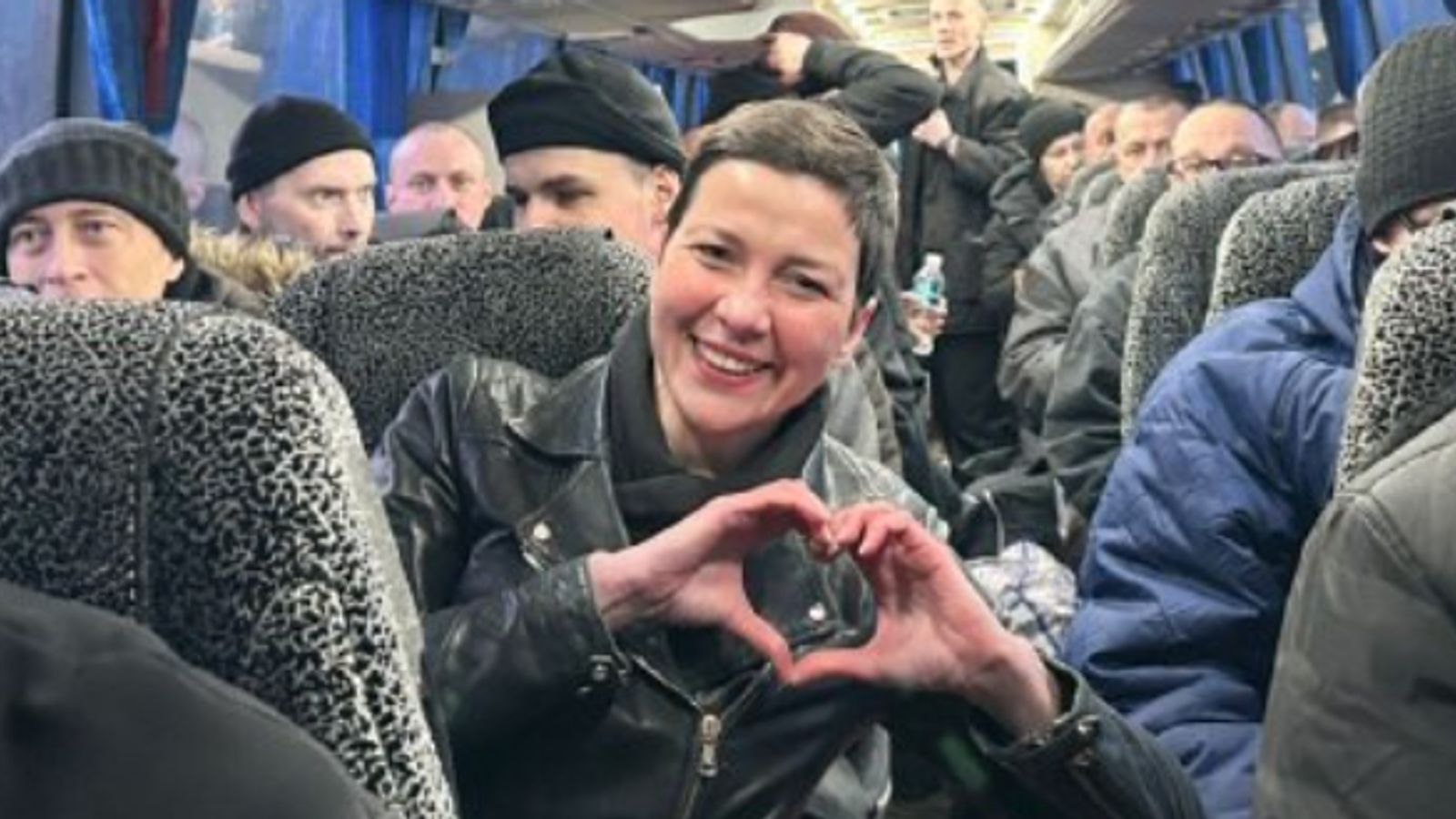
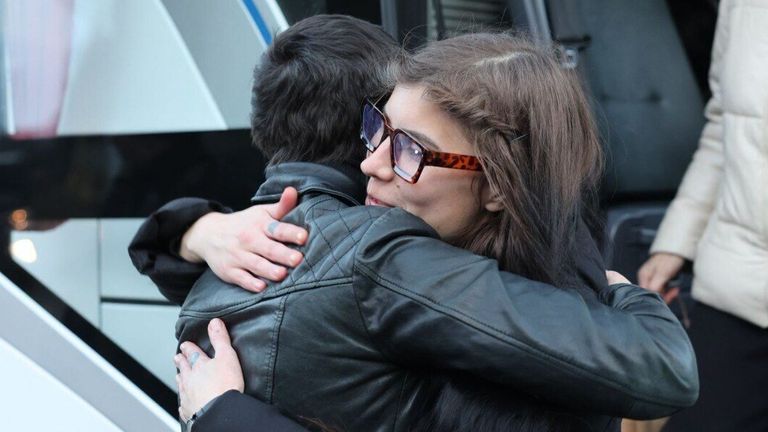
Belarus has pardoned 123 prisoners, including a Nobel Peace Prize laureate and a key opposition figure who challenged the presidential elections in 2020, in exchange for US sanctions relief.
Human rights advocate Ales Bialiatski and Maria Kolesnikova, a key figure in the mass protests that rocked the country in 2020, were among those released.
Earlier on Saturday, the Trump administration confirmed that the US was lifting sanctions on Belarus’s potash sector after officials held two days of talks in Minsk.
John Coale, the US special envoy for Belarus, also hinted that around 1,000 remaining political prisoners in Belarus could be released in the coming months as authoritarian President Alexander Lukashenko, a close ally of Russia, seeks to improve relations with Washington.
Separately, Ukraine confirmed it had received 114 prisoners released by Belarus. The other nine were received by Lithuania.
Maria Kolesnikova, 43, known for her close-cropped hair and trademark gesture of forming a heart with her hands, was one of dozens of released prisoners who arrived in Ukraine by coach on Saturday.
Maria Kolesnikova (right) celebrates being released from detention. Pic: Coordination Headquarters for the Treatment of Prisoners of War
“Of course, this feeling is incredible happiness,” she said in a video released on X from the Military Intelligence of Ukraine.
“At the same time, of course, I think about those people who are not yet free. I am very much looking forward to the moment when we can all hug each other, when we can all see one another, when we will all be free,” she added.
Ms Kolesnikova became a symbol of resistance when Belarusian authorities tried to deport her to Ukraine in September 2020. She broke away from security forces at the border, tore up her passport and walked back into Belarus.
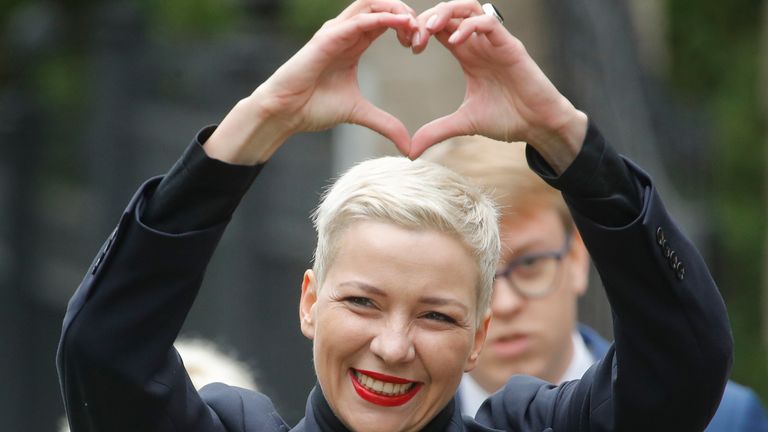
Maria Kolesnikova became a symbol of resistance to Alexander Lukashenko’s regime. File pic: AP
The professional flautist was convicted in 2021 on charges including conspiracy to seize power and sentenced to 11 years in prison, but then fell seriously ill and underwent surgery.
Ales Bialiatski, 63, who founded Viasna, Belarus’ oldest and most prominent human rights group, won the Nobel Peace Prize in 2022 while awaiting trial for charges which were widely regarded as politically motivated.
After arriving in Lithuania, he spoke briefly to crowds outside the US embassy in Vilnius and said in English: “Never give up”.
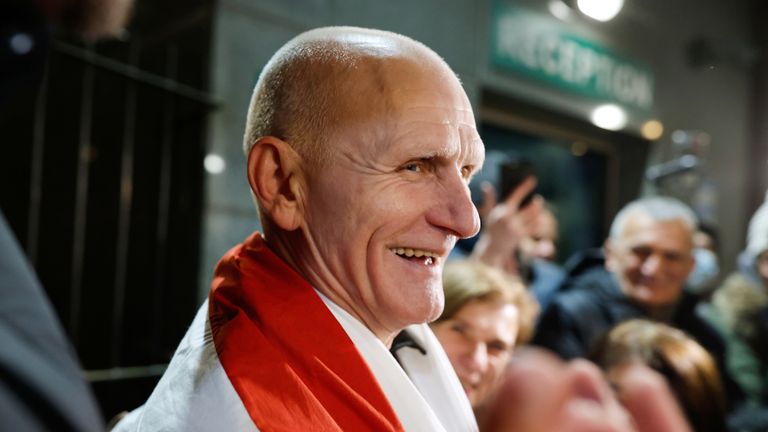
Nobel Peace Prize laureate Ales Bialiatski arrives in Lithuania after his release by Belarusian authorities. Pic: AP
He was seen by authorities as especially dangerous because of what Belarus alleged were his “extremist tendencies”.
Sentenced to 10 years in 2023, he had been held at a penal colony in Gorki, notorious for beatings and hard labour, and his health was deteriorating, according to his wife.
The Norwegian Nobel Committee expressed “profound relief and heartfelt joy” at the release of Mr Bialiatski and called on the Belarusian authorities “to release all political prisoners”.
Read more from Sky News:
Venezuelan oil exports ‘at standstill’
Far right ’emboldened’ in Australia
Thailand-Cambodia fighting continues
Sviatlana Tsikhanouskaya, who is an opposition leader in exile and a close ally of Ms Kolesnikova, posted her delight on X: “Maria is free!”
She added: “For five years, we fought for Maria Kolesnikova’s freedom. I am deeply grateful to the US administration and our European partners who worked tirelessly to secure her release.
“Maria is in a safe place, and we hope to hear from her soon.”
Ukrainian officials said President Volodymyr Zelenskyy had also spoken to Ms Kolesnikova after her release, although they have not released any more details.
In a statement, published on the Telegram social media platform, the Military Intelligence of Ukraine confirmed more details of who had been released, including people “imprisoned for political reasons”.
Among the group were Viktar Babaryka, a former banker, jailed in 2021 after challenging Mr Lukashenko at the polls, and journalist Maryna Zolatava, who was imprisoned in 2023 on a range of charges including harming national security. Critics argue both sentences were politically motivated.
President Lukashenko has ruled the nation with an iron fist for more than three decades, but has been repeatedly sanctioned by Western countries both for its crackdown on human rights and for allowing Moscow to use its territory in the invasion of Ukraine.
Following the two-day talks, US envoy John Coale posted on X: “Another 156 political prisoners released thanks to President Trump’s leadership! An important step in U.S.-Belarus relations.”
It is not clear whether the figure includes previously released prisoners.
Speaking to the Reuters news agency on Saturday, Mr Coale said around 1,000 remaining political prisoners in Belarus could be released in the coming months.
“I think it’s more than possible that we can do that, I think it’s probable… We are on the right track, the momentum
is there.”
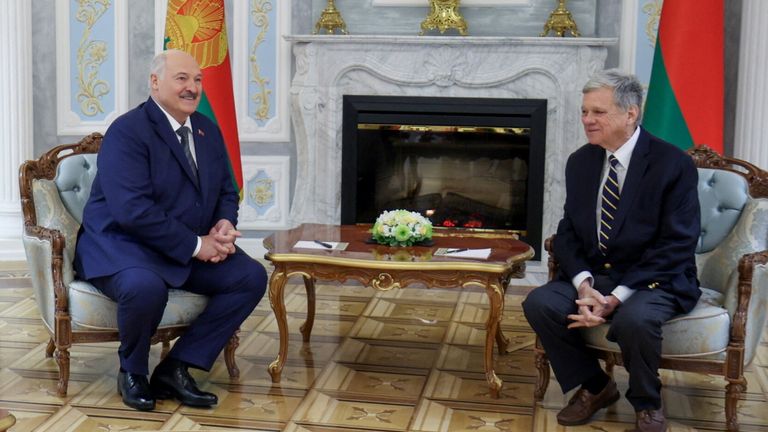
Belarusian President Alexander Lukashenko meeting John Coale, US special envoy, in Minsk for talks. Pic: President of the Republic of Belarus/Reuters
US officials eased some sanctions after meeting with President Lukashenko in September 2025. In response, Minsk freed more than 50 political prisoners into Lithuania, taking the total number freed by Belarus since July 2024 to more than 430.
Mr Coale also spoke about weather balloons which have flying over the border from Belarus into Lithuania.
“He [Mr Lukashenko] agreed recently to do everything he could to stop the balloons,” Mr Coale told the Reuters news agency.
Lithuania has declared a state of emergency over the balloons, used by cigarette smugglers, which have caused over a dozen closures of Vilnius airport in recent months.
World
Israel says Hamas commander – who was one of the architects of the 7 October 2023 attacks – killed in strike
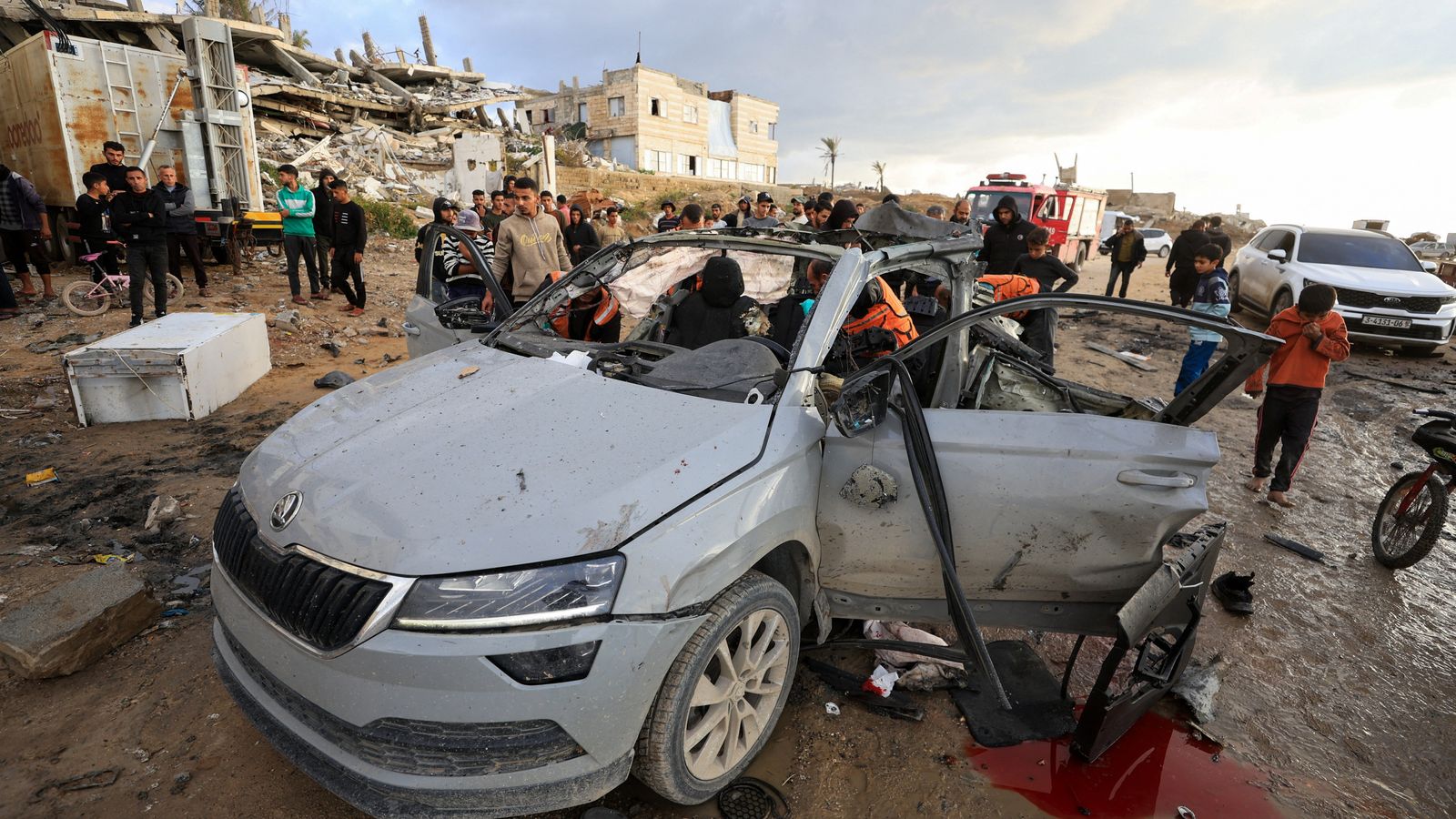
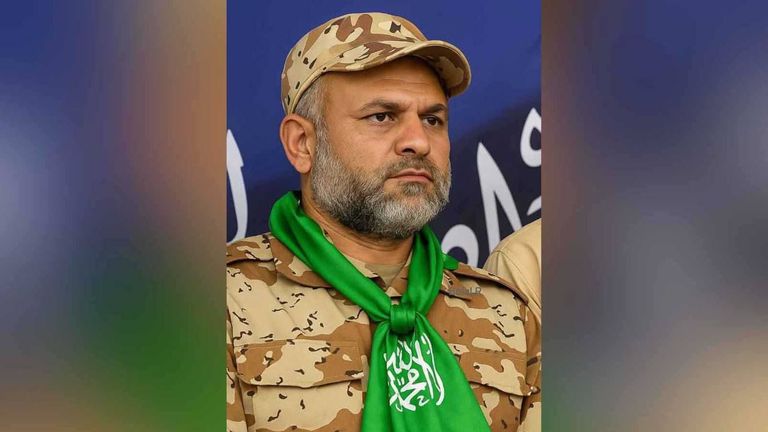
A senior Hamas commander who was one of the architects of the 7 October 2023 attacks on Israel has been killed in a strike on Gaza City, according to the country’s military.
Raed Saed was targeted in response to an attack by Hamas in which an explosive device injured two soldiers on Saturday, Israeli Prime Minister Benjamin Netanyahu and Defence Minister Israel Katz said in a joint statement.
It is the highest-profile killing of a senior Hamas figure since the Gaza ceasefire came into effect in October.
Gaza health authorities said the attack on a car in Gaza City killed five people and wounded at least 25 others, but there has been no confirmation from Hamas or medics that Saed was among the dead.
Raed Saed
Hamas condemned the attack in a statement as a violation of the ceasefire agreement but stopped short of threatening retaliation.
An Israeli military official described Saed as a high-ranked Hamas member who helped establish and advance the group’s weapons production network.
“In recent months, he operated to re-establish Hamas’ capabilities and weapons manufacturing, a blatant violation of the ceasefire,” the official said.
The 10 October ceasefire has enabled hundreds of thousands of Palestinians to return to Gaza City’s ruins after a war that began after Hamas-led militants killed 1,200 people, most of them civilians, and seized 251 hostages in an attack on southern Israel.
Israel’s retaliatory offensive has killed more than 70,700 Palestinians, most of them civilians, according to health officials in Gaza.
Israel has pulled troops back from city positions, and aid flows have increased, but violence has not completely stopped.
Palestinian health authorities say Israeli forces have killed at least 386 people in strikes in Gaza since the truce, while Israel says three of its soldiers have been killed.
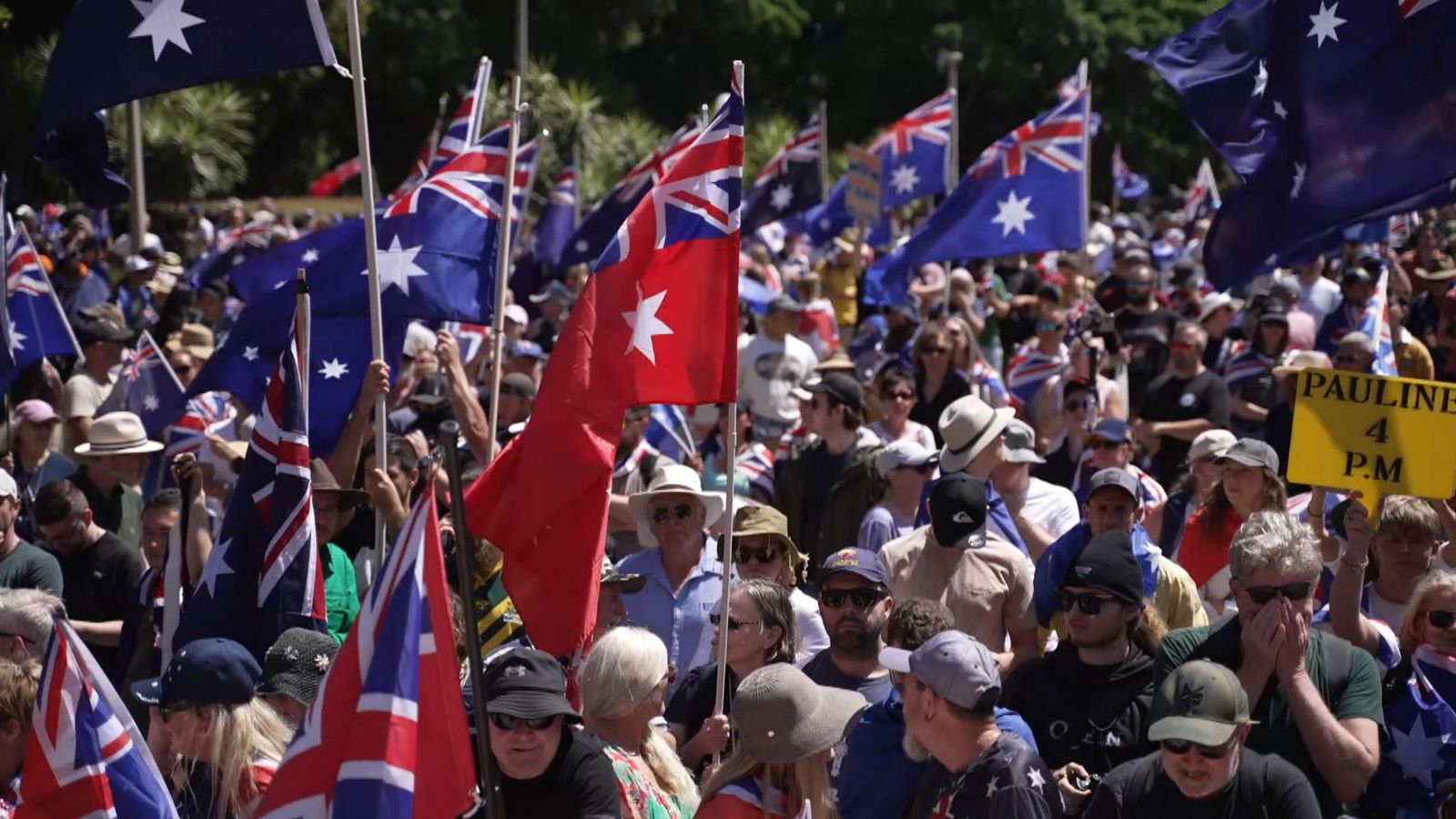
As Australia slides into its summer, it is leaving behind months marked by nationwide protests on one major issue – migration.
In August, around 50,000 people demonstrated in towns and cities across the country. There were clashes at separate rallies between far-right and far-left protesters in Melbourne.
In October, there were more protests. This time police accused the far-left of attacking officers and trying to confront right-wing protesters.
Tension on both sides is running high.
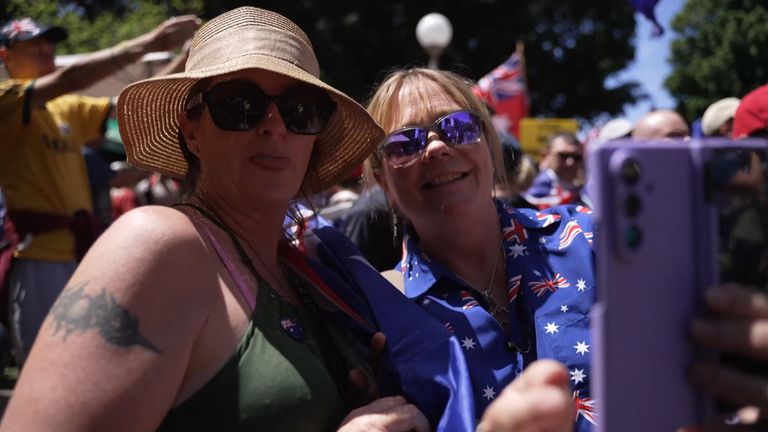
Fran Grant, right
Sydney protester Fran Grant has attended all the rallies.
“I love Australia and I’m not happy with what’s happening now,” she explained.
“It looks like the Labour government are continuing to bring in immigrants. I have no problem with that if we have the infrastructure to support it, but we don’t.”
Migration levels now falling
During the COVID crisis, Australia introduced strict border closures and migration plummeted.
Then in the years following the pandemic, there was a migration boom. A total of 1.4 million people entered Australia.
These were huge numbers. However, the Australian Bureau of Statistics shows net overseas migration has since fallen by almost 40% since its post-COVID peak.
But many Australians still believe the numbers are still too high.
‘We can’t keep going like this’
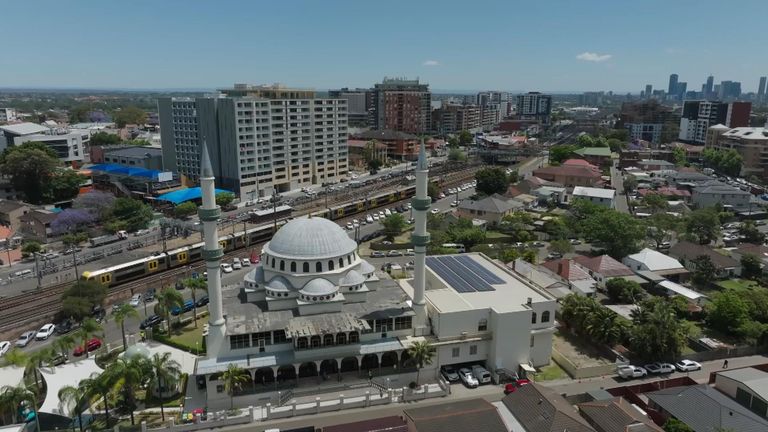
Auburn, Sydney
Australia’s multicultural heart is in suburbs like Auburn in Sydney, where almost 80% of families use a language other than English at home.
Steve Christou is a Cumberland City councillor and the son of Greek-Cypriot migrants.
“All we’re saying is put a stop to excess immigration until the country’s infrastructure can keep up,” he said. “We can’t keep going like this.”
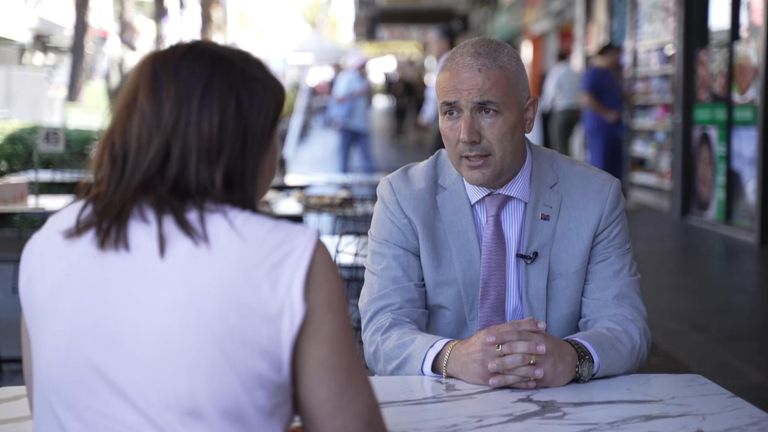
Steve Christou
He added: “We’re not blaming the migrants in the country, let’s be very clear about that. The government is being blamed for letting in 1.4 million migrants in the last three years to the point where the country can’t cope.”
Mr Christou spoke to protesters at the rally in October. There were families, students and seniors in the crowd, flying Australian flags and singing Australian songs.
Critics have called these protests racist, inflammatory and dangerous, but many people attending said they were there to show their pride for Australia and its way of life.
Others were demonstrating against the country’s housing shortage and increasing cost of living.
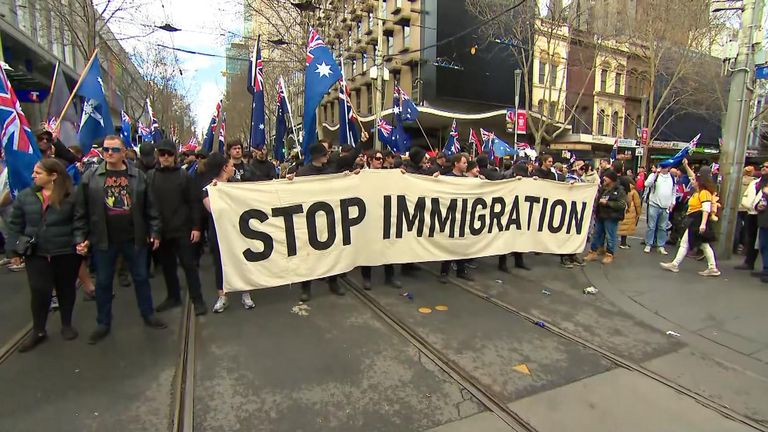
Neo-Nazi Melbourne march
Australia’s neo-Nazis emboldened
In August, dozens of Australia’s neo-Nazis also attended the Melbourne and Sydney protests and addressed the crowds.
In Melbourne, migration demonstrations and counter-protests turned violent. Neo-Nazis allegedly attacked an indigenous camp in the city.
Speaking at an anti-racism rally in Sydney, deputy leader of the Australian Greens, Mehreen Faruqi, told Sky News: “The far-right are emboldened in a way that I have never seen before.”
Senator Faruqi was born in Pakistan but has lived in Australia for more than 30 years.

Mehreen Faruqi
“They [far-right] are coming out on the streets, they have signs and slogans and chants that are white supremacists, white nationalists, and of course, this is happening across the world.”
Terrorism and far-right expert, Dr Josh Roose, from Deakin University in Melbourne, said: “We know that the Nazis see this as their time to capitalise.
“They’re not only attending these rallies, but they’re seeking to position themselves at the front, to mobilise people and shape the public conversation by normalising extreme ideas.”
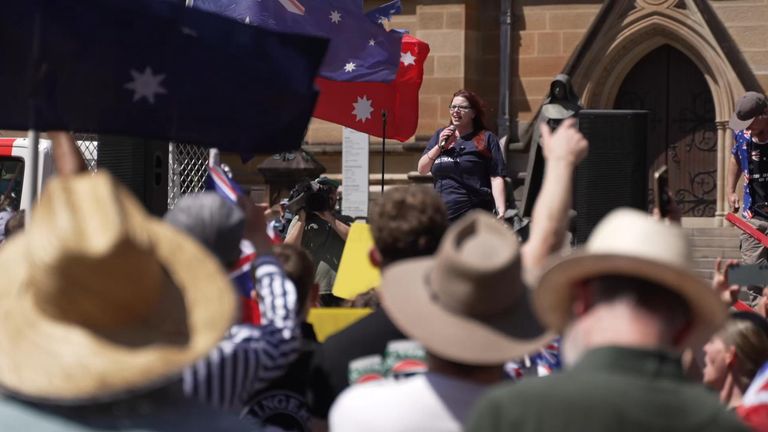
Bec ‘Freedom’
At the “March for Australia” rally in October, organiser Bec “Freedom” told Sky News that the neo-Nazis are “proud Australians .. standing up for our country against mass immigration. So long as they’re not violent, they’re welcome here.
“While they’re at my event, they’ve been told to keep it respectful. No hate speech, no violence, no Hitler talk,” she said.
Read more from Sky News:
UK sanctions paramilitary commanders in Sudan over ‘mass killings’
Belgian PM ‘sceptical’ about Ukraine loan using Russian assets
Ms Freedom said she’s “definitely not” coordinating with the neo-Nazis, that she has spoken with them and “that’s as far as it goes”.
Asked if she was worried that the presence of the neo-Nazis at the August rally would give the March for Australia movement a bad name, she replied: “The thing is we’ve been abused, and name-called by the media for so long… If you want to call me a Nazi, then fine, call me a Nazi.”
Other demonstrators said they wanted nothing to do with the neo-Nazis and had no time for the group and its messages.
On 8 November, more than 60 neo-Nazis gathered on the steps of the New South Wales state parliament, holding a banner reading “Abolish the Jewish Lobby”.
The brazen stunt shocked the public and was widely condemned by the state government.
The government is now strengthening laws against public displays of neo-Nazi ideology.
A bill to ban the burqa
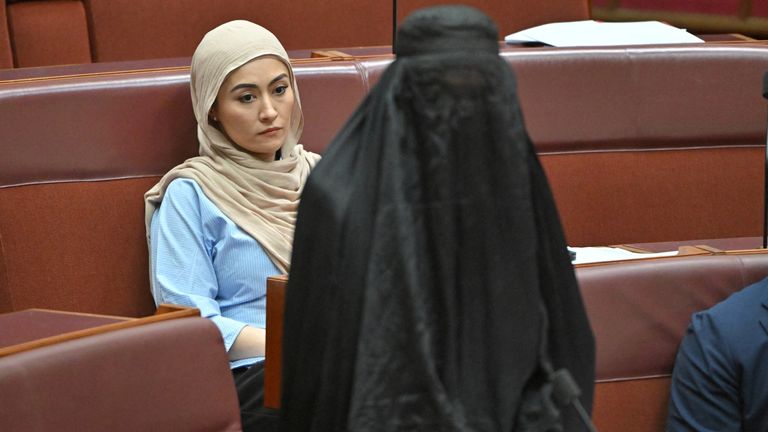
One Nation leader Pauline Hanson wears a burqa in the Senate chamber. Pic: AAP/Reuters
There’s been political controversy too.
In November, Australian senator and leader of the far-right One Nation party, Pauline Hanson, created a political storm when she wore a burqa (a full-face Islamic covering) inside federal parliament.
Ms Hanson is calling for the burqa to be banned in public places. Her party is rising in the polls and drawing disaffected Coalition (or Conservative) voters to its ranks.
At home with Fran Grant and her reptiles
Ms Grant’s home is where she can really express her pride in Australia.
She has an Australian flag flying out the front, an Australian-map-shaped coffee, and a collection of native goannas and snakes.
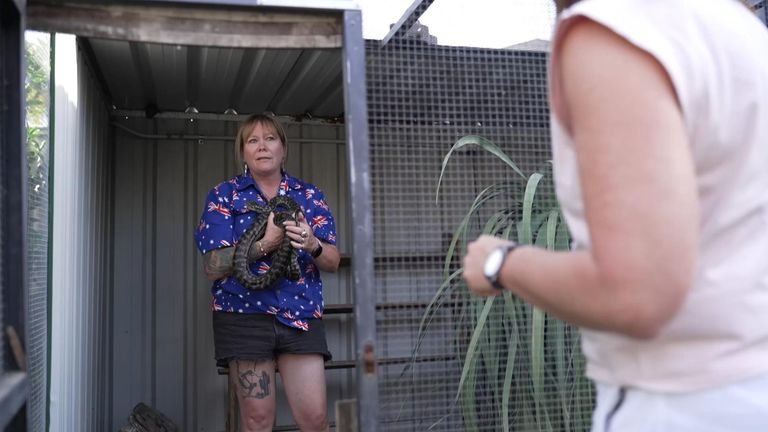
Ms Grant with snake
Ms Grant said being born in Australia, she’s won the “lottery of life” but believes there are too many “economic migrants” coming in.
“I’m very happy for people to come here. My mum was a 10-pound pom (British migrant),” she explained.
“At the moment where the cost of living and housing is so high, instead of just saying ‘racism, racism’ let’s look at what’s best for people who live here now.”
-
 Sports2 years ago
Story injured on diving stop, exits Red Sox game
-
 Sports3 years ago
‘Storybook stuff’: Inside the night Bryce Harper sent the Phillies to the World Series
-
 Sports2 years ago
Game 1 of WS least-watched in recorded history
-
 Sports3 years ago
Button battles heat exhaustion in NASCAR debut
-
 Sports3 years ago
MLB Rank 2023: Ranking baseball’s top 100 players
-
Sports4 years ago
Team Europe easily wins 4th straight Laver Cup
-
 Environment3 years ago
Japan and South Korea have a lot at stake in a free and open South China Sea
-
 Environment1 year ago
Here are the best electric bikes you can buy at every price level in October 2024