

Labour MP Rupa Huq suspended and apologises after calling Chancellor Kwasi Kwarteng ‘superficially’ black

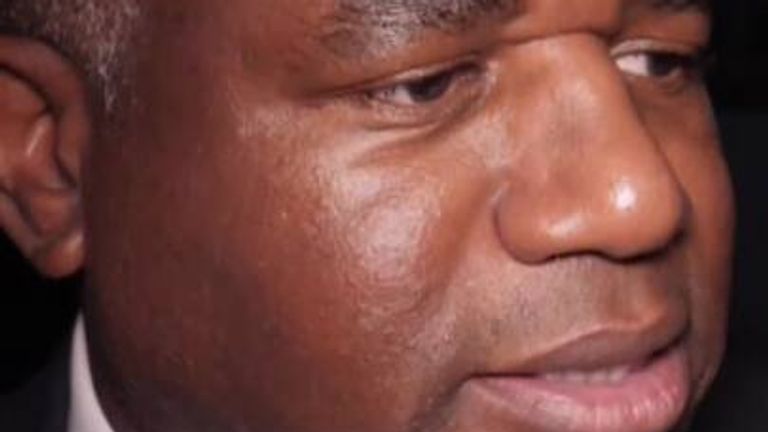
A Labour MP has been suspended from the party after she was accused of making “racist” comments about the chancellor.
Rupa Huq was administratively suspended pending an investigation after she claimed that Kwasi Kwarteng was “superficially” black.
The MP for Ealing Central and Acton made the remarks about the UK’s first black chancellor at a Labour conference fringe event on Monday entitled “What’s Next for Labour’s Agenda on Race?”.
Labour extends poll lead over Conservatives – politics live
After her suspension, Ms Huq apologised for her “ill-judged” comments.
“I have today contacted Kwasi Kwarteng to offer my sincere and heartfelt apologies for the comments I made at yesterday’s Labour conference fringe meeting,” she posted on social media.
“My comments were ill-judged and I wholeheartedly apologise to anyone affected.”
Jake Berry, the Conservative Party chairman, had condemned Ms Huq’s “vile” comments before her suspension and urged Sir Keir Starmer, the Labour leader, to remove the whip.
Angela Rayner, Labour’s deputy leader, told Ms Huq to apologise and take “immediate action” over the “completely unacceptable” remarks.
‘You wouldn’t know he is black’
In audio posted online by the Guido Fawkes website, Ms Huq says of Mr Kwarteng: “Superficially he is a black man.
“He went to Eton, I think, he went to a very expensive prep school, all the way through, the top schools in the country.
“If you hear him on the Today programme, you wouldn’t know he is black.”
Labour said: “We condemn the remarks and urge her to withdraw them and apologise.”
Read more:
Who is Kwarteng? The chancellor unafraid of upsetting his own party
Labour pledge to create new, publicly owned energy company
‘Appalling comments’
In a letter to Sir Keir on Tuesday, Mr Berry said the Labour leader must take action against Ms Huq.
Expressing his “serious concerns”, he wrote: “During an event organised by the British Future and Black Equity Organisation and attended by shadow secretary of state for women and equalities Anneliese Dodds, Rupa Huq made a number of racist comments about the Chancellor of the Exchequer, Kwasi Kwarteng.”
He continued: “Sunder Katwala, the event chair, was forced to respond to her appalling comments about the chancellor by saying his Conservative views ‘doesn’t make him not black… and I think the Labour Party has to be really careful’.
“I trust you will join me in unequivocally condemning these comments as nothing less than racist and that the Labour whip will be withdrawn from Rupa Huq as a consequence.”
In a tweet, Mr Katwala said Ms Dodds was no longer at the meeting when the comments were made.
David Lammy, the shadow foreign secretary, told the BBC that the remarks were “unfortunate” and that Ms Huq should “stand those comments down”.
David Lammy on Rupa Huq’s comments
Also speaking to the broadcaster, Ms Rayner said: “She should apologise for those comments.
“For me those comments are completely unacceptable.
“I think Rupa needs to reflect on what she has said and she needs to take immediate action.”
Sajid Javid, the Conservative former health secretary, said he was “appalled and saddened” by the comments.
“Rather than give encouragement to racists and people who seek to divide us, she should know better,” he posted on social media.
“Not too late for her to show that she does.”
The suspension came shortly after Sir Keir finished his conference speech, which he used to argue now is a “Labour moment” for the party to provide the leadership the nation “so desperately needs”.
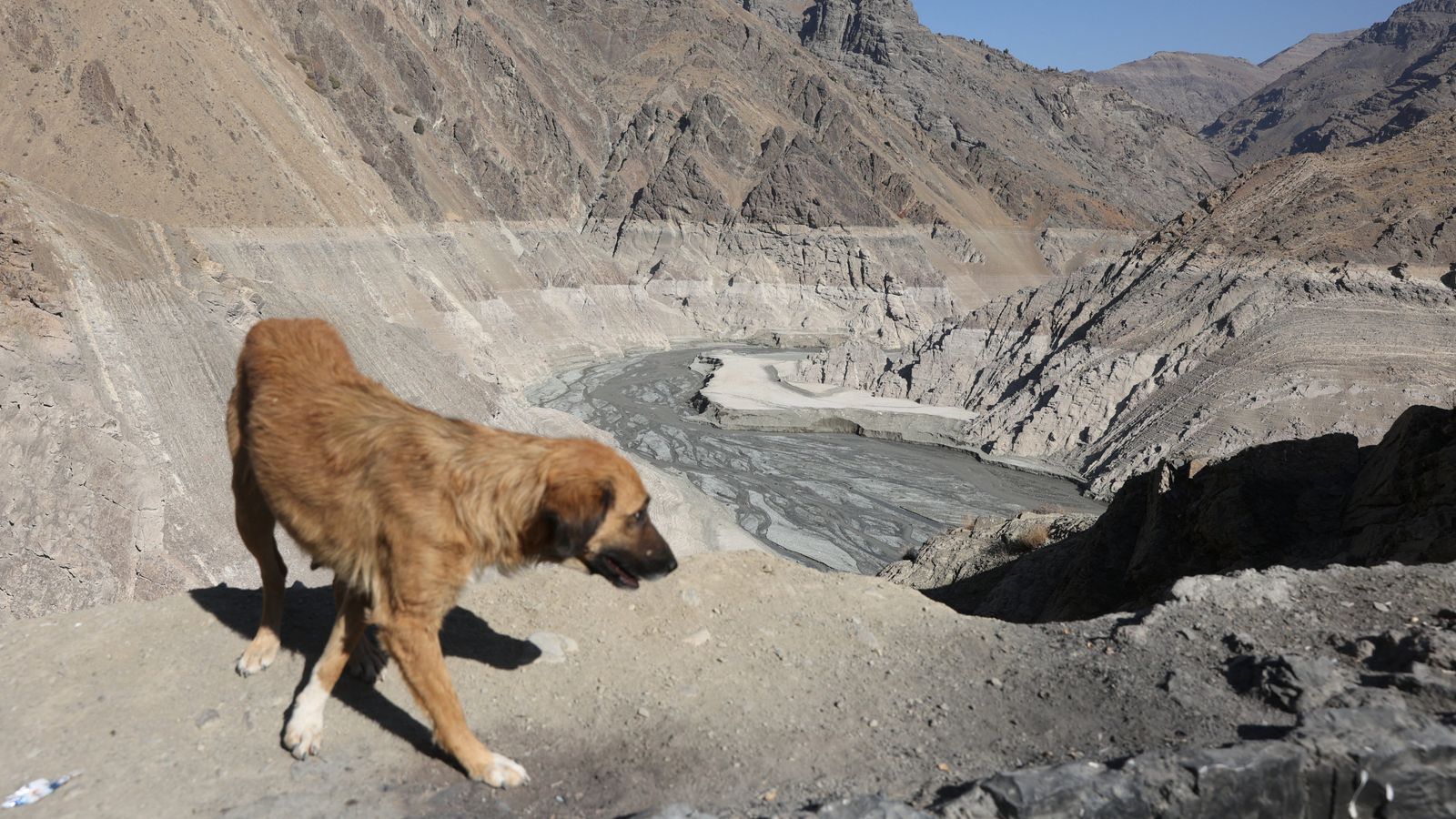
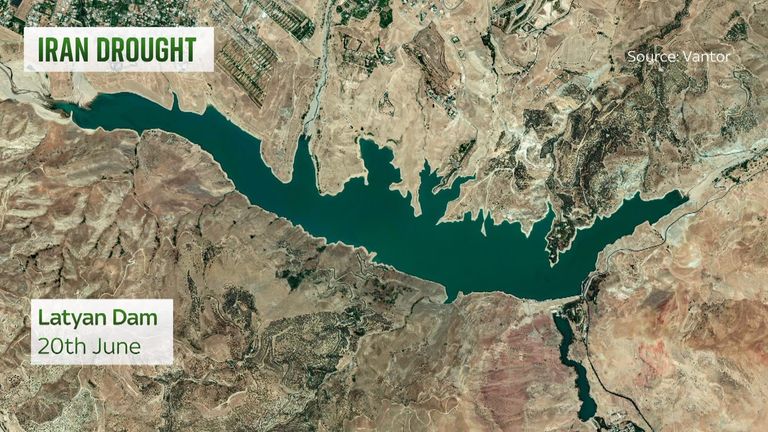
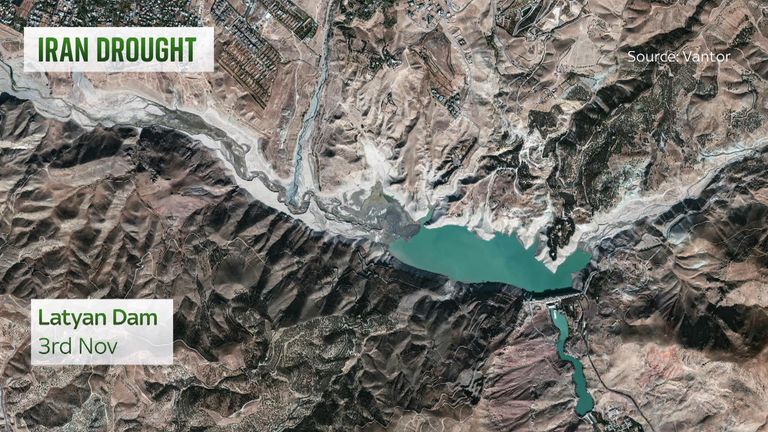
Iran’s capital is counting down to “day zero” – the day the water runs out and the taps run dry.
Reservoirs that supply Tehran’s 15 million residents are almost empty.
The Karaj dam, which supplies a quarter of the city’s drinking water, is just 8% full.
Water rationing has begun in some areas, with the flow from taps reduced or even stopped altogether overnight.
President Masoud Pezeshkian has urged people to use water sparingly – or the city, or at least parts of it, may even have to evacuate.
So what’s going on?
Rain should start falling in the autumn after Iran’s hot dry summer.
But according to the country’s National Weather Forecasting Centre, this has been the driest September to November period in half a century, with rainfall 89% below the long-term average.
The combination of low rainfall and high heat has lasted for more than five years, leaving the country parched.
But the weather – and the shadow of climate change – aren’t the only factors in Tehran’s water crisis.
According to the Centre for Strategic and International Studies, the population of the city has almost doubled from 4.9 million in 1979 to 9.7 million today.
But water consumption has risen even faster, quadrupling from 346 million cubic metres in 1976 to 1.2 billion cubic metres now. Increasing wealth has allowed more people to buy washing machines and dishwashers.
To supplement supplies from reservoirs, Tehran has had to turn to natural aquifers underground, which provide between 30% and 60% of its tap water in recent years.
But that puts the city in direct competition with farmers who draw on the water to irrigate crops.
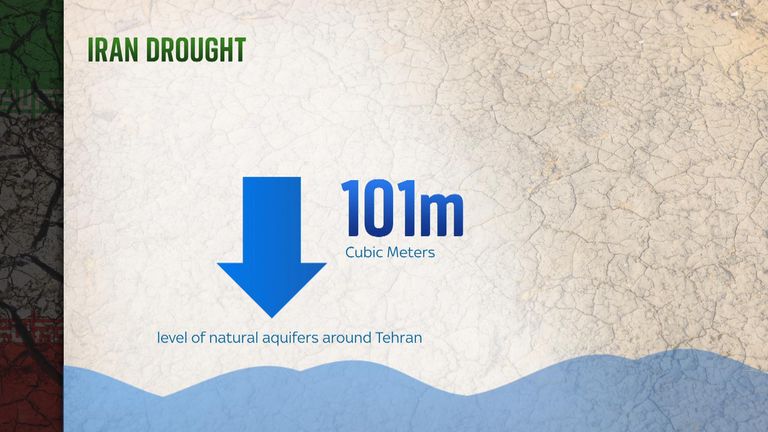
Levels are falling by 101 million cubic metres a year around Tehran, according to analysis in the journal Science Advances. That’s water that has accumulated from many decades of rain – and will take at least as long to replenish.
Read more from Sky News:
Could a volcanic eruption have spread the Black Death?
The words you have mispronounced all year – and how to say them
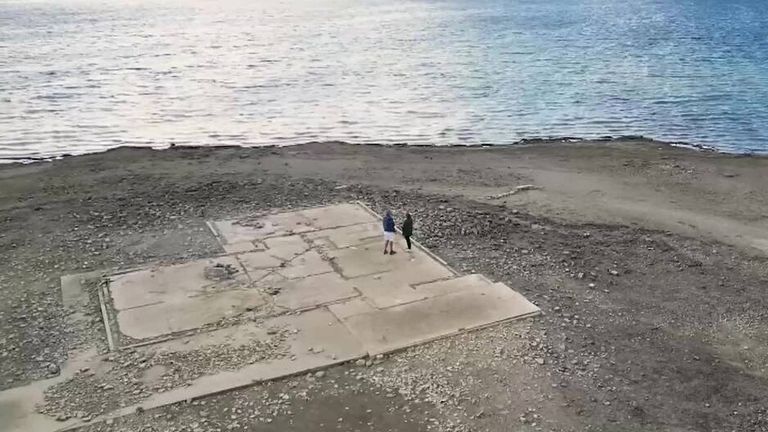
Professor Kaveh Madani, the former deputy head of Iran’s environment department and now director of the United Nations University Institute for Water, Environment and Health, said chronic mismanagement of natural resources has led to what he calls water bankruptcy.
He told Sky News: “These things were not created overnight.
“They’re the product of decades of bad management, lack of foresight, overreliance and false confidence in how much infrastructure and engineering projects can do in a country that is relatively water short.”
Government ministers blame the water shortage on climate change, water leaks from pipes and the 12-day war with Israel.
Whatever the reason, it underlines the threat of water scarcity to global cities. Tehran is not alone.
Water crisis: Will Britain’s taps run dry?
Cape Town in South Africa narrowly avoided taps running dry eight years ago after a city-wide effort to save water.
Even London, known for its rain, is at risk. Supplies haven’t kept up with population growth and booming demand.
As Tehran has found, droughts that are being made more likely and more severe with climate change can expose the fragility of water supply.
Israel will be allowed to compete in next year’s Eurovision Song Contest, organisers have said – with several broadcasters saying they will now boycott the event.
Dutch broadcaster AVROTROS, Spain’s RTVE, Ireland’s RTE and Slovenia’s RTV immediately issued statements saying they will not participate in the 2026 contest following the European Broadcasting Union’s general assembly meeting on Thursday.
Members from 37 countries were asked to vote in a secret ballot on whether they were happy with tougher new rules announced last month, without going ahead with a vote on participation next year.
It followed criticism from some broadcasters of Israel’s role in Eurovision amid the war in Gaza, and allegations that voting at this year’s contest had been manipulated in favour of their contestant.
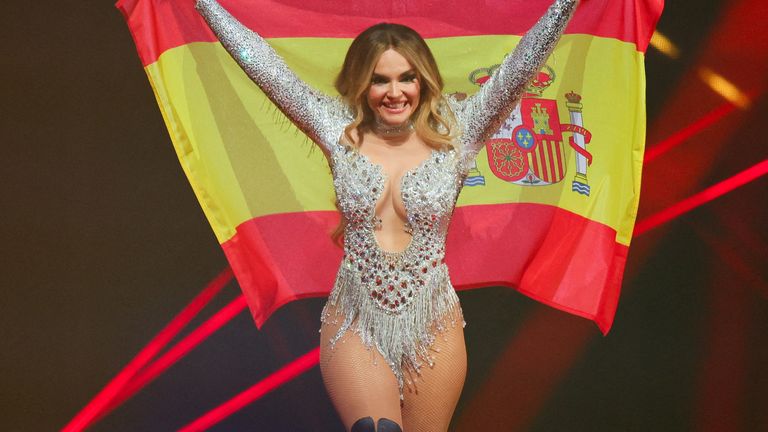
Spain, represented by Melody earlier this year, is one of the countries that has said it will not take part in 2026. Pic: Reuters
In a statement, the EBU, which organises Eurovision, said members had shown “clear support for reforms to reinforce trust and protect neutrality”. Sky News understands 11 countries voted against only accepting the rule changes.
Golan Yochpaz, chief executive of Israel’s public broadcaster KAN, said during the meeting that attempts to remove them from the contest could “only be understood as a cultural boycott”, according to a statement shared by the organisation.
Israel’s president Isaac Herzog posted on X following the announcement, saying: “Israel deserves to be represented on every stage around the world, a cause to which I am fully and actively committed… I hope that the competition will remain one that champions culture, music, friendship between nations, and cross-border cultural understanding.”
Boycott announcements – what have broadcasters said?
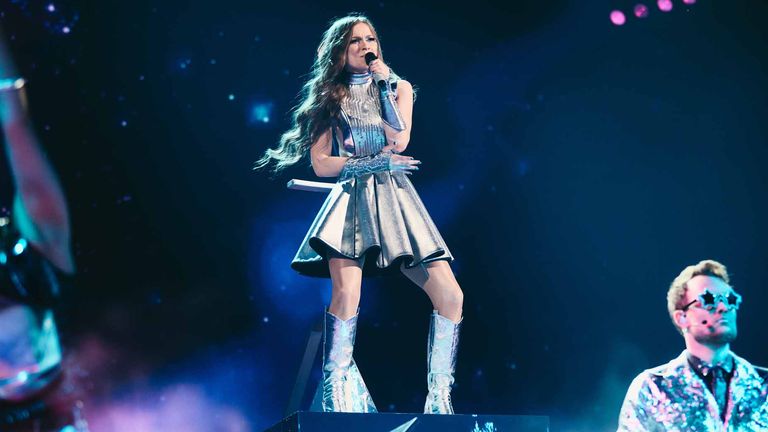
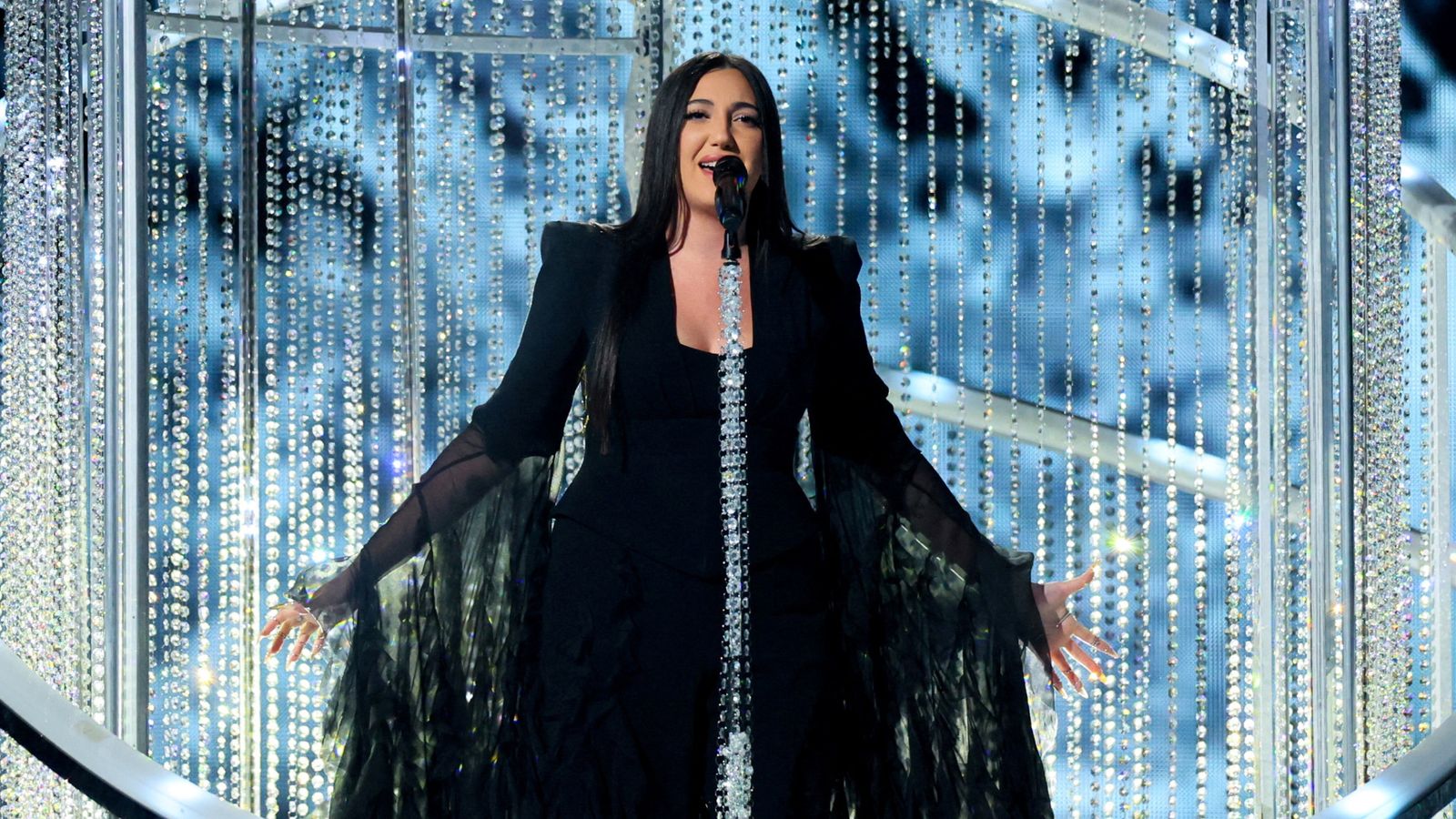
Ireland, represented by EMMY in Basel 2025, have also said they will not participate in 2026. Pic: EBU
The broadcasters from Spain, Ireland, Slovenia and the Netherlands had all said earlier in the year that they would not participate in 2026 should Israel be allowed to continue in the competition.
In a statement following the general assembly meeting, RTE confirmed Ireland‘s position.
“RTE feels that Ireland’s participation remains unconscionable given the appalling loss of lives in Gaza and the humanitarian crisis there which continues to put the lives of so many civilians at risk,” the broadcaster said.
AVROTROS, broadcaster for the Netherlands, said that “under the current circumstances, participation cannot be reconciled with the public values that are fundamental to our organisation”.
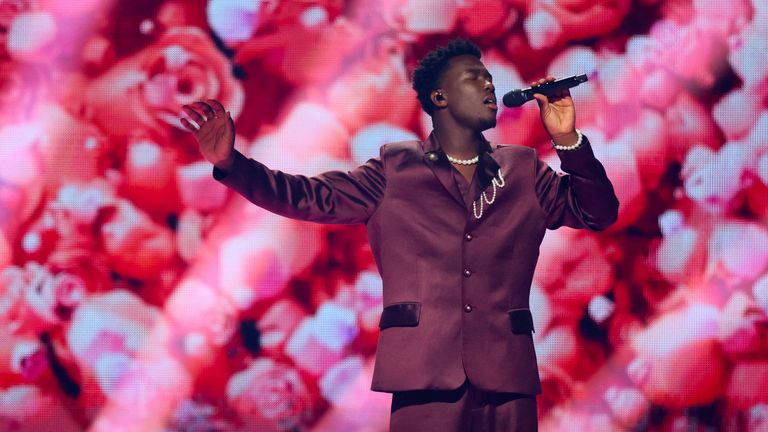
Claude singing C’est La Vie for The Netherlands at this year’s event. Pic: Reuters
General director Taco Zimmerman said it had not been an easy decision, adding: “Culture unites, but not at any price. What has happened over the past year has tested the limits of what we can uphold.”
Confirming its withdrawal, Spain‘s RTVE highlighted how its board of directors had agreed in September that the country would withdraw “if Israel was part of it”.
This is a big deal for Eurovision, as Spain is one of the “Big Five” broadcasters – a group which also includes France, Germany, Italy and the UK. While the host broadcaster – as last year’s winners, this is Austria this year – will often contribute the most towards the cost of staging the contest, the Big Five will also make up a significant amount.
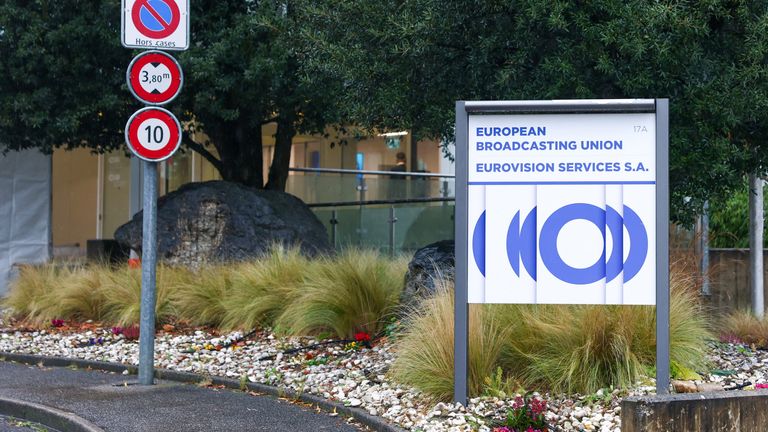
Members met at the European Broadcasting Union headquarters in Geneva, Switzerland. Pic: REUTERS/Denis Balibouse
Slovenian broadcaster RTV said it was pulling out of the competition “on behalf of the 20,000 children who died in Gaza”.
In her address to members before the decision, Natalija Gorscak, RTV Slovenia board chairwoman, said: “For the third year in a row, the public has demanded that we say no to the participation of any country that attacks another country. We must follow European standards for peace and understanding.
“Eurovision has been a place for joy and happiness from the very beginning, performers and audiences have been united by music, and it should remain that way.”
Eurovision ‘is for broadcasters, not governments’
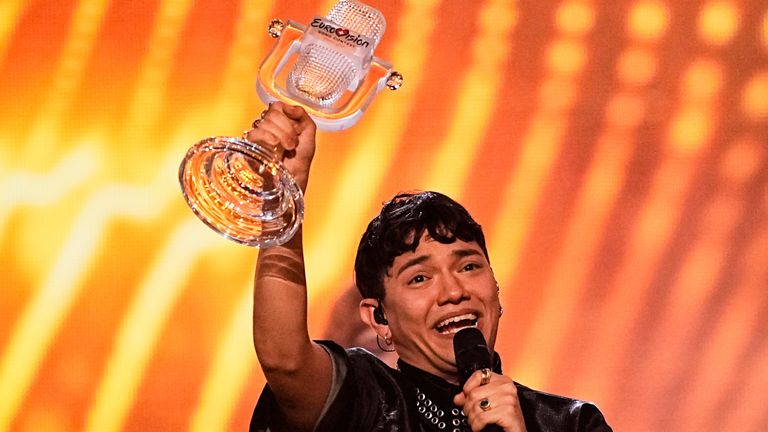
This year’s Eurovision Song Contest was won by JJ from Austria, so they will host in 2026. Pic: AP
But Austria’s broadcaster ORF said it was happy with the decision and is looking forward to hosting next year.
Roland Weissman, ORF director-general, said the contest “is a competition for broadcasters, not governments”, and that he had personally advocated for Israel’s participation.
“In the spirit of fostering cultural dialogue and supporting and strengthening the democratic role of public broadcasters, it was important not to burn any bridges,” he said, adding that concerns raised by some members had been taken “very seriously”.
“Naturally, I would regret it if broadcasters were to decide against participating,” he added. “I see the Eurovision Song Contest in Vienna as an opportunity to emphasise what unites us rather than what divides us – United by Music.”
Politics has always played a part in Eurovision, despite the EBU’s insistence that it remains politically neutral.
Countries have pulled out or been banned in previous years – most notably Russia in 2022, just days after the invasion of Ukraine.
But this exodus could be Eurovision’s biggest political crisis yet, with suggestions that other broadcasters may follow suit.
Iceland’s broadcaster RUV said its board would discuss participation at a meeting next Wednesday, after previously agreeing to a motion to recommend Israel be expelled.
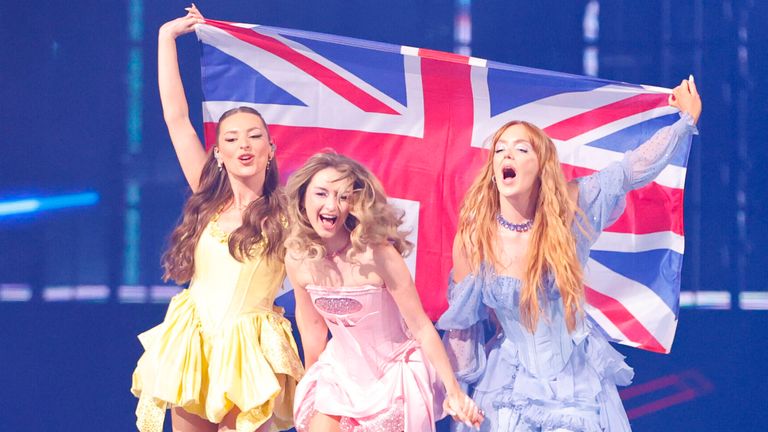
Remember Monday represented the UK at Eurovision in 2025. Pic: MANDOGA MEDIA/picture-alliance/dpa/AP
The BBC, which broadcasts the competition in the UK, said it supported the decision for Israel to be allowed to take part. “This is about enforcing the rules of the EBU and being inclusive,” it said in a statement.
Earlier this year, outgoing BBC director-general Tim Davie said the corporation was “aware of the concerns” raised, but the song contest had “never been about politics”.
Eurovision chaos has been brewing for some time – so what happens next?

With a slew of countries quitting Eurovision over Israel’s inclusion, the competition has been thrown into chaos.
This has been brewing for some time. A few months ago, the row had become such a point of contention that the EBU announced plans for an emergency vote. Crucially, that was called off when a Gaza ceasefire was announced.
So instead, at its big assembly meeting, countries were only allowed to vote on rule changes being introduced – another issue that allegedly involved Israel amid accusations of unfair voting practices.
If you read the EBU’s post-meeting statement, you’d think it had gone swimmingly. But while it made it sound like everyone was in agreement, Sky News understands 11 countries in fact voted against the changes.
Denied an actual vote on Israel’s participation, it triggered a domino effect of countries quitting – the Netherlands, Ireland, Spain and Slovenia.
Arguably, Spain pulling out could have the biggest effect. It’s one of the key financial backers of the contest – and that could potentially impact the ability to stage it in the grand way we’ve become to accustomed to.
So what happens next?
The contest prides itself on maintaining political and cultural neutrality, positioning itself as celebrating music and peace rather than politics.
But for now, the big question is: who will be left singing?
How have the rules changed?
In November, the EBU announced it was changing its voting system. This followed allegations of “interference” by Israel’s government earlier this year.
The rule changes announced in November came after Israeli singer Yuval Raphael received the largest number of votes from the public at the 2025 event, held in Basel, Switzerland, in May – ultimately finishing as runner-up to Austria’s entry after the jury votes were counted.
But a number of broadcasters raised concerns about Israel’s result.
Key changes to next year’s competition include:
• Clearer rules around promotion of artists and their songs
• Cap on audience voting halved
• The return of professional juries to semi-finals
• Enhanced security safeguards
It was these changes members were secretly balloted on at the general assembly. With a “large majority” voting that they were happy with these changes, the EBU said there was no need for a further vote on participation.
Speaking after the discussion, EBU president Delphine Ernotte Cunci said the result “demonstrates members’ shared commitment to protecting transparency and trust in the Eurovision Song Contest, the world’s largest live music event”.
Thanking members for their “thoughtful, respectful and constructive contributions” during the session and throughout the year, she said these discussions had led to “meaningful changes” to the rules, ensuring the contest “remains a place for unity and cultural exchange”.
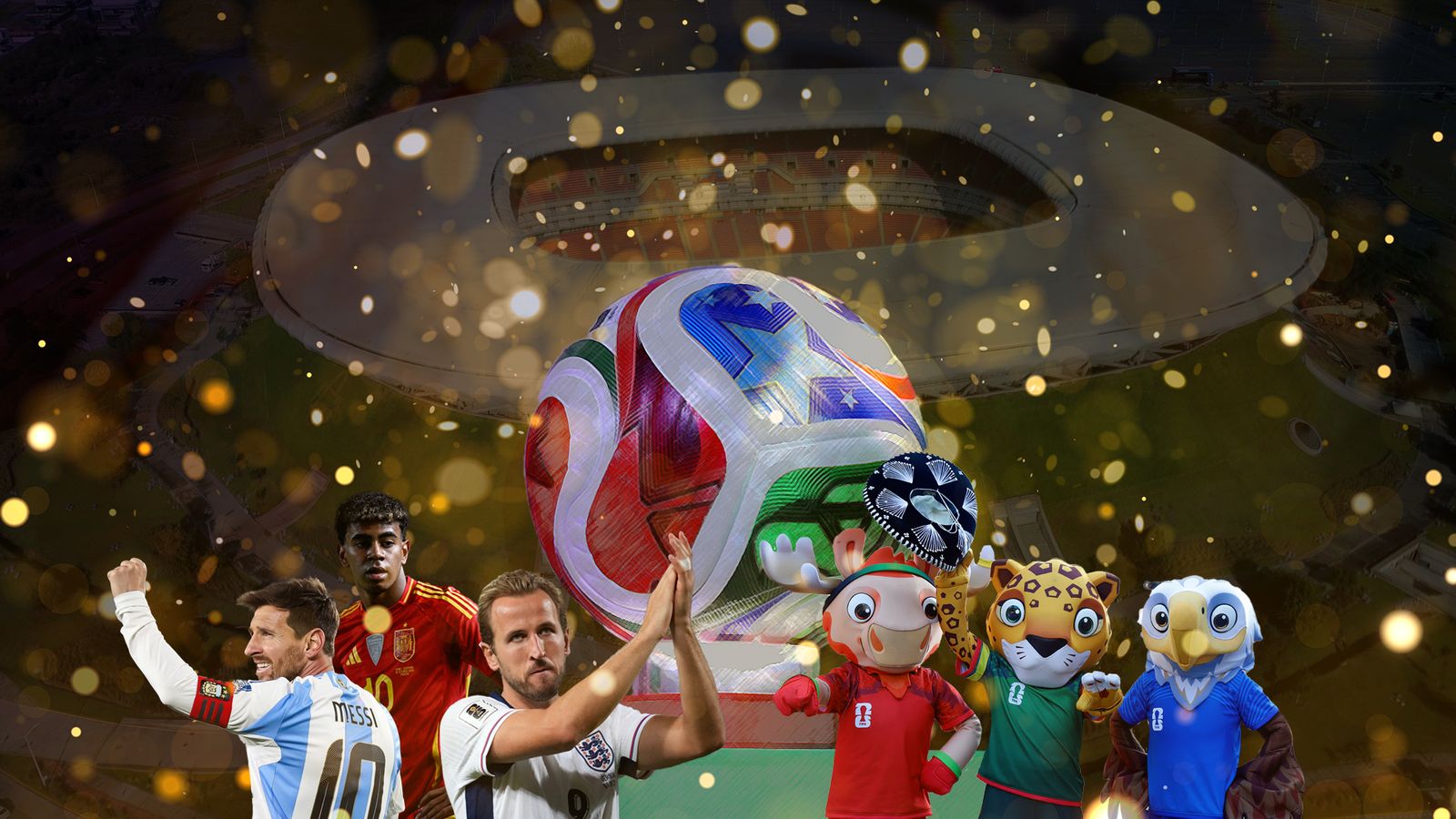
England and other qualified teams are finally set to find out who they’ll be facing in the group stages of the 2026 FIFA men’s World Cup today.
It’s guaranteed to be the biggest World Cup ever, with 48 teams competing instead of the usual 32.
Here’s everything you need to know.
When is the World Cup draw?
The draw, which determines which teams face which in the group stages, will take place on in Washington DC from 12pm local time, or 5pm UK time tonight.
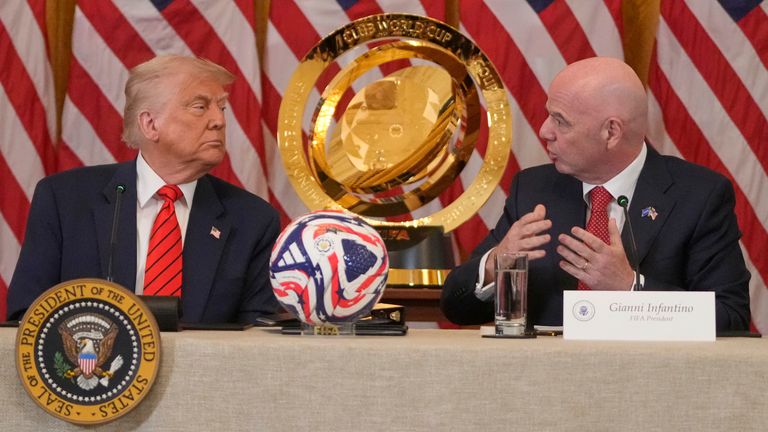
US President Donald Trump will join FIFA’s Gianni Infantino at the John F Kennedy Center – a performing arts venue where Mr Trump is chairman – to decide the fixtures.
Donald Trump and FIFA president Gianni Infantino. Pic: AP
Due to the increased number of countries taking part in the tournament, the format of the group stages has changed slightly. Instead of 32 teams being divided into eight groups, this year will see 12 groups of four.
The top two teams in each group, plus the eight best third-placed teams, will advance to a round of 32.
For the draw, Spain, Argentina, France and England – the four highest ranked teams – will be placed in the same pot for the draw, and are guaranteed not to meet each other until the semi-finals.
The three host nations are also guaranteed not to meet early, having been put in Pot 1 with the top teams.
The draw seedings are as follows:
Pot 1: Spain, Argentina, France, England, Brazil, Portugal, Netherlands, Belgium, Germany, United States, Mexico, Canada.
Pot 2: Croatia, Morocco, Colombia, Uruguay, Switzerland, Japan, Senegal, Iran, South Korea, Ecuador, Austria, Australia.
Pot 3: Norway, Panama, Egypt, Algeria, Scotland, Paraguay, Tunisia, Ivory Coast, Uzbekistan, Qatar, Saudi Arabia, South Africa.
Pot 4: Jordan, Cape Verde, Ghana, Curacao, Haiti, New Zealand, European playoff winner 1, European playoff winner 2, European playoff winner 3, European playoff winner 4, Intercontinental playoff winner 1, Intercontinental playoff winner 2.
You’ll be able to watch the ceremony via FIFA’s website or YouTube channel, while the BBC and BBC iPlayer will also be showing the draw.
Sky Sports will be offering live coverage of the draw, including analysis and reaction as the groups and fixtures are revealed.
FIFA says the draw is scheduled to take about 45 minutes during a show lasting about an hour and a half.
On 6 December at 5pm UK time, FIFA will put out another broadcast in which it will reveal all match venues and kick-off times.
Could Trump be getting a prize?
In November, FIFA revealed it had created a new worldwide peace prize, and that it would hand it out for the first time during the draw ceremony.
It said it would be given to “individuals who have taken exceptional and extraordinary actions for peace” – with no indication that potential recipients were limited to the world of sports.
It has prompted speculation the award will go to Donald Trump, who has long campaigned for a Nobel Peace Prize.
Mr Infantino, who has built up a strong relationship with the US president, backed him for the Nobel prize, writing on Instagram in October that Mr Trump “definitely deserves” the award for his efforts toward a peace deal in Gaza.
The award ultimately went to Venezuela’s opposition leader Maria Corina Machado.
When asked later if Mr Trump would get FIFA’s award, Mr Infantino laughed and said: “On the 5th of December, you will see.”
When and where is the World Cup?
The tournament runs from 11 June to 19 July 2026 and will be played at 11 sites in America, three in Mexico and two in Canada.
A total of 48 countries will be involved – up from 32 in 2022 – and 104 games will be played overall – up from 64.
The host nations automatically qualify and will play all three of their group stage matches on home soil.
The final will take place at the New York New Jersey (MetLife) Stadium – home of the New York Giants and New York Jets.
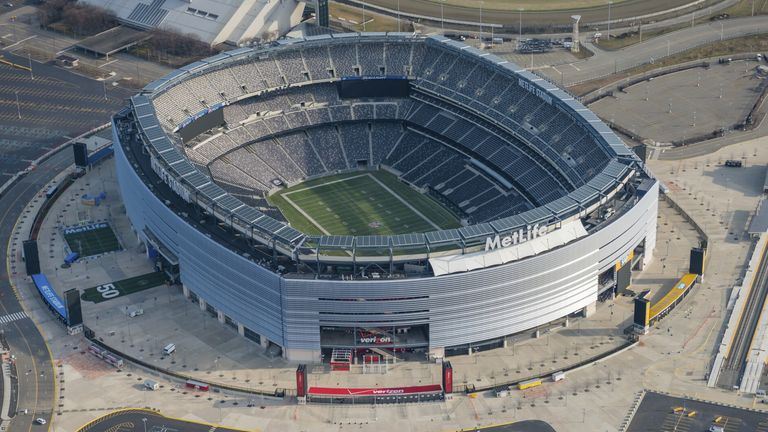
Aerial view of Metlife Stadium, where the final will be played. Pic: AP
All stadiums where games will be played include:
America:
• Atlanta Stadium
• Boston Stadium
• Dallas Stadium
• Houston Stadium
• Kansas City Stadium
• Los Angeles Stadium
• Miami Stadium
• New York New Jersey Stadium
• Philadelphia Stadium
• San Francisco Bay Area Stadium
• Seattle Stadium
Mexico:
• Estadio Azteca Mexico City
• Estadio Guadalajara
• Estadio Monterrey
Canada:
• Toronto Stadium
• BC Place Vancouver Stadium
Trump threatening to change host cities
Despite the stadiums already being selected, Donald Trump has threatened to remove Democrat-run city of Los Angeles from hosting, along with the Boston area.
Boston itself is not a host area, but the home of the NFL’s New England Patriots is being used by FIFA for seven matches, 30 miles away in Foxborough, Massachusetts.
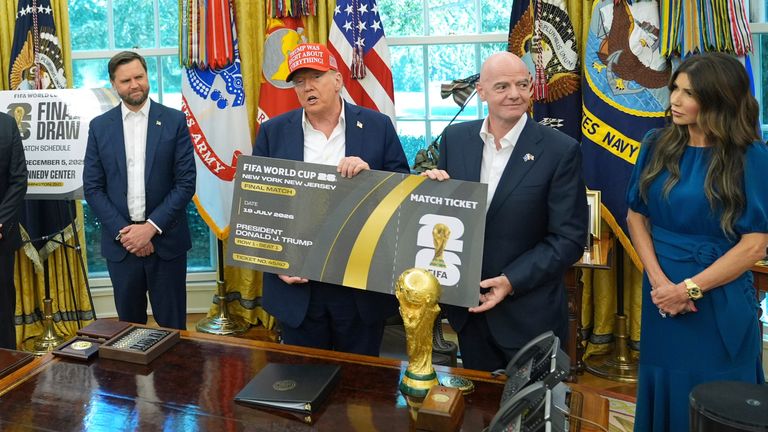
Could Trump move World Cup matches?
“If we think there’s going to be a sign of any trouble, I would ask Gianni [Infantino] to move that to a different city,” Mr Trump said in November, as protests against his government have taken place in both cities.
FIFA has told Sky News the US government does have the right to determine if cities are safe for the World Cup.
In a statement, FIFA said: “Safety and security are the top priorities at all FIFA events worldwide.
“Safety and security are obviously the governments’ responsibility, and they decide what is in the best interest for public safety.
“We hope every one of our 16 host cities will be ready to successfully host and fulfil all necessary requirements.”
Scott LeTellier, who was managing director of the 1994 World Cup in America, suggested the cities in question shouldn’t worry about Mr Trump’s threats, as changing the stadiums would require “some kind of national emergency that would give the government the authority to cancel an event”.
“I don’t see even a remote chance of that happening,” he said.
What teams could still qualify?
Out of an available 48 spots, 42 teams have already qualified.
The line-up automatically includes the three host nations, America, Mexico and Canada. While 16 of the spots are reserved for European teams – made up of the 12 UEFA qualifying group winners and the other four coming via play-offs.
Remaining qualifying spots are divided between the other confederations:
• CONMEBOL (South America) gets a minimum of six
• CONCACAF (North/Central America and Caribbean) gets a minimum of six
• AFC (Asia) gets eight
• CAF (Africa) gets nine
• OFC (Oceania) is guaranteed one spot.
For the first time since 1998, Scotland have bagged themselves a place through qualifying while Jordan, Curacao, Cape Verde and Uzbekistan will all make their World Cup debuts.
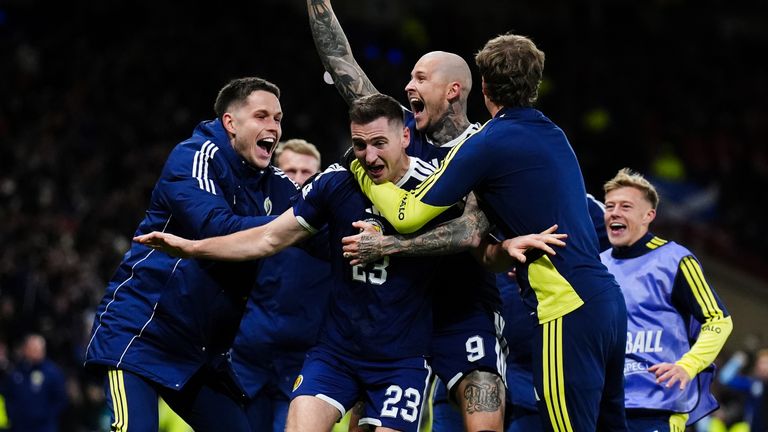
Scotland qualify for World Cup
The final slots at the tournament will be decided through play-offs.
On one side, a new inter-confederation tournament will see two teams from CONCACAF and one team each from CONMEBOL, AFC, CAF and OFC to battle it out for two spots in the World Cup.
The six teams that have qualified for these play-offs are: Bolivia, Congo DR, Iraq, Jamaica, New Caledonia and Suriname.
European, or UEFA, play-offs work slightly differently, with 16 teams battling it out for four available spaces.
This tournament is made up of the 12 runners-up from the European Qualifiers groups and the four best-ranked group winners of the 2024/25 UEFA Nations League that did not finish their group stage in first or second place.
On 20 November, a draw to determine who is set to play who in the eight semi-final matches on 26 March 2026 was made by FIFA. The winners will advance to the four final-stage matches on 31 March.
Should Wales and Northern Ireland both win their first-round games, they will then face each other, putting two home nations up against one another.
Will there be a half-time show?
Following in the footsteps of the NFL’s Superbowl, FIFA has confirmed that a half-time show will be performed during the World Cup final on 19 July.
Despite other finals having had musical acts before, this will be the first half-time show.
Earlier this year, FIFA’s Mr Infantino said British band Coldplay is behind the decision-making on multiple artists who will perform – none have been confirmed so far.
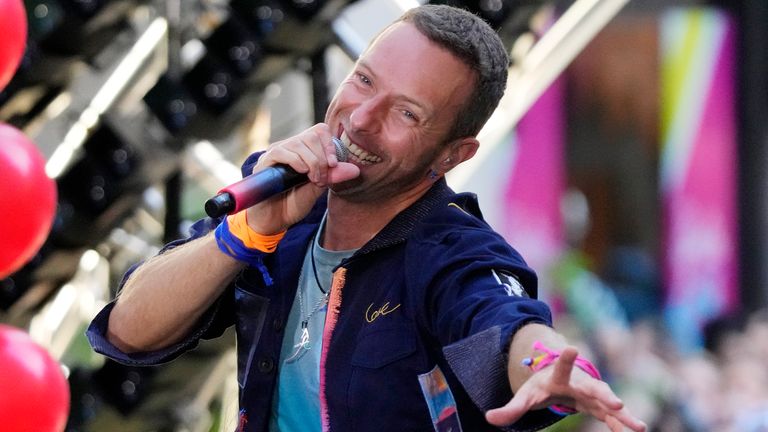
Coldplay’s Chris Martin will help decide who will perform at the World Cup half-time show. Pic: Charles Sykes/Invision/AP
Meet the mascots – and the ball
As there are three host nations, this year’s World Cup also comes with three mascots.
Maple the moose, Zayu the jaguar and Clutch the bald eagle will represent host countries Canada, Mexico and America respectively.
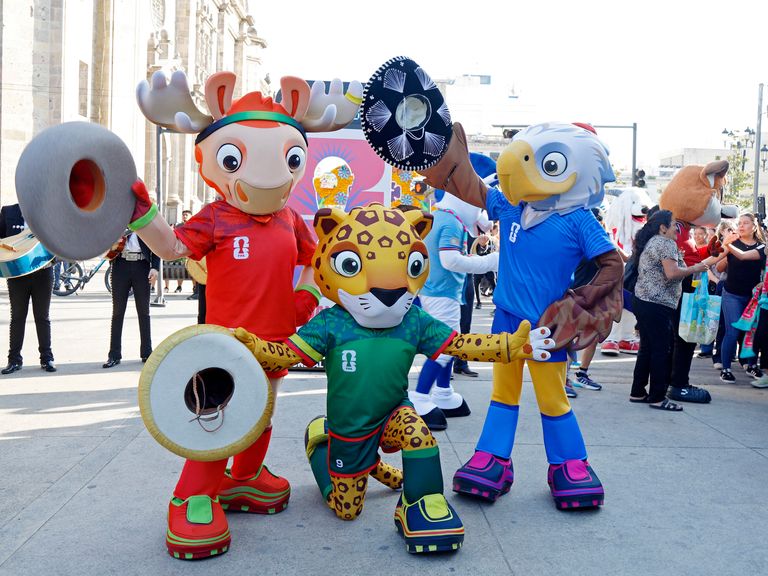
Pic: Reuters
Also reflecting the three co-hosts is the official World Cup match ball – Trionda – which means three waves in Spanish.
The ball features a swirled pattern incorporating red, green and blue, with each section representing a host nation.
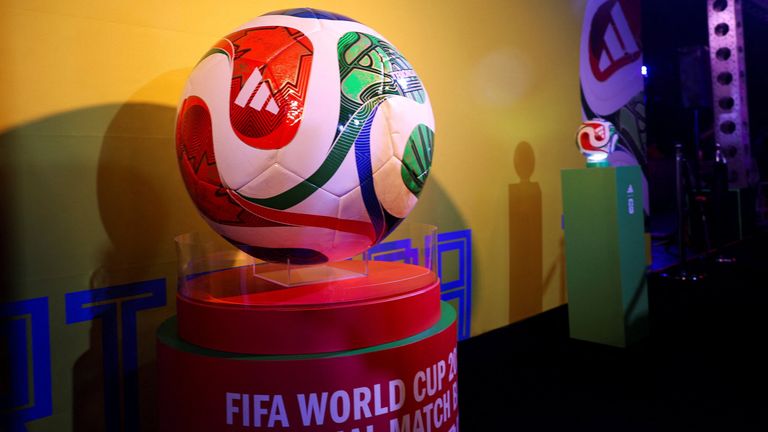
The official ball of the 2026 FIFA World Cup named Trionda. Pic: Reuters
How much are tickets?
FIFA says the cheapest tickets are from $60 (£45) in the group stage. But the most expensive tickets for the final are $6,730 (£5,094).
Initially, FIFA suggested tickets would be sold using dynamic pricing, meaning fans would pay different prices according to demand.
Variable pricing – fluctuating based on demand – had never been used at a World Cup before, raising concerns about affordability.
FIFA has now backed away from it, saying allocations would be set at a fixed price for the duration of the next ticket sales phase.
How you can get tickets
Tickets for the World Cup have been released in three phases, each with slightly different rules on who can buy the tickets and how.
Phase one was a Visa Presale Draw for people with a valid, unexpired Visa debit card, credit card, or reloadable prepaid card enabled with 3D Secure. This phase has now closed.
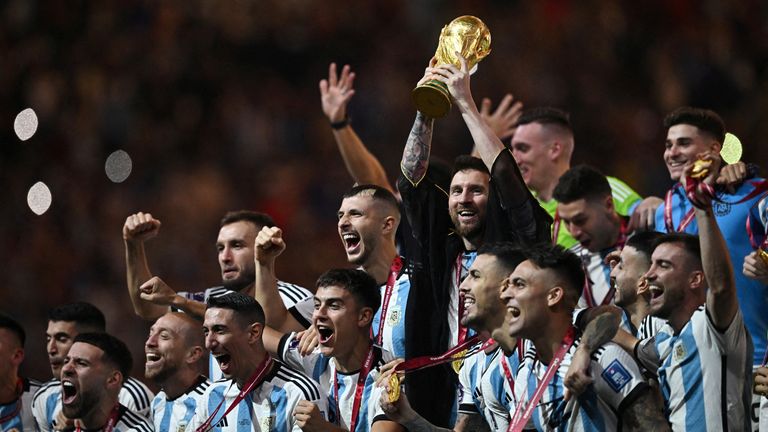
Argentina are reigning World Cup champions. Pic: Reuters
Phase two ran from 27 to 31 October, and saw registered individuals allocated time slots to purchase tickets from 12 November to early December.
Read more: Everything you need to know about buying tickets
The third phase, called a random selection draw, will start after the final draw determines the World Cup schedule.
It starts on 11 December, with the entry period for fans open until 13 January.
Those wanting tickets will need to have a FIFA ID in advance, which can be made via FIFA.com/tickets.
It’s from this same site that entries to the random selection draw will begin on 11 December, at 4pm UK time.
-
 Sports2 years ago
Story injured on diving stop, exits Red Sox game
-
 Sports3 years ago
‘Storybook stuff’: Inside the night Bryce Harper sent the Phillies to the World Series
-
 Sports2 years ago
Game 1 of WS least-watched in recorded history
-
 Sports3 years ago
Button battles heat exhaustion in NASCAR debut
-
 Sports3 years ago
MLB Rank 2023: Ranking baseball’s top 100 players
-
Sports4 years ago
Team Europe easily wins 4th straight Laver Cup
-
 Environment3 years ago
Japan and South Korea have a lot at stake in a free and open South China Sea
-
 Environment1 year ago
Here are the best electric bikes you can buy at every price level in October 2024