
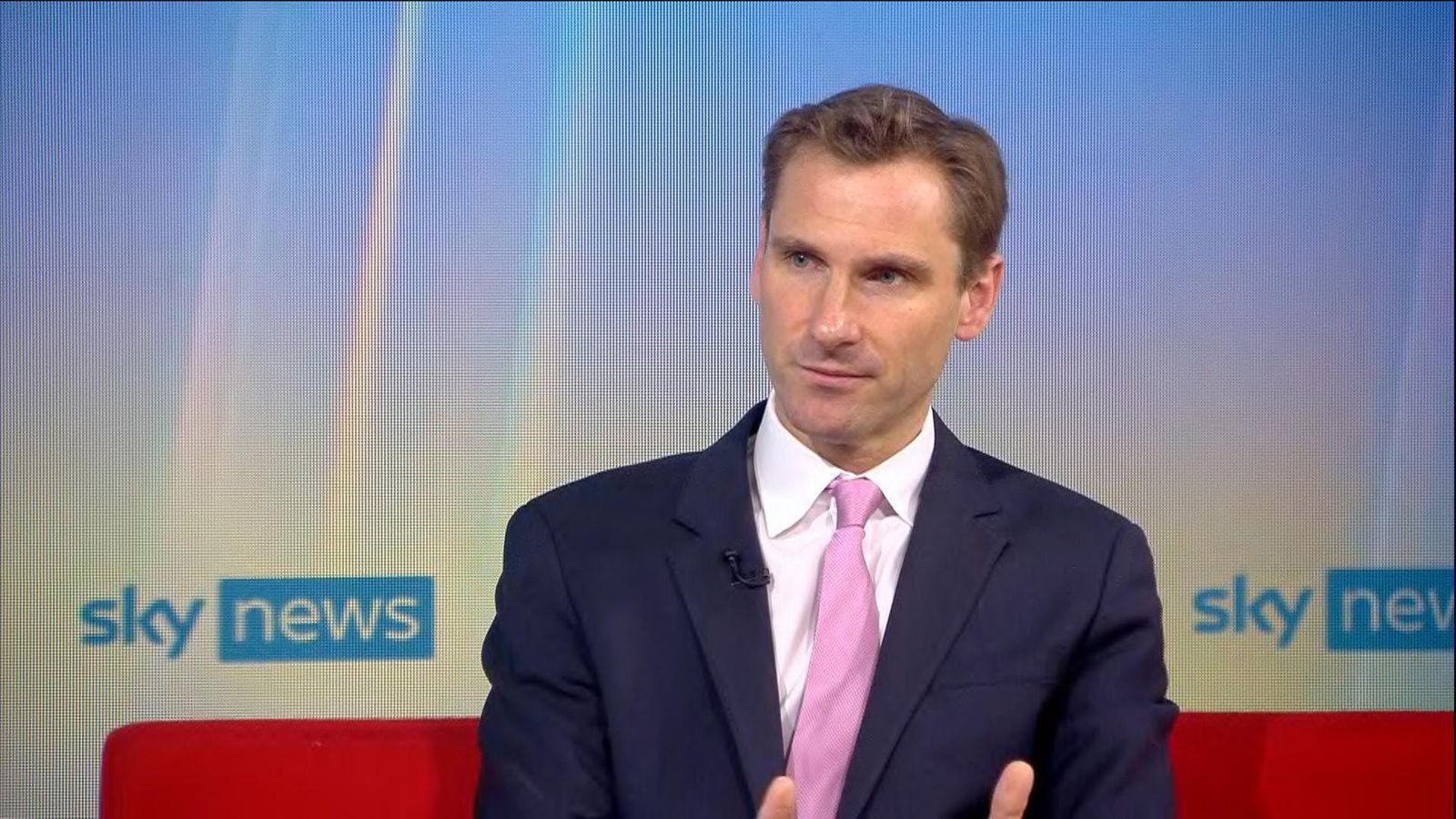
‘True’ that government tax cuts benefit the wealthiest, says finance minister Chris Philp

A government minister has accepted that scrapping the top rate of income tax would benefit only the wealthy.
Speaking to Sky News, the chief secretary to the Treasury Chris Philp said it was “true” that getting rid of the 45p rate would only help the better off.
But he claimed it was “very often those are people who are internationally mobile – they can choose where to locate people… and we want those people to locate here in the UK”.
UK economy latest news: Minister insists government won’t change course
He was speaking ahead of Prime Minister Liz Truss’s first public comments since the mini-budget market chaos, in which she defended her government’s policies, insisting it had “done the right thing” in order to get the economy growing.
Mr Philp also said he “respectfully disagrees” with the IMF, which had said the government’s economic plan would create more inequality in the UK.
His comments follow turmoil in the markets after the statement to the Commons on Friday by the chancellor Kwasi Kwarteng.
The “fiscal event” included tax cuts, such as scrapping the 44p rate for those earning over £150,000, reducing the basic rate of income tax by 1p and cancelling the planned increase to corporation tax.
But it sent the economy into a spin as economists worried about the levels of borrowing the Treasury was committing to.
On Wednesday, the Bank of England was forced to intervene, launching an emergency government bond-buying programme to prevent borrowing costs from spiralling out of control and stave off a “material risk to UK financial stability”.
Asked whether the government had made any mistakes, Mr Philp said “no one’s perfect”, but he added: “I’m not going to sort of apologise for having a plan to grow the UK’s economy.”
He also defended Mr Kwarteng, who has been facing criticism, not just from economists – including Ms Truss’s own external adviser, Gerard Lyons – but from Tory MPs too.
“The chancellor is in constant contact with the markets,” he said. “He’s meeting the governor of the Bank of England on a very regular basis.”
Is Liz Truss a dangerous PM?
‘Amateur bunch need to get back to their offices’
The government is facing demands from opposition parties to recall parliament from its conference recess to deal with the economic problems.
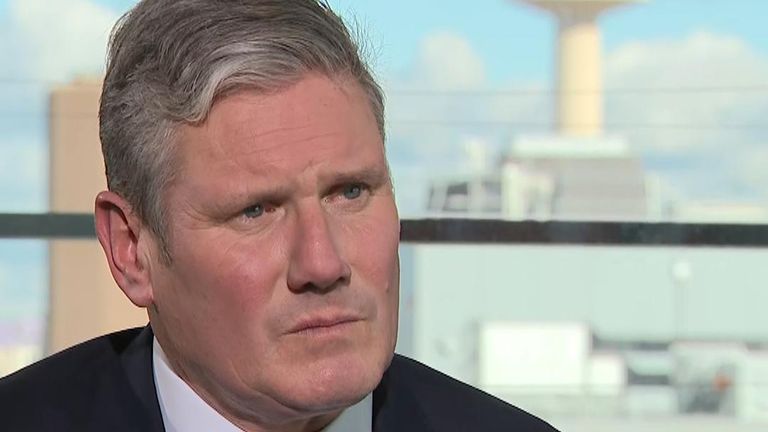
At the end of his party’s conference on Wednesday, the Labour leader Sir Keir Starmer called on Mr Kwarteng to reverse Friday’s announcements “before any more damage is done”, telling Sky News that Ms Truss was a “danger” to the economy.
Read more:
What are bonds, how are they different to gilts and where do they fit in the mini-budget crisis?
Your quick guide to what’s going on with the economy
The Liberal Democrat leader Sir Ed Davey also told Sky News that it was “a totally unnecessary crisis… caused by the incompetence of this Conservative government” and the Tories should cancel their upcoming conference.
He said Mr Philp was “was blaming everyone else but the government and no one believes him – no one believes this Conservative government anymore. They’ve lost total credibility.”
Click to subscribe to the Sky News Daily wherever you get your podcasts
Sir Ed added: “It is no good Conservative ministers going off to their conference next week, going to their cocktail parties, quaffing champagne while the country is in crisis.
“Liz Truss, Kwasi Kwarteng and the rest of this amateur bunch need to get back to their offices, stop their conference and sort this mess out – come to parliament and be held accountable.”

Victims of maternity failings say they’re “disappointed” with the findings of an interim report which they fear will have “no teeth” to make changes.
An investigation into NHS maternity services is under way after a series of shocking scandals.
The National Maternity and Neonatal Investigation (NMNI) is being led by Baroness Amos, who said “nothing prepared her” for the amount of “unacceptable care” families currently receive.
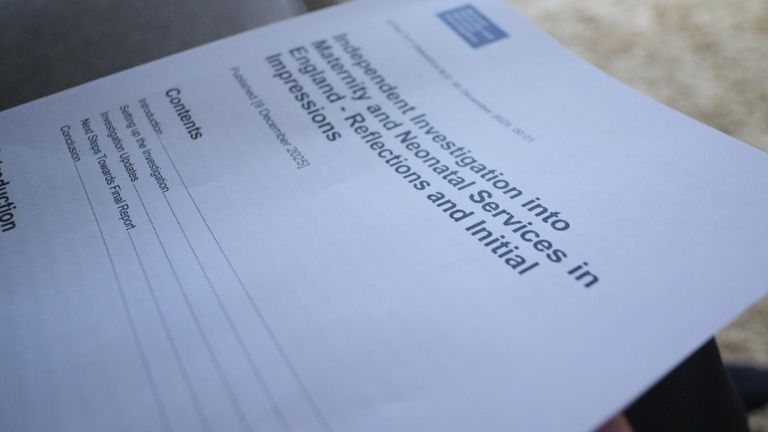
A report has been released documenting her initial reflections and impressions after meeting families and visiting hospitals.
She will investigate 12 NHS trusts in total, including Oxford University Hospitals (OUH), which runs the world-renowned John Radcliffe Hospital.
‘I was left in my own blood’
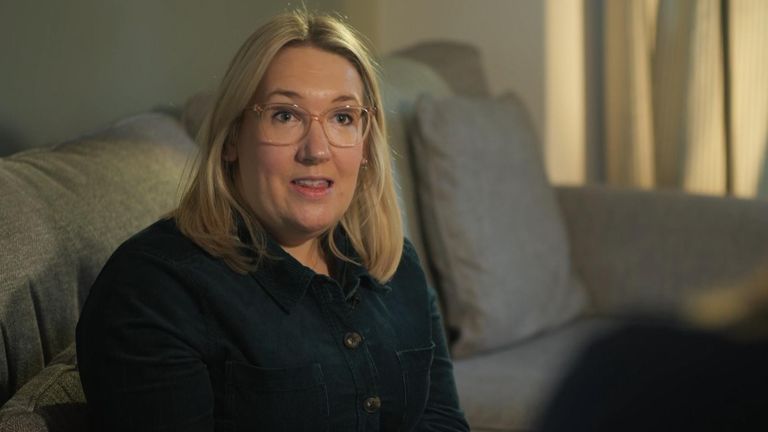
Rebecca Matthews formed a campaign for families failed by OUH after her own traumatic births.
Asked to discuss the care she received, she said she “could only describe it as callous”.
“There wasn’t any kindness there. I was left in my own blood,” she added.
Ms Matthews recently took part in evidence-gathering sessions held by Baroness Amos.
But when she read her interim report, she said it was “disappointing”, as it appeared to be “a bullet point list of failings that actually we’ve seen time and time again in independent reviews”.
“The reflections don’t mention accountability at all,” she said.
Birth trauma: Your stories
‘Why are we struggling to provide?’
Based on her initial inquiries, Baroness Amos found common themes, including women not being listened to and being “disregarded” when they raised concerns.
Many weren’t given the right information to make informed choices about their care.
She was told of discrimination against women of colour, working-class mothers, or parents who were younger.
A “staggering” 748 recommendations have been made about NHS maternity services in recent years, Baroness Amos revealed – and she does “not understand why change has been so slow”.
She asked: “Why are we in England still struggling to provide safe, reliable maternity and neonatal care everywhere in the country?”
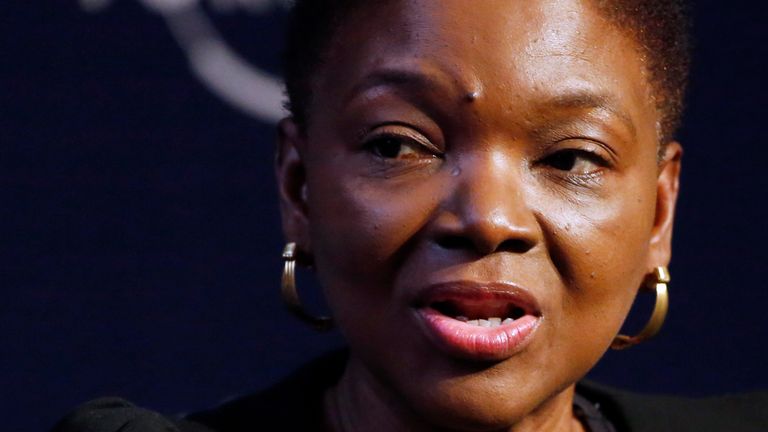
Baroness Valerie Amos. Pic: Reuters
The most recent health watchdog findings paint a depressing picture of maternity services.
Almost two-thirds of acute hospital maternity services were judged either inadequate or required improvement for safety.
Read more from Sky News:
Three women describe traumatic childbirth
This investigation is long overdue and isn’t due to report back fully until the spring.
But some campaigners are already worried it won’t bring meaningful change to maternity services.
Ms Matthews said it “seems as though it’s heading the same way that other reviews have gone in the past, leading to some recommendations but no teeth”.
“We need some mechanisms that are going to hold people and systems to account,” she said.
‘More to do’
OUH chief nurse Yvonne Christley said in a statement that “feedback received from patients using our maternity service over the last year is positive overall”.
“However, we know we have more to do to improve our maternity services,” she added.
“Our present focus is on listening to the experiences of women and families, which is helping us to identify opportunities for improvement.”
Anyone feeling emotionally distressed or suicidal can call Samaritans for help on 116 123 or email jo@samaritans.org in the UK. In the US, call the Samaritans branch in your area or 1 (800) 273-TALK.
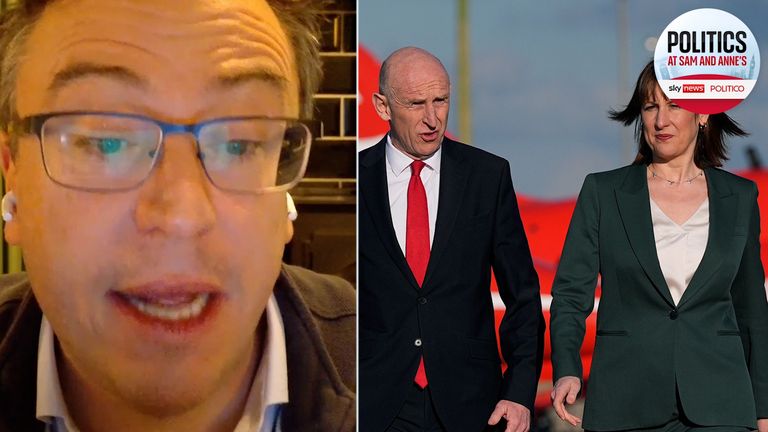
The head of the Royal Navy has warned the government to “step up” and fund defence or risk losing the UK’s superiority in the Atlantic to Russia.
Should that happen, General Sir Gwyn Jenkins said it would be the first time since the end of the Second World War that Britain’s warships and submarines were not the dominant force in their most vital sea lanes alongside their allies.
“We are holding on, but not by much,” he told a conference in London on Monday.
“There is no room for complacency. Our would-be opponents are investing billions. We have to step up, or we will lose that advantage.”
As a senior, serving military officer speaking publicly, he did not make any direct criticism of the speed of plans by Sir Keir Starmer’s government to increase defence spending.
But Sky News has reported that he and his fellow chiefs held a “very difficult meeting” last month over how to fund plans to rebuild the armed forces amid fears of further cuts.
Budget: what about defence spending?
Defence sources said there was growing concern at the very top of the armed forces about a gap between the promises being made by the prime minister to fix the UK’s hollowed-out defences and the reality of the size of the defence budget, which is currently not seen as growing fast enough.
That means either billions of additional pounds must be found more quickly, or ambitions to modernise and transform the armed forces might need to be curbed, despite warnings of mounting threats from Russia and China, and pressure from Donald Trump on allies to spend more on their own defences.
A Sky News and Tortoise podcast series called The Wargame tracks the hollowing out of the UK’s military since the end of the Cold War and the risk that has created.
👉Search for The Wargame on your podcast app👈
General Jenkins, the first Royal Marine to serve as First Sea Lord, used a speech at the Sea Power Conference to say that Russia is still investing billions in its naval capabilities – in particular the Northern Fleet that operates in the Atlantic – even as it wages war against Ukraine.
There has been a 30% increase in Russian incursions in the North Atlantic in the past two years, he said.
That included the Yantar spy ship, which last month was spotted off the coast of Scotland and even shone a laser at the pilots of a Royal Air Force reconnaissance plane that was tracking the vessel.
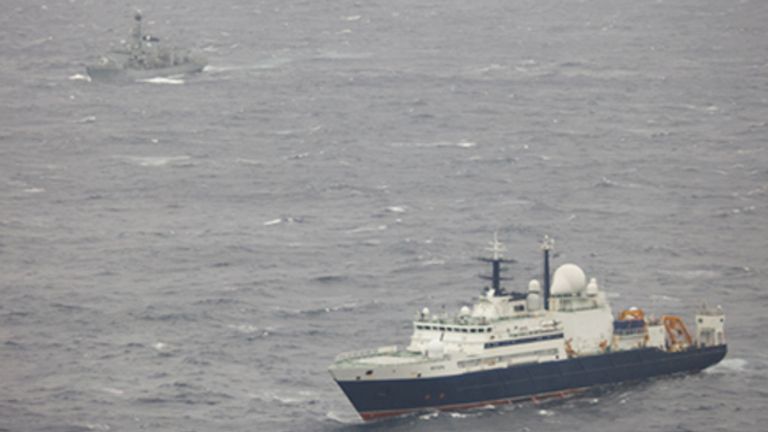
The Russian spy ship Yantar. Pic: MOD/PA
Yet General Jenkins said what Russia is doing beneath the surface of the waves, where the UK and its allies store vital communications cables as well as critical oil and gas pipelines, was even more concerning.
“I can also tell you today that the advantage that we have enjoyed in the Atlantic since the end of the Second World War is at risk,” he said.
Read more:
UK unveils undersea tech
Does Britain’s threat to Russia ring hollow?
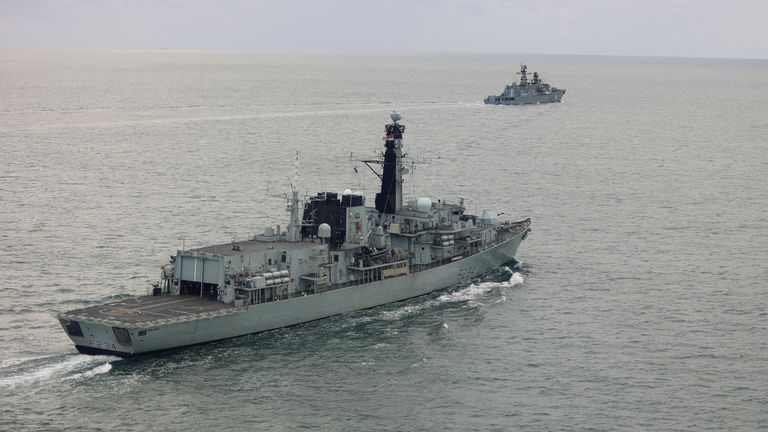
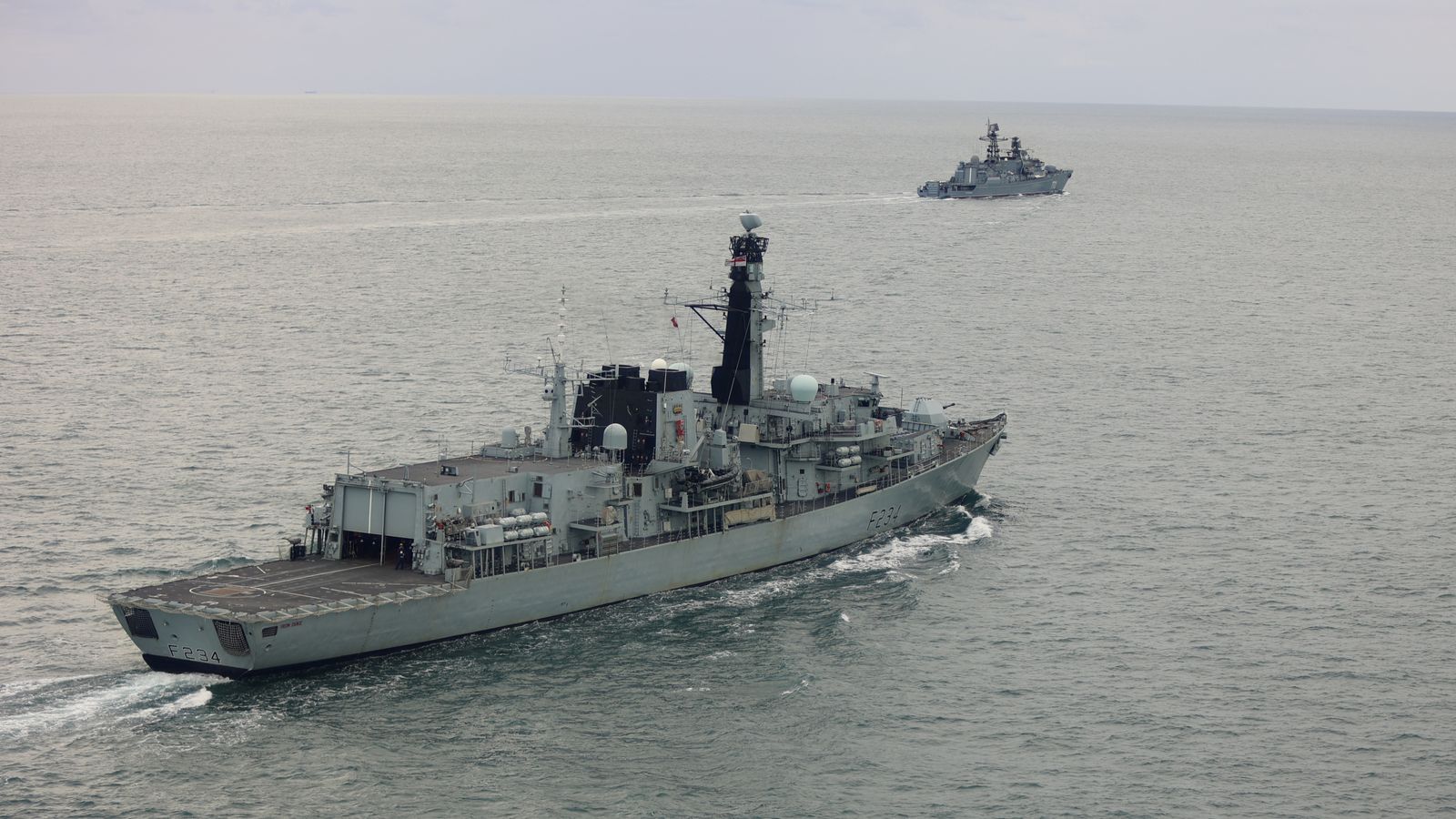
HMS Iron Duke shadowing the Russian Frigate Neustrashimy through UK waters in September. Pic: PA
Navy facing huge challenges
It is a particularly tough time for the navy, which has more ships and submarines alongside and unable to operate than at sea or at least ready to sail.
The service is also suffering from a shortage of sailors and in particular submariners, which again is impacting the availability of the fleet.
The crisis follows decades of funding cuts since the end of the Cold War, compounded by a litany of botched procurement programmes that has all too often seen vessels coming into service years late, at an inflated price and in too few numbers.
Vision of ‘hybrid navy’
Despite the sombre tone, the First Sea Lord set out how he wants to transform his service and make it ready to fight a war – though not until 2029, a timeline that could be too slow if some predictions about the threat posed by Russia to NATO are correct.
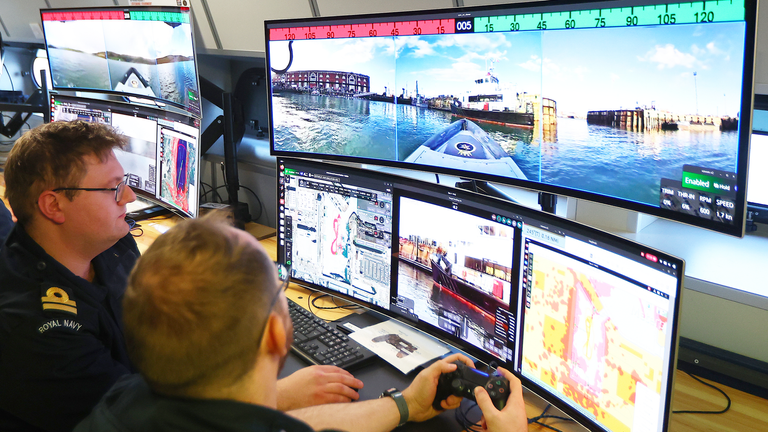
New UK military technology unveiled
His vision – working with industry and other allies – is about developing a blend of manned ships and submarines as well as unmanned ones – a “hybrid navy”.
He is also stripping back what he called the navy’s own bureaucracies to enable the service to move much faster – crucially at the pace of the threat and the pace of rapid and growing technological change.
“We will face headwinds, we will face rough seas, but together, we can solve these problems if we have the appetite, if we have the determination, and if we have the mindset.”

-
 Sports2 years ago
Story injured on diving stop, exits Red Sox game
-
 Sports3 years ago
‘Storybook stuff’: Inside the night Bryce Harper sent the Phillies to the World Series
-
 Sports2 years ago
Game 1 of WS least-watched in recorded history
-
 Sports3 years ago
Button battles heat exhaustion in NASCAR debut
-
 Sports3 years ago
MLB Rank 2023: Ranking baseball’s top 100 players
-
Sports4 years ago
Team Europe easily wins 4th straight Laver Cup
-
 Environment3 years ago
Japan and South Korea have a lot at stake in a free and open South China Sea
-
 Environment1 year ago
Here are the best electric bikes you can buy at every price level in October 2024