
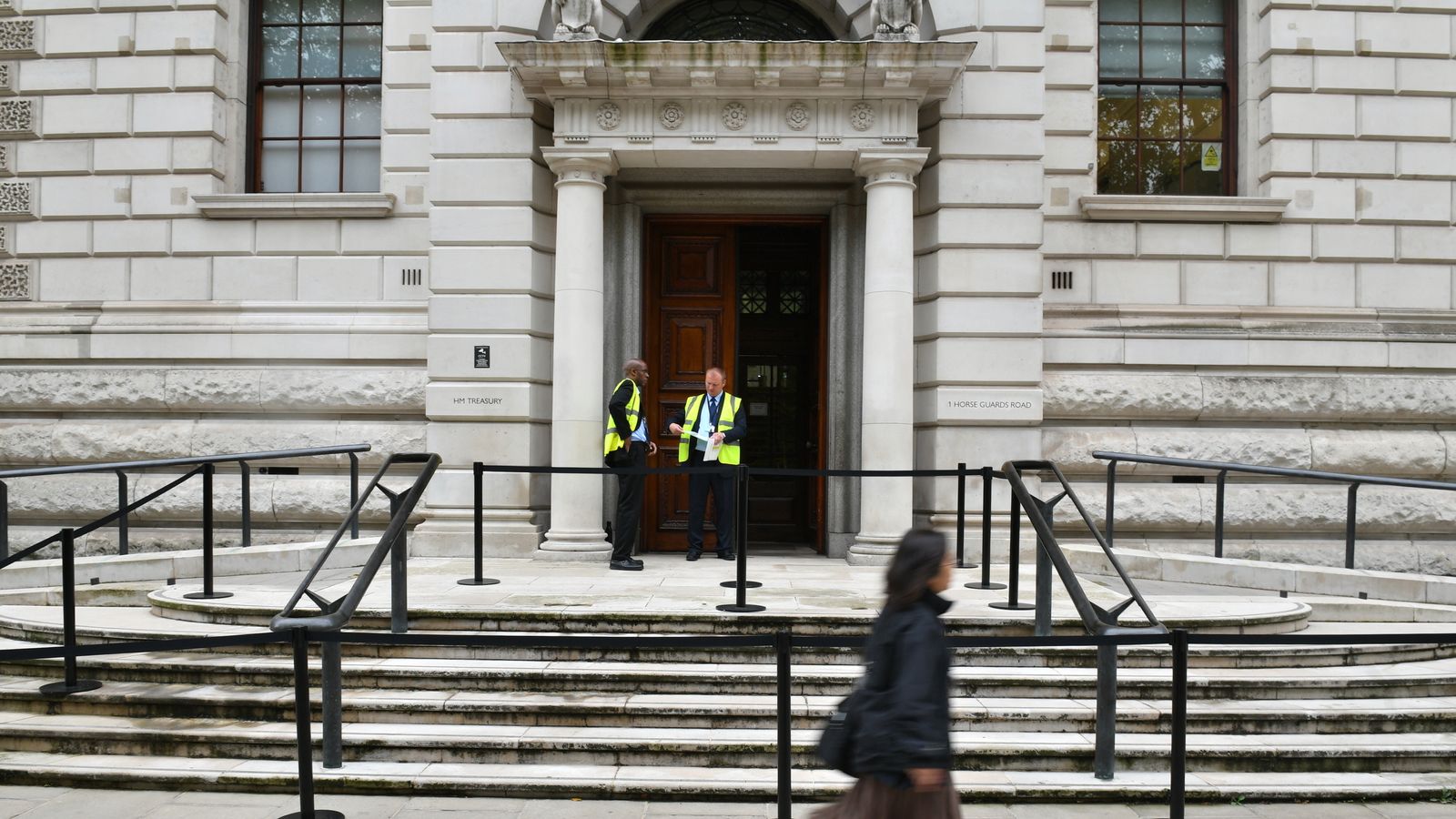
Truss and Kwarteng to meet fiscal watchdog today after MPs demand full economic forecast


Liz Truss will meet the head of the UK’s independent fiscal watchdog today after a powerful group of cross-party MPs demanded the chancellor release a full economic forecast by the end of October – a month earlier than planned.
Chancellor Kwasi Kwarteng will join the prime minister as they meet the Office for Budget Responsibility’s Richard Hughes before they are handed a first draft of its full fiscal forecasts next week.
The Treasury confirmed to Sky News the meeting is happening but would not comment on the fact it is highly unusual for a PM to attend an OBR meeting.
They also denied it was an emergency meeting.
A Treasury spokesman said: “We are committed to working with the OBR.”
The news that the pair will be having a meeting with the OBR came just hours after the Treasury Select Committee, made up of MPs from all parties, demanded Mr Kwarteng release a full economic forecast from the OBR by the end of October and bring forward his medium-term budget from 23 November.
Labour take biggest poll lead in decades – follow live updates
Mel Stride, Tory chair of the committee, had said in his letter to the chancellor it is “hard to conclude other than that an absence of a forecast has in some part driven the lack of confidence in markets”.
He added: “Some have formed the unfortunate impression that the government may be seeking to avoid scrutiny, possibly on account of expecting the OBR forecast to be unsupportive of the achievement of the economic outcomes the government expects from the Growth Plan, including 2.5% trend growth in the medium term.”
Mr Kwarteng had said the forecast would be released on 23 November but after last Friday’s mini-budget caused economic turmoil for the UK, the committee discovered the chancellor will be getting an initial OBR forecast on 7 October.
They asked him to publish “without delay” the initial economic and fiscal forecast the OBR provided to him when he started the job a few weeks ago.
A reply from the chancellor has been requested for no later than Monday.
Senior Tory blames mini-budget for turmoil
Mr Stride also expressed frustration in his letter at having pressed Mr Kwarteng and his predecessor Nadhim Zahawi to publish an OBR forecast before the mini-budget and said the OBR had assured him on 26 August they could produce a forecast to that timescale and had already been working on it for a month.
“The OBR was standing by ready to provide a meaningful forecast alongside the 23 September statement had the Treasury requested it. No such request was received,” Mr Stride said.
Read more:
Kwasi Kwarteng insists government ‘protecting people across UK’
Government minister admits tax cuts benefit wealthiest
Mr Stride said he was pleased to see the OBR meeting happening.
“The PM and the chancellor must use this meeting as a reset moment – an opportunity to urgently bring forward the OBR forecast incorporating credible new fiscal rules and a plan which the OBR assesses as having a good chance of meeting them.
“Then we can all take a deep breath and start to move forward with greater confidence.”
The senior Tory told Sky News’ Daily Podcast earlier on Thursday: “Many colleagues are very concerned, and I think that’s totally unsurprising.
“I mean, I can speak for myself. I’m on the record as saying that I think if we’re not very careful, then our position as being the party of sound money and economic responsibility, fiscal responsibility, may be in jeopardy.”
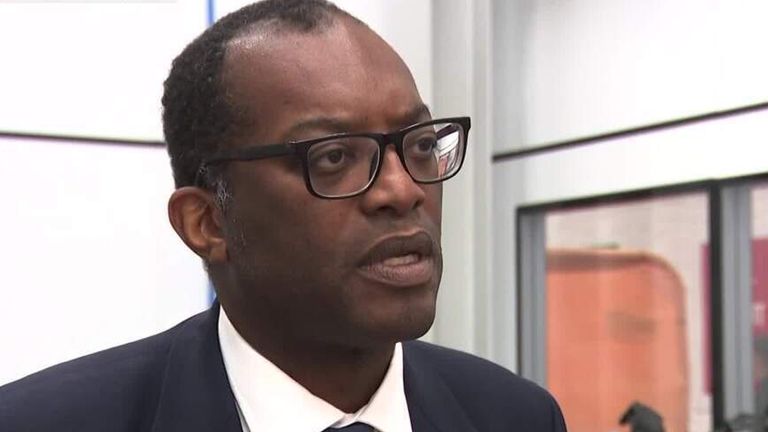
Chancellor ‘sticking with growth plan’
He added that he did not think it was incompetence that caused the current problems and suspects “some of those involved have been taken slightly by surprise how quickly the markets turned” but he thinks publishing an OBR forecast would be central to calming the markets by “demonstrating credibility”.
Liz Truss and Mr Kwarteng have today been defending the mini-budget, with the prime minister insisting the government took “decisive action” that will aid growth.
The chancellor said the plan is aimed at “protecting people right across the country” and was “absolutely essential” for growth.
Subscribe to the Daily podcast on Apple Podcasts, Google Podcasts, Spotify, Spreaker
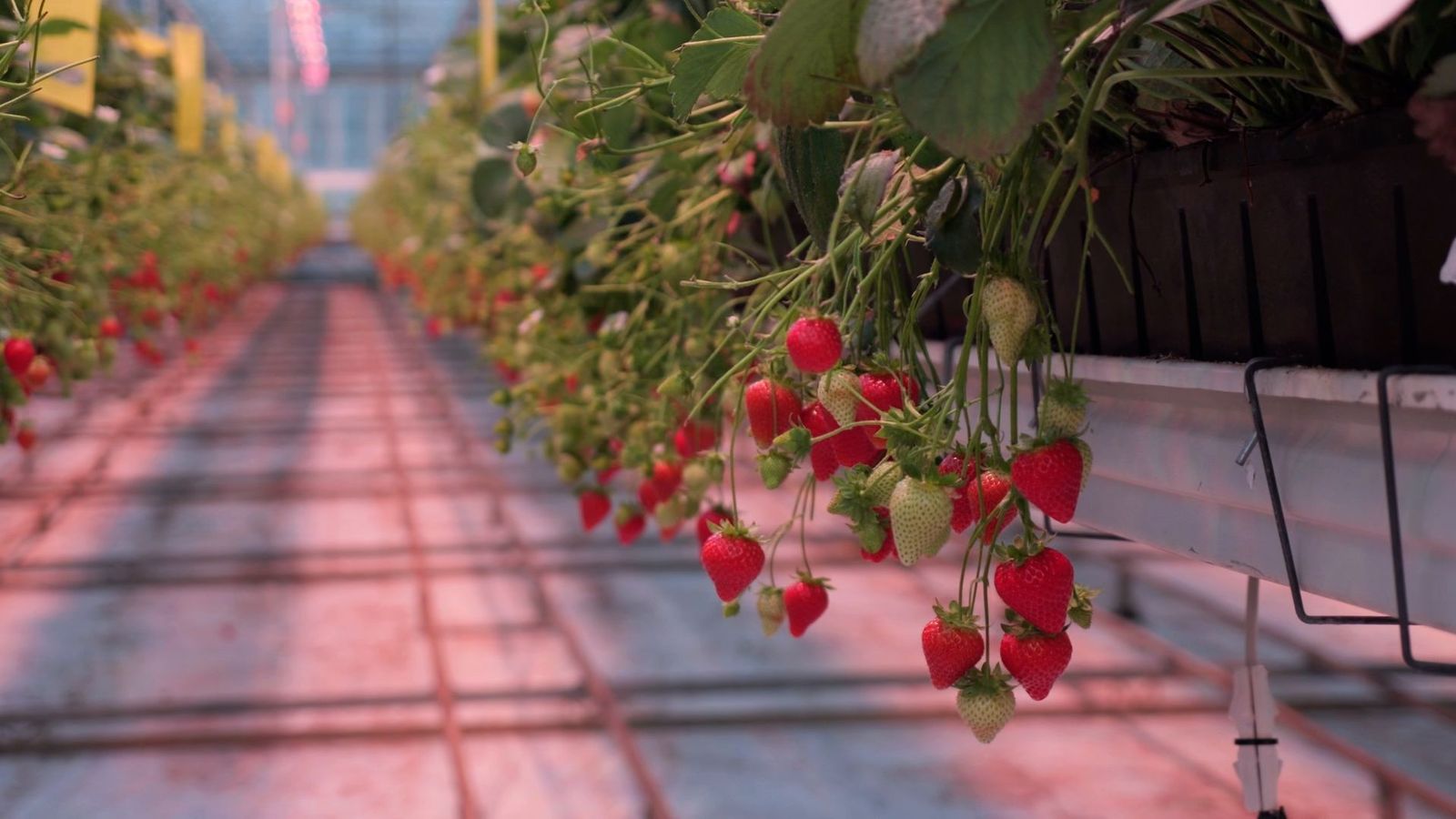
Acres of sweet, red strawberries are ripening in West Sussex this winter ready to be sold in UK supermarkets.
LED lighting in vast glasshouses is enabling berries to be grown all year on a commercial scale for the first time ever.
It means less reliance on fruit flown in from countries like Egypt.
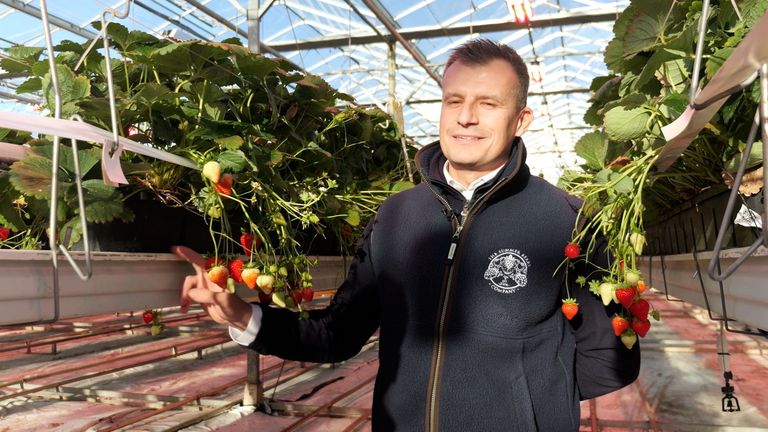
Bartosz Pinkosz
“The LED lighting is the prime reason for successful growing,” said Bartosz Pinkosz, operations director of The Summer Berry.
“If it was not a sunny day, the LED lighting would create enough energy for leaves to absorb that energy, take it in and deliver the energy to the berries.
“We are able to have the right sweetness in the berries and the right shape, right size.”
There are 36,000 square metres of the greenhouses at the site in Chichester, partially powered by renewable energy and buzzing with bees as pollinators.
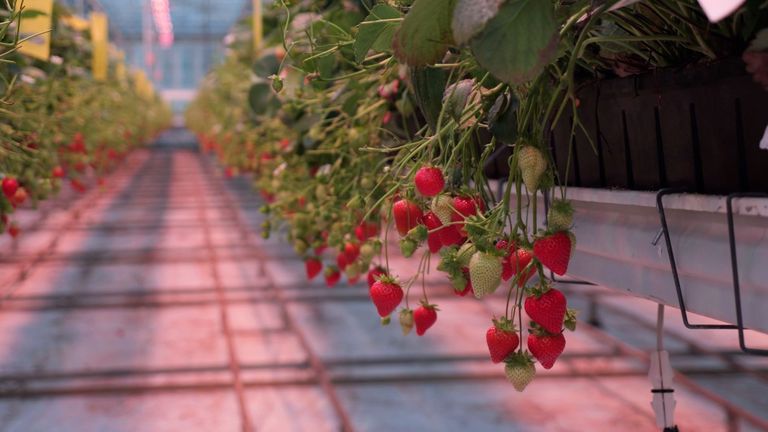
Acres of strawberries ripening in West Sussex
And the new strand to the business means year-round work for 50 people.
But while it might cut the food miles dramatically, there’s still an inevitable environmental impact when a colossal space is created warm enough for pickers to wear short sleeves in winter.
Dr Tara Garnett, director of food systems platform TABLE, said: “You’re going to need a lot of heat and you’re going to need a lot of light in order to reproduce those summer growing conditions so everything hinges on the energy source you’re going to be using.
“And when we look at the UK self sufficiency levels in fruit and vegetables they are appalling – 16% of the fruit we consume is UK-grown, so the vast majority is imported, and when it comes to vegetables we’re looking more at 50% or so, so there’s a lot more we can do to build up, and should be doing.”
Around 1.5 million punnets of strawberries are expected to be picked on the site over the full stretch of winter, allowing British strawberries to be eaten this Christmas.
But for some, it’s simple – strawberries should be saved for summer, even if it is a much shorter journey from plant to plate.


-
 Sports2 years ago
Story injured on diving stop, exits Red Sox game
-
 Sports3 years ago
‘Storybook stuff’: Inside the night Bryce Harper sent the Phillies to the World Series
-
 Sports2 years ago
Game 1 of WS least-watched in recorded history
-
 Sports3 years ago
Button battles heat exhaustion in NASCAR debut
-
 Sports3 years ago
MLB Rank 2023: Ranking baseball’s top 100 players
-
Sports4 years ago
Team Europe easily wins 4th straight Laver Cup
-
 Environment3 years ago
Japan and South Korea have a lot at stake in a free and open South China Sea
-
 Environment1 year ago
Here are the best electric bikes you can buy at every price level in October 2024