
California serial killer is ‘on a mission’ but police are baffled as to what the mission is

A suspected California serial killer appears to be “on a mission” police have said, although they admit they are still baffled as to what that mission is.
The gunman has so far shot dead six men and wounded a woman in a 18-month killing spree in the Stockton and Oakland areas.
There is a $125,000 (£109,000) reward for information leading to an arrest.
The victims appear to have little in common, no particular ethnic group seems to have been targeted and while some were homeless, others were not. None were beaten or robbed and they don’t appear to have known each other.
“We don’t know what the motive is. What we do believe is that it’s mission-oriented,” Stockton Police Chief Stanley McFadden said Tuesday. “This person’s on a mission.”
The first victim was 39-year-old Juan Vasquez Serrano, who was shot multiple times in Oakland in April last year.
Days later the woman was shot and although wounded managed to scare off the attacker by walking towards him.
She described him as wearing a dark-coloured hooded sweatshirt with the hood pulled up, dark-coloured pants and an all-black COVID-style face mask.
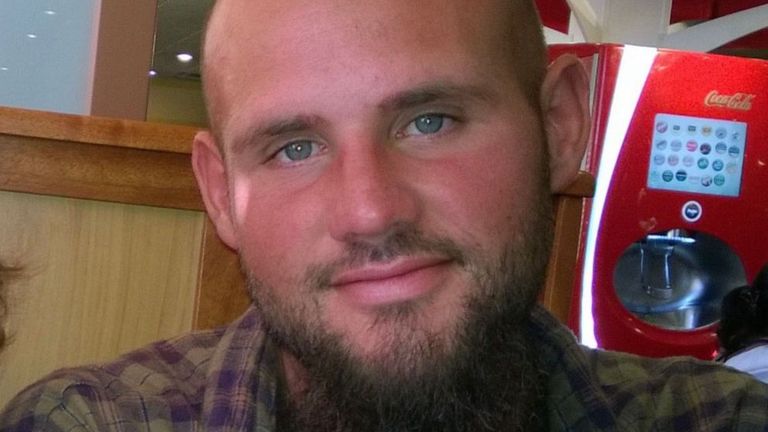
Paul Yaw was the first of the Stockton victims to die Pic: Greta Bogrow
The killer than appears to have laid low for for more than a year before switching his attention to the Stockton area, around 70 miles from Oakland.
On 8 July this year Paul Yaw, 35, was shot dead, followed by Salvador Debudey Jr., 43, on 11 August; Jonathan Hernandez Rodriguez, 21, on 30 August; Juan Cruz, 52, who died on 21 September.
The most recent victim was Lorenzo Lopez Sr., 54, who was shot dead on 27 September.
He “was just a person who was out here at the wrong place, at the wrong time, at the wrong circumstance,” his brother, Jerry Lopez, told local television station KXTV-TV. “It’s hard to process that this has happened.”
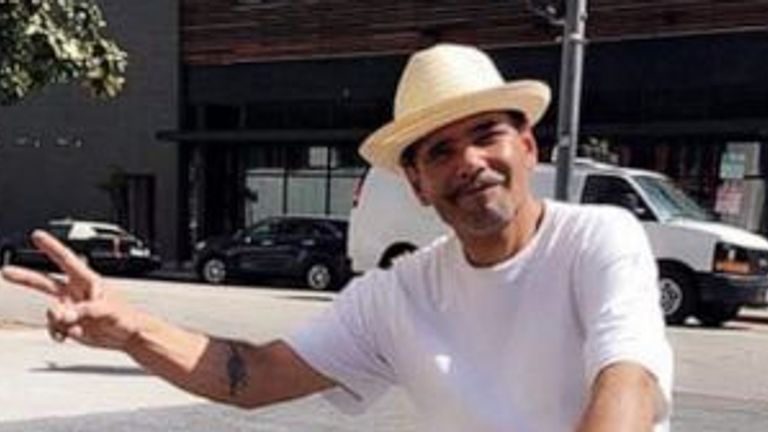
Lorenzo Lopez, the most recent victim, died on 27 September Pic: Jerry Lopez Family
Stockton Police said four of the victims were walking alone while the fifth was sitting in his car.
It is believed the same gun was used for both the Oakland and Stockton shootings.
Police admit they have little to go on apart from some indistinct CCTV footage.
“To be honest, we just don’t know,” Stockton Police Officer Joseph Silva said. “This person or people who are out doing this, they are definitely very bold and brazen.”
US
US launches ‘large scale’ strikes to ‘eliminate’ Islamic State fighters in Syria after US citizens killed in desert

The US has launched strikes to “eliminate ISIS fighters, infrastructure, and weapons sites” in Syria, according to Defence Secretary Pete Hegseth.
A U.S. official described it as “a large-scale” strike that hit 70 targets in areas across central Syria that had IS infrastructure and weapons.
“This is not the beginning of a war – it is a declaration of vengeance. The United States of America, under President Trump’s leadership, will never hesitate and never relent to defend our people,” he said in a social media post.
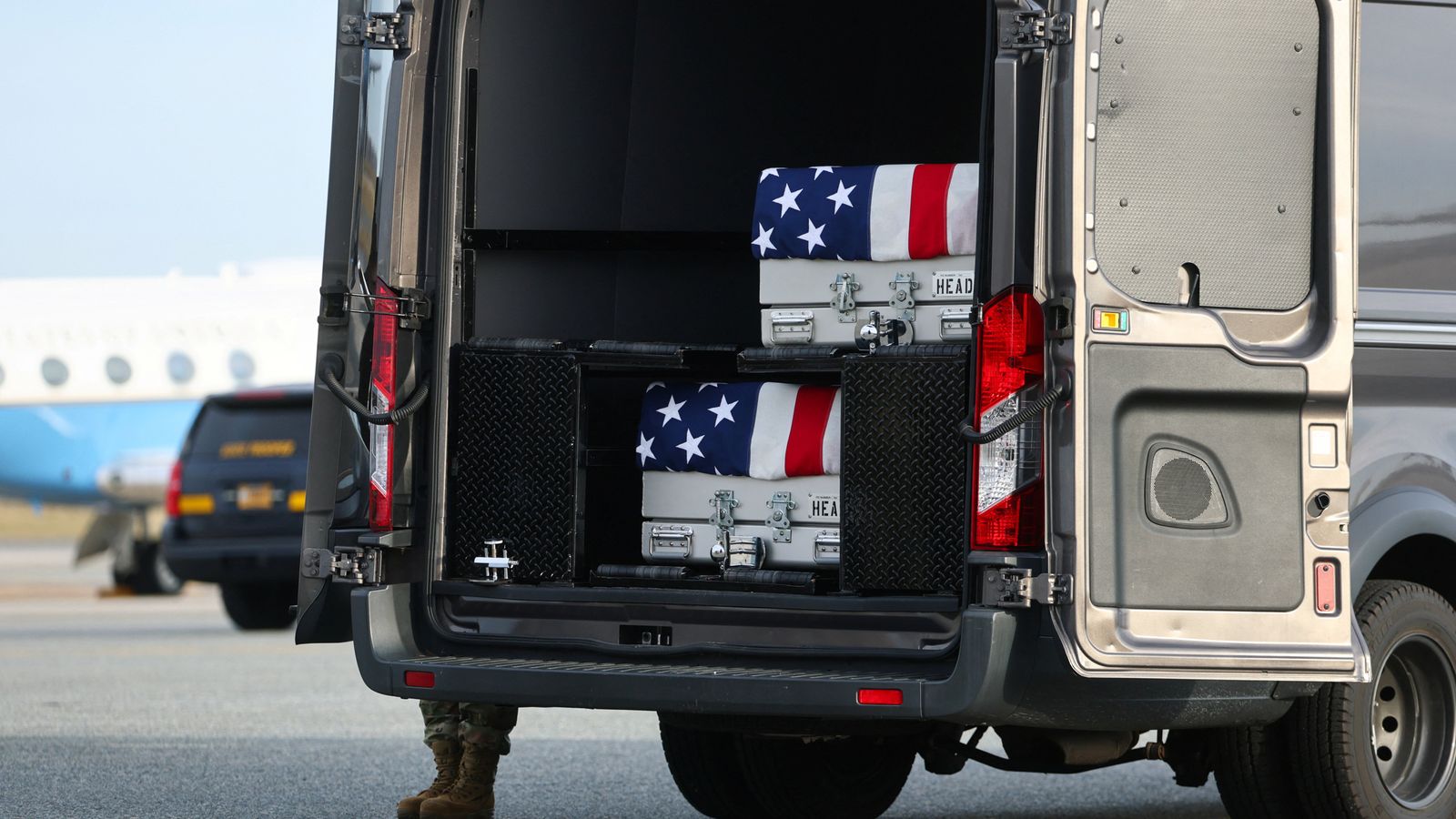
The announcement came after three US citizens – two National Guard members and a civilian interpreter – were killed in an attack in the Syrian desert on 13 December. Three US personnel were also wounded, the Pentagon’s chief spokesperson said on X.
US President Donald Trump blamed the killings on Islamic State fighters.
“Because of ISIS’s vicious killing of brave American Patriots in Syria, whose beautiful souls I welcomed home to American soil earlier this week in a very dignified ceremony, I am hereby announcing that the United States is inflicting very serious retaliation, just as I promised, on the murderous terrorists responsible,” Mr Trump wrote on Truth Social.
“We are striking very strongly against ISIS strongholds in Syria, a place soaked in blood which has many problems, but one that has a bright future if ISIS can be eradicated.”
Donald Trump and Pete Hegseth salute as the remains of the three US citizens killed in Syria arrive at Dover Air Force Base. Pic: AP
He said the Syrian government was fully supportive of the US strikes against the Islamic State, warning that fighters “will be hit harder than you have ever been hit before”.
A US official told The Associated Press that the US strike on Islamic State fighters on Friday was conducted using F-15 Eagle jets, A-10 Thuderbolt ground attack aircraft and AH-64 Apache helicopters.
The official, who spoke on condition of anonymity to discuss sensitive operations, said more strikes should be expected.
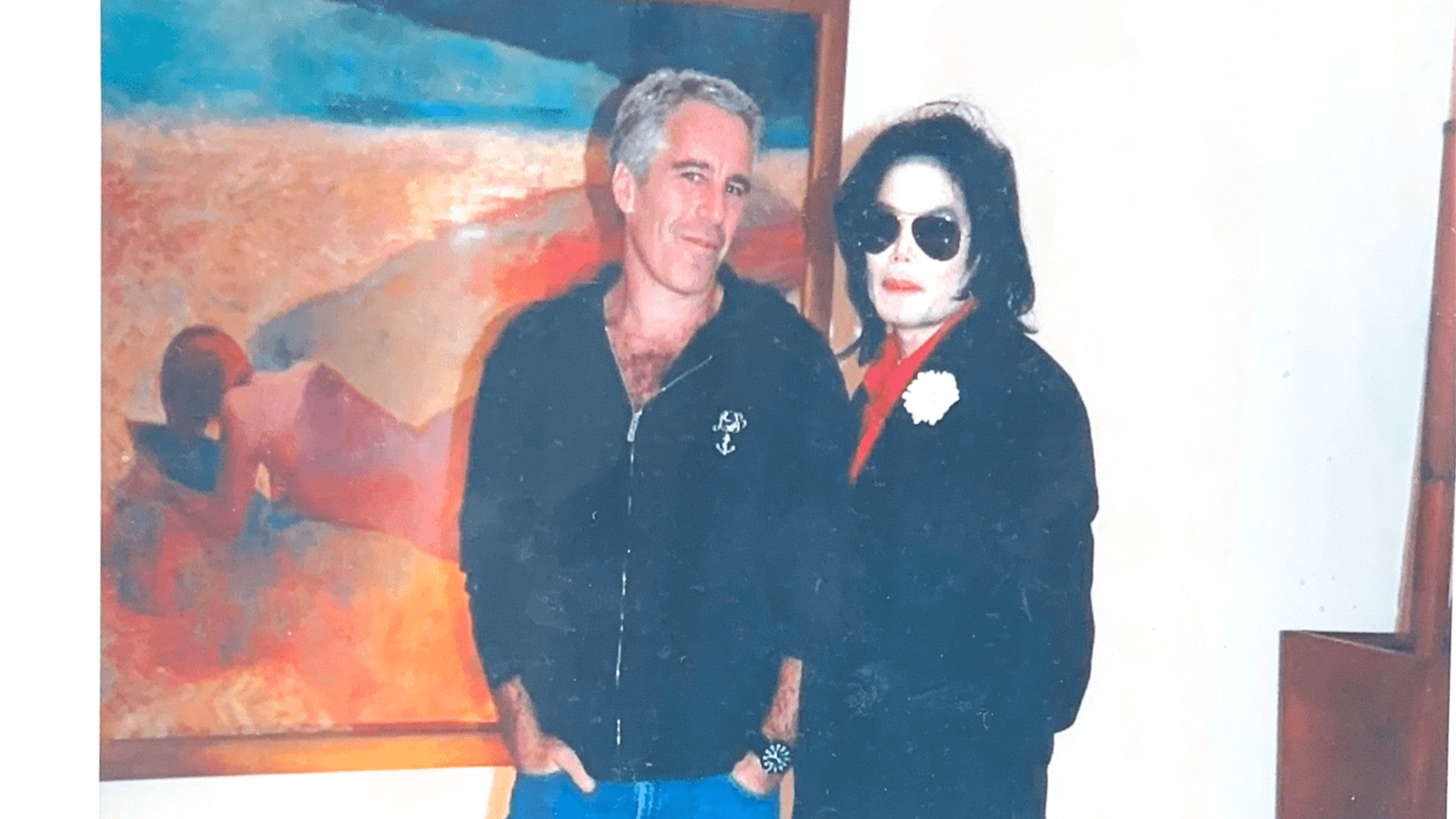
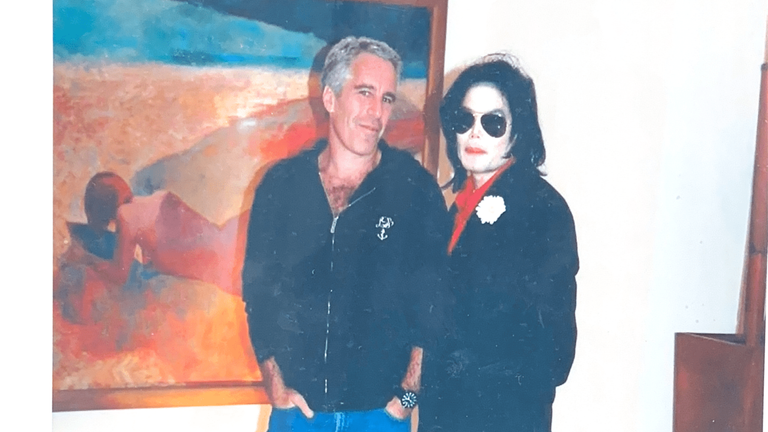
New photos of the people in Jeffrey Epstein’s circle are among thousands of documents released by the US Department of Justice.
The tranche of material relating to the dead paedophile financier was made public shortly after 9pm UK time – hours before a legal deadline in the US following the passing of the Epstein Files Transparency Act.
They include images of his former girlfriend Ghislaine Maxwell, who is serving a prison sentence after she was found guilty of child sex trafficking and other offences in connection with Epstein in 2021.
Follow live updates: What’s in latest documents
In one picture, she is seen posing outside 10 Downing Street, while in another, she is pictured in a swimming pool with Bill Clinton and a woman, whose face has been obscured.
Jeffrey Epstein and Michael Jackson. Pic: US DoJ
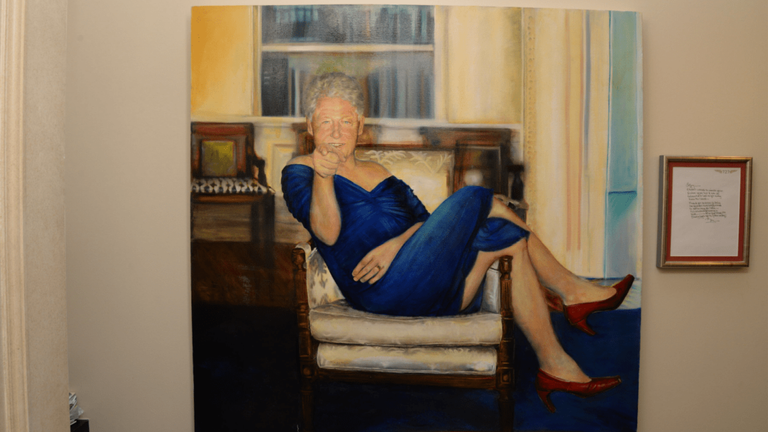
Painting of Bill Clinton in a dress. Pic: US DoJ
The former US president is also pictured in a hot tub with an unidentified woman in another picture, while a separate image shows a painting of Mr Clinton wearing a blue dress with red high heels.
The context of the photos is unknown and being identified in the files does not suggest any wrongdoing.
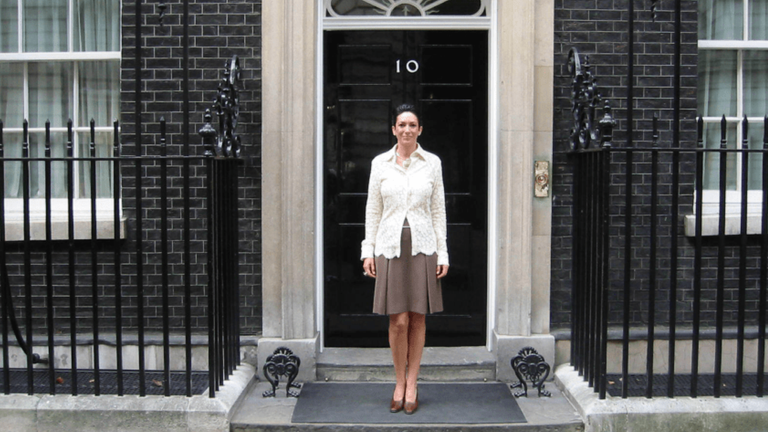
Ghislaine Maxwell outside of 10 Downing Street, date unknown. Pic: US Department of Justice
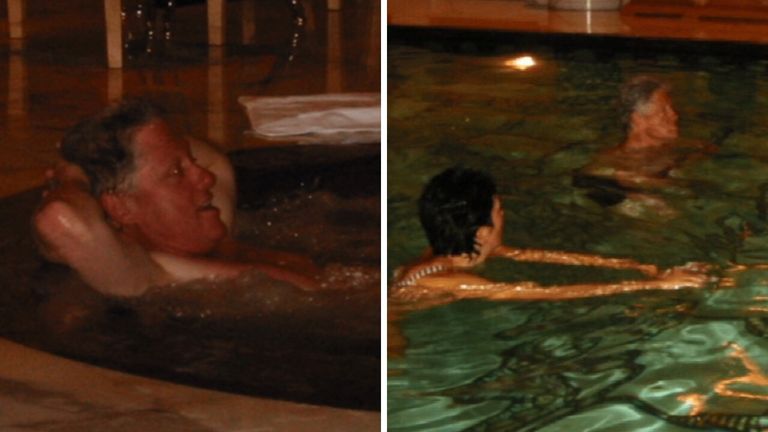
Photos of Bill Clinton. Pics: US DoJ
In his 2024 memoir, Citizen: My Life After The White House, Mr Clinton wrote: “The bottom line is, even though it allowed me to visit the work of my foundation, travelling on Epstein’s plane was not worth the years of questioning afterward. I wish I had never met him.”
Many of the documents in the release have been heavily redacted, including a “masseuse list”, in which all 254 entries have been blacked out.
All 119 pages of a grand jury document are redacted in their entirety, while scores of women’s portraits, many of which appear to show them in sexual positions or are titled “nude”, are blacked out.
There are also handwritten notes, flight logs, and a contact book.
Another file features a scrapbook featuring pictures of Epstein and redacted pictures of women, with the caption on one page: “Is my cover blown?”
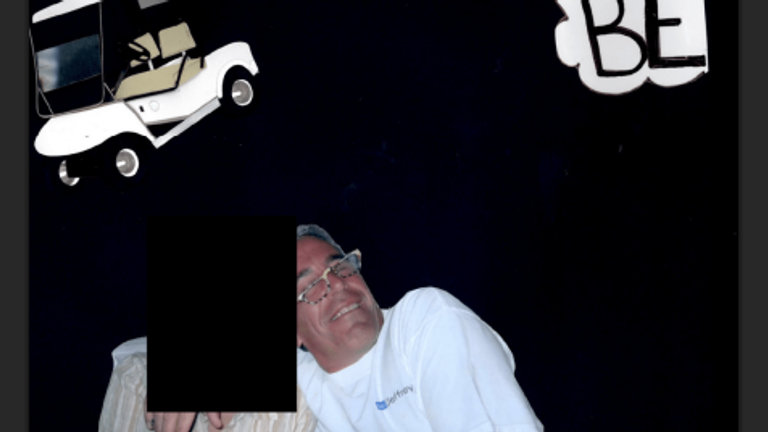
A scrapbook. Pic: US DoJ
![A note from Jeffrey Epstein that reads "For a good time call [REDACTED]". Pic: US DoJ](https://e3.365dm.com/25/12/768x432/skynews-jeffrey-epstein-epstein-files_7115456.png?20251219224257)
A note from Jeffrey Epstein that reads “For a good time call [REDACTED]”. Pic: US DoJ
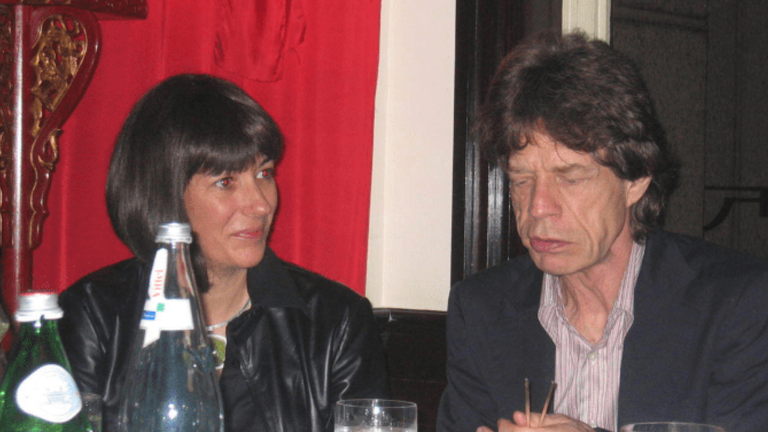
Ghislaine Maxwell and Mick Jagger, date unknown. Pic US DoJ
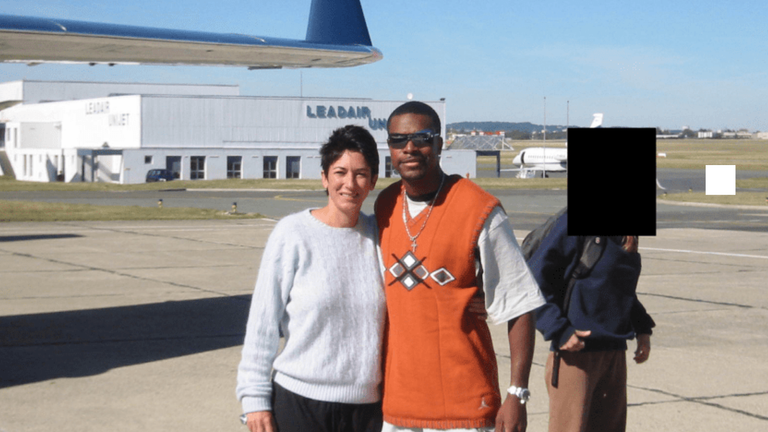
Ghislaine Maxwell and Chris Tucker. Pic: US DoJ
The US deputy attorney general, Todd Blanche, said in a letter to Congress that more than 1,200 victims and their families were identified during a review of the records, which have been redacted to protect victims.
Celebrities including the late Michael Jackson, Rolling Stones frontman Sir Mick Jagger, Motown singer Diana Ross and comedian Chris Tucker are among those pictured in the files. There is no suggestion of any wrongdoing by them.
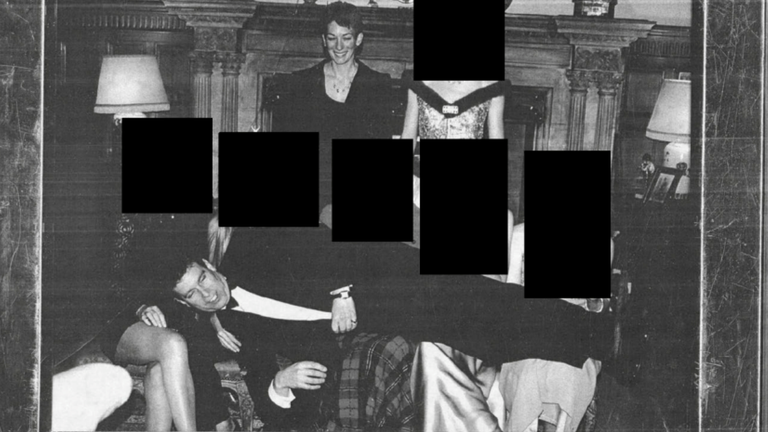
Andrew Mountbatten Windsor and Ghislaine Maxwell with redacted women. Pic: US DoJ
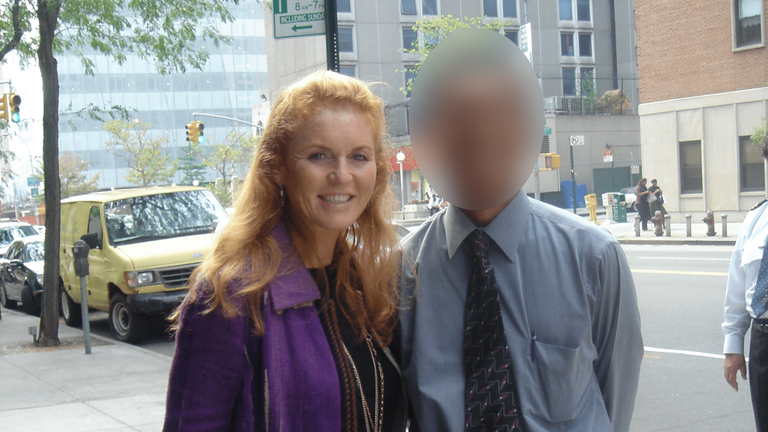
Sarah Ferguson with a man blurred by Sky News, date unknown. Pic: US DoJ
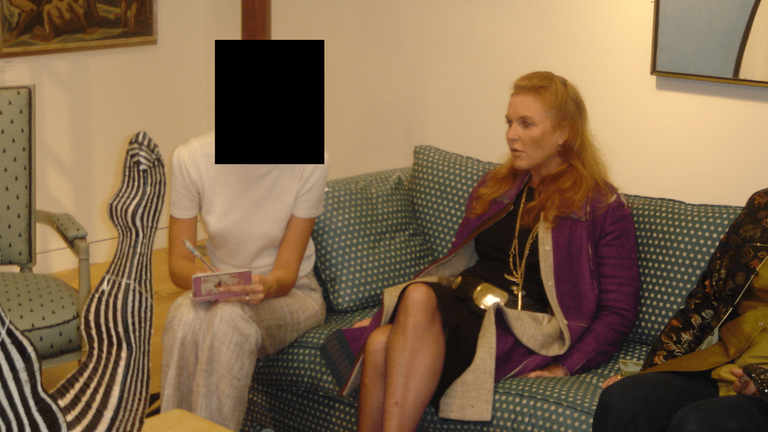
Sarah Ferguson with a redacted woman, date unknown. Pic: US DoJ
Andrew Mountbatten-Windsor, who was stripped of his royal titles following controversy over his relationship with Epstein, and his ex-wife Sarah Ferguson, also appear.
The former duke has been dogged by allegations that he sexually assaulted then 17-year-old Virginia Giuffre after she was trafficked by Epstein. He has always denied the accusations and any wrongdoing.
He paid millions to Ms Giuffre, whom he claims to have never met, to settle a civil sexual assault claim in 2022.
In one picture from the newly released files, the former prince is seen lying across five women, whose faces have been redacted, while Maxwell is stood behind smiling. It is not known where or when the photo was taken.
Several charities cut ties with Ms Ferguson after it emerged she had written a gushing message to Epstein, describing him as her “supreme friend”. Her spokesperson said she wrote the note because he had threatened to sue her.
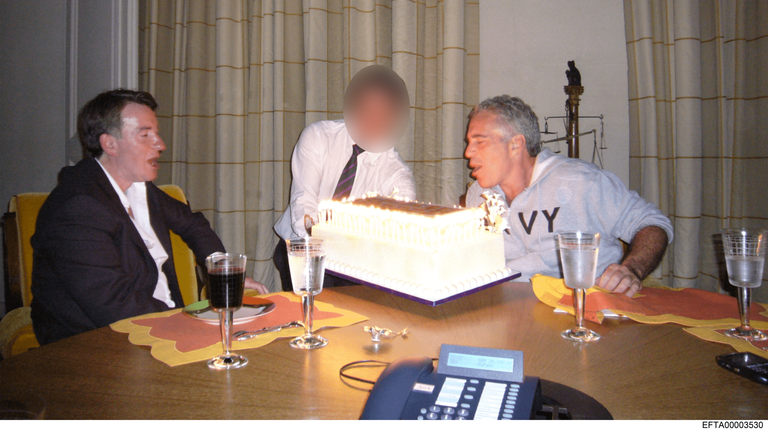
Peter Mandelson and Jeffrey Epstein with a man blurred by Sky News. Pic: US DoJ
Another Epstein associate, Lord Mandelson, is pictured with the late sex offender blowing the candles out on a birthday cake. It is a picture that has been published before.
Lord Mandelson was fired as the ambassador to the US in September over his links to Epstein.
This breaking news story is being updated and more details will be published shortly.
Please refresh the page for the latest version.
You can receive breaking news alerts on a smartphone or tablet via the Sky News app. You can also follow us on WhatsApp and subscribe to our YouTube channel to keep up with the latest news.
Democrats have shared more pictures from Jeffrey Epstein’s estate, a day before the government’s deadline for the full release.
The 68 photos published on Thursday are among more than 95,000 images that the House Oversight Committee Democrats said they were reviewing.
They said the images were “selected to provide the public with transparency into a representative sample of the photos” and to “provide insights into Epstein’s network and his extremely disturbing activities”.
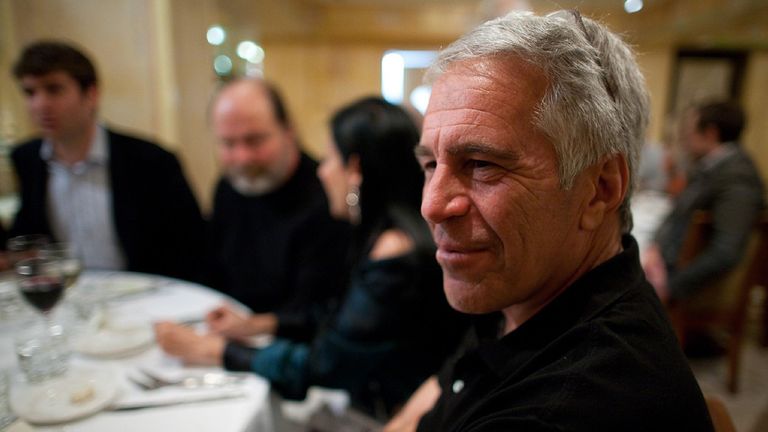
Jeffrey Epstein. Pic: @OversightDems
But the Democrats added that they are still analysing thousands more images that are “both graphic and mundane”.
There is no suggestion of wrongdoing on the part of those pictured in the images – and the context surrounding the photos is not known.
Mystery text quotes price for ‘girl’
The latest cache includes a text message appearing to discuss the price for a girl.
It isn’t clear who sent the messages and to whom, but the screenshot shows some details on an unidentified girl, described as a teenager here.
“I will send u girls now,” one of the texts read.
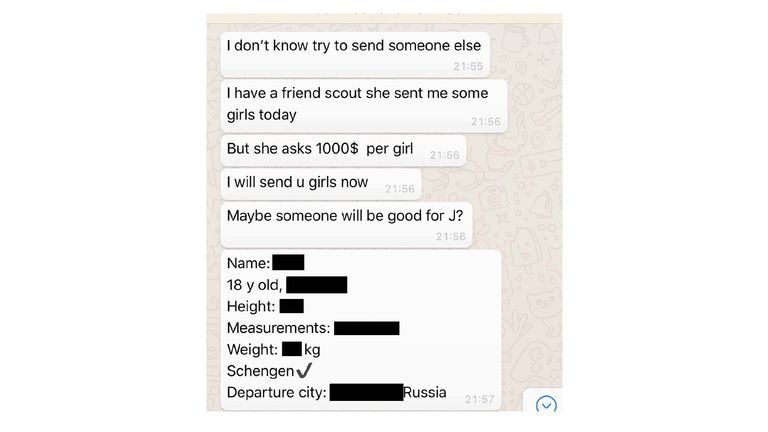
Pic: @OversightDems
Writing on body
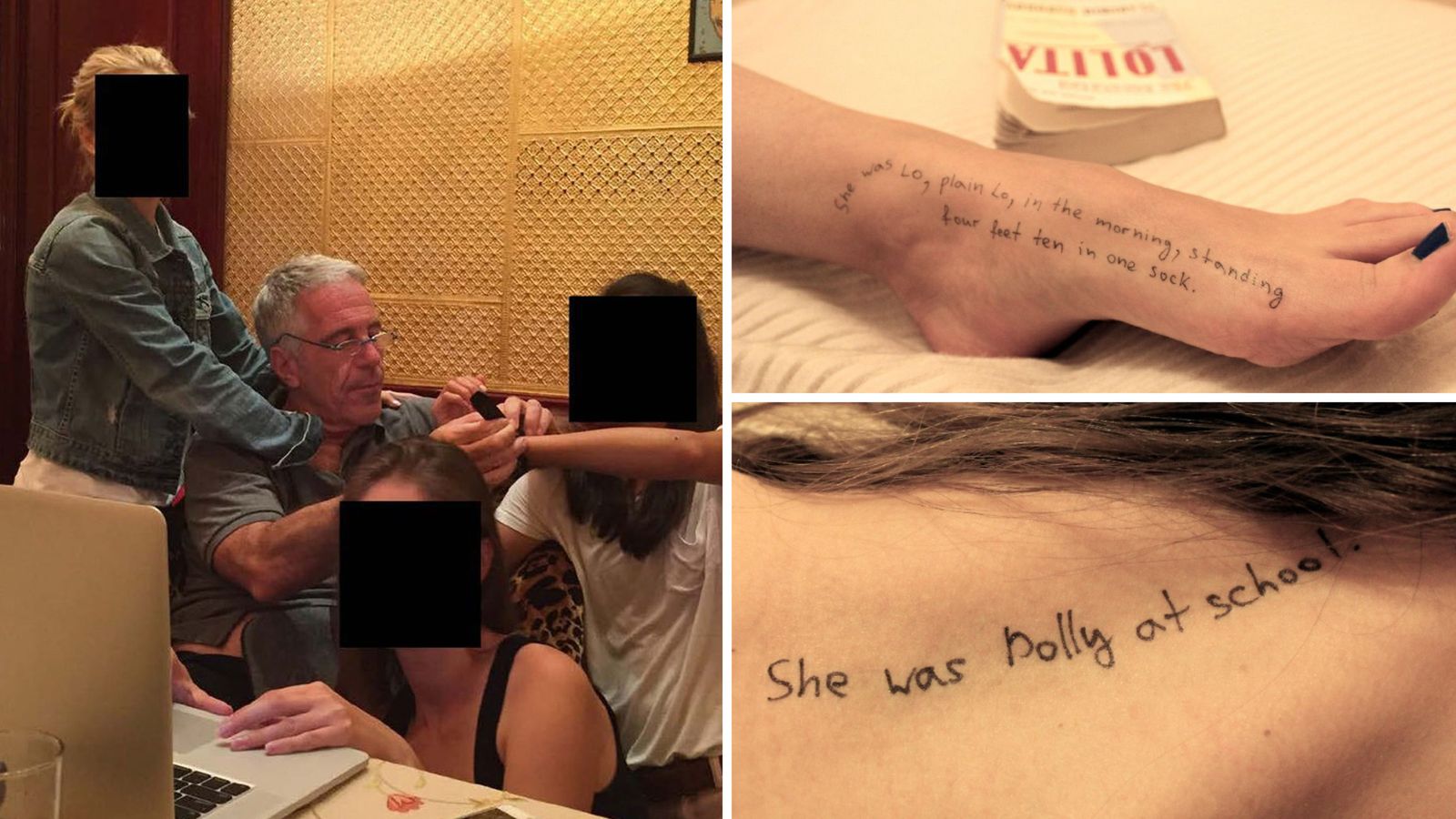
Several pictures show handwritten messages on a person’s body.
One appears to be quoting the opening paragraph of the book Lolita – which can be seen in the background of the picture.
The book was written by Vladimir Nabokov and tells the story of a girl groomed by a middle-aged literature professor.
Another shows writing on a foot, which reads: “She was Lo, plain Lo, in the morning, standing four feet ten in one sock.”
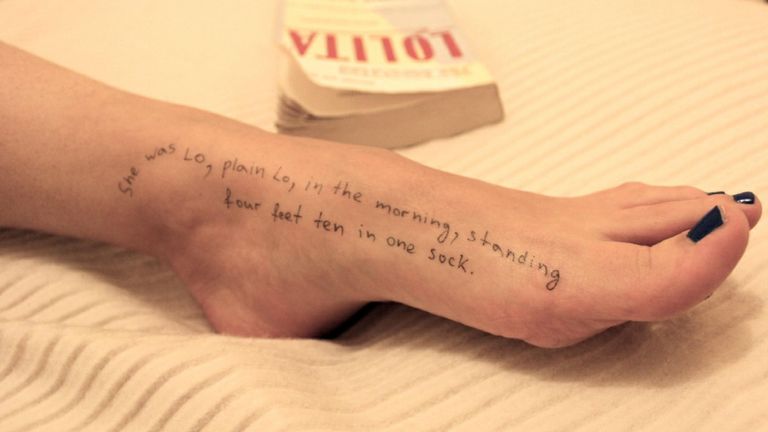
The writing appears to be quoting the opening paragraph of the book Lolita. Pic: @OversightDems
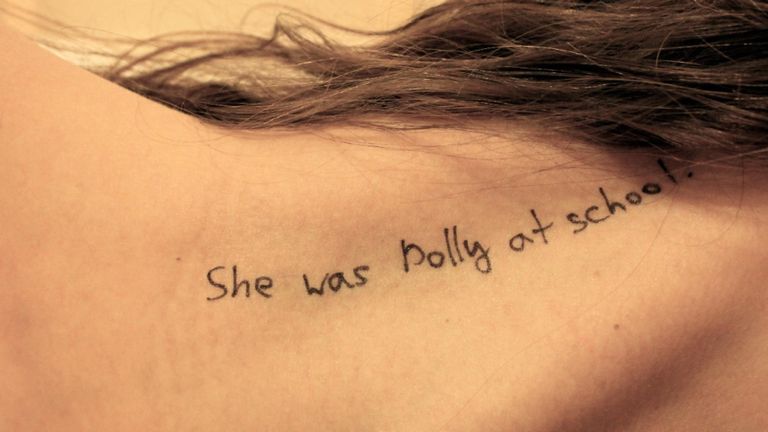
Another handwritten message. Pic: @OversightDems
Other messages can be seen on the neck, hip, back and chest, with the latter reading: “The tip of the tongue taking a trip of three steps down”.
In a different image, Epstein is pictured with three girls in his house in New York. One appears to be touching Epstein’s chest, one is holding her wrist up and another is looking at a laptop.
The identity of the women has been hidden.
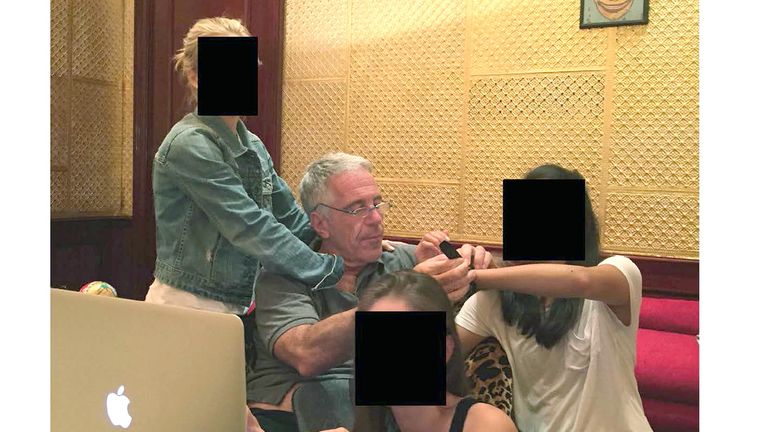
Epstein with three women whose faces have been redacted. Pic: @OversightDems
Epstein with high-profile figures
Some high-profile figures also appear in the newly released images, with one showing Epstein sitting alongside Sheikh Jabor Bin Yousef Bin Jassim Bin Jabor al Thani.
He is the chairman and director of several privately established companies and is a member of the Qatari royal family.
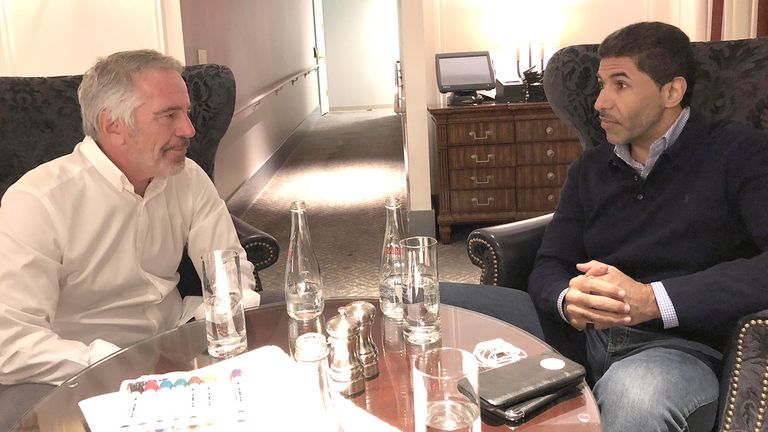
Epstein with Sheikh Jabor Bin Yousef Bin Jassim Bin Jabor al Thani. Pic: @OversightDems
Another image shows Epstein with the former president of the UN General Assembly, Miroslav Lajcak, who held the role between 2017 and 2018. He is also a former Slovakian foreign affairs minister.
Last month, he told TASR news agency: “The reopening of the Epstein case occurred after I left New York, and the full extent of his inexcusable actions, which I strongly condemn, only came to light after his arrest.”
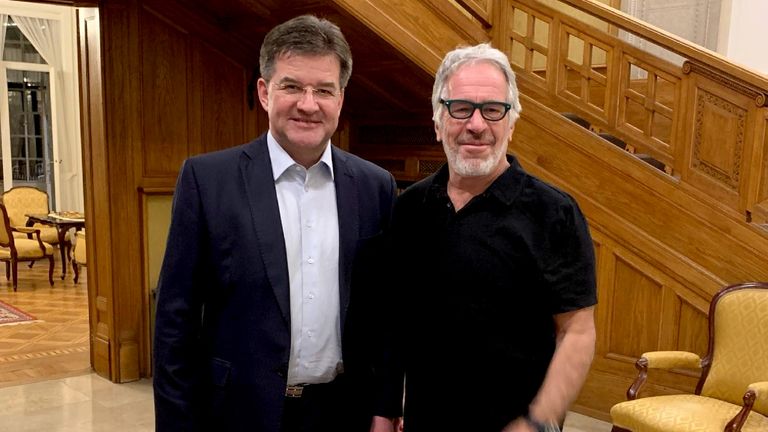
Miroslav Lajcak, former president of the UN General Assembly, next to Epstein. Pic: @OversightDems
Shaher Abdulhak, a deceased Yemeni billionaire businessman whose son is a suspect in the murder of a Norwegian woman in Mayfair, was also pictured with Epstein.
His son, Farouk Abdulhak, fled to Yemen after the rape and death of Martine Vik Magnussen in March 2008 and has been wanted for questioning ever since.
Ms Magnussen was found dead among rubble in a basement in Great Portland Street.
She and her friends had been celebrating finishing their end-of-term exams at the Maddox nightclub before she vanished. Her body was found two days later.
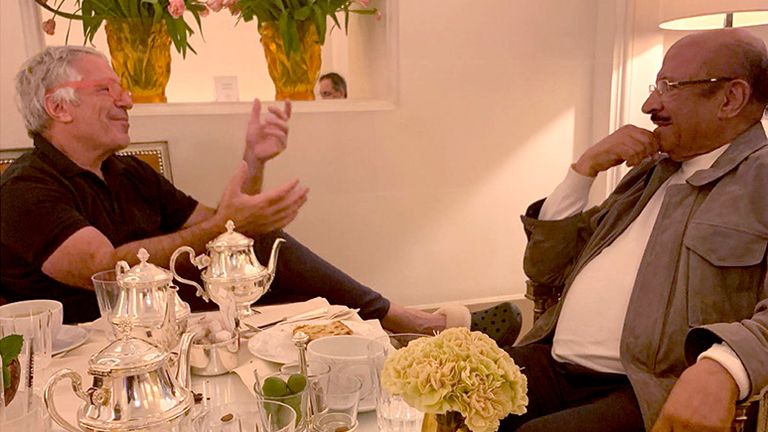
Deceased Yemeni billionaire Shaher Abdulhak with Epstein. Pic: @OversightDems
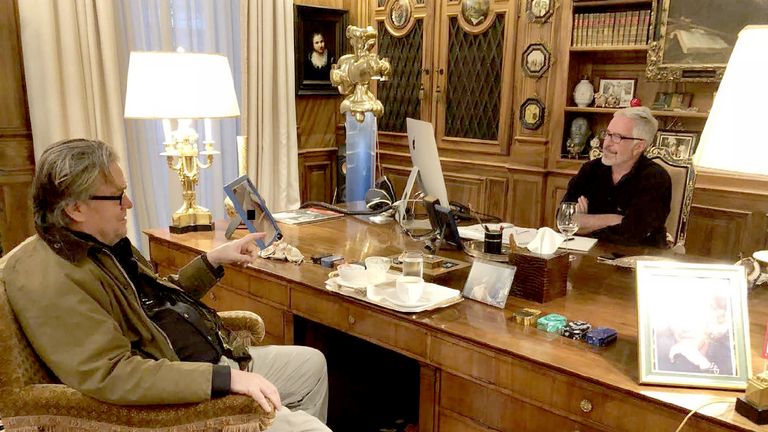
Epstein and Steve Bannon. Pic: @OversightDems
Also featured in the newly released images were former Israeli prime minister Ehud Barak, magician David Blaine, businessman Tom Pritzker, billionaire Bill Gates, director Woody Allen, talk show host Dick Cavett, Trump ally Steve Bannon, and Kuwait’s former information minister Anas al Rasheed.
Photos of identity documents with redacted names were also published, including one with text saying that “the bearer was convicted of a sex offense against a minor”, which could belong to convicted sex offender Epstein.
Also among the identification documents is a heavily redacted Russian passport. It belongs to a female, but other information has been blocked out.
The release also includes ID documents from the Czech Republic, South Africa, Ukraine, and Lithuania.
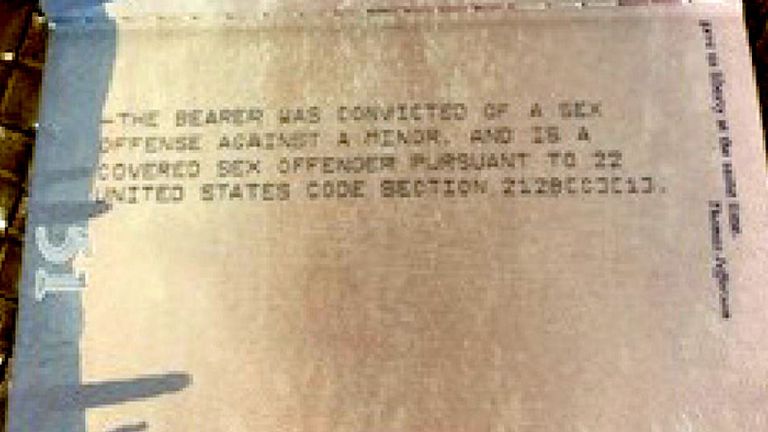
One passport appeared to belong to someone ‘convicted of a sex offense against a minor’. Pic: @OversightDems
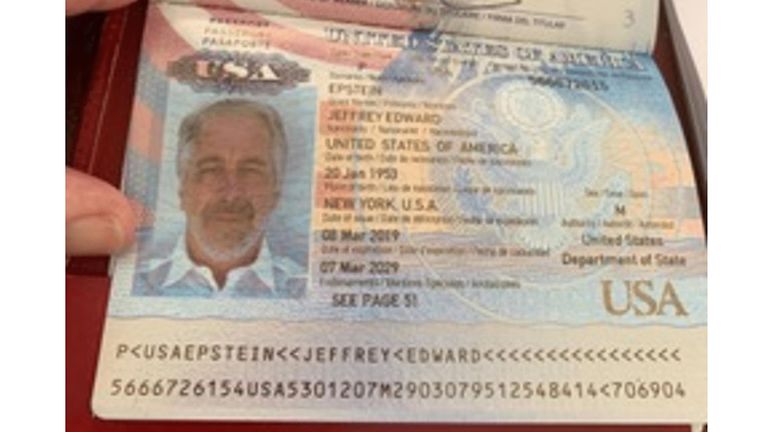
Epstein’s passport. Pic: @OversightDems
Deadline looming
The picture drop came a day before the deadline set by a bipartisan bill that compels the US Justice Department to release the Epstein files within 30 days, which was signed into law by US President Donald Trump last month.
Mr Trump had promised to release the Epstein files during his ultimately successful presidential campaign, but he later made a U-turn, even going as far as calling the Epstein files a Democratic “hoax”, before eventually changing path again to sign the bill.
House minority leader Hakeem Jeffries said ahead of the deadline that he believes the Department of Justice will release the files in time, and warned that there will be “strong bipartisan pushback” if they don’t.
“Based on my conversations with some of the top Democrats who’ve been working on this matter, related to full and complete disclosure of the Epstein files, we do expect compliance,” he told reporters on Thursday.
Full release going ‘down to the wire’
National security lawyers inside the Department of Justice are “working down to the wire” as Friday’s deadline for the full release of the Epstein files edges closer, according to Sky News’ US correspondent James Matthews.
He said those lawyers are mulling “how much is actually divulged in these documents”.
“There will be redactions… the question is, how far short of everything? How far short of the full story will the release fall?” Matthews said.
“The issue at the heart of it… where does Donald Trump feature? Remember, he emphatically denies all knowledge of Epstein’s criminal activities and any involvement in them.”
Read more:
Releasing the Epstein files: How we got here
Ghislaine Maxwell attempts to overturn conviction
‘Frustration building’
Meanwhile, frustration is building at the justice department ahead of the release, according to CNN.
A source has told the US broadcaster that there could be up to 1,000 redactions needed from each attorney.
Lawyers reportedly believe they aren’t getting clear or comprehensive direction on how to make the most information available under the law.
A previous batch of images featured more high-profile figures, including Donald Trump, Andrew Mountbatten-Windsor, Bill Clinton, British entrepreneur Richard Branson, Emirati businessman Ahmed bin Sulayem, and singer Jimmy Buffett.
Several images of a sexual nature have also been released, including a picture of a bowl of novelty condoms with a caricature of Mr Trump’s face, and various sex toys.
-
 Sports2 years ago
Story injured on diving stop, exits Red Sox game
-
 Sports3 years ago
‘Storybook stuff’: Inside the night Bryce Harper sent the Phillies to the World Series
-
 Sports2 years ago
Game 1 of WS least-watched in recorded history
-
 Sports3 years ago
Button battles heat exhaustion in NASCAR debut
-
 Sports3 years ago
MLB Rank 2023: Ranking baseball’s top 100 players
-
Sports4 years ago
Team Europe easily wins 4th straight Laver Cup
-
 Environment3 years ago
Japan and South Korea have a lot at stake in a free and open South China Sea
-
 Environment1 year ago
Here are the best electric bikes you can buy at every price level in October 2024