
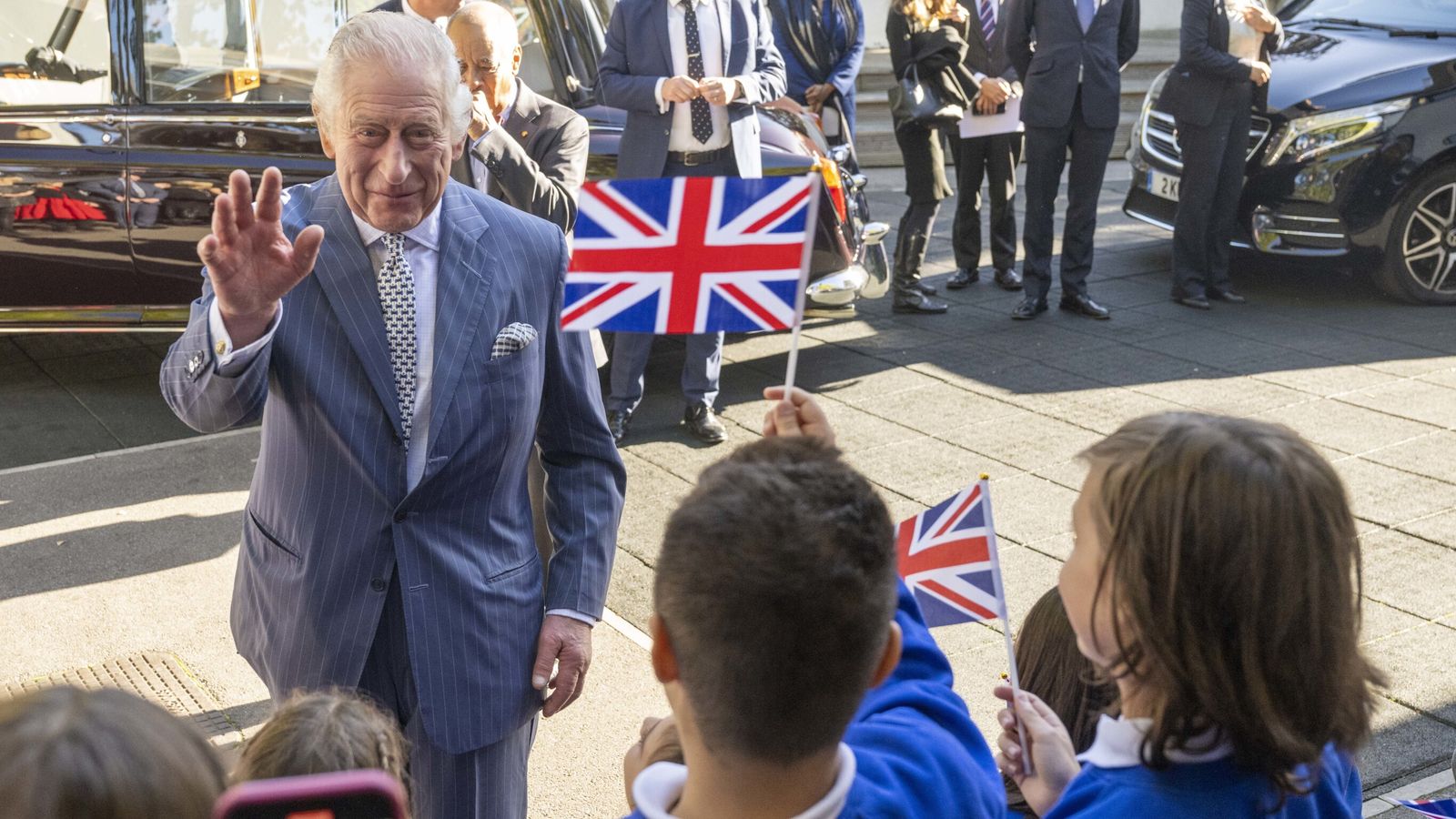
‘How old are you King Charles?’ Question during visit to Walthamstow youth charity sums up gulf between monarch and youngsters seeking understanding

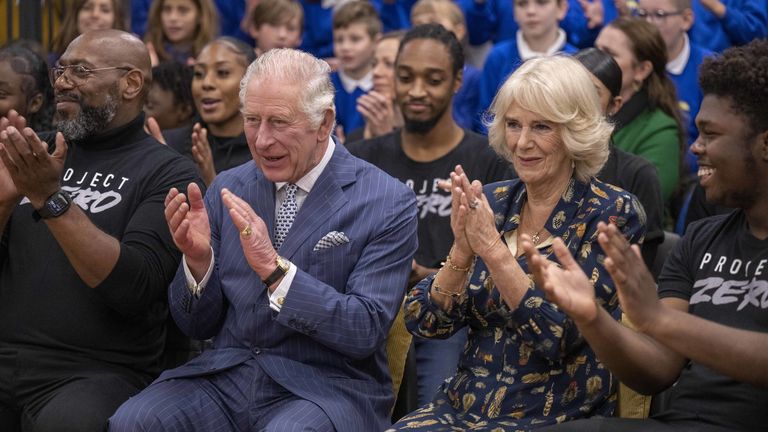
They’ve both been in their new roles for a very similar time, and despite questions about how people would feel about King Charles following the much-loved Queen, he’s so far fared better than Liz Truss just down the road at Number 10.
But at times of political turmoil, you can’t help but think about the role of the monarch.
We talked about it so often when the Queen was alive, how she was a symbol of continuity for many when everything else seemed in turmoil.
Now with the government in a state of flux, the country feeling unsettled and a cost of living crisis, can her son be that same unifying and reassuring figure?
Back in London for their first joint engagement, the King and the Queen Consort had come to see the work of Project Zero in Walthamstow.
A ‘getting to know what matters to this community’ type of visit, all centred around a truly inspiring organisation set up by Stephen Barnabis after two of his teenage cousins were stabbed to death.
Getting kids out of gangs, away from crime and supporting all young people to achieve their potential in this borough, not just those who are disadvantaged, is what they’re all about.
‘How old are you King Charles?’
But it was a primary school pupil who summed up a potential issue for the new King when it comes to really understanding what matters, especially to a younger crowd.
“How old are you King Charles?” they said, the King replying, “you’ll have to guess”.
He is 73 and Camilla is 75. It is a huge age gap from the teenagers and young people in their twenties that they would meet during the visit, who were certainly not all devoted royal fans, as I found out chatting to them afterwards.
One of the youth workers Nia Gichie told me: “I believe that before this visit our young people saw our Royal Family as them and us.”
But she added that the interest shown by the King and Camilla really struck the groups they spoke to.
“I think they got that realness from them, and for our young people to actually have access, to have those conversations with their majesties, is something that they will always remember,” she said.
‘I’ve seen a different side to them’
Rebecca Huggins supports other young people after Project Zero helped her, and admitted she never used to be that interested in the royals.
“If I’m being honest, I never really had that attachment to the Royal Family but, seeing them today, I’ve seen a different side to them, I’ve seen a personal side to them, and they really seem invested in making a change.”
Read more:
King tells refugee he hopes to return to Afghanistan in ‘joyful moment’
What will King Charles’ coronation involve?
Coins featuring King’s portrait unveiled
Rebecca was in care and in an abusive relationship. She couldn’t believe it when Camilla bothered to ask if she’d been getting support.
“We had a nice little heart-to-heart,” she explained, adding that it came as a big surprise that the King “had some banter”.
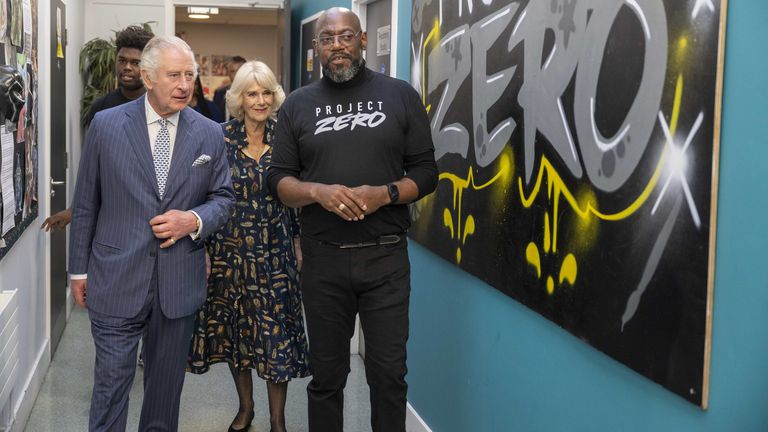
King Charles III and the Queen Consort with Project Zero founder Stephen Barnabis (right)
‘You can see what the visit has meant’
Stephen Barnabis, who set up the charity, told me he felt the visit had changed some people’s perceptions of the Royal Family.
“You can say for a lot of young people the relevance of them is a conversation, it is a discussion, but I think you can see the excitement, you can see what the visit has meant,” he said.
From private conversations he had with them, he also sensed the King and Camilla genuinely want to know more about the current pressures people are facing.
“We’ve gone from COVID, to war, to the energy costs and the crisis, and they’ve kind of been there in the forefront and really interested in what’s going on across the country. I can actually see that in talking to them today,” he added.
‘He can make change’
Natasha Johnson is currently living in temporary accommodation with her seven and 14-year-old sons after a fire broke out at their flat close to the youth centre during the summer heatwaves.
She told the King about it and seemed surprised at how it played out.
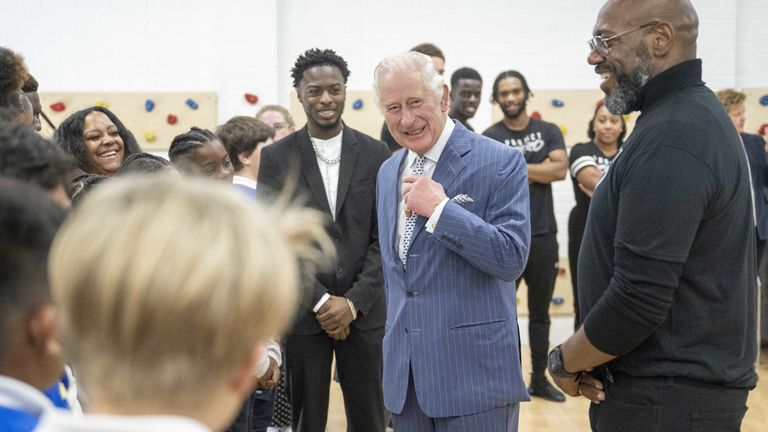
“I thought he was going to be very cold and very reserved, but no, great eye contact, and it just felt really relaxed,” she said.
With everything that’s going on in politics, she told me that the short meeting with the King really did matter.
“He’s the voice of the people, he can make change, and he’s very passionate about these sorts of things… he was more concerned about the aftermath of, ok there was a fire, but what happens next.”
Smiling, she added: “I felt held, I felt kind of contented as well that he understood and listened and so did the Queen as well.”
‘Our head of state is utterly useless’
You do get a different perspective from organisations such as Republic, the anti-monarchy group.
Their chief executive Graham Smith tweeted in the past couple of days: “We are entering another period of constitutional uncertainty, the only certainty being that our head of state is utterly useless #AbolishTheMonarchy #NotMyKing”.
And yes, this was only one visit, to one charity, in one part of London.
But the King and Queen Consort just going, making the time to stop and to listen, appears to have meant a great deal at a moment when people there feel the government doesn’t have the capacity or stability to truly deal with the day-to-day problems that matter to them, and no doubt many others across the United Kingdom.

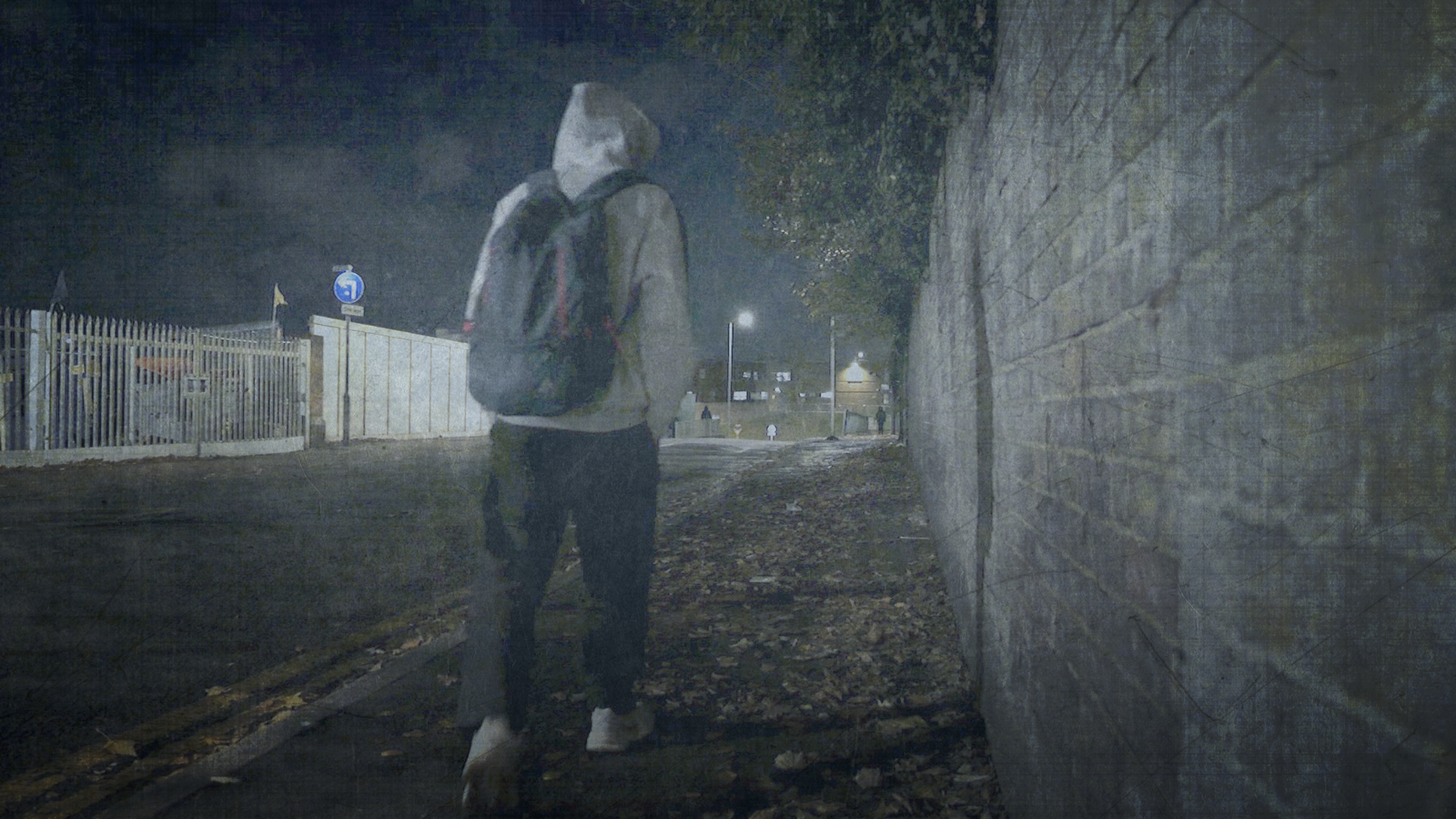
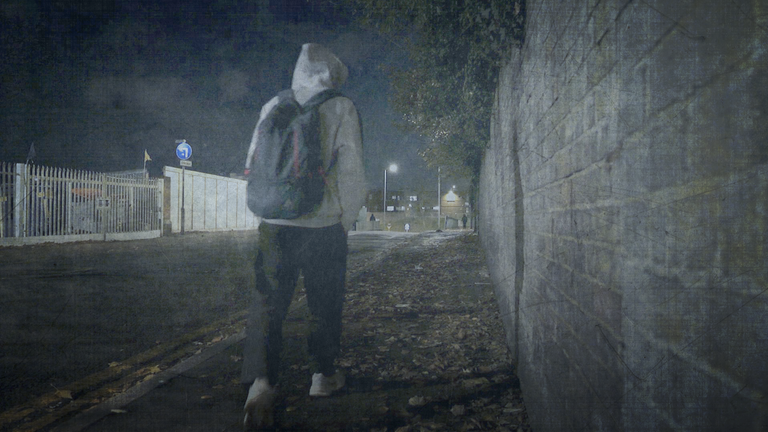
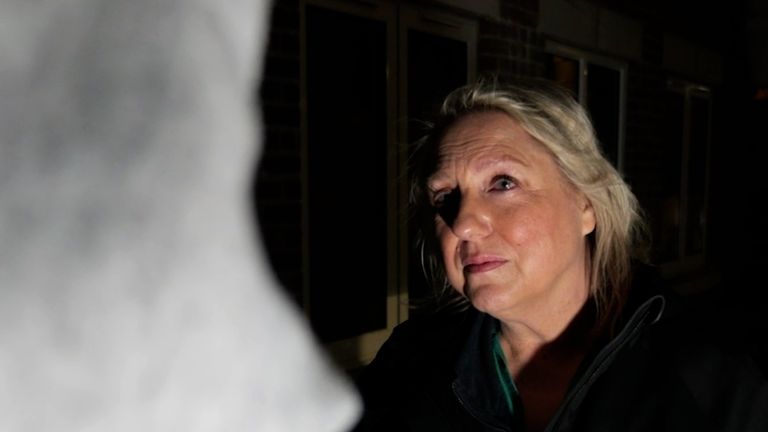
Ramesh lives in fear every day. A police siren is enough to alarm him.
He’s one of up to 400,000 visa overstayers in the UK, one lawyer we spoke to believes.
It’s only an estimate because the Home Office has stopped collecting figures – which were unreliable in the first place.
Britain is being laughed at, one man told us, “because they know it’s a soft country”.
‘Ramesh’ came to the UK from India
We meet Ramesh (not his real name) at a Gurdwara, a Sikh place of worship, where he goes for food and support.
He insists he can’t return to India where he claims he was involved in political activism.
Ramesh says he came to the UK on a student visa in 2023, but it was cancelled when he failed to continue his studies after being involved in a serious accident.
He tells us he is doing cash-in-hand work for people who he knows through the community where he is living and is currently working on a house extension where he gets paid as little as £50 for nine hours labouring.
“It’s very difficult for me to live in the UK without my Indian or Pakistani community – also because there are a lot of Pakistani people who give me work in their houses for cleaning and for household things,” he adds.
‘What will become of people like us?’
Anike has lived in limbo for 12 years.
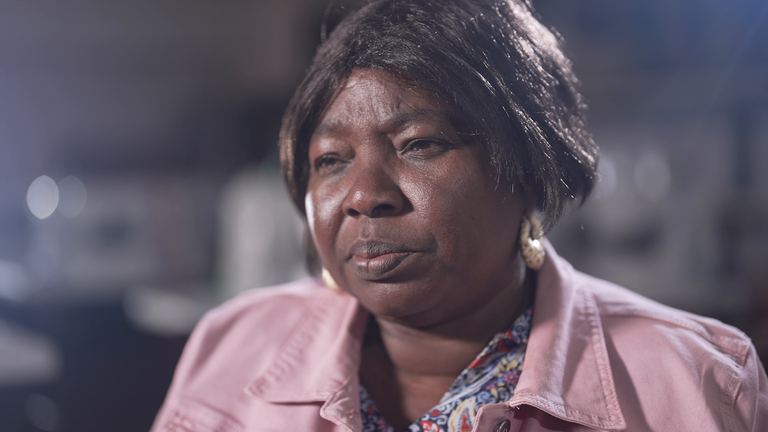
Now living in Greater Manchester, she came to the UK from Nigeria when her sister Esther was diagnosed with a brain tumour – she had a multi-entry visa but was supposed to leave after three months.
Esther had serious complications from brain surgery and says she is reliant on her sister for care.

Immigration officials are in touch with her because she has to digitally sign in every month.
Anike has had seven failed applications for leave to remain on compassionate grounds refused but is now desperate to have her status settled – afraid of the shifting public mood over migration.
“Everybody is thinking ‘what will become of people like us?'” she adds.
‘It’s a shambles’
The government can’t say with any degree of accuracy how many visa overstayers there are in Britain – no data has been collated for five-and-a-half years.
But piecing together multiple accounts from community leaders and lawyers the picture we’ve built is stark.
Immigration lawyer Harjap Singh Bhangal told us he believed there could be several hundred thousand visa overstayers currently in Britain.

He says: “At this time, there’s definitely in excess of about 200,000 people overstaying in the UK. It might even be closer to 300,000, it could even be 400,000.”
Asked what evidence he has for this he replies: “Every day I see at least one overstayer, any immigration lawyers like me see overstayers and that is the bulk of the work for immigration lawyers.
“The Home Office doesn’t have any accurate data because we don’t have exit controls. It’s a shambles. It’s an institution where every wall in the building is cracked.”
The number of those who are overstaying visas and working cash in hand is also virtually impossible to measure.
‘They know Britain is a soft country’
“They’re laughing at us because they know Britain is a soft country, where you won’t be picked up easily,” says the local man we’ve arranged to meet as part of our investigation.
We’re in Kingsbury in northwest London – an area which people say has been transformed over the past five years as post-Brexit visa opportunities opened up for people coming from South Asia.
‘Mini-Mumbai’
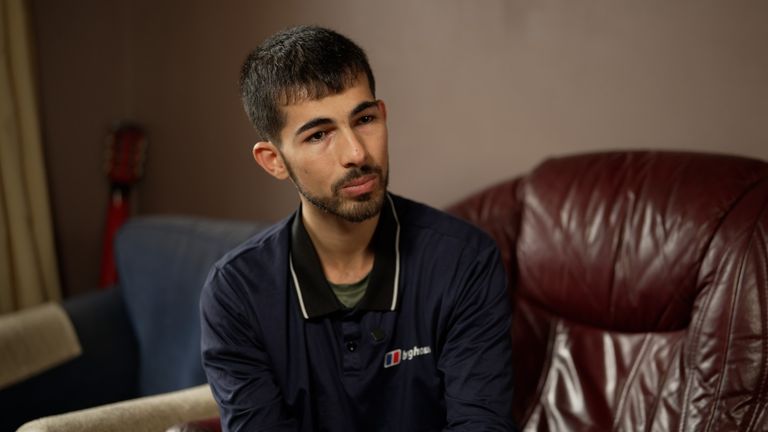
The man we’re talking to lives in the community and helps with events here. He doesn’t want to be identified but raises serious questions about visa abuse.
“Since the last five years, a huge amount of people have come in this country on this visiting visa, and they come with one thing in mind – to overstay and work in cash,” he says.
“This area is easy to live in because they know they can survive. It looks like as if you are walking through mini-Mumbai.”
‘The system is more than broken’
‘It’s taxpayers who are paying’
And he claims economic migrants are regularly arriving – who’ve paid strangers to pretend they’re a friend or relative in order to obtain a visitor visa to get to Britain.
He says: “I’ve come across so many people who have come this way into this country. It’s widespread. When I talk to these people, they literally tell me, ‘Oh, someone is coming tomorrow, day after tomorrow, someone is coming’.
“Because they’re hidden they may not be claiming benefits, but they can access emergency healthcare and their children can go to school.
“And who is paying for it? It’s the taxpayers who are paying for all this,” says the man we’ve met in north London.
Read more from Sky News:
Net migration figures hit four-year low
How Denmark may inspire UK asylum reforms
A Home Office spokesperson said: “We will not tolerate any abuse of our immigration system and anyone found to be breaking the rules will be liable to have enforcement action taken against them.
“In the first year of this government, we have returned 35,000 people with no right to be here – a 13% rise compared to the previous year.
“Arrests and raids for illegal working have soared to their highest levels since records began, up 63% and 51%.”
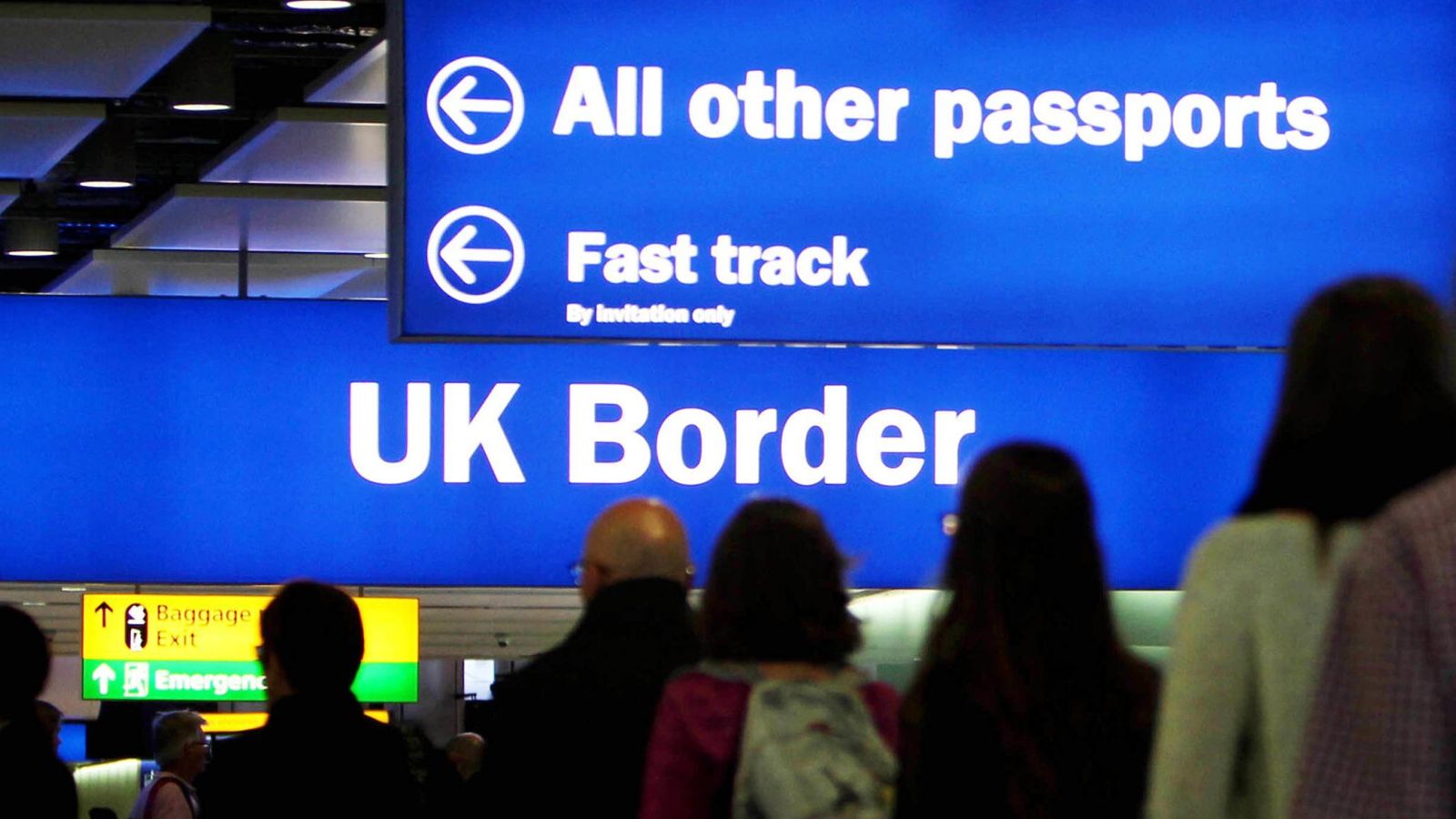
The government can’t say with accuracy how many visa overstayers there are in Britain – no data has been collated for five-and-a-half years.
Sky News has spoken to immigration lawyers about the numbers, and one believes there could be as many as 400,000 living across the country.
Harjap Singh Bhangal described the situation as a “shambles”.
“The Home Office doesn’t have any accurate data because we don’t have exit controls. It’s a shambles. It’s an institution where every wall in the building is cracked,” he told Sky’s Lisa Holland.
The visa overstayers in ‘soft’ Britain
Why doesn’t the government know?
The Home Office used to gather data on visa overstayers by effectively checking a list of passport numbers associated with visas against a list of passport numbers of people leaving the UK, taken from airlines and other international travel providers.
If there was a passport number match in the arrivals and departures part of their database, that person was recorded to have left when they should have. If there wasn’t, they were a potential overstayer.
They stopped producing the figures because a combination of Brexit and COVID added complications that made the Home Office conclude they wouldn’t be able to get to a reliable number using the same method.
It’s now four and a half years since EU citizens had freedom of movement to the UK revoked, and more than three and a half years since pandemic-era travel restrictions ended.
And yet we are still waiting to see what a new method might look like.
Read more from Sky News:
Is this what the beginning of a war looks like?
There’s one big problem with Australia’s social media ban
The old method wasn’t perfect. If someone changed their passport while in the UK, for example, or if the airline or individual entered the number wrong when they were leaving, there wouldn’t be a match.
The Home Office regarded the statistics as likely overestimating the true number of overstayers, and the Office for National Statistics designated the figures as “experimental” rather than “official” statistics, meaning the conclusions should be treated with caution. But they were a reasonable best guess.
With all that in mind, between April 2016 and March 2020 upwards of 250,000 people were flagged as potential overstayers, equivalent to 63,000 per year.
That’s more than the 190,000 people who are recorded to have arrived in the UK on small boats since 2018.
It represents 3.5% of the seven million visas that expired over that period, so at least 96.5% of people left when they should.
Other Home Office data reveals that more than 13 million visas were issued between 2020 and the end of June 2025, including a record 3.4 million in 2023.
But what we don’t know is how many have expired, which means it’s difficult for us to even guess how many people might have overstayed.
-
 Sports2 years ago
Story injured on diving stop, exits Red Sox game
-
 Sports3 years ago
‘Storybook stuff’: Inside the night Bryce Harper sent the Phillies to the World Series
-
 Sports2 years ago
Game 1 of WS least-watched in recorded history
-
 Sports3 years ago
Button battles heat exhaustion in NASCAR debut
-
 Sports3 years ago
MLB Rank 2023: Ranking baseball’s top 100 players
-
Sports4 years ago
Team Europe easily wins 4th straight Laver Cup
-
 Environment3 years ago
Japan and South Korea have a lot at stake in a free and open South China Sea
-
 Environment1 year ago
Here are the best electric bikes you can buy at every price level in October 2024