
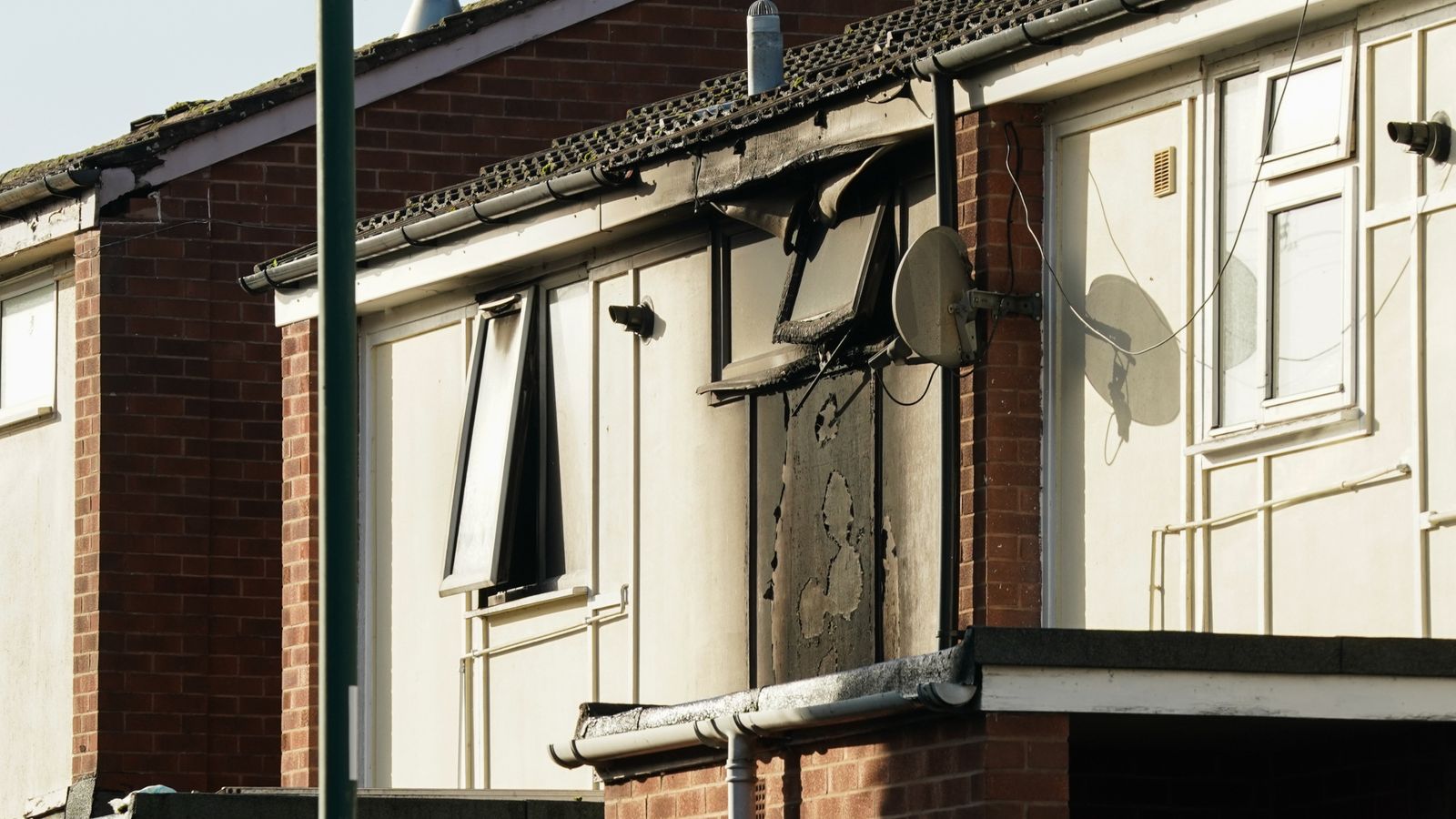
Man arrested after baby and toddler die in flat fire

A man has been arrested on suspicion of murder after a baby and toddler died in a flat fire in Nottingham.
The emergency services were called to reports of a fire in the Clifton area of the city at 3.17am today.
A woman, thought to be in her 30s, and two children were treated at the scene for smoke inhalation and taken to hospital. Sky News understands she is the children’s mother.
The children, girls aged three and one, were pronounced dead a short while later.
Detectives have now arrested a 31-year-old man from Clifton on suspicion of murder and attempted murder.
He remains in custody for questioning.
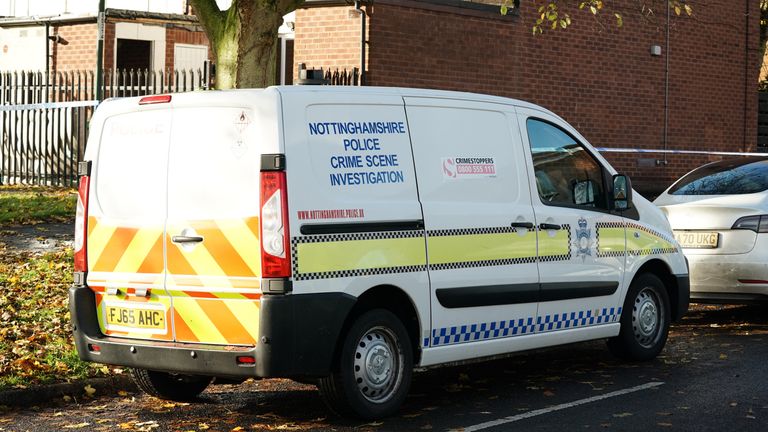
Crime scene investigators at the scene
The woman remains in a critical condition.
Detective Chief Inspector Greg McGill, who is leading the investigation, said: “This is a deeply tragic incident and we have a large team working tirelessly to understand the full circumstances.
“Whilst we have now made an arrest, the investigation remains at an early stage and we are continuing to appeal to anyone who has even the slightest bit of information, or even CCTV or dash-cam footage, to please come forward.”
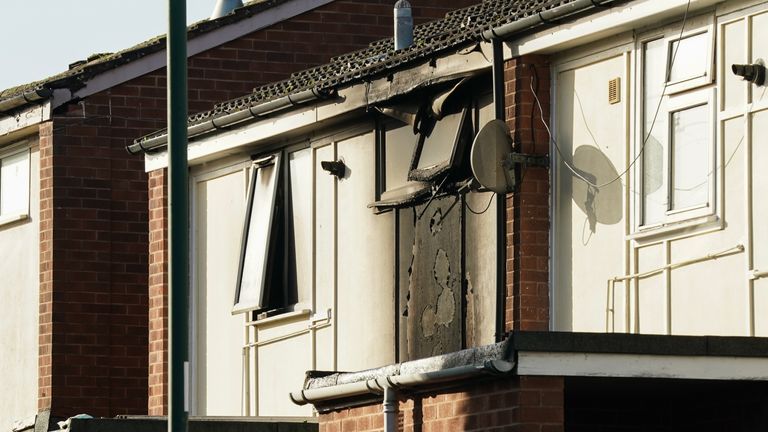
The fire broke out in a first-floor flat
Reassurance patrols
Inspector Ben Lawrence, who has led reassurance patrols in the local community after the fire, added: “These are clearly very sad circumstances and our thoughts continue to be with the family of those involved.
“This has also been an extremely traumatic event for the local community, especially for neighbours who have been left shocked and deeply saddened by the deaths of two very young children.
“We’ve increased reassurance patrols in the area and if anyone has any concerns we’d encourage them to speak to one of our officers.”

Police at the scene in Nottingham
Anyone with information that could assist the investigation is asked to submit it to the Public Portal (mipp.police.uk). If you would prefer to speak to police, please call 101 and ask for Nottinghamshire Police quoting incident 0110_20112022.
Alternatively, contact the independent crime-fighting charity Crimestoppers anonymously on 0800 555 111 or through their anonymous online form at www.crimestoppers-uk.org.

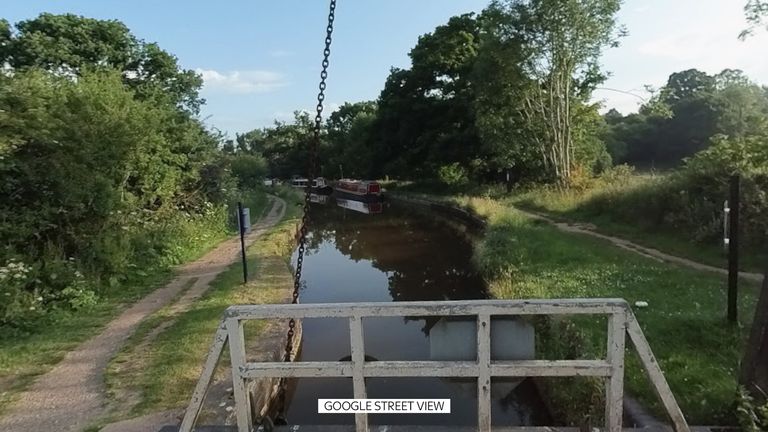
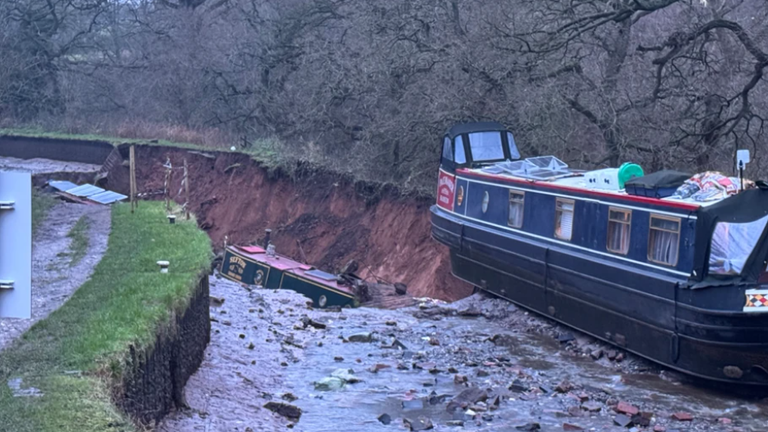
A major incident had been declared in Shropshire following reports of a sinkhole affecting a canal in the Chemistry area of Whitchurch.
Emergency services are currently on the scene, and a multi-agency response has been set up, co-ordinated through the Shropshire Tactical Co-ordination Group (TCG).
There are currently no reports of any casualties, and residents are being assisted by the fire service.
A picture seen by Sky News shows a whole section of the canal completely drained of water. Two narrowboats appear to have fallen into the hole and are sitting on the canal bed.
This is the section of the canal which has been affected. Pic: Uy Hoang/Google Street View
Pic: Shropshire Fire and Rescue Service
Shropshire Fire and Rescue Service said on X: “Shropshire FRS is responding to a landslip affecting the canal in the Whitchurch area.
“For everyone’s safety, members of the public are kindly asked to remain away from the affected area, including Whitchurch Marina, while crews and partners manage the incident.”

Puppy farms, trail hunting and snare traps are all set to be banned under animal welfare reforms being introduced by the government.
Ministers have today unveiled the government’s Animal Welfare Strategy, which also takes aim at other measures seen as cruel, such as shock collars, as well as cages and crates for farm animals.
But while proposals to improve animals’ lives have been welcomed, Labour have been accused of acting like “authoritarian control freaks” for plans to ban trail hunting.
This is the practice that sees an animal scent laid through the countryside, which then allows riders and dogs to ‘hunt’ the smell.
Labour banned fox hunting outright in 2004, but Sir Keir Starmer’s government has suggested trail hunting is now “being used as a smokescreen for hunting” foxes.
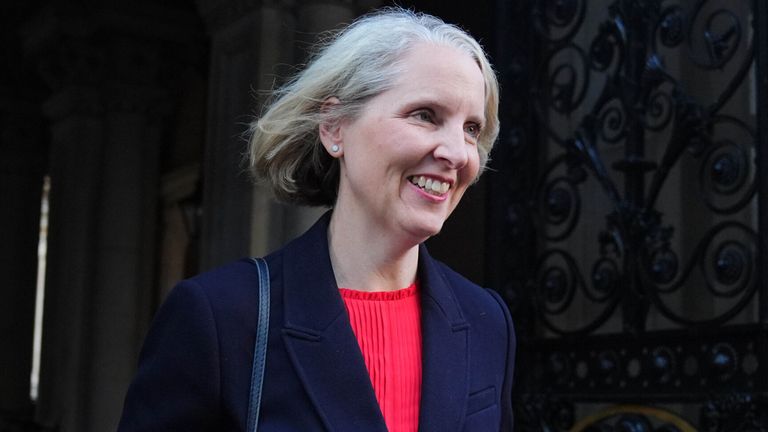
Announcing the reforms, Environment Secretary Emma Reynolds said: “This government is delivering the most ambitious animal welfare strategy in a generation.
“Our strategy will raise welfare standards for animals in the home, on the farm and in the wild.”
Emma Reynolds has said the UK is a “nation of animal lovers”.
Pic: PA
Under the proposals, puppy farms – large-scale sites where dogs are bred intensively – will be banned.
This is because these farms can see breeding dogs kept in “appalling conditions” and “denied proper care”, resulting in “long-term health issues”, according to the Department for the Environment, Food and Rural Affairs (DEFRA).
The strategy has also launched a consultation on banning shock collars, which use electricity to sting pets and prevent them from escaping.
Other proposals include introducing new licences for rescue and rehoming organisations, promoting “responsible” dog ownership and bringing in new restrictions for farms to improve animal welfare.
Read more:
How a roundabout could decide the UK’s next PM
Starmer will absolutely be PM next Christmas
These will see bans on “confinement systems” such as colony cages for hens and pig-farrowing crates, while requirements will be brought in to spare farmed fish “avoidable pain”.
The use of carbon dioxide to stun pigs will also be addressed, while farmers will be encouraged to choose to rear slower-growing meat chicken breeds.
In order to protect wild animals, snare traps will be banned alongside trail hunting, while restrictions on when hares can be shot will be introduced.

Reform UK leader Nigel Farage has said the government “might as well ban walking dogs in the countryside”.
Pic: PA
The reforms have been publicly welcomed by multiple animal charities, including the RSPCA, Dogs Trust, Battersea Dogs and Cats Home, and World Farming UK, as well as by the supermarket Waitrose.
Thomas Schultz-Jagow, from the RSPCA, called the proposals a “significant step forward” and said they have the potential to improve millions of lives.
He added: “People in the UK love animals, and they want to see governments leading the way to outlaw cruel practices which cause suffering. This strategy leads the way by showing a strong commitment to animal welfare.”
Meanwhile, the Greens have also welcomed it but warned the strategy must have “real teeth”, “clear timescales” and “properly support farmers through the transition and not allow imports that don’t meet UK standards”.
Adrian Ramsay said: “Puppy legislation must end breeding for extreme, unhealthy traits in dogs. The strategy could go further for animals, particularly by ending greyhound racing, as the Welsh Government is doing.”
But the Conservatives have hit out at the strategy, saying it shows Labour “simply doesn’t care about rural Britain”.
Victoria Atkins, the shadow environment secretary, said: “While it is good to see the government taking forward Conservative policies to tackle puppy smuggling and livestock worrying, Labour is yet again favouring foreign farmers over British farmers by allowing substandard foreign imports to undercut our already-high welfare standards.”
She also accused Labour of announcing the strategy on the Monday before Christmas “to avoid scrutiny” as “they know that this will be another hammer blow to farming profitability”.
Meanwhile, Nigel Farage said: “So now Labour wants to ban trail hunting. You might as well ban walking dogs in the countryside as they chase rabbits, hares, deer and foxes. Labour are authoritarian control freaks.”
The Countryside Alliance, an organisation that promotes rural sport, said: “Why does the government want a war with the countryside?
“Trail hunting supports hundreds of jobs and is central to many rural communities. After its attack on family farms, the government should be focusing on addressing issues that actually help rural communities thrive, rather than pursuing divisive policies that hinder them.”

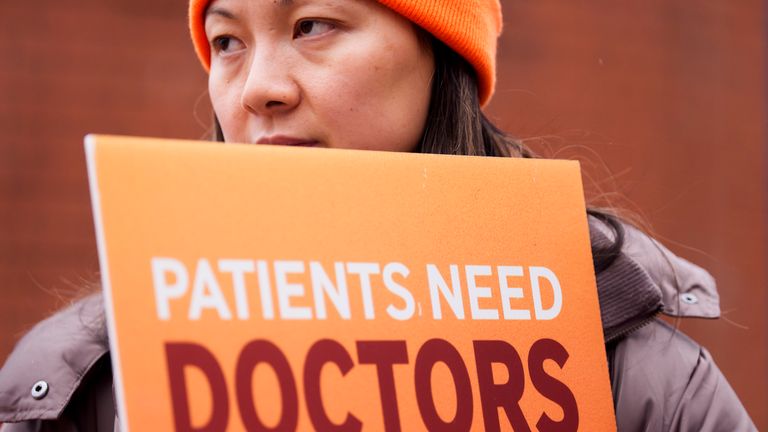
Wes Streeting has pledged to do all he can to avoid industrial action in 2026, as doctors in England return to work following a five-day walkout.
The health secretary said the strike, coupled with surging flu cases, constituted “the most serious threat to the NHS” since he began the role a year and a half ago.
He said: “The double whammy of strike action and flu this December posed the most serious threat to the NHS since I became health and social care secretary.
“The health service has only been able to cope because of the extraordinary efforts of the dedicated staff who work in it, and the hardest yards are in the weeks ahead as we get the NHS through the busiest weeks of the year.
“To everyone who played a role in keeping NHS services running through this exceptionally challenging month, thank you for the real difference you have made.
“I do not want to see a single day of industrial action in the NHS in 2026 and will be doing everything I can to make this a reality.
“My door remains open, as it always has done, and I’m determined to resume discussions with the BMA in the new eear to put an end to these damaging cycles of disruption.”
The strike took place after The British Medical Association (BMA) said 83% of English members had rejected a fresh proposal from the Labour government.
Sir Keir Starmer called the action “irresponsible”, while Mr Streeting accused the union of a “shocking disregard for patient safety”.
The BMA said the strike was “entirely avoidable” and has demanded a “credible offer” for English doctors to avert “real-terms pay cuts”.
The government’s offer had included a fast expansion of specialist training posts as well as covering out-of-pocket expenses such as exam fees.
It also offered to extend the union’s strike mandate to enable any walkout to be rescheduled to January.
It does not address resident doctors’ demand for a 26% salary rise over the next few years to make up for the erosion in their pay in real terms since 2008 – this is on top of a 28.9% increase they have had over the last three years.
Public support for the strikes is low, according to a recent YouGov poll.
The results showed 58% of those asked either somewhat or strongly opposed the industrial action, while 33% somewhat or strongly supported it.
-
 Sports2 years ago
Story injured on diving stop, exits Red Sox game
-
 Sports3 years ago
‘Storybook stuff’: Inside the night Bryce Harper sent the Phillies to the World Series
-
 Sports2 years ago
Game 1 of WS least-watched in recorded history
-
 Sports3 years ago
Button battles heat exhaustion in NASCAR debut
-
 Sports3 years ago
MLB Rank 2023: Ranking baseball’s top 100 players
-
Sports4 years ago
Team Europe easily wins 4th straight Laver Cup
-
 Environment3 years ago
Japan and South Korea have a lot at stake in a free and open South China Sea
-
 Environment1 year ago
Here are the best electric bikes you can buy at every price level in October 2024