
Connect with us

Published

on

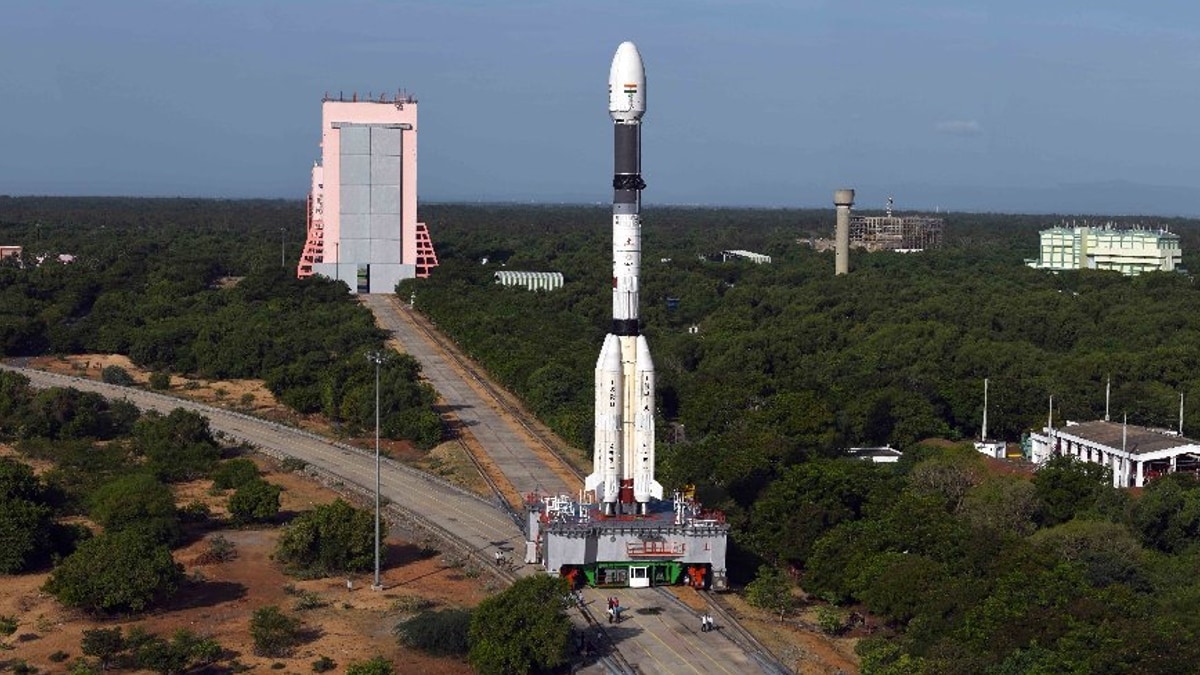
ISRO on Wednesday announced that RH200, the versatile sounding rocket of the Indian space agency, has registered its 200th consecutive successful launch from the shores of Thumba, Thiruvananthapuram. The Indian Space Research Organisation (ISRO) has termed it a “historic moment”. It was witnessed by former President Ram Nath Kovind and ISRO chairman S Somanath, among others.

The successful flight of RH200 took off from the Thumba Equatorial Rocket Launching Station (TERLS).

“Indian sounding rockets are used as privileged tools for the scientific community for carrying out experiments on meteorology, astronomy and similar branches of space physics,” an ISRO statement said.

Campaigns such as Equatorial ElectroJet (EEJ), Leonid Meteor Shower (LMS), Indian Middle Atmosphere Programme (IMAP), Monsoon Experiment (MONEX), Middle Atmosphere Dynamics (MIDAS), and Sooryagrahan-2010 have been conducted using the sounding rocket platform for scientific exploration of the Earth’s atmosphere, it said.

The Rohini Sounding Rocket (RSR) series have been the forerunners for ISRO’s heavier and more complex launch vehicles, with a continued usage even today for atmospheric and meteorological studies, the national space agency headquartered here said.

“The 200th consecutive successful flight stands testimony to the commitment of Indian rocket scientists towards unmatched reliability demonstrated over the years,” it said.

Meanwhile, ISRO is all set to launch PSLV-C54/ EOS-06 mission with Oceansat-3 and eight nano satellites, including one from Bhutan, from the Sriharikota spaceport on November 26. The launch is scheduled at 11.56am on Saturday, the national space agency said on Sunday.

Last week, ISRO announced that the payload capability of India’s heaviest LVM3 rocket has been enhanced by up to 450kg with a successful engine test. According to the Indian Space Research Organisation, the CE20 cryogenic engine indigenously developed for Launch Vehicle Mark 3 (LVM3) was subjected to a successful hot test at an uprated thrust level of 21.8 tonnes for the first time on November 9, according to the country’s national space agency.


Affiliate links may be automatically generated – see our ethics statement for details.

Continue Reading

Science

James Webb Space Telescope Could Help Reveal Dark Matter in a Way Scientists Did Not Anticipate

Published

on

By

New research suggests the James Webb Space Telescope could help scientists understand dark matter by studying oddly shaped early galaxies. These elongated galaxies may form due to dark matter’s gravitational behaviour, offering indirect clues about whether ultralight or warm dark matter particles shaped the early universe.

Continue Reading

Science

Interstellar Comet 3I/ATLAS Nears Earth on Dec. 19, Offering Rare Insights Into Cosmic Visitors

Published

on

By

Interstellar comet 3I/ATLAS will make its closest approach to Earth on Dec. 19. Observing the comet provides scientists a rare opportunity to study dust and gases from its icy nucleus and learn more about material forming around other stars, expanding understanding of interstellar objects while posing no threat to our planet.

Continue Reading

Science

Europe’s Ariane 6 Rocket Lifts Off With First Galileo Satellites, Boosting Europe’s Navigation Network

Published

on

By

Europe’s Ariane 6 rocket has launched its first Galileo navigation satellites, joining the 26-satellite constellation. The mission strengthens Europe’s GPS capabilities and reduces reliance on foreign rockets.

Continue Reading

Trending





