

Tesla blogs propagate fake news of chip joint venture, but why?

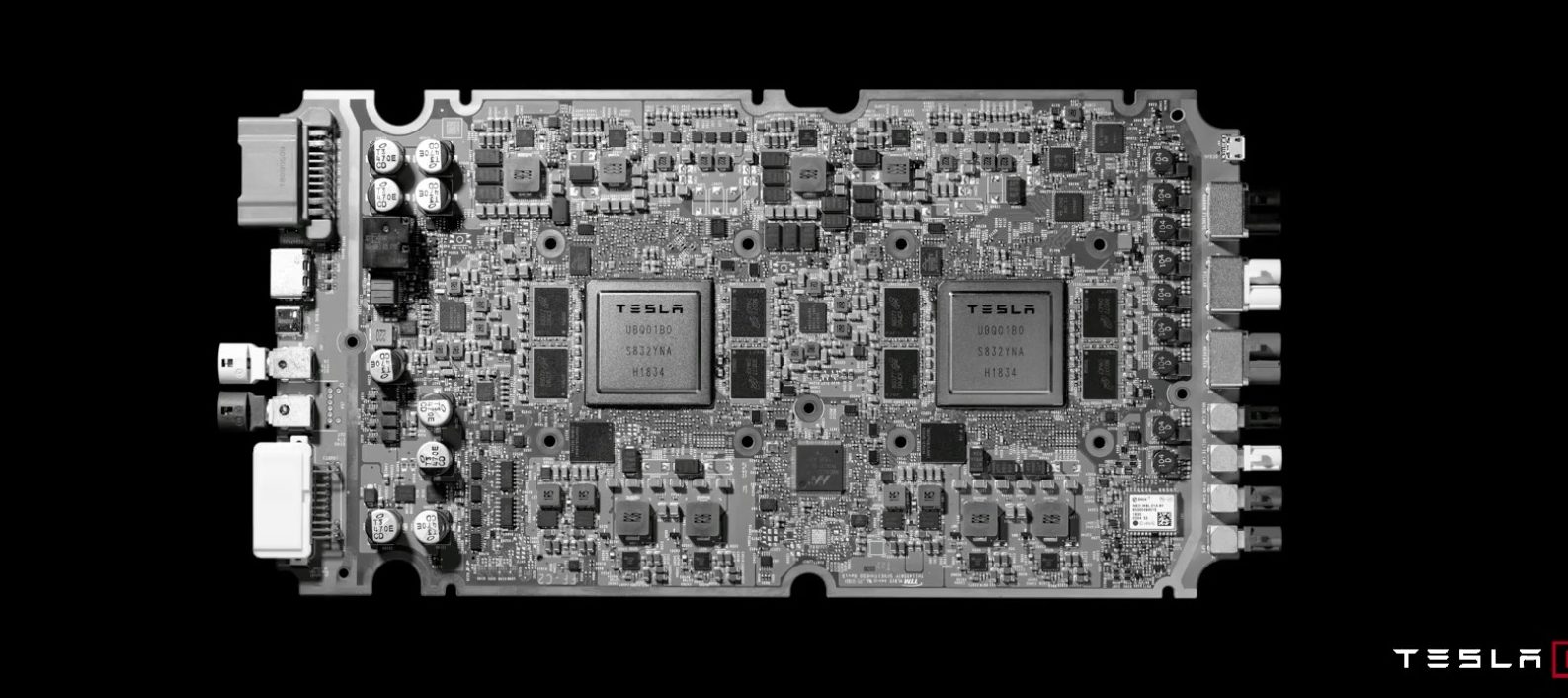
Several Tesla blogs are reporting that Tesla created a joint venture to produce computer chips with a company that is clearly fake.
The reason behind the strange situation is unclear.
Over the last few days, Tesla blogs, including Teslarati and Tesmanian (with the latter having been promoted recently by CEO Elon Musk on Twitter), have reported that Tesla has “set up a semiconductor joint venture with Swiss’s Annex Semiconductor” in China.
The report claims that Tesla, along with Annex, have invested $150 million to start the new joint venture and produce automotive chips.
Teslarati called Annex “a formidable partner” for Tesla and “among the global leaders in automotive system-on-chip (SoC), microcontroller (MCU), and processor, image sensor, and power device products.”
The only problem is that the company is fake.
It looks like the blogs only copy pasted from a report from Chinese website Ijiwei without verifying any of the information.
I asked a few sources in the semiconductor business, and no one had ever heard of Annex Semiconductor.
After researching Annex, I couldn’t find anything about the company other than its own website and the new reporting from the Tesla blogs.
As for the website, it triggered my bullshit meter as it appeared extremely generic. My suspicions were confirmed when all the phone numbers on the contact page didn’t work, and I couldn’t find a single employee linked to the company.
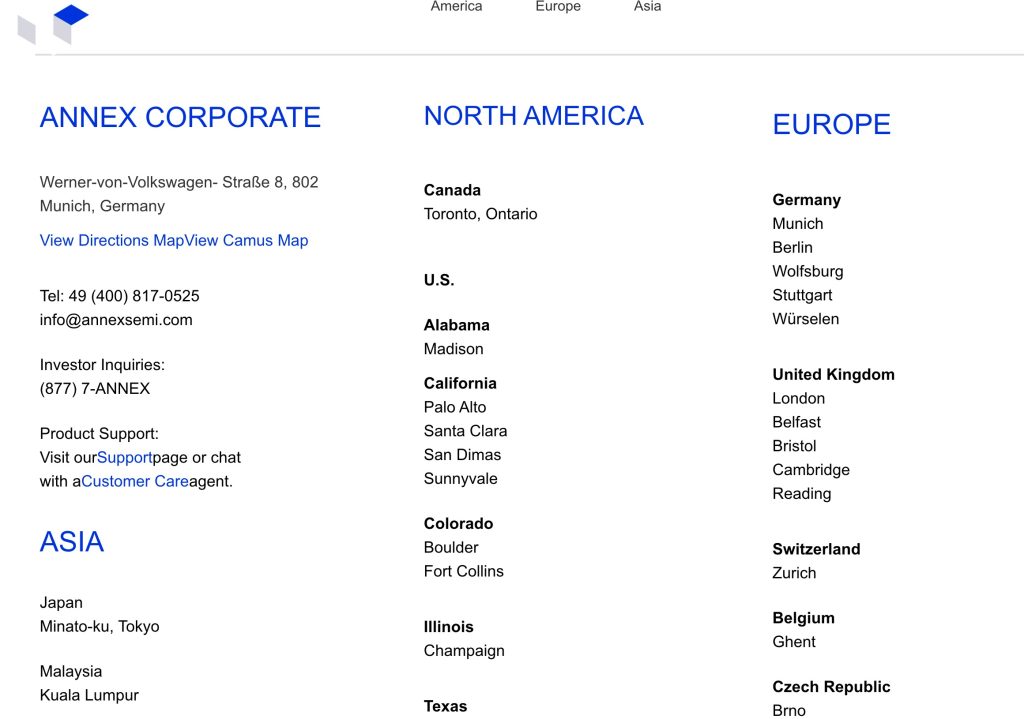
The links to the company’s social media accounts were also not working, and I couldn’t find an actual social media presence. The address of its headquarters is not real, and all the other supposed offices don’t have any listed addresses.
The reports from Teslarati and Tesmanian also both mentioned that Annex Semiconductor was bought by Zurich Fund back in June for $5 billion. The publications didn’t bother to verify that, either.
Zurich Fund also appears to be a completely made-up company. The website has the same design as Annex’s, and it is also full of vague and generic information. Its “our people” page actually profiles two executives, but they are both made up with stock images for their profiles:

I couldn’t find anyone matching those names and profiles. Like Annex, the only reference that I could find about the Zurich Fund is a press release about it buying Annex in June. No other information about the company is available nor does anyone claim to be working for the company.
That’s not normal for a company that is able to buy a chip maker for $5 billion.
Furthermore, a look at Annex’s website index suggests that it was created in China, which is strange for a company that is supposed to be Swiss.
In conclusion, there’s nothing pointing to Annex being a real company, and even less so pointing to it being a $5 billion leader in automotive chip-making partnering with Tesla.
Electrek’s Take
It’s a good reminder to be careful about what you read online. Even publications that claim to be experts in a subject, such as Tesla, often post things without ever bothering to look into the sources.
But it raises the question: Why the subterfuge? So far, I couldn’t find a clear reason for making up the fake companies and the partnership with Tesla beyond tricking lazy reporters. If there’s a company whose stock it would have helped, I couldn’t find it, but that’s a possibility. If you have any idea, let us know in the comments section below or reach out to me at fred@electrek.co.
FTC: We use income earning auto affiliate links. More.

![Fortescue Infinity Train gets 14.5 MWh battery that never needs charging [update]](https://i0.wp.com/electrek.co/wp-content/uploads/sites/3/2025/06/1765412623796.jpg?resize=1200,628&quality=82&strip=all&ssl=1)
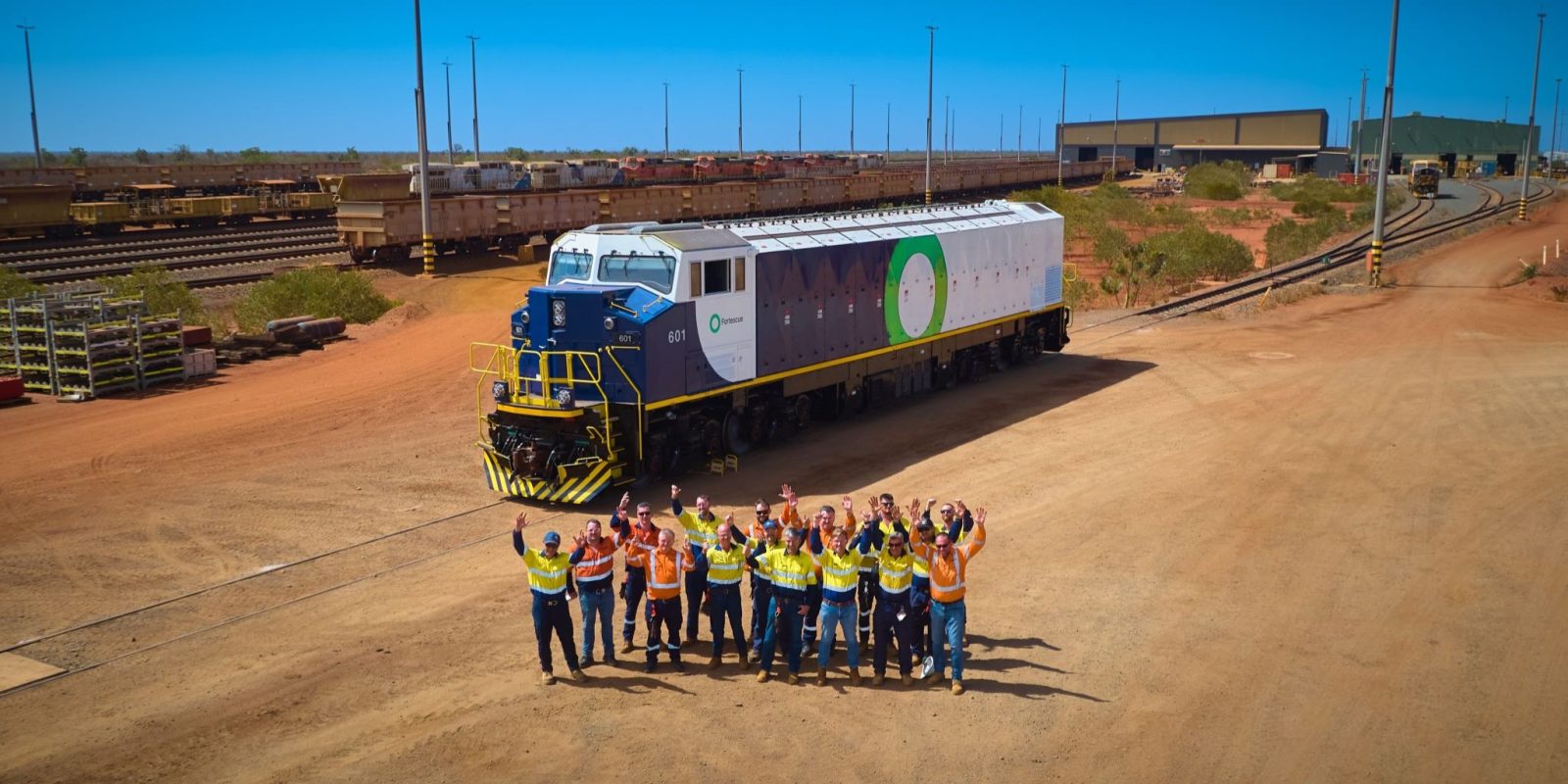
Fortescue has taken the wraps off a prototype of its proposed “Infinity Train” electric locomotive, making the 1,100 km (about 685 miles) trip from Perth to the Pilbara and marking a major milestone in the decarbonization of the company’s heavy haul operations.
UPDATE 15DEC2025: now there are two!
This week, two of Fortescue battery-electric locomotives began operating at the company’s Pilbara mines in Australia, where the so-called Infinity Trains (co-developed with Caterpillar’s Progress Rail division) began regular duty.
“It’s not every day you welcome not just one, but two of the world’s largest battery-electric locomotives into your operations,” said Fortescue Metals CEO, Dino Otranto, on LinkedIn. “[I] can’t wait to see these in motion soon!”
The two new trains are now fully operational assets, packing almost unimaginably massive 14.5 MWh battery packs that were charged once with grid power upon deployment, and which will (in theory) remain at a usable state of charge indefinitely thanks to a cleverly applied combination of gravity, regenerative braking, and human intelligence.
You can read the original article about the Infinity Train prototype completing its first 1,100 km (~685 miles) trip across the Pilbara, below, then let us know what you think of Fortescue’s latest fuel-saving efforts in the comments section at the bottom of the page.
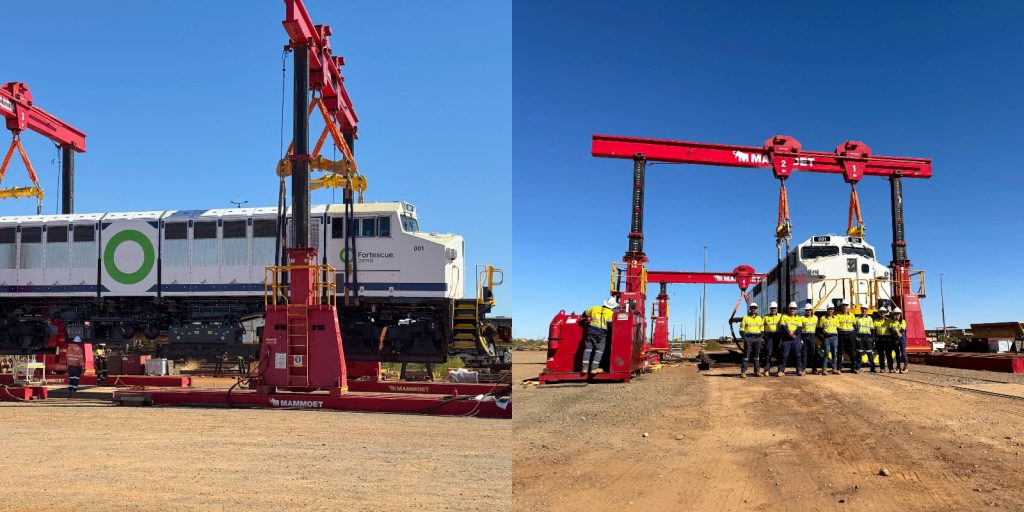
Co-developed with the locomotive experts at Downer Group, Fortescue revealed its concept for a battery electric “Infinity Train” back in March of 2022. At the time, the company promised a “world’s first” iron ore train capable of fully charging its batteries through regenerative braking. The two companies claimed the clever technology would create a self-sustaining, zero-emission rail system powered entirely by the force of gravity during the train’s loaded downhill travels.
This week, the concept went from the drawing board to the real world, completing an 1,100 km trip across Australia and proving itself to be up to the task of handling the grueling demands of Fortescue’s massive mining operations.
“We’re thrilled to see our battery electric locomotive prototype arrive in the Pilbara,” said Ellie Coates, CEO of Fortescue Zero. She added that the achievement, using zero fossil fuels, “represent(s) a major step in Fortescue’s journey to Real Zero.”
The Fortescue Infinity Train uses the energy produced by slowing the loaded train on downhill sections of the company’s 385 mile private, heavy-haul rail network to recharge its battery systems. That energy is enough to bring the unloaded train back to the mine, eliminating the need for external charging infrastructure or additional renewable energy sources, making the train almost entirely self-sufficient.
Fortescue says the deployment of the Infinity Train concept at its mines will eliminate more than 82 million liters of diesel fuel consumption (about 21 million gallons, which ChatGPT tells me amounts to about 235,200 tons of CO₂ emissions).
That change alone would eliminate about 11% of Scope 1 emissions annually for Fortescue all on its own, putting it well on its way to its stated goal of achieving “Real Zero” emissions-free operations.
Electrek’s Take

Using gravity to charge up heavily-laden mining vehicles on downhill runs is an idea that’s been put into practice for years, with great success wherever the topography allows (since 2017, at least). Combining that clever use of gravity, traction braking, and battery storage for use on a rail system like this just seems smart, and it makes me think we’re just scratching the surface of all the clever ways electrification and battery storage will eventually get put to use.
I wonder what would happen if you threw some battery electric rail cars into the mix, as well!? You guys are smart, head down to the comments and let me know (and, while you’re there, help me check ChatGPT’s math on those carbon emissions).
SOURCE | IMAGES: Fortescue, via LinkedIn.

If you’re considering going solar, it’s always a good idea to get quotes from a few installers. To make sure you find a trusted, reliable solar installer near you that offers competitive pricing, check out EnergySage, a free service that makes it easy for you to go solar. It has hundreds of pre-vetted solar installers competing for your business, ensuring you get high-quality solutions and save 20-30% compared to going it alone. Plus, it’s free to use, and you won’t get sales calls until you select an installer and share your phone number with them.
Your personalized solar quotes are easy to compare online and you’ll get access to unbiased Energy Advisors to help you every step of the way. Get started here.


FTC: We use income earning auto affiliate links. More.


Develon is kicking off the holidays with seven new or updated electric excavators, led by its seriously impressive flagship offering: the new 25‑ton DX250LCE-7 battery-electric crawler excavator developed by HD Hyundai.
When Hyundai acquired the Doosan Infracore equipment division back in 2023, it rebranded the orange machines as “Develon” in a move that signaled a new era of forward-looking thinking for the Korean company — and, last week, we got some of the first tangible results of that new thinking debuted with the launch of seven new or updated electric excavators, including the flagship DX250LCE-7 25-ton model shown here.
Develon says its new electric machines offer identical performance to their diesel counterparts, while delivering significant reductions in emissions, noise, and vibration — and that the breadth and scope of the brand’s new, zero-emission lineup underscores its continued commitment to sustainable innovation in the heavy equipment space.
“Moving forward, Hyundai Infracore is focusing on innovation and smart technology, as well as productivity and fuel efficiency. I think the timing very good for us, with exciting new technologies on the market,” Young-cheul Cho, President and CEO of Develon parent company HD Hyundai Infracore, told Construction Europe at last summer’s Intermat construction show. “Our next generation machines will use AI and have sensors that will be reliable in all environments and all weathers, which will improve safety.”
The new Develon DX250LCE-7 brings Cho’s Intermat vision to life with specs that meet or beat the diesel-powered DX255LC-7’s capabilities in a quiet, zero-emission package.
Starting with horsepower, the DX250LCE-7’s electric motors pot out about 200 hp (comparable to the diesel) while tipping the scales at a ~26 metric ton operating weight. Bucket capacity matches the diesel at 1.4 cubic meters, too — but the Develon’s standout feature is its oversized battery pack, offering up to 12 hours of continuous runtime on a single charge under typical conditions (kWh capacity hasn’t been released), with DC fast-charging options that can get it back in action at full capacity in under two hours — making it ideal for a full-day of moving dirt.
North American pricing and availability should be released in Q1.
Electrek’s Take
As demand for low-emission solutions rises throughout Europe and SE Asia, the latest electric excavators from Develon and parent company Hyundai provide an ideal balance between eco-friendly operation and real-world job site requirements – especially when fitted with articulating buckets and other versatile implements.
Regardless of who is in power in the US, the fact is that these electric machines deliver quiet, efficient performance in challenging environments, cutting both emissions and noise while maintaining productivity and improving both operators’ safety and working conditions. They’re winners all the way.
SOURCE | IMAGES: Develon; via ELM Group.
If you’re considering going solar, it’s always a good idea to get quotes from a few installers. To make sure you find a trusted, reliable solar installer near you that offers competitive pricing, check out EnergySage, a free service that makes it easy for you to go solar. It has hundreds of pre-vetted solar installers competing for your business, ensuring you get high-quality solutions and save 20-30% compared to going it alone. Plus, it’s free to use, and you won’t get sales calls until you select an installer and share your phone number with them.
Your personalized solar quotes are easy to compare online and you’ll get access to unbiased Energy Advisors to help you every step of the way. Get started here.
FTC: We use income earning auto affiliate links. More.

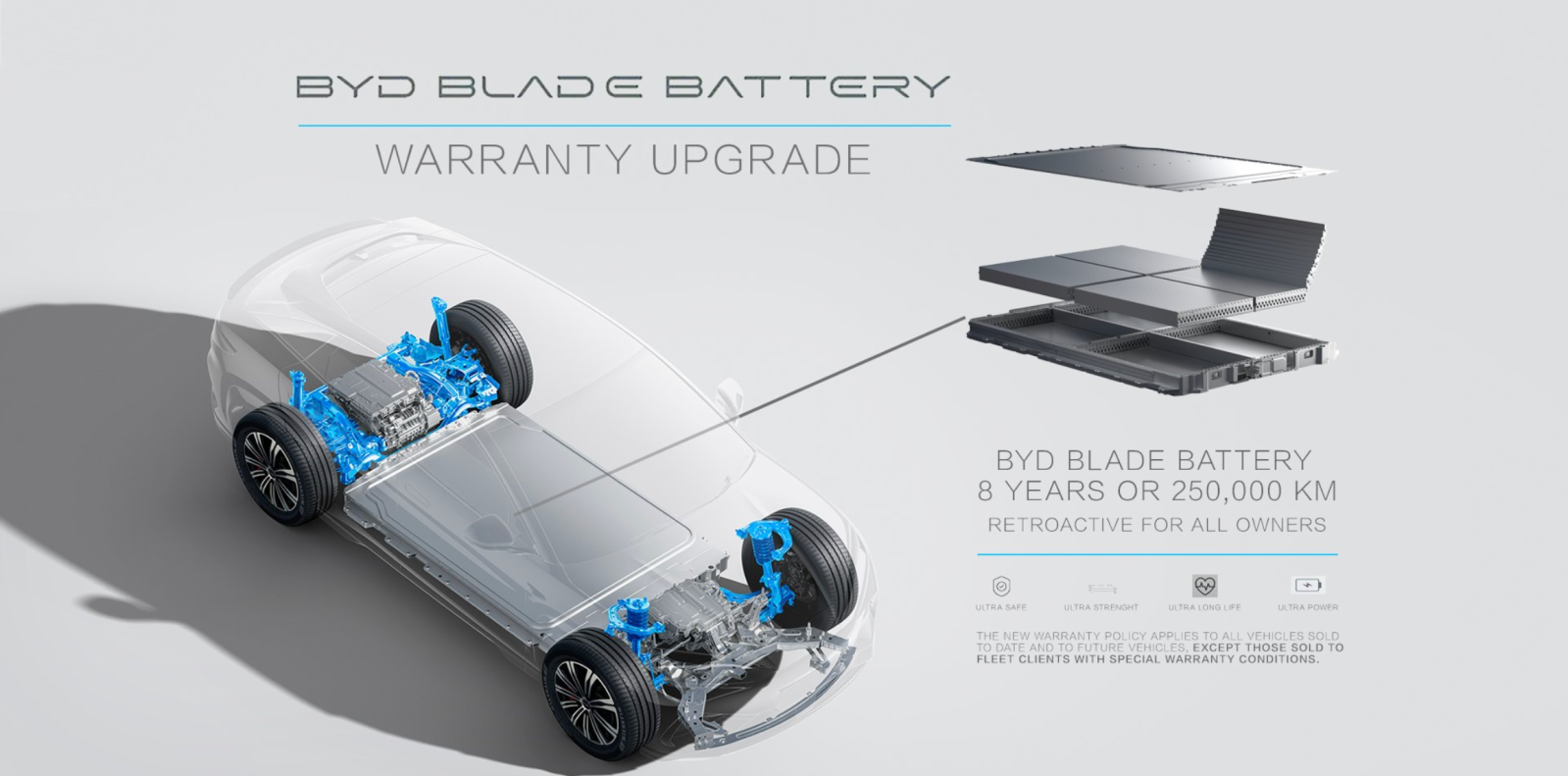
BYD is making a significant move to boost confidence in its electric vehicles in Europe. The Chinese automaker has announced a major update to its warranty terms, extending the battery coverage to 8 years or 250,000 km (approx. 155,000 miles), whichever comes first.
This new policy significantly outpaces the industry standard and puts pressure on competitors like Tesla and Volkswagen to follow suit.
The announcement was made via BYD Europe’s official channels today, confirming that the new warranty terms apply to its lineup of “New Energy Vehicles” (NEVs) in the region:
Previously, BYD offered a warranty that was more in line with the industry average, typically around 8 years or 160,000 km (100,000 miles), with some variations like 200,000 km in specific markets. This bump to 250,000 km is a massive increase in mileage coverage, effectively targeting high-mileage drivers, taxi fleets, and Uber drivers who might be wary of long-term degradation.
For context, here is how the new BYD warranty stacks up against the main competition in Europe:
- BYD (New): 8 years / 250,000 km
- Tesla (Model 3/Y RWD): 8 years / 160,000 km
- Tesla (Long Range/Perf): 8 years / 192,000 km
- Volkswagen (ID. Series): 8 years / 160,000 km
- Hyundai/Kia: 8 years / 160,000 km
As you can see, BYD is now offering nearly 60% more mileage coverage than the standard warranty provided by Volkswagen and the base Tesla models. Even compared to Tesla’s Long Range battery warranty, BYD offers an additional 58,000 km of protection.
The move is enabled by BYD’s confidence in its Blade Battery technology, which is interestingly used by competitors, such as Tesla.
The Blade Battery uses Lithium Iron Phosphate (LFP) chemistry, which is known for having a longer cycle life than the Nickel Cobalt Manganese (NCM) cells traditionally used in long-range EVs.
BYD has often claimed that the Blade Battery can sustain over 3,000 charge cycles while maintaining reasonable capacity. Even when accounting for linear degradation to 70% capacity over that lifespan, 3,000 cycles on a vehicle with a 400 km starting range would still result in roughly 1 million kilometers of total service life. Consequently, a 250,000 km warranty remains quite conservative for the chemistry, even if it is aggressive for the market.
This comes as BYD continues to expand aggressively in Europe, having recently launched the Sealion 7 and updated versions of the Seal and Atto 3.
Electrek’s Take
This is exactly the kind of competition we like to see.
It’s great to see BYD using the inherent durability of LFP cells to offer a tangible benefit to consumers rather than just cutting costs.
I’m looking at Tesla here. Tesla has been a pioneer in battery longevity, and we know their packs can last a very long time, especially the LFP packs in the standard range Model 3 and Y.
In fact, Tesla even used BYD’s blade batteries in some of the vehicles it sells in Europe.
It would be great to see Tesla follow BYD here.
FTC: We use income earning auto affiliate links. More.
-
 Sports2 years ago
Story injured on diving stop, exits Red Sox game
-
 Sports3 years ago
‘Storybook stuff’: Inside the night Bryce Harper sent the Phillies to the World Series
-
 Sports2 years ago
Game 1 of WS least-watched in recorded history
-
 Sports3 years ago
Button battles heat exhaustion in NASCAR debut
-
 Sports3 years ago
MLB Rank 2023: Ranking baseball’s top 100 players
-
Sports4 years ago
Team Europe easily wins 4th straight Laver Cup
-
 Environment3 years ago
Japan and South Korea have a lot at stake in a free and open South China Sea
-
 Environment1 year ago
Here are the best electric bikes you can buy at every price level in October 2024