
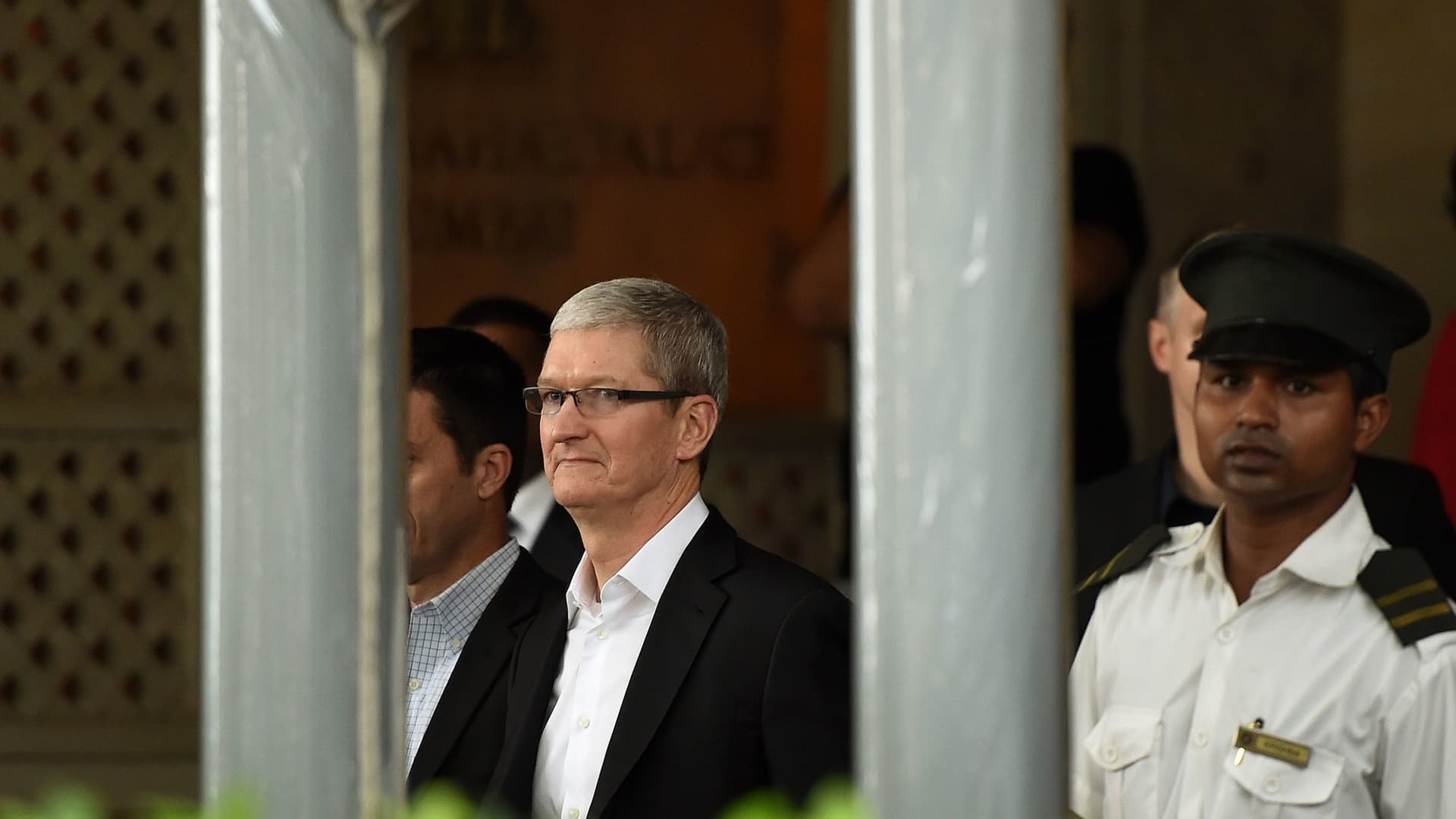
Apple explores moving some iPad production to India


A former EU commissioner has hit back after receiving a U.S. visa ban for alleged censorship.
The Trump administration imposed visa bans on Thierry Breton, a former European Union commissioner behind the Digital Services Act (DSA), and four anti-disinformation campaigners, accusing them of censoring U.S. social media platforms.
“The State Department is taking decisive action against five individuals who have led organized efforts to coerce American platforms to censor, demonetize, and suppress American viewpoints they oppose,” Secretary of State Marco Rubio said in a statement.
He added that “these radical activists and weaponized NGOs have advanced censorship crackdowns by foreign states—in each case targeting American speakers and American companies.”
As such, their entry to the U.S. has “potentially serious adverse foreign policy consequences,” he said.
“Based on these determinations, the Department has taken steps to impose visa restrictions on agents of the global censorship-industrial complex who, as a result, will be generally barred from entering the United States.”
Breton, who served as EU commissioner between 2019 and 2024, wrote on X: “As a reminder: 90% of the European Parliament — our democratically elected body — and all 27 Member States unanimously voted the DSA.”
“To our American friends: “Censorship isn’t where you think it is.””
It comes as President Donald Trump continues to ramp up travel restrictions for foreign visitors and criticizes Europe.
Rubio did not identify who his department had taken action against, however Under Secretary for Public Diplomacy Sarah Rogers later did so on X.
Josephine Ballon, the co-leader of HateAid who serves on Germany’s Advisory Council of the Digital Services, was among those working on anti-disinformation campaigns to receive sanctions. Her co-leader Anna-Lena von Hodenberg was also affected. CNBC has reached out to Ballon and Von Hodenberg for comment.
The bans are part of efforts to enforce what Rogers refers to as a “red line” for the U.S. and the “extraterritorial censorship of Americans.”
In an interview with GB news on Dec. 4, Rogers took aim at the U.K.’s Online Safety Act (OSA), saying the law was being applied extraterritorially, accounting for U.S. citizens’ speech about U.S. politics on U.S.-based platforms.
Europe’s DSA and the U.K.’s OSA are among only a handful of pieces of legislation designed to keep the power of Big Tech in check and improve safety for children online.
The DSA forces tech giants like Google and Meta to police illegal content more aggressively, or face hefty fines, while the OSA law requires age verification on adult sites and a number of other platforms.
Technology
Waymo will update driverless fleet after San Francisco blackout to improve navigation during outages


A Waymo car is halted on the road amid a power outage in San Francisco, California, U.S., December 20, 2025, in this screengrab obtained from a social media video.d
Reuters
Three days after a blackout in San Francisco caused Waymo to pause its driverless car service, the Alphabet-owned company said it’s updating its fleet so its vehicles are better prepared to respond during future outages.
“We’ve always focused on developing the Waymo Driver for the world as it is, including when infrastructure fails,” the company said in a blog post late Tuesday.
Power outages began early afternoon on Saturday in San Francisco and peaked roughly two hours later, affecting about 130,000 customers, according to Pacific Gas and Electric. As of Sunday morning, about 21,000 customers remained without power. PG&E said a fire at a substation resulted in “significant and extensive” damage.
With stoplights and traffic signals not functioning, the city was hit with widespread gridlock. Videos shared on social media appeared to show multiple Waymo vehicles stalled in traffic in various neighborhoods.
“We directed our fleet to pull over and park appropriately so we could return vehicles to our depots in waves,” Waymo said in Tuesday’s blog post. “This ensured we did not further add to the congestion or obstruct emergency vehicles during the peak of the recovery effort.”
San Francisco Mayor Daniel Lurie said in an update on X Saturday evening that police officers, fire crews, parking control officers and city ambassadors were deployed across affected neighborhoods.
Waymo said that it’s analyzing the event, and is taking three “immediate steps.”
The first involves “fleet-wide updates” to give vehicles “more context about regional outages,” so cars can take more decisive actions at intersections. The company said it’s also improving its “emergency response protocols,” and is coordinating with Mayor Lurie’s team in San Francisco to better collaborate in emergency preparedness. Finally, Waymo said it’s updating its first responder training “as we discover learnings from this and other widespread events.”
In addition to the Bay Area, Waymo currently serves paid rides to the public in and around Austin, Texas, Phoenix, Atlanta and Los Angeles. The company recently crossed an estimated 450,000 weekly paid rides, and said in December it had served 14 million trips in 2025, putting it on pace to end the year at more than 20 million trips total since launching in 2020.
“Backed by 100M+ miles of fully autonomous driving experience and a record of improving road safety, we are undaunted by the opportunity to challenge the status quo of our roads, and we’re proud to continue serving San Franciscan residents and visitors,” the company said in Tuesday’s blog.
— CNBC’s Lora Kolodny and Jennifer Elias contributed to this report.
WATCH: Waymo service resumes after errors cause issues in San Francisco


Direxion signage at the New York Stock Exchange (NYSE) in New York, US, on Monday, Dec. 22, 2025. The holiday-shortened week started with gains in stocks amid a broad advance that saw a continuation of the bullish momentum on Wall Street.
Michael Nagle | Bloomberg | Getty Images
Motive, a company with software for managing corporate trucks and drivers, on Tuesday filed for an initial public offering on the New York Stock Exchange under the symbol “MTVE.”
The paperwork puts Motive among a fast-growing group of tech companies looking to go public in 2026. Anthropic, OpenAI and SpaceX have all reportedly considered making their shares widely available for trading next year.
Motive is smaller, reporting a $62.7 million net loss on $115.8 million in revenue in the third quarter. The loss widened from $41.3 million in the same quarter of 2024, while revenue grew about 23% year over year. The company had almost 100,000 clients at the end of September.
Ryan Johns, Obaid Khan and Shoaib Makani started Motive in 2013, originally under the name Keep Truckin. Makani, the CEO, is Khan’s brother-in-law.
Investors include Alphabet’s GV, Base10 Partners, Greenoaks, Index Ventures, Kleiner Perkins and Scale Venture Partners.
Motive’s AI Dashcam device for detecting unsafe driving “has prevented 170,000 collisions and saved 1,500 lives on our roads,” Makani wrote in a letter to investors. Most revenue comes from subscriptions, although Motive does sell replacement hardware and professional services.
The San Francisco company changed its name to Motive in 2022, and as of Sept. 30, it employed 4,508 people. Motive employs 400 full-time data annotators who apply labels that are meant to enhance artificial intelligence models.
Motive has ongoing patent-infringement litigation with competitor Samsara, which went public in 2021 and today has a $22 billion market capitalization.
WATCH: AI IPO boom next year? The changing 2026 IPO landscape
-
 Sports2 years ago
Story injured on diving stop, exits Red Sox game
-
 Sports3 years ago
‘Storybook stuff’: Inside the night Bryce Harper sent the Phillies to the World Series
-
 Sports2 years ago
Game 1 of WS least-watched in recorded history
-
 Sports3 years ago
Button battles heat exhaustion in NASCAR debut
-
 Sports3 years ago
MLB Rank 2023: Ranking baseball’s top 100 players
-
Sports4 years ago
Team Europe easily wins 4th straight Laver Cup
-
 Environment3 years ago
Japan and South Korea have a lot at stake in a free and open South China Sea
-
 Environment1 year ago
Here are the best electric bikes you can buy at every price level in October 2024