
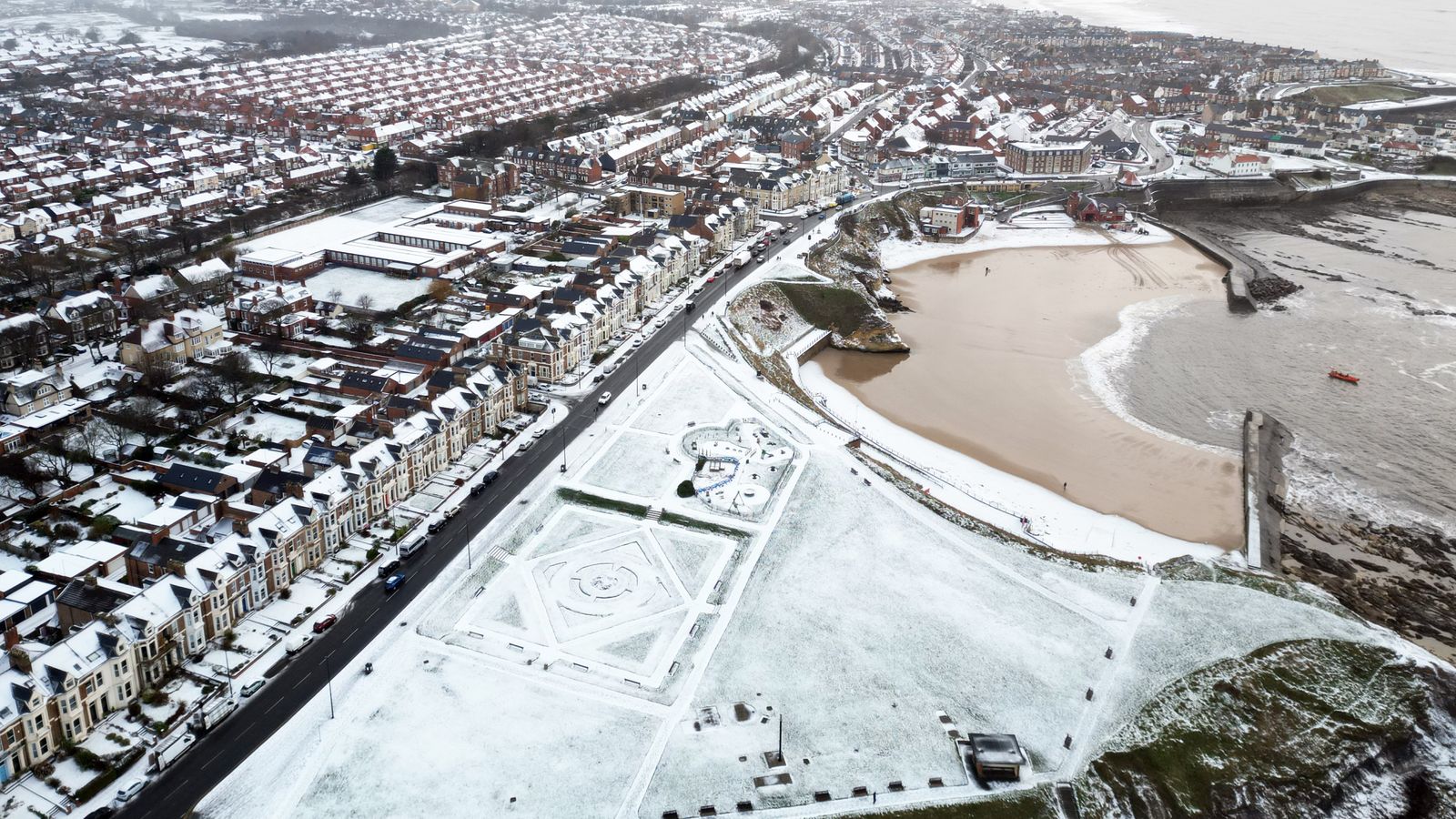
UK weather: Weekend set to bring snow for most of UK

Another blanket of snow is headed for the UK this weekend, with up to 15cm (6in) in some parts.
Forecasters say most of the UK will be affected – but it will be followed by a band of rain and milder air, bringing an end to the cold snap.
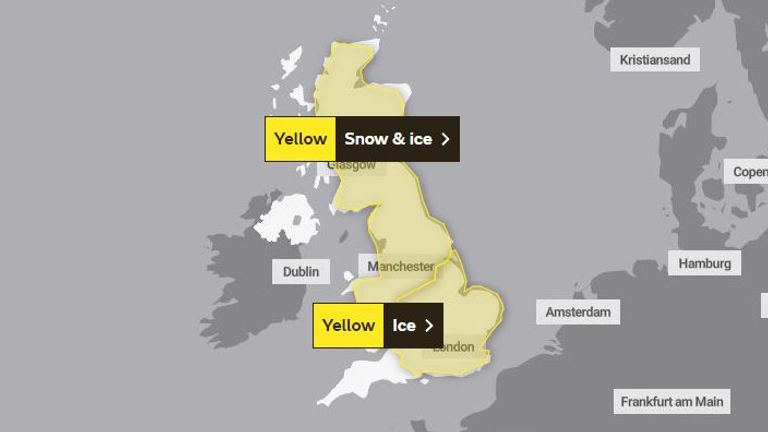
The Met Office has issued a yellow weather warning for snow and ice covering the majority of Scotland, Wales, the north of England and the Midlands from 3am to 9pm on Sunday.
Another warning for snow and ice will also cover most of the south of England from 3am until 11am on Sunday.
It comes as the current severe weather conditions have caused major disruption across the UK in the past few days.
Engineers have warned some people on Shetland could be without power until the weekend as they work to reconnect thousands who have endured their fourth day without power after significant snowfall.
Scottish and Southern Electricity Networks (SSEN) has said progress is slow, with 1,700 homes still without power on Thursday night. The company has warned that some homes will not be reconnected until next week – seven days after they lost power.
Met Office weather warnings on Sunday
Five-day forecast where you live
Met Office meteorologist Ellie Wilson said: “A band of rain and snow is going to be moving northeastwards across the country through Sunday.
“It’s bringing milder air behind it, but that milder air bumps into the cold air that’s where we’re seeing where the snow is likely to fall.”
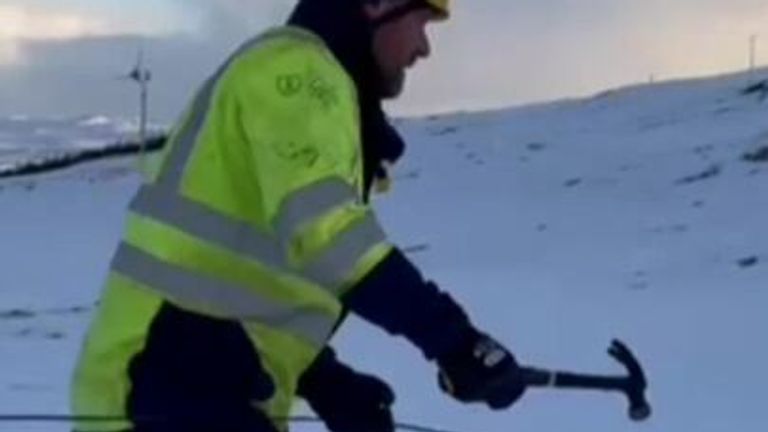
Shetland residents still without power
Ms Wilson said there could be up to 8cm (3in) over Wales and 15cm in the north of Scotland.
She added: “Because of the current cold conditions that we’ve seen, any of that snowfall will be falling onto cold frozen surfaces so there is a risk of ice here through the morning.
Ms Wilson said temperatures on Sunday afternoon onwards will be “on the rise” and will likely hit 9 -10C in the west and have risen to 11-13C across the UK on Monday.
A Met Office yellow warning for snow and ice currently remains in place across much of northern Scotland, including Shetland, and northeast England, Yorkshire and Humber until 11.59pm on Thursday.

Resident doctors across England begin a five-day strike this morning over pay and jobs, marking the 14th walkout by them since March 2023.
It coincides with the record number of flu cases in England and NHS leaders warning of a “huge strain on hospitals” and strikes causing “further disruption and delays”.
Resident doctors are striking in England from 7am today until 7am on Monday 22 December.
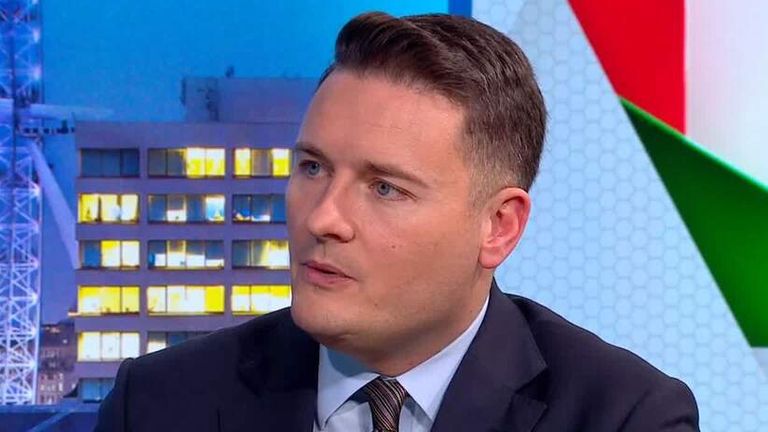
Sir Keir Starmer called the action “irresponsible” while Health Secretary Wes Streeting has rejected the British Medical Association’s (BMA) pay demands, accusing the union of a “shocking disregard for patient safety”.
But the BMA insists its strike is “entirely avoidable” and has demanded a “credible offer” to avert “real-terms pay cuts”.
Why are resident doctors on strike?
The government says resident doctors have already received an average pay rise of 28.9% over the past three years (2023-24 to 2025-6).
But the BMA has been demanding an additional 26% pay uplift to restore what they say amounts to erosion in their earnings, once inflation is taken into account. Although there is some dispute about the extent of the real terms fall, because of the BMA’s use of the Retail Price Index (RPI) in its calculation.
Hopes that the strike could be averted were dashed on Monday when the BMA said 83% of resident doctors rejected a fresh proposal from the government.
While it did not include any extra pay, the offer included the fast expansion of specialist training posts; covering out-of-pocket expenses such as exam fees; and offering to extend the union’s strike mandate to enable any walkout to be rescheduled to January.
What if I need urgent medical care?
The Department of Health and Social Care says it is important people do not avoid seeking urgent care, and should use 999 if it is a serious or life-threatening emergency. For everything else, there is NHS 111 or the NHS App.
It adds that patients should turn up for planned appointments unless they have been told otherwise. Any appointments that need to be rescheduled will be given priority.
During strikes, there are exemptions or special arrangements, called derogations, which allow certain essential services to continue operating. It means critical services will be maintained to ensure patient safety and prevent serious harm.
How much do resident doctors earn?
There are many different types of resident doctor in England with different levels of pay. Full Fact, which has crunched the numbers, said they currently earn between £38,831 and £73,992 a year, but that does not take into account extra pay for unsociable hours.
Full Fact states that resident doctors typically get between a quarter and a third more than their basic salary from other sources.
This takes estimated average earnings (in the year ending August 2025) to between £45,846 and £81,061 (although the government claims the figures are more like £49,000 to £97,000).
Comparisons with other countries are difficult because of how doctors are categorised. Broadly, resident doctors in England earn about the same as those in Ireland and anything between 1% less and 26% more than in New Zealand.
But doctors in Australia earn somewhere between 23% and 48% more than their counterparts in England.
What has the reaction been?
The prime minister has said the strike comes “on the back of a very substantial pay increase in the last year or so”.
“I think it’s irresponsible action by the BMA,” he told MPs.
The health secretary called for doctors to ignore the strike and criticised what he called the “fantasy demand for another 26% pay rise,” adding that “it reveals the BMA’s shocking disregard for patient safety”.
Dr Jack Fletcher, chairman of the BMA’s resident doctors’ committee, said the strikes were “entirely avoidable”. He added that “we should start negotiating, and the government should stop game-playing”.
But organisations representing NHS trusts have been scathing about the walkouts. Daniel Elkeles, chief executive of NHS Providers, said: “Trust leaders and staff will be working now to minimise the impact of the strike, but sadly it will mean further disruption and delays.”
Meanwhile, Rory Deighton, acute and community care director at the NHS Confederation, said: “These strikes come at the worst possible time, with rapidly rising flu levels putting huge strain on hospitals.”
What about public support for strikes?
Public support for the strikes is low, according to a YouGov poll released last week.
The results showed 58% of those asked either somewhat or strongly opposed the industrial action, while 33% somewhat or strongly supported it.
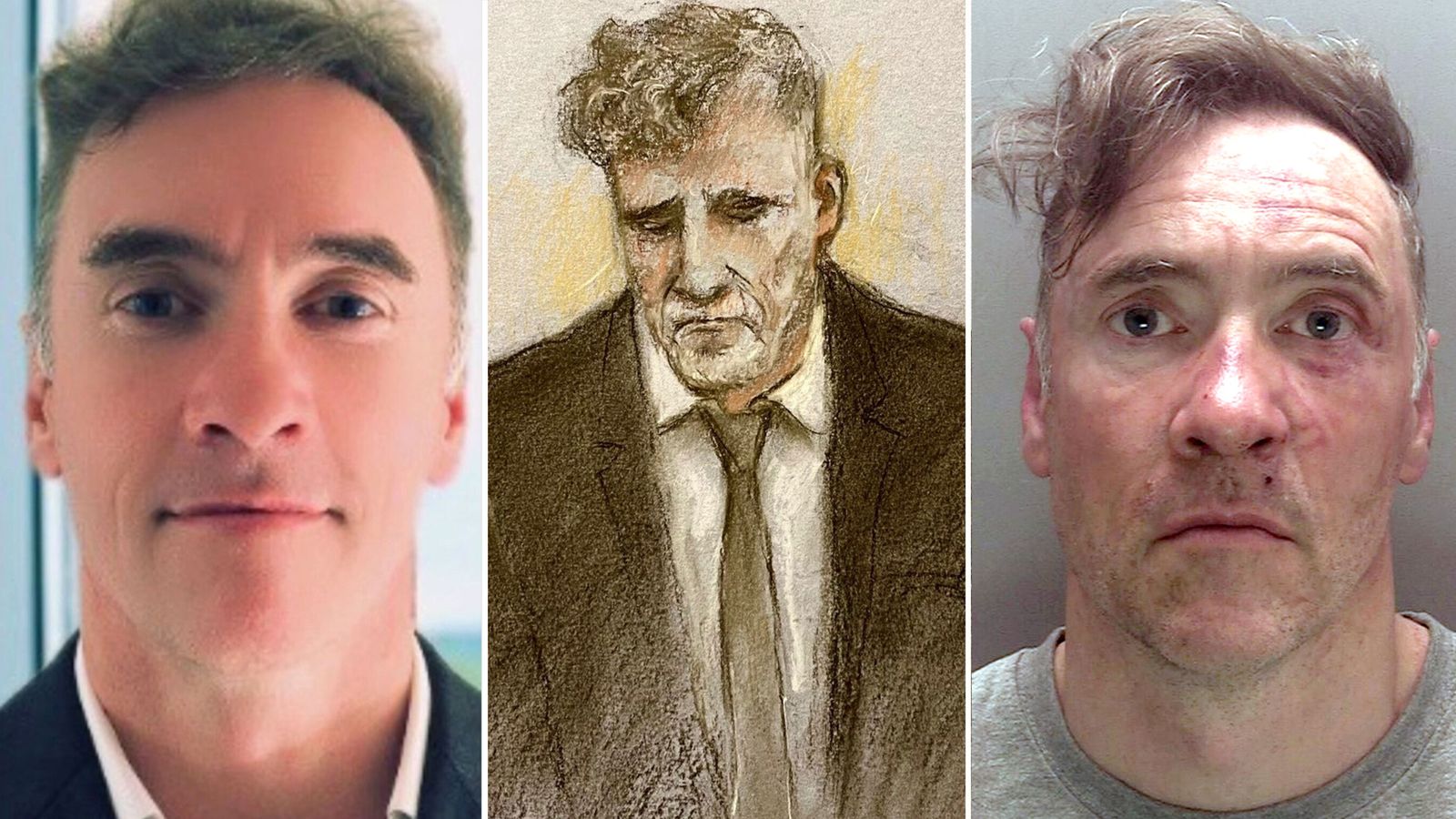
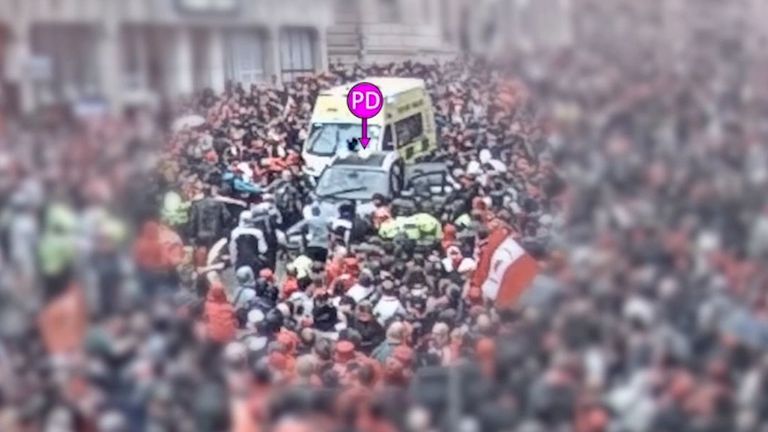
The dashcam footage from Paul Doyle’s Ford Galaxy, as he ploughs his way through the crowd at the Liverpool parade, is chilling.
Bodies are thrown left and right, people disappear under the front of the car, for a few seconds some appear to be clinging to the bonnet, terror on their faces.
The sound is equally graphic. The screaming and the shouting from outside of the car. And the thumps: as people bang on the car to get Doyle to stop, and as people are hit by it.
Men, women and children hit. A bike, a baby’s pram.
Paul Doyle was seen on CCTV driving into the crowd. Pic: Merseyside Police
Throughout those couple of minutes, Doyle lays on the car’s horn, the parking sensors beep constantly, and he shouts.
“F***ing hell, move,” he repeats. “Get out the f***ing way”, “f***ing move”, “get off the f***ing road, you f***ing p***k”.
Those words, prosecutors say, reveal the truth – that Doyle knew he was driving at people.
He was jailed for 21 years and six months – with Judge Andrew Menary KC telling Doyle he acted in an “inexplicable and undiluted fury” when he drove into the crowds.
The judge told him his “disregard for human life defies ordinary understanding”.
“Your actions caused horror and devastation on a scale not previously encountered by this court,” he said.
“The footage is truly shocking… it shows you, quite deliberately, accelerating into groups of fans time and time again.
“You struck people head-on, knocked others onto the bonnet, drove over limbs, crushed prams and forced those nearby to scatter in terror.”
Follow latest as Paul Doyle is sentenced
“In my 20 years of policing, this is the most graphic and distressing footage I have ever encountered,” said Detective Chief Inspector John Fitzgerald, the senior investigating officer for Merseyside Police.
“Doyle’s total disregard for the safety of others – particularly the many young children present on Dale Street and Water Street that day – is beyond comprehension. It is sheer luck that no lives were lost.”
In the end, that dashcam footage was never shown to a jury as Doyle pleaded guilty on the day his trial was due to begin. The footage will not be released to the public due to its graphic nature.
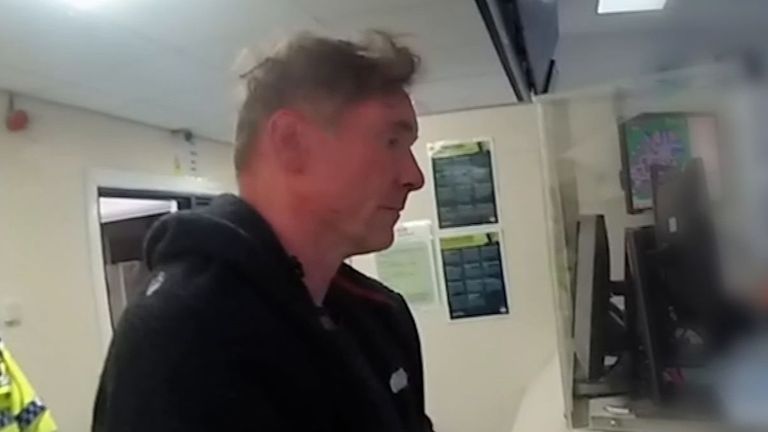
Paul Doyle after his arrest. Pic: Merseyside Police
What motivated his rampage?
“I think Doyle was just determined to get to where he wanted to get to, and there was no stopping him no matter who was in his way,” said DCI Fitzgerald.
“He clearly got angrier and angrier as the dashcam footage rolls on. He was yelling profanities at the people in his way.
“He just clearly got red mist.
“I do not believe that Doyle deliberately set out his journey to injure people on that day, but his actions were deliberate.”
Ex-soldier helped stop attack
Doyle was only stopped by the bravery of former soldier Dan Barr. He managed to climb into the back seat of the car when Doyle briefly paused.

Dan Barr helped stop Doyle
“It was desperation to get him stopped, determination to stop him by whatever means, I think that’s what was going through my head,” Mr Barr said.
“He accelerated off, the door slammed shut and I’d gone from the total chaos of panic and screaming to the relative silence as he’s accelerated off and you can just hear the people being hit and run over.
“It was horrendous, and I could see people’s faces. I could see the looks of them trying to plead but wasting their time, that’s all they could do because there was nowhere to go to get out of the way.
“I do remember seeing he had an automatic and therefore P for park was right at the end so I thought I’ll just jam that forward as far as I could that should stop him, and it did.”
Without Mr Barr’s actions, police say, Doyle would have carried on. They have described him as a hero.

Dan Barr says he hasn’t been the same since the incident
“I don’t think I am,” Mr Barr said. “I think it is standard.
“Who wouldn’t, if they could have, done what I did? I can’t think of anyone, especially on that street.”
It has come at a cost.
“I don’t think I have processed it, to be honest with you,” Mr Barr said.
“I’m not the same since that day. I’m not doing great but I’m getting there.”
By the time it was all over, 134 people had been injured, including two babies and six other children.
Read more:
Liverpool parade victim tells of ‘carnage’
Tens of thousands of Liverpool fans had been on the streets of the city on that spring bank holiday Monday to celebrate the club’s Premier League triumph.
Doyle had driven to the parade to collect a friend he had earlier dropped off there. On his way into the city, his dashcam had recorded him driving erratically, undertaking other cars and running a red light.
But police say there had been no sign earlier that day of what could have triggered his rage.
Doyle’s violent past
It can now be revealed that Doyle has previous convictions for assault.
In the early 1990s, while serving in the Royal Marines, he was convicted of biting off part of someone’s ear during a fight in a pub. He was discharged from the military at that time.
Police say they believe Doyle is a fan of Liverpool’s city rivals Everton, but that this was not a factor in what happened on 26 May.
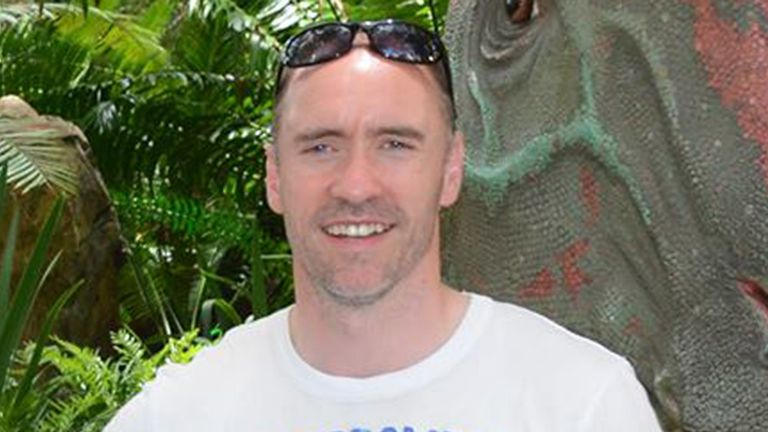
Paul Doyle has previous convictions for assault
In police interviews, Doyle claimed he acted in fear and panic because someone in the crowd with a knife had opened his car door. Investigators say they spoke to 1,500 witnesses and no one else mentioned seeing a knife.
He also claimed he stopped when he hit the first person. In fact, he had hit more than 100 before stopping. His claims, prosecutors say, were lies.
As the incident unfolded, many of those who were there shared their first thoughts.
Debbie Blair said: “People were just screaming, ‘It’s a terrorist, it’s a terrorist, he might have a gun, he might have a knife’.”
“Next minute people were all screaming, ‘kill him, kill him’,” she said.
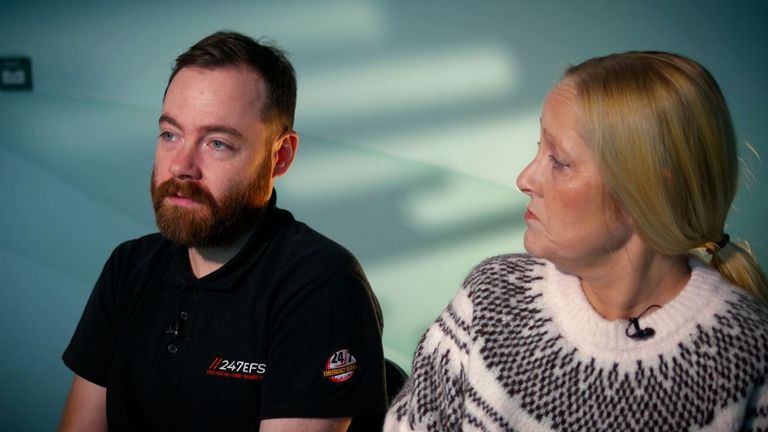
Debbie Blair and her son Mike, who was injured
Her son Mike was with her. Images of car attacks on Christmas markets in Europe, he said, flashed through his mind. His greatest concern was the number of children there.
“It was carnage, total carnage,” he said.
He was treated in hospital for injuries that still affect him.
“It shouldn’t have happened. But for someone to intentionally do that, it’s quite sick really.”
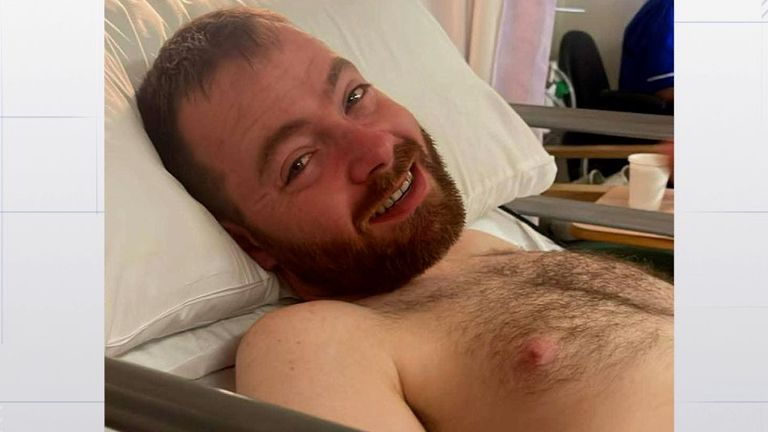
Mike was treated in hospital after the Liverpool parade incident
Police say Doyle has never shown any remorse for his actions. He told officers: “I’ve ruined my family’s lives.”
What he did on 26 May, prosecutors say, devastated lots of people’s lives.
UK
Russia trying to ‘bully’ UK and allies with attacks under threshold of all-out war, MI6 chief says
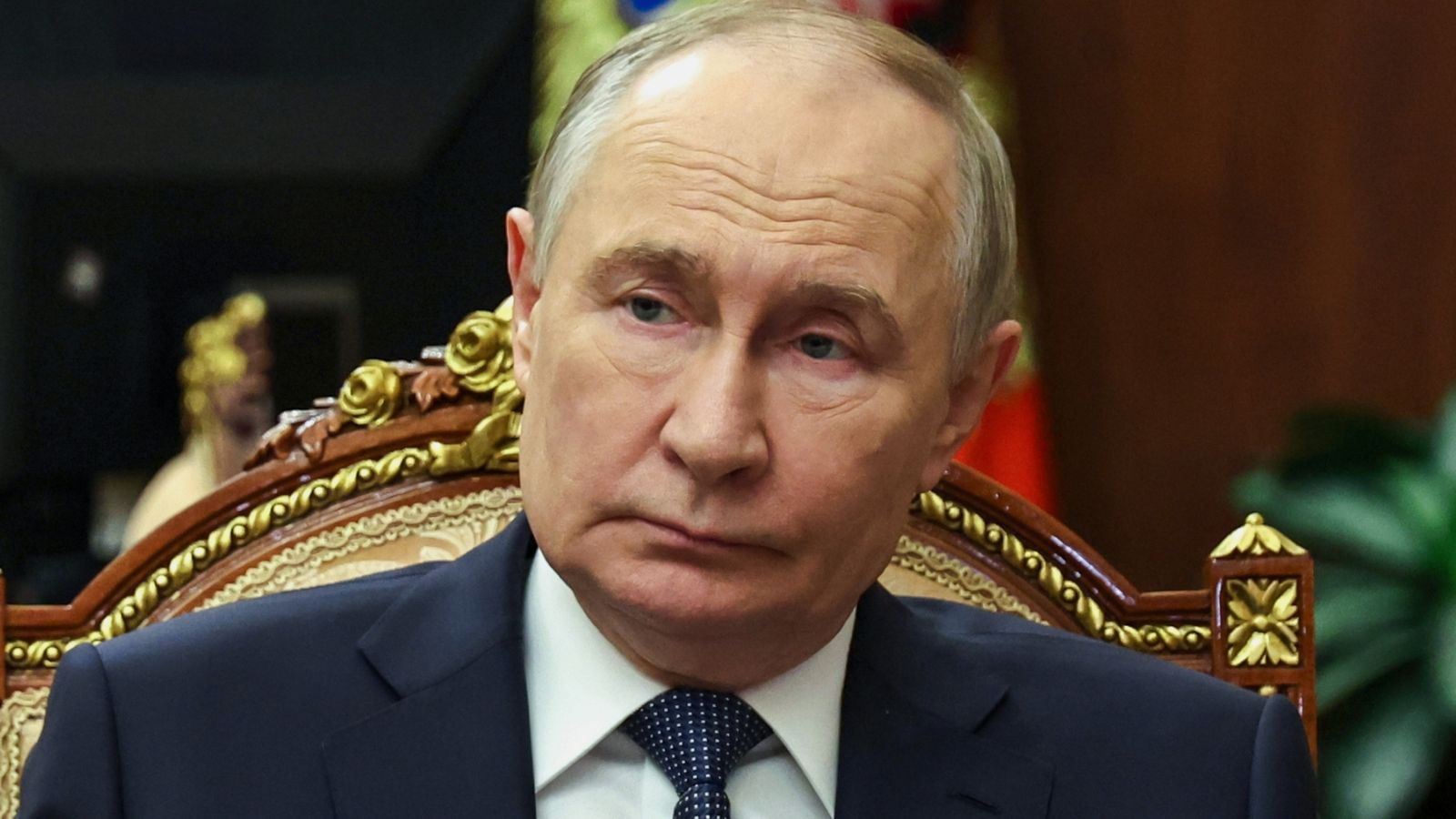

Russia is trying to “bully, fearmonger and manipulate” the UK and its allies with attacks under the threshold of all-out war, the new head of MI6 has said.
Blaise Metreweli, the first female chief of the Secret Intelligence Service (SIS), said Britain was “operating in a space between peace and war” and that everyone has a responsibility to understand the dangers because “the frontline is everywhere”.
In her first big speech on Monday, she also focused on Vladimir Putin’s devastating war in Ukraine, accusing him of “dragging out negotiations” on a peace deal and warning that Kyiv’s fate is “fundamental not just to European sovereignty and security but to global security”.
Offering her view on the evolution of global security threats, Ms Metreweli underlined the transformative role of technology, from artificial intelligence to quantum computing.
She said control over such advanced technologies is shifting from states to corporations and even individuals, making the balance of global power more “diffuse, more unpredictable”.
The spymaster did not name anyone.
Blaise Metreweli. Pic: PA
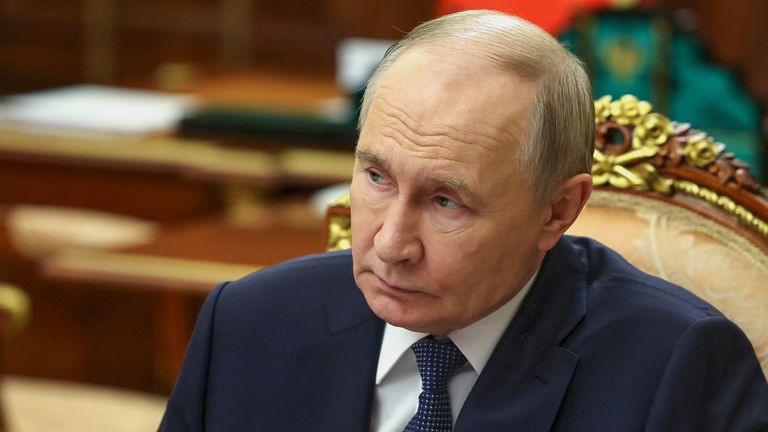
Is time running out for peace plan?
However, innovators such as Elon Musk are becoming increasingly influential, with their technologies such as his Starlink satellites and his social media site X.
The boss of MI6 was speaking at her agency’s headquarters in London, though she said that the main work of her spies was carried “many miles away from this place – out of sight, hidden from the world, undercover, recruiting and running agents who choose to place their trust in us, sharing secrets to make the UK and the world safer”.
She warned the world was “more dangerous and contested now than it has been for decades”.
Read more from Sky News:
Who were the suspected gunmen in Bondi Beach terror attack?
Jimmy Lai found guilty of national security offences in Hong Kong
The spy chief said: “Conflict is evolving and trust eroding, just as new technologies spur both competition and dependence.
“We are being contested from sea to space – from the battlefield to the boardroom. And even our brains as disinformation manipulates our understanding of each other and ourselves… We are now operating in a space between peace and war.
“This is not a temporary state or a gradual evolution. Our world is being actively remade with profound implications for national and international security.”
Breaking with a tradition by previous chiefs of offering a view on a range of threats when speaking publicly, Ms Metreweli said she was choosing to focus on Russia.
“We all continue to face the menace of an aggressive, expansionist and revisionist Russia, seeking to subjugate Ukraine and harass NATO,” she said.
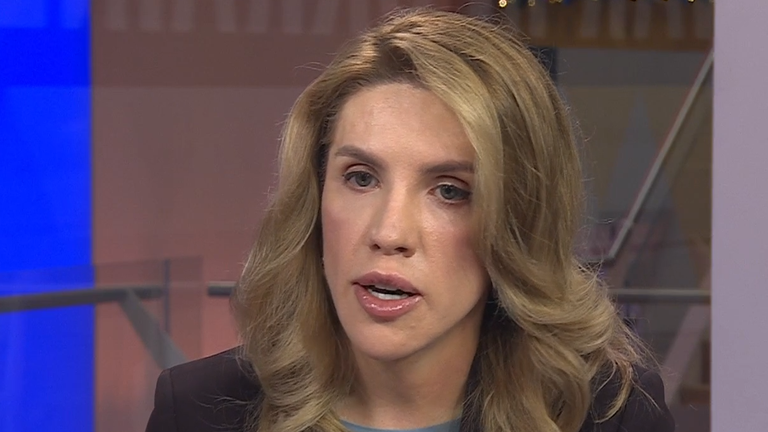
Ukrainian MP: Who will stop Putin?
On the conflict, she said Putin was “dragging out negotiations and shifting the cost of war on to his own population”.
Her comments come as Donald Trump is attempting to broker a peace deal between Moscow and Kyiv.
General Oleksandr Syrskyi, the head of Ukraine’s armed forces, told Sky News in an interview earlier this month that he believed Putin was using the US push for negotiations as “cover” while Russian troops attempted to seize more land by force.
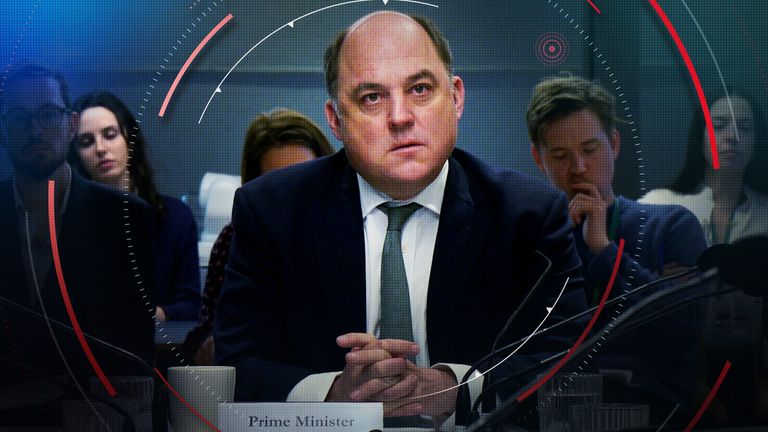
The Wargame returns with new episodes
The MI6 boss said the UK’s support for Ukraine would endure regardless of Moscow’s stalling actions.
She also flagged a growing wave of “grey zone” hostilities – deliberately carried out under the threshold of conventional armed conflict – that she attributed to Moscow.
“It’s important to understand their [Russia’s] attempts to bully, fearmonger and manipulate because it affects us all,” she said.
“I am talking about cyber attacks on critical infrastructure. Drones buzzing airports and bases. Aggressive activity in our seas, above and below the waves. State-sponsored arson and sabotage. Propaganda and influence operations that crack open and exploit fractures within societies.”
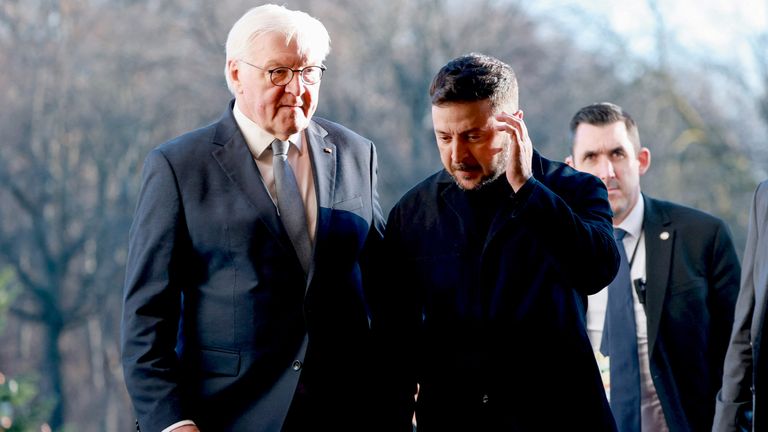
Germany’s President Steinmeier with President Zelenskyy in Berlin on Monday. Pic: Reuters
While she did not specify any particular incidents, there have been a spate of mysterious drone sightings in Denmark, Germany and Sweden; while a Russian spy ship was spotted off the coast of Scotland and acts of arson and sabotage have been carried out in the UK, such as a blaze at a warehouse in east London that was providing aid to Ukraine.
Drawing attention to another method to attack a country and its people, Ms Metreweli underlined how information is being weaponised, with falsehoods spread online that are designed to erode trust in a society and amplify divisions.
“The export of chaos is a feature not a bug in this Russian approach to international engagement and we should be ready for this to continue until Putin is forced to change his calculus,” she said.
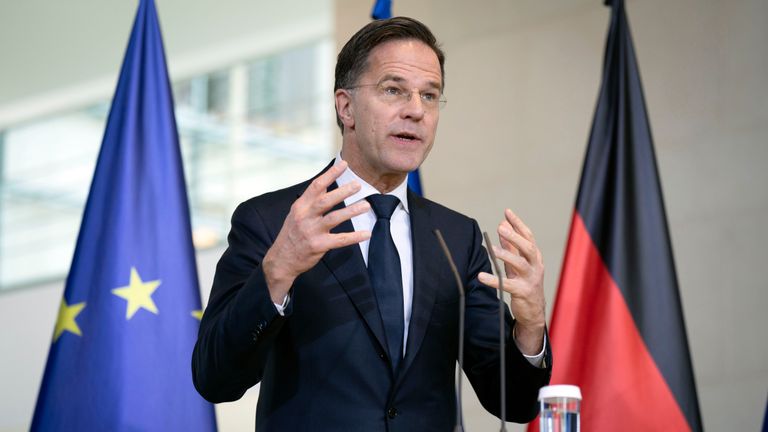
NATO boss: ‘Conflict is at our door’
MI6, she said, is adapting to respond to the evolving threats.
But unusually Ms Metroweli also said the wider British public had a role to play, such as with schools helping to educate children to spot disinformation on social media and to check sources of news “and be alive to those algorithms that trigger intense reactions like fear”.
She added: “It also means everyone in society really understanding the world we are in – a world where… the frontline is everywhere. Online, on our streets, in our supply chains, in the minds and on the screens of our citizens.”
Building on the success of the highly acclaimed podcast The Wargame, Sky News presents The Wargame: Decoded – a one-off live event that takes you deep inside the minds of the wargame’s participants. Discover how they tackled the toughest challenges, the decisions they made under intense pressure, and even experience key moments of the game for yourself.
Click here to get tickets.
Sky News’ Deborah Haynes will guide the conversation with Sir Ben Wallace, Robert Johnson, Jack Straw, Amber Rudd, Keir Giles and General Sir Richard Barrons – real-life military chiefs, former government officials and leading experts. Together, they will unpack their experiences inside The Wargame, revealing the uncertainty, moral dilemmas and real-world pressures faced by those who must make decisions when the nation is under threat.
Join us for this unique event exploring how the UK might respond in a moment of national crisis and get a rare, unfiltered glimpse into how prepared the country truly is for war.
-
 Sports2 years ago
Story injured on diving stop, exits Red Sox game
-
 Sports3 years ago
‘Storybook stuff’: Inside the night Bryce Harper sent the Phillies to the World Series
-
 Sports2 years ago
Game 1 of WS least-watched in recorded history
-
 Sports3 years ago
Button battles heat exhaustion in NASCAR debut
-
 Sports3 years ago
MLB Rank 2023: Ranking baseball’s top 100 players
-
Sports4 years ago
Team Europe easily wins 4th straight Laver Cup
-
 Environment3 years ago
Japan and South Korea have a lot at stake in a free and open South China Sea
-
 Environment1 year ago
Here are the best electric bikes you can buy at every price level in October 2024