
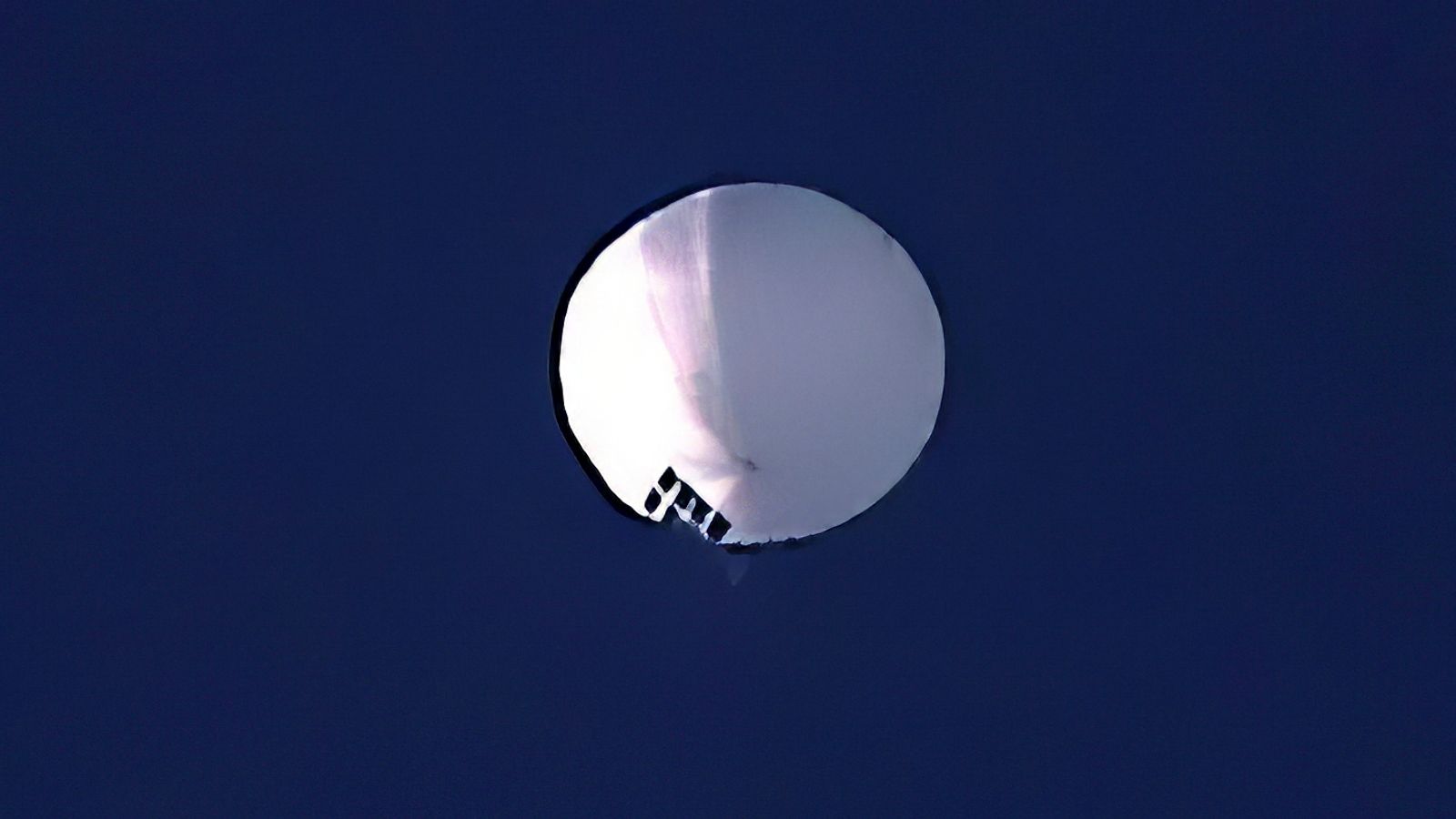
Chinese spy balloon flying over US airspace, says Pentagon

The US military is tracking a suspected Chinese spy balloon that has been flying over northwestern America in recent days.
A senior defence official said the US has “very high confidence” the balloon was flying over sensitive sites to collect information.
“Clearly the intent of this balloon is for surveillance,” the official said.
It was spotted over Billings, Montana, on Wednesday – close to one of the US’s three nuclear missile silo fields at Malmstrom Air Force Base.
It also flew over the Aleutian Islands, off the coast of Alaska, and through Canada.
The balloon is still in US airspace but officials declined to say where it is now.
They acknowledged it was operating above civilian air traffic and below “outer space” but declined to say how high it was flying.
Military and defence leaders have considered shooting the balloon out of the sky but decided against it due to the potential safety risk from falling debris.
US defence secretary Lloyd Austin convened a meeting of senior military and defence leaders to review the threat profile of the balloon and possible responses, which were presented to US President Joe Biden on Wednesday.
How could a China-Taiwan war hurt the economy?
The US has engaged Chinese officials “with urgency” and communicated the seriousness of the situation.
Read more: Mike Pompeo: China ‘wants world dominance and is a bigger threat than Vladimir Putin’
A Pentagon spokesperson said: “The United States government has detected and is tracking a high-altitude surveillance balloon that is over the continental United States right now. We continue to track and monitor it closely.
“Once the balloon was detected, the US government acted immediately to protect against the collection of sensitive information.”
China and the US have experienced tensions of late, clashing over Taiwan and China’s human rights record and its military activity in the South China Sea.
US Secretary of State Antony Blinken is expected to travel to China in the coming days.
It is not clear if this will affect his travel plans, which the State Department has not formally announced.
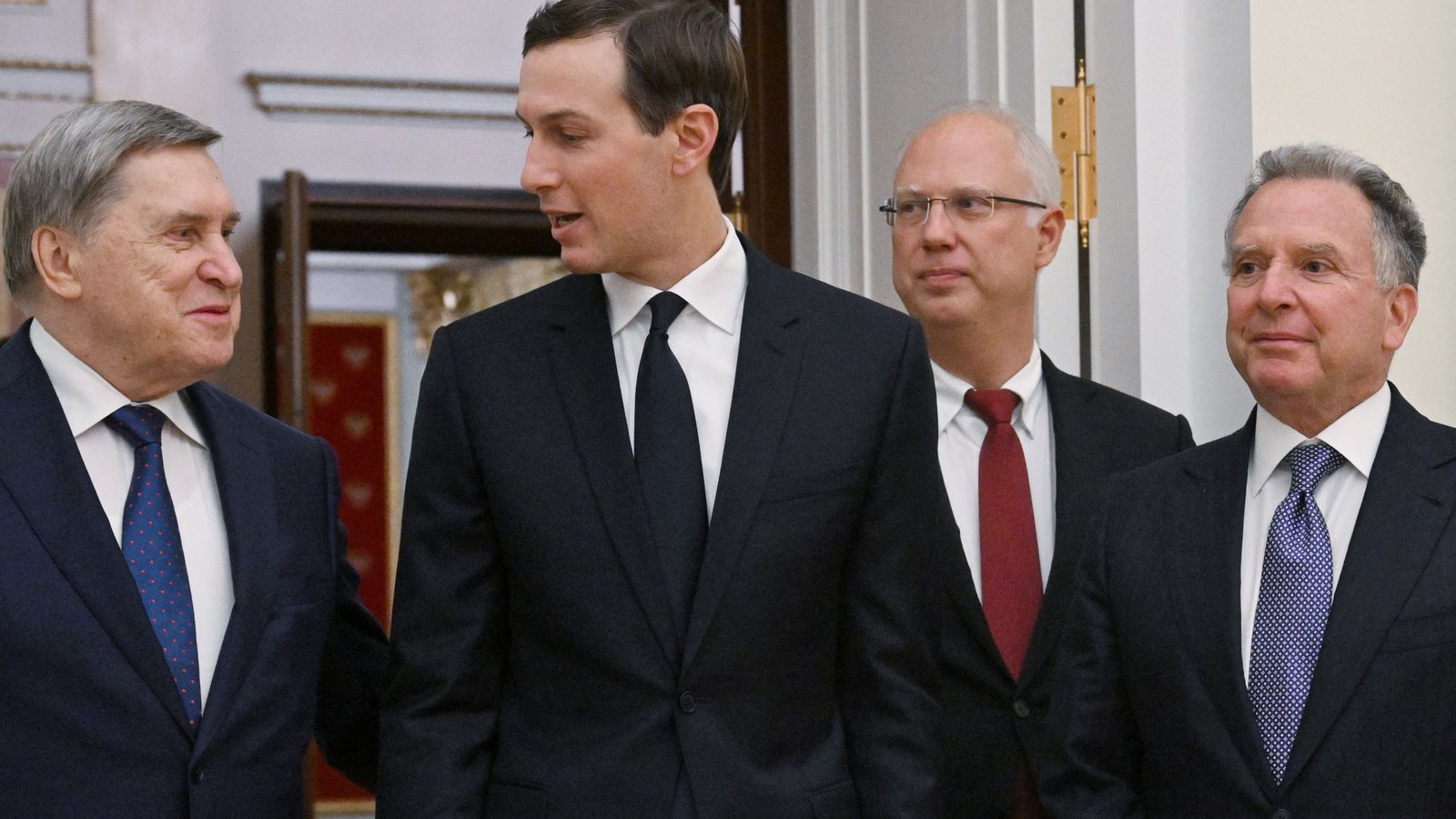
The Americans were given the full VIP treatment on their visit to Moscow.
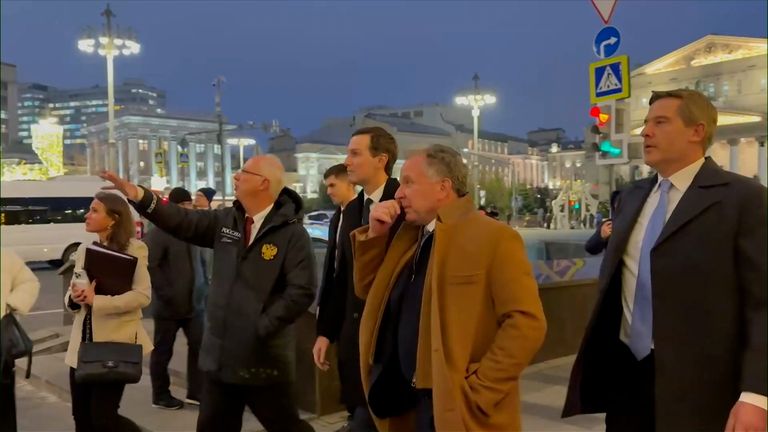
There was a motorcade from the airport, lunch at a Michelin-starred restaurant, and even a stroll around Red Square.
It felt like Steve Witkoff and Jared Kushner were on more of a tourist trail than the path to peace.
Trump’s envoys walk around Moscow
They finally got down to business in the Kremlin more than six hours after arriving in Russia. And by that point, it was already clear that the one thing they had come to Moscow for wasn’t on offer: Russia’s agreement to their latest peace plan.
According to Vladimir Putin, it’s all Europe’s fault. While his guests were having lunch, he was busy accusing Ukraine’s allies of blocking the peace process by imposing demands that are unacceptable to Russia.
The Europeans, of course, would say it’s the other way round.
But where there was hostility to Europe, only hospitality to the Americans – part of Russia’s strategy to distance the US from its NATO allies, and bring them back to Moscow’s side.
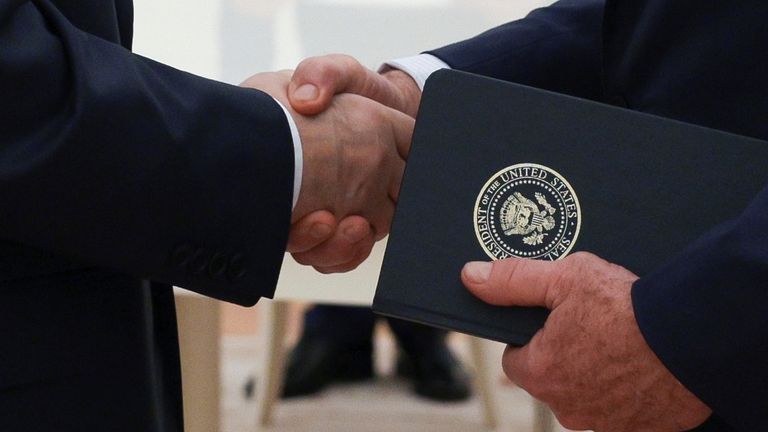
Vladimir Putin and Steve Witkoff shaking hands in August. AP file pic
Putin thinks he’s winning…
Russia wants to return to the 28-point plan that caved in to its demands. And it believes it has the right to because of what’s happening on the battlefield.
It’s no coincidence that on the eve of the US delegation’s visit to Moscow, Russia announced the apparent capture of Pokrovsk, a key strategic target in the Donetsk region.
It was a message designed to assert Russian dominance, and by extension, reinforce its demands rather than dilute them.
Read more:
Michael Clarke answers your Ukraine war questions
‘Thousands’ of Westerners applying to live in Russia

‘Everyone must be on this side of peace’
…and believes US-Russian interests are aligned
The other reason I think Vladimir Putin doesn’t feel the need to compromise is because he believes Moscow and Washington want the same thing: closer US-Russia relations, which can only come after the war is over.
It’s easy to see why. Time and again in this process, the US has defaulted to a position that favours Moscow. The way these negotiations are being conducted is merely the latest example.
With Kyiv, the Americans force the Ukrainians to come to them – first in Geneva, then Florida.
As for Moscow, it’s the other way around. Witkoff is happy to make the long overnight journey, and then endure the long wait ahead of any audience with Putin.
It all gives the impression that when it comes to Russia, the US prefers to placate rather than pressure.
According to the Kremlin, both Russia and the US have agreed not to disclose the details of yesterday’s talks in Moscow.
I doubt Volodymyr Zelenskyy is filled with hope.
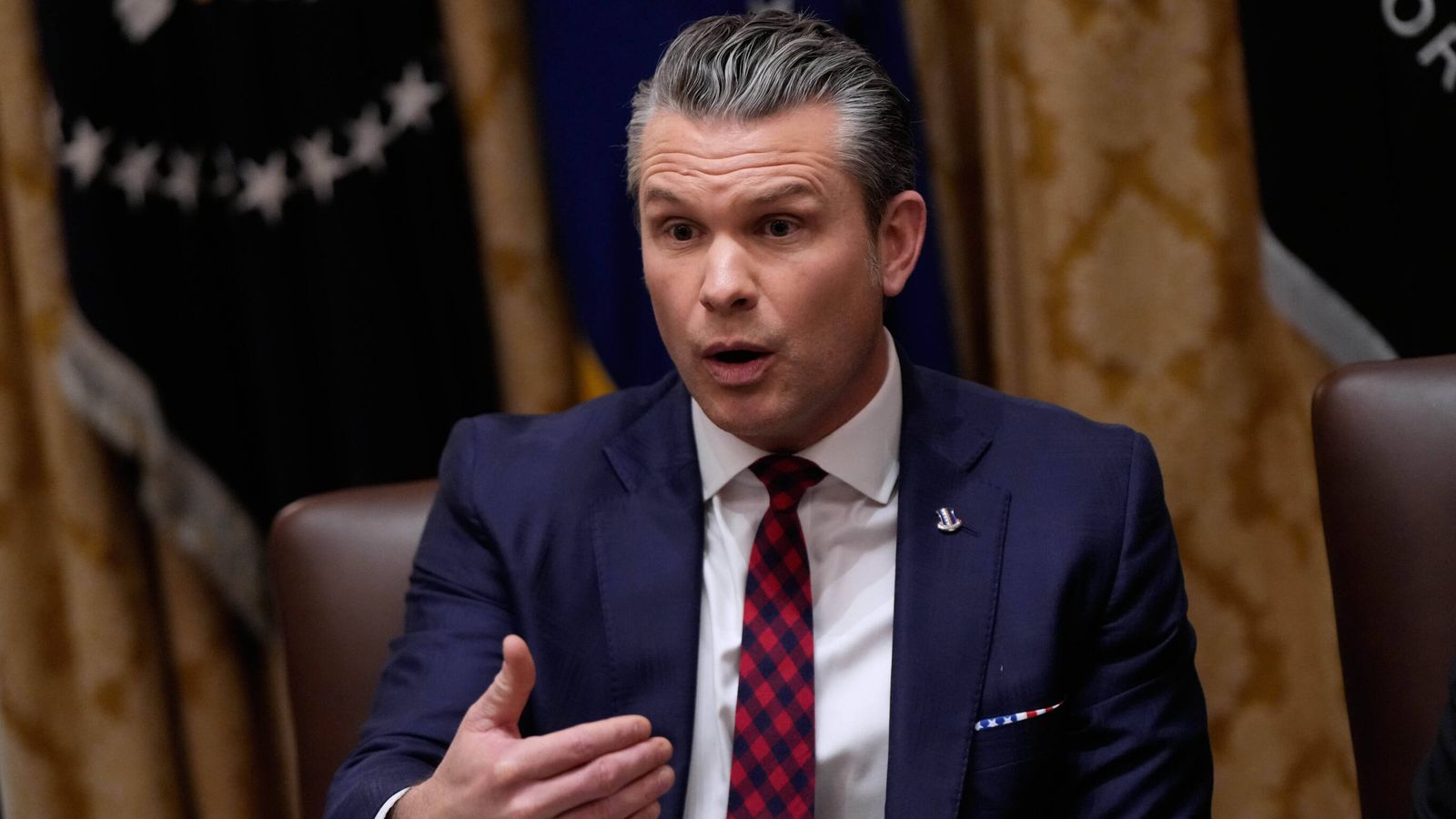
US defence secretary Pete Hegseth has cited the “fog of war” in defence of a follow-up strike earlier this year on a boat alleged to be carrying drugs in the Caribbean Sea.
His comments came on the day the Pope urged Donald Trump not to try to oust Venezuelan President Nicolas Maduro using military force.
Speaking at a cabinet meeting on Tuesday alongside Mr Trump, Mr Hegseth said the US had paused strikes because it was hard to find drug boats.
But strikes against drug traffickers would continue, he said.
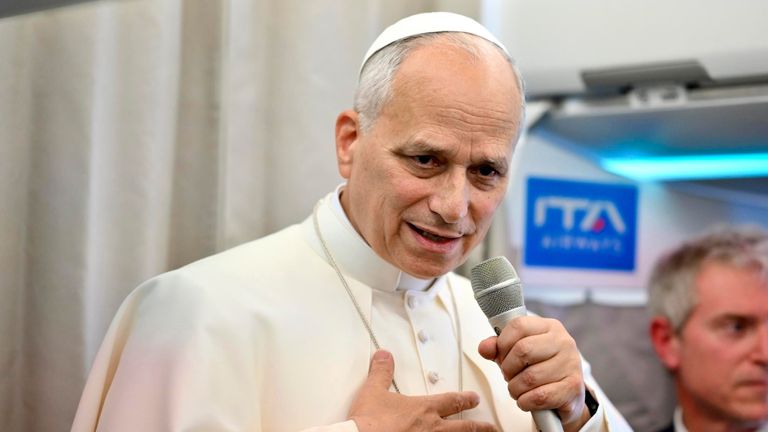
Pope Leo XIV talks to reporters as he returns from visits to Turkey and Lebanon. Pic: AP
During the cabinet meeting at the White House, Mr Hegseth said that he did not see that there were survivors in the water when the second strike was ordered and launched in early September, saying that “the thing was on fire”.
Mr Hegseth also said he “didn’t stick around” for the rest of the mission following the first strike, adding that the admiral in charge had “made the right call” in ordering it, which he “had complete authority to do”.
The Washington Post first reported that Mr Hegseth issued a verbal order for the second strike that killed survivors on the boat.
On Monday, the White House said that Navy vice admiral Frank “Mitch” Bradley acted “within his authority and the law” when he ordered the second strike.
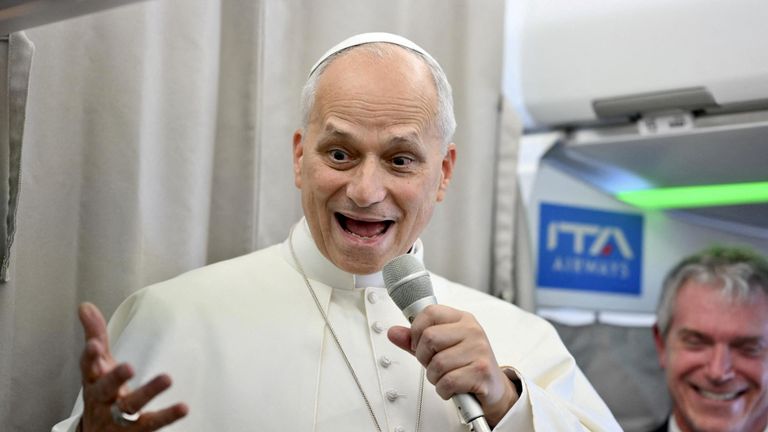
Pope pleads to Trump not to oust Venezuelan president by force
Asked if he supported the second strike on a boat in the Caribbean Sea in September, President Trump said he “didn’t know anything” and “still haven’t gotten a lot of information because I rely on Pete”, referencing Mr Hegseth.
On Tuesday, Pope Leo, the first American pontiff, said it would be better to attempt dialogue or impose economic pressure on Venezuela if Washington wanted to pursue change there.
Read more from Sky News:
Government delays Chinese ‘super embassy’ decision
Imran Khan healthy but isolated in jail, his sister says
The Trump administration has been weighing options to combat what it has portrayed as Mr Maduro’s role in supplying illegal drugs that have killed Americans.
The socialist Venezuelan president has denied having any links to the illegal drug trade.
Asked during a news conference about President Trump’s threats to remove Mr Maduro by force, the Pope said: “It is better to search for ways of dialogue, or perhaps pressure, including economic pressure.”
He added that Washington should search for other ways to achieve change “if that is what they want to do in the United States”.
The Pope was speaking as he flew home from visiting Turkey and Lebanon – his first overseas trip in the role.
Mr Maduro has said Venezuelans are ready to defend their country as the US considers a land attack.
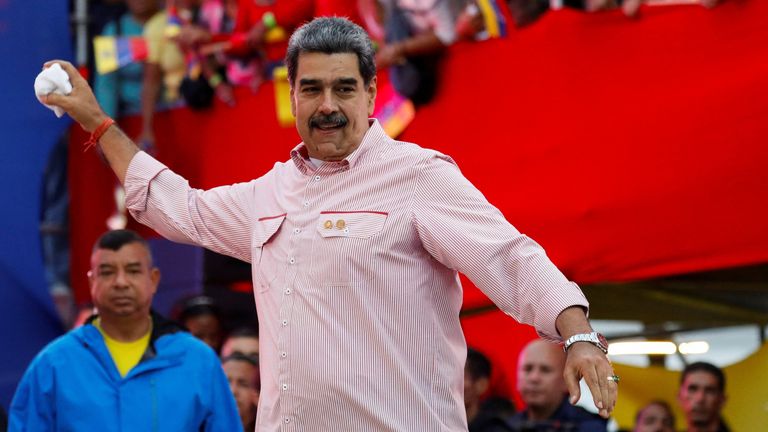
Venezuela’s President Nicolas Maduro in Caracas. Pic: Reuters

A map showing Venezuelan military facilities
The president held a rally in Caracas amid heightened tensions with Mr Trump’s administration, which has been targeting what it says are boats carrying drug smugglers.
Mr Trump met his national security team on Monday evening, having warned last week that land strikes would start “very soon”.
It has not been confirmed what was discussed at the meeting. But White House press secretary Karoline Leavitt told reporters: “There’s many options at the president’s disposal that are on the table – and I’ll let him speak on those.”
US forces have carried out at least 21 strikes on boats it claims were carrying narcotics to its shores over the last few months.
Did Pete Hegseth commit a war crime?
Mr Maduro – considered a dictator by many in the West – said on Monday that Venezuelans were ready “to defend [the country] and lead it to the path of peace”.
“We have lived through 22 weeks of aggression that can only be described as psychological terrorism,” he said.
Venezuela has said the boat attacks, which have killed more than 80 people, amount to murder – and that Mr Trump’s true motivation is to oust Mr Maduro and access its oil.
US
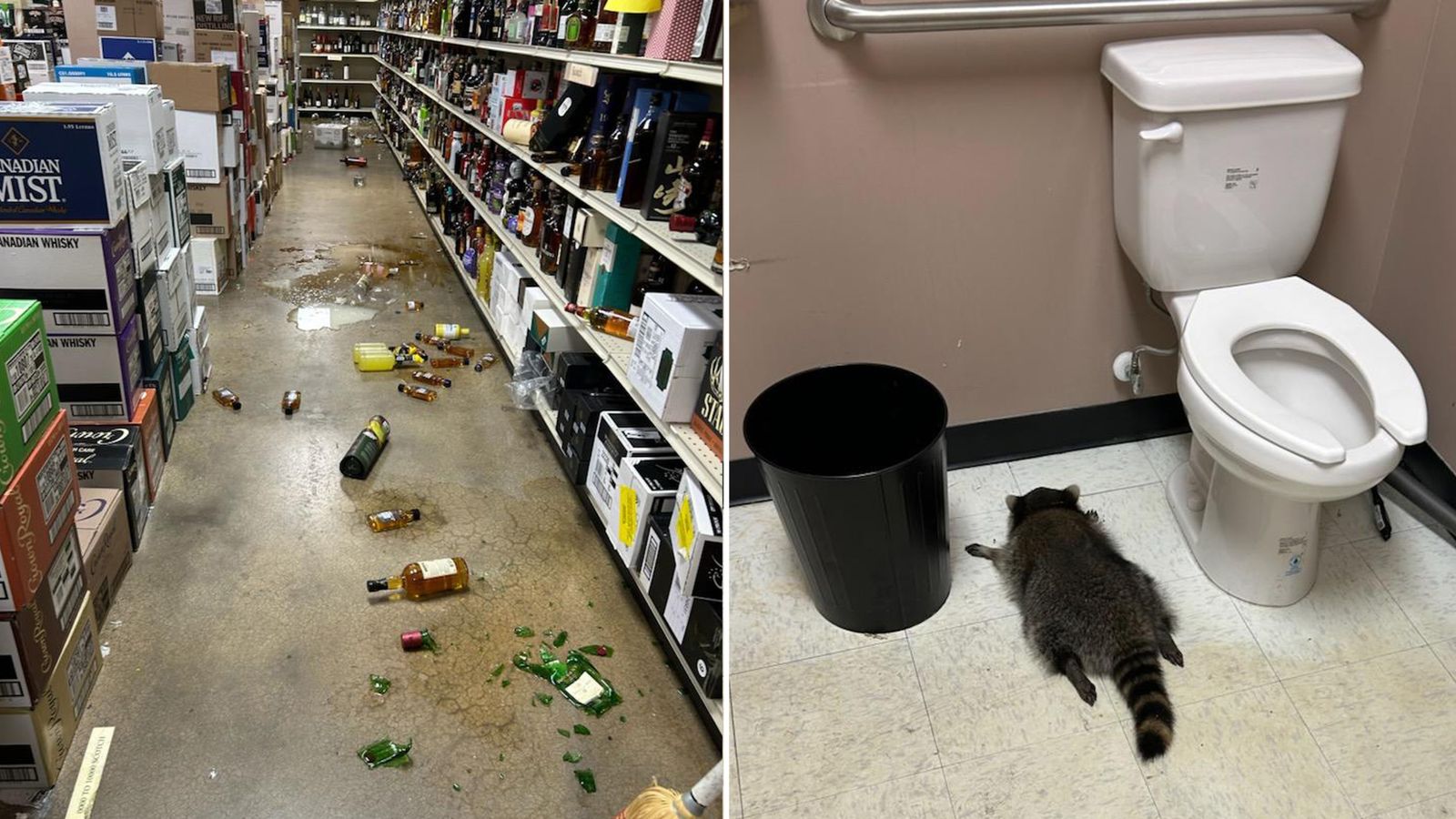
Spirit animal: Raccoon gets drunk as a skunk in a booze store – and sleeps off hangover in the toilet
-
 Sports2 years ago
Story injured on diving stop, exits Red Sox game
-
 Sports3 years ago
‘Storybook stuff’: Inside the night Bryce Harper sent the Phillies to the World Series
-
 Sports2 years ago
Game 1 of WS least-watched in recorded history
-
 Sports3 years ago
Button battles heat exhaustion in NASCAR debut
-
 Sports3 years ago
MLB Rank 2023: Ranking baseball’s top 100 players
-
Sports4 years ago
Team Europe easily wins 4th straight Laver Cup
-
 Environment3 years ago
Japan and South Korea have a lot at stake in a free and open South China Sea
-
 Environment1 year ago
Here are the best electric bikes you can buy at every price level in October 2024