



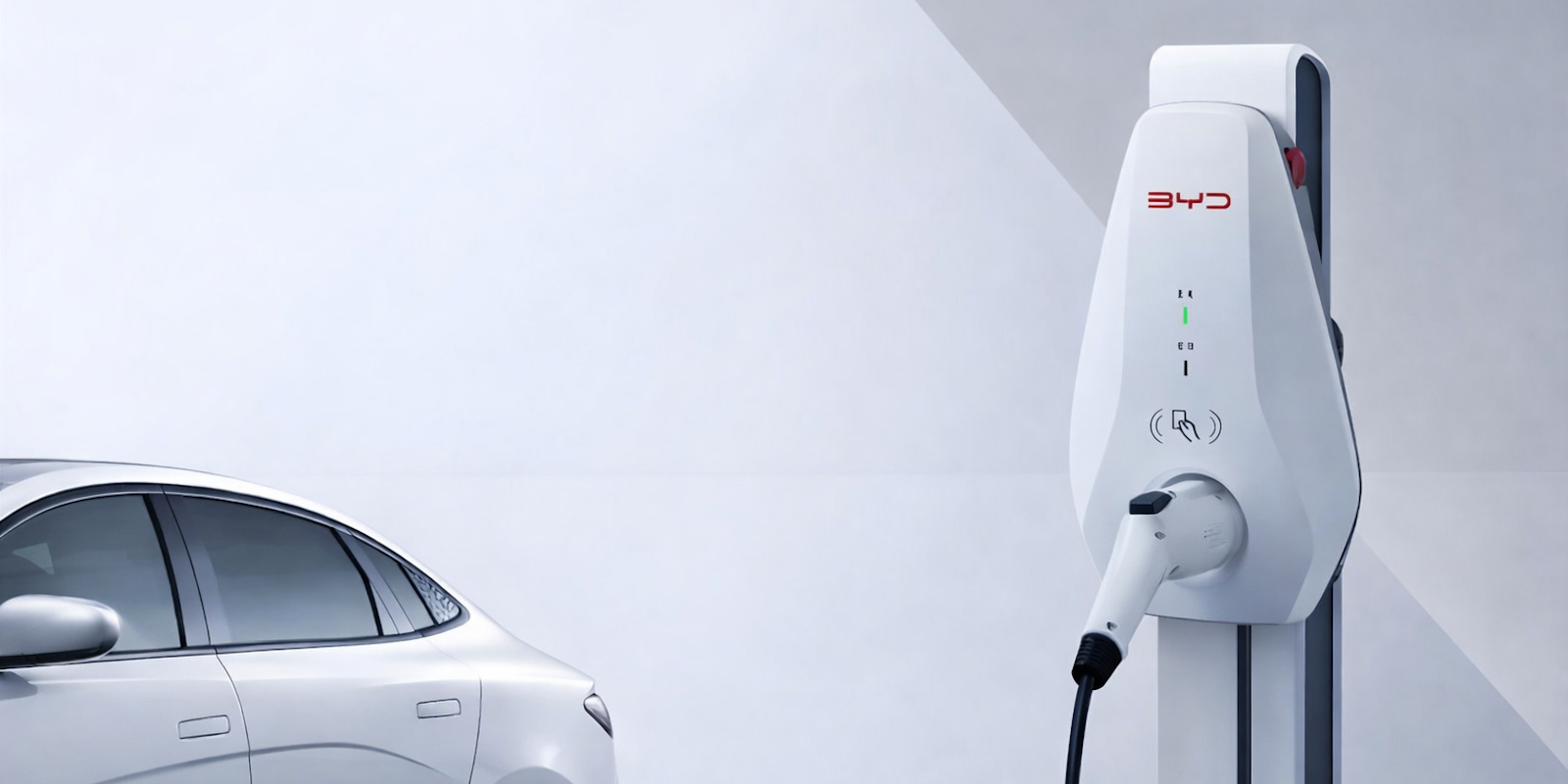
BYD is taking a page from the Airbnb playbook by launching a home charger sharing system that lets EV owners open up their personal charging equipment to other BYD drivers — and get paid for the convenience.
Instead of waiting for utilities or charging networks to build out more public infrastructure, BYD is effectively crowdsourcing existing capacity from home chargers its customers have already installed, turning underused residential charging equipment into a shared resource while its owner is at work or away.
Also like Airbnb, the app allows the charger’s owner and user to settle the pricing and availability and other transaction details between themselves, with contact information and messaging also going through the app.
Great, if not totally unique idea
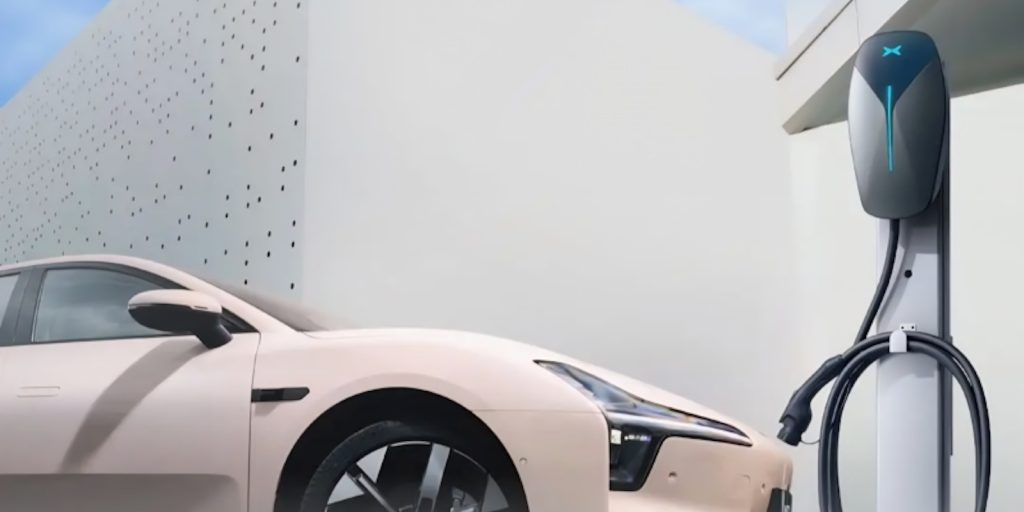
BYD’s system seems to be more polished and, thanks to the integrated card reader, a bit more accessible than similar concepts from Nio and XPeng. XPeng’s system allows charger owners to set different electricity prices at different times (ex.: off-peak electricity at 0.35 yuan/kWh, significantly lower than peak), to cover their electricity costs.
The XPeng system also only seems to support automatic payment through the app, as opposed to the BYD system that bakes a card reader right in.
Electrek’s Take
I don’t know enough about the public charging scene throughout China – a massive country half a world away – to know how much of a need this is serving, but here in the US, I seem to recall that this was more or less PlugShare’s original concept, and could easily imagine a half-dozen scenarios outside of an Airbnb where a simple, app-based system like this could play out positively for both the EV driver and the equipment owner.
Multifamily apartments or condos with deeded spaces, churches, schools, municipal buildings, or other spaces that sit empty most days could be great uses for this, and I bet you guys could think of two or three more. I look forward to hearing about them, and whether or not a brand-specific network could help move the needle for a brand like Harley or Jeep that’s struggling with its EVs, in the comments.
SOURCE | IMAGES: BYD, via CarNewsChina.

If you’re considering going solar, it’s always a good idea to get quotes from a few installers. To make sure you find a trusted, reliable solar installer near you that offers competitive pricing, check out EnergySage, a free service that makes it easy for you to go solar. It has hundreds of pre-vetted solar installers competing for your business, ensuring you get high-quality solutions and save 20-30% compared to going it alone. Plus, it’s free to use, and you won’t get sales calls until you select an installer and share your phone number with them.
Your personalized solar quotes are easy to compare online and you’ll get access to unbiased Energy Advisors to help you every step of the way. Get started here.


FTC: We use income earning auto affiliate links. More.


The Xbox booth during the Gamescom video games trade fair at the Trade Fair Center in Cologne, Germany, Aug. 20, 2025.
Ina Fassbender | Afp | Getty Images
Microsoft’s Xbox has had a tumultuous year.
A slew of layoffs, price hikes and studio closures have led many to declare — not for the first time — that the Xbox is dead.
Laura Fryer, former executive producer at Microsoft Game Studios, said in June that the company seems to have “no desire or literally can’t ship hardware anymore.”
Former Microsoft executive and ex-Blizzard Entertainment president Mike Ybarra slammed Xbox’s “confusing” strategy in a now-deleted X post in October, saying the company is potentially heading for a “death by a thousand needles.”
The company’s overall gaming revenue decreased 2% year-over-year, with a 29% dip in Xbox hardware sales, according to Microsoft’s first-quarter earnings for fiscal 2026.
The broader console industry has been in a major slump, with hardware spending down 27% year-over-year in November, which is typically a busy shopping month, according to a recent report from research firm Circana.
It was the worst November in two decades, IGN reported, citing Circana data.
Combined Switch and Switch 2 unit sales were down more than 10% during the month and PS5 sales were down more than 40%, IGN said. But the Xbox Series hardware took the biggest beating, with a dramatic 70% drop in sales.
In console sales, Xbox can barely see the leaders this year.
Nintendo‘s Switch 2 has sold 10.36 million units since its debut in June, the company said in its latest earnings report. Sony‘s PlayStation 5 had 9.2 million units sold in 2025, according to its most recent financial results.
Microsoft’s Xbox Series S and Series X, at 1.7 million units, couldn’t outsell the original Nintendo Switch, which launched in 2017 and has sold 3.4 million units so far this year, data from game sales tracking site VGChartz estimated.
Microsoft declined to comment on Xbox sales or numbers.
The company stopped reporting console unit shipments in 2015 as the gap between Xbox and PlayStation widened.
The Series S, Series X and PS5 all originally released in 2020, with some updates being released since then.
In November, Valve made a splash with its next-generation Steam Machine, which is set to launch next year.
The reveal of its console-PC hybrid generated buzz across the gaming landscape, with The Verge declaring that “Valve just built the Xbox that Microsoft is dreaming of.”
The mini cube will be able to run Windows PC games through Valve’s own Linux-based SteamOS as a television console or as a gaming computer. Gamers will have access to Steam’s extensive library of thousands of games.
But Microsoft doesn’t seem too worried about falling behind.
“We’re not in the business of out-consoling Sony or out-consoling Nintendo. There isn’t really a great solution or win for us,” Microsoft Gaming CEO Phil Spencer said in a 2023 podcast.
In congratulating Valve on the release, the Xbox boss gave a nod to the movement to expand gaming access “across PC, console and handheld devices.”
As Sony and Nintendo have firmly established themselves as hardware companies, Microsoft is pushing toward Bill Gates’ original vision of an all-encompassing entertainment hub in the living room.
“Ultimately, the addressable market is anybody who wants to play games, and Microsoft wants to serve that market,” Wedbush analyst Michael Pachter told CNBC.
Microsoft CEO Satya Nadella said in a recent interview with the TBPN podcast that the company’s gaming business model will look to be “everywhere in every platform,” from consoles to TV to mobile.
His comments also hinted that the next Xbox may function more like a PC.
“It’s kind of funny people think about the console and PC as two different things,” Nadella said. “We built a console because we wanted to build a better PC, which could then perform for gaming. So I kind of want to revisit some of that conventional wisdom.”
Xbox President Sarah Bond echoed the idea, saying in a recent interview with Mashable that the company’s next-generation console will have “some of the thinking” seen in the Xbox’s new handhelds, which were built by hardware manufacturer Asus in partnership with Microsoft.
Launched in October, those devices support cross-platform gaming and can run PC games bought from Epic Games, CD Projekt and Valve stores.
Xbox has already incorporated that approach into the latest Backbone Pro, which rolled out in November.
Designed in partnership with Backbone Labs, the portable gaming controller offers access to cloud gaming on mobile, PC, smart TV and other streaming devices.
So what will Microsoft’s new-gen console look like?
Little is known about where the company is at in its development.
A source familiar with Xbox strategy told CNBC that the company is looking at creating an open system that enables players to jump between console, PC and cloud gaming — and any form of entertainment beyond gaming.
Gaming in the cloud
Pachter said that while Microsoft is not completely abandoning hardware, the company is splitting its audience into existing buyers interested in specialized consoles and everyone else.
In a 2019 interview with The Verge, Spencer said that he was not concerned with focusing on console sales as much as making games accessible.
“I do think as we look at the next decade of gaming, as we think about reaching the over 2 billion people on the planet who play games, many of those people won’t be buying consoles and gaming PCs,” Spencer said.
Xbox Game Pass subscription service, which gives subscribers access to games from a variety of publishers, is a clear example of this strategy.
Microsoft has been steadily expanding its title offerings on the service.
The platform’s most basic tier, Game Pass Essential (previously Game Pass Core), which costs $9.99 and launched in 2023 with 36 games, now offers over 50 titles.
Ultimate tier members have access to over 500 titles.
Sarah Bond, head of Xbox partnerships, speaks about Xbox Game Pass during the Microsoft Corp. Xbox event ahead of the E3 Electronic Entertainment Expo in Los Angeles, June 9, 2019.
Patrick T. Fallon | Bloomberg | Getty Images
The growth in cloud gaming has been blistering.
Xbox reported a record 34 million Game Pass subscribers in 2024 and a total Game Pass revenue of almost $5 billion over the last fiscal year.
Xbox said in a November blog post that the number of cloud gaming hours from Game Pass subscribers was up 45% compared to the same time last year. The Microsoft subsidiary also said console players are “spending 45% more time cloud streaming on console and 24% more on other devices.”
In announcing the benchmark, the platform added that Xbox Cloud Gaming is now in 30 countries with the expansion into India, which it called “the fastest-growing gaming market in the world,” home to more than 500 million gamers this year.
Although Microsoft faced heavy criticism from subscribers after increasing the cost of its Ultimate tier by 50% from $19.99 to $29.99 in October, the company is reportedly testing an ad-supported version of Xbox Cloud Gaming.
Omdia senior principal analyst George Jijiashvili told CNBC that a free Game Pass tier would likely act as a user-acquisition tool, especially for gamers who have not invested in consoles yet.
However, due to the high costs associated with cloud gaming, an ad-supported tier would likely not be able to actually drive a meaningful amount of revenue, he said.
Cloud gaming is inherently difficult to scale since it needs to balance computing power and operating costs with user affordability.
“With console-grade cloud gaming, you need to essentially run every single instance of the game in a server,” Jijiashvili said. “You need a dedicated hardware for every single person that’s streaming the game, meaning it just doesn’t scale.”
Despite gaming’s scaling limitations, Microsoft seems committed to doing what it has done with the rest of its products — moving it to the cloud.
“They’ve evolved into a primarily cloud services company,” Pachter said. “So everything they’ve done since they started acquiring studios at Xbox has been toward the connected experience in the home to view entertainment.”
Game studio bonanza
Microsoft has spent the past few years building out its entertainment hub with a catalog of original games through an acquisition blitz.
In 2018, the software giant more than doubled its game studios with a string of acquisitions that included Ninja Theory, inXile Entertainment and Obsidian Entertainment.
Two years later, Microsoft bought ZeniMax Media, which owned Bethesda, for $8.1 billion. It was the company’s largest gaming acquisition until its 2023 purchase of Activision Blizzard for $75.4 billion.
Pachter said that the software giant’s gaming spree was also a move to collect “enough content” to bolster its cloud gaming services.
Yet Microsoft’s approach to using its roster of exclusive titles has seen a stark shift recently.
As Xbox exclusives still struggled to compete with wildly successful PlayStation games like “Marvel’s Spider-Man” and “God of War,” the company has made a definitive pivot away from its original-content strategy.
Bond recently said in an interview with Mashable that the idea of exclusive games is “antiquated” as the company has leaned into cross-platform gaming.
Microsoft announced in October that the upcoming “Halo” game will be available on Sony’s PlayStation 5, marking the first time the major franchise has become accessible on a competing console.
In 2024, Xbox opened four formerly exclusive games to other consoles.
Spencer said at the time that the move did not indicate a change in Xbox’s exclusive strategy, but the company has since continued to bring several former exclusives to rival platforms.
In a January interview, Spencer said that the company won’t “put walls up” where users can engage with Xbox games.
“What we’ve learned is put the games first, make sure the games can be as great as they can,” he said. “We love the experience on our own hardware, on our own platform, but our games will show up in more and more places.”
Cuts and price jumps
Microsoft laid off 1,900 workers, around 9% of its gaming division, in January and slashed another 650 jobs from Xbox in September.
In May, the company also shut down several studios under game publisher Bethesda, including “Redfall” maker Arkane Austin and “Mighty Doom” developer Alpha Dog Games.
The gaming unit was hit again when company-wide layoffs in July led to Microsoft shelving “Perfect Dark” and “Everwild,” games that have reportedly been in development for at least seven years, as well as multiple unannounced projects.
Some have attributed the cost-cutting measures to mounting pressure to hit lofty profit goals.
The company reportedly asked its gaming division in 2023 to target profit margins of 30%, according to Bloomberg, which cited people familiar with the matter.
The goal was a significant jump from the 12% profit margin Xbox reached in 2022, as revealed in court documents, and well above the average video-game industry standard of 17% to 22%, analysts told Bloomberg.
Microsoft told CNBC that while the company does set ambitious goals, the reported 30% profit margin target was incorrect.
Microsoft has raised prices on its aging lineup of flagship consoles twice over the past year. Nintendo and Sony also announced price hikes for their respective consoles in August.
The PS5 currently starts at $549.99, and the original Nintendo Switch and Nintendo Switch 2 cost $399.99 and $499.99, respectively.
Xbox’s new ROG Xbox Ally and ROG Xbox Ally X were priced at $599.99 and a staggering $999.99, respectively.
With a growing number of consoles and handhelds in the market, competition is fierce for a dedicated group of customers that will always be interested in owning hardware.
But Xbox is betting that cloud and cross-platform gaming are the future.
For a decade, claims have been made about the death of the Xbox, and what comes next could fully spell the end, or bring a metamorphosis.

-
 Sports2 years ago
Story injured on diving stop, exits Red Sox game
-
 Sports3 years ago
‘Storybook stuff’: Inside the night Bryce Harper sent the Phillies to the World Series
-
 Sports2 years ago
Game 1 of WS least-watched in recorded history
-
 Sports3 years ago
Button battles heat exhaustion in NASCAR debut
-
 Sports3 years ago
MLB Rank 2023: Ranking baseball’s top 100 players
-
Sports4 years ago
Team Europe easily wins 4th straight Laver Cup
-
 Environment3 years ago
Japan and South Korea have a lot at stake in a free and open South China Sea
-
 Environment1 year ago
Here are the best electric bikes you can buy at every price level in October 2024