
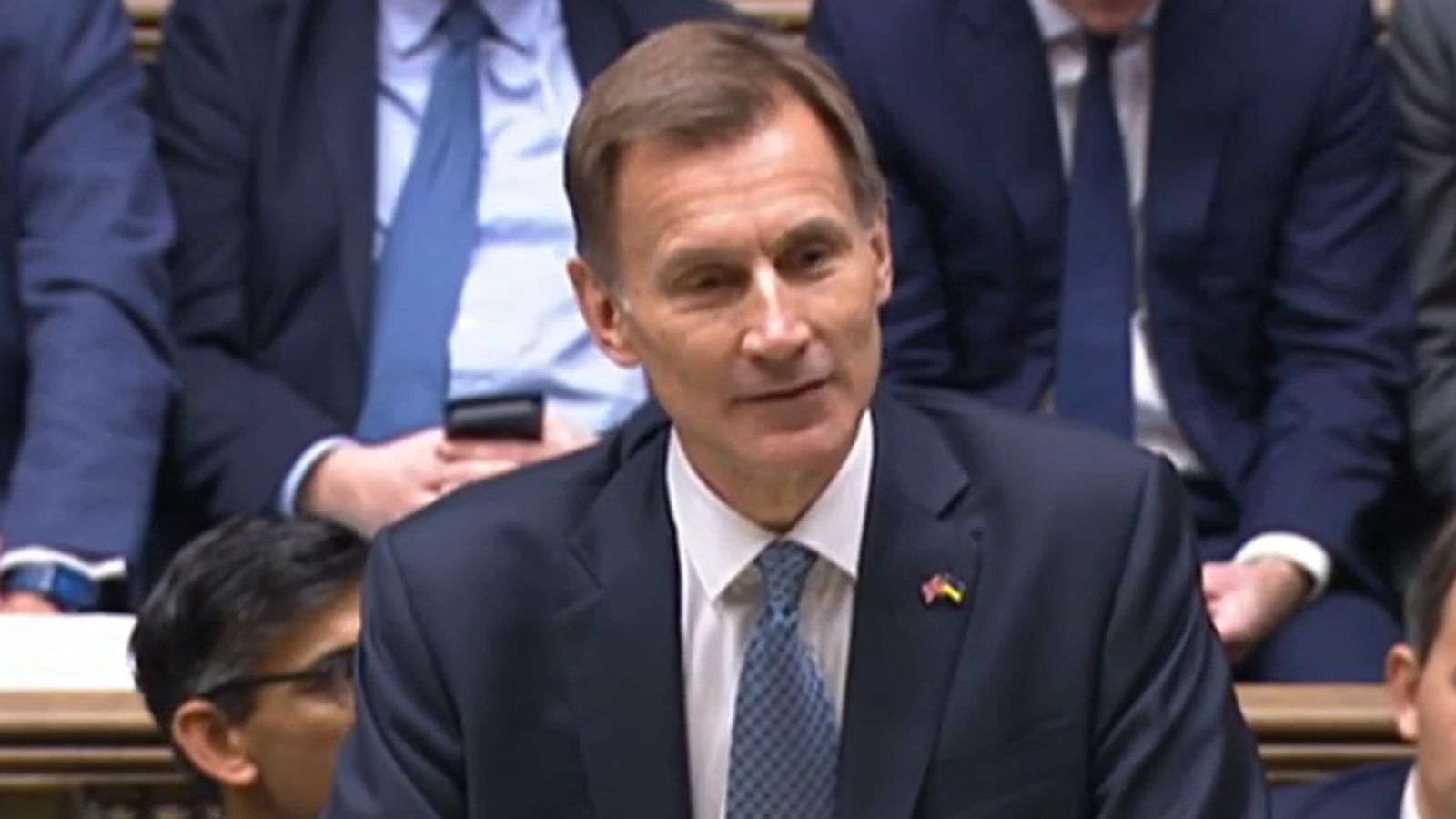
Jeremy Hunt offers hope on pay settlements but rules out feeding inflation

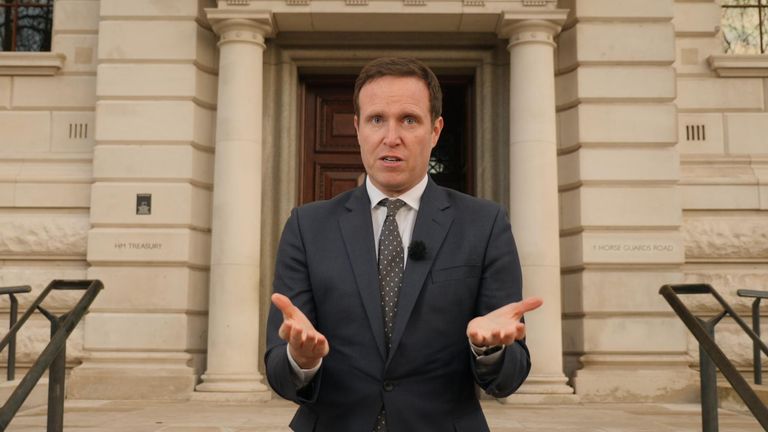
Chancellor Jeremy Hunt has not ruled out increasing pay offers to public sector workers, but warned that giving more money to teachers and nurses could entrench high inflation.
Speaking as it was revealed the UK economy narrowly avoided recession in 2022, Mr Hunt also indicated he would resist pressure to cancel a planned cut to household energy support that will see typical bills rise by £500 to around £3,000 in April.
Asked if there were any circumstances in which he would consider increasing pay offers to avert more public sector pay strikes the chancellor told Sky News: “It’s not a no, but I’m saying we’ll talk about absolutely anything, except things that will dig in the very high inflation that is causing people to see the cost of their weekly shop go up and the value of their wages erode.
“We’ll talk about absolutely anything to resolve the strikes except measures that will entrench high inflation.
“We don’t think strikes are helpful, they’re very damaging and very disruptive. The best way to resolve these issues is to sit and talk and find a solution that doesn’t entrench the very inflation that is upsetting so many people.”
Many economists dispute the argument that increasing public sector pay can entrench inflation, but Mr Hunt said it was a key factor in holding down pay.
“We should listen to a very clear warning from the Bank of England governor on Thursday who said that if you fund higher wage settlements through borrowing, that is inflationary, and that’s why it’s a very difficult situation. We want to get back into a situation where people’s real wages are growing.”
Why is the UK economy so weak?
On maintaining energy support, a measure that would reduce inflation for family budgets, he argued that continuing support at current levels would damage the public finances.
The cost to the taxpayer of existing support has proved much lower than initially forecast because wholesale gas prices have fallen, leading campaigners and the energy industry to call for support to be maintained.
“We are doing absolutely everything we can to help families through this difficult period,” Mr Hunt said. “We’re giving about £3,500 of support on average to every family in the country this year and last year, so it’s a massive amount, about £99bn.
Read more from Sky News:
Used car sales find reverse gear on supply squeeze
Broadband and phone bill rises to be investigated by regulator
“But we also have to be responsible with public finances. Because if we’re not we just give them a different pressure, which is higher interest rates as a result of the reasons. We look at everything we can do, but we won’t do things that lead to higher interest rates.”

Thousands of NHS workers strike
The chancellor’s position on pay and energy reflects the dismal state of the public finances.
The official figures released by the Office for National Statistics earlier on Friday paint a grim picture of a stagnating economy with a dysfunctional public sector.
The Bank of England is forecasting a recession this year, albeit slightly less acute than previously, and forecast the UK will not recover to its pre-pandemic scale until 2026.
There is also acute pressure on Mr Hunt from businesses to incentivise investment and growth. Pharmaceutical giant AstraZeneca offered a stark example of the impact of government policy this week, citing rising corporation tax as the reason it has chosen to build a new manufacturing facility in Ireland not the UK.
Mr Hunt rejected the characterisation of the UK’s prospects.
“We believe that this country has some of the most exciting growth prospects anywhere if you look at our strengths in technology,” he said.
“Last year, we became only the third country in the world to have a trillion-dollar tech economy, our strengths are the life sciences and in clean energy where we’re a world leader in offshore wind. We think we have fantastic growth prospects.
“But to take to make the most of those we have to deal with our inflation issue which is over 10%, and for companies that want to invest high interest rates are a real disincentive.
“We need to get interest rates down. That was working with the Bank of England to deal with inflation. And then we think we have tremendous growth prospects.”
World
Zelenskyy to make first official visit to Ireland – as ‘productive’ Ukraine-US talks under way in Florida
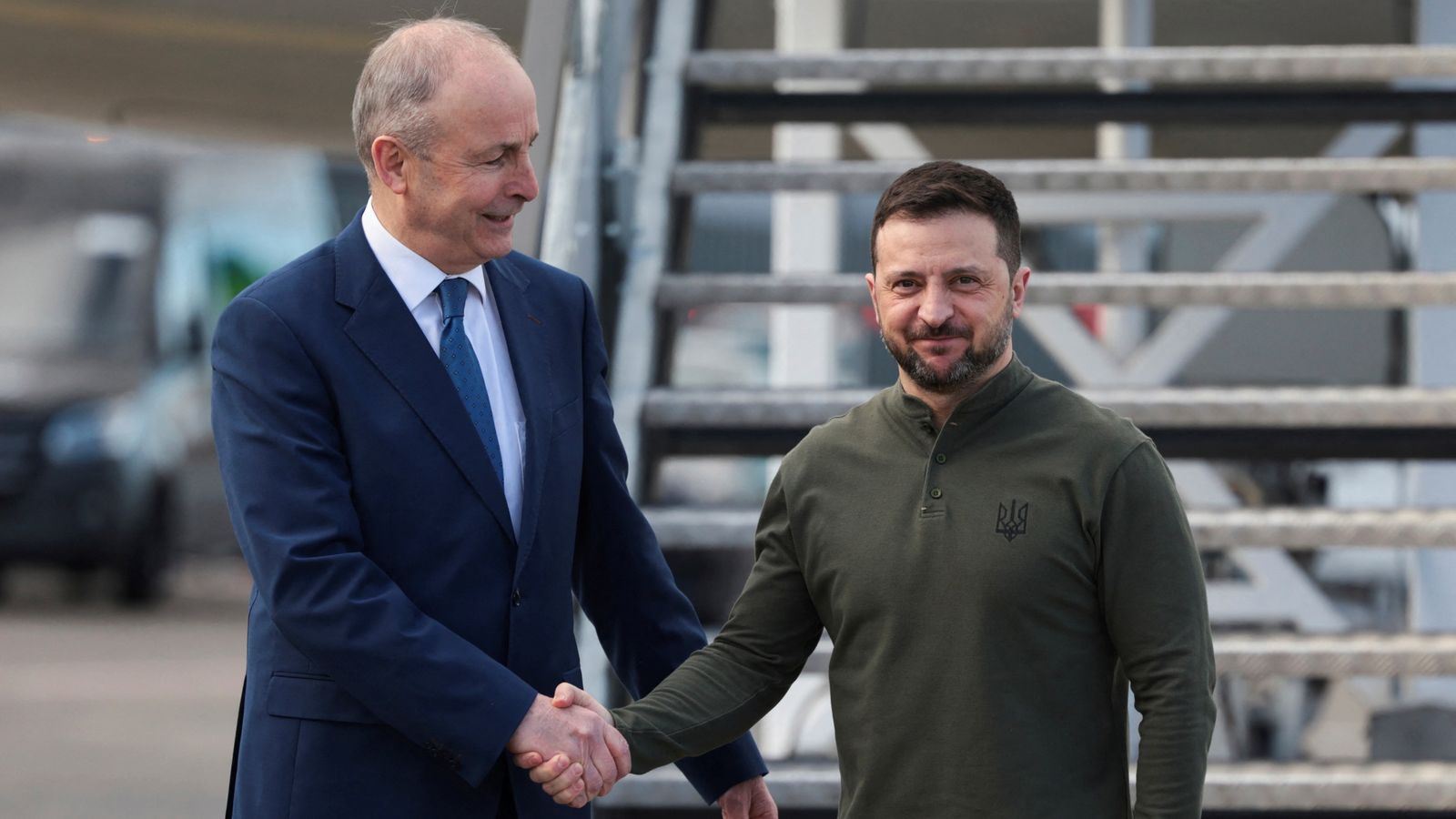

Volodymyr Zelenskyy is set to make his first official visit to Ireland tomorrow, Taoiseach Micheal Martin has revealed.
The Ukrainian president will be accompanied by First Lady Olena Zelenska and meet Mr Martin, president Catherine Connolly and foreign minister Helen McEntee.
Mr Martin said he and Mr Zelenskyy would be holding a bilateral meeting, as well as attending the inauguration of the Ireland-Ukraine Economic Forum, which he said “offers an opportunity to explore the potential for strengthened business-to-business, trade and investment links between Ireland and Ukraine”.
Micheal Martin greets Volodymyr Zelenskyy as he briefly stops in Ireland on way to the US in February. Pic: Reuters
Speaking ahead of the visit, the Taoiseach said: “It is an honour to welcome President Zelenskyy and the First Lady to Ireland.
“Around the world, he is rightly recognised as someone who embodies the courage and resilience of the Ukrainian people, who have inspired the world in their brave defence of their country and its sovereignty since it was brutally and illegally invaded by Russia.
“I have met with President Zelenskyy many times, including in Kyiv, but I particularly look forward to greeting him on this first official visit of a Ukrainian president to Ireland.”
Ireland has been a staunch ally of Ukraine’s since Russia began its invasion in 2022, offering some 120,000 Ukrainians a safe haven.
US-Ukraine talks begin in Florida
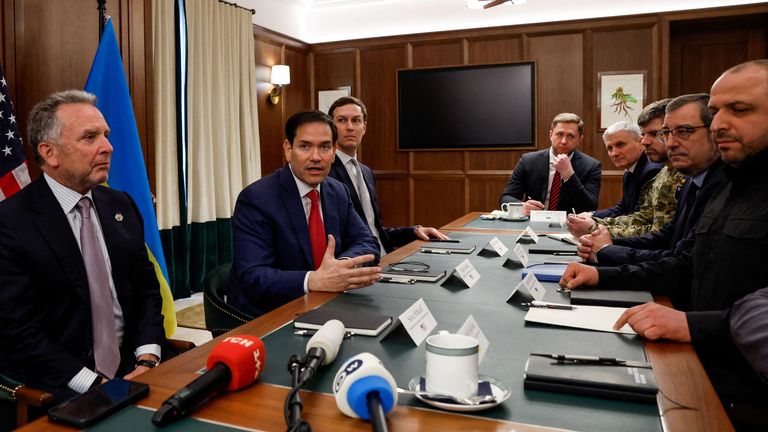
The Ireland announcement comes after Mr Zelenskyy’s top team engaged in peace talks with the US for several hours in Florida on Sunday.
The US-Ukraine talks were quickly organised after Donald Trump released a 28-point proposal that was largely seen to be favouring Russia, having been developed in earlier negotiations between Washington and Moscow.
The plan would have imposed limits on the size of Ukraine’s military, blocked Ukraine from joining NATO and required it to hold elections in 100 days. It also initially envisioned Ukraine ceding the entire eastern region of the Donbas to Russia.
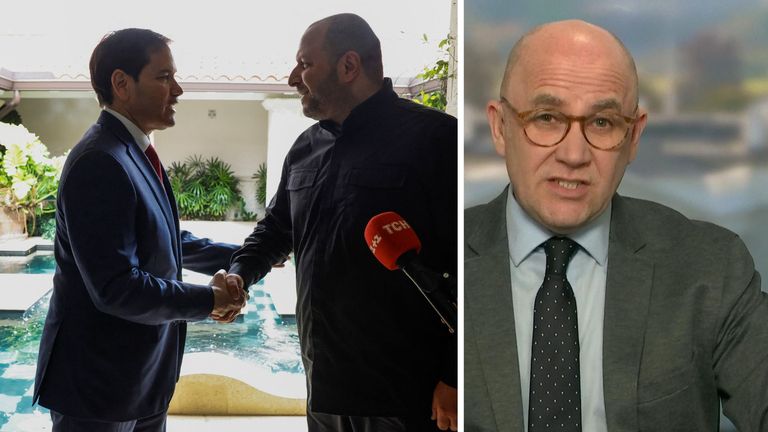
Sky’s US correspondent David Blevins analyses what’s at state this week
Read more:
Who is Steve Witkoff, the property mogul seeking a peace deal?
Go behind the scenes on the frontline with new-look Sky News show
It isn’t clear what changes have been made so far, but US secretary of state Marco Rubio has reassured Ukraine over the plans.
“This is not just about ending a war. This is about ending a war in a way that creates a mechanism and a way forward that will allow them to be independent and sovereign, never have another war again, and create tremendous prosperity for its people,” he said.
“Not just rebuild the country, but to enter an era of extraordinary economic progress.”
He added: “This is not just about peace deals. It’s about creating a pathway forward that leaves Ukraine sovereign, independent and prosperous. We expect to make even more progress today.”
Rustem Umerov, head of Ukraine’s security council, responded by saying the US was “hearing”, “supporting” and “working beside” Ukraine.
Mr Zelenskyy’s team in the US was without his former chief of staff and lead negotiator, Andrii Yermak, as he quit on Friday after officials raided his home amid a corruption scandal.
After the meeting, Mr Rubio said the talks had been “productive”, but more work remained to be done.
On X, Mr Zelenskyy said: “I am grateful to the United States, to President Trump’s team, and to the President personally for the time that is being invested so intensively in defining the steps to end the war. We will continue working. I look forward to receiving a full report from our team during a personal meeting.”
Later this week, Mr Trump’s special envoy Steve Witkoff is set to travel to Moscow to continue talks with the Kremlin.
‘Ukrainians have a delicate job’
Sustained Russian aerial assaults over the weekend
While peace talks ensued, Russian forces launched overnight attacks in and around Kyiv over the weekend, killing at least seven people and injuring dozens more.
Impacts were also reported in the regions of Dnipro, Kharkiv, Odesa, Sumy and Kherson.
Mr Zelenskyy said: “Such attacks occur daily. This week alone, Russians have used nearly 1,400 strike drones, 1,100 guided aerial bombs and 66 missiles against our people. That is why we must strengthen Ukraine’s resilience every day.”
The attacks also hit Ukrainian energy facilities and left hundreds of thousands without power in the capital. Supplies have since been restored.
Targeting such infrastructure has become a familiar tactic from Russia over the winter, in what Ukraine officials say is the “weaponising” of the cold.

Moment Ukraine strikes Russian ‘shadow fleet’ ships
Ukraine launched its own drones at two of Russia’s so-called “shadow fleet” oil tankers in the Black Sea on Friday, and claimed responsibility for damaging a major oil terminal on Saturday near the Russian port of Novorossiysk.
The terminal is owned by the Caspian Pipeline Consortium, which includes Russian, Kazakh and US shareholders.
Subsequently, on Sunday, Kazakhstan’s foreign ministry said it viewed Ukraine’s attack as “an action harming the bilateral relations of the Republic of Kazakhstan and Ukraine”, adding it expected Ukraine to “take effective measures to prevent similar incidents in the future”.
Ukraine’s foreign ministry said the country’s actions were not directed against Kazakhstan or third parties and were only aimed at repelling what it called “full-scale Russian aggression”.
World
‘This is journalism at its most raw’: Go behind the scenes on the frontline with new-look Sky News show

World
More than 600 dead in Indonesia and Thailand after floods and landslides – and Sri Lanka reporting more than 200 deaths from cyclone
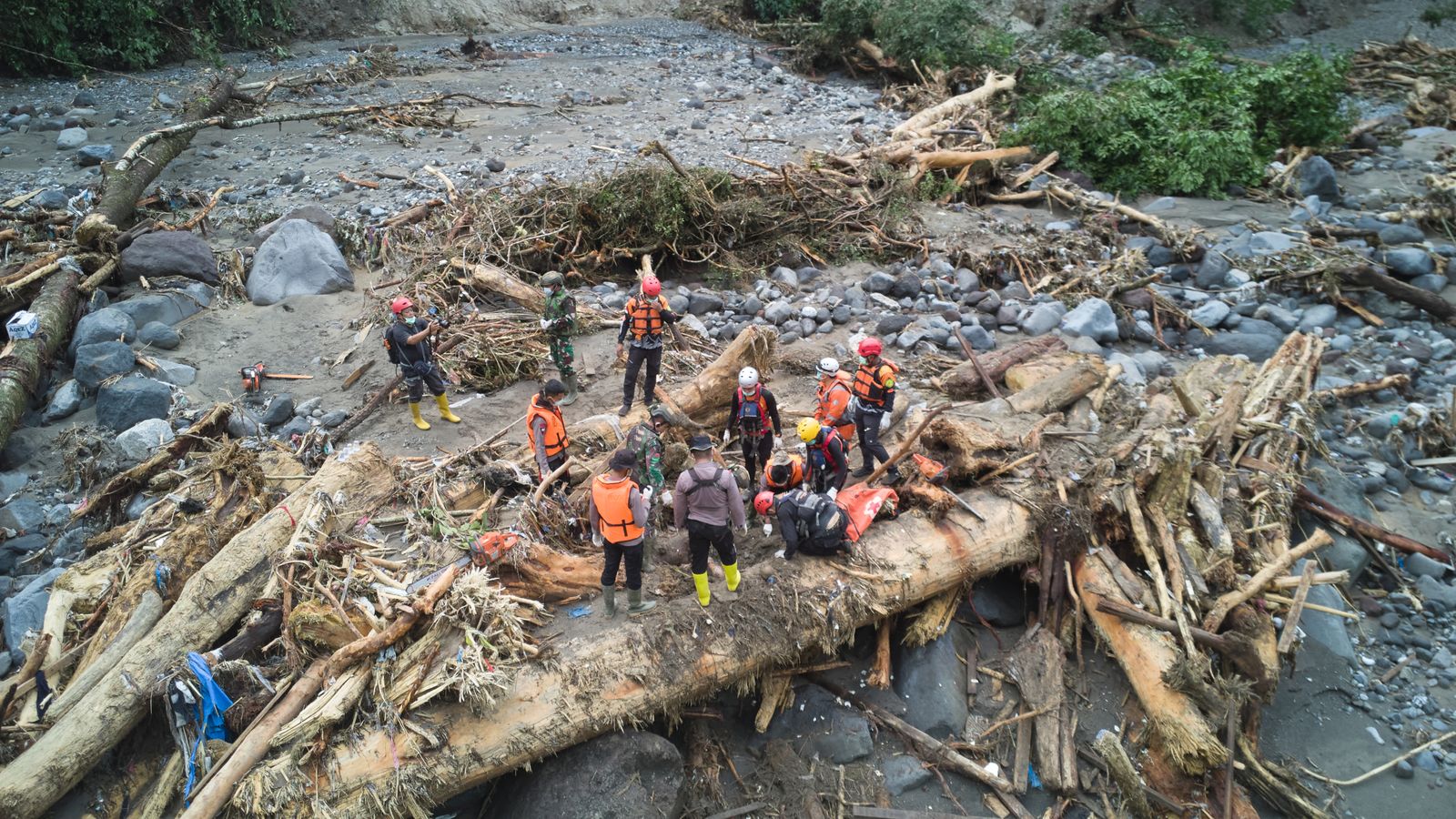
The death toll following flooding and landslides in Indonesia and Thailand has risen to more than 600 – with nearby Sri Lanka also reporting more than 200 deaths after a cyclone.
Three people have also died in Malaysia, officials have said, due to the extreme weather in South Asia and Southeast Asia.
In total, Indonesian officials said 442 people had died and Thai authorities reported 170 deaths in the southern part of the country, as of midday UK time on Sunday.
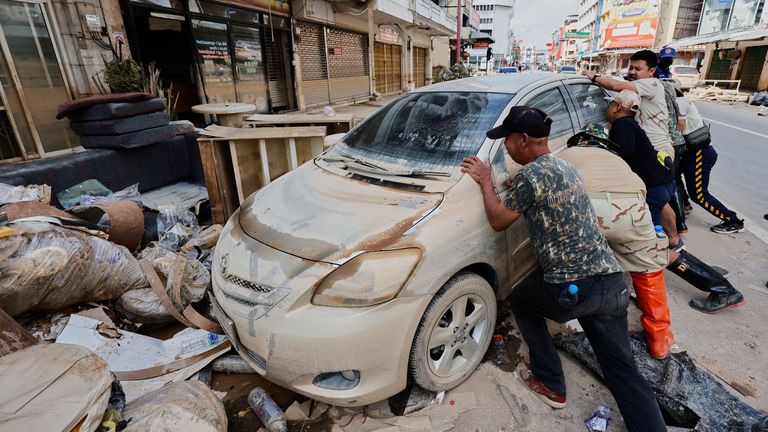
People move a car damaged by floods in Songkhla province, Southern Thailand. Pic: AP
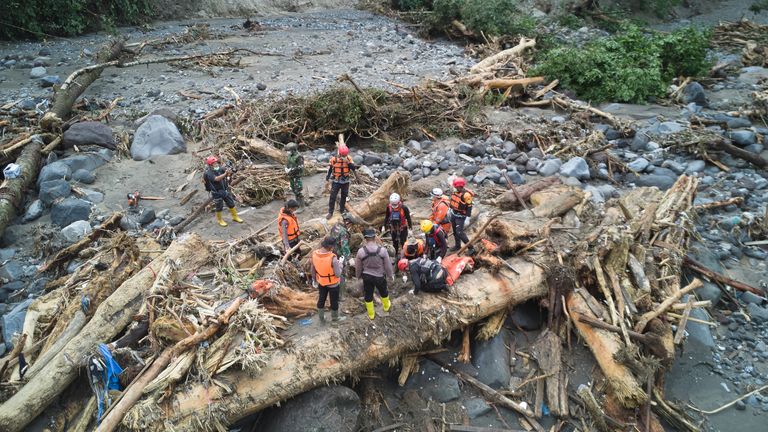
Rescuers search for flood victims in Tanah Datar, West Sumatra, Indonesia. Pic: AP
Rescue efforts were ongoing throughout the day, with more than four million people affected – almost three million in Southern Thailand and 1.1 million in Western Indonesia – by the effects of a tropical storm formed in the Malacca Strait.
Indonesian relief and rescue teams have used helicopters to deliver aid to people they could not access because of blocked roads on the western island of Sumatra.
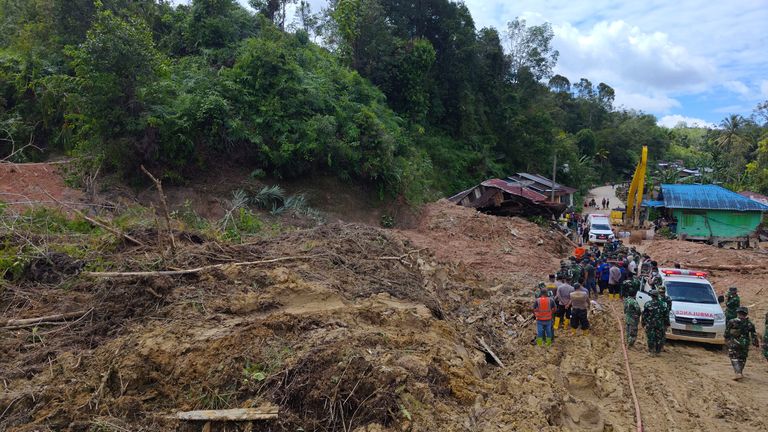
Rescuers search for victims at the site of a landslide in Adiankoting, North Sumatra, Indonesia. Pic: AP
Many areas have been cut off, while damage to telecommunications infrastructure has hampered communications.
Officials said on Saturday that they had received reports of people looting supply lines as they grow desperate for relief in other areas.
Hat Yai, the largest city in Thailand’s Songkhla province, received 335mm (13 inches) of rain on Friday last week, its highest single-day tally in 300 years.
After days of rain, meteorological authorities in Malaysia lifted tropical storm and continuous rain warnings there yesterday, forecasting clear skies for most of the country.
However, there are still about 18,700 people in evacuation centres, according to the country’s national disaster management agency.
Read more from Sky News:
Surgeon may never face justice over ‘botched’ operations
William ‘moved’ by severely ill Gazan children’s courage
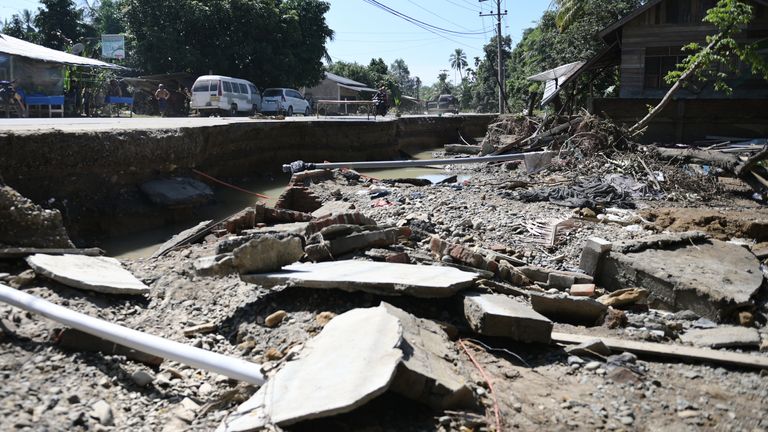
A road heavily damaged by a flash flood in Bireun, Aceh province, Indonesia. Pic: AP
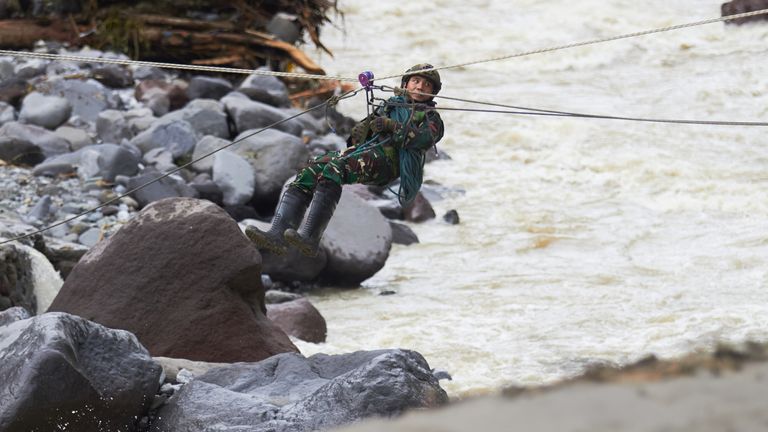
A soldier uses ropes to cross a river during a search operation in Tanah Datar, West Sumatra, Indonesia. Pic: AP
More than 200 dead in Sri Lanka
Across the Bay of Bengal, Sri Lanka’s disaster management centre said in a situation report on Sunday that 212 people had died as a result of Cyclone Ditwah.
Another 218 people have been recorded as missing across the South Asian country’s 25 districts, and more than half a million people have been affected nationwide.
-
 Sports2 years ago
Story injured on diving stop, exits Red Sox game
-
 Sports3 years ago
‘Storybook stuff’: Inside the night Bryce Harper sent the Phillies to the World Series
-
 Sports2 years ago
Game 1 of WS least-watched in recorded history
-
 Sports3 years ago
Button battles heat exhaustion in NASCAR debut
-
 Sports3 years ago
MLB Rank 2023: Ranking baseball’s top 100 players
-
Sports4 years ago
Team Europe easily wins 4th straight Laver Cup
-
 Environment3 years ago
Japan and South Korea have a lot at stake in a free and open South China Sea
-
 Environment1 year ago
Here are the best electric bikes you can buy at every price level in October 2024