
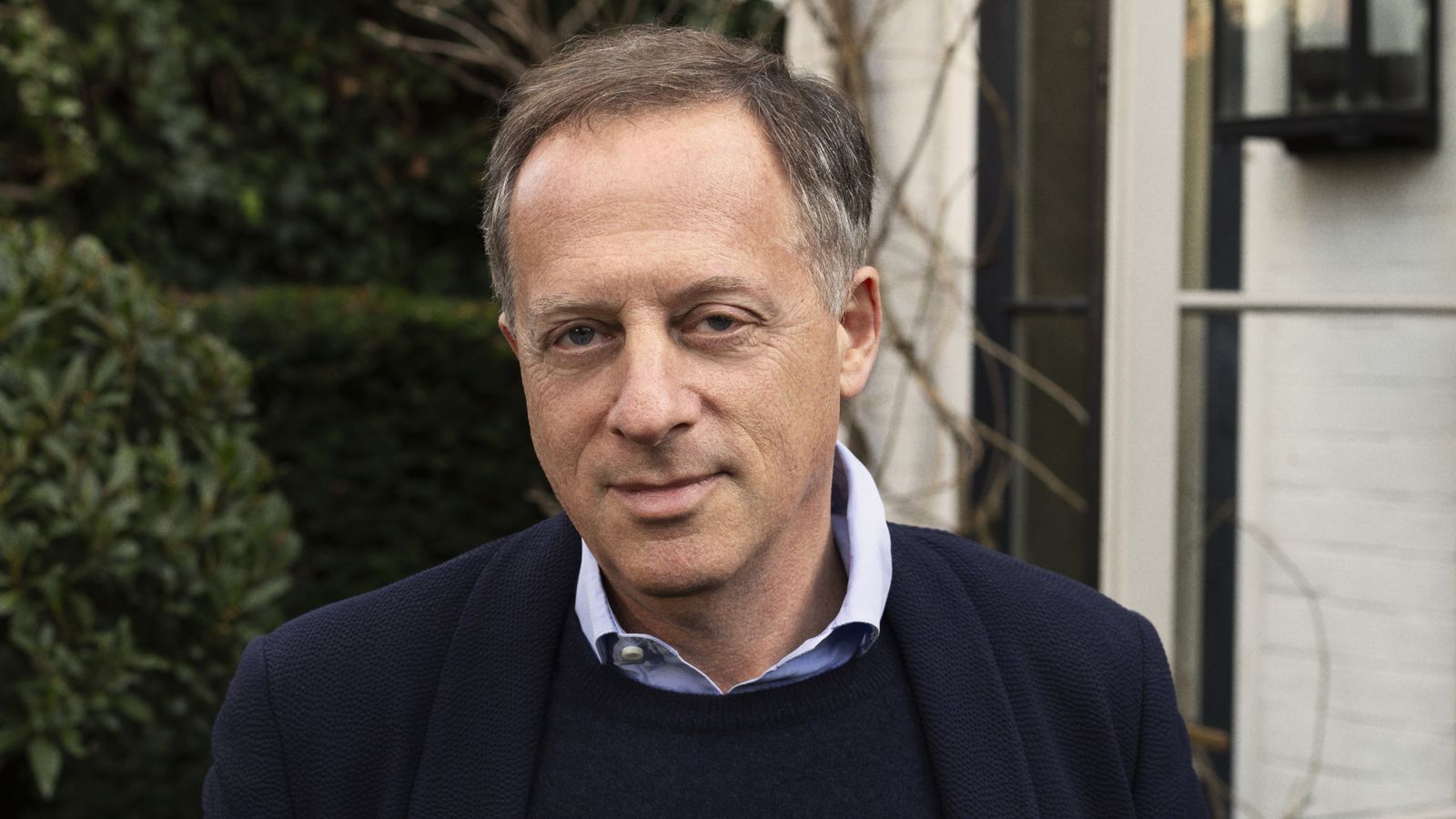
Richard Sharp: BBC chair’s position ‘increasingly untenable’ after helping Boris Johnson secure £800,000 loan, says Labour’s Lisa Nandy


The BBC chairman’s position is becoming “increasingly untenable” after a committee of MPs found he made “significant errors of judgement” by facilitating a loan guarantee for Boris Johnson, a frontbench Labour MP has said.
Lisa Nandy made the remarks on Sky News after it emerged Richard Sharp, who helped Mr Johnson secure an £800,000 loan, failed to declare his role as a go-between for the then-prime minister when applying for the chairman’s job.
The cross-party Digital, Culture, Media and Sport Committee has said in a report that Mr Sharp should “consider the impact his omissions will have” on public trust in the broadcaster.
BBC chairman Richard Sharp is under pressure
The committee also said his actions “constitute a breach of the standards expected of individuals” applying for prominent public appointments.
The same committee backed Mr Sharp’s appointment to the chairman’s job in January 2021 but was not aware of his role in facilitating the loan.
Committee report is a ‘really serious development’
Ms Nandy, the shadow levelling up secretary, told Sky News’ Sophy Ridge on Sunday programme that the government had “relied on the defence” that the committee had approved the appointment of Mr Sharp as BBC chair.
She continued: “But the committee today is saying that actually, had they known about (the loan), it would have been a very different situation.
“This information was not disclosed to them prior to approving that appointment.”
Speaking about the findings in the report, Ms Nandy said: “It is a really serious development and it makes Richard Sharp’s position look increasingly untenable.”
She added: “I think it’s difficult to see how Richard Sharp could possibly stay in the position that he’s in, given the far reaching implications for the reputation of the BBC and the implications for trust in journalism.”
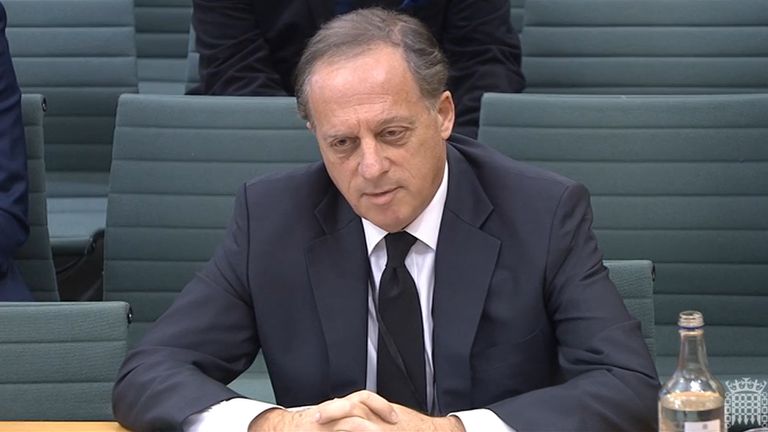
Mr Sharp appearing before the Commons Digital, Culture, Media and Sport Committee
Ms Nandy’s comments came after the Conservative Party’s development minister Andrew Mitchell said the report’s findings are a “matter for the BBC”.
“I think Damian Green (acting chair of the Digital, Culture, Media and Sport Committee) is a very senior member of the House of Commons and what he and his committee says matters,” he said.
“But I think, as I say, this is really something which the public appointments commissioner must look at and we must wait for his judgement. And above all, of course, it’s a matter for the judgement of the BBC.”
Sharp claims he ‘acted in good faith’
Mr Sharp has said he didn’t arrange the loan but admitted introducing his friend Sam Blyth, a cousin of Mr Johnson who wanted to help the then-PM, to the Cabinet Office.
A spokesperson for Mr Sharp said he “regrets” not telling MPs about his association with Mr Blyth “and apologises”.
“It was in seeking at the time to ensure that the rules were followed, and in the belief that this had been achieved, that Mr Sharp acted in good faith in the way he did,” the spokesperson said.
Read more:
Boris Johnson becoming highest-earning MP this parliament
It’s hard to see how Sharp survives this sleazy aftershock of Johnson’s time in office

Of the three investigations launched into Richard Sharp’s appointment, this was always the one least likely to prove fatal for his position as BBC chair.
That’s simply because the other inquiries are being run by Whitehall’s official regulator for appointments and the BBC itself.
If the findings from either of those two are anywhere near as critical as this committee report, it’s hard to see how Mr Sharp survives in post.
That’s because the BBC chair really needs to carry the confidence of the government and the corporation to execute the role.
It’s a wholly unwelcome development for BBC employees who have felt increasingly under siege in recent years from a mix of budget cuts, mass redundancies and accusations of political bias.
Given Richard Sharp himself has said the BBC has a “liberal bias”, the fact he has dragged the corporation into this row is particularly grating for many.
But despite this being another example of a somewhat sleazy aftershock of Boris Johnson’s time in office, it’s an unideal situation for Rishi Sunak too.
The prime minister used to work for Richard Sharp at Goldman Sachs, adding to the sense this is all a symptom of a cosy and monied establishment looking after itself.
In its strongly-worded report on the matter, the committee said: “Richard Sharp’s decisions, firstly to become involved in the facilitation of a loan to the then-prime minister while at the same time applying for a job that was in that same person’s gift, and then to fail to disclose this material relationship, were significant errors of judgement, which undermine confidence in the public appointments process and could deter qualified individuals from applying for such posts.”
The MPs continued: “Mr Sharp should consider the impact his omissions will have on trust in him, the BBC and the public appointments process.”
A Cabinet Office spokesperson said: “The Office of the Commissioner for Public Appointments is reviewing the competition to ensure the process was run in compliance with the rules and we will await the outcome.”
The family of a father-of-four who died on holiday in Benidorm say new evidence has further convinced them that foul play was involved in his death.
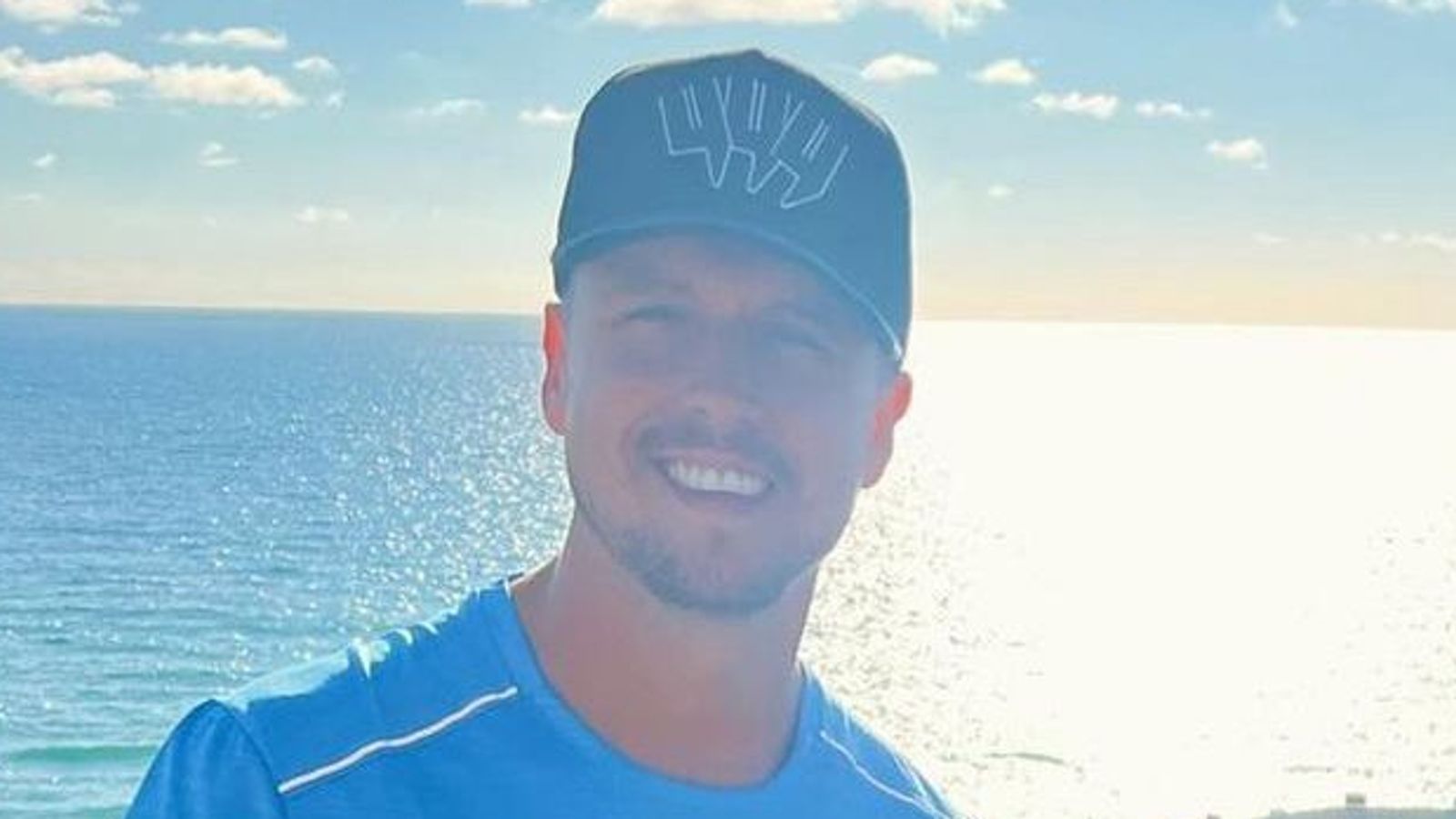
Nathan Osman, 30, from Pontypridd in South Wales, was on a long weekend break with friends in Benidorm in September 2024.
Less than 24 hours after he arrived, his body was found by an off-duty police officer at the bottom of a remote 650ft (200m) cliff on the outskirts of the resort.
He died from head and abdominal injuries after falling from height, a post-mortem found.
Local police said it was “a tragic accident” that occurred after Nathan left his friends in Benidorm to walk back to his hotel room alone.
But his family believe the investigation into his death has not been adequate, and that the local authorities have never considered the possibility of a homicide.
Their suspicions of foul play were first provoked by the fact that the remote location where Nathan was found was in the opposite direction to the hotel, and some distance away on foot.
They began doing their own investigating, building a timeline of events drawn from sources including CCTV, witness statements and Nathan’s bank records, which they say showed attempts were made to use his bank cards the day after he died.
After presenting their findings to Spanish prosecutors as evidence that others may have been involved, the case was reopened earlier this year.
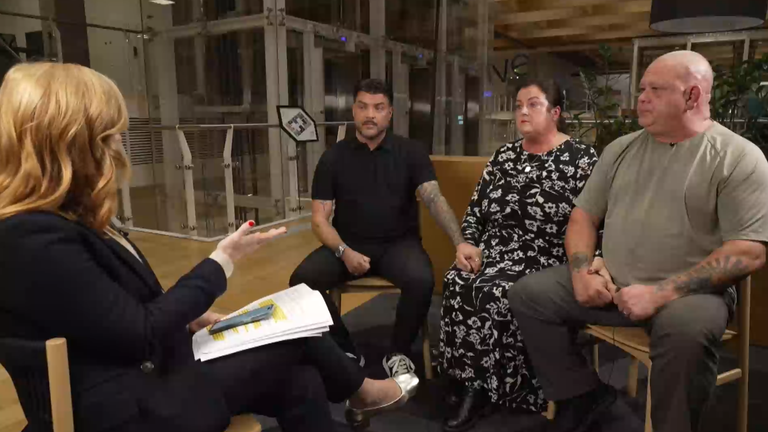
Now, the family have told Sarah-Jane Mee on The UK Tonight that new phone data they have uncovered suggests he couldn’t have reached the spot he was found on foot.
Nathan’s brother Lee, mother Elizabeth and father Jonathan speak to Sarah-Jane Mee
After getting the phone back a couple of months ago, they say they tracked Nathan’s last movements through a health app.
“There’s a breakdown inside the app of every 10 minutes – the distance, pace, measurement of pace… every detail you can think of,” Nathan’s brother, Lee Evans, tells Mee.
“His pace wasn’t consistent with a fast walk or even a sprint.”
He said it was a faster journey, despite being uphill for 40 minutes, which has convinced the family that he was in a vehicle.

Pic: Family handout
The family also went to visit the area where Nathan was found.
“We were a bit upset, but we were very pleased we went up there”, his mother, Elizabeth, says. “We could see… there’s no way he would have looked at that area and thought, ‘I’m going up here.’
“You can see straight off, there’s no clubs, there’s no hotels up there, there’s just the odd house dotted around. It was just out in the wild, there was nothing up there.”
Read more:
Prince William ‘moved’ after meeting severely ill Gazan children
Surgeon may never face justice over ‘botched’ operations
The family says the phone data has helped them determine that he died around half an hour after he was seen on CCTV walking towards his hotel in the early hours of the morning.
“It was really ridiculous to think that my son would’ve walked up there [the remote location where he died] at 4am in the pitch dark.”
After the family were interviewed by Mee in May, South Wales Police opened its own investigation into Nathan’s death.
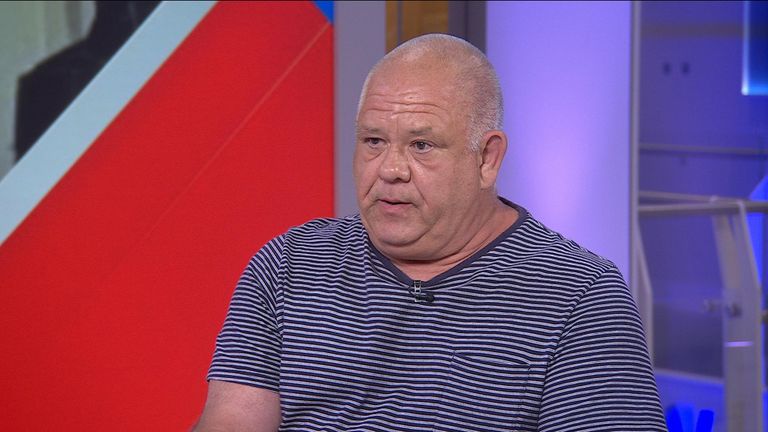
Nathan’s family speaking to Mee in May
Lee says the Welsh force has been “appalled” by the lack of evidence turned over from the local police’s investigation.
His and Nathan’s father, Jonathan, says: “No procedures were followed. Nothing was cordoned off, it wasn’t a crime scene. There’s loads of things that could’ve been taken. Tyre tracks, foot tracks, nothing. No DNA taken.”
Lee says: “All that we’ve done over the last year, this could’ve been squashed within the first week, two weeks [by local investigators].
“We’ve had to find out and keep delving into every possible outcome and overturn every stone possible. We started off with… a needle in a haystack, we had no direction or any support on which way to go.”
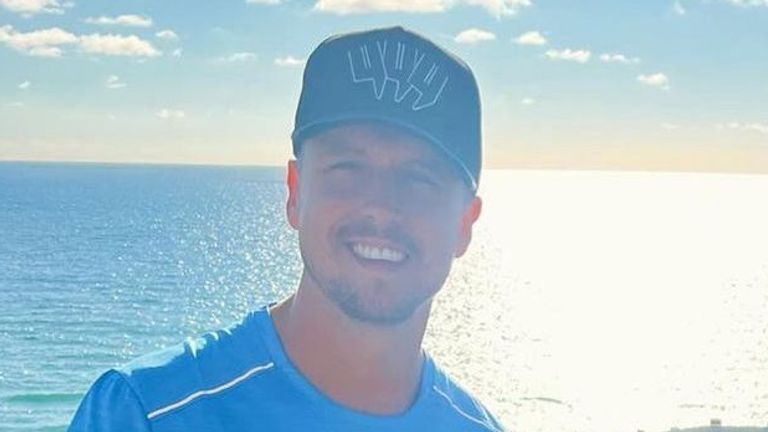
Nathan Osman. Pic: Family handout
What does Nathan’s family hope for now?
Nathan’s family say they have located 27 CCTV cameras which could have picked Nathan up in the area, after local investigators didn’t find any.
Elizabeth says that after alerting Spanish police to the locations, they were told that the CCTV “wouldn’t be working” or that footage would’ve already been erased.
“They just surmised everything,” she adds.
But the family, who found the last known CCTV footage of Nathan earlier this year, are convinced there is still hope.
Lee says: “There’s a number of CCTV footage in that area. We know there’s a way of finding a vehicle of some sort.”
But the family admit they may never find whoever could be responsible for Nathan’s death because so much time has been lost.
Elizabeth concludes: “Nathan walks with us every day. We all believe that,” adding that “all we want” is to find the ones responsible for his death and for him to “have the respect of a decent investigation”.
Sky News contacted Spanish police, which declined to comment, adding the case is under judicial review and it doesn’t want to hinder the course of the investigation.
South Wales Police told Sky News: “South Wales Police is carrying out enquiries on behalf of HM Coroner and a family liaison officer has been appointed to provide support.”
Watch the full interview with Sarah-Jane Mee on The UK Tonight from 8pm this evening on Sky News.
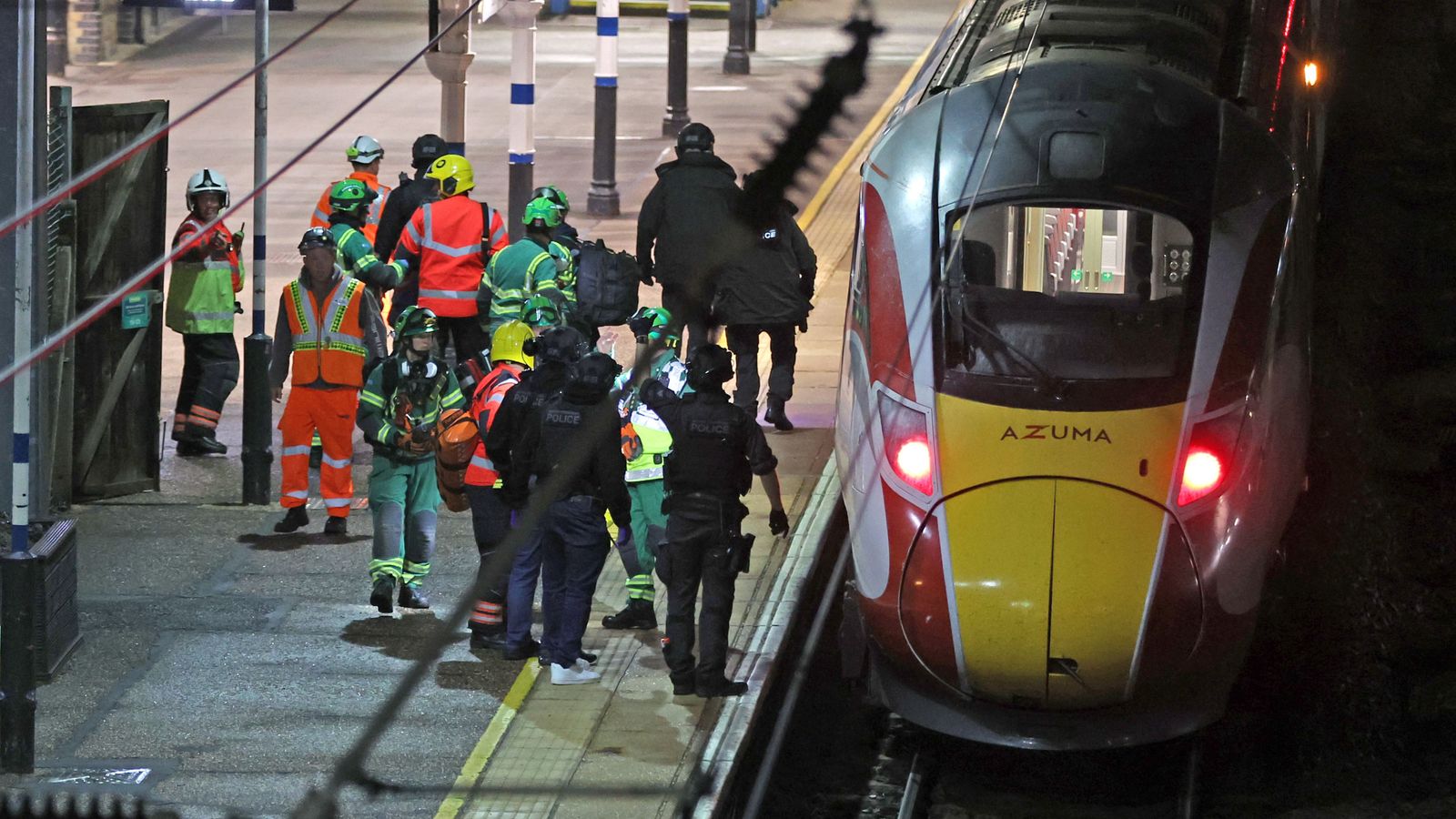
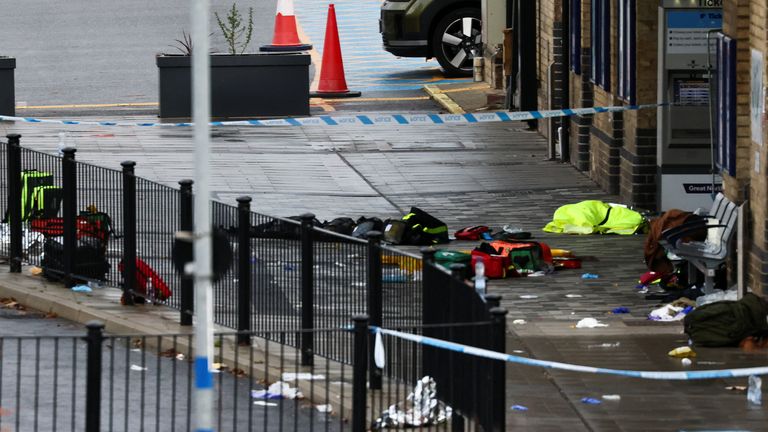
A man accused of a mass stabbing on an LNER train in Huntingdon last month and separate attacks over the previous 48 hours, could face a trial next year.
Anthony Williams, 32, is charged with 10 counts of attempted murder and one count of possession of a knife over the alleged attack on a LNER train from Doncaster to London on 1 November.
Williams, refused to attend Monday’s hearing at Cambridge Crown Court, and has yet to enter pleas. But the judge has set a provisional trial date in June.
He is charged with one count of assault occasioning actual bodily harm over an alleged attack on a male police officer in custody.
Williams also faces another count of attempted murder and one count of possession of a knife over a separate incident at Pontoon Dock Docklands Light Railway (DLR) station, in east London, earlier on 1 November.
The aftermath of the mass stabbing. Pic: Reuters
At Monday’s hearing, held in Williams’ absence, the case was joined with seven further charges, bringing the total number of charges to 21.
Williams, who said at an earlier hearing that he is of no fixed abode, had also failed to attend a hearing at Peterborough Magistrates’ Court on 19 November over the seven additional charges.
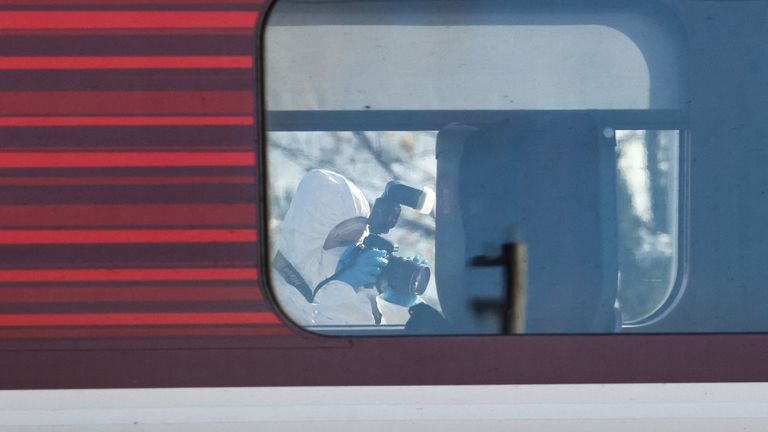
A forensic officer taking pictures on the train. Pic: Reuters
The seven charges relate to the following incidents in the 24 hours leading up to the train stabbings:
• Attempted murders of a 14-year-old boy at Henry Penn Walk, Peterborough, on 31 October.
• Attempted murder of a 22-year-old man near Pleasure Fair Meadow Road, Peterborough, on 31 October.
• Attempted wounding of a 28-year-old man at Viersen Platz, Peterborough, on 31 October.
• Affray at a barbershop in Peterborough on 31 October.
• Possession of a knife in a public place at a footbridge near Henry Penn Walk, the Rail World car park and Queen’s Walk, all in Peterborough on 31 October.
• Theft of knives from Asda supermarket in Stevenage on 31 October.
• Assault of a 31-year-old man onboard a train travelling from King’s Cross to Peterborough on 1 November.
Read more from Sky News:
Danger to life warning for parts of UK
Father pleaded with his son ‘not to kill me’
Judge Mark Bishop said a further hearing will take place at Cambridge Crown Court on 28 January, with a provisional trial date set for 22 June.
Williams remains in custody.
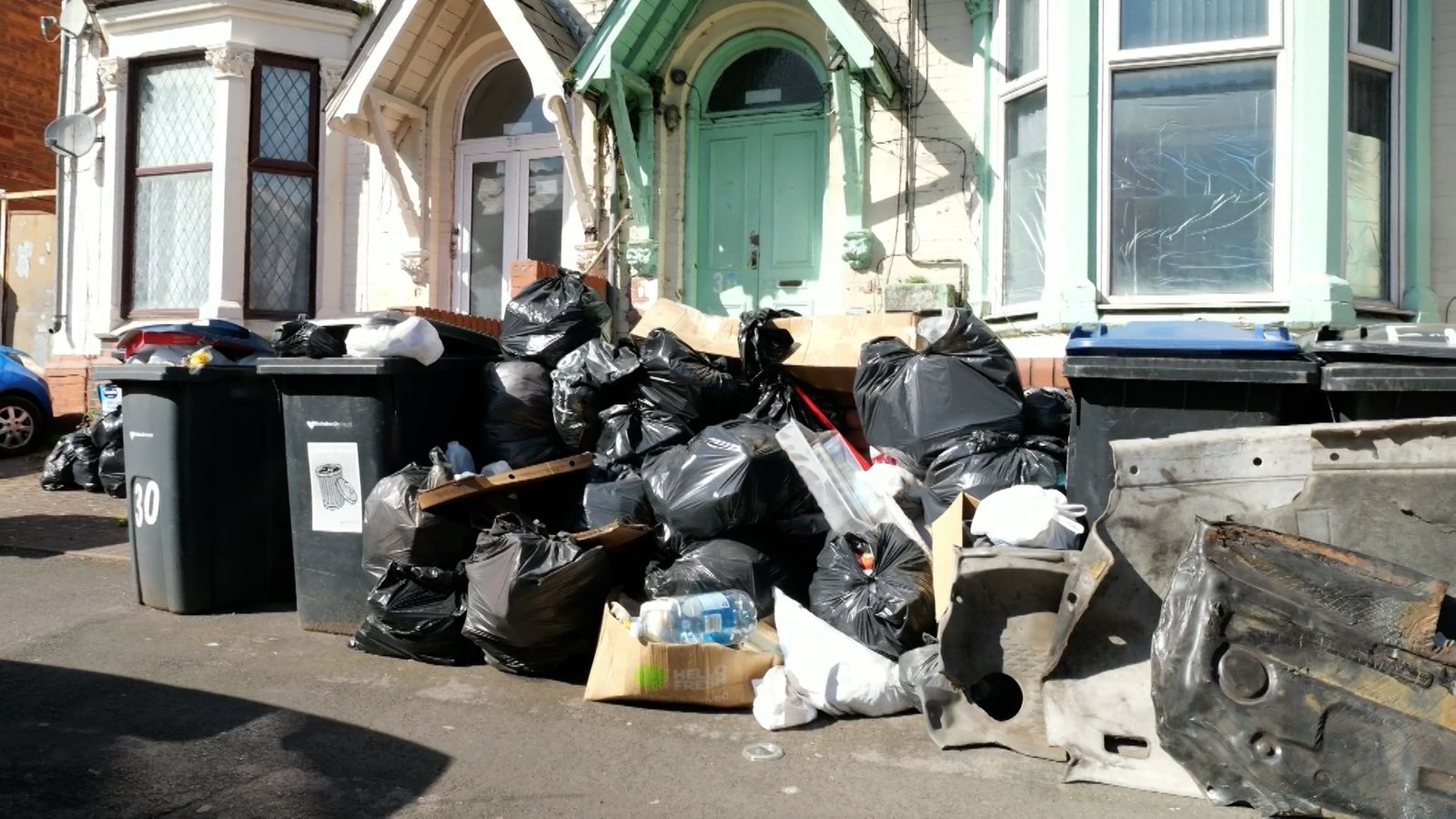
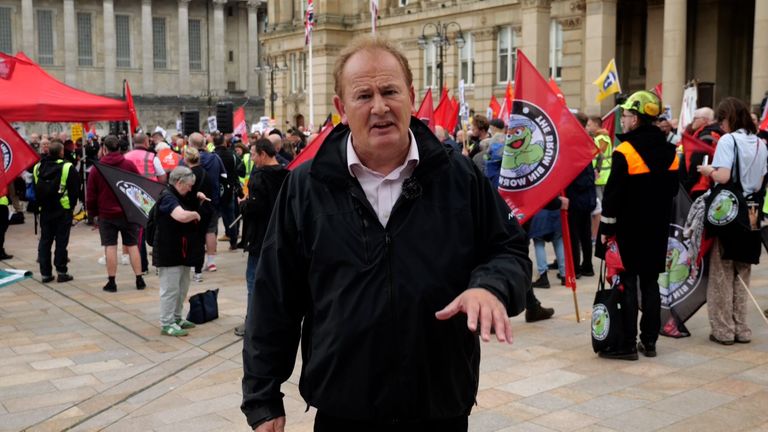
Agency workers hired to fill the void in the wake of the Birmingham bin strikes have voted for strike action and will be joining the picket.
The first day of the action kicks off today, with a rally organised by the Unite union at the Smithfield depot in Birmingham.
The union said the numbers joining the strike were “growing daily” – but Birmingham City Council said just “a small number” of agency staff were taking part.
The replacement workers recruited by the Job&Talent agency, said they had voted in favour of industrial action “over bullying and harassment and the threat of blacklisting at the council’s refuse department two weeks ago”.
From September: Birmingham bin strikes six months on
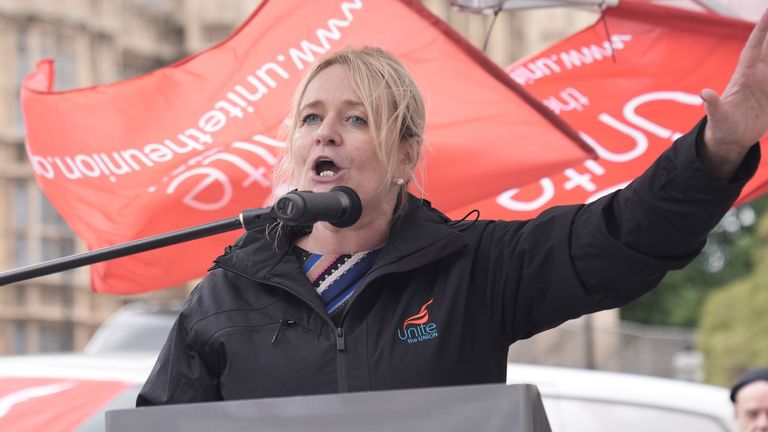
General secretary of Unite Sharon Graham. Pic: PA
Sharon Graham, Unite’s general secretary, said: “Birmingham council will only resolve this dispute when it stops the appalling treatment of its workforce.
“Agency workers have now joined with directly-employed staff to stand up against the massive injustices done to them.”
Read more:
Six months on, there’s no end in sight for the Birmingham bin strike
Birmingham bin strikes: How residents are taking action
She added: “Instead of wasting millions more of council taxpayers’ money fighting a dispute it could settle justly for a fraction of the cost, the council needs to return to talks with Unite and put forward a fair deal for all bin workers.
“Strikes will not end until it does.”
Strikes from the bin workers in Birmingham have been ongoing since January, and are likely to continue beyond May next year.
Birmingham City Council said it was “disappointed the dispute has not been resolved as Unite has rejected all our offers”.
“We are continuing to make regular waste collections and our contingency plan is working,” it added.
It also said it found “no blacklisting has taken place” after an investigation and that it “strongly” refuted Unite’s claims of bullying, which it said were “unfounded”.
Job&Talent has been contacted for comment.
-
 Sports2 years ago
Story injured on diving stop, exits Red Sox game
-
 Sports3 years ago
‘Storybook stuff’: Inside the night Bryce Harper sent the Phillies to the World Series
-
 Sports2 years ago
Game 1 of WS least-watched in recorded history
-
 Sports3 years ago
Button battles heat exhaustion in NASCAR debut
-
 Sports3 years ago
MLB Rank 2023: Ranking baseball’s top 100 players
-
Sports4 years ago
Team Europe easily wins 4th straight Laver Cup
-
 Environment3 years ago
Japan and South Korea have a lot at stake in a free and open South China Sea
-
 Environment1 year ago
Here are the best electric bikes you can buy at every price level in October 2024