
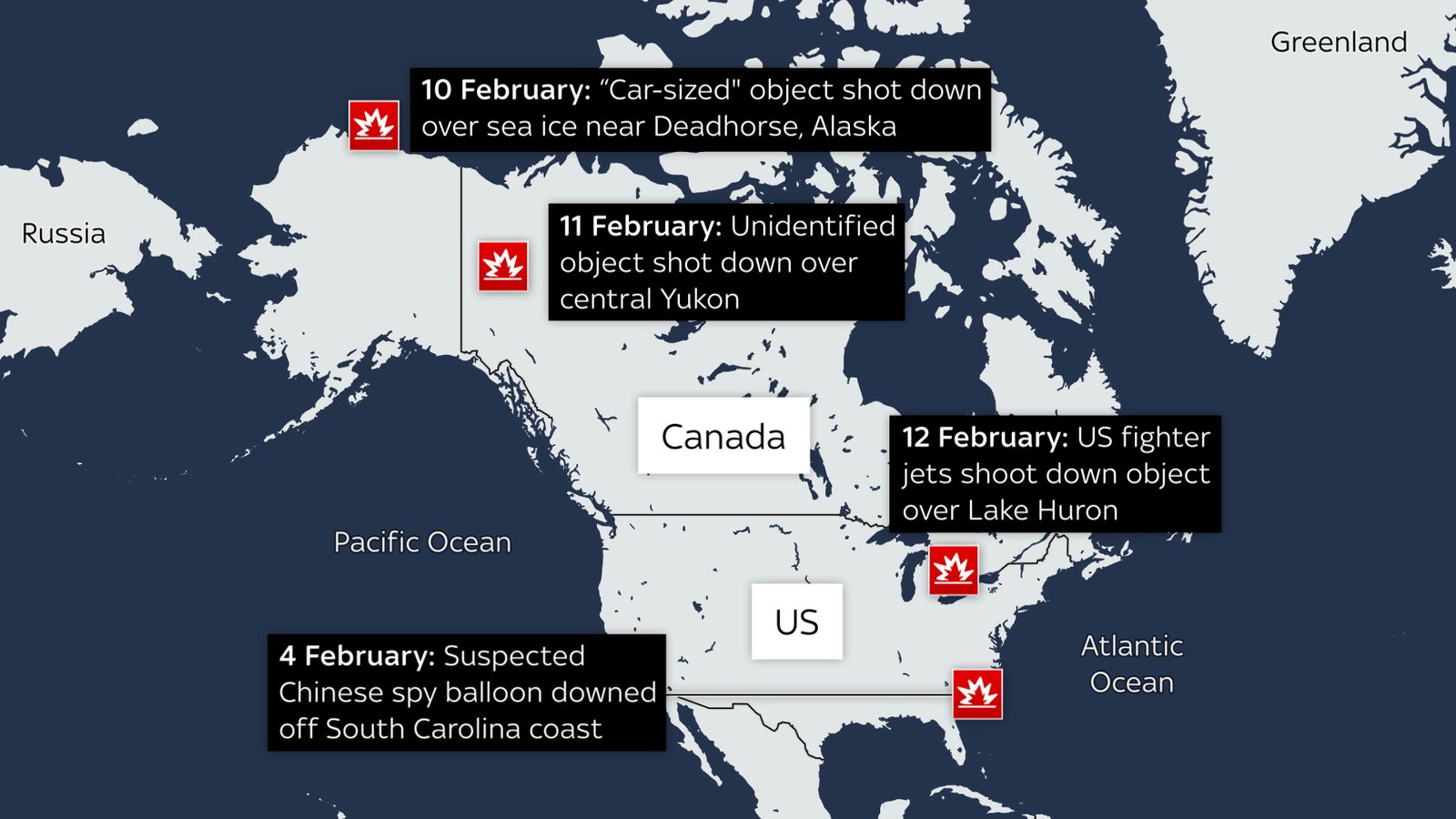
Spy balloons and flying objects: A timeline of what and where fighter jets have shot down unidentified aircraft so far this month


US fighter jets have now shot down four flying objects in fewer than 10 days.
The latest instance, involving what US officials described as an “unidentified” object, was brought down near the US-Canada border on Sunday on the orders of President Joe Biden.
It comes after the military downed the first flying object, a suspected Chinese “spy” balloon, off the Carolina coast on 4 February.
Two other objects were also shot down, on 11 February and 12 February.
Though Beijing has confirmed the first was from China, US officials are yet to give further details about the nature of the three latter objects, which so far remain unidentified.
Here, Sky News takes a look at when and where the four objects were shot down, and what we know so far.
4 February
The first object, described by US officials as a suspected Chinese “spy” balloon, was first spotted by US air defence systems flying towards Alaska from the Bering Sea.
A high-altitude balloon over Billings in Montana
The balloon moved through Canada before dipping back into the US and out off the coast of South Carolina, where it was shot down with a missile fired by an F-22 fighter aircraft, about six nautical miles off the coast near Myrtle Beach.
A US defence official said the aircraft was a spy balloon and that China had intended to use it on sensitive military sites.
However, China insisted the balloon was used for meteorological and other scientific research and had been blown off course.
The object sparked a diplomatic row between the US and China, with US Secretary of State Anthony Blinken postponing his planned trip to Beijing at short notice.

In a statement, the Chinese Foreign Ministry called the shooting down of the balloon an “obvious overreaction” that “seriously violated international conventions”.
10 February
A second object, described as being “about the size of a small car” was spotted by the North American Aerospace Defense Command (NORAD) near Alaska and downed on 10 February.
According to Pentagon press secretary Brigadier General Patrick Ryder, the object, which was hovering at an altitude of around 40,000ft, was “not similar in size or shape” to the balloon shot down off South Carolina.
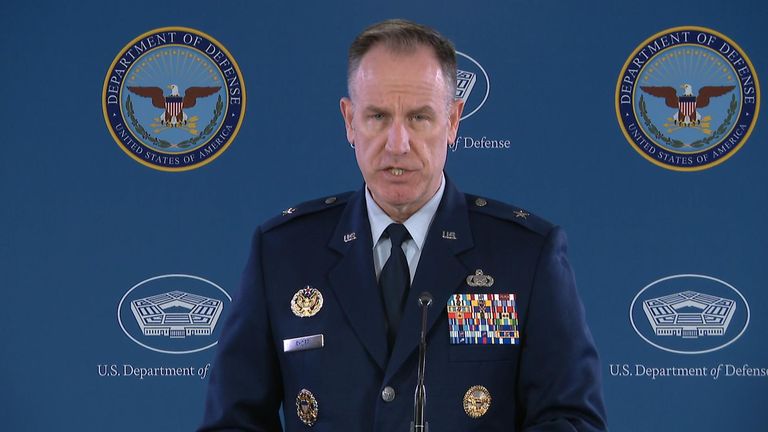
Unknown object shot down by US was ‘size of small car’
Read more:
‘Possible’ that China has sent spy balloons over UK
What are spy balloons?
Two US F-22 warplanes were dispatched from Joint Base Elmendorf-Richardson near Anchorage, Alaska, and the object was shot down over sea ice near Deadhorse.
US officials said a search team had been sent to recover debris from the object in order to identify what it is and where it had come from.
11 February
A third object, again unidentified but described by US officials as “much smaller” than the suspected spy balloon, was tracked entering US airspace over Alaska before drifting over Canada.
Canadian officials described the object, which was flying at an altitude of around 40,000ft, as “small” and “cylindrical” and that it “posed a reasonable threat”.
Again, US F-22 jets tracked the object, while Canadian CF-18 fighters and CP-140 maritime patrol craft also joined the operation.
The object was shot down by a US F-22 over a central area of Canada’s Yukon Territory, on the orders of Canadian Prime Minister Justin Trudeau.
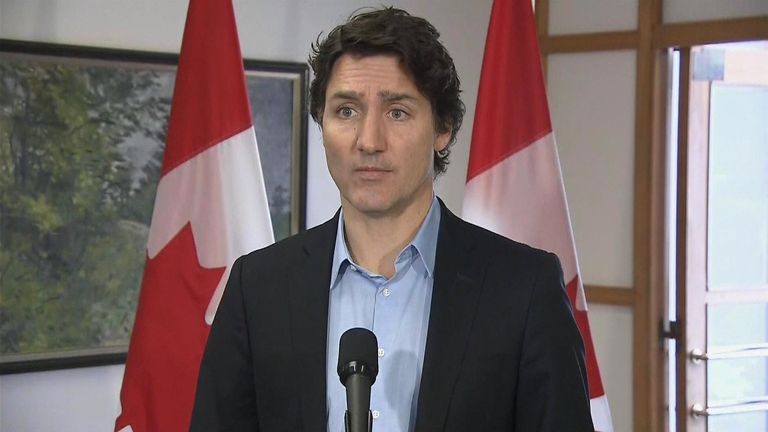
The object was shot down by a US F-22 fighter jet.
“To our knowledge, this is the first instance of Norad downing an object in Canadian airspace, and the importance of this moment should not be underestimated,” said Canada’s Defence Minister Anita Anand.
12 February
On Sunday, US officials confirmed another unidentified object had been shot down by fighter jets over Lake Huron on the US-Canada border near Michigan.
This time the object was flying at a considerably lower altitude, around 20,000ft.
Read more:
Moment Chinese ‘spy balloon’ is shot down
Chinese spy balloons: The puzzling theories
It was shot down by an F-16 jet, on the orders of Mr Biden, due to concerns that its altitude and flight path could endanger civilian planes.
A senior US official, speaking anonymously, described the latest object as having “an octagonal structure with strings hanging off but no discernible payload”.
In a statement, the Pentagon said: “Based on its flight path and data we can reasonably connect this object to the radar signal picked up over Montana, which flew in proximity to sensitive DOD [Department of Defense] sites.
Click to subscribe to the Sky News Daily wherever you get your podcasts
“We did not assess it to be a kinetic military threat to anything on the ground, but assess it was a safety flight hazard and a threat due to its potential surveillance capabilities.”
US Air Force general Glen VanHerck admitted he did not know what the last three objects shot down were or how they stayed aloft.
However, he told reporters they were not the same as the Chinese “spy” balloon.
“We’re calling them objects, not balloons, for a reason,” he said – also refusing to rule out any explanation when asked if they could be extra-terrestrial.
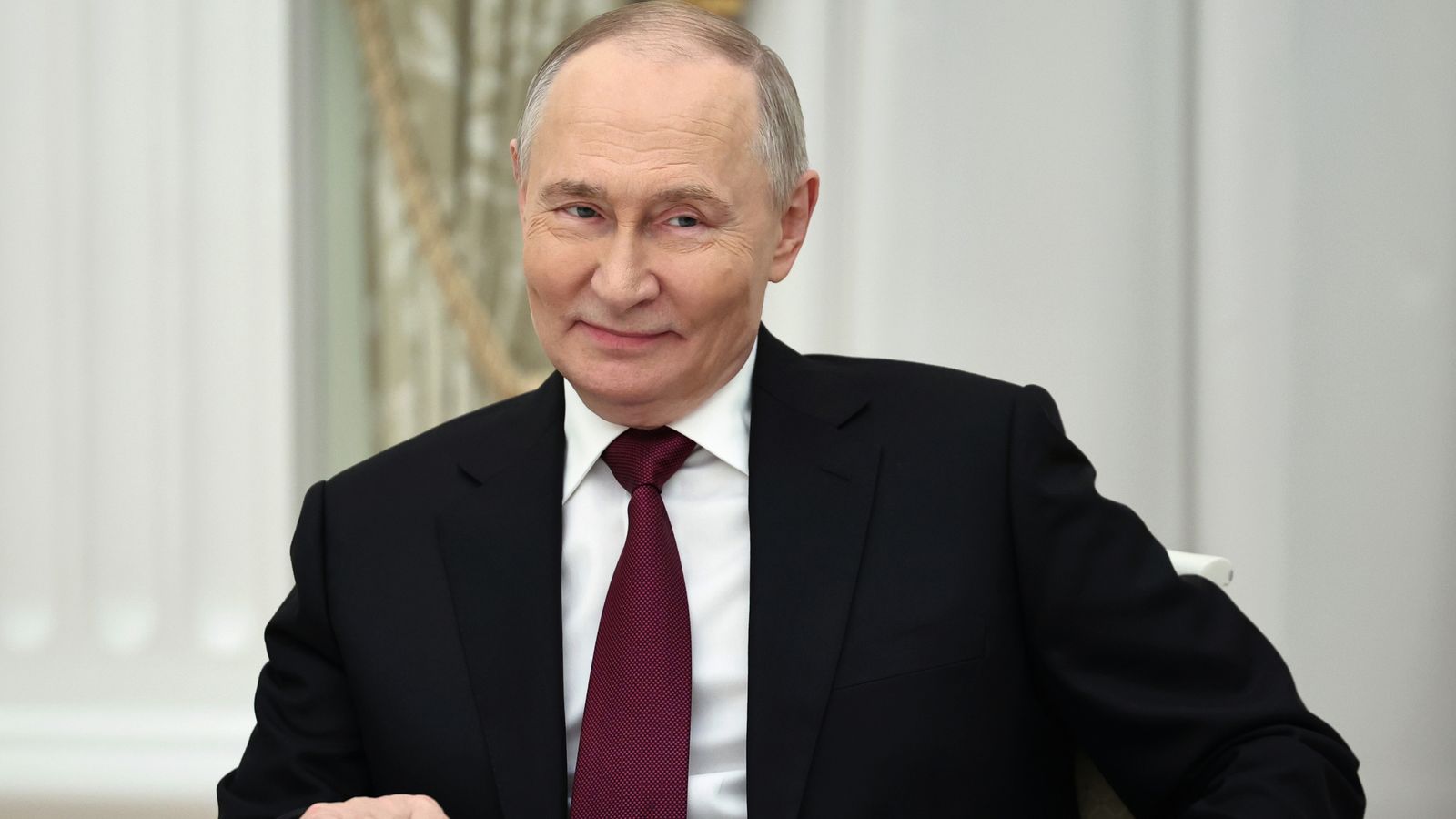
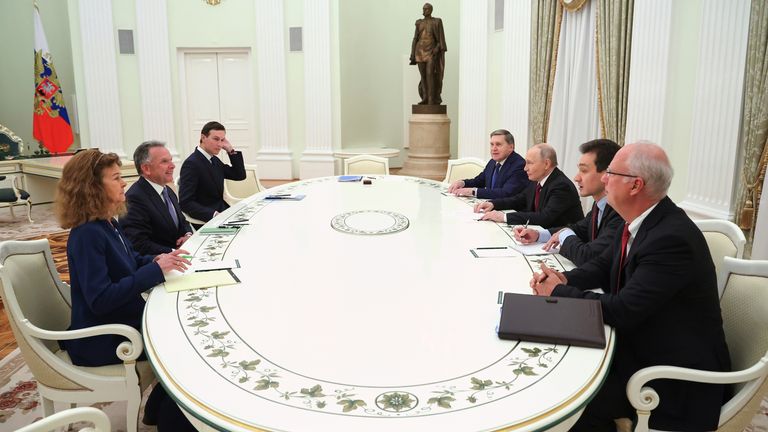
Talks between US negotiators and Vladimir Putin about Ukraine were “productive” but there was no breakthrough, according to Russian officials.
Donald Trump sent special envoy Steve Witkoff and his own son-in-law, Jared Kushner, to Tuesday’s summit in Moscow.
They were pictured in Red Square prior to the summit and Mr Witkoff later told a smiling Mr Putin that Moscow was a “magnificent city”.
Shortly before the summit, the Russian president warned his country was ready to fight if Europe wanted a war.
Latest updates on Ukraine conflict
Russian foreign policy aide Yuri Ushakov and investment envoy Kirill Dmitriev were involved in the talks, which lasted over five fours and ended after midnight.
Both sides agreed not to disclose precise details, but in a one-word social media post, Mr Dmitriev described the meeting as “productive”.
Mr Ushakov called it “rather useful, constructive”, and asked whether peace was closer or further, Mr Ushakov commented: “Not further, that’s for sure”.
However, he said a compromise hadn’t been reached on the issue of territories and that the Kremlin sees “no resolution to the crisis” without one.
Russia wants the whole of the Donbas region – even the parts it does not hold – but Ukraine has balked at the prospect.
Mr Ushakov said there was “still a lot of work to be done, both in Washington and in Moscow” and that “contacts will continue”.
The two sides were joined by translators. Pic: Sputnik/AP
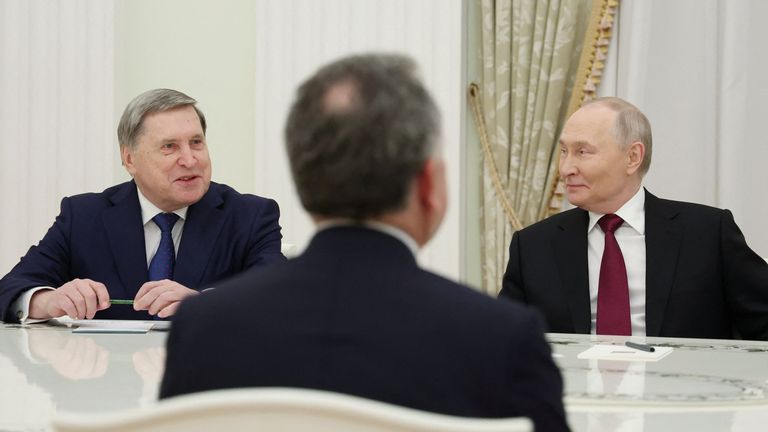
Pic: Reuters
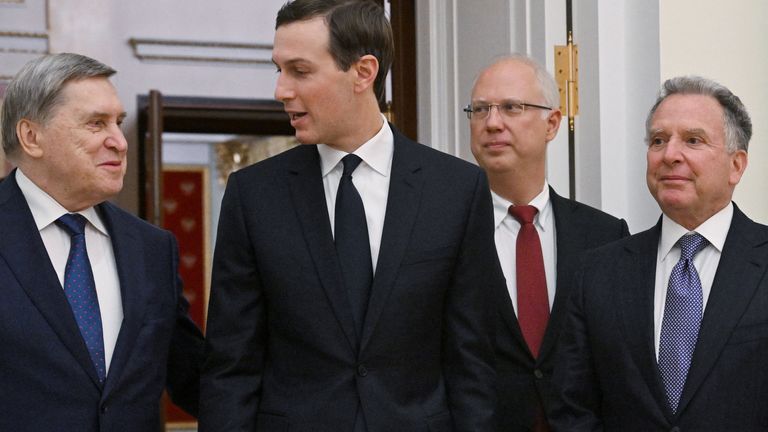
Jared Kushner and Steve Witkoff were joined by Kirill Dmitriev (2nd right) and Yuri Ushakov (left). Pic: Reuters
The meeting took place after an initial 28-point US peace plan was leaked and alarmed European officials, who said it heavily favoured Russia.
An “updated and refined peace framework” was formulated after talks between Europe, the US and Ukraine in Geneva last month.
Earlier on Tuesday, Mr Putin said Russia was ready to fight if Europe wanted a war.
The Russian president accused European powers of changing peace proposals for Ukraine with “demands” that Russia considered “absolutely unacceptable”.
Mr Putin said the Europeans were “on the side of war”.
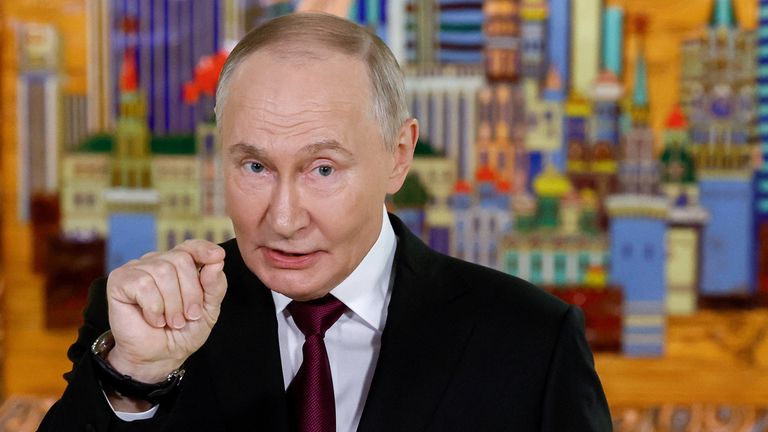
Putin ‘lashes out’ at Europe
“We’re not planning to go to war with Europe, I’ve said that a hundred times,” he said following an investment forum.
“But if Europe suddenly wants to fight us and starts, we’re ready right now. There can be no doubt about that.”
“If Europe suddenly wants to start a war with us and does, then a situation could very quickly arise in which we have no one to negotiate with,” he added.
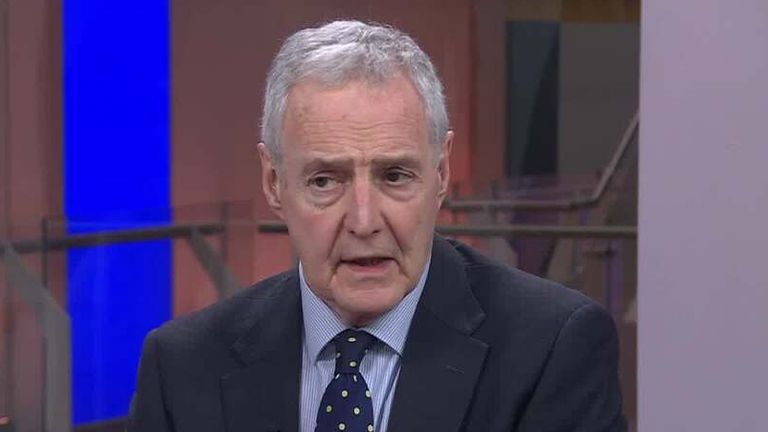
Putin trying to frighten US away from Europe with war remarks
Zelenskyy in Dublin
Ukraine’s President Volodymyr Zelenskyy was in Dublin on Tuesday to meet Ireland’s prime minister and president.
During the trip, Mr Zelenskyy said he was ready to meet Mr Trump again but it would depend on how successful the Moscow talks were.
He said the chances of ending the war were “better now than ever” but warned there would be “no easy decisions” and there must be “no games behind Ukraine’s back”.
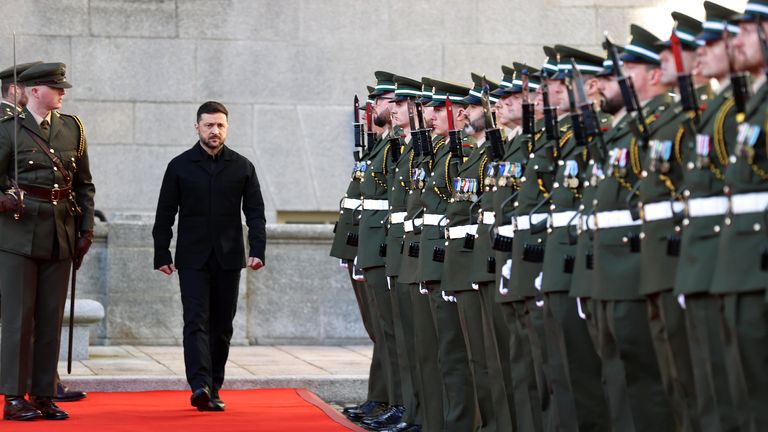
President Zelenskyy had a guard of honour in Dublin. Pic: Reuters
Calling it “one of the most challenging but optimistic moments” since Russia invaded in 2022, he said the US was “taking serious steps to end this war one way or another”.
He admitted “some things still need to be worked out” and said a “decent, dignified peace” was needed.
Read more:
How history could view Trump as ‘biggest useful idiot’
Hotspots: Reality of life on frontline of journalism
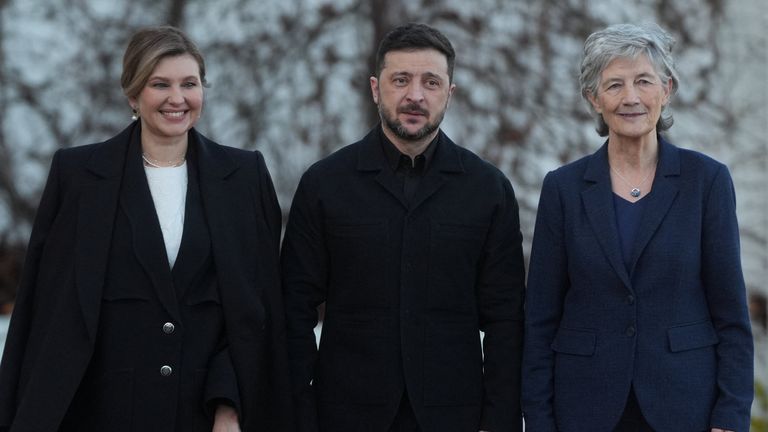
President Zelenskyy, his wife Olena, and Irish President Catherine Connolly. Pic: Reuters
The Irish government announced €100m (£88m) in non-lethal aid for Ukraine, “generosity” for which Mr Zelenskyy said Ukraine was grateful.
It brings the total in non-lethal military aid provided to Ukraine this year to €200m (£176m).
The funding is part of a new Ireland-Ukraine partnership, which builds on an agreement signed last year.
It includes €25m (£22m) for the restoration and protection of energy infrastructure and a scheme to support training and other efforts as part of Ukraine’s path to EU accession, which Mr Zelenskyy said he hoped to achieve within five years.
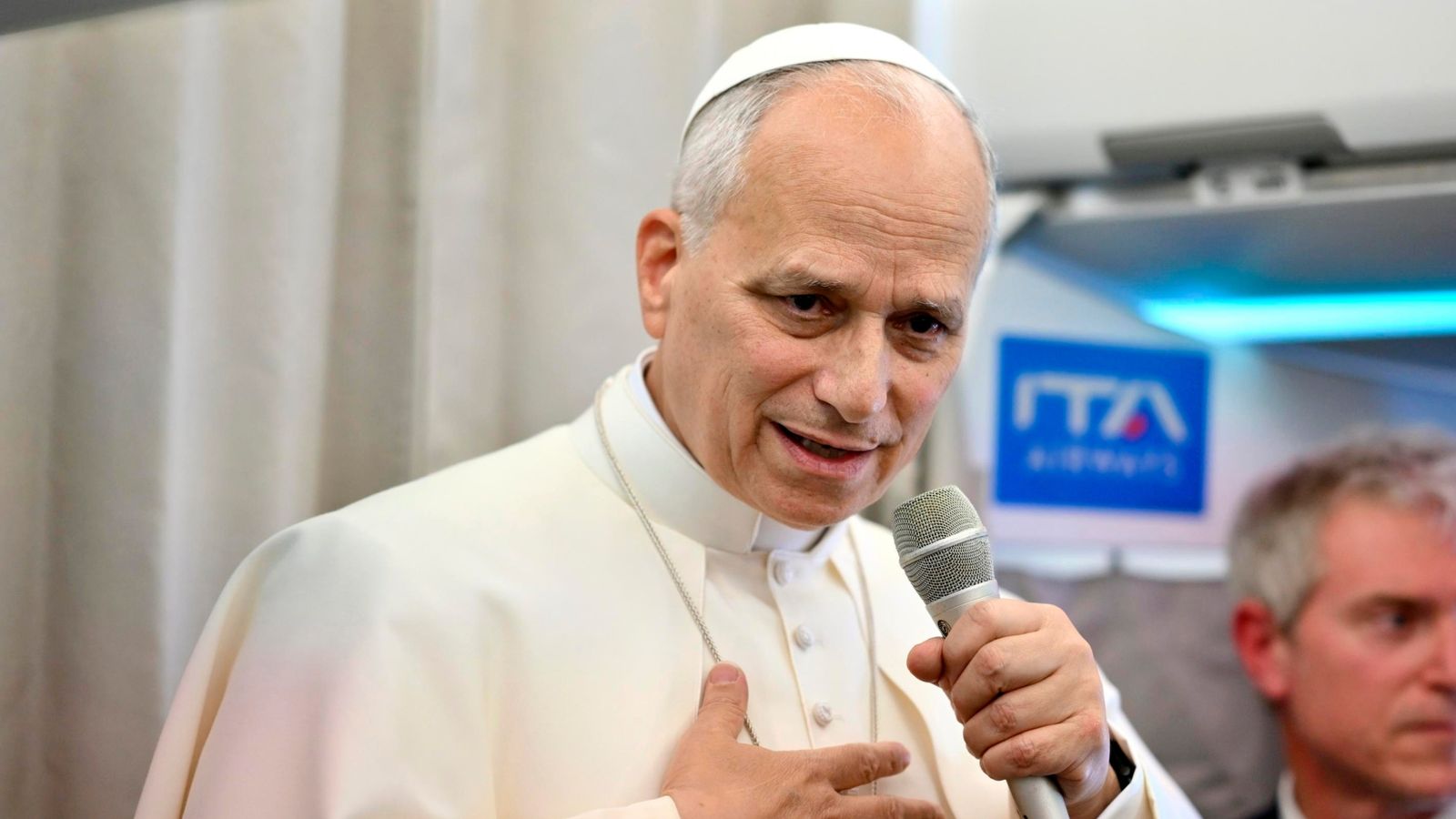
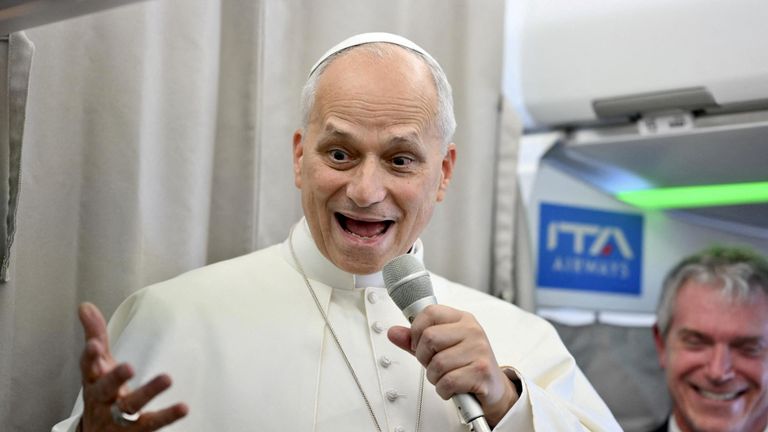
The Pope has urged Donald Trump not to try to oust Venezuelan President Nicolas Maduro using military force.
Leo, the first American pontiff, said it would be better to attempt dialogue or impose economic pressure on Venezuela if Washington wants to pursue change there.
The Trump administration has been weighing options to combat what it has portrayed as Mr Maduro’s role in supplying illegal drugs that have killed Americans.
The socialist Venezuelan president has denied having any links to the illegal drug trade.
Pope Leo XIV aboard a flight to Rome. Pic: Reuters
Asked during a news conference about President Trump’s threats to remove Mr Maduro by force, the Pope said: “It is better to search for ways of dialogue, or perhaps pressure, including economic pressure.”
He added that Washington should search for other ways to achieve change “if that is what they want to do in the United States”.
The Pope was speaking as he flew home from a visit to Turkey and Lebanon – his first overseas trip in the role.
Mr Maduro has said Venezuelans are ready to defend their country as the US considers a land attack.
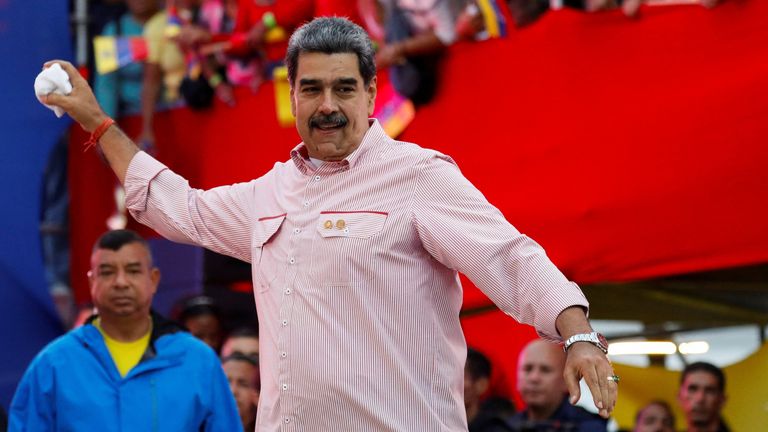
Venezuela’s President Nicolas Maduro in Caracas. Pic: Reuters
The president held a rally in Caracas amid heightened tensions with Mr Trump’s administration, which has been targeting what it says are boats carrying drug smugglers.
Mr Trump met his national security team on Monday evening, having warned last week that land strikes would start “very soon”.
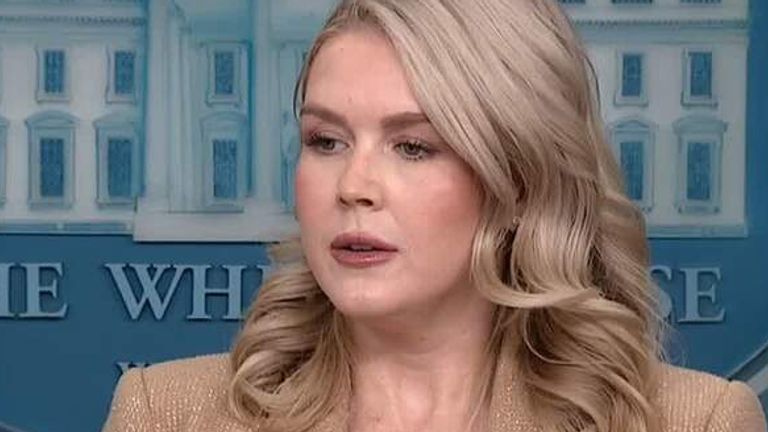
It’s not been confirmed what was discussed at the meeting, but White House press secretary Karoline Leavitt told reporters: “There’s many options at the president’s disposal that are on the table – and I’ll let him speak on those.”
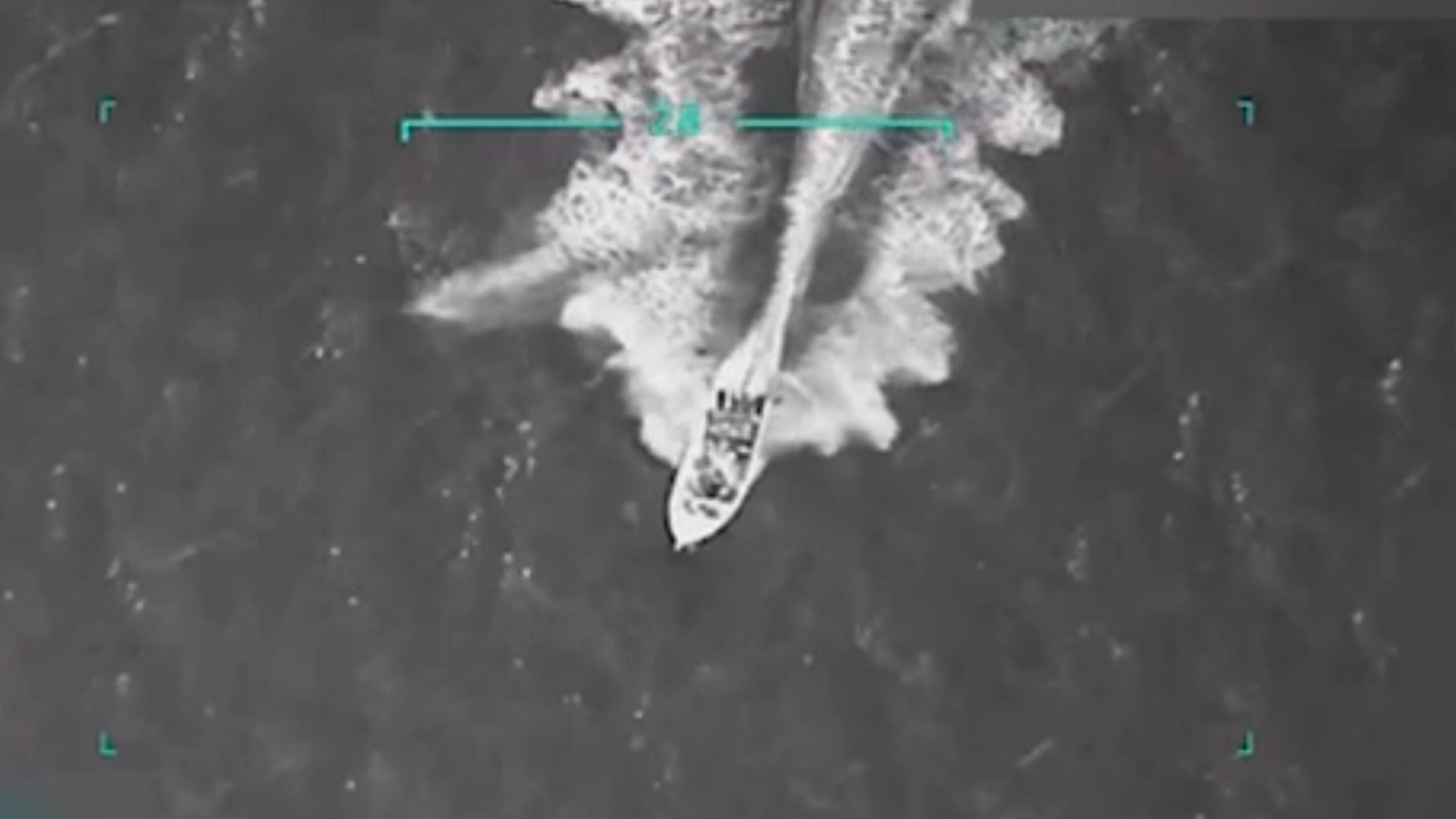
US forces have carried out at least 21 strikes on boats it claims were carrying narcotics to its shores over the last few months.
‘The president has a right to take them out’
Mr Maduro – widely considered a dictator by the West – said on Monday that Venezuelans are ready “to defend [the country] and lead it to the path of peace”.
“We have lived through 22 weeks of aggression that can only be described as psychological terrorism,” he said.
Venezuela has said the boat attacks, which have killed more than 80 people, amount to murder – and that Mr Trump’s true motivation is to oust Mr Maduro and access its oil.
This breaking news story is being updated and more details will be published shortly.
Please refresh the page for the latest version.
You can receive breaking news alerts on a smartphone or tablet via the Sky News app. You can also follow us on WhatsApp and subscribe to our YouTube channel to keep up with the latest news.

“Many options” are on the table to deal with Venezuelan drug gangs, the White House has said, as the US considers attacking on land.
President Trump is meeting his national security team on Monday and could discuss what would be a major escalation in strikes that have so far only targeted boats.
Karoline Leavitt, the president’s press secretary, did not detail what the meeting would focus on. However, Mr Trump said last week that land strikes would start “very soon”.
“There’s many options at the president’s disposal that are on the table – and I’ll let him speak on those,” Ms Leavitt told reporters.
Three killed as US strikes another alleged drug boat
American forces have carried out at least 21 strikes on boats it claims were carrying narcotics to its shores over the last few months.
The US has accused Venezuelan President Nicolas Maduro of being involved in the drugs trade – a claim he denies.
Venezuela has said the attacks, which have killed more than 80 people, amount to murder and that President Trump’s true motivation is to oust Mr Maduro and access its oil.
President Maduro – widely considered a dictator by the West – said on Monday that Venezuelans are ready “to defend [the country] and lead it to the path of peace”.
“We have lived through 22 weeks of aggression that can only be described as psychological terrorism,” he said.
Concerns have been raised over the legality of the US attacks, which the Pentagon has sought to justify by designating the gangs as foreign terror organisations.
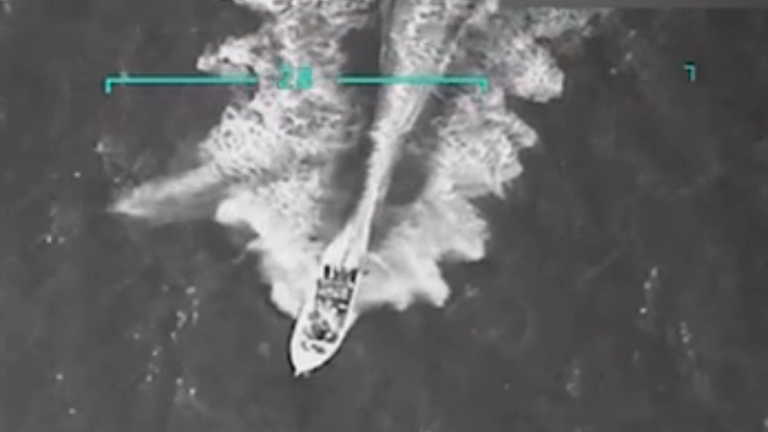
Image of an alleged drug boat being targeted by the US military. Pic: Truth Social
Tensions remain high over America’s large deployment in the Caribbean Sea and eastern Pacific, which includes its flagship aircraft carrier and thousands of troops.
The US has released videos of boats being blown up but has not provided evidence – such as photos of drugs – to support the smuggling claims.
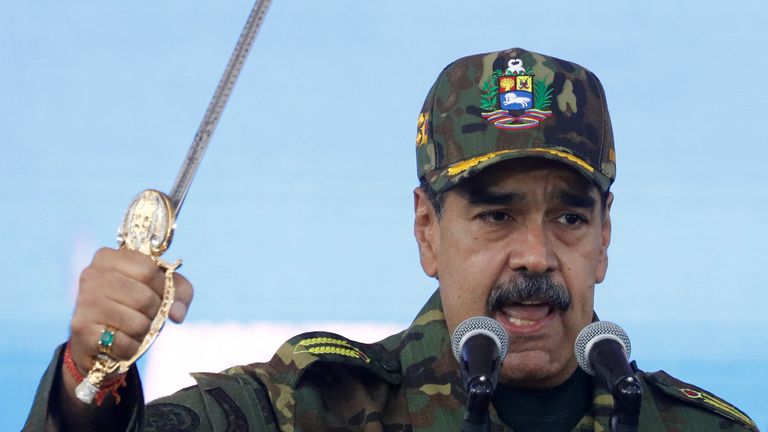
President Maduro is widely considered a dictator by the West. Pic: Reuters
Controversy also surrounds the first incident, on 2 September, in which 11 people were killed – with a follow-up strike targeting the boat after the first attack left two survivors in the water.
US media reported defence secretary Pete Hegseth gave an order beforehand that everyone on board should be killed.
However, there are concerns about the legality of the second strike if the survivors posed no threat.
Mr Hegseth dismissed the reporting as “fake news” and insisted all actions in the region are compliant with US and international law.
“Every trafficker we kill is affiliated with a Designated Terrorist Organization,” he said on X.
President Trump said on Sunday he would not have wanted a second strike and that Mr Hegseth had denied giving such an order.
Read more from Sky News:
Hong Kong fire: 13 arrested as death toll hits 151
More than 1,100 confirmed dead in Asia floods
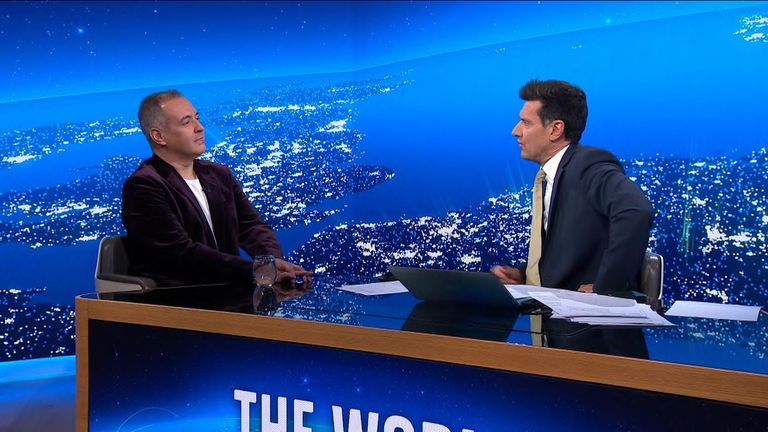
Is US about to go to war with Venezuela?
Ms Leavitt confirmed on Monday that the boat had been hit by a second strike – but denied Mr Hegseth gave the order for the follow-up.
Instead, she said he had authorised US navy vice admiral Frank Bradley to attack and the admiral acted “well within his authority and the law, directing the engagement to ensure the boat was destroyed and the threat to the US was eliminated”.
As the US weighs its next steps, Mr Trump said on Sunday he had spoken to President Maduro by phone and that the conversation went neither “well or badly”.
In recent days, he also stated that Venezuela’s airspace should be considered closed – with the South American nation calling it a “colonial threat” and “illegal, and unjustified aggression”.
-
 Sports2 years ago
Story injured on diving stop, exits Red Sox game
-
 Sports3 years ago
‘Storybook stuff’: Inside the night Bryce Harper sent the Phillies to the World Series
-
 Sports2 years ago
Game 1 of WS least-watched in recorded history
-
 Sports3 years ago
Button battles heat exhaustion in NASCAR debut
-
 Sports3 years ago
MLB Rank 2023: Ranking baseball’s top 100 players
-
Sports4 years ago
Team Europe easily wins 4th straight Laver Cup
-
 Environment3 years ago
Japan and South Korea have a lot at stake in a free and open South China Sea
-
 Environment1 year ago
Here are the best electric bikes you can buy at every price level in October 2024