
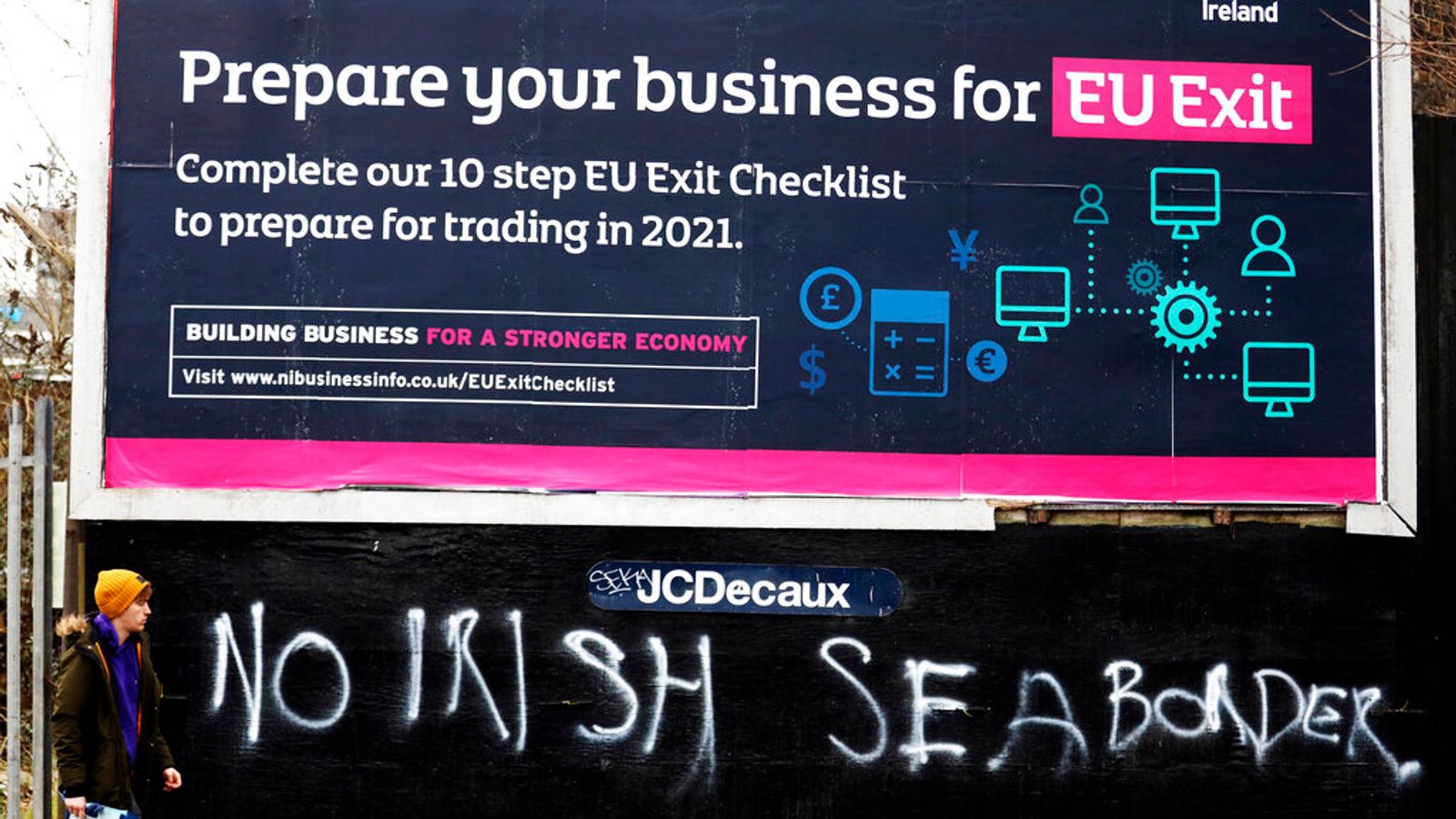
What is the Brexit deal being discussed between UK and EU and will it be backed in Northern Ireland?

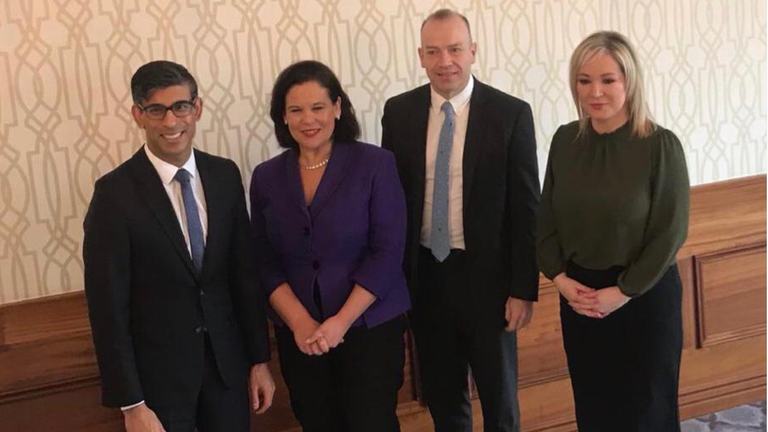
Rishi Sunak says Britain and the EU have an understanding on what needs to be done around the Northern Ireland Protocol, but that work still needs to be done.
The prime minister spoke about where things stand following his speech at the Munich Security Conference, saying that Britain wanted to have a positive relationship with the EU.
So what is actually going on?
I thought we had a Brexit deal, what is this agreement that Rishi Sunak is trying to get?
These talks are all about the part of the Brexit deal that relates to Northern Ireland.
Dubbed the “Northern Ireland Protocol”, it was agreed with the EU by Boris Johnson in 2020 – alongside the wider trade and co-operation treaty.
The point of it is to avoid a hard physical border on the island of Ireland – the only place where there is a land frontier between the UK and EU.
All parties agreed this was necessary to preserve peace on the island.
The protocol does this by placing Northern Ireland in a far tighter relationship with the EU, compared with the rest of the UK.
Since the Brexit deal fully came into force at the start of 2021, there has been an ongoing process to iron out the various issues it has thrown up relating to Northern Ireland.
That has escalated over time to the point where a new agreement is now being worked on.
There’s new hope of a breakthrough to end years of deadlock between the UK and the European Union over post-Brexit trade arrangements
What practical changes are needed?
To avoid a hard border on the island of Ireland, physical checks take place when goods cross the Irish Sea from Great Britain to Northern Ireland.
Companies and traders in Northern Ireland also have to comply with EU single market rules.
This has all caused friction in the flows of goods coming from England, Wales and Scotland with shortages of certain items in shops and onerous paperwork for businesses.
EU rules on food stuffs has also meant a potential ban on sausages and other “chilled meats” coming from Great Britain.
There are also upsides of the deal though. As Northern Ireland essentially still has one foot in the EU single market, it’s easier for businesses there to trade on the continent.
What’s been the political fallout in Belfast?
Democratic Unionist Party (DUP) unionist politicians in Belfast believe Northern Ireland is being carved out from the rest of the UK and treated in too different a fashion.
This stems in part from the practical problems being experienced by businesses.
There’s also concern over a so-called “democratic deficit” whereby Northern Ireland takes on rules from Brussels that it has no say over.
There are more ideological issues too. The role played by the European Court of Justice is a big sticking point.
Because Northern Ireland is still subject to EU rules, Brussels believes its court should have a heavy involvement in resolving disputes.
The DUP and some Conservative MPs see this as an erosion of the UK’s sovereignty and incompatible with the aims of Brexit.
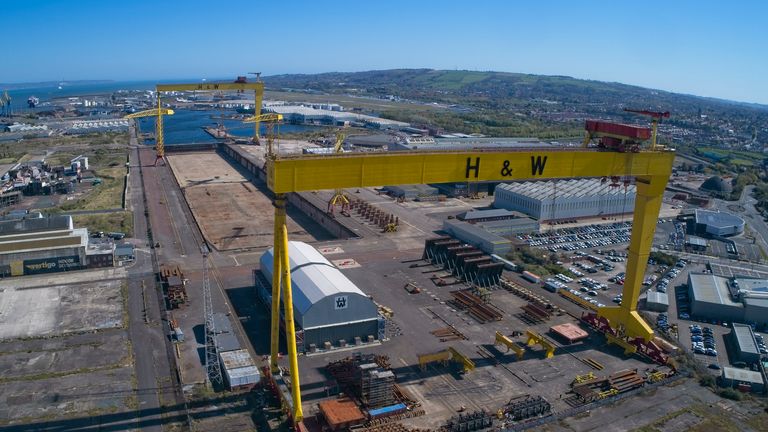
The iconic site of Harland & Wolff’s shipyard in Belfast
How does this relate to the Northern Ireland assembly?
The DUP is one of two parties that shares power in the devolved government in Northern Ireland.
But the party has been staging a boycott and refusing to allow this executive to form or the elected assembly to sit until its concerns over the Brexit deal are addressed.
This has meant the democratic institutions that are supposed to be running public services in Northern Ireland and representing voters haven’t been functioning properly for more than a year.
Sinn Fein – the republican party that also shares powers in Belfast – has urged the DUP to approve the changes to the Brexit deal and go back into power-sharing as soon as possible.
What will be in the new deal?
We don’t really know. Downing Street has been keeping quiet about the details.
Speculation is that parts of it will look quite similar to plans outlined by the UK last year.
There may be a “green lane” and “red lane” system to separate goods destined for Northern Ireland from those at risk of being transported to the Republic and on to the EU.
This should reduce the need for physical checks and paperwork. Some sort of compromise is also likely on the role of the European Court of Justice.
There could potentially be a mechanism whereby the ECJ can only decide on a dispute after a referral from a separate arbitration panel or a Northern Irish court.
Read more:
Britain and EU NI deal ‘by no means done’
Northern Ireland election delayed until January 2024
Will the DUP support it?
This is the big unknown. The party has come up with seven “tests” that it will apply to any deal when deciding whether to back it.
These contain some specific requests, such as there being no checks on goods going from Great Britain to Northern Ireland and no border in the Irish Sea.
But there are also broader points such as allowing the people of Northern Ireland the same privileges as everyone else in the United Kingdom and guaranteeing the letter and spirit of the Good Friday Agreement.
There are also electoral considerations, a sizeable chunk of the unionist community in Northern Ireland believes the DUP should only go back into power-sharing if the Northern Ireland Protocol is scrapped completely.
So if the DUP is seen to cave too easily, the party could lose voters to more hard line rivals.
Will Tory MPs support it?
Again, we just don’t know. It’s also unclear whether MPs will actually get a Commons vote on the new agreement. Downing Street hasn’t committed to one.
But not allowing MPs to have a say would risk inflaming tensions with backbenchers.
The main audience the prime minister needs to please here is the “European Research Group” of pro-Brexit MPs.
They claim otherwise, but the caucus isn’t really as powerful as it was a few years ago.
Many senior members are now in government including the Home Secretary Suella Braverman, the Northern Ireland Secretary Chris Heaton-Harris and his junior minister Steve Baker.
They will all need to be happy before the deal is published. In fact, they could play a part in getting Eurosceptic colleagues on board.
The reaction of Boris Johnson could also prove crucial. If the former prime minister came out against his successor’s deal, that could galvanise backbench anger.
Labour has said it will lend Rishi Sunak votes if he can’t push the deal through on his own. But this would be an embarrassing development for the prime minister that would risk further instability in his own party.
What happens if Rishi Sunak can’t get everybody on board?
The prime minister can live with some dissent from his MPs. Failing to win the support of the DUP is more serious though, as it means the party will continue to block the formation of the devolved executive in Belfast.
If the objections from the DUP seem less forceful, Mr Sunak could proceed anyway and hope they eventually come onboard after May’s local elections.
If he runs into a solid roadblock with both his MPs and the DUP and can’t get further concessions from the EU, then there is still the option of invoking the Northern Ireland Protocol Act.
This is UK legislation currently making its way through Parliament that would strip away parts of the Brexit deal without the approval of the EU.
Many see it as contravening international law and using it risks a trade war with Brussels. That’s something the government could do without, given the delicate economic situation.
What if Rishi Sunak gets his deal through with support from everybody?
If the prime minister can fix the Brexit deal, restore power-sharing in Belfast and keep his party together then it will be the undeniable high point of his time in Downing Street so far.
He will be able to claim that he solved an issue that has bedevilled his three predecessors.
It also has the potential of being a significant political inflexion point.
If the economic situation improves and he can also bring forward tangible action on strikes and Channel crossings, then there is a chance that the gloomy electoral outlook for the government begins to brighten.
But I thought Boris Johnson said Brexit was done?
Yes, he did. He also promised that his deal would not lead to a border in the Irish Sea.
At the time, many inside and outside of politics warned that the text of the agreement he signed would mean checks between Great Britain and Northern Ireland.
The former prime minister and his allies now say no one expected the EU to enforce the agreement in such a strict and inflexible way. The real answer to all this may lie in the politics of the time.
In 2019, Boris Johnson was eager to get a deal agreed with Brussels and campaign in a general election on the back of it.
This meant some of the thornier parts of the treaty were somewhat played down at the time. But it also stored up problems that Rishi Sunak is now trying to fix.
If this deal goes through, will Brexit then be done?
It will be more “done” than it ever has been. But overall, not really.
For a start, the Northern Ireland Protocol has a consent mechanism built into it, meaning that members of the devolved assembly in Belfast will vote next year on whether to keep the arrangement.
If a simple majority of Stormont members approves the deal, then it will remain in place for four years, at which point another vote will take place.
If it passes with a higher approval percentage in both unionist and republican parties, then the next vote will happen in eight years’ time. Then there’s the issue of the UK signing trade deals with other countries around the world.
This could mean changes to domestic rules and regulations that would have a knock-on impact for Northern Ireland and for the UK’s broader relationship with the EU.
Future governments may also decide to take a different approach with Brussels meaning Brexit and the country’s relationship with its closest neighbours will stay a live issue for a good time yet.
UK
Specialist teams and online investigators deployed across England and Wales to tackle ‘national emergency’ of violence against women and girls
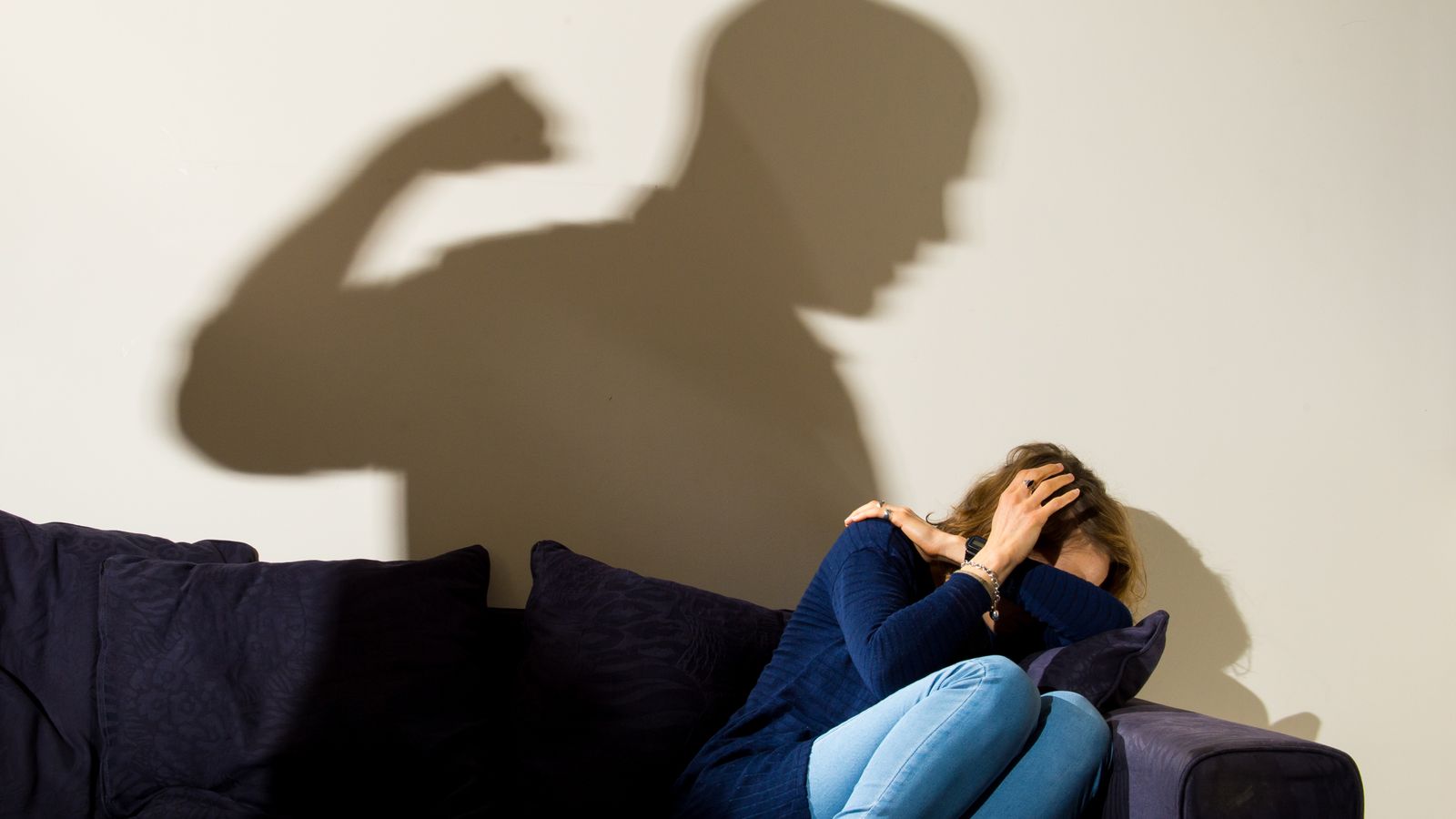
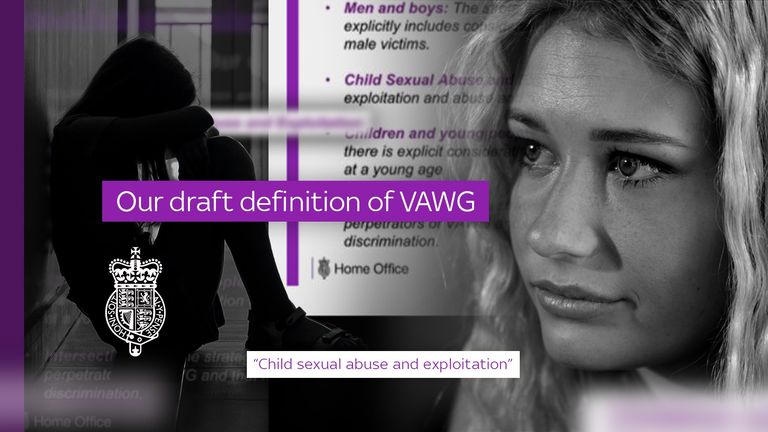
Specialist investigation teams for rape and sexual offences are to be created across England and Wales as the Home Secretary declares violence against women and girls a “national emergency”.
Shabana Mahmood said the dedicated units will be in place across every force by 2029 as part of Labour’s violence against women and girls (VAWG) strategy due to be launched later this week.
The use of Domestic Abuse Protection Orders (DAPOs), which had been trialled in several areas, will also be rolled out across England and Wales. They are designed to target abusers by imposing curfews, electronic tags and exclusion zones.
The orders cover all forms of domestic abuse, including economic abuse, coercive and controlling behaviour, stalking and ‘honour’-based abuse. Breaching the terms can carry a prison term of up to 5 years.
Govt ‘thinking again’ on abuse strategy
Nearly £2m will also be spent funding a network of officers to target offenders operating within the online space.
Teams will use covert and intelligence techniques to tackle violence against women and girls via apps and websites.
A similar undercover network funded by the Home Office to examine child sexual abuse has arrested over 1,700 perpetrators.
Abuse is ‘national emergency’
Home Secretary Shabana Mahmood said in a statement: “This government has declared violence against women and girls a national emergency.
“For too long, these crimes have been considered a fact of life. That’s not good enough. We will halve it in a decade.
“Today we announce a range of measures to bear down on abusers, stopping them in their tracks. Rapists, sex offenders and abusers will have nowhere to hide.”
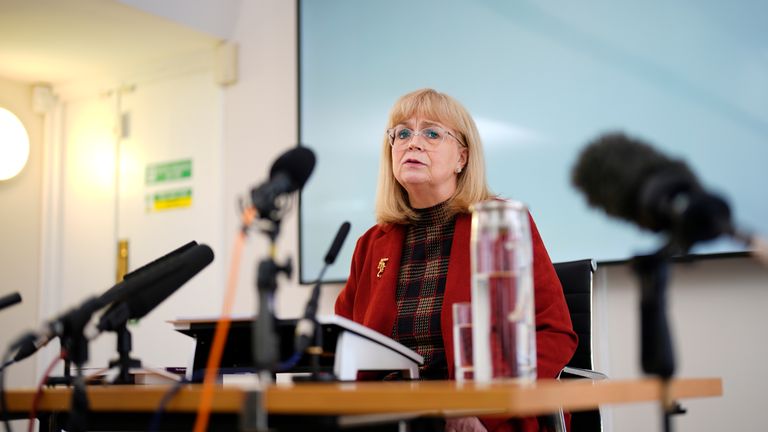
Angiolini Inquiry: Recommendations are ‘not difficult’
The target to halve violence against women and girls in a decade is a Labour manifesto pledge.
The government said the measures build on existing policy, including facial recognition technology to identify offenders, improving protections for stalking victims, making strangulation a criminal offence and establishing domestic abuse specialists in 999 control rooms.
Read more from Sky News:
Demands for violence and abuse reforms
Women still feel unsafe on streets
Minister ‘clarifies’ violence strategy
Labour has ‘failed women’
But the Conservatives said Labour had “failed women” and “broken its promises” by delaying the publication of the violence against women and girls strategy.
Shadow Home Secretary, Chris Philp, said that Labour “shrinks from uncomfortable truths, voting against tougher sentences and presiding over falling sex-offender convictions. At every turn, Labour has failed women.”
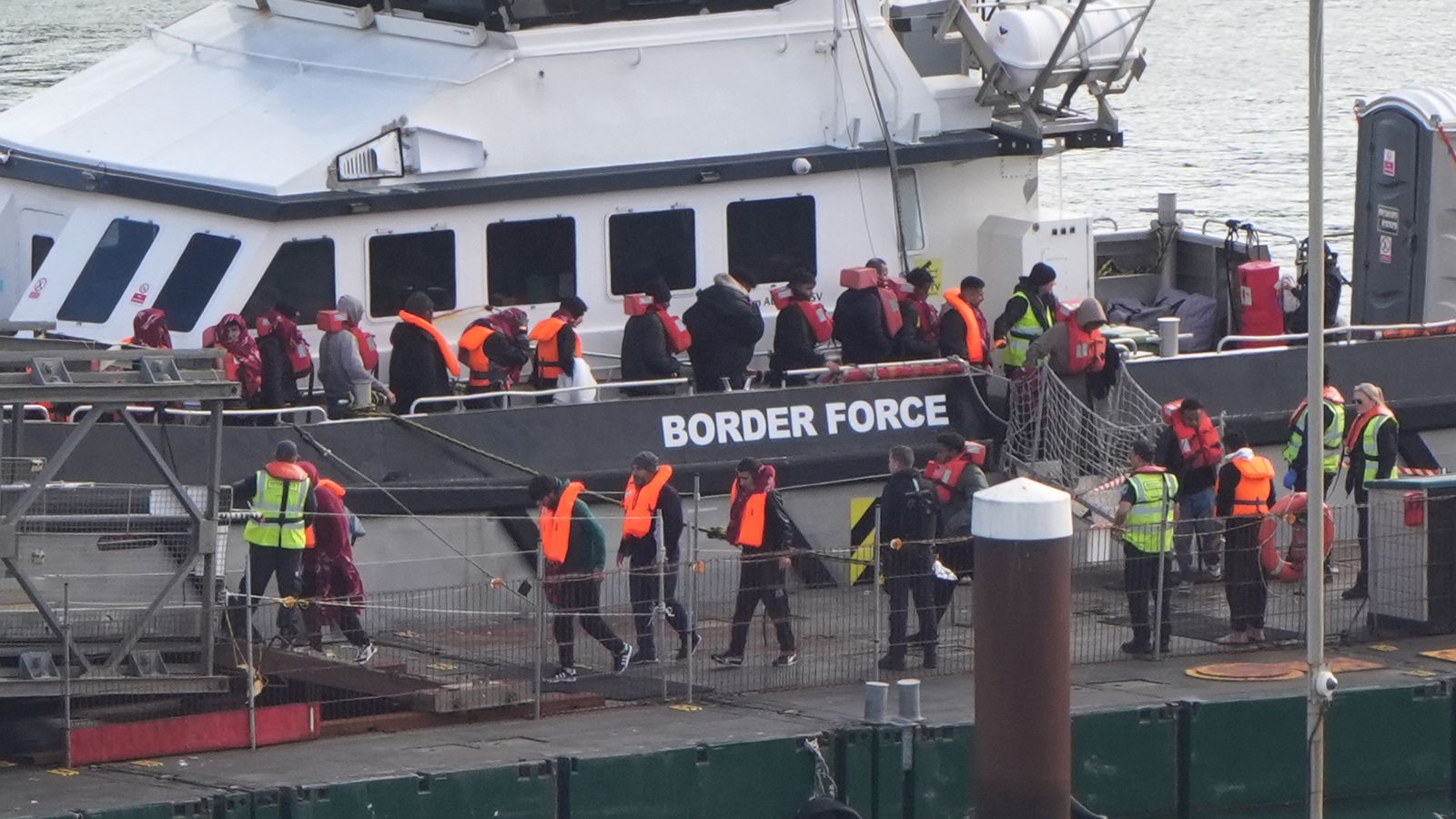
There have been no migrant arrivals in small boats crossing the Channel for 28 days, according to Home Office figures.
The last recorded arrivals were on 14 November, making it the longest uninterrupted run since autumn 2018 after no reported arrivals on Friday.
However, a number of Border Force vessels were active in the English Channel on Saturday morning, indicating that there may be arrivals today.
So far, 39,292 people have crossed to the UK aboard small boats this year – already more than any other year except 2022.
The record that year was set at 45,774 arrivals.
It comes as the government has stepped up efforts in recent months to deter people from risking their lives crossing the Channel – but measures are not expected to have an impact until next year.
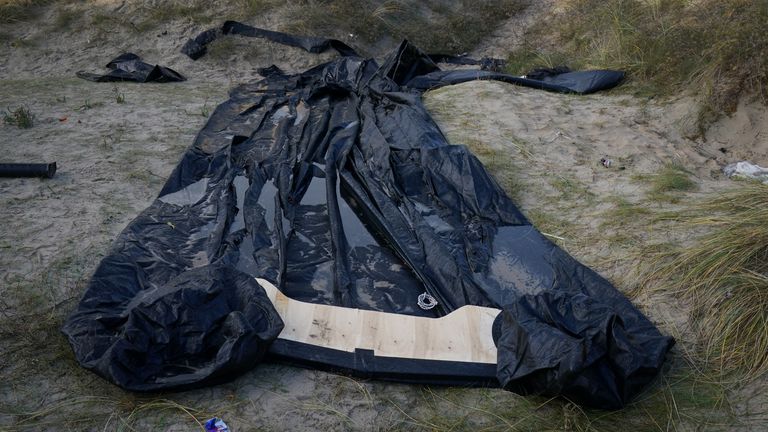
Debris of a small boat used by people thought to be migrants to cross the Channel lays amongst the sand dunes in Gravelines, France. Pic: PA
December is normally one of the quietest for Channel crossings, with a combination of poor visibility, low temperatures, less daylight and stormy weather making the perilous journey more difficult.
The most arrivals recorded in the month of December is 3,254, in 2024.
Deputy Prime Minister David Lammy met with ministers from other European countries this week as discussions over possible reform to the European Convention on Human Rights (ECHR) continue.
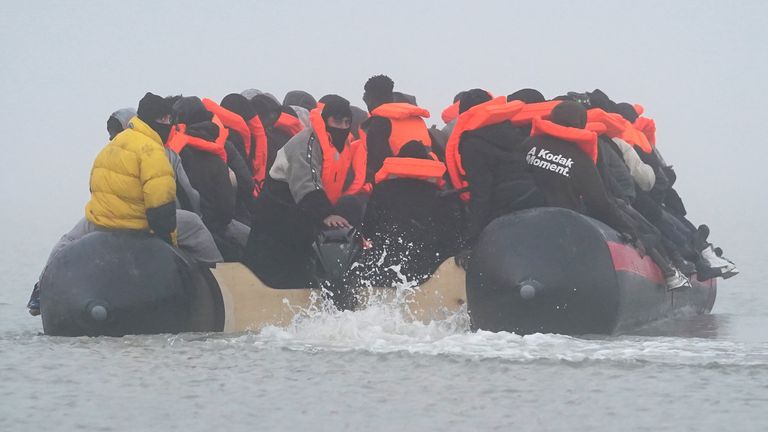
France agrees to start intercepting small boats
The issue of small boat arrivals – a very small percentage of overall UK immigration – has become a salient issue in British politics in recent years.
Last month, French maritime police announced they would soon be able to intercept boats in the English Channel.
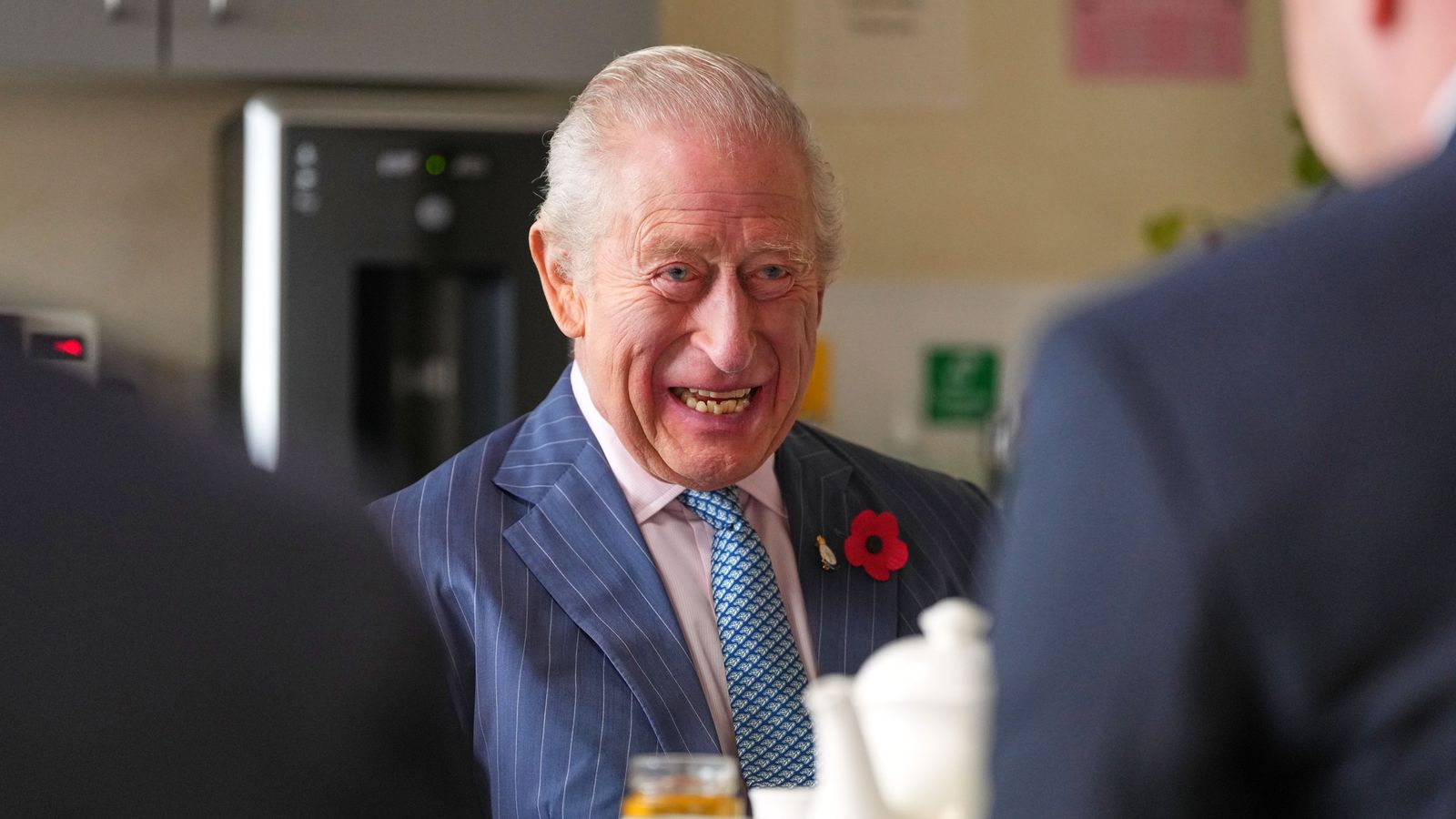
The King has shared in a television address that, thanks to early diagnosis, his cancer treatment can be reduced in the new year.
In a televised address, Charles said his “good news” was “thanks to early diagnosis, effective intervention and adherence to doctors’ orders”.
“This milestone is both a personal blessing and a testimony to the remarkable advances that have been made in cancer care in recent years,” he added.
“Testimony that I hope may give encouragement to the 50% of us who will be diagnosed with the illness at some point in our lives.”
The King announced in February 2024 that he had been diagnosed with cancer and was beginning treatment.
The monarch postponed all public-facing engagements, but continued with his duties as head of state behind palace walls, conducting audiences and Privy Council meetings.
He returned to public duties in April last year and visited University College Hospital Macmillan Cancer Centre in central London with the Queen and discussed his “shock” at being diagnosed when he spoke to a fellow cancer patient.
Sources suggested last December his treatment would continue in 2025 and was “moving in a positive direction”.
The King began returning to public duties in April last year. File pic: PA
The King has chosen not to reveal what kind of cancer he has been treated for. Palace sources have partly put that down to the fact that he doesn’t want one type of cancer to appear more significant or attract more attention than others.
In a statement after the speech aired, a Buckingham Palace spokesperson said: “His Majesty has responded exceptionally well to treatment and his doctors advise that ongoing measures will now move into a precautionary phase.”
Sir Keir Starmer praised the video message as “a powerful message,” and said: “I know I speak for the entire country when I say how glad I am that his cancer treatment will be reduced in the new year.
“Early cancer screening saves lives.”
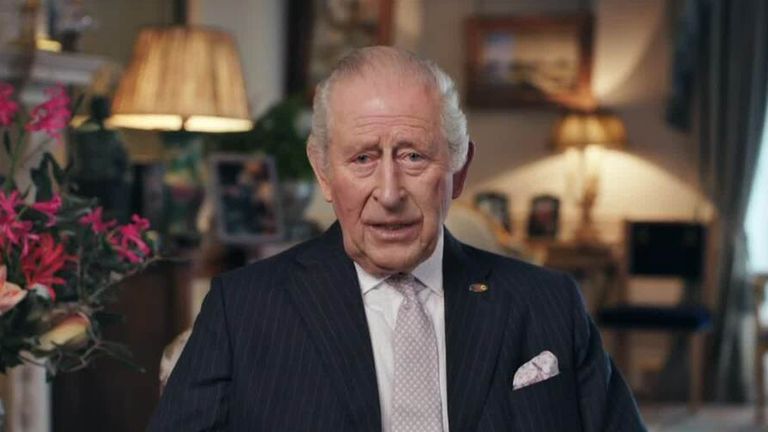
Watch: King Charles gives update on treatment
Early detection can give ‘the precious gift of hope’
His message on Friday was broadcast at 8pm in support of Stand Up To Cancer, a joint campaign by Cancer Research UK and Channel 4.
In an appeal to people to get screened for the disease early, the King said: “I know from my own experience that a cancer diagnosis can feel overwhelming.
“Yet I also know that early detection is the key that can transform treatment journeys, giving invaluable time to medical teams – and, to their patients, the precious gift of hope. These are gifts we can all help deliver.”
Charles noted that “at least nine million people in our country are not up to date with the cancer screenings available to them,” adding: “That is at least nine million opportunities for early diagnosis being missed.
“The statistics speak with stark clarity. To take just one example: When bowel cancer is caught at the earliest stage, around nine in ten people survive for at least five years.
“When diagnosed late, that falls to just one in ten. Early diagnosis quite simply saves lives.”
Minor inconvenience of screening ‘a small price to pay’
The King acknowledged that people often avoid screening “because they imagine it may be frightening, embarrassing or uncomfortable”. But, he added: “If and when they do finally take up their invitation, they are glad they took part.
“A few moments of minor inconvenience are a small price to pay for the reassurance that comes for most people when they are either told either they don’t need further tests, or, for some, are given the chance to enable early detection, with the life-saving intervention that can follow.”
Read more from Sky News:
Christmas tree chopped down hours after lights switch-on
More photos from Epstein’s estate released
Taylor Swift breaks down in tears over Southport attacks
Giving his “most heartfelt thanks” to doctors, nurses, researchers and charity workers, the King added: “As I have observed before, the darkest moments of illness can be illuminated by the greatest compassion. But compassion must be paired with action.
“This December, as we gather to reflect on the year past, I pray that we can each pledge, as part of our resolutions for the year ahead, to play our part in helping to catch cancer early.
“Your life – or the life of someone you love – may depend upon it.”
-
 Sports2 years ago
Story injured on diving stop, exits Red Sox game
-
 Sports3 years ago
‘Storybook stuff’: Inside the night Bryce Harper sent the Phillies to the World Series
-
 Sports2 years ago
Game 1 of WS least-watched in recorded history
-
 Sports3 years ago
Button battles heat exhaustion in NASCAR debut
-
 Sports3 years ago
MLB Rank 2023: Ranking baseball’s top 100 players
-
Sports4 years ago
Team Europe easily wins 4th straight Laver Cup
-
 Environment3 years ago
Japan and South Korea have a lot at stake in a free and open South China Sea
-
 Environment1 year ago
Here are the best electric bikes you can buy at every price level in October 2024