

Abby Choi: Police search landfill for missing body parts of Hong Kong model whose legs were found in fridge


Police are searching a landfill site as they investigate the murder of a Hong Kong model whose dismembered legs were found inside a fridge.
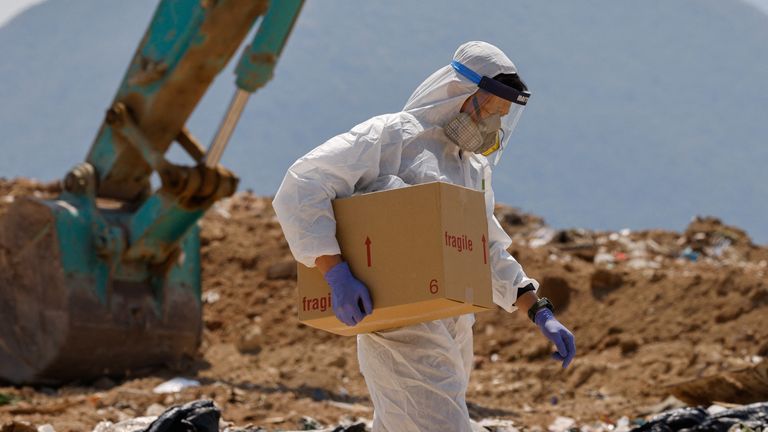
More than 100 officers wearing protective suits used excavators and shovels to search for Abby Choi’s hands and torso which remain missing.
A young woman’s skull, which is believed to be Ms Choi’s, was found in a cooking pot that was seized from the property where her legs were found.
A hole on the back of the skull is where she was struck in the fatal attack, officials believe.
The search for her remaining body parts has been taking place at the North East New Territories Landfill in Ta Kwu Ling, Hong Kong, close to the border with mainland China.
Superintendent Alan Chung told reporters: “The suspects threw away several bags of important evidence in the morning of 22 February.
“There may be some human body parts or they could be the clothes and phone of the victim – or even the weapons.”
So far, the search has not yielded anything substantial other than bones – with police unable to ascertain whether they are from a human or an animal.
Ms Choi, 28, was reportedly last seen a week ago on Tuesday 21 February, with police finding her legs in a fridge days later.
Human tissue was discovered in pots of soup when officers searched the property on Friday.
Local media reports say the house is in Lung Mei Village in Thai Po and is believed to have been rented by Ms Choi’s former father-in-law a few weeks ago.
Abby Choi was a model and influencer
Ms Choi, whose Instagram account has more than 100,000 followers, posted days before her disappearance, sharing a photoshoot she did for the front cover of fashion magazine, L’Officiel Monaco.
Police said she was embroiled in a financial dispute involving tens of millions of Hong Kong dollars with her ex-husband and his family – with “some people” unhappy with the way she handled her finances.
Ex-husband and former in-laws charged
Ms Choi’s ex-husband, Alex Kwong, 28, his father, Kwong Kau and brother, Anthony Kwong, were charged with murder on Monday, while her former mother-in-law, Jenny Li, faces one count of perverting the course of justice.
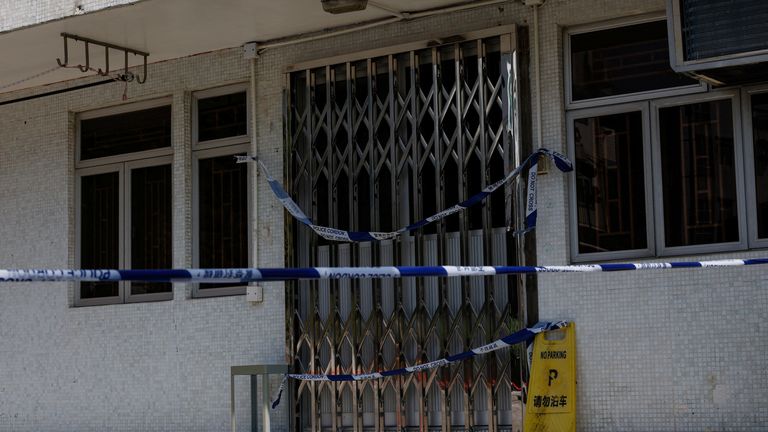
Cordon lines are seen outside a village house where part of Abby Choi’s body was found
All four suspects were denied bail and have yet to enter any pleas. They are due to appear in court in May.
However, Alex Kwong jumped bail after appearing in another court on Tuesday for a previous theft allegation.
Another woman who had been arrested for allegedly assisting other suspects in the case was released on bail pending further investigation, police said.
She was believed to have been in an affair with the ex-husband’s father, the force said earlier.
‘My heart is heavy’
Ms Choi’s family visited a mortuary to identify her body before gathering near the house in Lung Mei Village dressed in black to mourn her loss.
Her friend, Bernard Cheng, said the model was mum to four children aged between three and 10.
Alex Kwong is dad to the two eldest children, who are in the care of their maternal grandmother.
Ms Choi’s second husband, Chris Tam, fathered the two younger children, who are staying with his family.
Her friend, Bernard Cheng, said she had good relationships with her family, including her in-laws.
He said he initially believed she was kidnapped.
“I haven’t imagined a person who’s so good, so full of love, so innocent, a person who doesn’t do anything bad will be killed like this,” he said.
“My heart is still heavy. I can’t sleep well.”
World
Europe must ‘ramp up’ pressure on Russia, says No 10 after Coalition of the Willing meeting with Volodymyr Zelenskyy
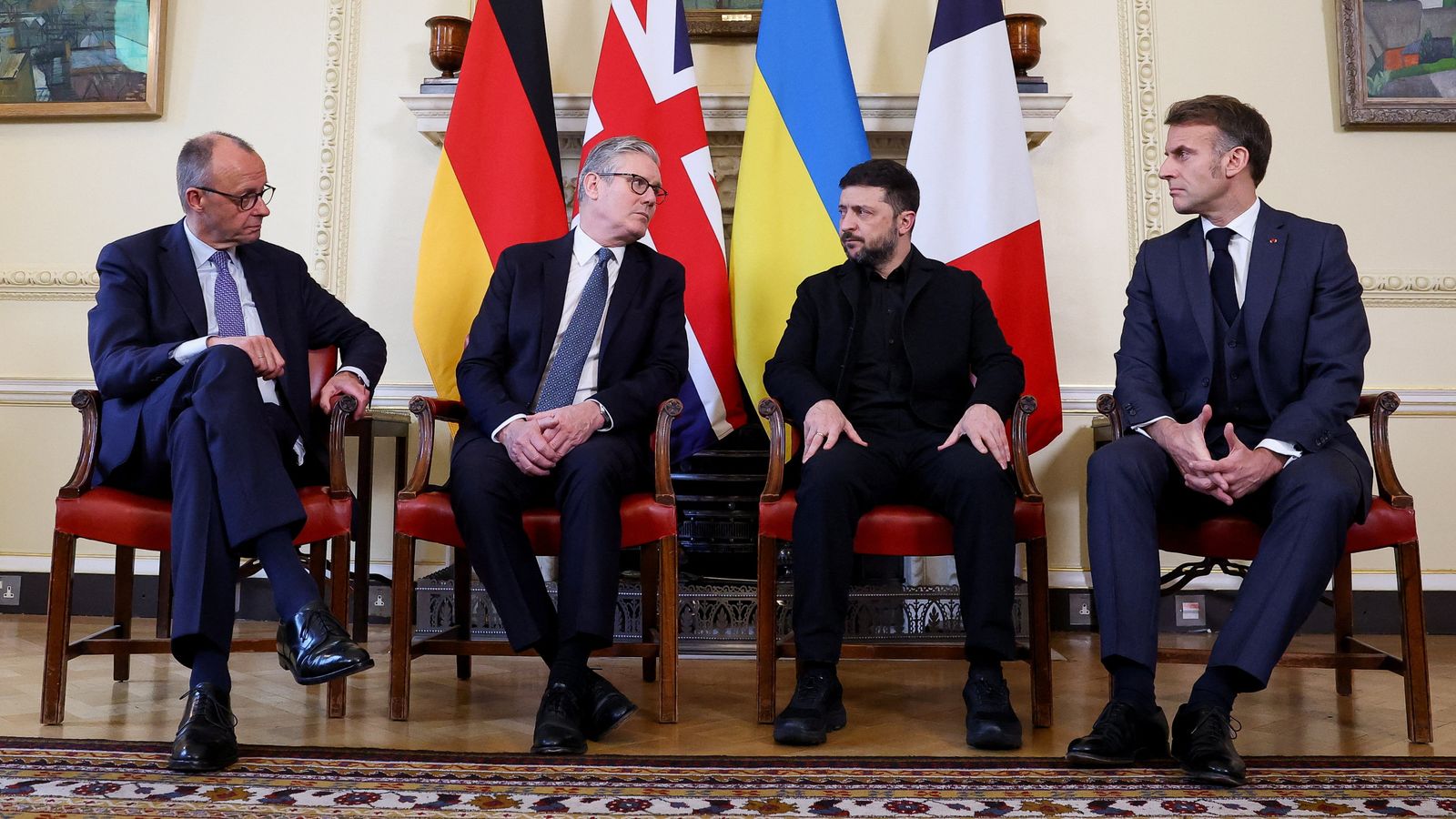
Europe must “ramp up” pressure on Russia “to bring an end to this barbaric war”, a Downing Street spokesperson said after Sir Keir Starmer chaired a meeting with the Coalition of the Willing.
Earlier, the prime minister met with Ukrainian President Volodymyr Zelenskyy, French President Emmanuel Macron and German Chancellor Friedrich Merz at Downing Street for crisis talks on the future of Ukraine.
After the Downing Street meeting, a spokesperson said Sir Keir “convened a call with other European allies alongside President Zelenskyy”.
“The leaders all agreed that now is a critical moment and that we must continue to ramp up support to Ukraine and economic pressure on Putin to bring an end to this barbaric war.”
Ukraine latest: ‘Critical stage’ in push for peace
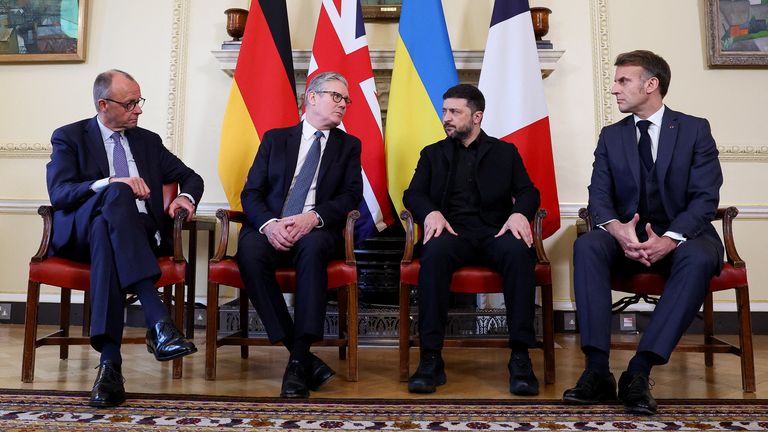
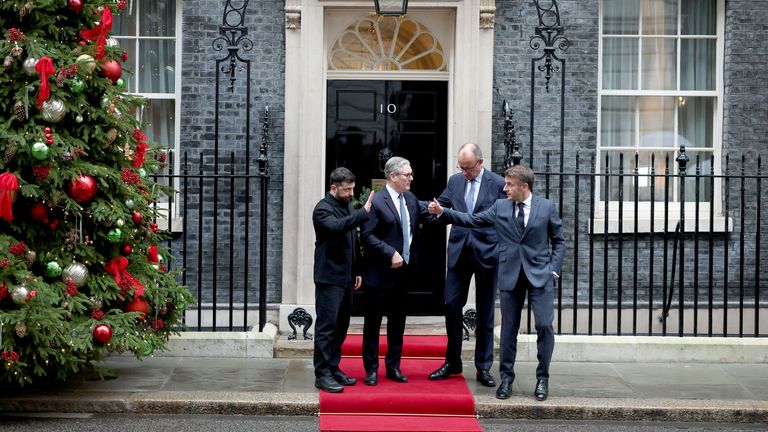
Friedrich Merz, Sir Keir Starmer, Volodymyr Zelenskyy and Emmanuel Macron at Downing Street. Pic: Reuters
During the earlier meeting, the Downing Street spokesperson said that the leaders “discussed the importance of the US-led peace talks for European security and supported the progress made”.
All four “underscored the need for a just and lasting peace in Ukraine, which includes robust security guarantees,” the spokesperson added.
“The leaders agreed that, while diplomatic efforts continue, Europe must stand with Ukraine, strengthening its ability to defend against relentless attacks that have left thousands without heat or light,” they said.
“They also discussed positive progress made to use immobilised Russian sovereign assets to support Ukraine’s reconstruction.”
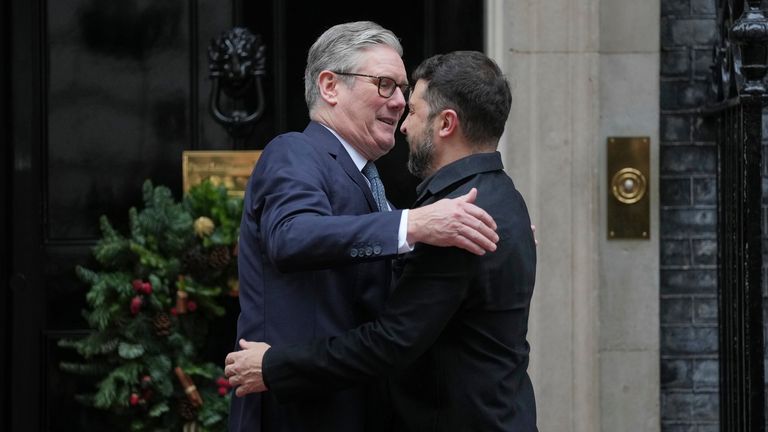
Mr Zelenskyy arrives at Downing Street
After arriving in the UK, Mr Zelenskyy said in a post on Telegram that “we are joining our efforts to end this war with a decent peace for Ukraine” and that “security must be guaranteed”.
He later said: “We can’t manage without Americans, we can’t manage without Europe and that is why we need to make some important decisions.”
The discussions come as US President Donald Trump accused Mr Zelenskyy of having failed to read the latest peace plan.
He said he was “a little disappointed” in the Ukrainian leader, while insisting Russia’s Vladimir Putin was “fine with it”.
Mr Trump’s eldest son had earlier told Sky’s lead world news presenter Yalda Hakim in an interview that his father may walk away from the Ukraine peace process.
When asked directly if he believed the US president would walk away from Ukraine, he answered: “I think he may, what’s good about my father and what’s unique about my father is you don’t know what he’s going to do. He’s unpredictable.”
Pic: Reuters
Sir Keir had earlier insisted any ceasefire must be “just” and “lasting”, adding: “We are at a critical stage in the push for peace.
“The principles remain the same. We stand with Ukraine, and if there is to be a ceasefire, it needs to be a just and lasting ceasefire.”
Mr Macron had insisted Ukraine’s allies have “a lot of cards” – but the main issue was to “finalise these peace negotiations” and find the “best possible conditions for Ukraine, for the Europeans, and for collective security”.
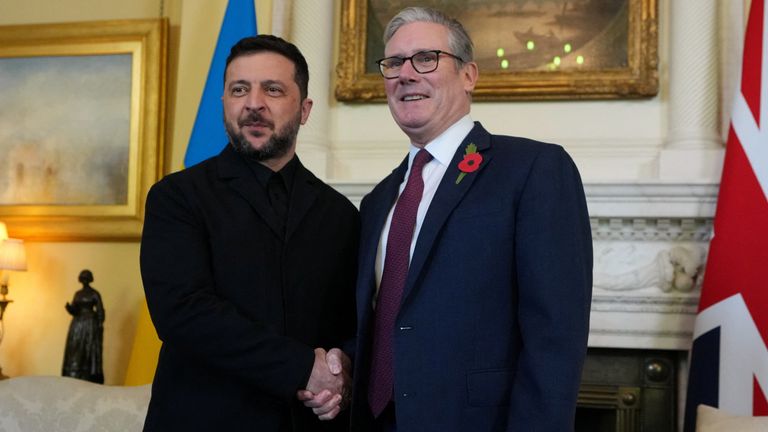
Why the meeting in London is important
Moments after arriving at Downing Street, Mr Merz said he was “sceptical about some of the details in documents coming from the US” but that was one of the reasons for Monday’s talks.
The four European leaders emerged from Downing Street at around 2.20pm for a group photo – but declined to answer any questions from the media.
Sir Keir and Mr Zelenskyy then went back inside the prime minister’s residence for further talks while Mr Macron and Mr Merz departed.
Read more from Sky News:
Paramount launches hostile takeover bid for Warner Bros
Host of British stars nominated for Golden Globes
The London meeting comes after Mr Zelenskyy’s officials concluded three days of talks with US diplomats.
Over the weekend, Mr Zelenskyy said he had discussed “next steps” with Mr Trump’s advisers and was “determined to keep working in good faith”.
According to Vatican sources, the Ukrainian president will next meet with Pope Leo at Castel Gandolfo, the papal residence outside of Rome, on Tuesday morning.
World
Israeli government accused of intimidation and harassment after raid on UN building in Jerusalem
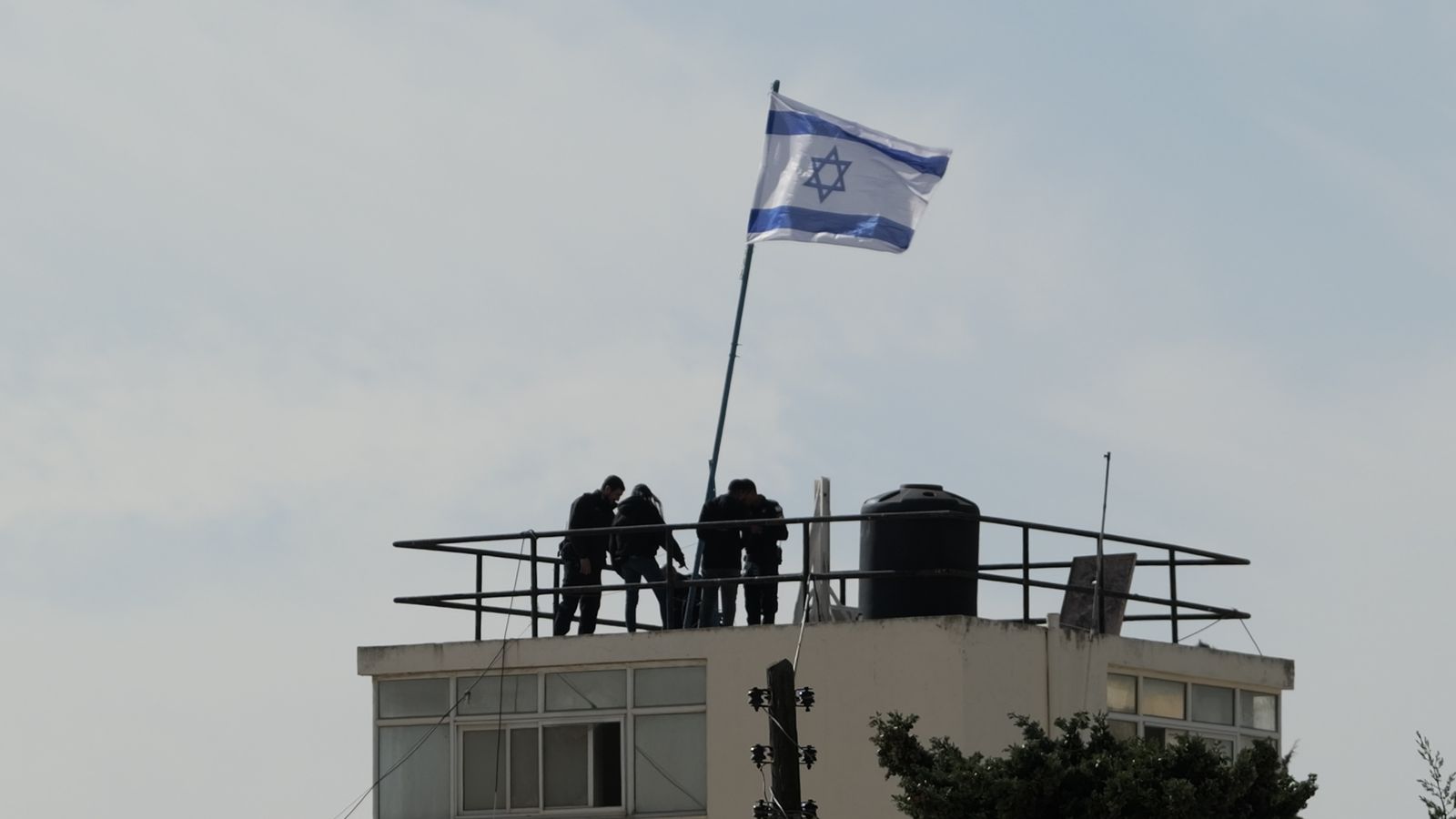
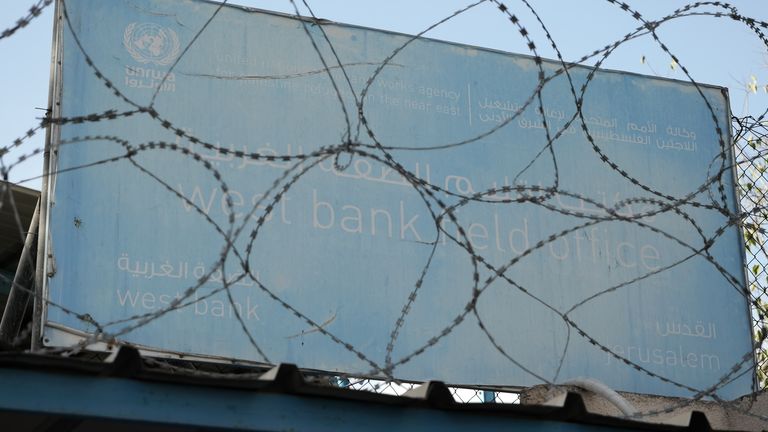
The Israeli government has been accused of intimidation, harassment and a “blatant disregard” of its obligations by the United Nations after Israeli officials raided a UN building in Jerusalem.
Police officers, along with officials from the town council, entered the East Jerusalem compound of UNRWA, the UN agency that provides services to Palestinian refugees.
The compound has been empty since January, when the Israeli government ordered UNRWA to close the building, accusing the agency of being “infested” with members of Hamas.
The United Nations denied that accusation vehemently.
Read more: What were UNRWA workers in Gaza accused of?
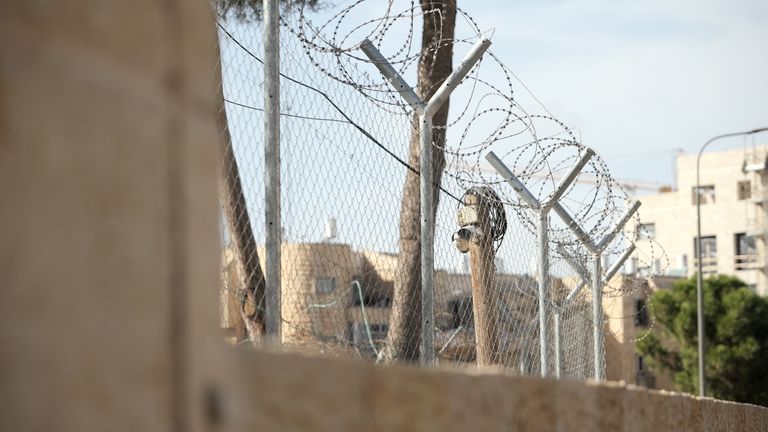
Having gained entry to the compound, the officials filled vehicles with possessions, including office furniture, and raised an Israeli flag in place of the United Nations flag.
They claimed that the building had been raided because UNRWA owed around hundreds of thousands of pounds worth of local taxes.
However, under the UN charter, UN buildings are exempt from such taxes and are also considered “inviolable”, meaning that, rather than raiding the building, Israel has an obligation to protect it.
Since its staff were told to leave, there have been attempts to break into the compound, which has been secured by a team of guards employed by the UN.
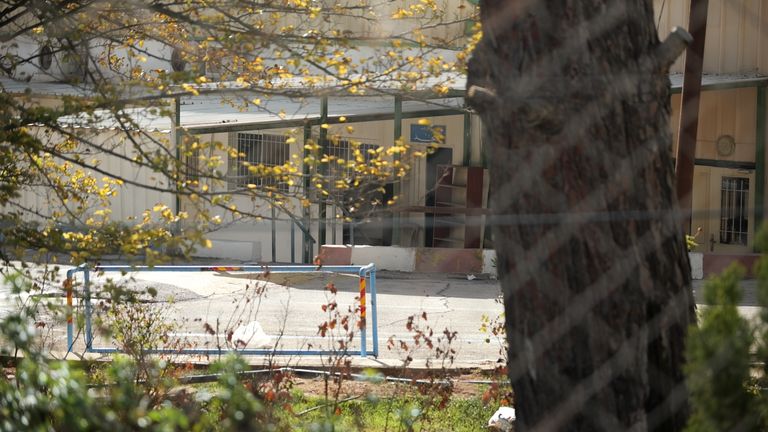
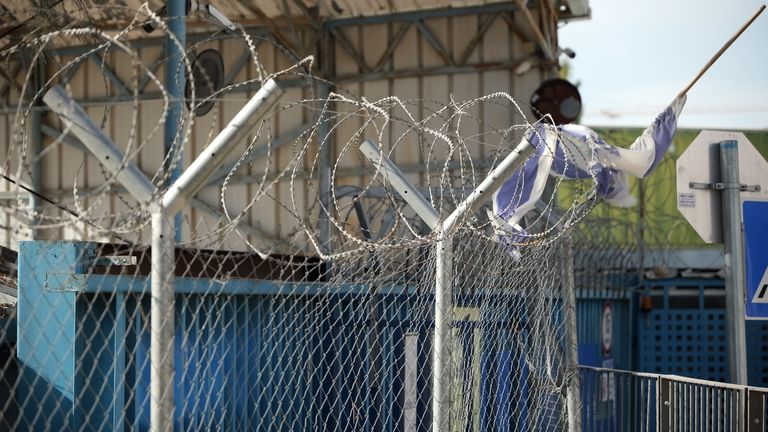
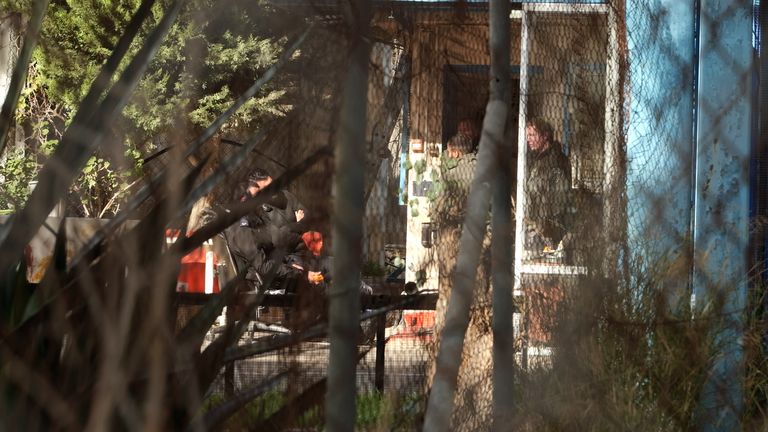
Sky News has been told that, when the Israeli officials arrived on Monday morning, the security guards were detained in a room within the compound.
“We didn’t let them in when they first came to the compound, but they cut the chains and the locks and took control,” said George, the head of security, who was standing outside the front gate when we arrived.
“They told my guards to stay in one room, took their phones from them, and told them they couldn’t leave.”
‘The false accusations led to this’
UNRWA’s commissioner-general, Philippe Lazzarini, said the raid was “a blatant disregard of Israel’s obligation as a United Nations Member State to protect and respect the inviolability of UN premises”.
He said that failing to cooperate with UN agencies “represent a new challenge to international law, one that creates a dangerous precedent anywhere else the UN is present across the world”.
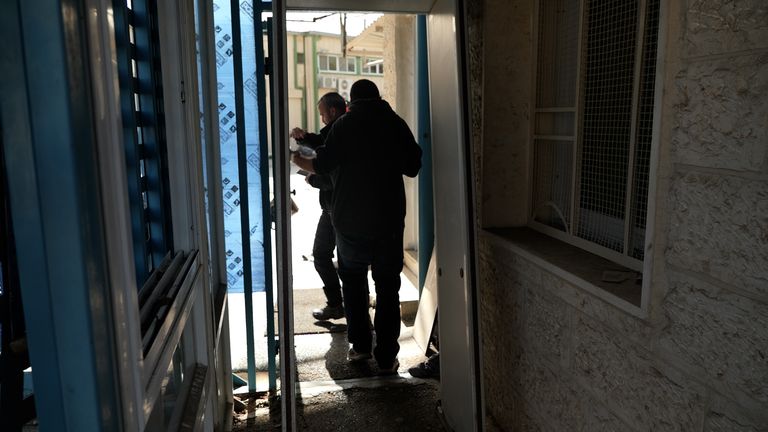
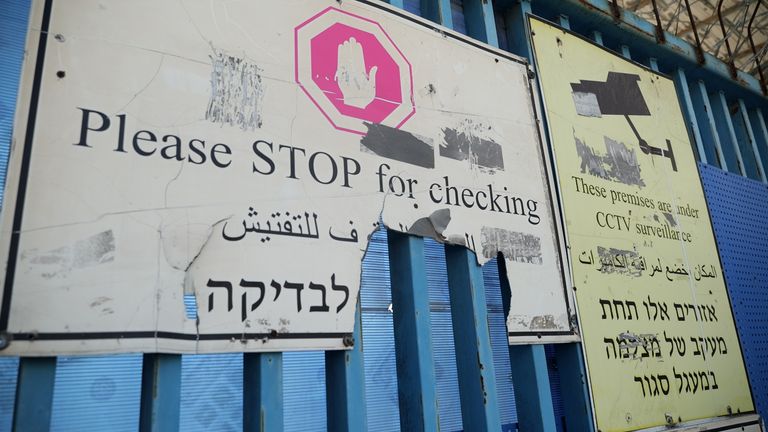
His anger was not isolated. Outside the gates of the UNRWA compound, we met Hakam Shahwam, who used to work here as UNRWA’s chief of staff. It was, he said, “a very sad day”.
Shahwam says the claims that UNRWA was a breeding ground for Hamas had led to the raid.
He told me: “The false accusations led to this. This is a shameful day, not only for the United Nations but also for the government of Israel.
“There must be a strong protest, and a response from the international community. This is unacceptable.”
Read more from Adam Parsons:
Gaza longs for normality, but quasi-anarchy reigns
Israeli forces kill two Palestinians after apparent surrender
‘It is time for UNRWA to be dismantled’
The Israeli government remains adamant that its criticism of UNRWA is justified.
When I asked Shosh Bedrosian, a spokesperson for Prime Minister Benjamin Netanyahu, about the raid, she said: “UNRWA is a stain on the United Nations.”
She added: “It is time for UNRWA to be dismantled. It is not part of the solution for Gaza, it is part of the problem.”
She did not comment on the legality of the raid, or on Israel’s ongoing commitment to the UN Charter.
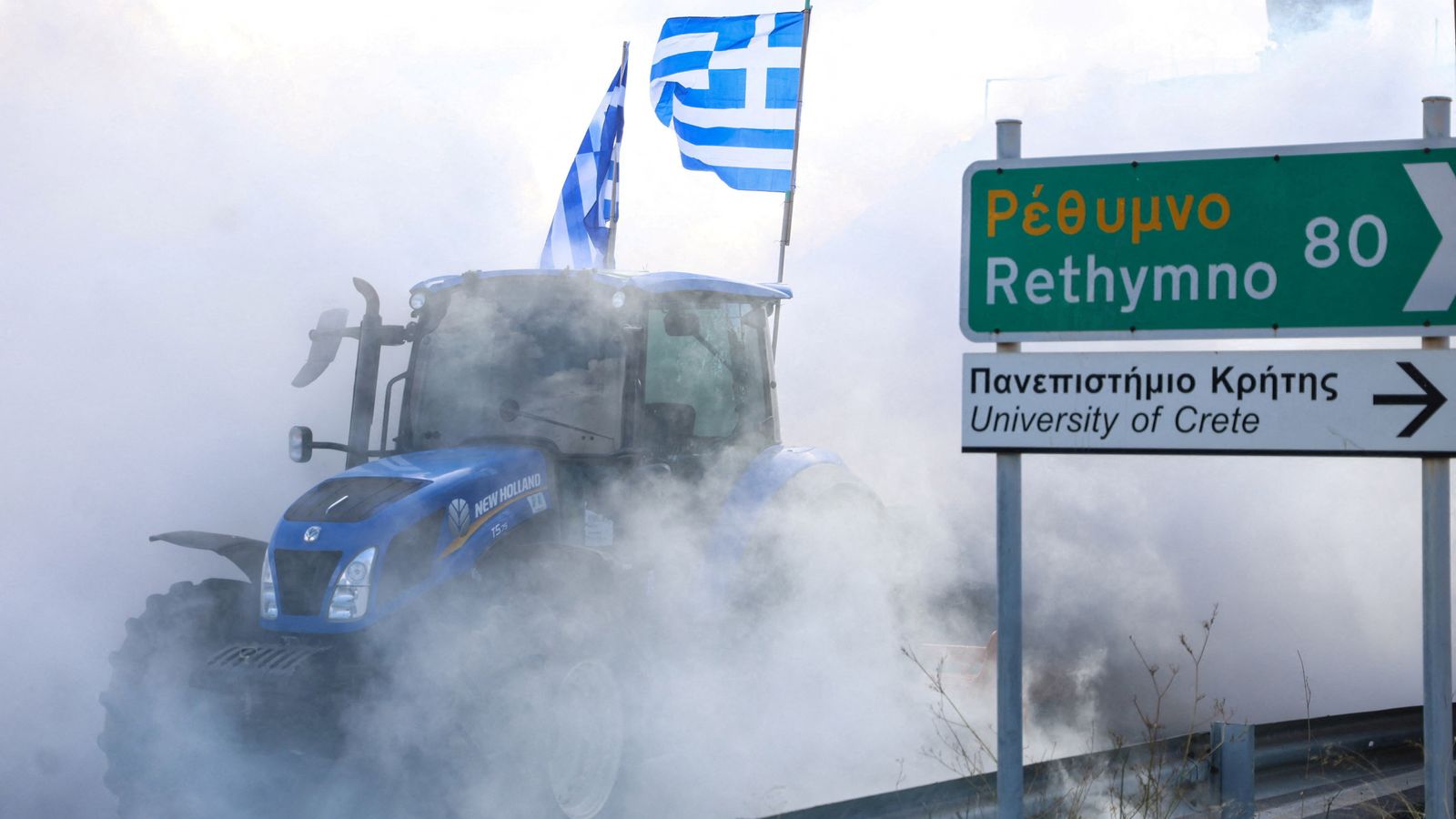
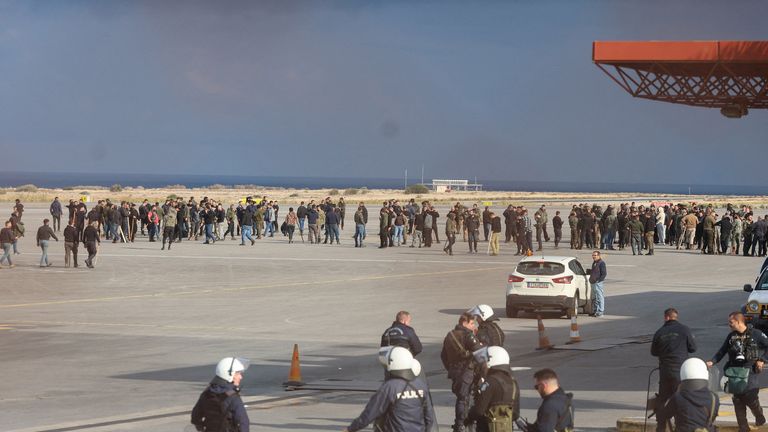
Greek farmers angered by delayed subsidy payments have shut down the international airport on Crete and clashed with riot police.
Images from local media showed dozens of farmers standing on the apron at Nikos Kazantzakis International Airport in Heraklion, the largest city on Crete.
Pic: Reuters
The airport was forced to suspend all flights, while fights between protesters and riot police broke out in Chania, the Greek island’s second-largest city, where two people were reportedly injured.
Officers used tear gas to disperse protesting farmers who pelted them with rocks and overturned a police patrol car, according to local media.
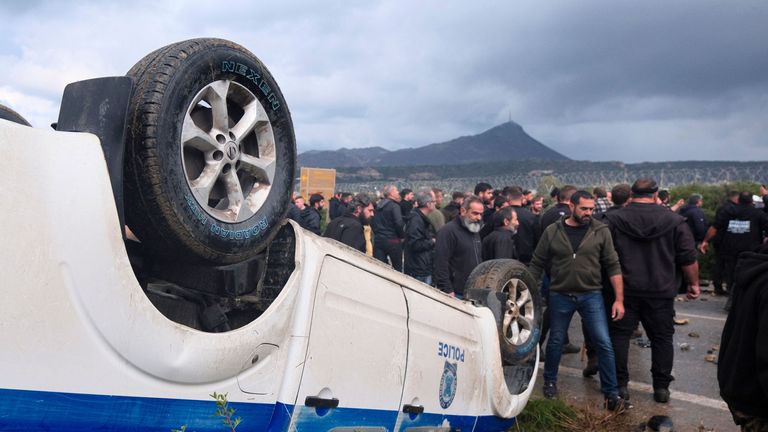
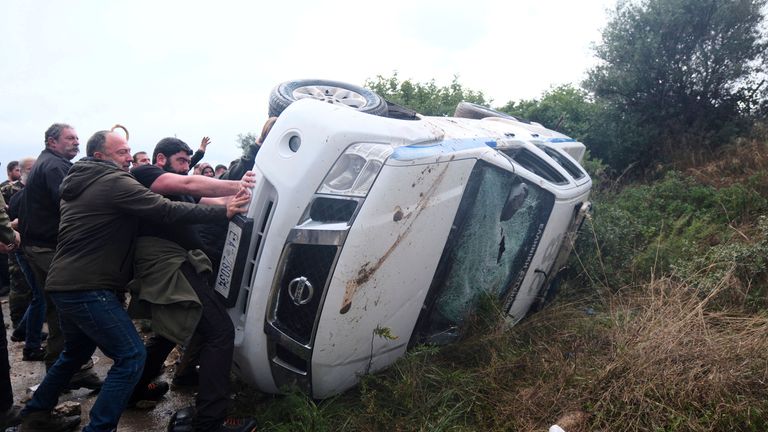
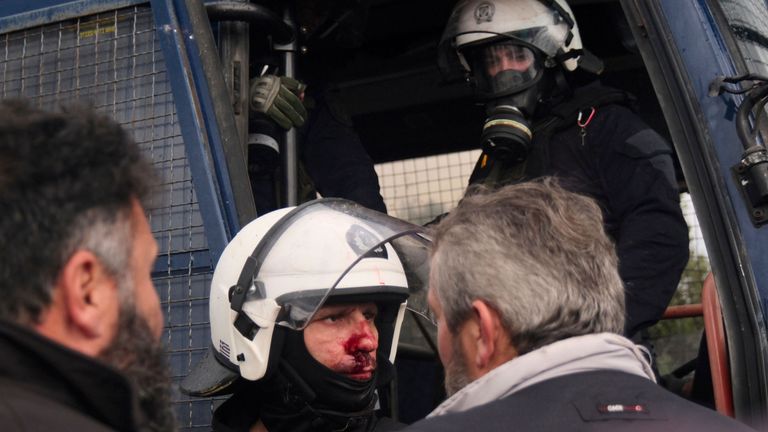
Pics: AP
The protests were sparked after delays in the payment of European Union-backed agricultural subsidies, which followed a scandal over fraudulent subsidy claims.
Authorities are reviewing all requests for EU farm subsidies, which protesters argue amount to collective punishment and leave farmers in debt and unable to plant their fields for next season.
Meanwhile, Greece’s farming sector has been hit by an outbreak of goat and sheep pox, leading to a mass cull of livestock.
Farmers have since deployed thousands of tractors and other agricultural vehicles at border crossings and key points along highways across the country, as well as ports and airports.
Read more from Sky News:
Nurse in transgender doctor row wins part of employment tribunal
Starmer holds crisis talks for ‘decent peace for Ukraine’
‘Danger to life’ warning as Storm Bram hits UK and Ireland
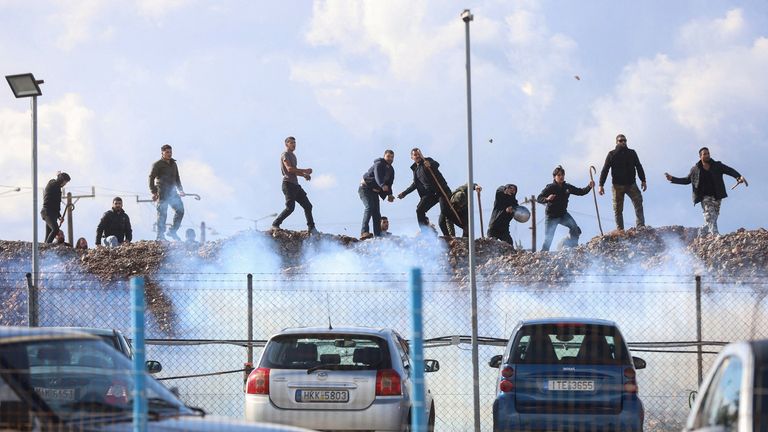
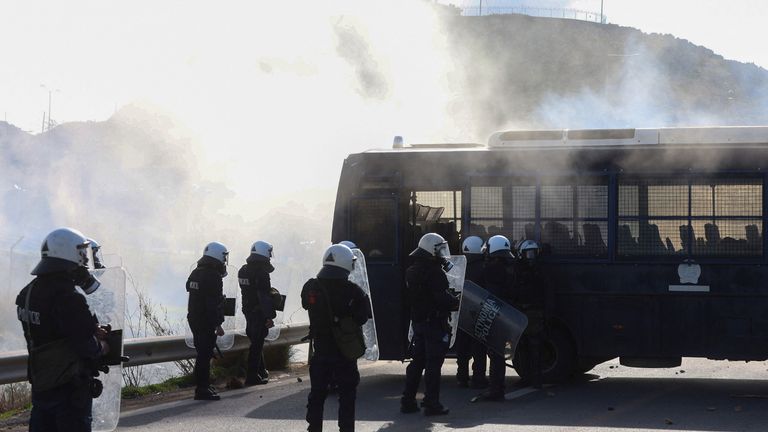
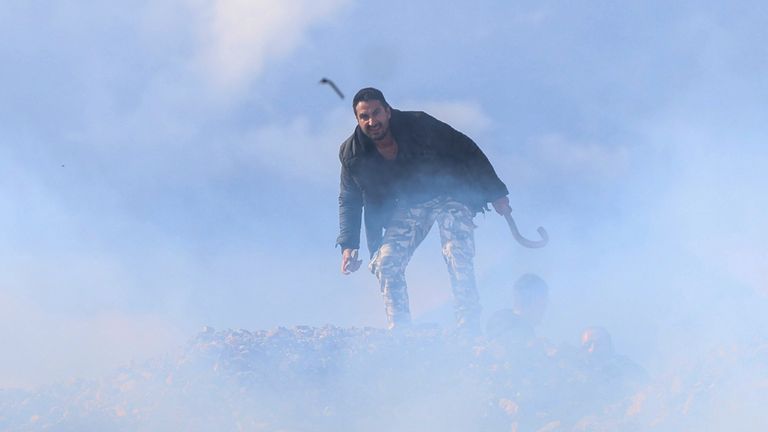
Pics: Reuters
Michalis Chrisochoidis, Greek minister for public order, said last week that the government remained open to talks with protest leaders, but warned it wouldn’t tolerate the shutdown of major transit points.
It comes after riot police fired tear gas at protesting farmers attempting to block the main access road to the international airport outside the northern Greek city of Thessaloniki on Friday.
Elsewhere, police have been enforcing traffic diversions in several parts of northern and central Greece, while farmer roadblocks at the country’s northern borders with Bulgaria, Turkey and North Macedonia have hampered truck traffic.
Protests by farmers are common in Greece, and similar blockades in the past have sometimes severed all road traffic between the north and south of the country for weeks.
-
 Sports2 years ago
Story injured on diving stop, exits Red Sox game
-
 Sports3 years ago
‘Storybook stuff’: Inside the night Bryce Harper sent the Phillies to the World Series
-
 Sports2 years ago
Game 1 of WS least-watched in recorded history
-
 Sports3 years ago
Button battles heat exhaustion in NASCAR debut
-
 Sports3 years ago
MLB Rank 2023: Ranking baseball’s top 100 players
-
Sports4 years ago
Team Europe easily wins 4th straight Laver Cup
-
 Environment3 years ago
Japan and South Korea have a lot at stake in a free and open South China Sea
-
 Environment1 year ago
Here are the best electric bikes you can buy at every price level in October 2024