

Pret a Manger staff get third pay rise in a year


Shop staff at Pret a Manger are to receive their third pay rise in a year.
The average pay base will have increased by 19% in the twelve months up to April at the British coffee and takeaway food chain.
But the latest hike is to ensure the company does not fall foul of a boost to the minimum wage, which will change by law on 1 April.
The latest announcement means its worst-paid staff will get an increase of 2.9%, from £10.30 an hour to £10.60 an hour.
Above inflation pay boost in last year
Nearly 8,000 (7,870) of Pret’s UK shop staff are to receive an additional 3% pay rise from 1 April, in addition to the 5% rise from December 2022.
Next month, typical pay will grow to a range between £10.60 and £11.90 an hour, up from an hourly rate between £10.30 and £11.55.
Barista pay is slightly higher and will increase from between £10.85 and £12.50 an hour to between £11.20 and £12.85. Pay rates depend on location and experience.
The 19% total pay rise over the last year far surpasses the rate of inflation, which stood at 10.1% in the year up to January.
Pret said pay was being upped in an effort to support staff with the high cost of living. The company also gives free food to employees and introduced a discounts portal offering supermarket items and other goods at a lower cost.
Industrial relations in Britain are at their most fractious since 1989
Battle of the pay increases
There are 429 Pret shops in the UK, with 121 overseas. The firm plans to double in size by 2026.
Pret is just one of a number of large employers to raise wages as workers pay more for goods and bills, and competition to attract staff remains high.
While the number of job vacancies has declined, unemployment, at 3.7% is still near a low not seen since 1974.
Other food retailers such as Sainsbury’s and Tesco have also upped pay for its shop workers.
Sainsbury’s staff outside London should now get at least £11 an hour, up from £10.25, while those working in the capital saw see their hourly wage rise from £11.30 to £11.95, the company said.
Tesco last month increased hourly pay for shop floor staff by 7% to a minimum of £11.02 an hour. Like Pret, this is the company’s third pay rise in a year.
The national living wage – which is independently calculated based on what people need to live on – will rise to £10.42 an hour from April, an increase of 9.7%.
Read more:
Sunak says pay rises will fuel inflation
Higher wages have been a concern for the Bank of England in its effort to bring inflation down to 2%.
“We are concerned about persistence [of inflation] and that’s why, frankly, we raised interest rates this time,” the Bank of England governor told the Treasury select committee last month.
“I am very uncertain, particularly about price-setting and wage-setting in this country. We have got the largest upside skew in our forecasts that we have ever had on inflation,” Andrew Bailey said.



The first-ever Capture case has been delayed at the Court of Appeal as the Post Office asks for an extension to respond, Sky News has learned.
Pat Owen, a former sub postmistress who has since passed away, was convicted of stealing in 1998 based on evidence from computer software.
The system, known as Capture, was used in up to 2,500 branches in the 1990s, before the infamous Horizon system was introduced.
Hundreds of sub-postmasters were wrongfully convicted between 1999 and 2015 as part of the Horizon scandal.
Earlier this year, Sky News unearthed a 1998 report showing the Capture software was also faulty.
That report, commissioned by the solicitors acting for Mrs Owen in 1998, was served on the Post Office and may never have been seen by the jury in her case.
‘All we want is her name cleared’
Ms Owen was given a suspended prison sentence and fought to clear her name subsequently – but died in 2003.
Her case was referred by the Criminal Cases Review Commission (CCRC) to the Court of Appeal in October.
The Post Office had until 5 December to respond to papers put forward by Mrs Owen’s defence team but they have now asked for an extension until 30 January.
Ms Owen’s daughter, Juliet Shardlow, described the family’s suffering at the lengthening wait.
“I need to emphasise the profound impact the ongoing delay is having on our family,” she said.
“The continuous uncertainty only compounds our heartache, stress, and anxiety.
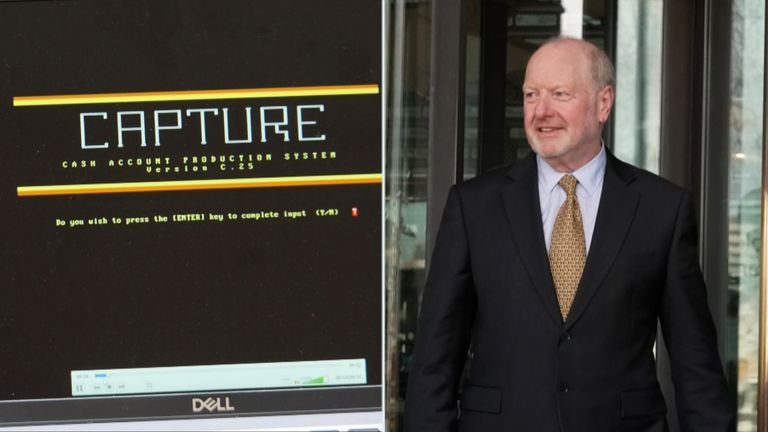
Alan Bates: New redress scheme ‘half-baked’
“It has become the last thing I think about before I go to sleep and the first thing when I wake up.
“We have waited 27 years for justice, and this additional wait feels never-ending.”
Ms Owen’s case is the first time a conviction based on Capture has reached the Court of Appeal since the scandal was exposed.
Read more from Sky News:
Corporate manslaughter charges considered in Post Office scandal
21 ‘Capture’ cases investigated for miscarriages of justice
Lawyers have said that if Ms Owen is exonerated posthumously, it may “speed up” the handling of others.
CCRC chair Dame Vera Baird also told Sky News in the summer it could be a “touchstone case” for other victims.
The CCRC is also continuing to investigate around 30 other “pre-Horizon” convictions.
A Post Office spokesperson said: “We have sought an extension of time to fully consider and respond to the CCRC’s Statement of Reasons in Ms Owen’s case.
“We deeply regret the impact our request for further time will have on Ms Owen’s family.
“We have a duty to carefully consider the evidence presented in the Statement of Reasons submitted by the CCRC and do everything we can to fully assist the Court when it considers this conviction.”
Meanwhile, the first-ever redress scheme for victims of the Post Office Capture IT scandal was launched this autumn.
The Capture Redress Scheme will provide payments of up to £300,000, and more in “exceptional” cases, to former postmasters who suffered financial losses.

-
 Sports2 years ago
Story injured on diving stop, exits Red Sox game
-
 Sports3 years ago
‘Storybook stuff’: Inside the night Bryce Harper sent the Phillies to the World Series
-
 Sports2 years ago
Game 1 of WS least-watched in recorded history
-
 Sports3 years ago
Button battles heat exhaustion in NASCAR debut
-
 Sports3 years ago
MLB Rank 2023: Ranking baseball’s top 100 players
-
Sports4 years ago
Team Europe easily wins 4th straight Laver Cup
-
 Environment3 years ago
Japan and South Korea have a lot at stake in a free and open South China Sea
-
 Environment1 year ago
Here are the best electric bikes you can buy at every price level in October 2024