
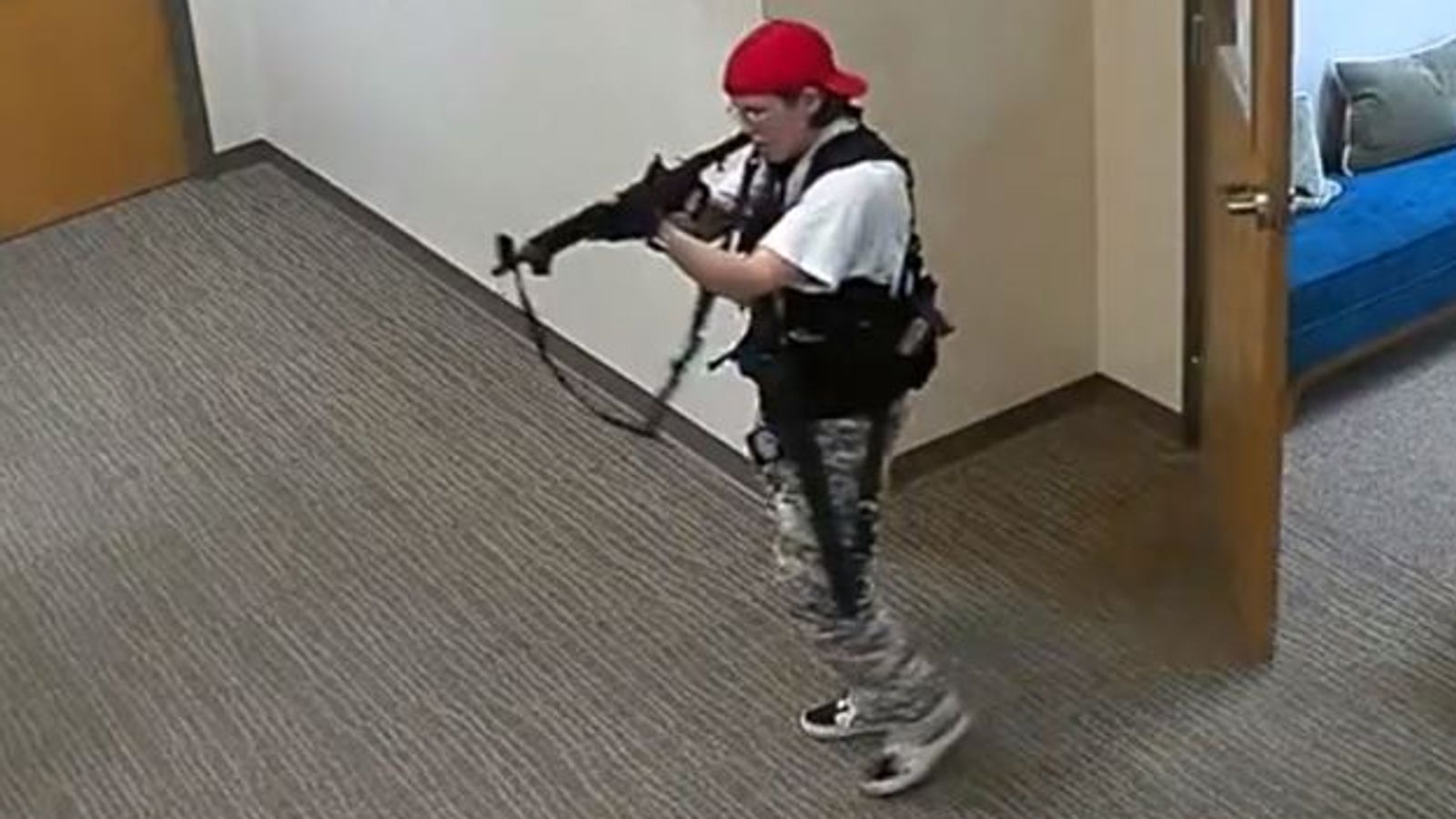
Video of Nashville school killer entering building released by police


Nashville police have released video of the moment an attacker entered a school before shooting six people dead, including three nine year olds.
Audrey Elizabeth Hale was shot dead after they were confronted by police at the private Christian school.
Hale, 28, who identified as transgender, was described by officials as a “lone zealot”, who lived in Nashville, and was armed with two assault-type weapons, and a handgun.
Audrey Hale
Hale had a manifesto and detailed maps of the school, and entered the building by shooting through its doors before the killings.
The video shows the doors’ panes smashing into smithereens as Hale makes their way in.
Hale is shown wandering the school premises holding the rifle.
Police chief John Drake said: “We have a manifesto. We have some writings that we’re going over that pertain to this day, the actual incident. We have a map drawn out about how this was all going to take place.”
The six victims have been named as Evelyn Dieckhaus, Hallie Scruggs, and William Kinney, all aged nine, 61-year-olds Cynthia Peak and Mike Hill, and 60-year-old Katherine Koonce who was the school’s headteacher.
Officers started receiving reports of an attack at 10.13am (4.13pm UK time) and as police began clearing the ground floor of the school they heard gunfire coming from the second floor.

Headteacher Katherine Koonce was among the six victims. Pic: The Covenant School

Michael Hill. Pic: Facebook
Two officers from a five-member team opened fire in response and fatally shot the suspect at 10.27am (4.27pm).
The three children, who were all students, were pronounced dead after they arrived at hospital.
The attacker died after being “engaged by” officers, police said in a Twitter post.
A possible motive for Hale’s gun violence is not known.
Vigils are under way, as Nashville residents left flowers, balloons and other tributes to the victims at the school.
Read more from Sky News:
Mississippi town grieves dead and mourns shattered lives
Gwyneth Paltrow ski crash: Man suing film star describes moment of impact
Biden condemns ‘sick’ attack
US President Joe Biden called Monday’s attack “sick” and “heartbreaking”.
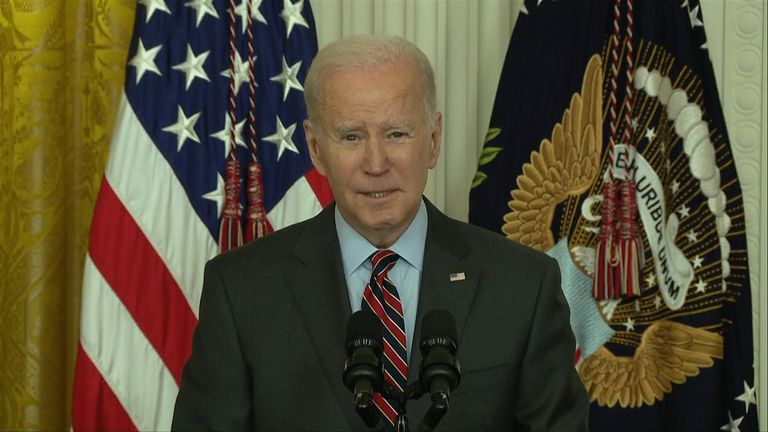
Nashville shooting ‘sick’, says Biden
He said the US needs to do more to protect schools and he called on the Senate to pass the assault weapons ban – which would criminalise the knowing sale, manufacture, transfer, possession or importation of many types of semi-automatic weapons and large-capacity magazines.
No one else was shot in the assault at the school, which teaches students up to sixth grade (around 12 years old).
So far this year, there have been 89 US school shootings – defined as when a gun is fired on school property.
In 2022, there were 303 such incidents, the highest of any year in the K-12 school shooting database, which goes back to 1970.
Other pupils walked to safety, holding hands as they left their school surrounded by police cars, to a nearby church where they were reunited with their parents.
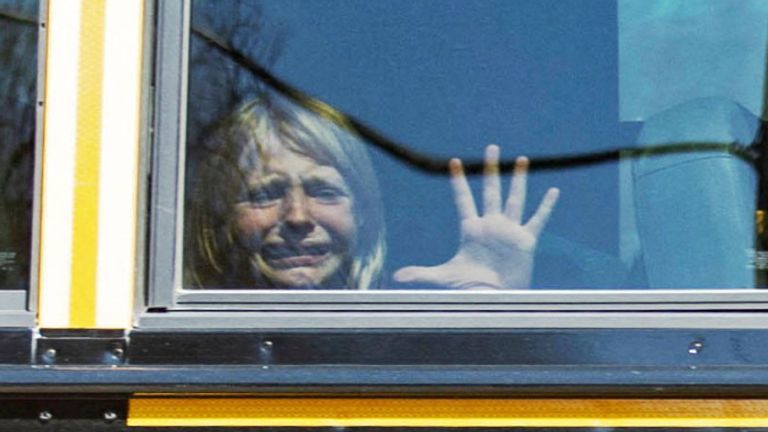
A child cries while on the bus leaving the Covenant School following the shooting

Officers with rifles, heavy vests and helmets could be seen walking through the school car park and around the perimeter of the building.
Helicopter footage also showed the officers looking around a wooded area between the campus and a nearby road.
Police said no officers were deployed to the school at the time of the shooting because it is a church-run school.
Nashville mayor John Cooper thanked emergency services for their response to the attack.
He tweeted: “In a tragic morning, Nashville joined the dreaded, long list of communities to experience a school shooting.
“My heart goes out to the families of the victims. Our entire city stands with you.”
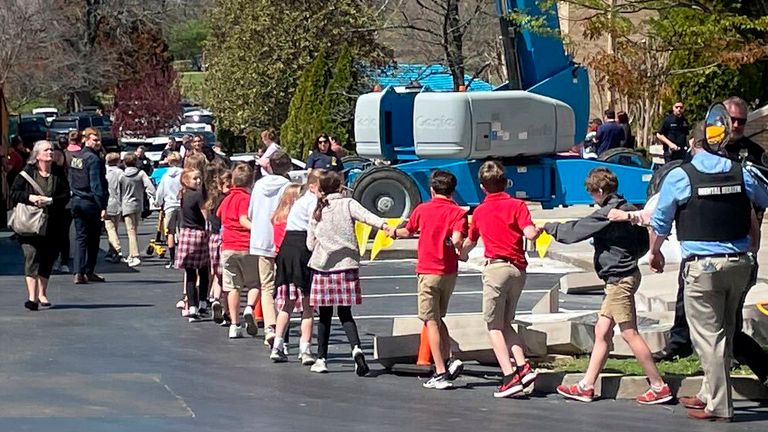
Six killed in Nashville school shooting
‘Unimaginable tragedy’
Democrat state representative Bob Freeman, whose district includes the Covenant School, called the shooting an “unimaginable tragedy”.
“I live around the corner from Covenant and pass by it often. I have friends who attend both church and school there,” Mr Freeman said.
“I have also visited the church in the past. It tears my heart apart to see this.”
The Covenant School has about 200 students from pre-school to sixth grade and was founded as a ministry of Covenant Presbyterian Church in 2001, according to the school’s website.
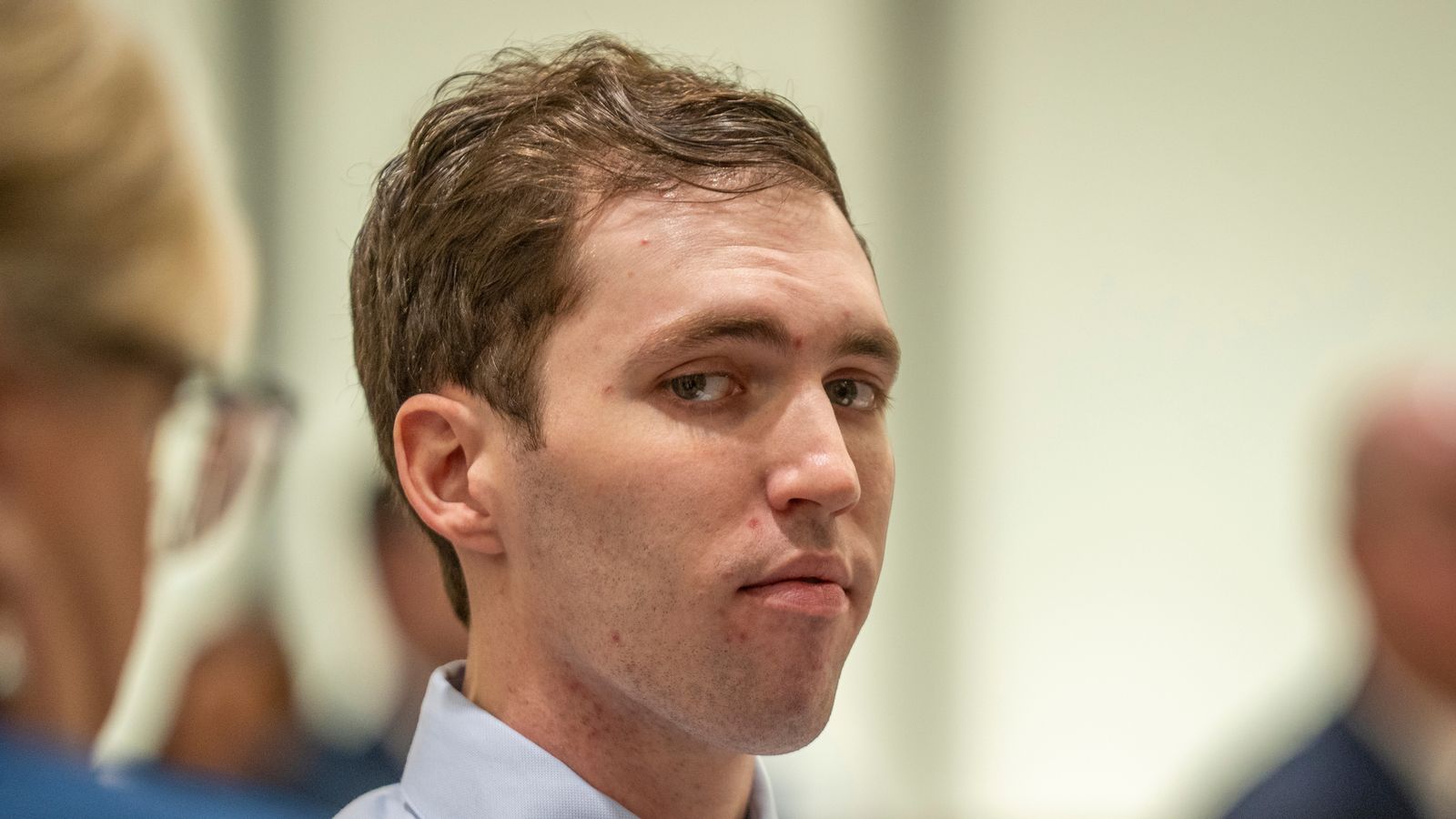
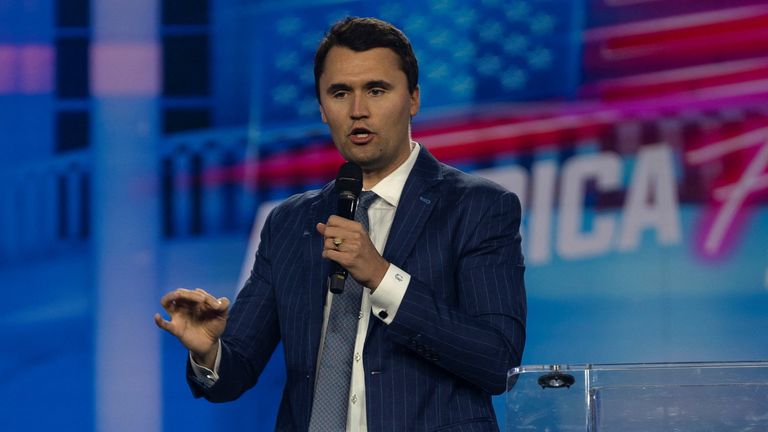
The man accused of killing right-wing influencer Charlie Kirk has appeared in person at court for the first time.
Tyler Robinson, 22, from Utah, is charged with aggravated murder in relation to the shooting of Kirk on the Utah Valley University campus in Orem.
Charlie Kirk pictured in December 2024. Pic: Reuters
Video of the incident showed Kirk, 31, and a staunch ally of Donald Trump, reaching up with his right hand after a gunshot was heard as blood came out from the left side of his neck. He died shortly after.
Prosecutors plan to seek the death penalty.
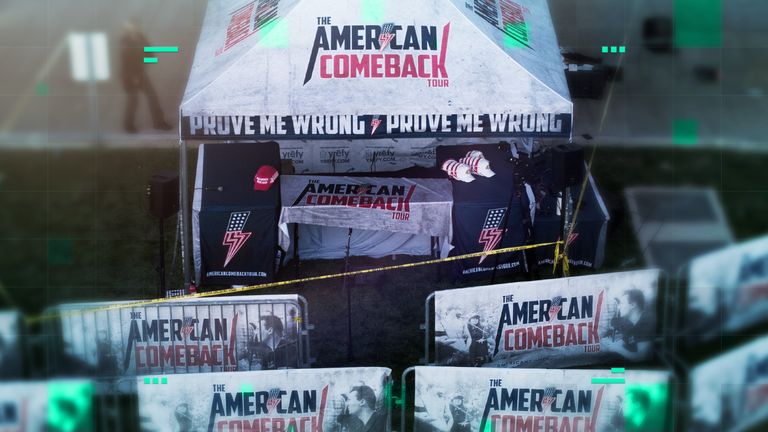
How the Charlie Kirk shooting unfolded
On Wednesday’s appearance at Fourth District Court in Provo, Utah, Robinson arrived in court with restraints on his wrists and ankles and wearing a dress shirt, tie and slacks.
Read more: What we can learn about suspect from charging document
According to the Associated Press, he smiled at family members sitting in the front row of the courtroom, where his mother teared up and wiped her eyes with a tissue.
He made previous court appearances via video or audio feed from jail.
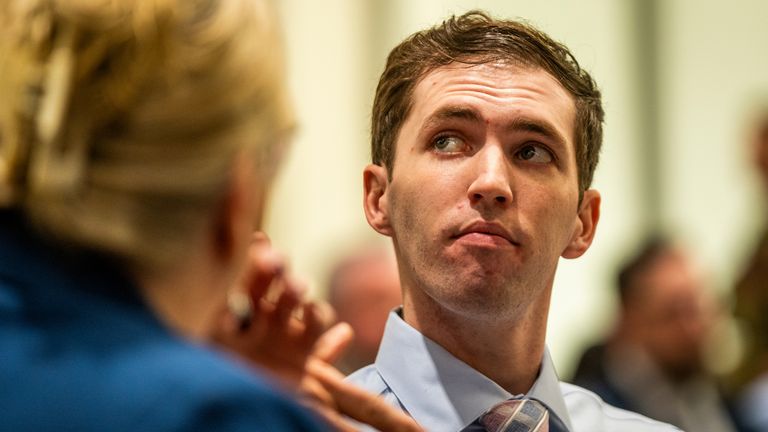
Pic: AP
The shooting happened during Kirk’s “prove me wrong” series, which saw the father of two visit campuses and debate contentious subjects; in this case, he was discussing mass shootings.
Prosecutors say the bullet which struck Kirk’s neck “passed closely to several other individuals”, including the person questioning him as part of the event.
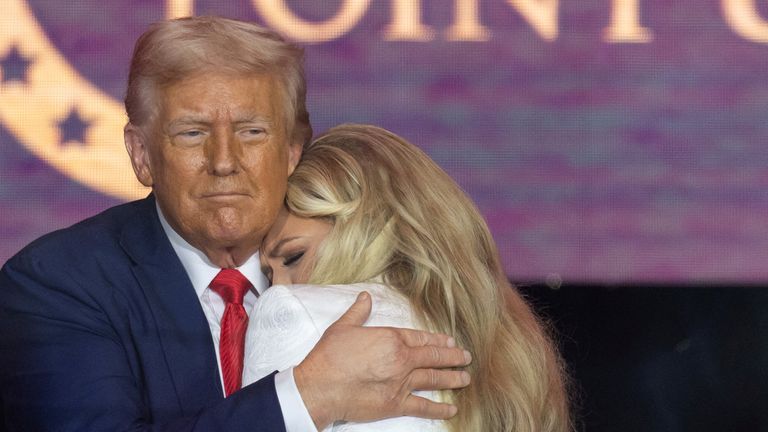
President Trump comforts Charlie Kirk’s widow Erika at his memorial service in Arizona in September. Pic: Reuters
A charging document about Robinson from September includes incriminating texts sent between the alleged shooter and his roommate after Kirk’s death.
Read more from Sky News:
Analysis: The real reason for Trump’s Venezuela exploits
FBI release Luigi Mangione ‘to-do list’ before alleged assassination
Judge Tony Graf also heard arguments on Wednesday about whether cameras and media should be allowed in the courtroom, with Robinson’s lawyers and the Utah County Sheriff’s Office asking for them to be banned.
Mr Kirk’s widow, Erika Kirk, has called for full transparency and said “we deserve to have cameras in there”.
The judge has already made allowances to protect Robinson’s presumption of innocence before a trial, agreeing that the case has drawn “extraordinary” public attention
US
US won’t ‘stand by and watch sanctioned vessels’, warns White House after tanker seized off Venezuela
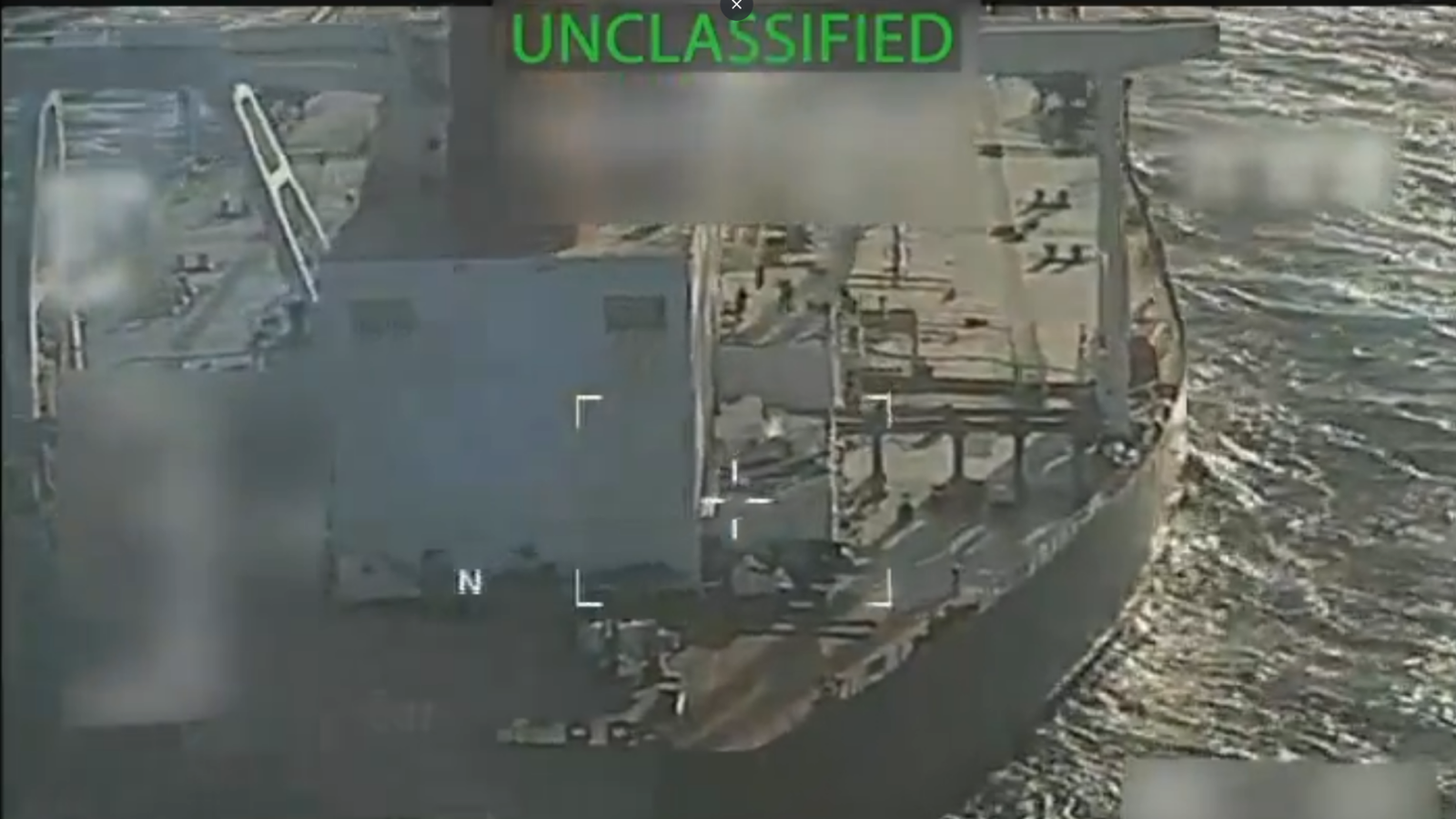
The US will not “stand by and watch sanctioned vessels sail the seas”, the White House has warned, after American forces seized an oil tanker off the coast of Venezuela.
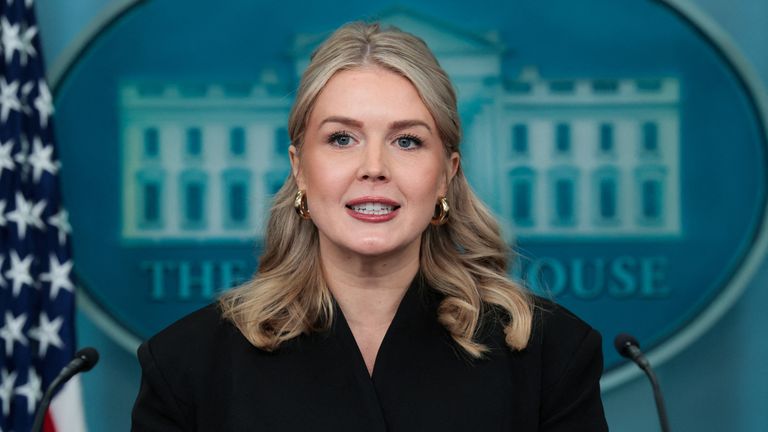
Spokeswoman Karoline Leavitt told reporters she would not speak about future ship seizures, but said the US would continue to follow Donald Trump‘s sanction policies.
“We’re not going to stand by and watch sanctioned vessels sail the seas with black market oil, the proceeds of which will fuel narcoterrorism of rogue and illegitimate regimes around the world,” she said.
White House press secretary Karoline Leavitt briefing the media. Pic: Reuters
The US is gearing up to intercept more ships, six sources familiar with the matter told Reuters.
One source said several more sanctioned tankers had been identified by the US for potential seizure.
Two of the people said the US Justice Department and Homeland Security had been planning the seizures for months.
American forces were monitoring vessels in Venezuelan ports and waiting for them to sail into international waters before taking action, one source added.
It comes after a crude oil tanker, named Skipper, on Wednesday was stormed by US forces executing a seizure warrant.
The ship left Venezuela’s main oil port of Jose between 4 and 5 December after loading about 1.1 million barrels of oil, according to satellite information analysed by TankerTrackers.com and internal shipping data from Venezuelan state oil company PDVSA.
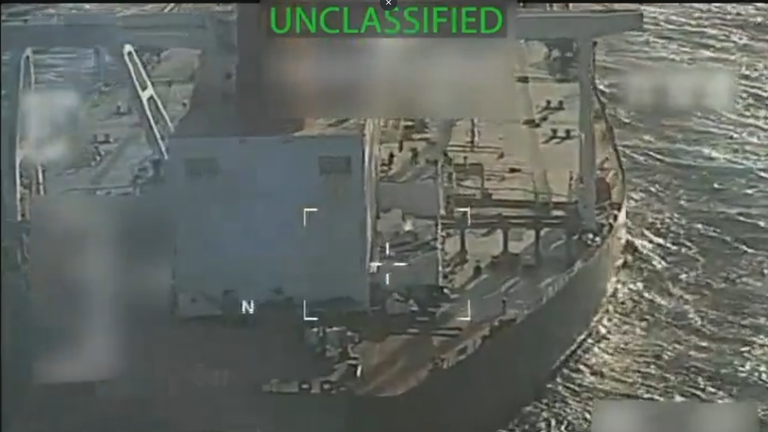
A still from a video of US forces seizing a Venezuelan oil tanker, posted by Pam Bondi. Pic: X/@AGPamBondi
The real reason for Donald Trump’s Venezuela exploits

Donald Trump wants you to know that there is one leading reason why he is bearing down militarily on Venezuela: drugs.
It is, he has said repeatedly, that country’s part in the production and smuggling of illegal narcotics into America that lies behind the ratcheting up of forces in the Caribbean in recent weeks. But what if there’s something else going on here too? What if this is really all about oil?
In one respect this is clearly preposterous. After all, the United States is, by a country mile, the world’s biggest oil producer. Venezuela is a comparative minnow these days, the 21st biggest producer in the world, its output having been depressed under the Chavez and then Maduro regimes. Why should America care about Venezuelan oil?
For the answer, one needs to spend a moment – strange as this will sound – contemplating the chemistry of oil…
US attorney general Pam Bondi said on X, formerly Twitter, that the ship was “used to transport sanctioned oil from Venezuela and Iran”.
“For multiple years, the oil tanker has been sanctioned by the United States due to its involvement in an illicit oil shipping network supporting foreign terrorist organisations,” she added.
Ms Leavitt said that “the United States does intend to get the oil” that was onboard the vessel.
The government in Caracas, led by President Nicolas Maduro, branded the ship’s seizure a “blatant theft” and an “act of international piracy”.
Read more:
Analysis: Is this what the beginning of a war looks like?
US-Venezuela crisis explained
Why tanker seized by US was ‘spoofing’ its location
The US has been ramping up the pressure on Mr Maduro and is reportedly considering trying to oust him. It has piled on sanctions, carried out a military build-up in the southern Caribbean, and launched attacks on suspected drug vessels from Venezuela.
Now America has issued new sanctions targeting Franqui Flores, Efrain Antonio Campo Flores, and Carlos Erik Malpica Flores – three nephews of Mr Maduro’s wife, Cilia Flores – as well as on six crude oil tankers and six shipping companies linked to them.
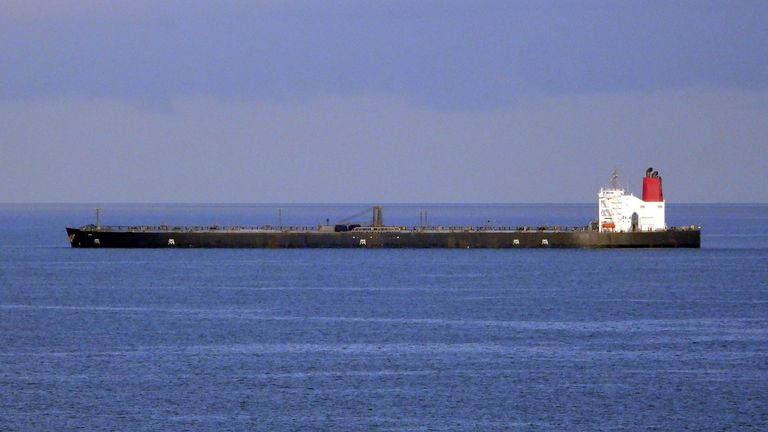
Skipper. Credit: TankerTrackers
By seizing oil tankers, the US is threatening Mr Maduro’s government’s main revenue source – oil exports.
The sources said the US was focusing on what’s been called the shadow fleet – tankers transporting sanctioned oil to China, the biggest buyer of crude from Venezuela and Iran.
They said one shipper had already temporarily suspended three voyages transporting six million barrels of Venezuelan crude oil.
“The cargoes were just loaded and were about to start sailing to Asia,” a source said.
“Now the voyages are cancelled and tankers are waiting off the Venezuelan coast as it’s safer to do that.”
-
 Sports2 years ago
Story injured on diving stop, exits Red Sox game
-
 Sports3 years ago
‘Storybook stuff’: Inside the night Bryce Harper sent the Phillies to the World Series
-
 Sports2 years ago
Game 1 of WS least-watched in recorded history
-
 Sports3 years ago
Button battles heat exhaustion in NASCAR debut
-
 Sports3 years ago
MLB Rank 2023: Ranking baseball’s top 100 players
-
Sports4 years ago
Team Europe easily wins 4th straight Laver Cup
-
 Environment3 years ago
Japan and South Korea have a lot at stake in a free and open South China Sea
-
 Environment1 year ago
Here are the best electric bikes you can buy at every price level in October 2024