

Kia boosts electric vehicle sales goal to 1.6 million by 2030, but is it enough?

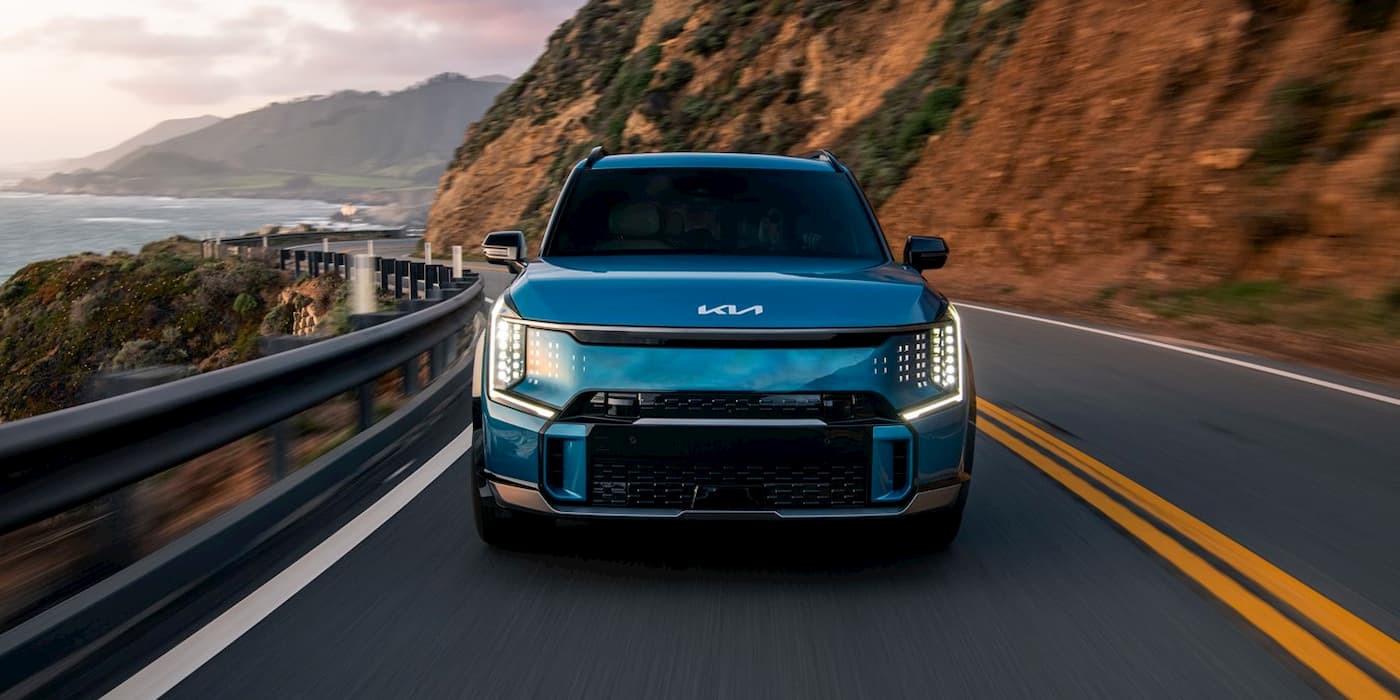
Kia updated its electric vehicle strategy Wednesday at its CEO Investor Day 2023 in Seoul, Korea. The automaker says it’s now aiming to sell 1.6 million EVs by 2030, up 400,000 from the previous guidance of 1.2 million.
With Kia forecasting 4.3 million overall sales by then, it would mean EVs would only account for 37% of all sales.
Kia raises EV sales goal to 1.6 million by 2030
After a record year in 2022 coming off a fresh brand overhaul, Kia looks to keep the momentum rolling. The South Korean automaker revealed its “Plan S” strategy in 2020, designed to transition the company to an EV-focused brand and boost sales.
In fact, Kia has completely transformed its brand, including changing the company name (from Kia Motors to Kia) and introducing a new logo.
Last May, Kia unveiled its first dedicated fully-electric vehicle, the high-flying EV6 crossover, based on Hyundai’s E-GMP platform, the same one the IONIQ 5 and IONIQ 6 models ride on.
The company established its “opposites united” design approach, which has been its guiding philosophy for the new EVs like the flagship EV9, Kia’s first seven-seat SUV, and the smaller upcoming EV5 electric SUV.
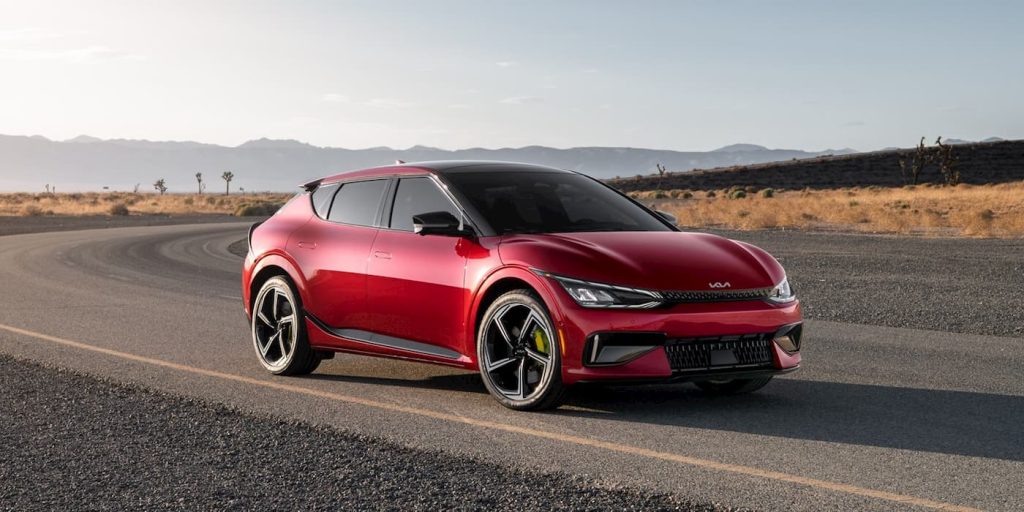
Kia’s CEO, Ho Sung Song, announced today that the automaker will accelerate its efforts to become an “EV tier 1 brand.” To do so, Kia has developed four pillars:
- Introduce a full EV lineup including 15 models as of 2027.
- Increase EV sales goal to 1.6 million by 2030, up 400,000 from the previous 1.2 million guidance.
- Advance battery technology from Gen 3 to Gen 5 (which Kia says will increase energy density by 50%) and secure a stable battery supply chain.
- Install 3,500 ultra-fast chargers in Korea by 2025 while partnering globally to expand charging infrastructure.
As an interim target, Kia is aiming to sell over 1 million electric vehicles by 2026, representing a 25% increase from its previous plans. The South Korean automaker has its first dedicated EV plant opening in 2024 in Gwangmyeong, South Korea, where two new EV models will be built.
Kia’s first target will be selling 258,000 electric vehicles by the end of the year as it works to establish its position in the new EV era.
Electrek’s Take
Although Kia adjusting its EV sales goal higher is great, it still only represents 37% of the automaker’s total sales target for 2030.
Several automakers are already selling double-digit (or 100%) EV sales by now, while other legacy automakers like Ford, GM, and Stellantis are aiming for 40% to 50% by the end of the decade, which is low in itself.
Tesla sold 1.2 million zero-emission EVs alone in 2022, and another record first quarter with over 422,000 deliveries.
Earlier this year, Polestar’s head of sustainability, Fredrika Klarén, called out legacy automakers, saying there is no place for mass-produced non-EV models after 2030.
Klarén said Polestar is basing its assessments on a science-based approach, and anyone claiming they will fix it by 2040 or 2050 is not listening, because we will have already missed our goal, going on to explain:
We only have seven years left until we hit 1.5 degrees global warming. That’s a fact if we continue on the route we’re heading into. So, anything after 2030, we’re not interested.
We don’t have time to wait until after 2030, especially not with only 37% EV sales. More needs to be done including ending ICE vehicle production.
FTC: We use income earning auto affiliate links. More.


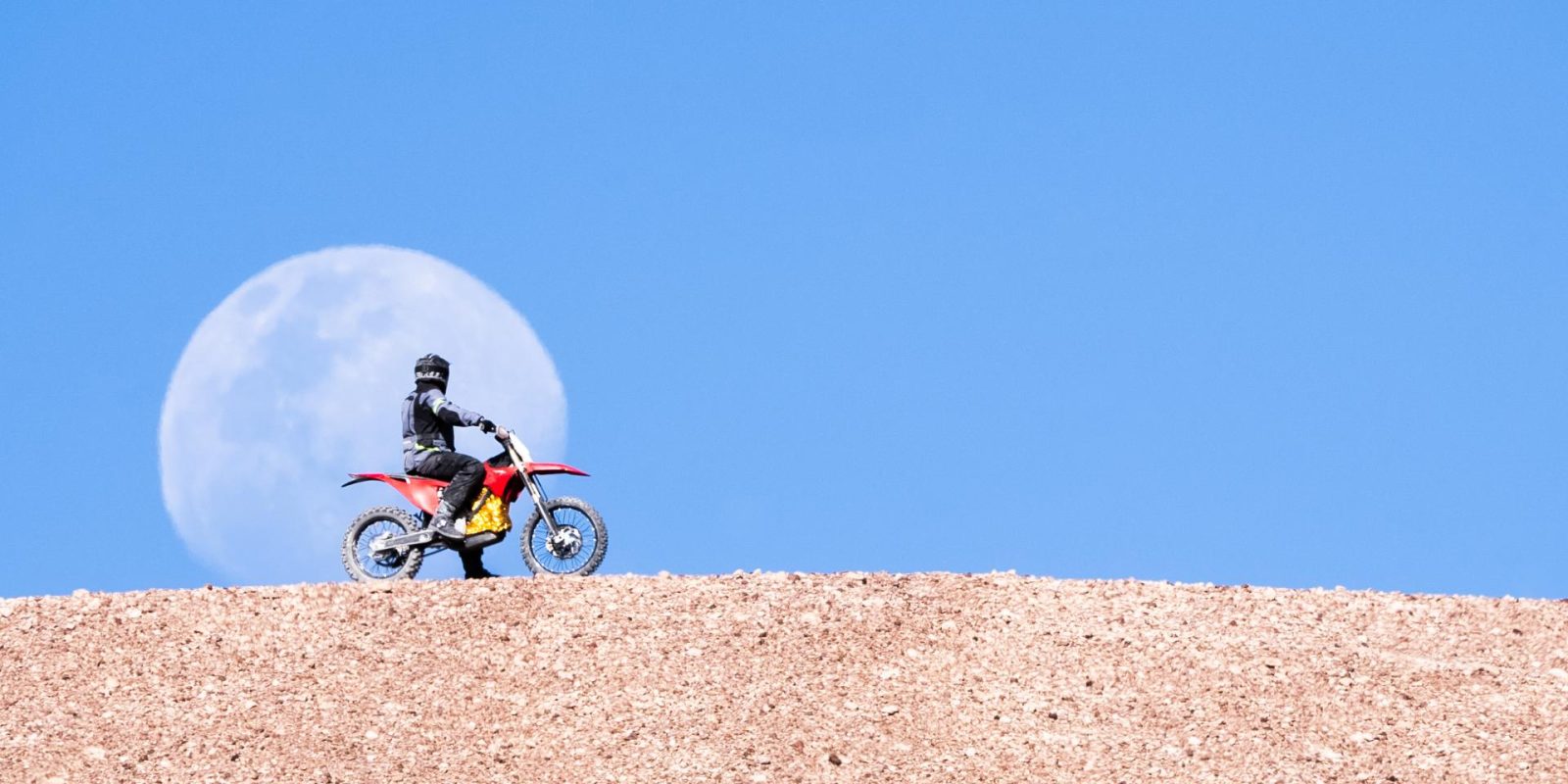
Electric motorcycles are already known for their instant torque and quiet performance, but now one electric dirt bike has proven it can do something gas bikes can’t: breathe where combustion engines can’t. Stark Future and Swiss mountaineer-rider Jiri Zak just made history by setting a new high-altitude world record on the world’s highest active volcano, riding a fully electric Stark VARG EX up to an astonishing 6,721 meters (22,051 feet) above sea level.
The record-setting ride took place on Los Ojos del Salado, a massive stratovolcano straddling the Chile–Argentina border in the Atacama Desert. It’s the tallest active volcano in the world and one of the most brutal environments on Earth to test the limits of man and machine. Sub-zero temperatures, violent weather, thin air, and volcanic terrain have made it the proving ground for record-breaking attempts by companies like Porsche, Yamaha, and Jeep since the early 2000s.
But this time, it wasn’t a combustion engine motorcycle powering the ascent, but rather a battery-powered motorcycle.
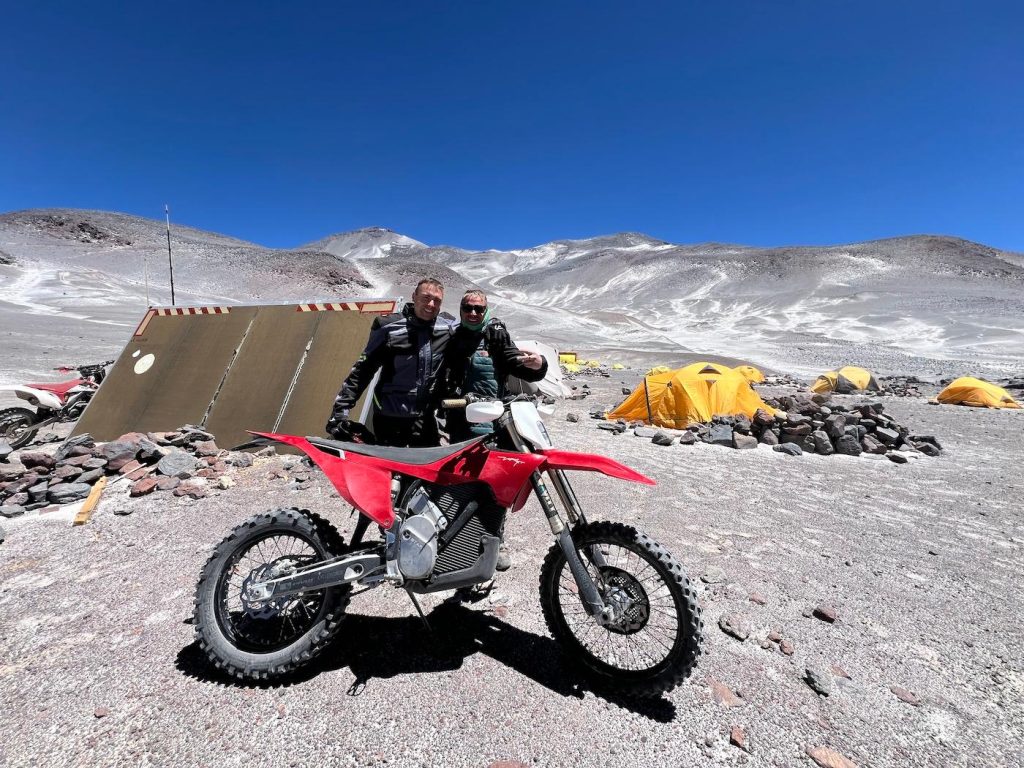
Stark’s electric VARG EX conquers the thin air
Riding at nearly 7,000 meters means serious altitude sickness risks for humans – and serious performance losses for gas engines. But that’s exactly where the Stark VARG EX shines. Without relying on air-fuel combustion, the VARG EX can deliver full torque even in oxygen-starved conditions. It also simplifies high-altitude riding by eliminating gear shifting, relying instead on electric driveline efficiency and seamless power delivery.
Jiri Zak, the expedition’s lead rider and a seasoned alpinist, put it best. “Two years ago this was just a dream – do it on an electric bike, where combustion loses its breath. Ojos is unforgiving; one mistake can cost your life. That’s why I’m here with a team I trust and a motorcycle that keeps delivering power in thin air.”
Zak’s attempt was logged on November 30, 2025, with GPS units that were sealed in advance to ensure authenticity. The full data is now undergoing third-party verification, with Guinness World Records authentication in process.
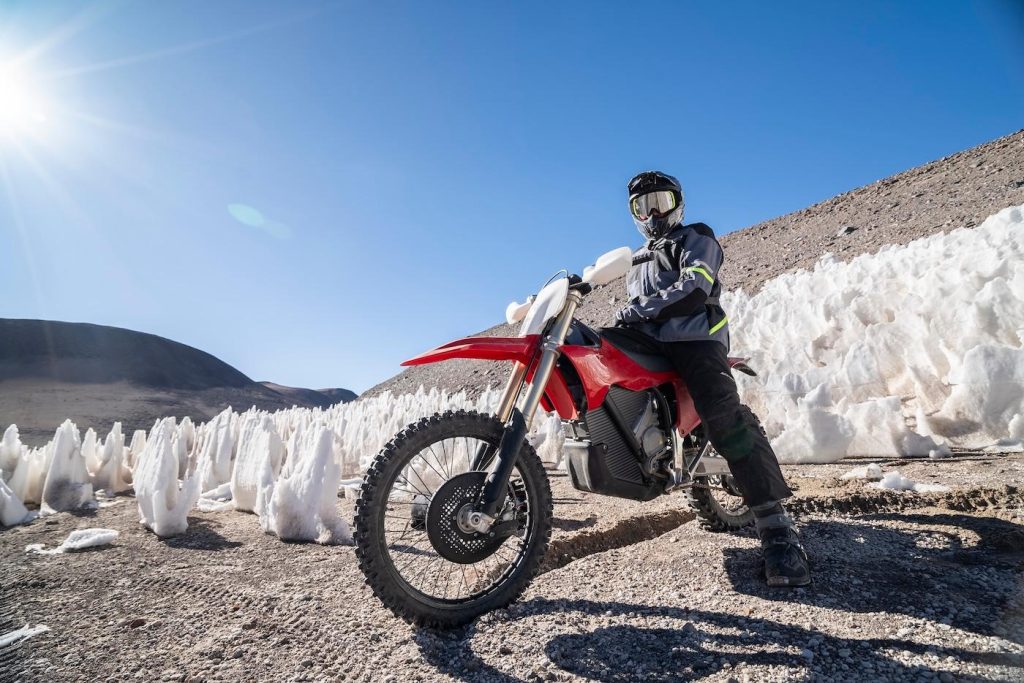
Stark and Zak aimed to push a motorcycle – regardless of the powertrain, electric or gas – higher than ever before. And they did.
The previous high-altitude motorcycling records involved heavily modified combustion bikes operating at the ragged edge of their capability. But the Stark VARG EX performed the feat right out of the box, with no major mechanical changes. That’s a serious milestone for electric mobility.
“This was never about a standalone number,” said Stark Future CEO Anton Wass. “It’s about proving that electric is not a compromise; it takes you further than any other combustion bike could. The VARG platform can operate at the edge of the atmosphere.”
Built for the extremes
To make the record possible, Stark assembled a team of logistics experts, mountain safety personnel, and videographers to document the expedition. The crew spent multiple days acclimating, scouting line choices, and studying energy management strategies for the high-altitude ride.
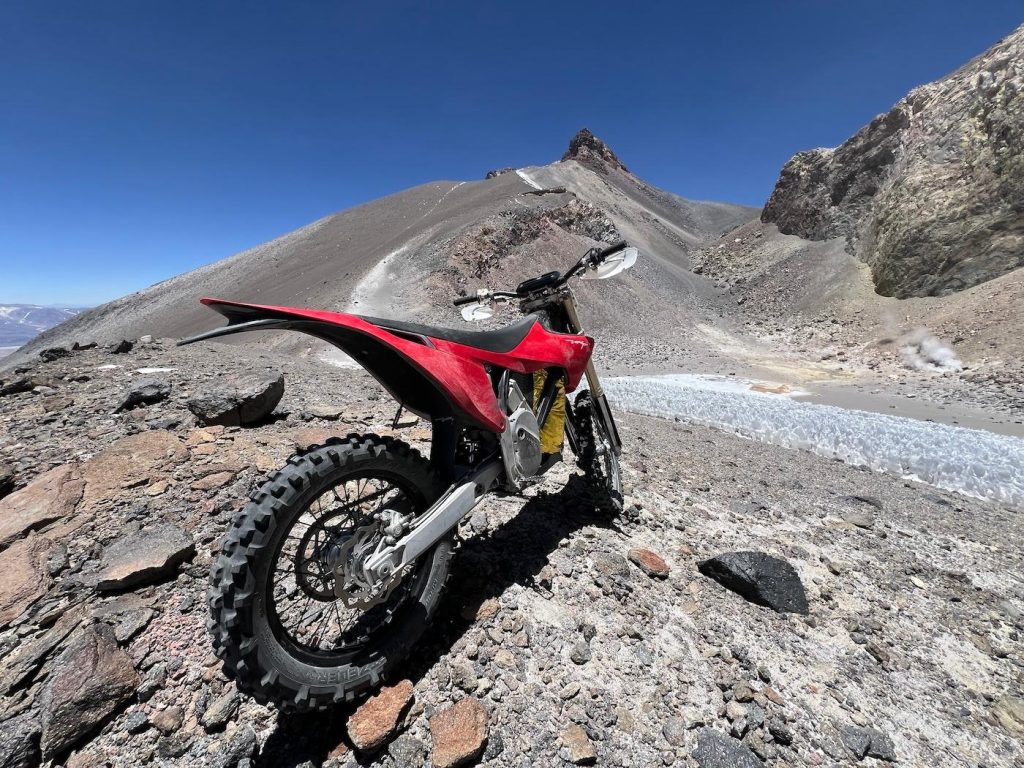
Weather windows were tight. Battery thermal regulation was crucial. Traction was unpredictable. Zak even described one of the most intense moments on the mountain, returning from the summit, “The hardest moment was the traverse to Argentina Pass. The balcony was gone. The wind and snow had erased my old track. Nature had taken the path back.”
Even with the challenges, the VARG EX maintained its composure, and its performance, throughout the climb.
A moonshot mentality
With a slogan like “Next stop? The moon!” it’s clear Stark is doing more than just chasing off-road trophies. The company is positioning itself as a symbol of what electric powertrains can accomplish in terrain where gas bikes falter.
Stark Future, founded in 2020 in Barcelona, has rapidly become the most talked-about name in the electric motocross scene. Their flagship VARG model claims to be the most powerful motocross bike ever built, and the EX variant used in this record attempt is the company’s enduro-specific version.
Stark’s vision is about pushing the motorcycle industry toward a more sustainable, electric future. And with this record-setting ride, they’ve just planted an electric flag higher than any motorcycle has ever gone before.


FTC: We use income earning auto affiliate links. More.


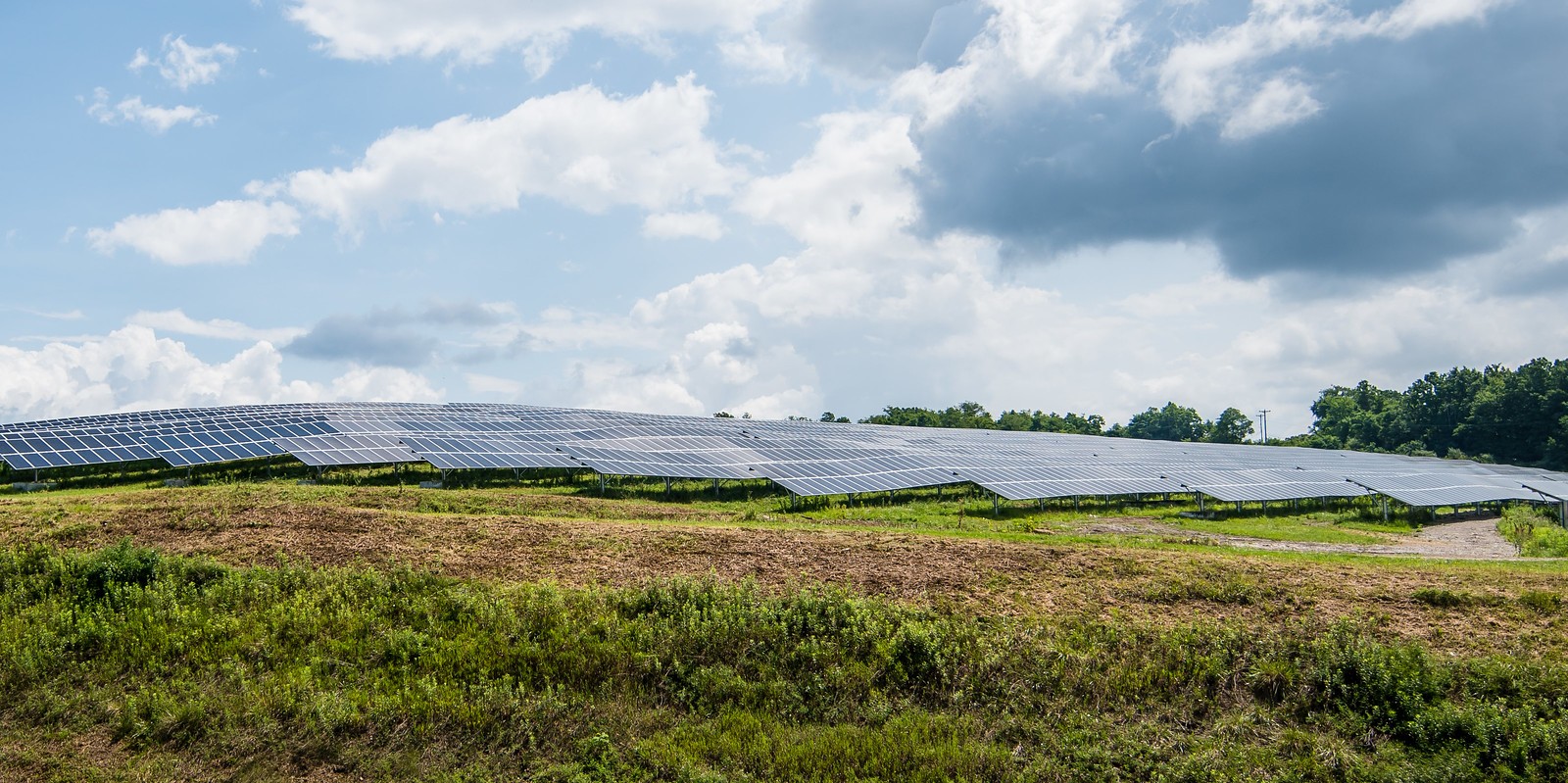
The US solar industry just delivered another huge quarter, installing 11.7 gigawatts (GW) of new capacity in Q3 2025. That makes it the third-largest quarter on record and pushes total solar additions this year past 30 GW – despite the Trump administration’s efforts to kneecap clean energy.
According to the new “US Solar Market Insight Q4 2025” report from Solar Energy Industries Association (SEIA) and Wood Mackenzie, 85% of all new power added to the grid during the first nine months of the Trump administration came from solar and storage. And here’s the twist: Most of that growth – 73% – happened in red states.
Eight of the top 10 states for new installations fall into that category, including Texas, Indiana, Florida, Arizona, Ohio, Utah, Kentucky, and Arkansas. Utah jumped into the top 10 this quarter thanks to two big utility-scale projects totaling more than 1 GW.
But the report also flags major uncertainty ahead. Federal actions, including a July memo from the Department of the Interior (DOI), have slowed or stalled the approvals pipeline for utility-scale solar and storage. Without clarity on permitting timelines, Wood Mackenzie’s long-term utility-scale forecast through 2030 remains basically unchanged from last quarter.
“This record-setting quarter for solar deployment shows that the market is continuing to turn to solar to meet rising demand,” said Abigail Ross Hopper, SEIA’s president and CEO. She added that strong growth in red states underscores how decisively the market is shifting toward clean energy. “But unless this administration reverses course, the future of clean, affordable, and reliable solar and storage will be frozen by uncertainty, and Americans will continue to see their energy bills go up.”
Two new solar module factories opened this year in Louisiana and South Carolina, adding a combined 4.7 GW of capacity. That brings the total new US module manufacturing capacity added in 2025 to 17.7 GW. With a new wafer facility coming online in Michigan in Q3, the US can now produce every major component of the solar module supply chain.
“We expect 250 GW of solar to be installed from 2025 to 2030,” said Michelle Davis, head of solar research at Wood Mackenzie and lead author of the report. “But the US solar industry has more potential. With rising power demand across the country, solar could do even more if current constraints were eased.”
SEIA also noted that, following an analysis of EIA data, it found that more than 73 GW of solar projects across the US are stuck in permitting limbo and at risk of politically motivated delays or cancellations.
Read more: EIA: Solar + storage soar as fossil fuels stall through September 2025

If you’re looking to replace your old HVAC equipment, it’s always a good idea to get quotes from a few installers. To make sure you’re finding a trusted, reliable HVAC installer near you that offers competitive pricing on heat pumps, check out EnergySage. EnergySage is a free service that makes it easy for you to get a heat pump. They have pre-vetted heat pump installers competing for your business, ensuring you get high quality solutions. Plus, it’s free to use!
Your personalized heat pump quotes are easy to compare online and you’ll get access to unbiased Energy Advisors to help you every step of the way. Get started here. – *ad
FTC: We use income earning auto affiliate links. More.
-
 Sports2 years ago
Story injured on diving stop, exits Red Sox game
-
 Sports3 years ago
‘Storybook stuff’: Inside the night Bryce Harper sent the Phillies to the World Series
-
 Sports2 years ago
Game 1 of WS least-watched in recorded history
-
 Sports3 years ago
Button battles heat exhaustion in NASCAR debut
-
 Sports3 years ago
MLB Rank 2023: Ranking baseball’s top 100 players
-
Sports4 years ago
Team Europe easily wins 4th straight Laver Cup
-
 Environment3 years ago
Japan and South Korea have a lot at stake in a free and open South China Sea
-
 Environment1 year ago
Here are the best electric bikes you can buy at every price level in October 2024