

This US company’s heat pump works below -22F

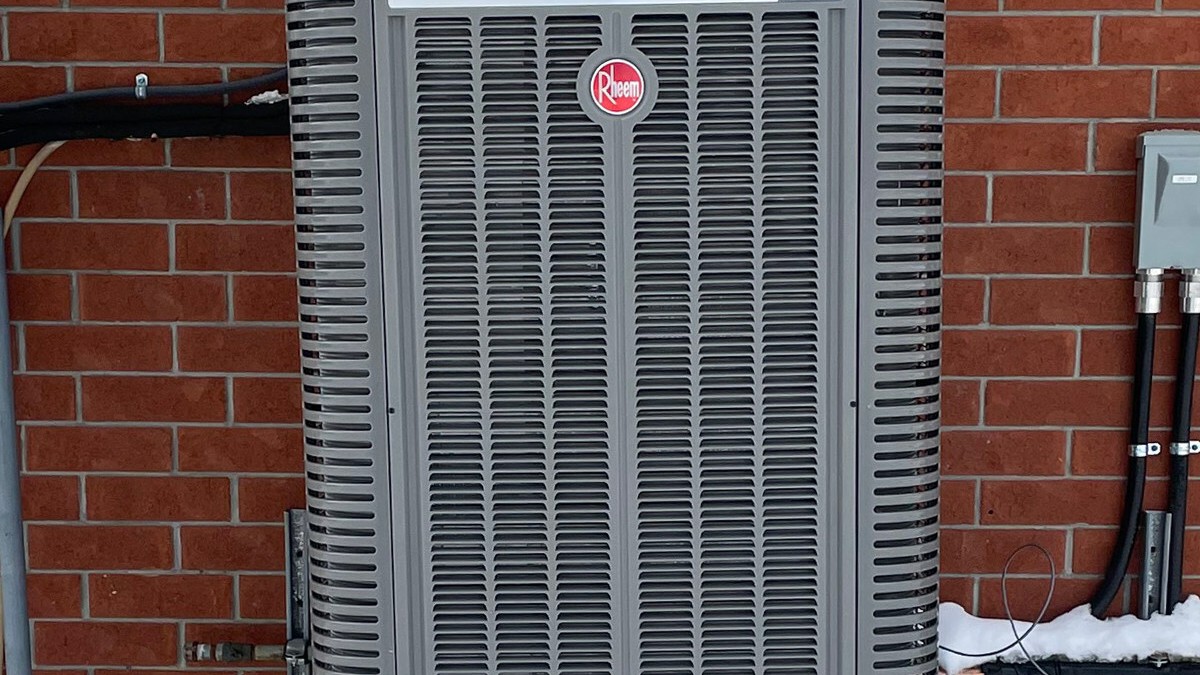
Atlanta-headquartered Rheem‘s heat pump has been given an “exemplary performance” nod in the US Department of Energy’s Cold Climate Heat Pump Challenge.
DOE launched the Heat Pump Challenge because, according to the program’s fact sheet, “additional efforts are needed to address common technical and market barriers to wider adoption by consumers – which include performance at temperatures of 5F and below, installation challenges, and electricity grid impacts during peak demand periods.”
In other words, we need them to work reliably in cold climates. That’s because heating and/or cooling a home, along with water heating, account for 40% of the primary energy consumption in buildings in the US and are a major source of emissions.
DOE is working with manufacturers to lab test the performance of cold climate heat pumps. Field testing will take place over the next couple of years.
Besides Rheem, other manufacturers, such as Johnson Controls, Carrier, Trane, and Bosch, are also taking part in the challenge.
Rheem reports that the DOE determined that its residential heat pump delivered outstanding results in the challenge.
Rheem improved its existing design to deliver 5% higher COP – the ratio of how much useful heat a heat pump will produce if it’s given a certain energy input – during heating at 5F ambient temperature than the DOE challenge specification.
The Rheem heat pump also performed at a 9% higher HSPF2 (heating seasonal performance factor) than the DOE challenge specification.
Jeff Goss, director, product management, at Rheem, said:
We were not surprised that our team of dedicated, innovative engineers at Rheem developed a residential heat pump that was able to provide 77% of nominal heating capacity at −15F ambient temperature [where the heat pump is stored] and provided uninterrupted heating operation at −23F ambient temperature, surpassing expectations and delivering top quality performance.
The DOE is aiming for deployment and commercialization in 2024 after field testing.
Read more: Here are 5 vital things you need to know about heat pumps
Photo: Rheem
UnderstandSolar is a free service that links you to top-rated solar installers in your region for personalized solar estimates. Tesla now offers price matching, so it’s important to shop for the best quotes. Click here to learn more and get your quotes. — *ad.
FTC: We use income earning auto affiliate links. More.

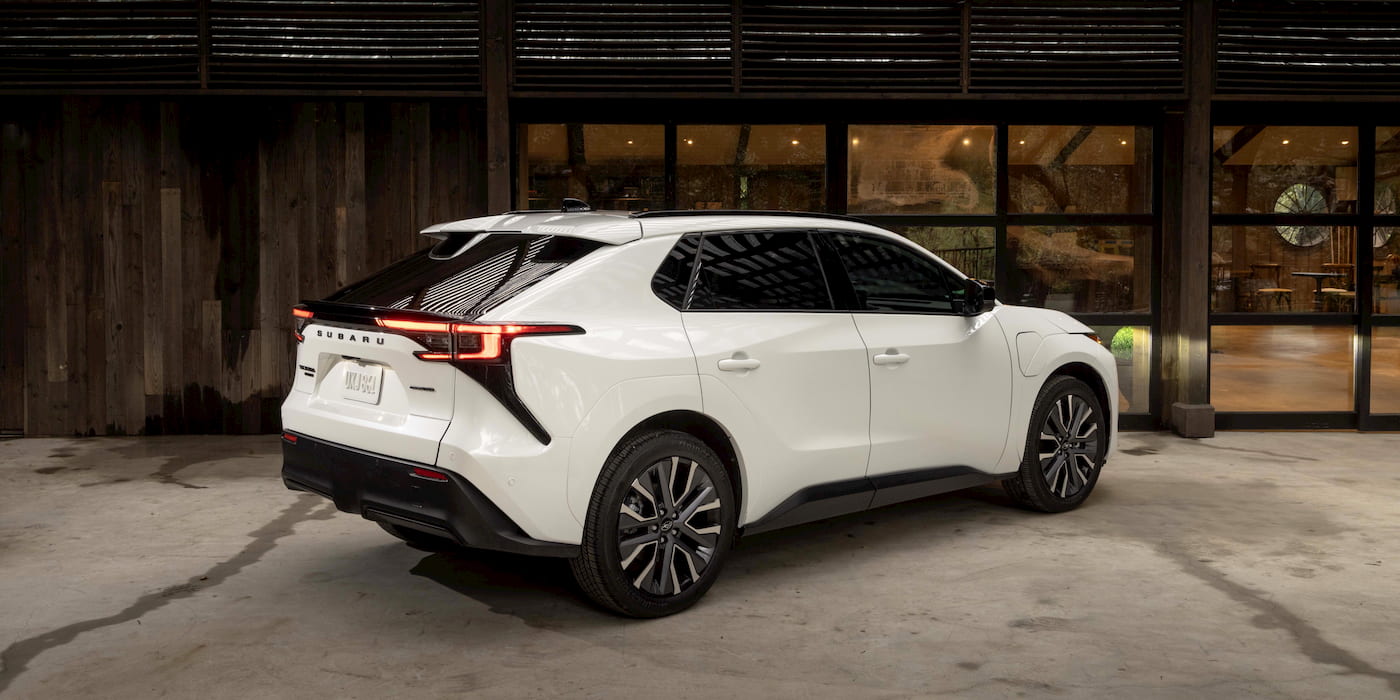
The new Subaru Solterra EV is surprisingly quick. It’s even faster than the WRX STI and BRZ, and it’s not even a performance model.
The new Subaru Solterra EV is faster than its gas cars
Subaru updated the electric SUV for the 2026 model year, improving it in just about every way. The 2026 Subaru Solterra is more powerful, can drive further, and it even has an NACS port so you can recharge at Tesla Superchargers.
Despite the improvements, the 2026 Subaru Solterra still starts at just $38,495, the same as the outgoing model.
Powered by a new 74.7 kWh battery, Subaru’s electric SUV can now drive up to 288 miles on a single charge, considerably more than the 2025 Solterra with an EPA-estimated driving range of just 227 miles.
The 2026MY is equipped with Subaru’s upgraded Symmetrical All-Wheel Drive (AWD) system, delivering up to 338 horsepower and 323 lb-ft of torque.
Subaru says the added power is good for a 0 to 60 mph sprint in “less than 5 seconds,” but according to Car and Driver, which tested the new electric SUV, it’s actually much faster.
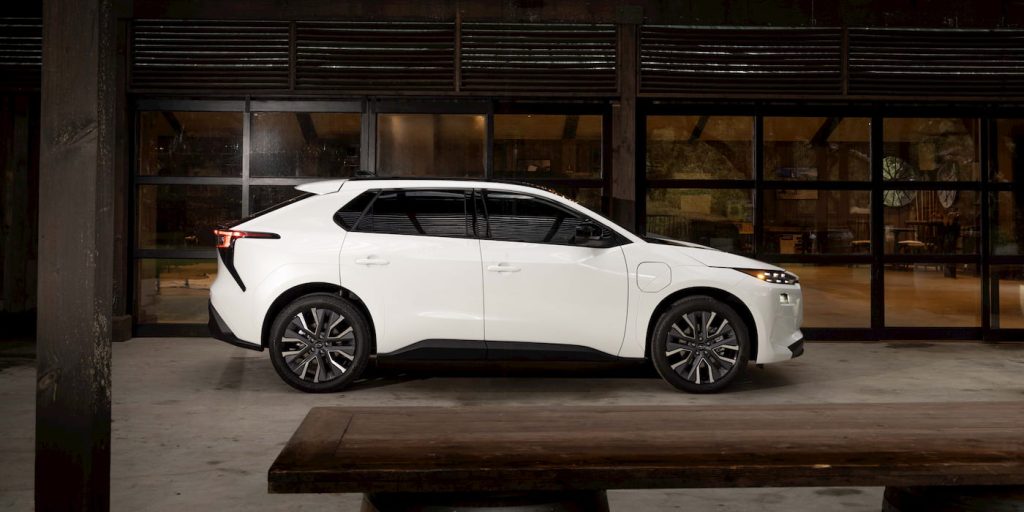
It’s even quicker than every BRZ and WRX STI they have tested. In fact, it’s the fastest Subaru Car and Driver has ever tested. The 2026 Solterra reached 60 mph in just 4.3 seconds and hit 100 mph in 11.8 seconds.
In comparison, the 2024 BRZ tS took 5.5 seconds to reach 60 mph and 13.7 seconds to get to 100 mph. A 2019 STI S209 hit 0 to 60 mph in 4.4 seconds, but beat the Solterra, reaching the century mark in just 11.2 seconds.
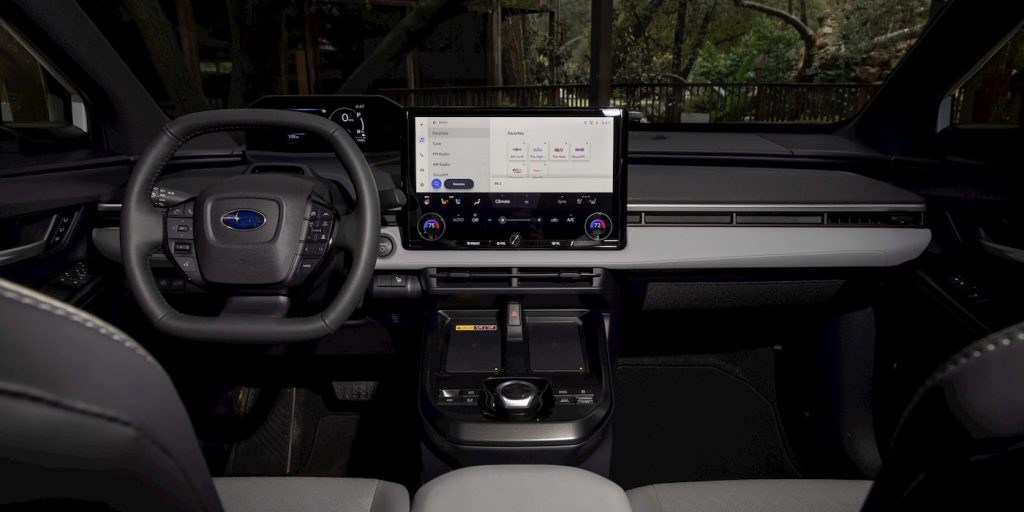
The Solterra and S209 tied in a drag race, covering a quarter-mile in 13 seconds. Although the Solterra’s instant torque gave it the edge off the line, it topped out at 101 mph, allowing the S209 to come back.
Subaru has yet to say if the Solterra will receive a higher-performance variant, but it did unveil an electric STI concept car at the Japan Mobility Show in October. The Performance-E STI concept “represents the future of the Performance Scene, spearheading Subaru’s new generation,” the automaker said at the event.
| 2026 Subaru Solterra trim | Starting Price (MSRP) |
| Solterra Premium | $38,495 |
| Solterra Limited | $41,395 |
| Solterra Limited XT | $42,895 |
| Solterra Touring XT | $45,555 |
With the new Uncharted and Trailseeker electric SUVs arriving at US dealerships, the Solterra likely won’t hold the crown for long.
The new 2026 Subaru Solterra EV is available in four trims: Premium, Limited, Limited XT, and Touring XT, starting at $38,495.
Looking to test one out for yourself? You can use our links below to easily find Subaru’s new electric SUVs near you.


FTC: We use income earning auto affiliate links. More.

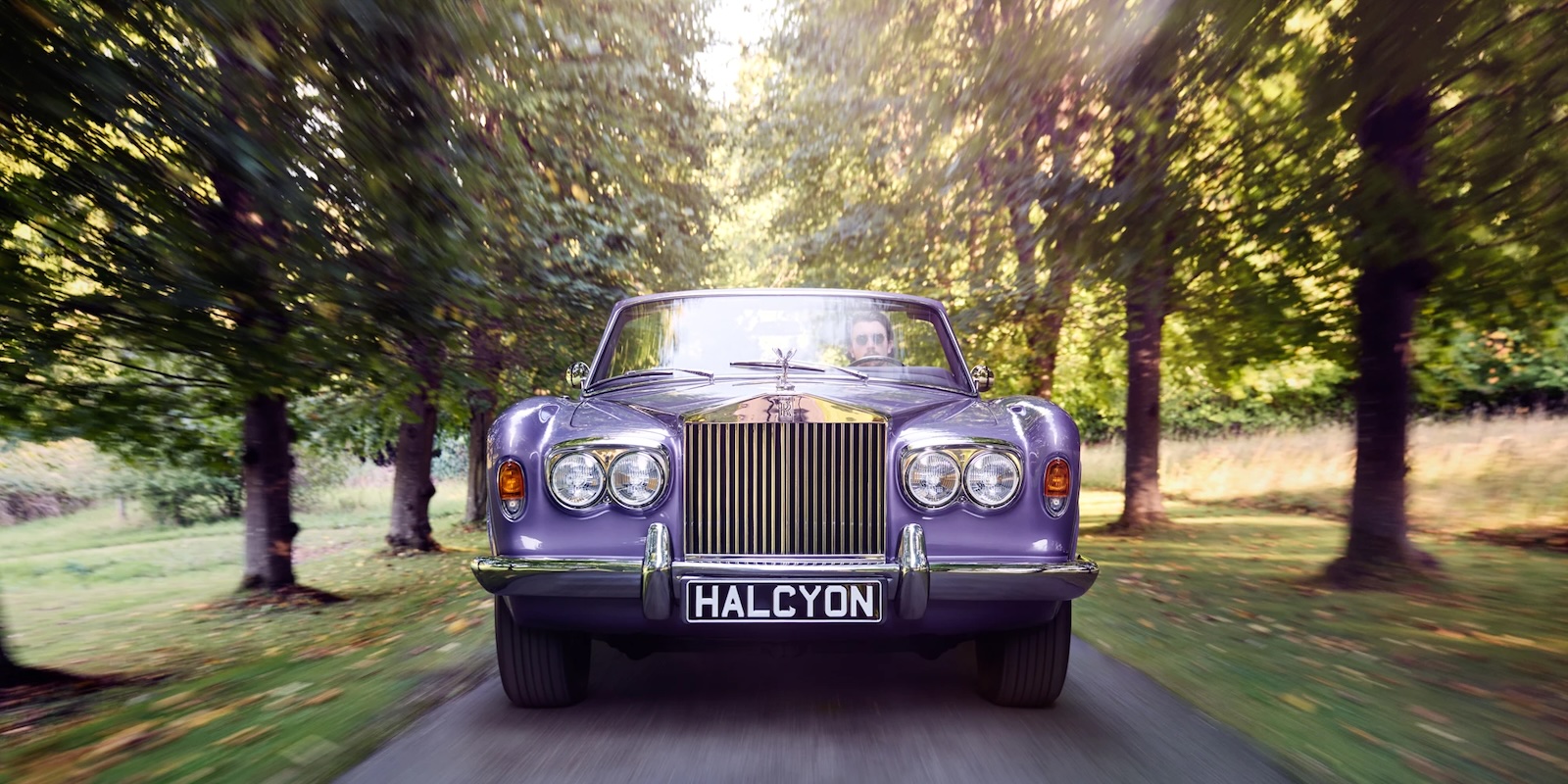
’Twas the night before Christmas, and while visions of sugarplums may be dancing in other, lesser heads, mine is hoping for some polished chrome, hand-stitched leather, and effortless, electric torque — because Mariah can have you, all I want for Christmas is this classic Rolls-Royce Corniche restomod (in seasonally-appropriate Sugarplum metallic).
Sure, the new money might tell you that the BMW-era Rolls-Royce are better cars than the storied marque could put out on its own, but they’re wrong. The high water mark for postwar Rollers was the Corniche Drophead Coupe (that’s a convertible for you poors), and Halcyon has just taken one and packed it full of all-electric, battery-powered goodness.
Santa, pay attention.
Halcyon remastered Corniche
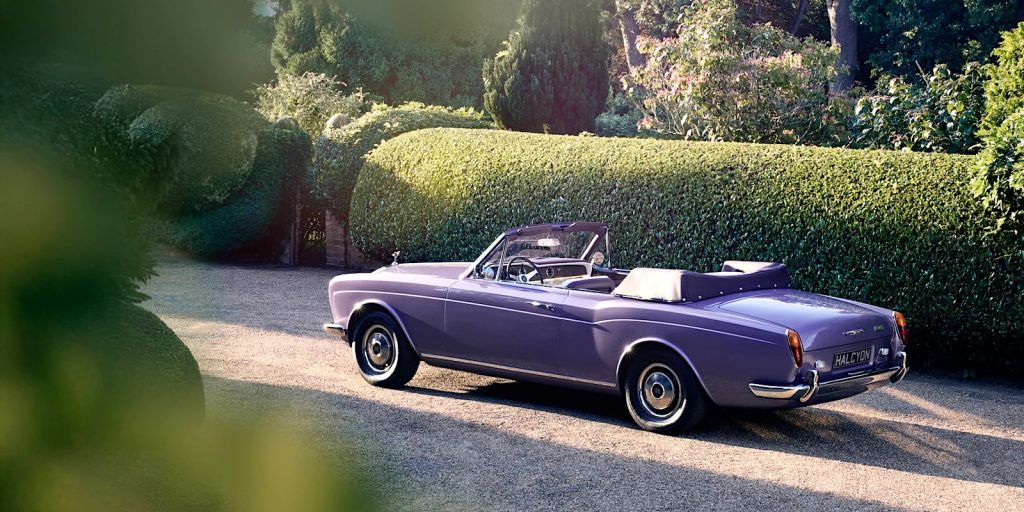
Halcyon executives are quick to point out that this isn’t a restoration, quick conversion, or restomod. This is something else. “Akin to your favourite piece of music, our remastering process adds quality, clarity, and depth while retaining the irreplaceable essence that ignited the love for these icons in the first place. Highland Heather (the car shown here –Ed.) embodies our vision for the future of Halcyon,” explains Matthew Pearson, CEO of Halcyon. “We’re beyond excited to begin realizing our clients’ incredible visions for these truly special cars.”
Limited to just 60 hand-made in Surrey, England commissions, each electric Rolls-Royce Corniche will take more than 2,000 man-hours to build to a unique and exacting set of specifications to be provided by clients through Halcyon’s atelier, “with no bespoke request left unexplored,” according to the company’s website.
But, while the look is vintage, Halcyon’s well-heeled clients will be driving home in an EV that is thoroughly modern. The ultra-luxe convertibles (I’m poor, too) will ride on an 800V electric vehilce platform developed by Halcyon’s sister company Evice Technologies, elevating the Rolls-Royce experience with all the smooth, silent, and effortless torque you remember from the timeless Corniche but with no emissions, dramatically reduced maintenance, and (allegedly) zero mass added to the original.
No comment on range, power, or pricing – but rest assured, the answer to questions about either or all of those topics will be the same, and classically Rolls-Royce: enough.
Halcyon Heather
SOURCE | IMAGES: Halcyon.

If you’re considering going solar, it’s always a good idea to get quotes from a few installers. To make sure you find a trusted, reliable solar installer near you that offers competitive pricing, check out EnergySage, a free service that makes it easy for you to go solar. It has hundreds of pre-vetted solar installers competing for your business, ensuring you get high-quality solutions and save 20-30% compared to going it alone. Plus, it’s free to use, and you won’t get sales calls until you select an installer and share your phone number with them.
Your personalized solar quotes are easy to compare online and you’ll get access to unbiased Energy Advisors to help you every step of the way. Get started here.
FTC: We use income earning auto affiliate links. More.

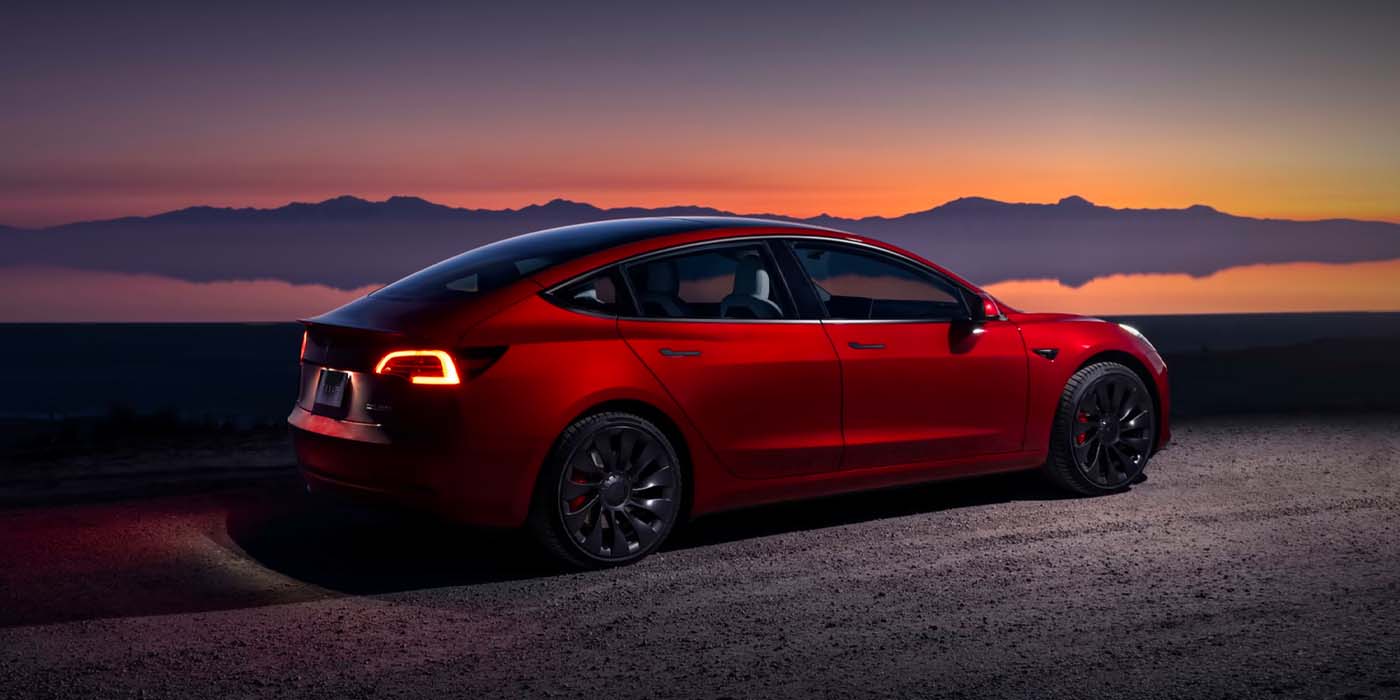
The National Highway Traffic Safety Administration (NHTSA) has officially opened a defect petition to evaluate the emergency door release mechanisms in the Tesla Model 3. The probe covers approximately 180,000 vehicles and focuses on allegations that the manual releases are too difficult to locate during emergencies.
The investigation comes following several media reports regarding fatal crashes where occupants or first responders reportedly struggled to open the vehicle doors to extract occupants following a crash.
According to the official investigation documents released by the Office of Defects Investigation (ODI), the evaluation was prompted by a petition citing that “the mechanical door release is hidden, unlabeled, and not intuitive to locate during an emergency”.
The specific subject of the investigation is listed as “Emergency egress controls are not readily accessible and clearly identifiable”.
The probe, designated as Defect Petition DP25002, specifically covers the Model Year 2022 Tesla Model 3. The ODI estimates the population of affected vehicles to be 179,071.
While Tesla’s electronic door handles are a signature design feature, they rely on power to function. In the event of a total power loss, which can happen during severe crashes, occupants or rescuers must use the mechanical overrides.
The petition alleges that these mechanical overrides are not obvious enough. The ODI resume states:
“The petition cites that the mechanical door release is hidden, unlabeled, and not intuitive to locate during an emergency.”
The document notes that the investigation is currently in the “Defect Petition” phase, where the agency will “evaluate the issue and determine whether to grant or deny the petition”. So far, the summary report associates one injury incident with this specific petition.
However, recent investigations by Bloomberg and the Post have found several fatal crashes in which door handle and door opening designs might have played a role.
Electrek’s Take
This is a tough one because anyone who owns a Model 3 knows exactly where the front manual release is, it’s that latch right in front of the window switches. In fact, many new passengers pull it by mistake instead of the button, which can damage the window trim.
Then at the rear, it is arguably even more complicated, especially if you haven’t read the owner’s manual, which you probably haven’t if you are sitting in the back seat.
While the fact that some do it even by mistake could suggest it’s obvious, the simple fact that the door-opening process isn’t intuitive enough to be done right on the first try could suggest a problem.
If first responders are struggling to get people out, that’s a massive problem. Tesla loves minimalism, and removing physical handles improves aerodynamics and aesthetics, but safety redundancy needs to be idiot-proof.
This is still early in the process, but if the NHTSA finds that the design delays egress, we could see a recall that involves stickering the release locations or, in a more complex scenario, retrofitting a more obvious physical lever.
FTC: We use income earning auto affiliate links. More.
-
 Sports2 years ago
Story injured on diving stop, exits Red Sox game
-
 Sports3 years ago
‘Storybook stuff’: Inside the night Bryce Harper sent the Phillies to the World Series
-
 Sports2 years ago
Game 1 of WS least-watched in recorded history
-
 Sports3 years ago
Button battles heat exhaustion in NASCAR debut
-
 Sports3 years ago
MLB Rank 2023: Ranking baseball’s top 100 players
-
Sports4 years ago
Team Europe easily wins 4th straight Laver Cup
-
 Environment3 years ago
Japan and South Korea have a lot at stake in a free and open South China Sea
-
 Environment1 year ago
Here are the best electric bikes you can buy at every price level in October 2024