

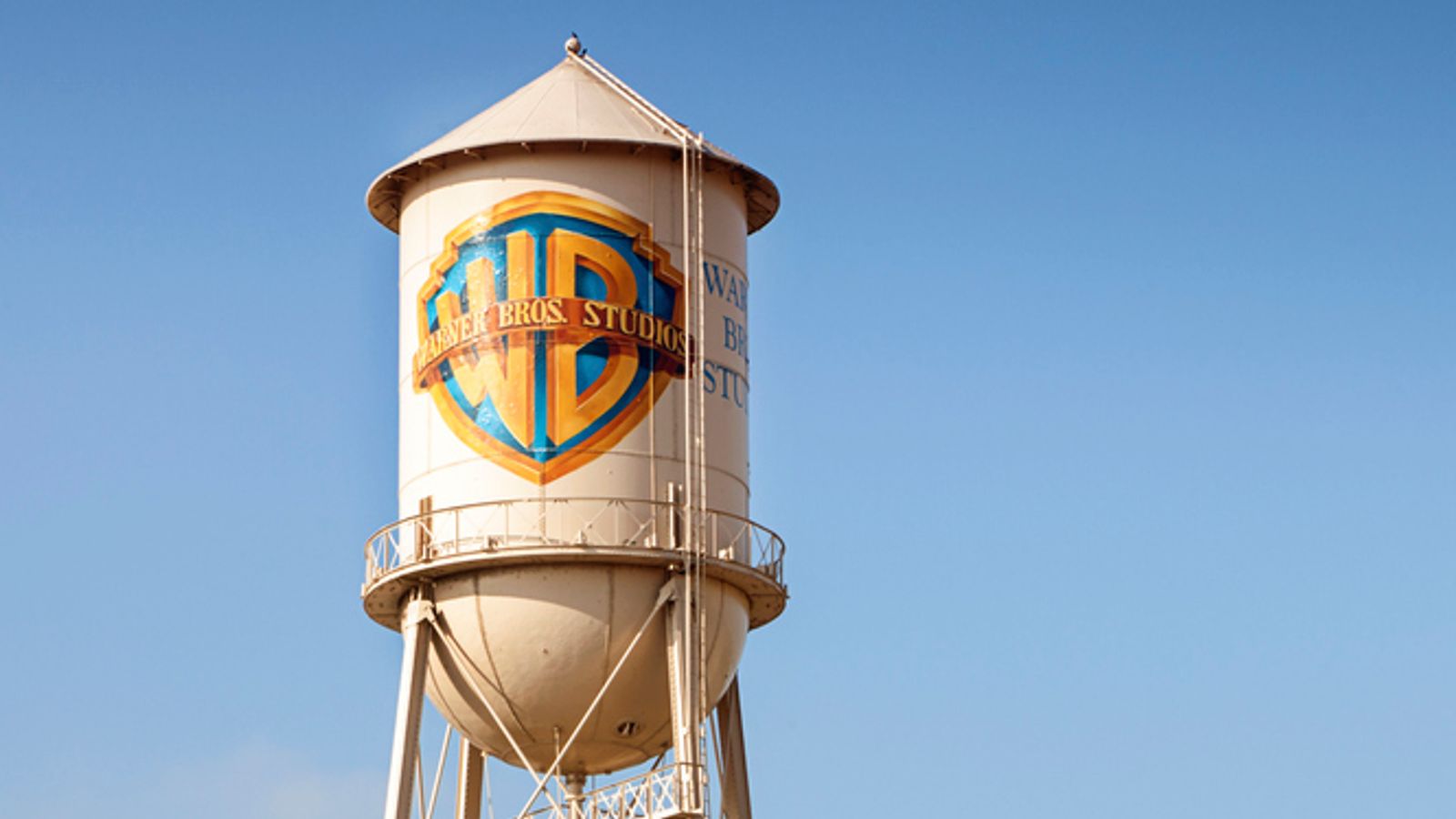
Warner Bros is reportedly set to reject a hostile $108bn (£81bn) takeover bid from Paramount, with one of the prospective buyer’s financing partners confirming it’s pulled out of the offer.
A spokesman for investment firm Affinity, owned by Donald Trump‘s son-in-law Jared Kushner, told Sky News’ US partner network NBC News “the dynamics of investment have changed significantly”.
It had backed Paramount’s bid, along with funds from Saudi Arabia and other Middle Eastern countries.
Bloomberg and The Wall Street Journal report the Warner Bros Discovery board are set to advise shareholders to reject Paramount‘s bid – paving the way for Netflix, which had struck a $72bn (£54bn) deal.
If the takeover goes through, it would give the streaming giant the rights to hit Warner franchises like Harry Potter, Batman, and Game Of Thrones, as well an extensive back catalogue of classic films.
Money latest: Oil prices fall to lowest level since 2021
Pic: iStock
It is the latest twist in a takeover saga where the winner will acquire a huge advantage in the streaming wars.
In June, Warner announced its plan to split into two companies – one for its TV, film studios and HBO Max streaming services, and one for the Discovery element of the business, which primarily comprises legacy TV channels that show cartoons, news, and sports.
Netflix agreed a $27.75 per-share price with the firm, which equates to the $72bn purchase figure deal to secure its film and TV studios, with the deal giving the assets a total value of $82.7bn.
However, Paramount said its offer would pay $30 (£22.50) cash per share, representing $18bn (£13.5bn) more in cash than its rival offered. The offer was made directly to shareholders, asking them to reject Netflix’s deal, in what is known as a hostile takeover.
The Paramount deal would involve rival US news channels CBS and CNN being brought under the same parent company.
Read more:
Why is Warner Bros for sale and how is Trump involved?
The US government will have a big say on the final deal, with the winning company likely facing the Department of Justice’s (DOJ) Antitrust Division, a federal agency which scrutinises business deals to ensure fair competition.
You’ve doubtless heard of the National Grid, the network of pylons and electricity infrastructure ensuring the country is supplied with power. You’re probably aware that there is a similar national network of gas pipelines sending methane into millions of our boilers.
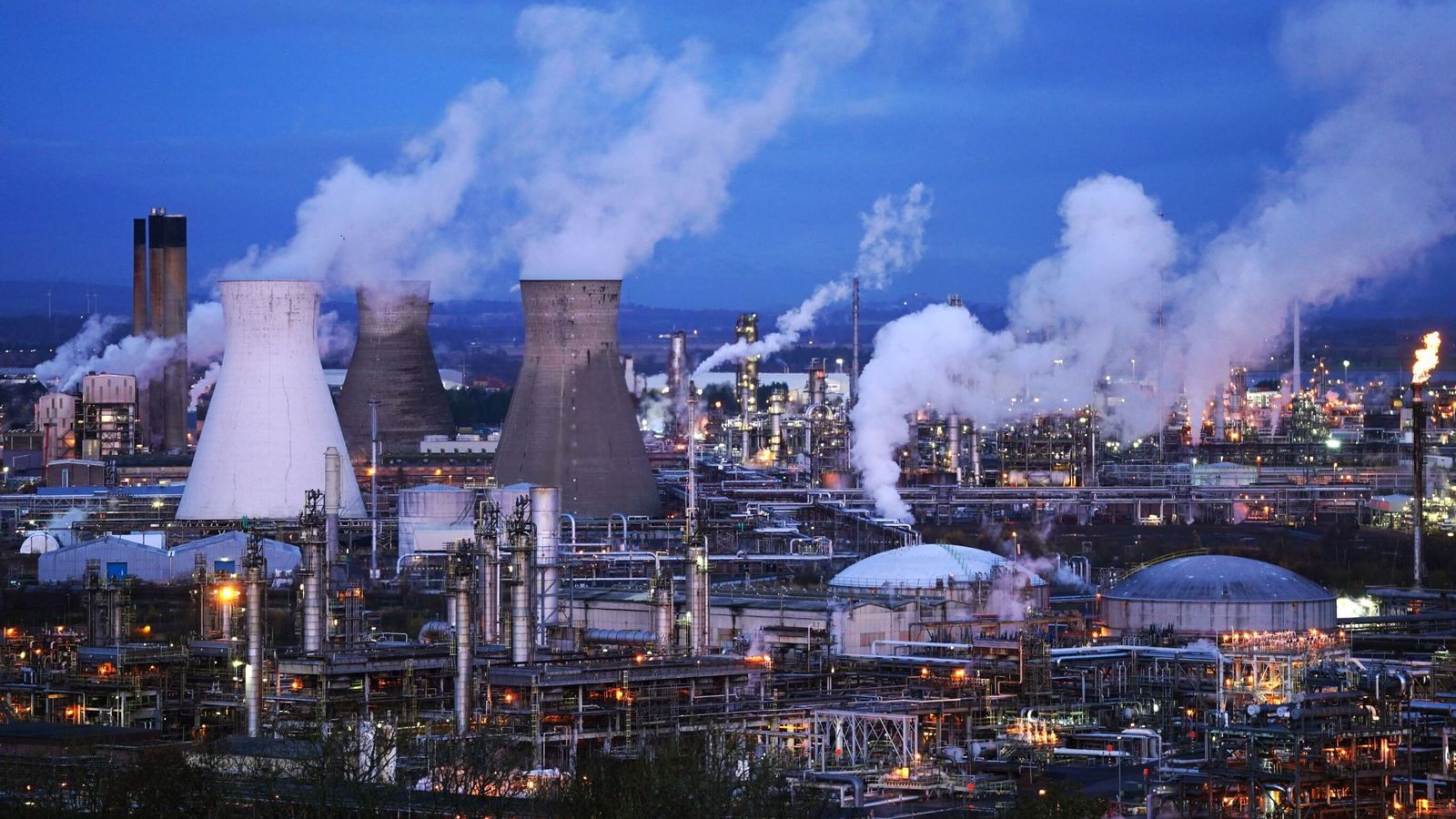
But far fewer people, even among the infrastructure cognoscenti, are even faintly familiar with the UK Ethylene Pipeline System. Yet this pipeline network, obscure as it might be, is one of the critical parts of Britain’s industrial infrastructure. And it’s also a useful clue to help explain why the government has just announced it’s spending more than £120m to bail out the chemical plant at Grangemouth in Scotland.
Ethylene is one of those precursor chemicals essential for the manufacture of all sorts of everyday products. React it with terephthalic acid and you end up with polyester. Combine it with chlorine and you end up with PVC. And when you polymerise ethylene itself you end up with polyethylene – the most important plastic in the world.
Why Grangemouth matters
Ethylene is, in short, a very big deal. Hence, why, many years ago, a pipeline was built to ensure Britain’s various chemical plants would have a reliable supply of the stuff. The pipes connected the key nodes in Britain’s chemicals infrastructure: the plants in the north of Cheshire, which derived chemicals from salt, the vast Wilton petrochemical plant in Teesside and, up in Scotland, the most important point in the network – Grangemouth.
The refinery would suck in oil and gas from the North Sea and turn it into ethane, which it would then “crack”, an energy-hungry process that involves heating it up to phenomenally high temperatures. Some of that ethylene would be used on site, but large volumes would also be sent down the pipeline. It would be pumped down to Runcorn, where the old ICI chlor-alkali plant, now owned by INEOS, would use it to make PVC. It would be sent to Wilton, where it would be turned into polyethylene and polyester.
Read more from Ed Conway:
The reality of Trump’s trade war
The reason for Trump’s Venezuela exploits
That’s the first important thing to grasp about this network – it is essential for the operation of a whole series of plants, many of them run by entirely different companies.
The second key thing to note is that, after the closure of the cracker at Wilton (now owned by Saudi company Sabic) and the ExxonMobil plant at Mossmorran in Fife, Grangemouth is the last plant standing. While the refinery no longer uses North Sea oil and gas, instead shipping in ethane from the US, it still makes its own ethylene.
So when INEOS began consulting on plans to close that ethylene cracker, officials down south in Westminster began to panic. The problem wasn’t just the 500 or so jobs that might have been lost in Grangemouth. It was the domino effect that would feed throughout the sector. All of a sudden, all those plants at the other ends of the pipeline would be affected too. In practice, the closure might have eventuated in more than a thousand job losses – maybe more.
What’s happening now?
All of which helps explain the news today – that the Department for Business and Trade is putting more than £120m of taxpayer money into the site. The bailout (it’s hard to see it as anything but) is not the first. The government has also put hundreds of millions of pounds of taxpayer money into British Steel, which it quasi-nationalised earlier this year, not to mention extra cash into Tata Steel at Port Talbot and loan guarantees to help Jaguar Land Rover after it faced an unprecedented cyber attack.
Work ground to a halt at JLR’s Wolverhampton factory after a cyber attack. Pic: PA
But while this package will undoubtedly provide Christmas cheer here in Grangemouth today, the government is left facing two distinct problems.
Reactive rather than strategic
The first is that for all that the chancellor and business secretary (who are themselves planning to visit Grangemouth today) are keen to pitch this latest move as a coherent part of their industrial strategy, it’s hard not to see it as something else. Far from appearing strategic, instead they seem reactive. To the extent that they have a coherent industrial strategy, it mostly seems to involve forking out public money when a given plant is close to closure. If they weren’t already, Britain’s industrialists will today be wondering to themselves: what would it take to get ourselves some of this money in future?
The crisis continues
The second issue is that the Grangemouth bailout is very unlikely to end the crisis spreading across Britain’s chemicals sector. A series of plants – some prominent, others less so – have closed in the past few years. The chemicals sector – once one of the most important in the economy – has seen its economic output drop by more than 20% in the past three years alone.
This is not just a UK-specific story. Something similar is happening across much of Europe. But for many chemicals companies, it simply doesn’t add up to invest and build in the UK any more – a product in part of regulations and in part of high energy costs. In short, this story isn’t over yet. There will be more twists and turns to come.
-
 Sports2 years ago
Story injured on diving stop, exits Red Sox game
-
 Sports3 years ago
‘Storybook stuff’: Inside the night Bryce Harper sent the Phillies to the World Series
-
 Sports2 years ago
Game 1 of WS least-watched in recorded history
-
 Sports3 years ago
Button battles heat exhaustion in NASCAR debut
-
 Sports3 years ago
MLB Rank 2023: Ranking baseball’s top 100 players
-
Sports4 years ago
Team Europe easily wins 4th straight Laver Cup
-
 Environment3 years ago
Japan and South Korea have a lot at stake in a free and open South China Sea
-
 Environment1 year ago
Here are the best electric bikes you can buy at every price level in October 2024