
Shell beats expectations with $9.6 billion in first-quarter profit, boosted by fuel trading


A view of the NEO magnetic plant in Narva, a city in northeastern Estonia. A plant producing rare-earth magnets for Europe’s electric vehicle and wind-energy sectors.
Xinhua News Agency | Xinhua News Agency | Getty Images
NARVA, Estonia — Europe’s big bet to break China’s rare earths dominance starts on Russia’s doorstep.
The continent’s largest rare-earth facility, situated on the very edge of NATO’s eastern flank, is ramping up magnet production as part of a regional push to reduce its import reliance on Beijing.
Developed by Canada’s Neo Performance Materials and opened in mid-September, the magnet plant sits in the small industrial city of Narva. This little-known border city is separated from Russia by the Narva River, which is an external frontier of both NATO and the European Union.
Analysts expect the facility to play an integral role in Europe’s plan to reduce its dependence on China, while warning that the region faces a long and difficult road ahead if it is to achieve its mineral strategy goals.
Magnets made from rare earths are essential components for the function of modern technology, such as electric vehicles, wind turbines, smartphones, medical equipment, artificial intelligence applications and precision weaponry.
Speaking to CNBC by video call, Neo CEO Rahim Suleman said the facility is on track to produce 2,000 metric tons of rare earth magnets this year, before scaling up to 5,000 tons and beyond as it seeks to keep pace with “an enormously quick-growing market.”
It is a frankly a billion-dollar problem that affects trillion-dollar downstream industries. So, it is worth solving.
Ryan Castilloux
managing director of Adamas Intelligence
The European region currently imports nearly all of its rare earth magnets from China, although Suleman expects Neo’s Narva facility to be capable of fulfilling around 10% of that demand.
“Having said that, our view of that number is something like 20,000 tons. So, we’d have a lot more work to do, a lot more building to do because I think the customers have a real need to diversify their supply chains,” Suleman said.
“We’re not talking about independence from any jurisdiction. We’re just talking about creating robust and diverse supply chains to reduce concentration risk,” he added.
Neo has previously announced initial contracts with Schaeffler and Bosch, major auto suppliers to the likes of German auto giants Volkswagen and BMW.
Europe’s push to deliver on its resource security goals faces several obstacles. Analysts have cited issues including a funding shortfall, burdensome regulation, a limited and fragmented made-in-EU supply chain and relatively high production costs. All of these raise questions about the viability of the EU’s ambitious supply chain targets.
“Europe needs a big increase in rare earth magnet capacity to even come close to a diversified supply chain for its carmakers,” Caroline Messecar, an analyst at Fastmarkets, told CNBC by email.
‘The guillotine still looms’
Once a previously obscure issue, rare earths have come to the fore as a key bargaining chip in the ongoing geopolitical rivalry between the U.S. and China.
In October, China agreed to delay the introduction of further export controls on rare earth minerals as part of a deal agreed between China’s Xi Jinping and U.S. President Donald Trump. China’s earlier rare earths restrictions, which upended global supply chains, remain in place, however.
“The threat is still there; the guillotine still looms. And so, I think collectively all of this has just sobered the West, end-users and governments to the risks that they face,” Ryan Castilloux, managing director of critical mineral consultancy Adamas Intelligence, told CNBC by phone.
“It is a frankly a billion-dollar problem that affects trillion-dollar downstream industries. So, it is worth solving,” he added.
European Commission President Ursula von der Leyen delivers her speech during a debate on the new 2028-2034 Multi-annual Financial Framework at the European Parliament in Brussels on November 12, 2025.
Nicolas Tucat | Afp | Getty Images
Europe, in particular, has been caught in the crosshairs of tariff turbulence. In its Autumn 2025 Economic Forecast, the European Commission, the EU’s executive arm, identified Chinese export controls leading to supply chain disruptions in several sectors such as autos and green energy.
It thrusts the issue of supply diversification in the spotlight for European policymakers, especially as demand is projected to grow until 2030 and EU supply remains highly reliant on a single supplier, according to a statement from a European Commission spokesperson.
In response, European Commission President Ursula von der Leyen announced in October that plans were underway to launch a so-called “RESourceEU” plan — along the lines of its “REPowerEU” initiative, which sought to overcome another supply issue — energy.
The Narva project predates these measures but, with 18.7 million euros ($21.7 million) in EU funding, it’s an example of what the EU hopes to achieve. And although its output is modest when compared to overall demand, it demonstrates how the EU plans to boost the bloc’s magnet output capacity and reduce dependence on Chinese supply.
Photo taken on Sept. 19, 2025 shows inside view of NEO magnetic plant in Narva, a city in northeastern Estonia.
Xinhua News Agency | Xinhua News Agency | Getty Images
China is the undisputed leader of the critical minerals supply chain, responsible for nearly 60% of the world’s rare earths mining and more than 90% of magnet manufacturing. Europe, meanwhile, is the world’s biggest export market for Chinese rare earths.
Russia’s doorstep
The location of Neo’s new magnet facility, meanwhile, has raised some eyebrows, given the potential security challenge of being in such close proximity to Russia.
Speaking shortly after Moscow’s full-scale invasion of Ukraine in early 2022, Russian President Vladimir Putin said Narva was historically part of Russia and needed to be taken back.
Asked why the company positioned its new rare earths plant there, Neo’s Suleman said the firm already had an existing infrastructure presence in the country, “and the right place was to be in Europe.”
“And then you go one step deeper, which is to get into Estonia. We have a long history in Estonia. We already have a rare separation facility that can do both light rare earths, and we’re developing heavy rare earths there,” Suleman said.
“We’ve been extremely impressed by the quality of the people in Estonia, their education level, their commitment to hard work … So, you put all that together, along with the support that we received both in Estonia and in the EU, and it was a great choice for us,” he added.
Estonian lawmakers have welcomed the potential of Neo’s magnet plant, saying the facility will benefit the development of both the country and broader region.
Jaanus Uiga, deputy secretary general for Energy and Mineral Resources of Estonia, said Neo’s magnet plant opened “very on time.”

Speaking to CNBC on Oct. 30, Uiga acknowledged economic tensions between the U.S. and China over rare earths, saying Estonia and the EU needed to adapt to an evolving situation.
“It is a very unique processing capability that was built in Estonia and also we are very happy for that because it happened in a region that is transitioning away from fossil fuels,” Uiga told CNBC’s “Squawk Box Asia.”

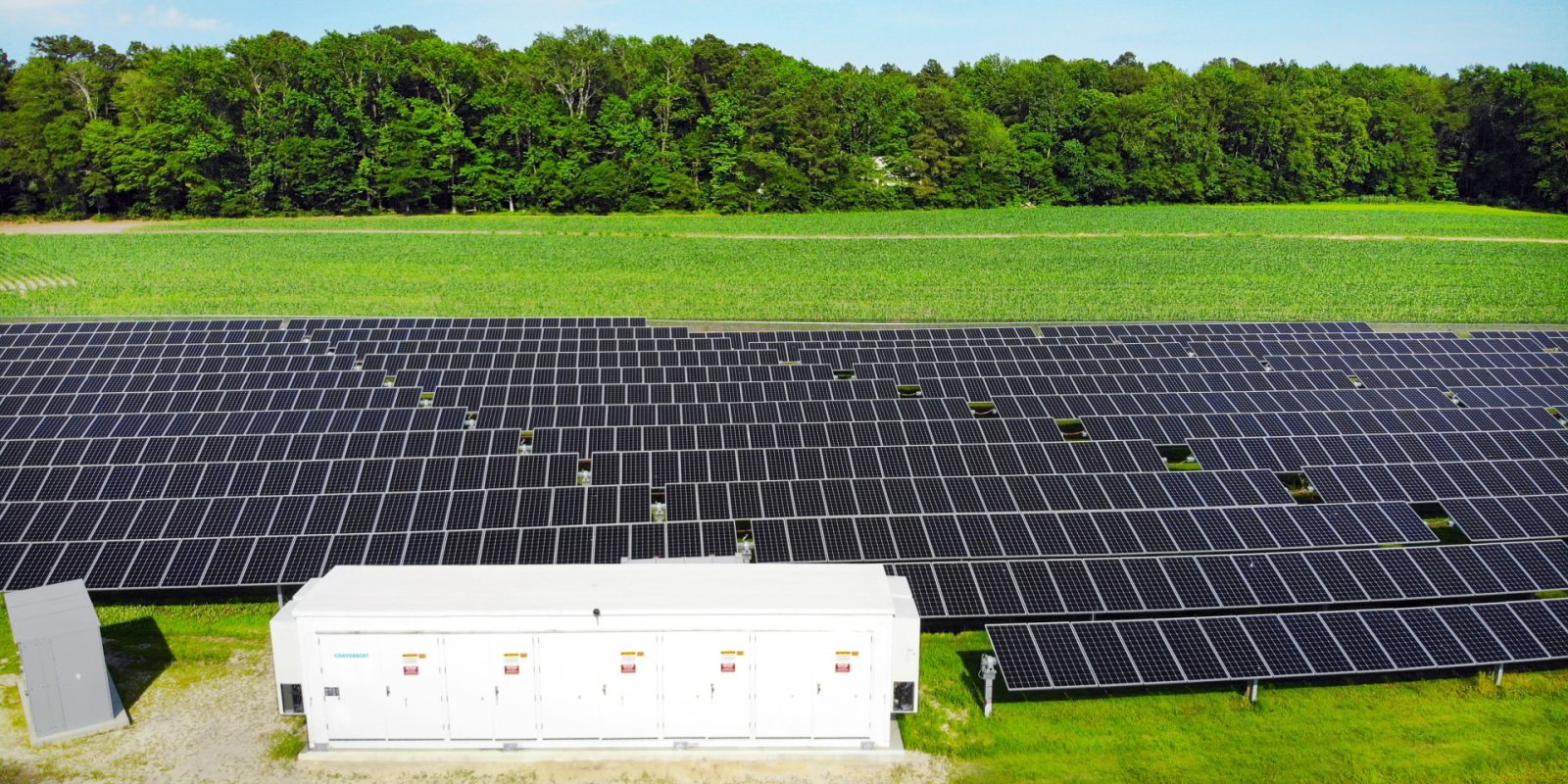
Newly published data from the Federal Energy Regulatory Commission (FERC), reviewed by the SUN DAY Campaign, reveal that solar accounted for over 75% of US electrical generating capacity added in the first nine months of 2025. In September alone, solar provided 98% of new capacity, marking 25 consecutive months in which solar has led among all energy sources.
Year-to-date (YTD), solar and wind have each added more new capacity than natural gas has. The mix of all renewables remains on track to exceed 40% of installed capacity within three years; solar alone may be 20%.
Solar was 75% of new generating capacity YTD
In its latest monthly “Energy Infrastructure Update” report (with data through September 30, 2025), FERC says 48 “units” of solar totaling 2,014 megawatts (MW) were placed into service in September, accounting for 98% of all new generating capacity added during the month. Oil provided the balance (40 MW).
The 567 units of utility-scale (>1 MW) solar added during the first nine months of 2025 total 21,257 MW and were 75.3% of the total new capacity placed into service by all sources. Solar capacity added YTD is 6.5% more than that added during the same period a year earlier.
Solar has now been the largest source of new generating capacity added each month for 25 consecutive months, from September 2023 to September 2025. During that period, total utility-scale solar capacity grew from 91.82 gigawatts (GW) to 158.43 GW. No other energy source added anything close to that amount of new capacity. Wind, for example, expanded by 11.07 GW while natural gas’s net increase was just 4.60 GW.
Between January and September, new wind energy has provided 3,724 MW of capacity additions – an increase of 28.6% compared to the same period last year and more than the new capacity provided by natural gas (3,161 MW). Wind accounted for 13.2% of all new capacity added during the first nine months of 2025.
Renewables were 88% of new capacity added YTD
Wind and solar (plus 4 MW of hydropower and 6 MW of biomass) accounted for 88.5% of all new generating capacity while natural gas added just 11.2% YTD. The balance of net capacity additions came from oil (63 MW) and waste heat (17 MW).
Utility-scale solar’s share of total installed capacity (11.78%) is now virtually tied with that of wind (11.80%). If recent growth rates continue, utility-scale solar capacity should surpass that of wind in FERC’s next “Energy Infrastructure Update” report.
Taken together, wind and solar make up 23.58% of the US’s total available installed utility-scale generating capacity.
Moreover, more than 25% of US solar capacity is in the form of small-scale (e.g., rooftop) systems that are not reflected in FERC’s data. Including that additional solar capacity would bring the share provided by solar and wind to more than a quarter of the US total.
With the inclusion of hydropower (7.59%), biomass (1.05%) and geothermal (0.31%), renewables currently claim a 32.53% share of total US utility-scale generating capacity. If small-scale solar capacity is included, renewables now account for more than one-third of the total US generating capacity.
Solar soon to be No. 2 source of US generating capacity
FERC reports that net “high probability” net additions of solar between October 2025 and September 2028 total 90,614 MW – an amount almost four times the forecast net “high probability” additions for wind (23,093 MW), the second fastest growing resource.
FERC also foresees net growth for hydropower (566 MW) and geothermal (92 MW) but a decrease of 126 MW in biomass capacity.
Meanwhile, natural gas capacity is projected to expand by 6,667 MW, while nuclear power is expected to add just 335 MW. In contrast, coal and oil are projected to contract by 24,011 MW and 1,587 MW, respectively.
Taken together, the net new “high probability” net utility-scale capacity additions by all renewable energy sources over the next three years – the Trump administration’s remaining time in office – would total 114,239 MW. On the other hand, the installed capacity of fossil fuels and nuclear power combined would shrink by 18,596 MW.
Should FERC’s three-year forecast materialize, by mid-fall 2028, utility-scale solar would account for 17.3% of installed U.S. generating capacity, more than any other source besides natural gas (39.9%). Further, the capacity of the mix of all utility-scale renewable energy sources would exceed 38%. The inclusion of small-scale solar, assuming it retains its 25% share of all solar energy, could push solar’s share to over 20% and that of all renewables to over 41%, while the share of natural gas would drop to less than 38%.
In fact, the numbers for renewables could be significantly higher.
FERC notes that “all additions” (net) for utility-scale solar over the next three years could be as high as 232,487 MW, while those for wind could total 65,658 MW. Hydro’s net additions could reach 9,927 MW while geothermal and biomass could increase by 202 MW and 32 MW, respectively. Such growth by renewable sources would swamp that of natural gas (29,859 MW).
“In an effort to deny reality, the Trump Administration has just announced a renaming of the National Renewable Energy Laboratory (NREL) in which it has removed the word ‘renewable’,” noted the SUN DAY Campaign’s executive director Ken Bossong. “However, FERC’s latest data show that no amount of rhetorical manipulation can change the fact that solar, wind, and other renewables continue on the path to eventual domination of the energy market.”

If you’re looking to replace your old HVAC equipment, it’s always a good idea to get quotes from a few installers. To make sure you’re finding a trusted, reliable HVAC installer near you that offers competitive pricing on heat pumps, check out EnergySage. EnergySage is a free service that makes it easy for you to get a heat pump. They have pre-vetted heat pump installers competing for your business, ensuring you get high quality solutions. Plus, it’s free to use!
Your personalized heat pump quotes are easy to compare online and you’ll get access to unbiased Energy Advisors to help you every step of the way. Get started here. – *ad


FTC: We use income earning auto affiliate links. More.


The Century is considered the most luxurious Toyota, and now it’s being spun off into its own high-end brand. Despite the rumors, the ultra-luxury brand won’t be as electric as expected.
Toyota sets new luxury brand up to fail with ICE plans
First introduced in 1967, the Century was launched in celebration of Toyota’s founder, Sakichi Toyoda’s 100th birthday.
The Century has since become a symbol of status and wealth in Japan, often used as a chauffeur car by high-profile company officials.
Toyota previewed the future of the ultra-luxury marquee at the 2025 Japan Mobility Show in October, launching it as a new standalone brand positioned above Lexus.
The new Century brand is set to rival higher-end automakers like Rolls-Royce and Bentley, but it won’t be as electric as initially expected. Toyota’s powertrain boss, Takashi Uehara, told CarExpert that the luxury brand’s first vehicle will, in fact, have an internal combustion engine.
Although no other details were offered, Uehara confirmed, “Yes, it will have an engine.” As to what kind, that has yet to be decided, Toyota’s powertrain president explained.

Like the next-gen Lexus supercar and upcoming Toyota GR GT, Uehara said the Century model could include a V8 engine.
The Century has been Toyota’s only vehicle with a V12 engine. In 2018, Toyota dropped the V12 in favor of a V8 hybrid powertrain for its third-generation.

Toyota’s Century launched its first SUV in 2023, currently on sale in Japan with a V6 plug-in hybrid system alongside the sedan.
Already widely considered the biggest laggard in the shift to fully electric vehicles, Toyota doubled down, developing a series of new internal combustion engines for upcoming models.
Century is one of the five global brands the Japanese auto giant introduced in October, along with Daihatsu, GR Sport, Lexus, and Toyota.
Electrek’s Take
It’s not surprising to see Toyota sticking with ICE for its ultra-luxury Century brand, but it will likely be a costly move.
Chinese auto giants, such as BYD and FAW Group, are quickly expanding into new segments, including high-end models under luxury brands such as Yangwang and Hongqi.
These companies are now expanding into new overseas markets, like Europe and Southeast Asia, where Japanese brands like Toyota have traditionally dominated, to drive growth.
Top luxury brands, including Porsche, BMW, and Mercedes-Benz, are already struggling to keep pace with Chinese EV brands. How does Toyota plan to compete with an “ultra-luxury” brand that still sells outdated ICE vehicles? We will find out more over the coming months and years as new sales data is released.
FTC: We use income earning auto affiliate links. More.
-
 Sports2 years ago
Story injured on diving stop, exits Red Sox game
-
 Sports3 years ago
‘Storybook stuff’: Inside the night Bryce Harper sent the Phillies to the World Series
-
 Sports2 years ago
Game 1 of WS least-watched in recorded history
-
 Sports3 years ago
Button battles heat exhaustion in NASCAR debut
-
 Sports3 years ago
MLB Rank 2023: Ranking baseball’s top 100 players
-
Sports4 years ago
Team Europe easily wins 4th straight Laver Cup
-
 Environment3 years ago
Japan and South Korea have a lot at stake in a free and open South China Sea
-
 Environment1 year ago
Here are the best electric bikes you can buy at every price level in October 2024