
US
US won’t ‘stand by and watch sanctioned vessels’, warns White House after tanker seized off Venezuela



The US will not “stand by and watch sanctioned vessels sail the seas”, the White House has warned, after American forces seized an oil tanker off the coast of Venezuela.
Spokeswoman Karoline Leavitt told reporters she would not speak about future ship seizures, but said the US would continue to follow Donald Trump‘s sanction policies.
“We’re not going to stand by and watch sanctioned vessels sail the seas with black market oil, the proceeds of which will fuel narcoterrorism of rogue and illegitimate regimes around the world,” she said.
White House press secretary Karoline Leavitt briefing the media. Pic: Reuters
The US is gearing up to intercept more ships, six sources familiar with the matter told Reuters.
One source said several more sanctioned tankers had been identified by the US for potential seizure.
Two of the people said the US Justice Department and Homeland Security had been planning the seizures for months.
American forces were monitoring vessels in Venezuelan ports and waiting for them to sail into international waters before taking action, one source added.
It comes after a crude oil tanker, named Skipper, on Wednesday was stormed by US forces executing a seizure warrant.
The ship left Venezuela’s main oil port of Jose between 4 and 5 December after loading about 1.1 million barrels of oil, according to satellite information analysed by TankerTrackers.com and internal shipping data from Venezuelan state oil company PDVSA.

A still from a video of US forces seizing a Venezuelan oil tanker, posted by Pam Bondi. Pic: X/@AGPamBondi
The real reason for Donald Trump’s Venezuela exploits

Donald Trump wants you to know that there is one leading reason why he is bearing down militarily on Venezuela: drugs.
It is, he has said repeatedly, that country’s part in the production and smuggling of illegal narcotics into America that lies behind the ratcheting up of forces in the Caribbean in recent weeks. But what if there’s something else going on here too? What if this is really all about oil?
In one respect this is clearly preposterous. After all, the United States is, by a country mile, the world’s biggest oil producer. Venezuela is a comparative minnow these days, the 21st biggest producer in the world, its output having been depressed under the Chavez and then Maduro regimes. Why should America care about Venezuelan oil?
For the answer, one needs to spend a moment – strange as this will sound – contemplating the chemistry of oil…
US attorney general Pam Bondi said on X, formerly Twitter, that the ship was “used to transport sanctioned oil from Venezuela and Iran”.
“For multiple years, the oil tanker has been sanctioned by the United States due to its involvement in an illicit oil shipping network supporting foreign terrorist organisations,” she added.
Ms Leavitt said that “the United States does intend to get the oil” that was onboard the vessel.
The government in Caracas, led by President Nicolas Maduro, branded the ship’s seizure a “blatant theft” and an “act of international piracy”.
Read more:
Analysis: Is this what the beginning of a war looks like?
US-Venezuela crisis explained
Why tanker seized by US was ‘spoofing’ its location
The US has been ramping up the pressure on Mr Maduro and is reportedly considering trying to oust him. It has piled on sanctions, carried out a military build-up in the southern Caribbean, and launched attacks on suspected drug vessels from Venezuela.
Now America has issued new sanctions targeting Franqui Flores, Efrain Antonio Campo Flores, and Carlos Erik Malpica Flores – three nephews of Mr Maduro’s wife, Cilia Flores – as well as on six crude oil tankers and six shipping companies linked to them.
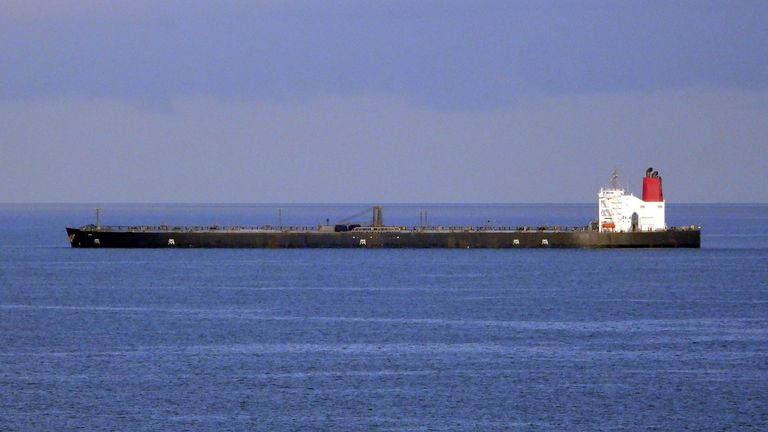
Skipper. Credit: TankerTrackers
By seizing oil tankers, the US is threatening Mr Maduro’s government’s main revenue source – oil exports.
The sources said the US was focusing on what’s been called the shadow fleet – tankers transporting sanctioned oil to China, the biggest buyer of crude from Venezuela and Iran.
They said one shipper had already temporarily suspended three voyages transporting six million barrels of Venezuelan crude oil.
“The cargoes were just loaded and were about to start sailing to Asia,” a source said.
“Now the voyages are cancelled and tankers are waiting off the Venezuelan coast as it’s safer to do that.”

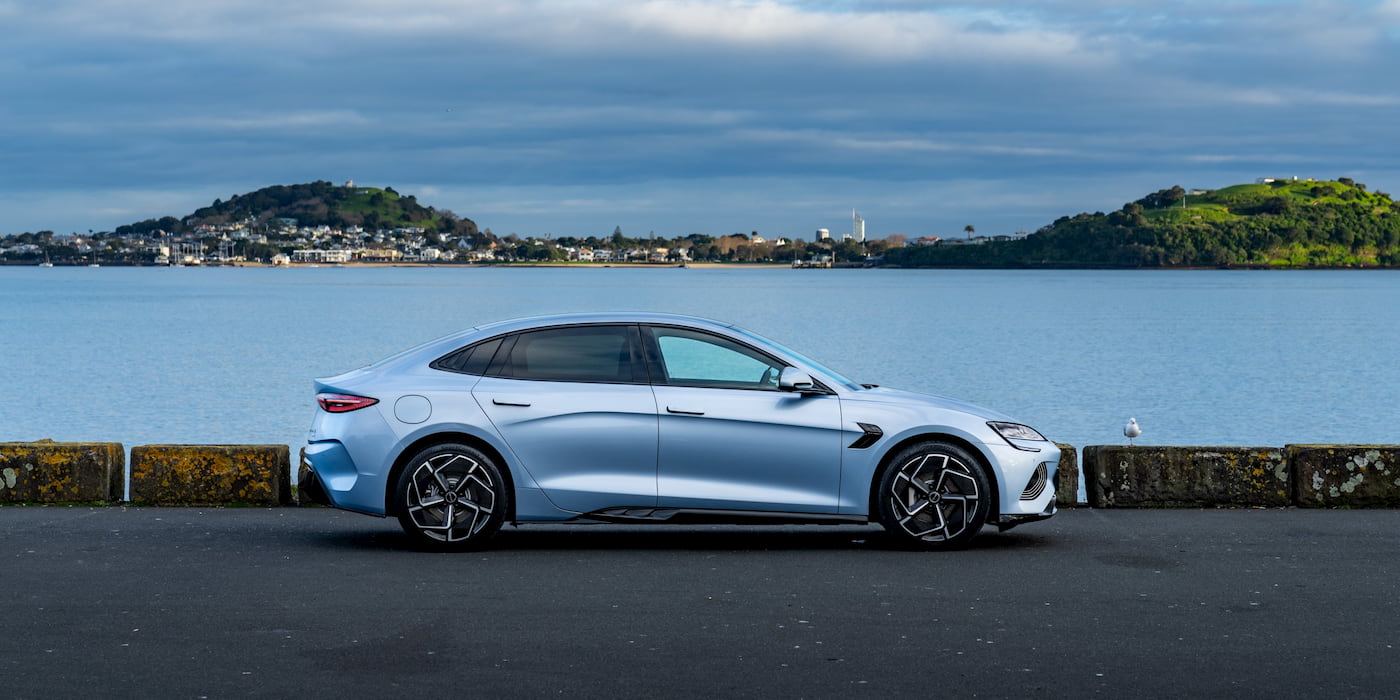
EV and battery supply chain research specialists Benchmark Mineral Intelligence reports that 2.0 million electric vehicles were sold globally in November 2025, bringing global EV sales to 18.5 million units year-to-date. That’s a 21% increase compared to the same period in 2024.
Europe was the clear growth leader in November, while North America continued to lag following the expiration of US EV tax credits. China, meanwhile, remains the world’s largest EV market by a wide margin.
Europe leads global growth
Europe’s EV market jumped 36% year-over-year in November 2025, with BEV sales up 35% and plug-in hybrid (PHEV) sales rising 39%. That brings Europe’s total EV sales to 3.8 million units for the year so far, up 33% compared to January–November 2024.
France finally returned to year-to-date growth in November, edging up 1% after spending most of 2025 in the red following earlier subsidy cuts. The rebound was led by OEMs such as the Volkswagen Group and Renault, a wider selection of EV models, and France’s “leasing social” program, aimed at helping lower-income households switch to EVs.
Italy also posted a standout month, logging record EV sales of just under 25,000 units in November. The surge followed the launch of a new incentive program designed to replace older ICE vehicles. The program earmarks €597.3 million (about $700 million) in funding for the replacement of around 39,000 gas cars.
The UK expanded access to its full £3,750 ($4,400) EV subsidy by adding five more eligible models: the Nissan Leaf (built in Sunderland, with deliveries starting in early 2026), the MINI Countryman, Renault 4, Renault 5, and Alpine A290.
US market slows after federal tax credit’s premature death
In North America, EV sales in the US did tick up month-over-month in November, following a sharp October drop after federal tax credits expired on September 30, 2025. Brands including Kia (up 30%), Hyundai (up 20%), Honda (up 11%), and Subaru (232 Solterra sales versus just 13 the month before) all saw gains, but overall volumes remain below levels when the federal tax credit was still available.
Policy changes aren’t helping. In early December, Trump formally “reset” US Corporate Average Fuel Economy (CAFE) standards, lowering the required fleetwide average to about 34.5 mpg by 2031. That’s a steep drop from the roughly 50.4 mpg target under the previous rule. Automakers can now meet the standard largely through gas vehicles, reducing pressure to scale BEVs and PHEVs.
Those loosened rules are already reflected in investment decisions, such as Stellantis’ $13 billion plan to expand US production by 50%, with a heavy focus on ICE vehicles. Earlier this year, Trump’s big bill set fines for missing CAFE targets to $0, further weakening the incentive for OEMs to electrify.
That’s some foolish policymaking, considering the world reached peak gas car sales in 2017. The US under Trump will be left behind, just as it will be with its attempts to revive the coal industry.
China still dominates, exports surge
China remains the backbone of global EV sales, even as growth slows. The Chinese market grew 3% year-over-year and 4% month-over-month in November. Year-to-date, EV sales in China are up 19%, with 11.6 million units sold.
One of the biggest headlines out of China is exports. BYD reported a record 131,935 EV exports in November, blowing past its previous high of around 90,000 units set in June. BYD sales in Europe have jumped more than fourfold this year to around 200,000 vehicles, doubled in Southeast Asia, and climbed by more than 50% in South America.
Global snapshot
Global EV sales from January to November 2025 vs January to November 2024, YTD %:
- Global: 18.5 million, +21%
- China: 11.6 million, +19%
- Europe: 3.8 million, +33%
- North America: 1.7 million, -1%
- Rest of World: 1.5 million, +48%
The takeaway: EV demand continues to grow worldwide, but policy support – or the lack thereof – is increasingly shaping where this growth shows up.
“Overall, EV demand remains resilient, supported by expanding model ranges and sustained policy incentives worldwide,” said Rho Motion data manager Charles Lester.
Read more: EV sales *still* have not fallen, cooled, slowed or slumped. Media is lying to you.

If you’re looking to replace your old HVAC equipment, it’s always a good idea to get quotes from a few installers. To make sure you’re finding a trusted, reliable HVAC installer near you that offers competitive pricing on heat pumps, check out EnergySage. EnergySage is a free service that makes it easy for you to get a heat pump. They have pre-vetted heat pump installers competing for your business, ensuring you get high quality solutions. Plus, it’s free to use!
Your personalized heat pump quotes are easy to compare online and you’ll get access to unbiased Energy Advisors to help you every step of the way. Get started here. – *ad


FTC: We use income earning auto affiliate links. More.
Technology
Trump signs executive order for single national AI regulation framework, limiting power of states

-
 Sports2 years ago
Story injured on diving stop, exits Red Sox game
-
 Sports3 years ago
‘Storybook stuff’: Inside the night Bryce Harper sent the Phillies to the World Series
-
 Sports2 years ago
Game 1 of WS least-watched in recorded history
-
 Sports3 years ago
Button battles heat exhaustion in NASCAR debut
-
 Sports3 years ago
MLB Rank 2023: Ranking baseball’s top 100 players
-
Sports4 years ago
Team Europe easily wins 4th straight Laver Cup
-
 Environment3 years ago
Japan and South Korea have a lot at stake in a free and open South China Sea
-
 Environment1 year ago
Here are the best electric bikes you can buy at every price level in October 2024