
Elon Musk subpoena in Epstein-JPMorgan lawsuit can be served to Tesla, judge rules


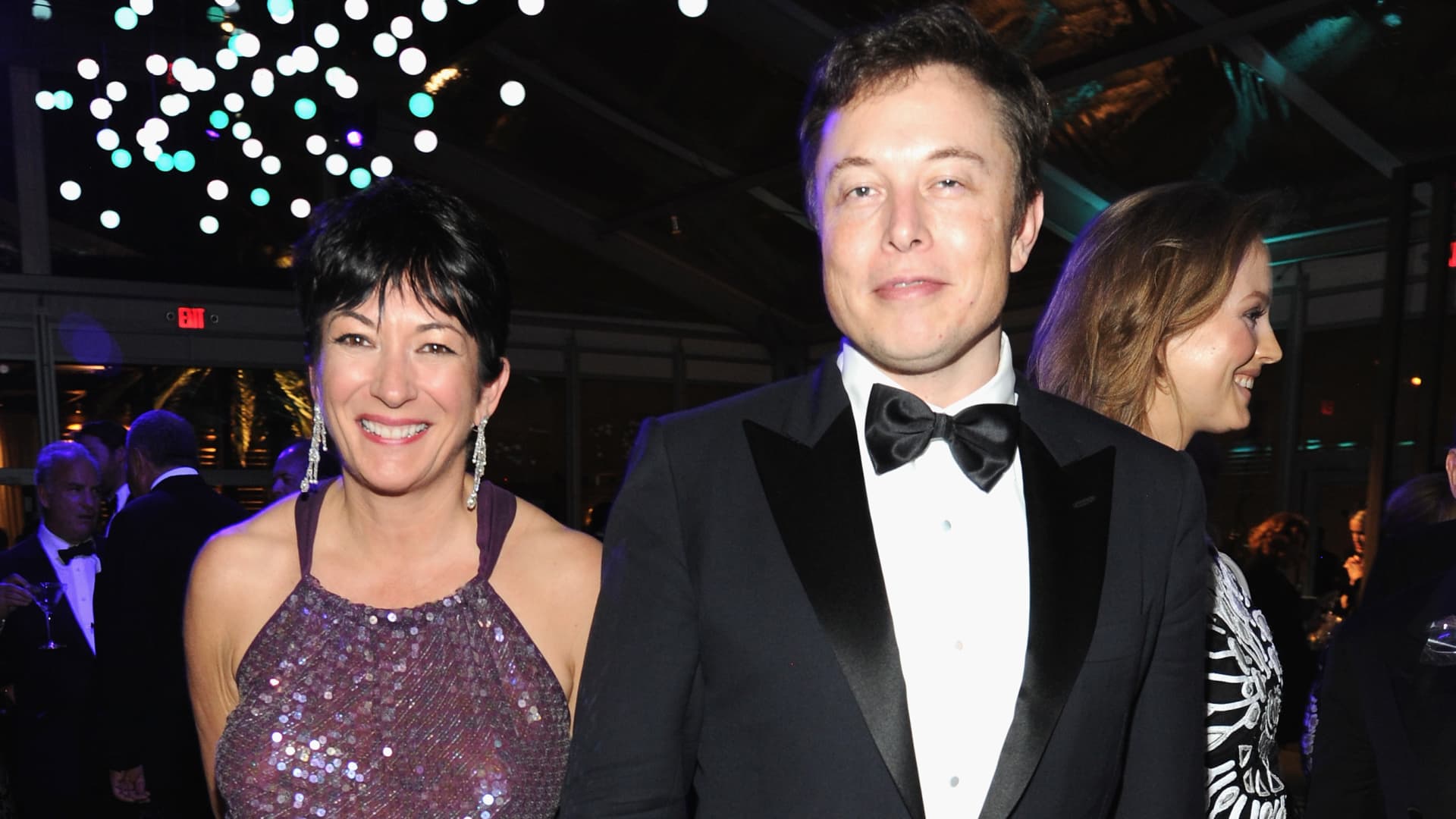
Ghislaine Maxwell and Elon Musk attend the 2014 Vanity Fair Oscar Party Hosted By Graydon Carter on March 2, 2014 in West Hollywood, California.
Kevin Mazur | vf14 | Wireimage | Getty Images
A federal judge ruled Wednesday that the U.S. Virgin Islands can serve a subpoena for Elon Musk to his electric car company Tesla, as part of the government’s lawsuit against JPMorgan Chase over the bank’s ties to dead sexual trafficker Jeffrey Epstein.
The ruling came days after lawyers for the USVI government told Judge Jed Rakoff they had been unable to serve the Tesla CEO personally with the subpoena demanding documents related to Epstein and JPMorgan.
The Virgin Islands is suing JPMorgan in U.S. District Court in Manhattan for allegedly enabling and financially benefiting from Epstein’s sex trafficking of young women. The late financier and sex criminal had been a customer of the bank from 1998 through 2013. JPMorgan denies any wrongdoing.
On April 28, the USVI issued a subpoena to Musk because of suspicion that Epstein “may have referred or attempted to refer” Musk as a client to JPMorgan, according to a court filing Monday.
That subpoena demands that Musk turn over any documents showing communication involving him, JPMorgan and Epstein, as well as “all Documents reflecting or regarding Epstein’s involvement in human trafficking and/or his procurement of girls or women for consensual sex.”
The USVI said in a court filing Monday that an investigative firm it had retained had been unable to locate Musk to serve him in person with the subpoena, as is the norm.
The filing also said that a lawyer for Musk did not reply to a request that the attorney accept the subpoena for his client.
Rakoff, in his order Wednesday, authorized the USVI to “arrange alternative service of its Subpoena to Produce Documents by serving Elon Musk via service upon Tesla Inc.’s registered agent.”
Musk didn’t immediately respond to a request for comment.
The USVI also has issued similar subpoenas for documents related to Epstein and JPMorgan to Google co-founders Larry Page and Sergey Brin, former Disney executive Michael Ovitz, Hyatt Hotels executive chairman Thomas Pritzker and Mort Zuckerman, the billionaire real estate investor.
JPMorgan CEO Jamie Dimon is scheduled to be deposed on May 26 for the lawsuit and for a related suit against the bank by a woman who says Epstein sexually abused her.
Muks in a tweet Monday night had blasted the idea of that he be given a subpoena in the case.
“This is idiotic on so many levels,” Musk wrote on Twitter, which he bought and took private last year.
“That cretin never advised me on anything whatsoever,” he wrote, referring to Epstein.
“The notion that I would need or listen to financial advice from a dumb crook is absurd,” Musk added. “JPM let Tesla down ten years ago, despite having Tesla’s global commercial banking business, which we then withdrew. I have never forgiven them.”
In 2018, Epstein told The New York Times he had been advising Musk after the Securities and Exchange Commission opened a probe into Musk’s comments about taking Tesla private. A Tesla spokesperson told The Times, “It is incorrect to say that Epstein ever advised Elon on anything.”
Epstein killed himself in August 2019, a month after federal authorities arrested him on an indictment charging him with child sex trafficking. He had previously pleaded guilty in 2008 to a Florida state charge of soliciting sex from an underage girl.
Before his fall from grace, Epstein and his former girlfriend Ghislaine Maxwell, socialized with many rich and powerful people, among them former presidents Donald Trump and Bill Clinton, as well as Britain’s Prince Andrew, the brother of King Charles III.
Maxwell, a British socialite, was convicted in late 2021 in federal court in Manhattan of procuring underage girls to be sexually abused by Epstein. Maxwell was sentenced in June 2022 to 20 years in prison.
Musk in July 2020 replied to a Twitter post that showed him posing for a photo next to a smiling Maxwell.
“Don’t know Ghislaine at all,” Musk wrote. “She photobombed me once at a Vanity Fair party several years ago. Real question is why VF invited her in the first place.”
The New York Times, in a 2022 article detailing that photo, reported that a Vanity Fair staff member who had stood next to both Maxwell and Musk at the party said that “the pair chatted.”
“Ms. Maxwell asked Mr. Musk if there were a way to remove oneself from the internet and encouraged Mr. Musk to destroy the internet; Mr. Musk demurred,” The Times reported, citing the staffer, who shared contemporaneous notes of the encounter.
“Ms. Maxwell then asked Mr. Musk why aliens hadn’t yet made contact with humanity, to which Mr. Musk replied that all civilizations eventually end — including Maxwell’s hypothetical alien one — and raised the possibility that humans are living in a simulation.”


The logo of an Apple Store is seen reflected on the glass exterior of a Samsung flagship store in Shanghai, China Monday, Oct. 20, 2025.
Wang Gang | Feature China | Future Publishing | Getty Images
A shortage of memory chips fueled by artificial intelligence players is likely to cause a price rise in smartphones in 2026 and a drop in shipments, Counterpoint Research said in a note on Tuesday.
Smartphone shipments could fall 2.1% in 2026, according to Counterpoint, versus a previous outlook of flat-to-positive growth.
Shipments do not equate to sales but are a measure of demand as they track the number of devices being sent to sales channels like stores.
Meanwhile, the average selling price of smartphones could jump 6.9% year-on-year in 2026, Counterpoint said, in comparison to a previous forecast of a 3.6% rise.
This is being driven by specific chip shortages and bottlenecks in the semiconductor supply chain, which are pushing up component prices.
The continued build-out of data centres globally has hiked demand for systems developed by Nvidia, which in turn uses components designed by SK Hynix and Samsung — the two biggest suppliers of so-called memory chips.
However, a specific component called dynamic random-access memory or DRAM, which is used in AI data centers, is also critical for smartphones. DRAM prices have surged this year as demand outstrips supply.
For low-end smartphones priced below $200, the bill of materials cost has increased 20% to 30% since the beginning of the year, Counterpoint said. The bill of materials is the cost of producing a single smartphone.
The mid and high-end smartphone segment has seen material costs rise 10% to 15%.
“Memory prices could rise another 40% through Q2 2026, resulting in BoM costs increasing anywhere between 8% and over 15% above current elevated levels,” Counterpoint said.
The rising price of components could be passed on to consumers and that will in turn, drive the rise in the average selling price.
“Apple and Samsung are best positioned to weather the next few quarters,” MS Hwang, research director at Counterpoint, said in the note. “But it will be tough for others that don’t have as much wiggle room to manage market share versus profit margins.”
Hwang said this will “play out especially” with Chinese smartphone makers who are in the mid-to-lower end of the market.
Counterpoint said some companies may downgrade components like camera modules, displays and even audio, as well as reusing old components. Smartphone players are likely to try to incentivize consumers to buy their higher-priced devices too.

-
 Sports2 years ago
Story injured on diving stop, exits Red Sox game
-
 Sports3 years ago
‘Storybook stuff’: Inside the night Bryce Harper sent the Phillies to the World Series
-
 Sports2 years ago
Game 1 of WS least-watched in recorded history
-
 Sports3 years ago
Button battles heat exhaustion in NASCAR debut
-
 Sports3 years ago
MLB Rank 2023: Ranking baseball’s top 100 players
-
Sports4 years ago
Team Europe easily wins 4th straight Laver Cup
-
 Environment3 years ago
Japan and South Korea have a lot at stake in a free and open South China Sea
-
 Environment1 year ago
Here are the best electric bikes you can buy at every price level in October 2024