
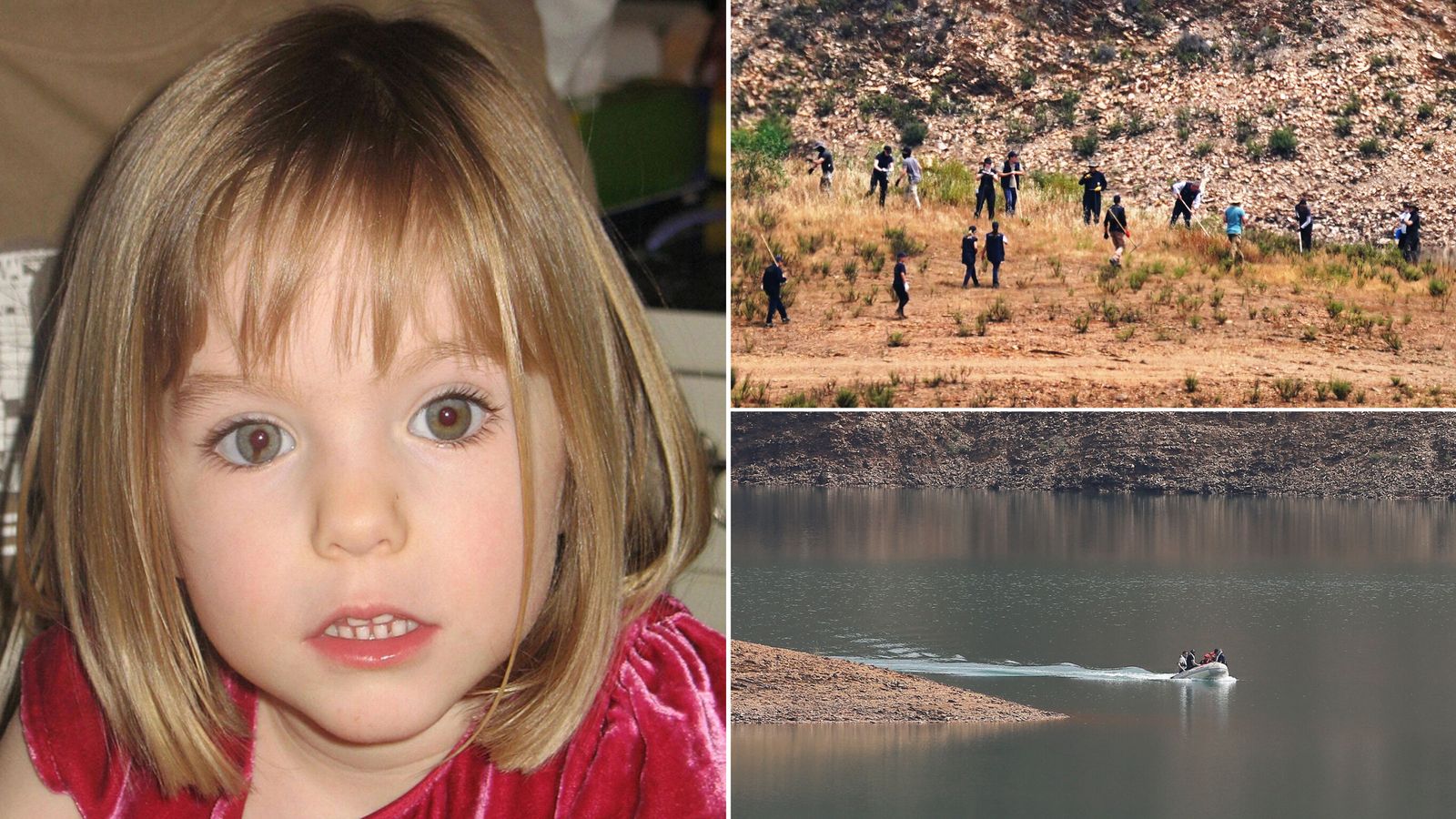
Madeleine McCann police remove bags during reservoir search

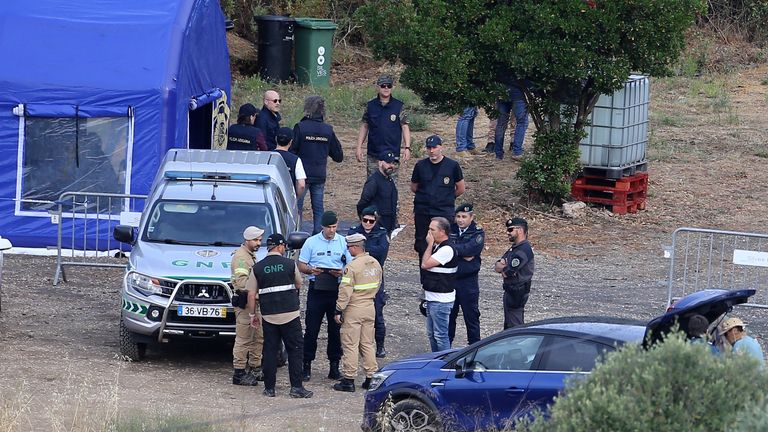
Police investigating the disappearance of Madeleine McCann have taken away a number of bags from a search site in southern Portugal.
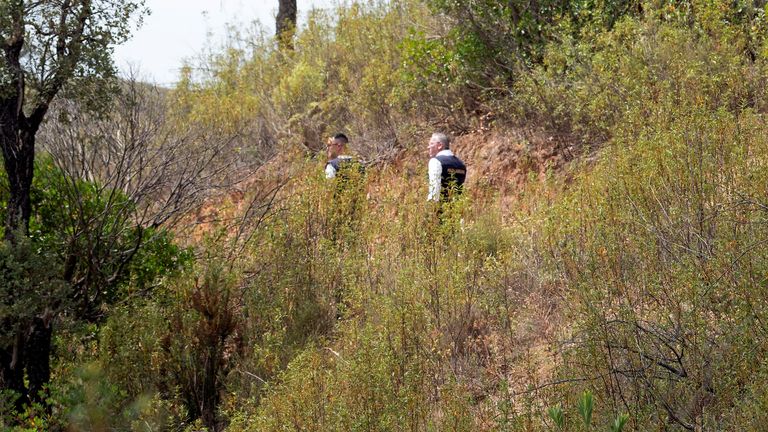
Officers have been combing a reservoir and surrounding scrubland after receiving “certain tip-offs”.
Police divers entered the water at the Arade dam in Silves municipality on Tuesday.
But it is not known what was in the bags.
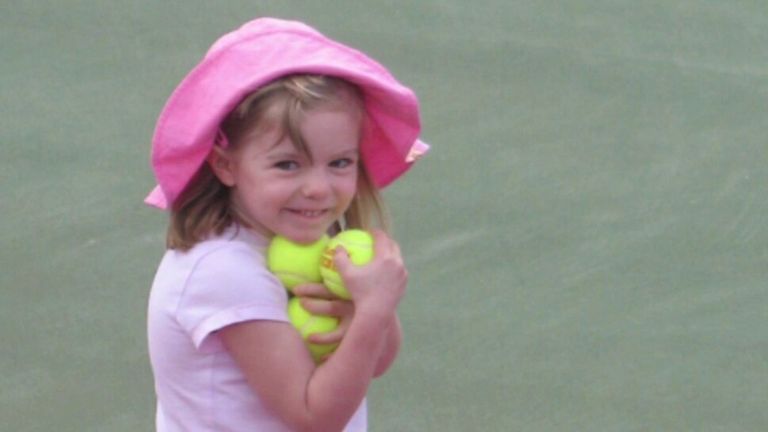
The site is about 31 miles from where the British girl went missing during a family holiday in Praia da Luz in the Algarve on 3 May 2007. Madeleine was just three years old at the time.
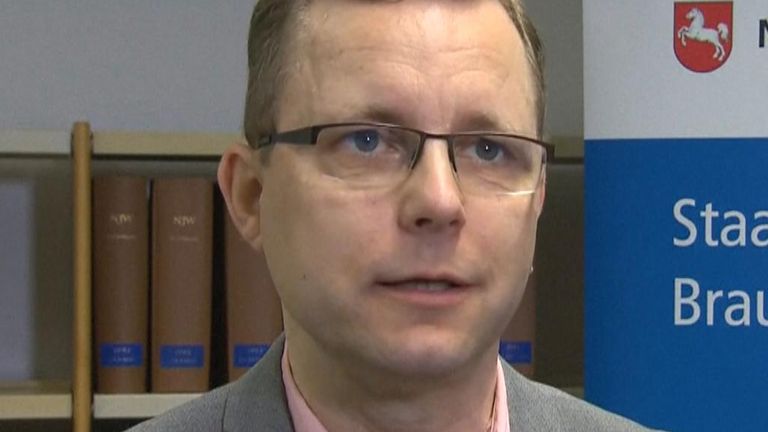
German prosecutor Christian Wolter said: “We are investigating in Portugal on the basis of certain tips [tip-offs].
“I can’t disclose the background at the moment, like why we are searching there and what we hope to find there. That shall remain our secret for the moment.”
A source familiar with the investigation told the Reuters news agency the operation was likely linked to photographs of the reservoir found at the hideout of Christian B.
He was named by German prosecutors last year as an official suspect in Madeleine’s disappearance.
Latest Madeleine search will ‘take time’
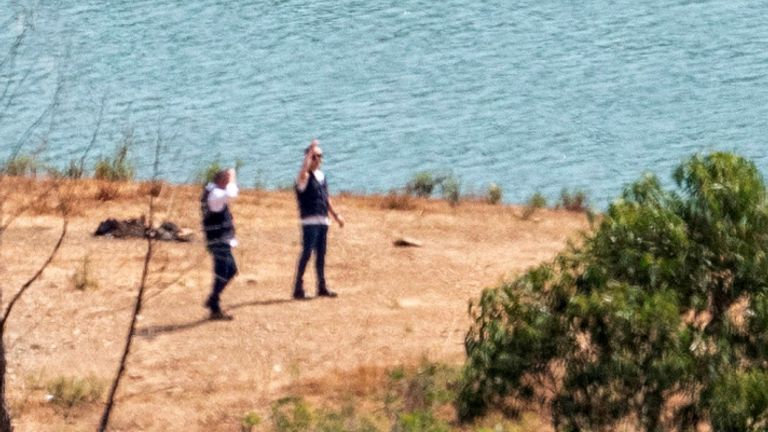
A boat was also sent into the reservoir with two officers. About 20 to 30 officers could be seen in the area, a dozen of which had sniffer dogs.
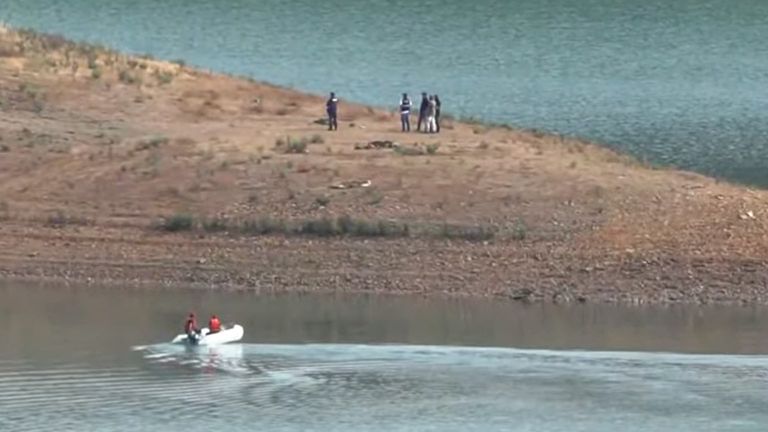
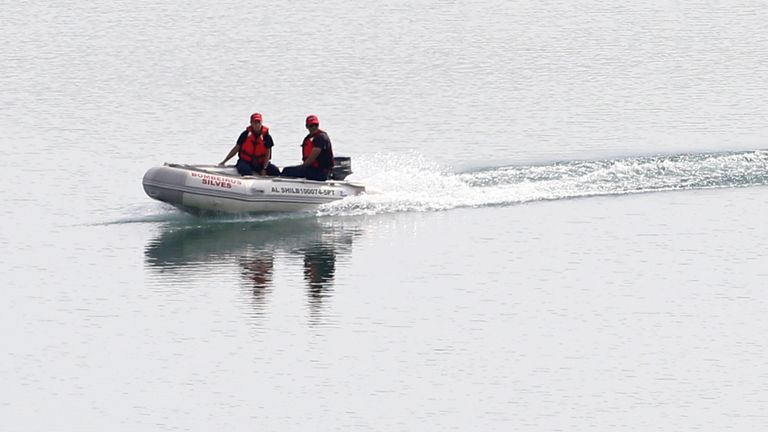
Pic: AP
Vehicles and officers were first seen at the site of the reservoir on Monday after reports of the new search emerged.
Read more:
The exact area where the search is taking place
How events unfolded in the disappearance of Madeleine McCann
Local police said they are co-ordinating searches in the Algarve at the request of German police and in the presence of British officers.
It comes after German police announced in June 2020 that they believed Madeleine was dead and that Christian B was likely responsible.
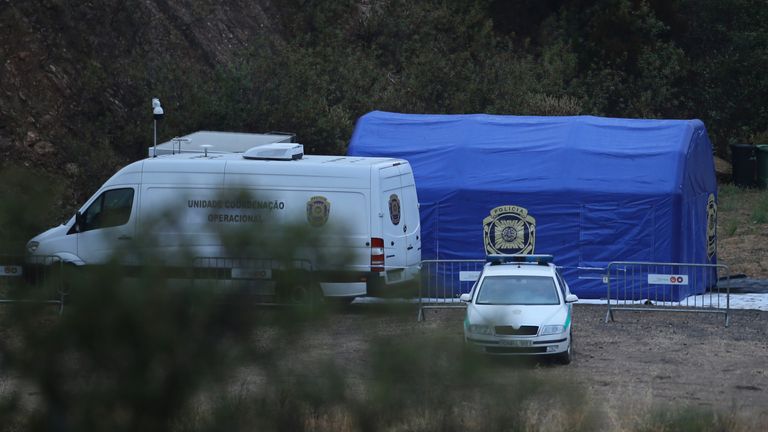
Pic: AP
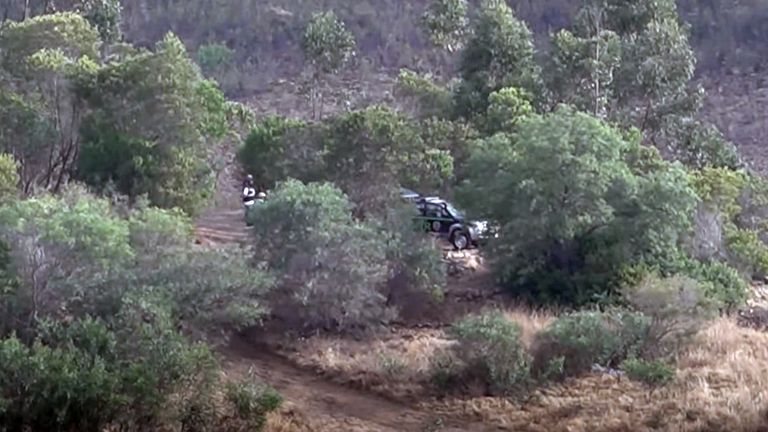
It is claimed the convicted child abuser and drug dealer used to visit the reservoir, allegedly referring to it as “his paradise”.
Christian B is currently in prison for raping a 72-year-old woman in the same area of the Algarve region from where Madeleine went missing, but he has not been charged with any crime related to the disappearance.
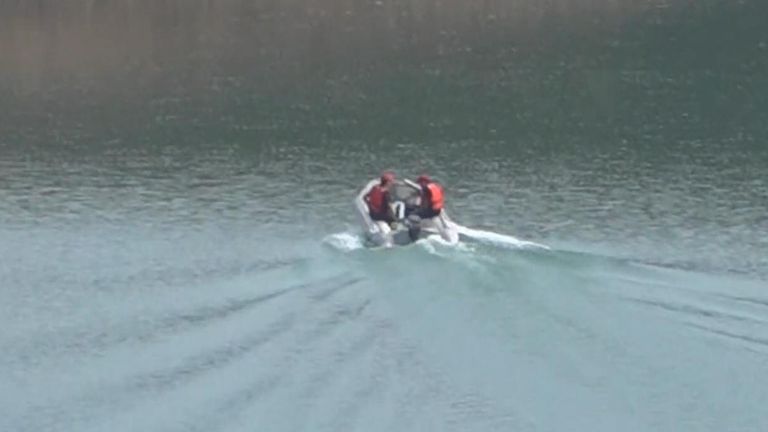
Author on Madeleine search
He has denied any involvement.
Jon Clarke, author of My Search for Madeleine, after he was the first journalist on the scene when Madeleine went missing in 2007, said that Mr Wolter received the tip-off from a “credible source” in April.
Speaking to Sky News, Mr Clarke said that police are “optimistic” that they might also find the bodies of three missing children who have never been found, including eight-year-old Joana Cipriano, who went missing in 2004, “very near” to Praia da Luz.
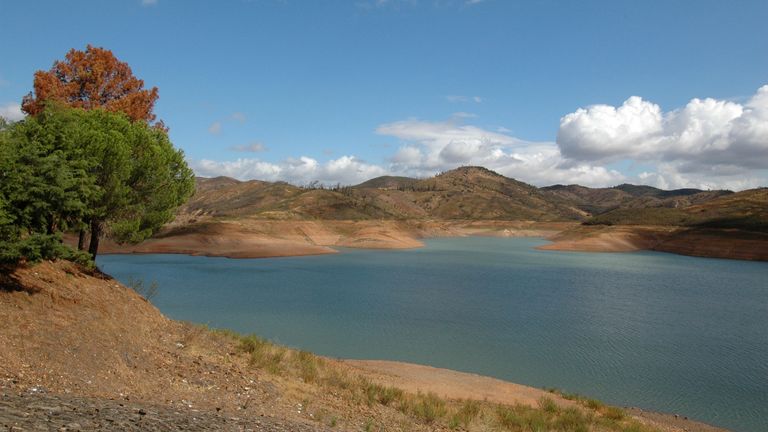
The Arade dam in Portugal
The waterway was previously searched in 2008 after Portuguese lawyer Marcos Aragao Correia paid for specialist divers to check the site.
He claimed to have been tipped off by criminal contacts that Madeleine’s body was in the reservoir, but nothing was found.
Sky’s Siobhan Robbins explains what is happening at the dam
A search was also carried out in 2014 of scrubland near where she vanished, after British police were given permission to investigate by Portuguese authorities.
A German court last month threw out additional rape and sexual offence charges against Christian B that were not linked to Madeleine’s case.
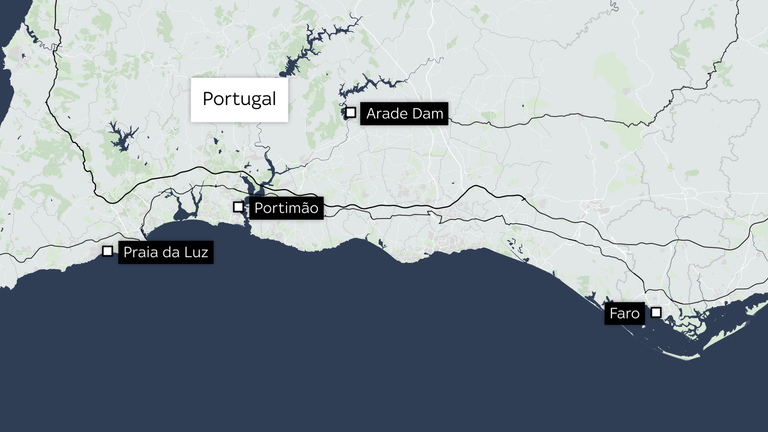
Madeleine went missing in Praia da Luz and the Arade Dam is being searched by police
He had been accused of three offences of aggravated rape and two offences of sexual abuse of children in Portugal between December 2000 and June 2017.
However, the court in Braunschweig ruled it had no jurisdiction in the case.
Read more:
Madeleine’s parents mark her 20th birthday
Kate and Gerry McCann lose legal battle over detective’s accusations
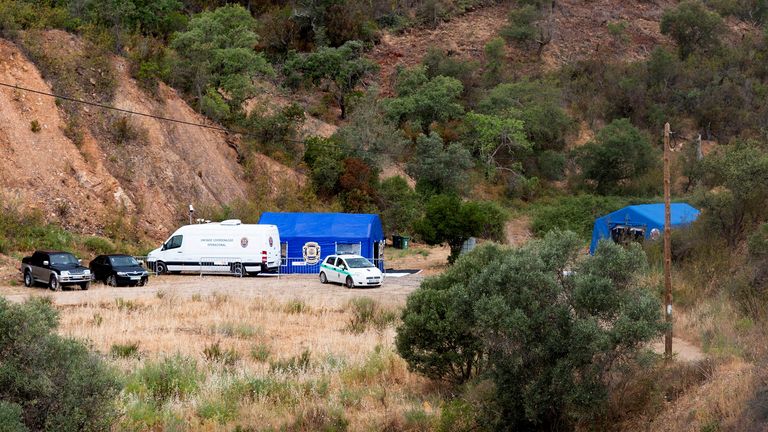
Officer’s at the site of the reservoir on Monday
Lawyer Friedrich Fulscher said the decision meant court authorities could not have jurisdiction over any potential case about Madeleine either. The court did not comment on his claim.
Pic: AP
Last year, on the 15th anniversary of her disappearance, Madeleine’s parents said it was “essential” to learn the truth of what happened to their daughter.
Kate and Gerry McCann also marked Madeleine’s 20th birthday earlier this month with a vow that they would “never give up” the search for her.
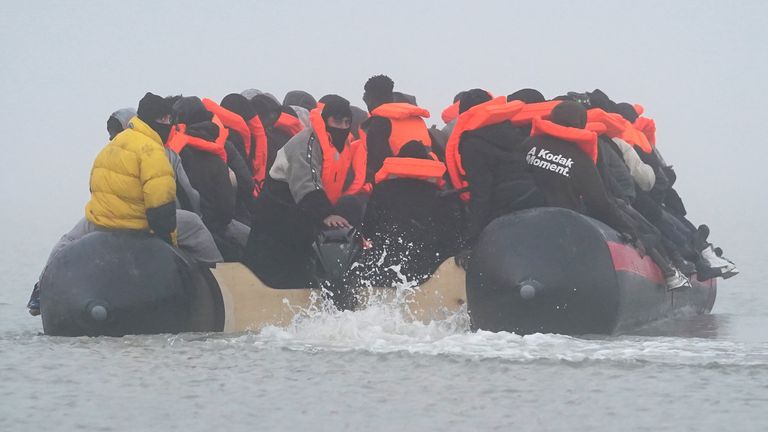
There have been no migrant arrivals in small boats crossing the Channel for 28 days, according to Home Office figures.
The last recorded arrivals were on 14 November, making it the longest uninterrupted run since autumn 2018 after no reported arrivals on Friday.
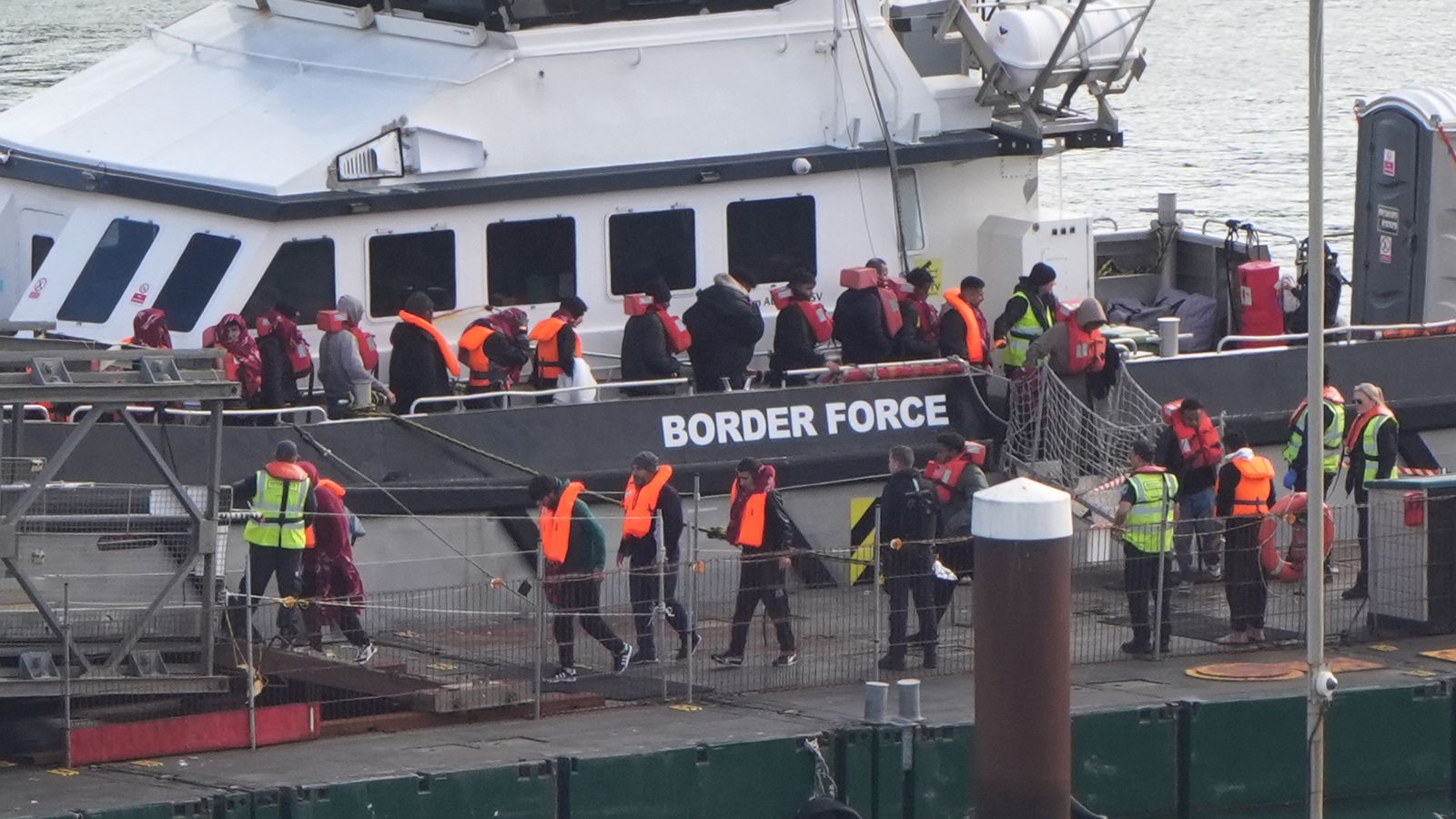
However, a number of Border Force vessels were active in the English Channel on Saturday morning, indicating that there may be arrivals today.
So far, 39,292 people have crossed to the UK aboard small boats this year – already more than any other year except 2022.
The record that year was set at 45,774 arrivals.
It comes as the government has stepped up efforts in recent months to deter people from risking their lives crossing the Channel – but measures are not expected to have an impact until next year.
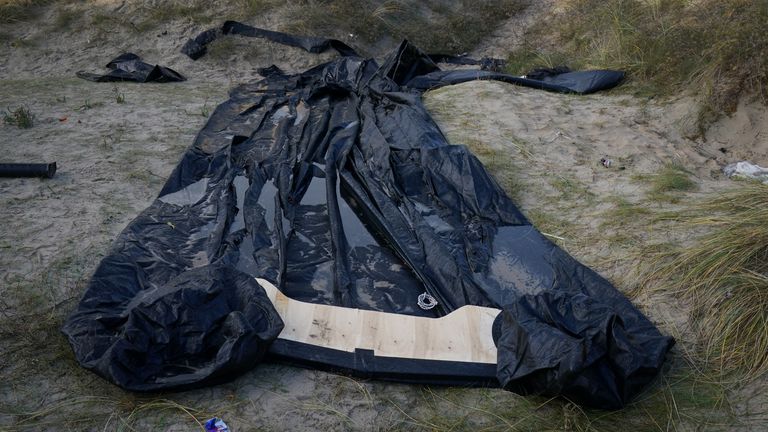
Debris of a small boat used by people thought to be migrants to cross the Channel lays amongst the sand dunes in Gravelines, France. Pic: PA
December is normally one of the quietest for Channel crossings, with a combination of poor visibility, low temperatures, less daylight and stormy weather making the perilous journey more difficult.
The most arrivals recorded in the month of December is 3,254, in 2024.
Deputy Prime Minister David Lammy met with ministers from other European countries this week as discussions over possible reform to the European Convention on Human Rights (ECHR) continue.
France agrees to start intercepting small boats
The issue of small boat arrivals – a very small percentage of overall UK immigration – has become a salient issue in British politics in recent years.
Last month, French maritime police announced they would soon be able to intercept boats in the English Channel.
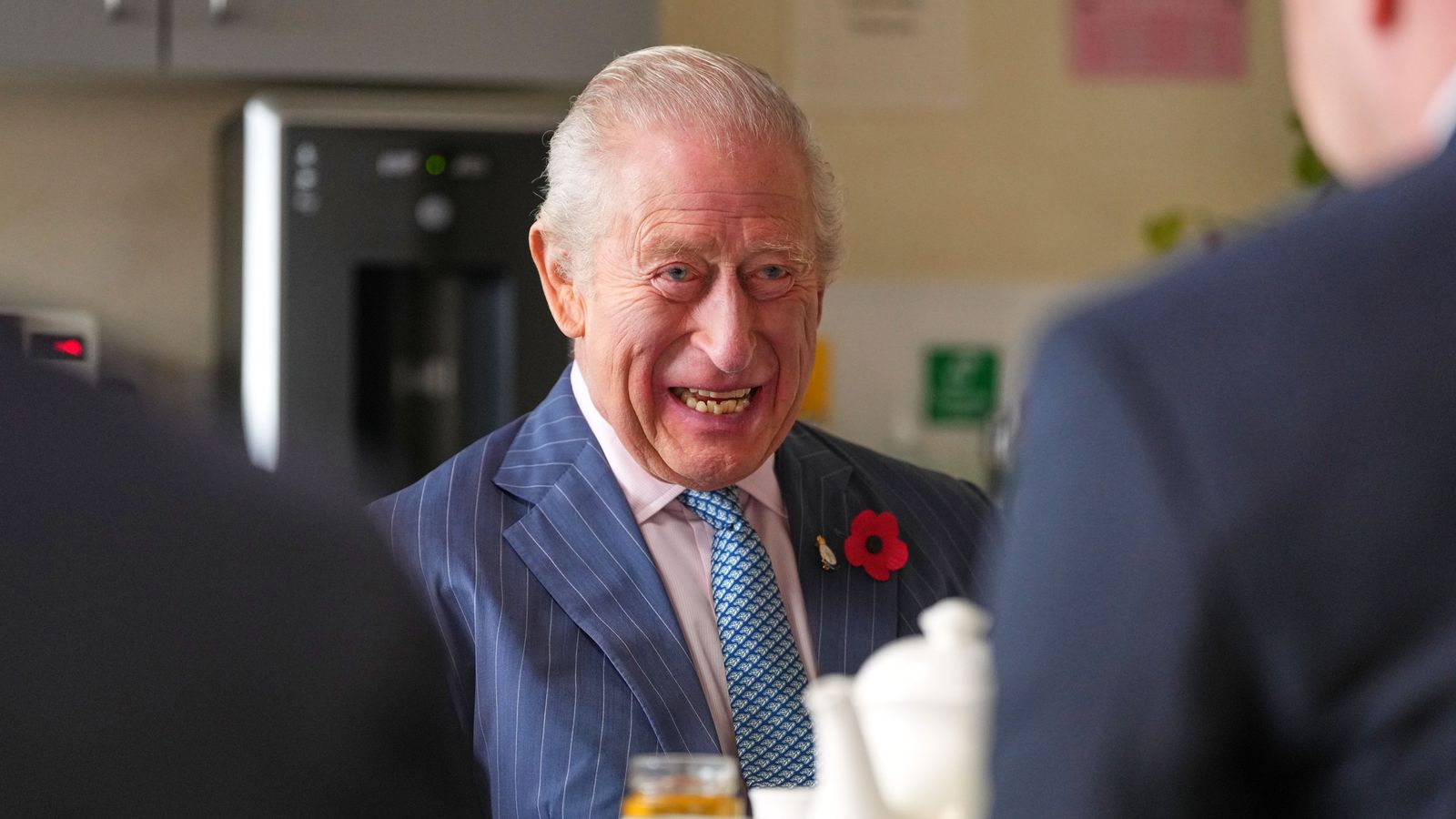
The King has shared in a television address that, thanks to early diagnosis, his cancer treatment can be reduced in the new year.
In a televised address, Charles said his “good news” was “thanks to early diagnosis, effective intervention and adherence to doctors’ orders”.
“This milestone is both a personal blessing and a testimony to the remarkable advances that have been made in cancer care in recent years,” he added.
“Testimony that I hope may give encouragement to the 50% of us who will be diagnosed with the illness at some point in our lives.”
The King announced in February 2024 that he had been diagnosed with cancer and was beginning treatment.
The monarch postponed all public-facing engagements, but continued with his duties as head of state behind palace walls, conducting audiences and Privy Council meetings.
He returned to public duties in April last year and visited University College Hospital Macmillan Cancer Centre in central London with the Queen and discussed his “shock” at being diagnosed when he spoke to a fellow cancer patient.
Sources suggested last December his treatment would continue in 2025 and was “moving in a positive direction”.
The King began returning to public duties in April last year. File pic: PA
The King has chosen not to reveal what kind of cancer he has been treated for. Palace sources have partly put that down to the fact that he doesn’t want one type of cancer to appear more significant or attract more attention than others.
In a statement after the speech aired, a Buckingham Palace spokesperson said: “His Majesty has responded exceptionally well to treatment and his doctors advise that ongoing measures will now move into a precautionary phase.”
Sir Keir Starmer praised the video message as “a powerful message,” and said: “I know I speak for the entire country when I say how glad I am that his cancer treatment will be reduced in the new year.
“Early cancer screening saves lives.”
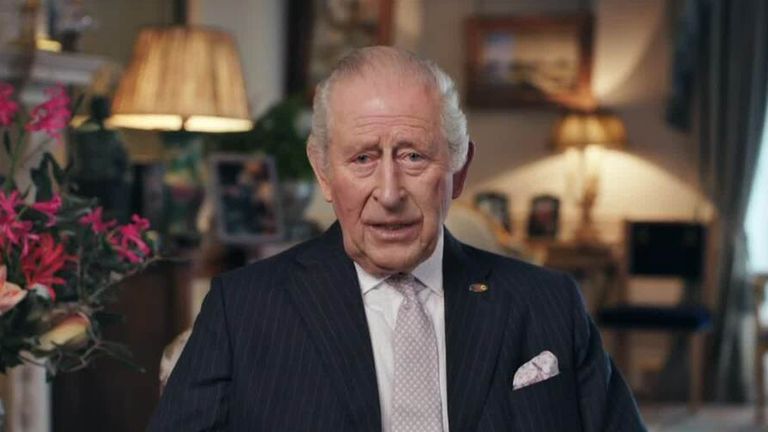
Watch: King Charles gives update on treatment
Early detection can give ‘the precious gift of hope’
His message on Friday was broadcast at 8pm in support of Stand Up To Cancer, a joint campaign by Cancer Research UK and Channel 4.
In an appeal to people to get screened for the disease early, the King said: “I know from my own experience that a cancer diagnosis can feel overwhelming.
“Yet I also know that early detection is the key that can transform treatment journeys, giving invaluable time to medical teams – and, to their patients, the precious gift of hope. These are gifts we can all help deliver.”
Charles noted that “at least nine million people in our country are not up to date with the cancer screenings available to them,” adding: “That is at least nine million opportunities for early diagnosis being missed.
“The statistics speak with stark clarity. To take just one example: When bowel cancer is caught at the earliest stage, around nine in ten people survive for at least five years.
“When diagnosed late, that falls to just one in ten. Early diagnosis quite simply saves lives.”
Minor inconvenience of screening ‘a small price to pay’
The King acknowledged that people often avoid screening “because they imagine it may be frightening, embarrassing or uncomfortable”. But, he added: “If and when they do finally take up their invitation, they are glad they took part.
“A few moments of minor inconvenience are a small price to pay for the reassurance that comes for most people when they are either told either they don’t need further tests, or, for some, are given the chance to enable early detection, with the life-saving intervention that can follow.”
Read more from Sky News:
Christmas tree chopped down hours after lights switch-on
More photos from Epstein’s estate released
Taylor Swift breaks down in tears over Southport attacks
Giving his “most heartfelt thanks” to doctors, nurses, researchers and charity workers, the King added: “As I have observed before, the darkest moments of illness can be illuminated by the greatest compassion. But compassion must be paired with action.
“This December, as we gather to reflect on the year past, I pray that we can each pledge, as part of our resolutions for the year ahead, to play our part in helping to catch cancer early.
“Your life – or the life of someone you love – may depend upon it.”
-
 Sports2 years ago
Story injured on diving stop, exits Red Sox game
-
 Sports3 years ago
‘Storybook stuff’: Inside the night Bryce Harper sent the Phillies to the World Series
-
 Sports2 years ago
Game 1 of WS least-watched in recorded history
-
 Sports3 years ago
Button battles heat exhaustion in NASCAR debut
-
 Sports3 years ago
MLB Rank 2023: Ranking baseball’s top 100 players
-
Sports4 years ago
Team Europe easily wins 4th straight Laver Cup
-
 Environment3 years ago
Japan and South Korea have a lot at stake in a free and open South China Sea
-
 Environment1 year ago
Here are the best electric bikes you can buy at every price level in October 2024