
The power of positive coaching and its impact on the Stanley Cup playoffs


-
Emily Kaplan, ESPN
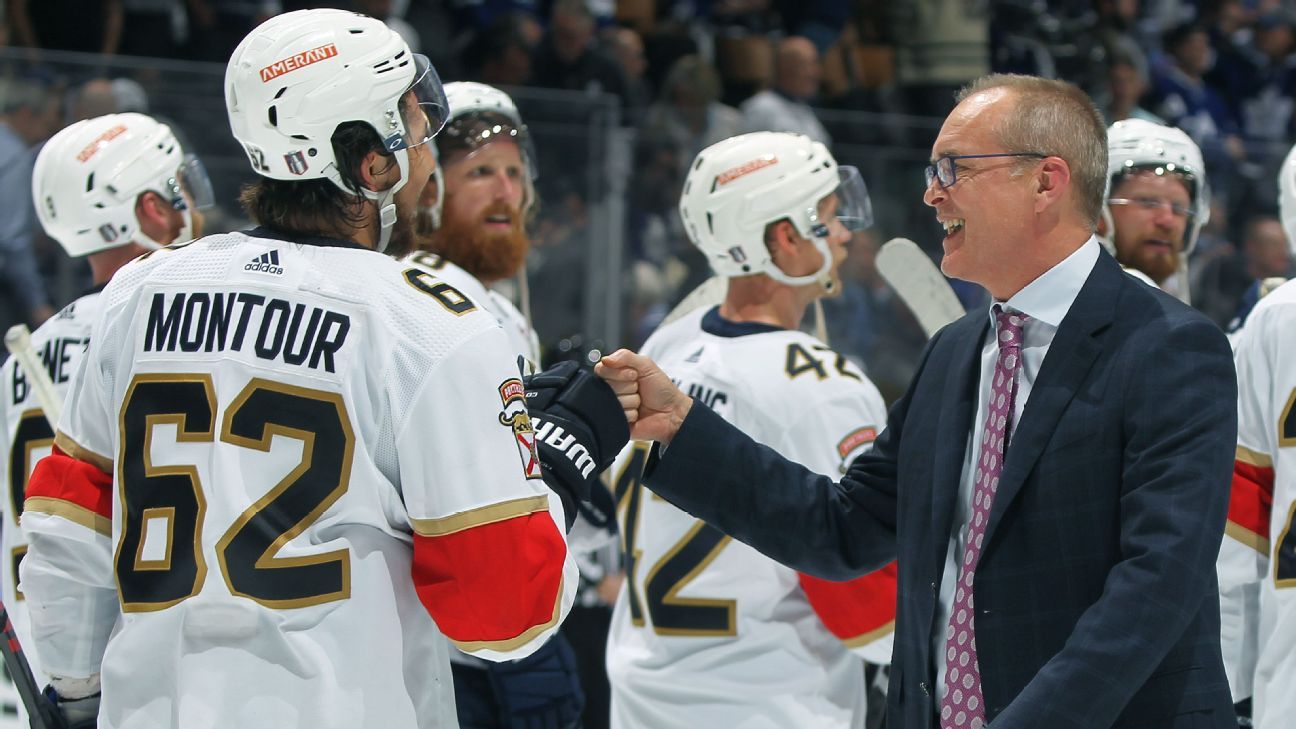
Following one of his nine seasons coaching the Winnipeg Jets, Paul Maurice had an idea: Could he be more intentional about the video he showed his players?
Video sessions are one of the most common teaching tools coaches employ. Maurice, now coach of the Florida Panthers, the eighth-seeded darlings of the Stanley Cup playoffs who are one win away from the Cup Finals, wondered how his staff could maximize these meetings. How many times did they have to show a system before it appeared in a game? Could they identify lag time from a teaching moment on video to tangible success on the ice?
Maurice also wanted to quantify something deeper: Was his clip selection affecting players’ psyche and performance?
“What happens if we put the same player on all of our negative clips, even though I know it’s not all on that one player, like I’m picking on him? Or if I kept showing a player just doing good things, because I love that player?” Maurice said. “We wanted to find the cumulative effect of the video we were showing.”
So Maurice and his staff embarked on an offseason project.
“From Monday to Thursday, the whole summer, from 9 in the morning to 1 or 2 in the afternoon, we all got together and reviewed everything,” said Pascal Vincent, then one of Maurice’s Winnipeg assistants. “We were looking for ways to improve.”
The Jets’ staff charted videos they showed the team the previous season and tracked the results in the subsequent games. They labeled each clip in one of three categories: positive clip, teaching clip, negative clip. The analytics department took it from there.
As the data accumulated, the coaches couldn’t help but notice a pattern.
“We realized that we were getting results and seeing more success when we were showing more positive clips,” Vincent said. “Of course, there are many other variables, but that is what the data said. I’ve done a lot of reading on the topic across other walks of life, and it confirmed what I was feeling.”
The feeling has become a massive trend in the NHL: Coaches are finding that it’s more productive to build up confidence through encouragement rather than hitting players with constant criticism. And it’s especially true with young millennials and Generation Z.
“The bully coach, right, wrong or different, has no chance in today’s game,” Detroit Red Wings coach Derek Lalonde said. “It’s the reality of the players today. You still have to hold them accountable, but you have to do it in different ways.”
Call it the Ted Lasso effect. Heck, NHL players are even quoting the fictional soccer coach, known for his extremely upbeat attitude. Bruins goalie Linus Ullmark committed a puck-handling blunder in overtime of Game 5 of Boston’s first-round series, directly leading to Matthew Tkachuk‘s winning goal for Florida. Afterward, Ullmark met a scrum of reporters and cameras at his locker, relaxed, composed, and even smiled at times. “You just have to have the mind of a goldfish,” Ullmark said, a verbatim quote from the TV series.
The popular show is a microcosm for a shift in societal norms, which includes a new emphasis on mental health. Workplaces across multiple industries are adapting as younger generations crave different — and in many instances, less negative — environments than their predecessors. Historically, that contrasted with the high-pressure, demanding nature of professional sports. Not anymore.
“Positive, constructive feedback — maybe people needed it generations before as well,” said Bruins forward Garnet Hathaway, 31. “It just wasn’t mainstream or they didn’t advocate for it. But now, you see it as a way of unlocking even more potential.”
The change in the sport is noticeable, and it’s leading to periods of self-reflection.
“Overall it’s become a more conservative, sensitive world. Kids now grow up not being yelled at so they don’t know how to react to being yelled at,” Colorado Avalanche forward Evan Rodrigues, 29, said. “Growing up, I loved to be yelled at, it got me into the game, it got me focused. Now when someone yells at me I take it differently. I’d rather them come up to me and say, ‘Hey, I know you’re better than that.’ I used to love proving people wrong whereas now I like proving people right.”
That idea feeds into one of Vincent’s tried and true teaching techniques. This season, Vincent served as an assistant coach for the Columbus Blue Jackets, one of the youngest teams in the league.
“Even if a player is struggling, there’s a reason that they’re here [in the NHL],” Vincent said. “So you need to find out what that player is good at, then reinforce it. When you lose your confidence, you go back to the foundations of what you’re good at, and it helps them find it again.”
Many players interviewed for this article pushed back on the idea that coaching has to be all positivity all the time — or that the NHL has fully transformed.
One player on an Eastern Conference team said: “My coach reads me the riot act pretty much twice a week. And I’m fine with it, if I deserve it.”
Another player described a “passive aggressive” style from one of his former coaches, who is still behind an NHL bench. “He’d say mean things about you loudly, while you were in earshot so you can hear it,” the player said. “Obviously because he wanted you to hear it.”
Some in the league see a downside to the uber-positive approach. After the Maple Leafs‘ disappointing second-round loss to the Panthers, a narrative emerged in some circles that Toronto management created an environment where its star players were too coddled, and therefore ill-equipped to handle the adversity of playoff hockey.
One longtime veteran player in the league said he has noticed a gradual change over the past few years and “it doesn’t sit well with me.” “Not to be the ‘back in my day’ guy, but … it really feels like we’ve become softer as a league,” the player said. “There are some dinosaur practices that need to go. I’d never advocate for mental or physical abuse. But this is professional sports, and it demands a level of accountability and toughness. It’s OK to feel uncomfortable sometimes. It’s OK to be yelled at or called out when you’re not meeting standards. That’s what makes you stronger.”
Former player Ray Ferraro, an 18-year NHL veteran and current ESPN analyst, put it bluntly: “Sometimes you need to be demanding, but not an a–hole. Because the old way certainly doesn’t work.”
Avalanche forward Mikko Rantanen, 26, called himself “a younger guy” but said “I don’t mind negative [coaching] sometimes.”
“I think the positive way of seeing is better, but it can’t be all positive; it needs to be a balance,” Rantanen said. “[Colorado coach] Jared [Bednar] does a good job of that. When we don’t play well, he shows it. Even when there’s a game where we fall asleep just for a few plays, he’s going to show it the next day and be mad. And that’s the way it should be.”
After Game 1 of the Western Conference finals, Dallas Stars coach Peter DeBoer said he laid into his players a bit following their loss to the Vegas Golden Knights.
“There’s certain pressure points with your team that you have to decide as a coach,” DeBoer said. “Is this a time to be supportive and a calming voice of reason, or is this a time to turn the screws and get into them a little bit? I think you can only go to the latter one so often.”
Coaches have also adapted to another trend younger millennials and Generation Z covet: transparency. Younger players don’t need to agree with what is happening, they just want to know why. Bednar said he has adapted by being clearer with communication.
“The trend, and it makes sense to me now, is that if guys get no information, they’ll go to the negative thought process,” Bednar said. “I always thought if I don’t give feedback on something, then you know you’re doing good. I like my guys to know that: If I’m not coming to you, it’s a good thing.”
But over the past few seasons, Bednar noticed that approach wasn’t always working, especially with younger players. If players didn’t receive any reaction from him, they’d assume the worst, or look to other places for feedback, such as social media, which can get dicey.
“If a guy plays 10 minutes a night generally, then all of the sudden he has a game that’s 7½, he’ll be like, ‘Oh my god, what did I do wrong?’ Then the negative thoughts come in,” Bednar said. “So I try to interrupt that. You have to go out of your way more. Now I try to brush past them in the locker room and just say, ‘Hey, good job last night,’ so they have something, even if I’m not having meetings with them.”
Lalonde said he has made transparency a top priority for the Red Wings.
“I’ve never had a lineup go up until I told the player he’s not in, and exactly why,” Lalonde said. “You have to be honest.”
Lalonde cited an example this season of a game in which he scratched one of his forwards.
“We spent just as much time as a staff putting three or four points together for the guy not in the lineup as we did on game planning the next night,” he said.
Maurice still thinks back to his tape study but isn’t ready to draw any grand conclusions.
“I don’t know if there’s a solid theory for every team,” Maurice said. “Every team is different, every player is different. The most important thing is to understand the human nature aspect of it all.”

-
Adam Rittenberg
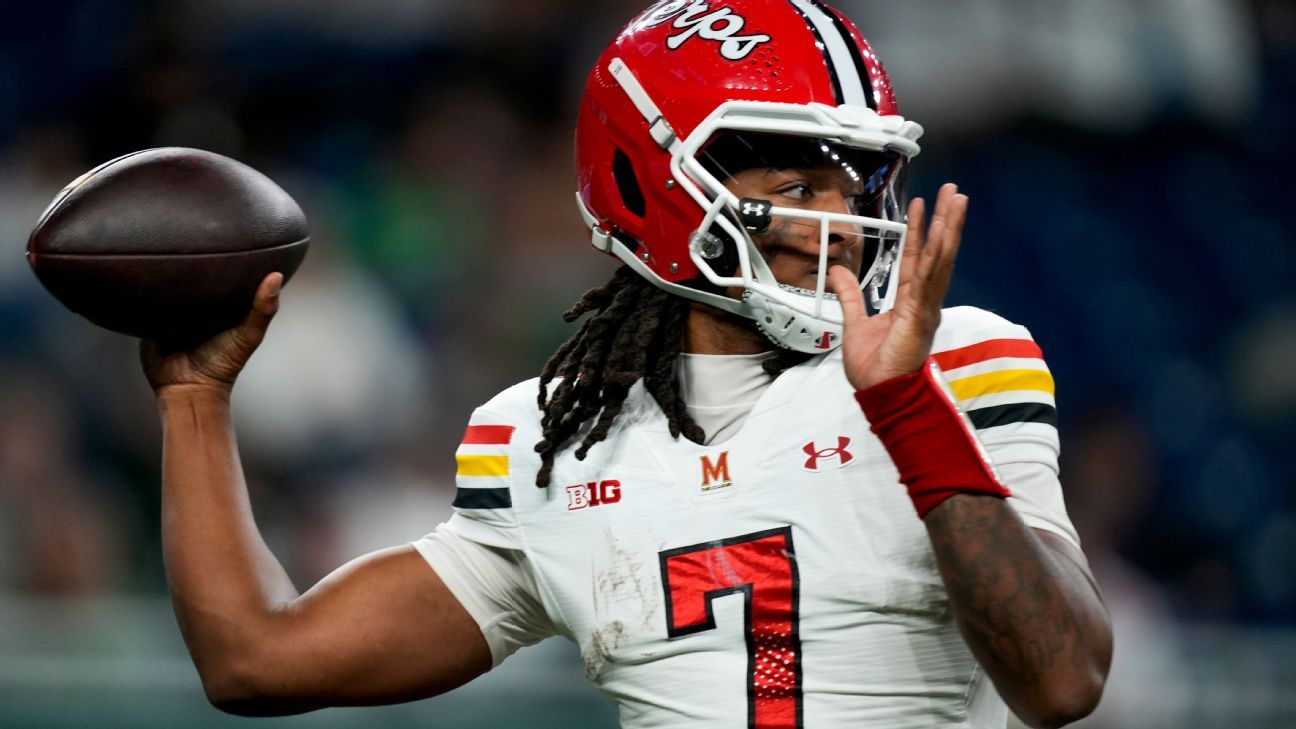
Maryland quarterback Malik Washington, who set the team’s freshman passing record this fall, will return to the Terrapins for the 2026 season.
Washington set Maryland freshman records for passing yards (2,963) and completions (273) this season, while connecting on 17 touchdown passes. He reached 200 passing yards in all but one game and finished as just the second Big Ten freshman since 1996 to record at least 2,500 passing yards and at least 300 rushing yards.
“Representing this team, this area, means so much to me and my family,” Washington said in a statement Saturday. “This is home and we’re going to continue keeping the best athletes from this area here with the Terps. I believe in everyone in our facility and I know we’re building something that our fans will be excited about for years to come.”
Washington, the nation’s No. 134 recruit in the 2025 class, grew up in Severn, Maryland, about 30 miles from Maryland’s campus. Despite a 4-8 record that included only one Big Ten win, Maryland announced that coach Mike Locksley, who recruited Washington, would return in 2026. Locksley will enter his eighth season as Maryland’s coach.
“Malik is a Terp through and through and I’m thrilled he’s coming back to lead this football team,” Locksley said in a statement. “He means so much to this area and this area means so much to him. What we saw from Malik this past season is only the tip of the iceberg. He has such a bright future and he’s already started putting the work in towards the 2026 season.”


-
 Sports2 years ago
Story injured on diving stop, exits Red Sox game
-
 Sports3 years ago
‘Storybook stuff’: Inside the night Bryce Harper sent the Phillies to the World Series
-
 Sports2 years ago
Game 1 of WS least-watched in recorded history
-
 Sports3 years ago
Button battles heat exhaustion in NASCAR debut
-
 Sports3 years ago
MLB Rank 2023: Ranking baseball’s top 100 players
-
Sports4 years ago
Team Europe easily wins 4th straight Laver Cup
-
 Environment3 years ago
Japan and South Korea have a lot at stake in a free and open South China Sea
-
 Environment1 year ago
Here are the best electric bikes you can buy at every price level in October 2024