
Business
Facewatch: The controversial tech that retailers have deployed to tackle shoplifting and violence

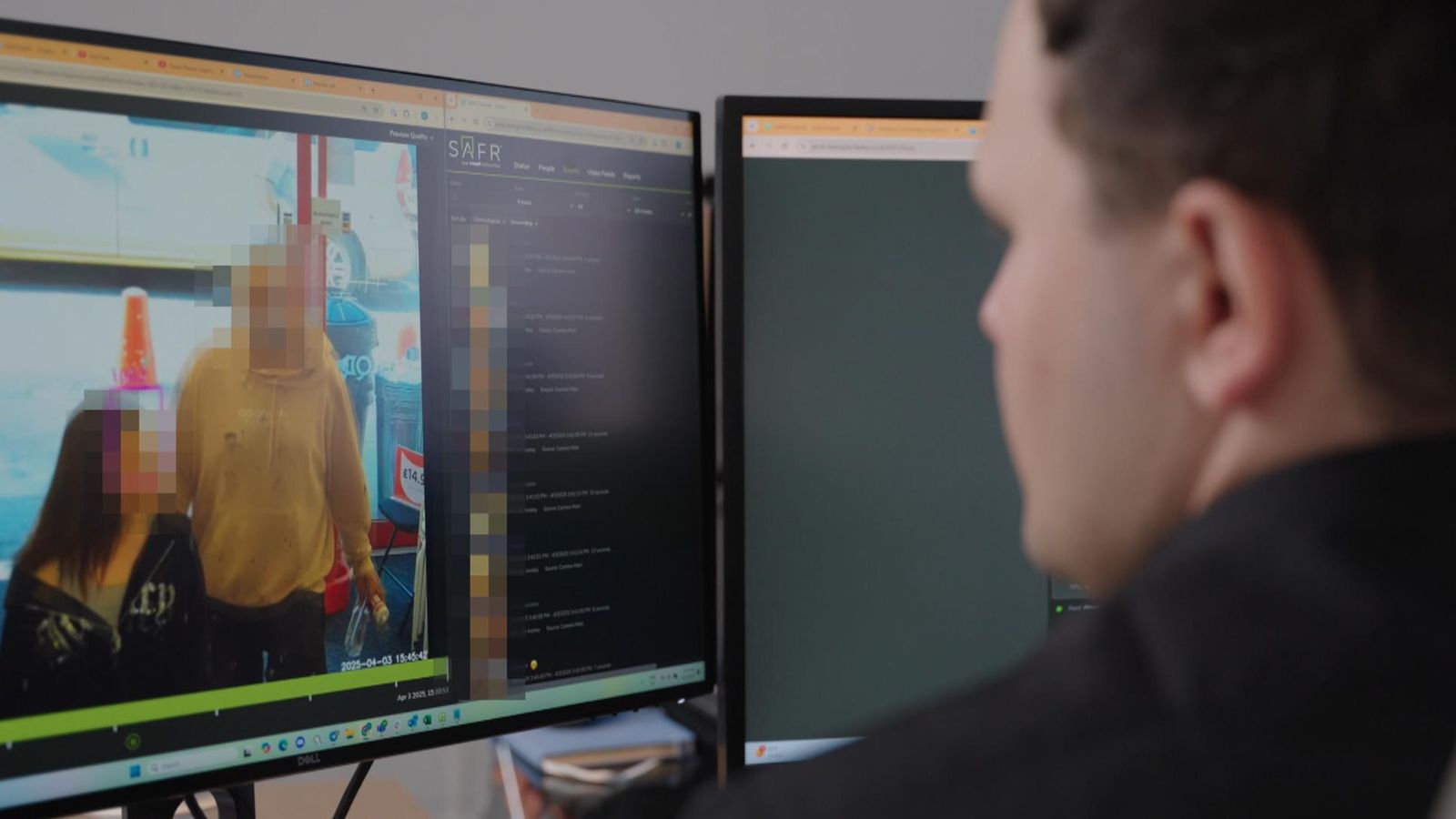
The Christmas period is upon us, and goods are flying off the shelves, but for some reason, the tills are not ringing as loudly as they should be.
Across the country, the five-finger discount is being used with such frequency that retailers are taking action into their own hands.
With concerns about the police response to shoplifting, many are now resorting to controversial facial recognition technology to catch culprits before they strike.
Sainsbury’s, Asda, Budgens and Sports Direct are among the high-street businesses that have signed up to Facewatch, a cloud-based facial recognition security system that scans faces as they enter a store. Those images are then compared to a database of known offenders and, if a match is found, an alert is set off to warn the business that a shoplifter has entered the premises.
It comes as official figures show shoplifting offences rose by 13% in the year to June, reaching almost 530,000 incidents. Figures reported in August showed more than 80% result in no charge.
At the same time, retailers are reporting more than 2,000 cases of violence or abuse against their staff every day. Faced with mounting losses and safety concerns, businesses say they are being forced to take security into their own hands because stretched police forces are only able to respond to a fraction of incidents.
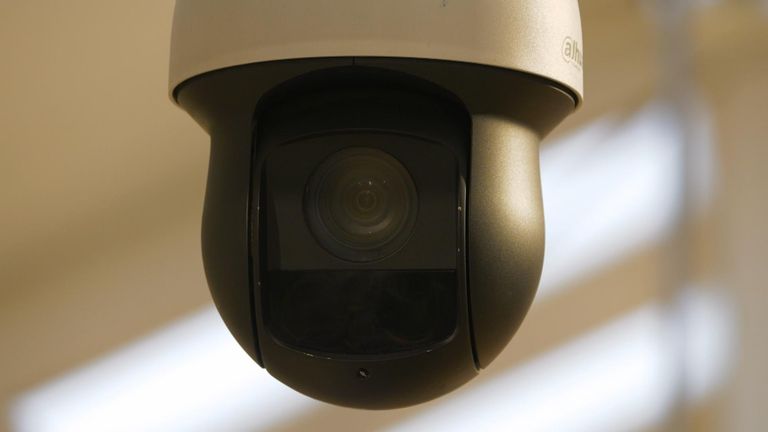
A Facewatch camera
At Ruxley Manor Garden Centre in south London, managing director James Evans said theft had become increasingly brazen and organised, with losses from shoplifting now accounting for around 1.5% of turnover. “That may sound small, but it represents a significant hit to the bottom line,” he said, pointing out that thousands of pounds’ worth of goods can be stolen in a single visit.
“We have had instances where the children get sent in to do it. They know that the parents will be waiting in the car park and they’ll know that there’s nothing that we can do to stop them.”

Gurpreet Narwan is seen at the garden centre while being shown how Facewatch works
Staff members here have also had their fair share of run-ins with shoplifters. In one case, employees trying to stop a suspected shoplifter were nearly struck by an accomplice in a car. “This is no longer just about stock loss,” said James, “It is about the safety of our staff.”
However, the technology is not without its critics. Civil liberties groups have warned that the expansion of this type of technology is eroding our privacy.
Silkie Carlo, director of Big Brother Watch, called it “a very dangerous kind of privatised policing industry”.
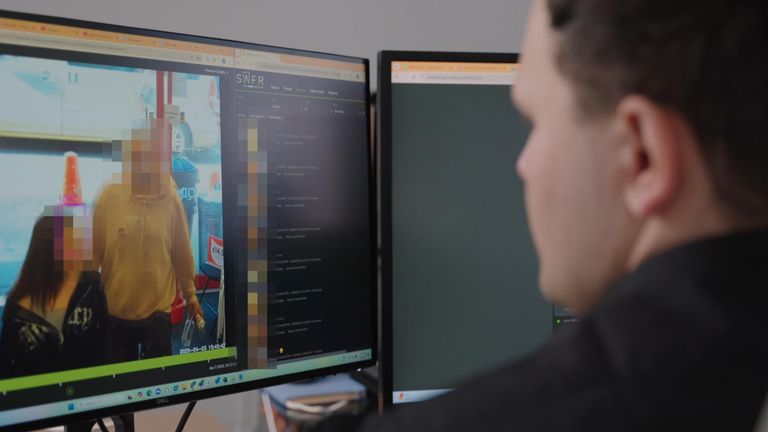
Facewatch is seen in operation as retailers look to crack down on crime.
“[It] really threatens fairness and justice for us all, because now it’s the case that just going to do your supermarket shopping, a company is quietly taking your very sensitive biometric data. That’s data that’s as sensitive as your passport, and [it’s] making a judgement about whether you’re a criminal or not.”
Silkie said the organisation was routinely receiving messages from people who said they had been mistakenly targeted. They include Rennea Nelson, who was wrongly flagged as a shoplifter at a B&M store after being mistakenly added to the facial recognition database. Nelson said she was threatened with police action and warned that her immigration status could be at risk.
Gurpreet’s profile can be seen on the Facewatch database
“He said to me, if you don’t get out, I’m going to call the police. So at that point I turned around and I was like, are you speaking to me? Then he was like yes, yes, your face set off the alarm because you’re a thief… At that point, I was around six to seven months pregnant and I was having a high-risk pregnancy. I was already going through a lot of anxiety and, so him coming over and shouting at me, it was like really triggering me.”
The retailer later acknowledged the error and apologised, describing it as a rare case of human mistake.
Read more:
Elon Musk closer to becoming first-ever trillionaire
William and George help prepare Christmas lunch for the homeless
A spokesperson for B&M said: ‘This was a simple case of human error, and we sincerely apologise to Ms Nelson for any upset caused. Reported incidents like this are rare. Facewatch services are designed to operate strictly in compliance with UK GDPR and to help protect store colleagues from incidents of aggressive shoplifting.”
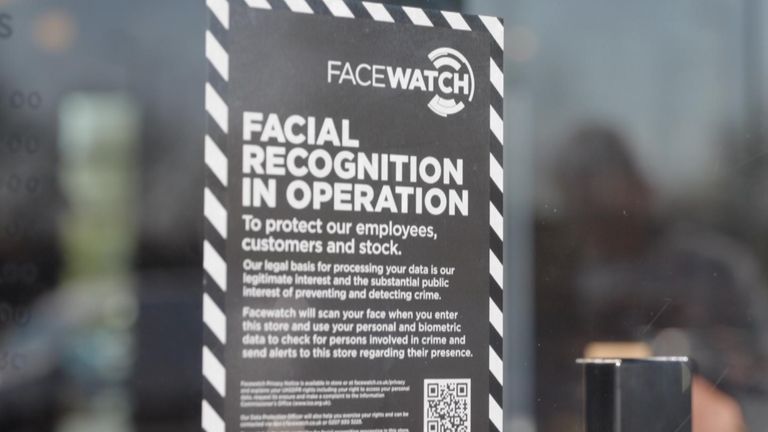
The cloud-based technology has critics who argue that it amounts to a misuse of personal data and privacy
Nick Fisher, chief executive of Facewatch, said the backlash was disproportionate.
“Well, I think it’s designed to be quite alarmist, using language like ‘dystopian’, ‘orwellian’, ‘turning people into barcodes’,” he said.
“The inference of that is that we will identify people using biometric technology, hold and store their own, store their data. And that’s just, quite frankly, misleading. We only store and retain data of known repeat offenders, of which it’s been deemed to be proportionate and responsible to do so… I think in the world that we are currently operating in, as long as the technology is used and managed in a responsible, proportionate way, I can only see it being a force for good.”
Yet, there is obviously widespread unease, if not anger, at the proliferation of this technology. Businesses are obviously alert to it, but the bottom line is calling.

-
Mark Schlabach
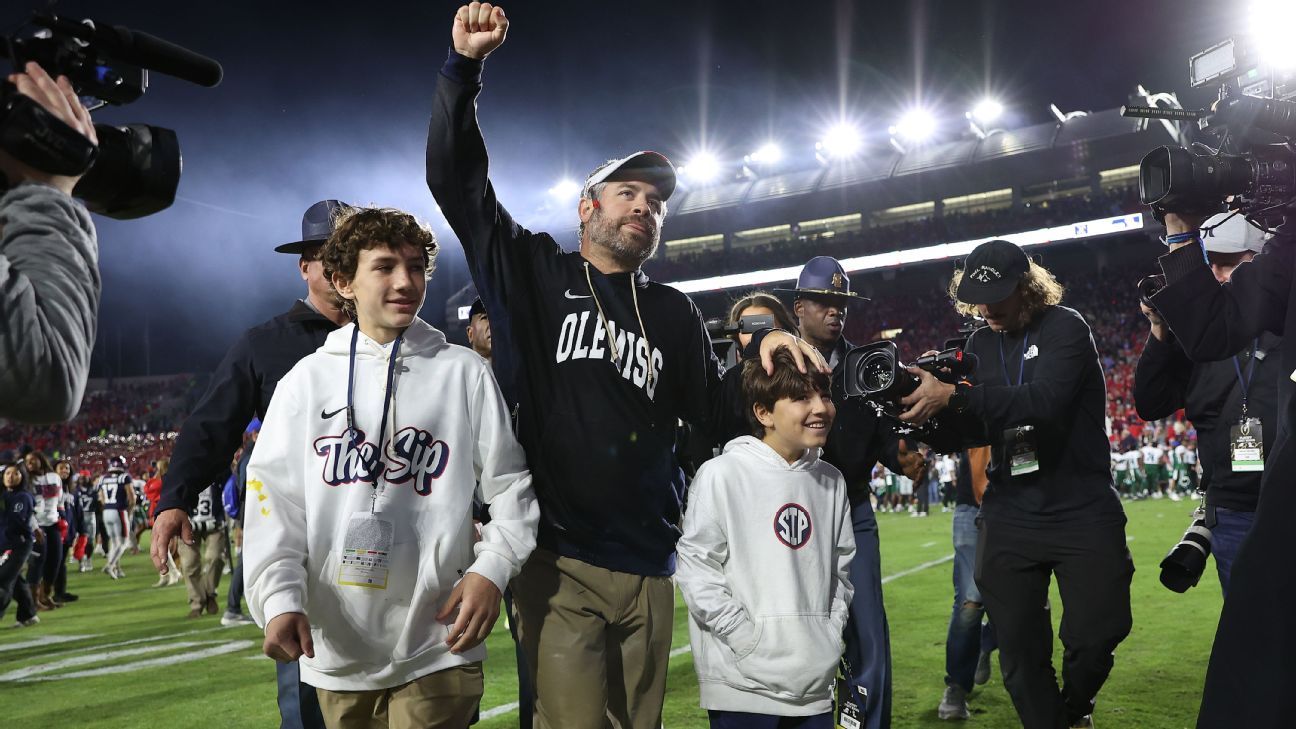
OXFORD, Miss. — After leading No. 6 Ole Miss to a 41-10 rout of No. 11 Tulane in a CFP first-round game on Saturday, new Rebels coach Pete Golding walked off the field with his name being chanted by fans at Vaught-Hemingway Stadium.
Golding, who won his first game as a head coach in the Rebels’ first-ever CFP game, raised his fist in victory and threw his visor into the stands. Then he hugged Ole Miss athletics director Keith Carter, who entrusted him with the program after former coach Lane Kiffin left for LSU on Nov. 30.
Golding, the Rebels’ 41-year-old defensive coordinator until Kiffin abruptly left, passed his first test against the Green Wave, which qualified for the CFP as the highest-rated champion from a Group of Five conference.
Ole Miss won 12 games in a season for the first time in its history.
“To finally be the last voice, it kind of hit me some,” Golding said. “And then just more excited for the players, how they responded. Some of those hugs will get you a little bit, you know?”
The Rebels’ next test, against No. 3 Georgia in a CFP quarterfinal at the Allstate Sugar Bowl in New Orleans on New Year’s Day (8 p.m. ET, ESPN), figures to be much more difficult.
The Bulldogs defeated the Rebels 43-35 in Athens, Georgia, on Oct. 18, handing them their only loss of the season.
The start against Tulane couldn’t have gone better. After taking the opening kickoff, the Rebels needed only three plays to drive 75 yards for a touchdown in 59 seconds. Quarterback Trinidad Chambliss threw a 30-yard pass to De’Zhaun Stribling and a 25-yarder to tight end Dae’Quan Wright, then tailback Kewan Lacy ran 20 yards up the middle for a touchdown to make it 7-0.
It was the longest streak of plays of 20 yards or longer to start a game by any FBS team in the past 20 seasons, according to ESPN Research. It was the fastest touchdown in a CFP game.
Tulane picked up three first downs and reached the Ole Miss 23 on its first possession. But cornerback Jaylon Braxton intercepted Jake Retzlaff‘s pass to Tre Shackelford at the 10.
Ole Miss took over at its 40 following Braxton’s 15-yard return and a face-mask penalty against the Green Wave. Lacy gained 30 yards up the middle on first down, and Chambliss threw a 26-yard pass to Deuce Alexander. Two plays later, Chambliss ran 4 yards into the end zone on a designed keeper to give the Rebels a 14-0 lead with 7:26 left in the first quarter.
The Rebels’ rout was on, and so was Golding’s coming-out party in front of 68,251 fans, the largest crowd in Ole Miss history.
It was an all-too-familiar sight for Tulane, which lost 45-10 at Ole Miss on Sept. 20.
“We looked a little slow on the perimeter, kind of similar to the first time we played this bunch,” Green Wave coach Jon Sumrall said. “They’re very talented. Hats off to them. They made plays. We didn’t make plays. Some of that was because of them, some of that was we didn’t do a very good job. But yes, the first two drives, it’s like you blink and you look up and it’s 14-0.”
Golding said he wasn’t surprised that his team came out so focused following the circus that surrounded Kiffin’s departure at the end of the regular season.
“I don’t think it was very hard at all because, I mean, it’d be one thing, no disrespect, if this was the Pop-Tart Bowl or something like that,” Golding said. “That s— would have been really hard. This is the playoffs. People start talking about are they going to play or are they not going to play? What are we talking about?”
The Rebels’ only scare against the Green Wave came late in the first half when both of their best players — Lacy and Chambliss — were injured on the same drive. Lacy, who has run for 1,366 yards with a school-record 21 rushing touchdowns, injured his left shoulder on a 7-yard catch.
Three plays later, Chambliss scrambled for an 11-yard run and was hurt while being tackled.
Backup quarterback Austin Simmons, who opened the season as the team’s starter before spraining his ankle, took over and finished the half.
Chambliss and Lacy came back to play in the second half, but Lacy went to the locker room in the fourth quarter. Golding said Lacy, who ran 15 times for 87 yards with one touchdown, had a bruised left shoulder.
“Yeah, he banged his shoulder up,” Golding said. “Obviously, he came back in the game and fought through that. We’ll address it here going forward, but he went back in the game and it’s a bruised shoulder.”
Chambliss completed 23 of 29 passes for 282 yards with one touchdown and ran six times for 36 yards with two scores. He is the fifth player to throw a touchdown and run for multiple scores in a CFP game.
The Rebels had 497 total yards, including 151 rushing.
Offensive coordinator Charlie Weis Jr. returned to coach the Rebels in the CFP, along with tight ends coach Joe Cox and receivers coach George McDonald. They’ll join Kiffin at LSU once the Rebels’ CFP run ends.
“I had zero concern with Charlie Weis calling this team, for this one reason: Charlie Weis cannot afford not to call a hell of a game,” Golding said. “All he’s heard is, ‘Lane Kiffin’s offense, Lane Kiffin’s offense, Lane Kiffin’s offense.’ So this is just one opportunity for people to realize Charlie Weis calls the offense, just like he’s done all year, and he did a great job tonight.”
It wasn’t the ending Sumrall had hoped for in his final game at Tulane. He was hired as Florida’s new coach on Nov. 30 after Kiffin turned it down.
“[I] told them it doesn’t change how I feel about them,” Sumrall said. “I love this group. Love each guy on that team. This team will walk together forever as champions because we won a conference championship, all right? So while the outcome tonight sucks — I’m not happy with it and there’s nothing about it I feel good about — I still feel good about this football team because we hoisted a championship trophy two weeks ago.”
The loss was emotional for Sumrall because his father, George, died in his sleep Thursday night after battling lengthy health issues; he was 77. Sumrall’s mother, Sandra, attended Saturday’s game.
“Man, it’s been hard, but I loved my dad,” Sumrall said. “I’m a lot of who I am because of how he raised me, and I can smile knowing that I’m going to live a life that’s going to honor my dad. He watched us today. He’s probably got some questions about how we played, just like I do. I just don’t have to hear them tonight from him.
“I’m sure I’ll hear them from my mom, though. But man, it’s been hard.”

-
David Hale
COLLEGE STATION, Texas — Rueben Bain rolled his eyes, smiled, then held up his cell phone, the lock screen glowing with a photo of Texas A&M offensive lineman Trey Zuhn III. Bain had anticipated the question. He was looking forward to it.
In the run-up to Saturday’s College Football Playoff game between Miami and Texas A&M, Zuhn had delivered the bulletin-board material, when he told reporters he didn’t think Bain “would be a threat that we need to worry about too much.”
Big mistake.
“We don’t take kindly to disrespect,” Bain said. “Some people said some things they shouldn’t have said.”
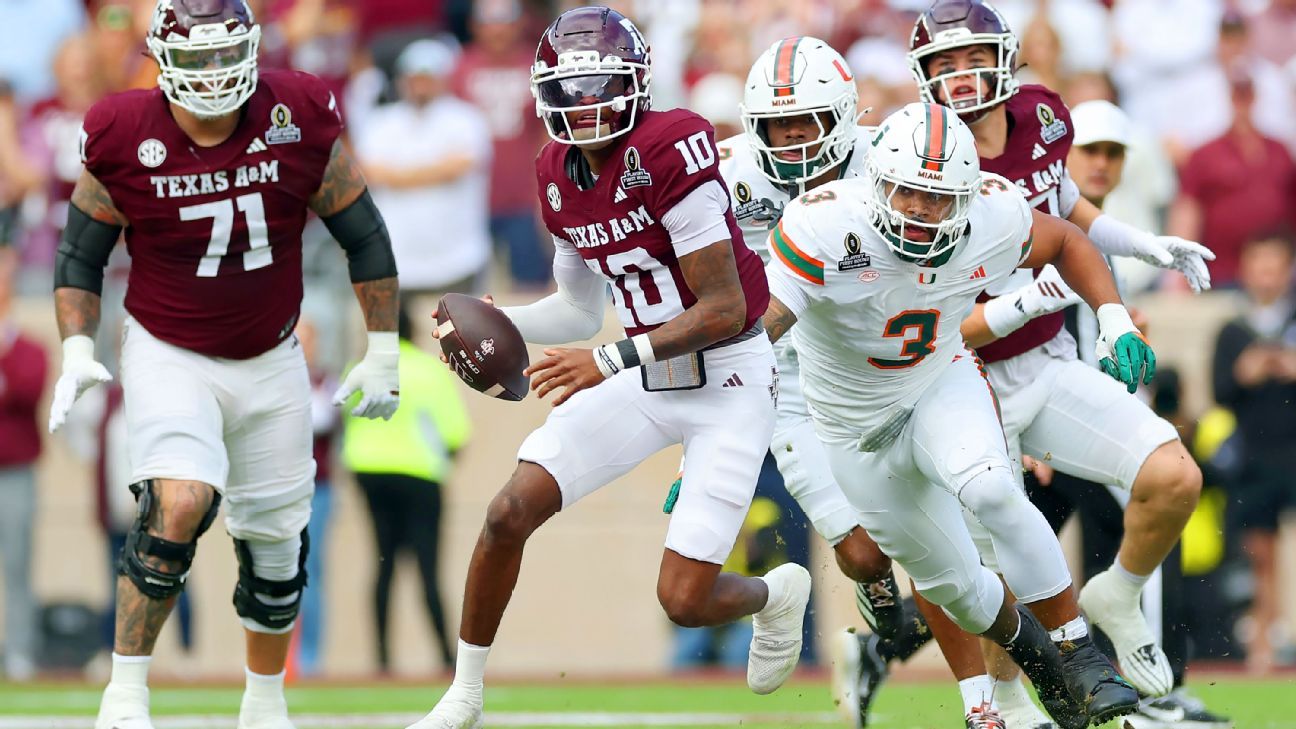
Bain and the Miami defense were dominant in a 10-3 win over the Aggies, ending a once-promising Texas A&M season and sending the Hurricanes on to the Goodyear Cotton Bowl, where they’ll face off against Ohio State.
Bain finished with five tackles — four for a loss — and three sacks, while also blocking a field goal in the first half.
The rest of the defense followed his lead, racking up nine tackles for loss and creating three takeaways, including a game-sealing interception in the back of the end zone with 24 seconds to play by freshman Bryce Fitzgerald.
In the aftermath, defensive end Akheem Mesidor was running through his rolodex of players who’d stepped up against the Aggies — defensive line, defensive backs, linebackers — then mentioned Fitzgerald.
“Bryce!” Bain and cornerback Keionte Scott both shouted in unison, laughing.
Fitzgerald arrived on campus in June, but quickly made his presence felt, and his role on Miami’s defense has grown as the season progressed. On Saturday, he was a star, intercepting Aggies quarterback Marcel Reed twice. The latter came on a third-and-goal at the 5 after the Aggies had marched down the field in an effort to tie it, but Fitzgerald stepped in front of a pass intended for Melin Ohrstrom and the celebration began.
“He’s a quick study,” Miami coach Mario Cristobal said. “He’s never flinched. He spends every waking minute studying, but when the lights come on, some guys just kind of have ‘it.’ He’s that guy. He just knows what to do and how to do it.”
A year ago, this Miami defense was the fly in the ointment that kept the Hurricanes from the playoff. With future No. 1 NFL draft pick Cam Ward working magic on offense, Miami’s battered secondary created a chain reaction that led to a complete defensive meltdown in the season’s stretch run. Miami lost two of its final three games to fall from No. 4 in the rankings to out of the playoff.
Cristobal responded by making a change at coordinator, bringing in Corey Hetherman — now a Broyles Award finalist — and putting a focus on rebuilding the back end of the defense. Fitzgerald and Scott, along with transfer Xavier Lucas, were keys to the turnaround. With the secondary secure, the defensive front was free to wreak havoc, and Mesidor and Bain did exactly that against the Aggies.
“We sat in the locker room for like 15 minutes [after the game],” Bain said, “just saying how crazy it was for us to win this game in this kind of way.”
Hetherman said the focus for Miami’s defense was actually more about patience and keeping Reed inside the pocket. The A&M quarterback did have a handful of scrambles that extended plays to find open receivers or picked up yards on the ground. But Hetherman said he prioritized showing Reed a host of different coverage schemes to keep him off balance, and eventually that allowed the Miami defensive front to get home.
Miami’s seven sacks against Texas A&M tied for the most by a ‘Canes defense in the last six seasons. And while there’d been concern about how Miami’s offensive line would handle the crowd noise at Kyle Field, where more than 104,000 fans provided a stifling soundtrack, it was actually the Aggies O-line that was flagged for multiple penalties.
“We lost the game of the line of scrimmage, and I think it got worse in the second half,” Aggies coach Mike Elko said. “We just couldn’t keep them off of us. We couldn’t get the run game established. We became one-dimensional. Once we became one-dimensional, they were able to tee off.”
Overall, Miami held the Aggies to just 326 yards of offense and just 89 on the ground — just 50 from A&M’s trio of tailbacks, Le’Veon Moss, Rueben Owens and EJ Smith.
And when Miami’s back was against the wall, the defense was at its best. A&M’s three red-zone trips amounted to just three total points, and when Miami receiver Malachi Toney fumbled near midfield late in the game, the Hurricanes defense followed with a quick three-and-out.
“A year ago, we had a tough time stopping people on defense,” Cristobal said. “This was one of those games where we felt like we were holding good and knocking them back. The confidence that [the defense] brings is off the charts, and they were the difference today.”
-
 Sports2 years ago
Story injured on diving stop, exits Red Sox game
-
 Sports3 years ago
‘Storybook stuff’: Inside the night Bryce Harper sent the Phillies to the World Series
-
 Sports2 years ago
Game 1 of WS least-watched in recorded history
-
 Sports3 years ago
Button battles heat exhaustion in NASCAR debut
-
 Sports3 years ago
MLB Rank 2023: Ranking baseball’s top 100 players
-
Sports4 years ago
Team Europe easily wins 4th straight Laver Cup
-
 Environment3 years ago
Japan and South Korea have a lot at stake in a free and open South China Sea
-
 Environment1 year ago
Here are the best electric bikes you can buy at every price level in October 2024